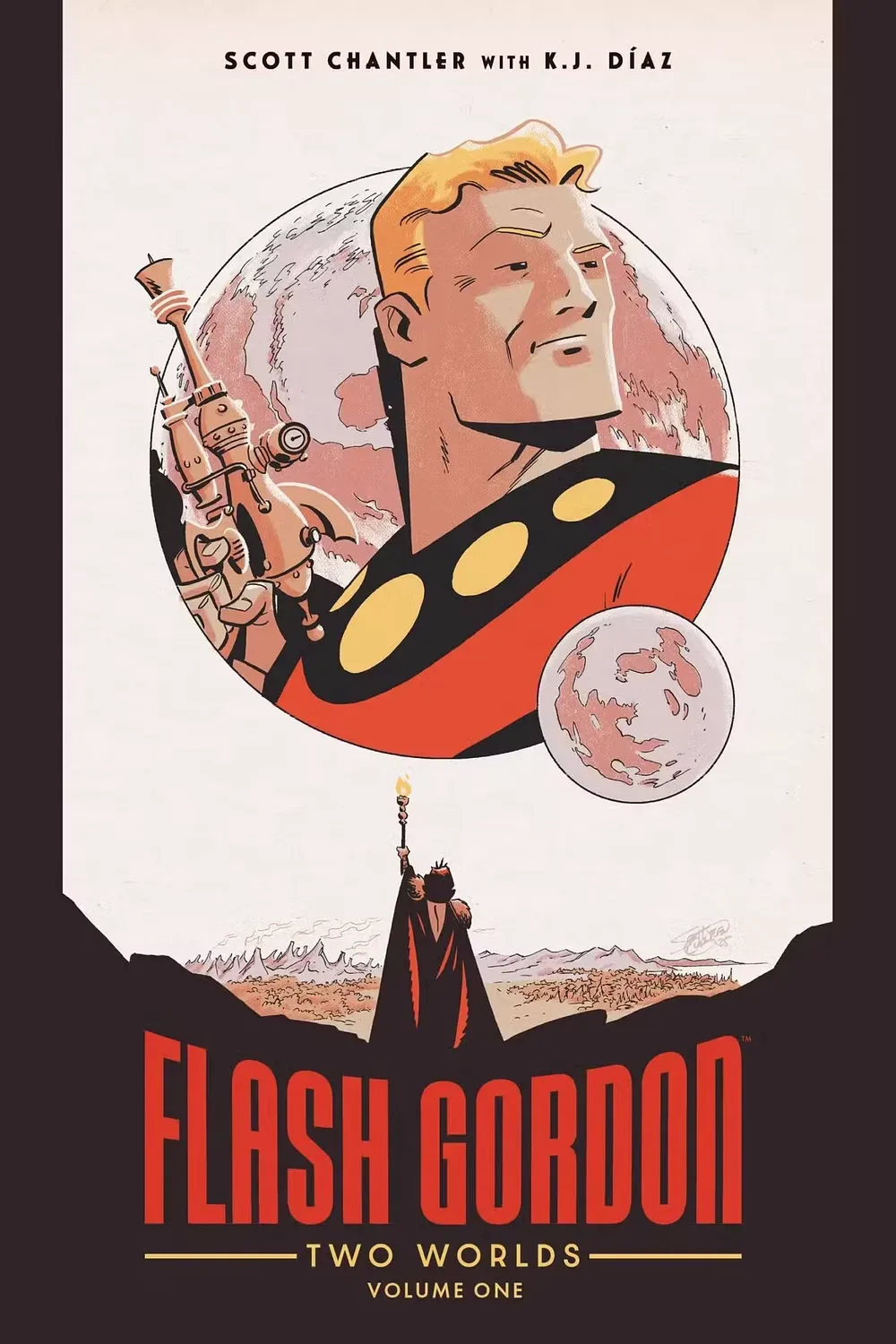
Flash Gordon is getting a radical alternate-history reset in Flash Gordon: Two Worlds – Volume 1, an original graphic novel from Mad Cave Studios and King Features Syndicate. The first of two planned volumes asks a deliberately unsettling question: what happens if Flash never makes the journey that traditionally turns him into Mongo’s champion?
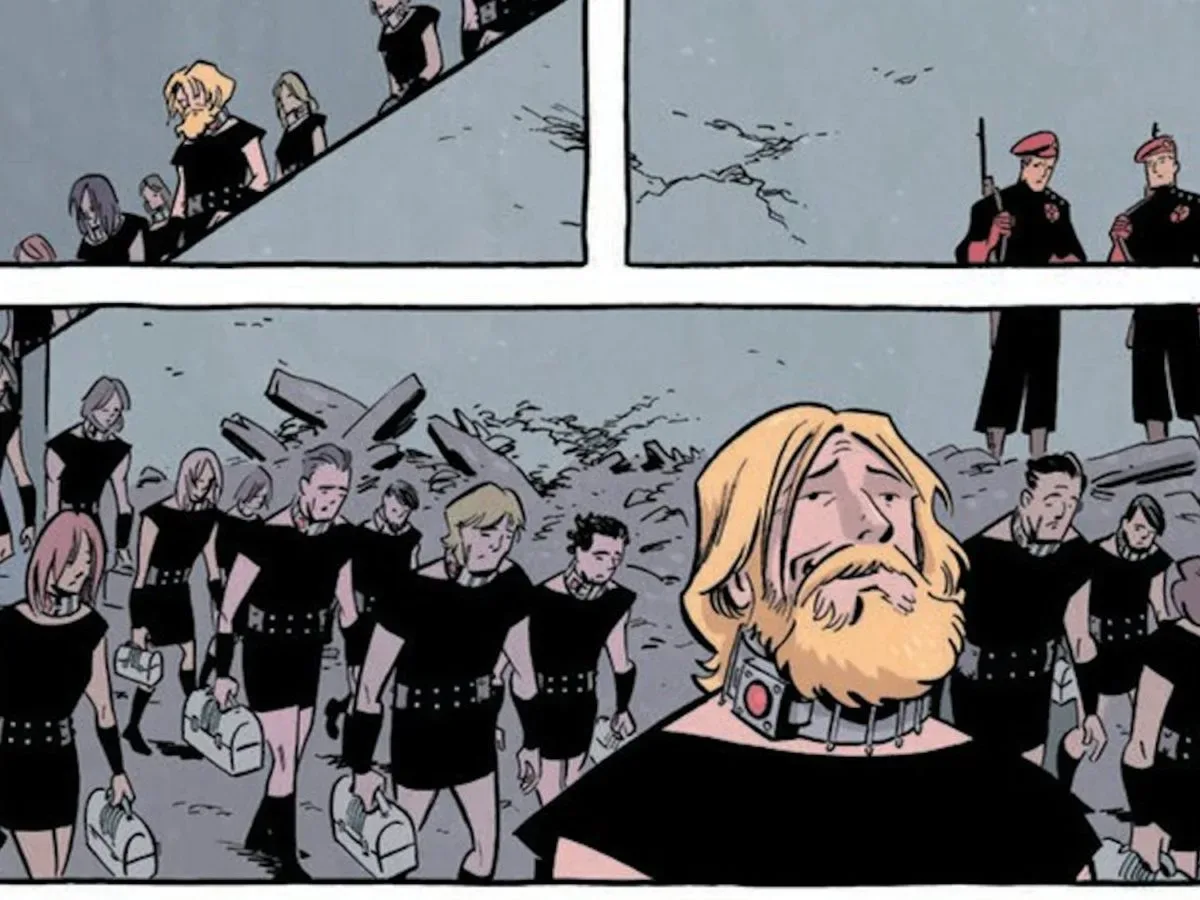
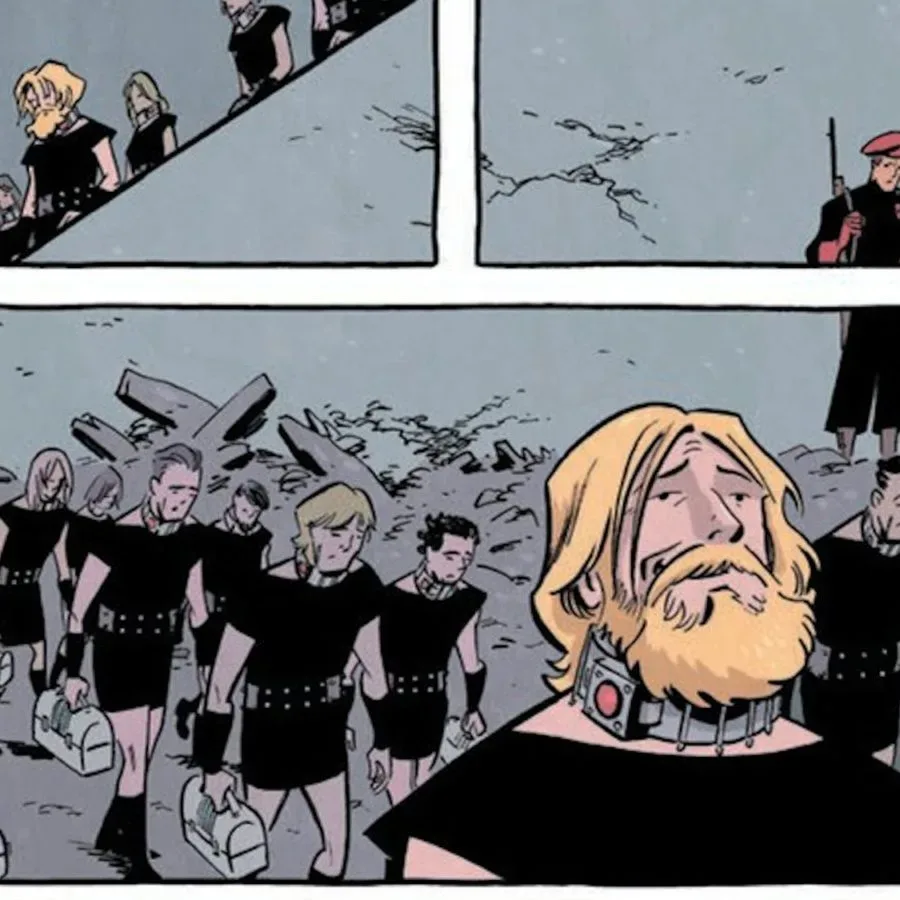
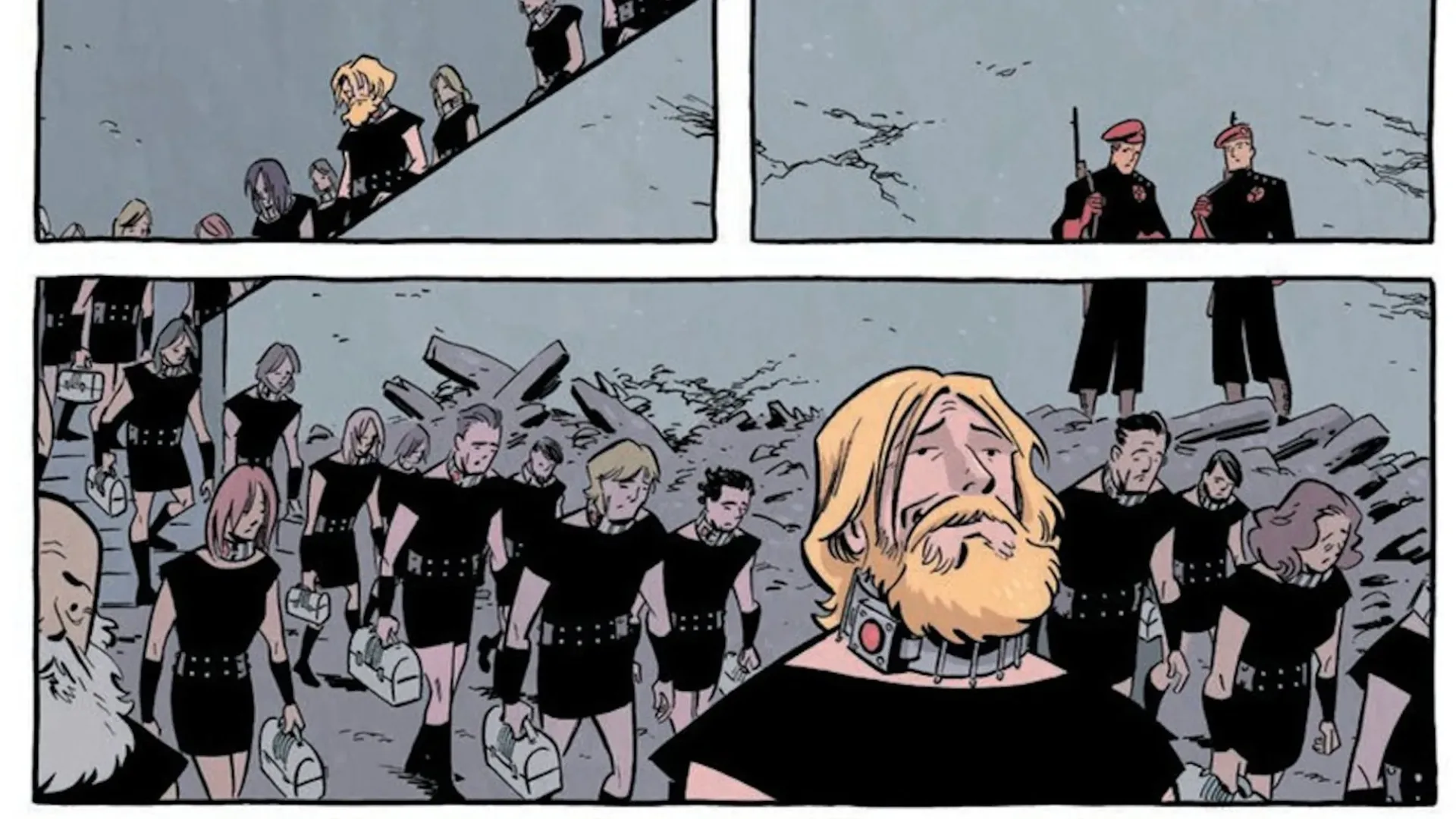
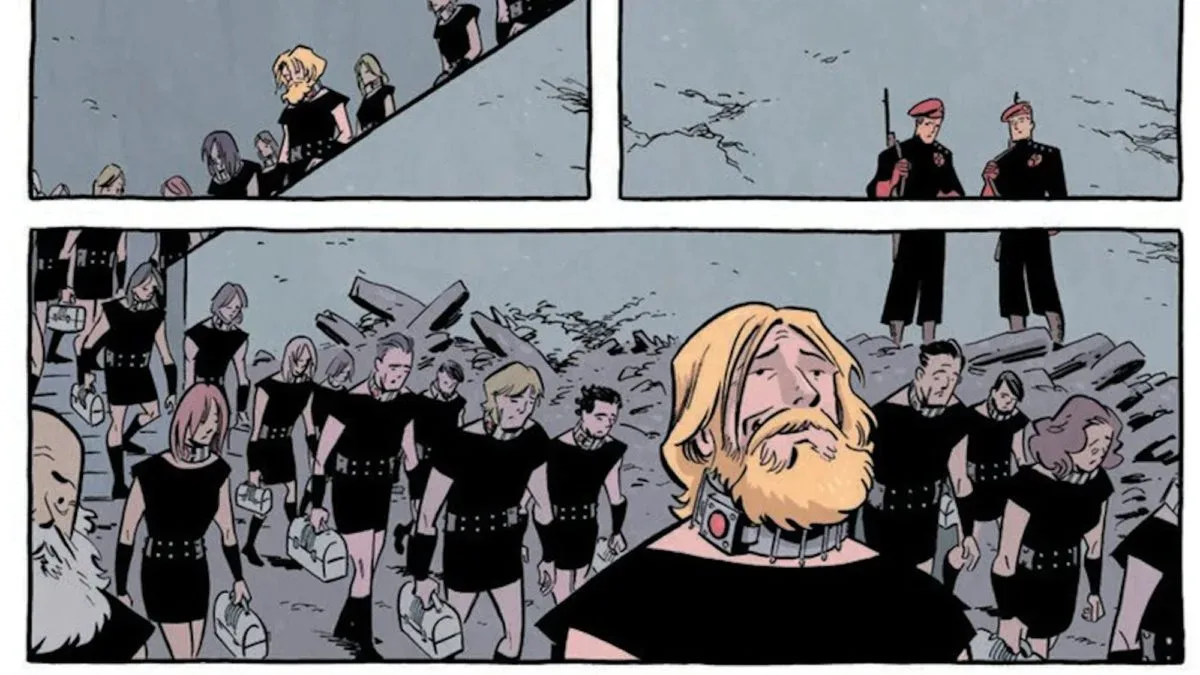
In this version, the answer is not a small continuity tweak or a new costume. Flash Gordon rules a conquered, devastated Earth under Ming the Merciless. Meanwhile, a nameless labourer looks toward the sky and imagines the heroic life he might have lived. The book’s premise strongly signals that this worker is the Flash Gordon readers know, placing the familiar hero and the ruler bearing his name on opposite sides of a world shaped by conquest.
Flash Gordon: Two Worlds – Volume 1 is written and drawn by Scott Chantler, with colours by Kike J. Díaz. It is Chantler’s first major project using a licensed character. Volume 1 is scheduled for November 10; Volume 2 is planned for 2027. The graphic novels are listed at $19.99/$24.99.
A Flash Gordon story built around the road not taken
The classic Flash Gordon setup is direct, propulsive science fiction: Flash, Dale Arden and Dr. Hans Zarkov are swept from Earth to Mongo, where Flash confronts Ming’s rule. It is a high-adventure structure built for momentum—an Earth hero goes somewhere impossible, discovers the scale of the threat and rises to meet it.
Two Worlds changes the crucial first move. Flash does not fly to the stars and stop Ming. That absence leaves room for a much darker chain of events: Ming’s authority reaches Earth, the planet is conquered, and Flash’s potential heroism becomes something mourned rather than celebrated.
That makes this a “what if” story in the meaningful sense, rather than simply an unfamiliar setting. An alternate-continuity tale starts with a recognisable element and changes one decisive condition, then follows the consequences. Here, the changed condition is Flash’s failure—or inability—to become the spacefaring rescuer associated with the character. The stated outcome is political as well as personal: Earth is no longer merely Flash’s home; it is territory ruled over by an empire.
The book’s central tension appears to be between identity and circumstance. If the labourer truly is Flash, then his inner urge to look upward and imagine heroism matters. He may have been denied the defining adventure, but the story leaves open whether the qualities that make Flash a hero can survive in a life designed to suppress them.
Dale Arden’s role shifts from companion to captive witness
The alternate setup also gives Dale Arden a different position in the story. On Mongo, she is described as the Emperor’s tormented bride. Rather than accompanying Flash on the adventure, she is already inside Ming’s power structure and living with its consequences.
Dale remembers briefly seeing a man on an aeroplane years earlier and cannot dismiss the sense that they were meant to meet. That detail creates a connection between the two main settings before the characters properly share an adventure. Earth and Mongo are not separate plot lanes; their relationship is embedded in the missed encounter that helped define this altered world.
It is an effective inversion of the familiar adventure formula. A traditional version sends Flash outward into the wider universe. Here, Dale is on Mongo while a possible version of Flash is kept on Earth, so the narrative begins with both characters displaced from the roles readers may expect. The distance between them is not just geographical. It represents the damaged possibility at the heart of the premise.
There is a practical storytelling advantage to that divide, too. Earth can show what conquest looks like from below, through the labourer’s perspective. Mongo can show the same regime from within its imperial centre, through Dale’s forced proximity to Ming. The supplied premise does not reveal how or when those threads converge, but the two-world structure suggests that the split viewpoint is fundamental rather than decorative.
Old-school spectacle, viewed through a modern lens
Mad Cave frames Two Worlds as a work grounded in the romance, danger and cosmic spectacle of Alex Raymond’s 1930s comic strip, as well as the serial-film tradition it inspired. Those ingredients are inseparable from Flash Gordon’s appeal: strange worlds, towering stakes, melodramatic peril and heroic imagery large enough to fill a planet—or several.
But the new book is not presented as a straightforward period recreation. It intends to contrast those older adventure traditions with present-day expectations. In practical terms, that means the story can preserve the scale and visual imagination associated with Flash Gordon while interrogating the assumptions behind the old wish-fulfilment setup.
The result is an inversion of the old rescue fantasy. Instead of an effortlessly victorious Earthman arriving to defeat an intergalactic tyrant, Two Worlds starts after the tyrant has won. Instead of conquest being a remote threat safely resolved by a hero, it is the condition of daily life on Earth and the reality surrounding Dale on Mongo.
This does not mean the book has abandoned adventure. The premise is still built around an emperor, a distant world, an interrupted destiny and a possible hero reaching for something beyond his station. Its difference lies in where it begins: with defeat, not triumph. The question is no longer simply whether Flash can defeat Ming; it is what “Flash Gordon” means in a world where Ming’s victory has already reshaped both the hero and the planet.
Why the Absolute Batman and Ultimate Spider-Man comparisons fit
The book has been positioned alongside the broad idea behind reinventions such as Absolute Batman and Ultimate Spider-Man: take a major, deeply familiar character and move a foundational piece of the puzzle. These comparisons are useful as a shorthand for approach, not as evidence that the series shares a publisher, continuity or format with either line.
For readers, the key distinction is that this is not being described as another standard Flash Gordon chapter. It is a two-volume original story with a premise designed to make prior knowledge feel slightly unstable. Readers who know Flash primarily as a smiling, decisive adventurer will encounter a ruler who bears his name and a worker who dreams of the heroic role. Readers who come in fresh can approach it as a science-fiction drama about authoritarian power, memory and a life that went wrong before it could begin.
That kind of reframing can make legacy characters accessible without requiring that every prior version be discarded. The classic version supplies the emotional contrast. The more a reader understands that Flash is normally defined by the journey to Mongo and opposition to Ming, the more force there is in a story where Earth has fallen and the expected hero is absent.
It also arrives at a time when superhero and adventure properties are often discussed through their alternate versions. For a wider example of how recognisable comic characters continue to travel across entertainment formats, see our coverage of Marvel’s Wolverine and the challenge of matching Spider-Man’s staying power. Flash Gordon’s new book is not a game adaptation, but it uses the same broad pop-culture language of recognisable icons made newly uncertain.
The creative team behind Two Worlds
Chantler handles both writing and art on Volume 1. His previous work includes Two Generals, Northwest Passage and Three Thieves. Taking both of the book’s core visual and narrative duties is especially notable for a premise where visual contrast is likely to matter: conquered Earth, imperial Mongo, dreams of heroism and the larger-than-life cosmic imagery associated with the property.
Díaz provides the colours and has credits including The Rocketeer: The Island and Los Monstruos. Colour is more than finish work in a cosmic adventure comic. It can distinguish worlds, establish the mood of empire and ruin, and help a story move between grounded oppression and space-opera scale. Specific page designs and colour choices have not been detailed, so readers should not treat the premise as a preview of the final visual approach. Still, the roles are clear: Chantler is building the story and line art, while Díaz is responsible for its colour.
The project is also notable as Chantler’s first major licensed-character work. That creates a balancing act at the centre of the book. It must be recognisably Flash Gordon—complete with Ming, Dale, Mongo and the genre’s grand sense of danger—while also being different enough for its altered premise to have a purpose.
What has been confirmed, and what remains open
The confirmed details are substantial but focused. Flash Gordon: Two Worlds is a two-volume original graphic-novel story. Volume 1 is coming November 10 from Mad Cave Studios, made in partnership with King Features Syndicate. Chantler writes and draws it; Díaz colours it. Dale is on Mongo as Ming’s tormented bride, Earth has been conquered, and a nameless labourer dreams of the hero he could have been. Volume 2 is expected in 2027.
Plenty remains deliberately unanswered. The provided details do not explain how Flash came to rule Earth, whether the labourer’s identity will be immediately confirmed on the page, or exactly how Dale and the labourer’s parallel stories will meet. They also do not establish whether the November 10 date applies globally, which formats beyond the stated graphic novel will be offered, or a more precise release window for Volume 2.
Those gaps are part of the hook. The announcement gives the consequence of a missed heroic journey but withholds the full mechanism. For Flash Gordon fans, that is the invitation: return to Mongo not for another assured win over Ming, but for a version of the myth where the villain has the upper hand and heroism has to be rediscovered from the ruins.