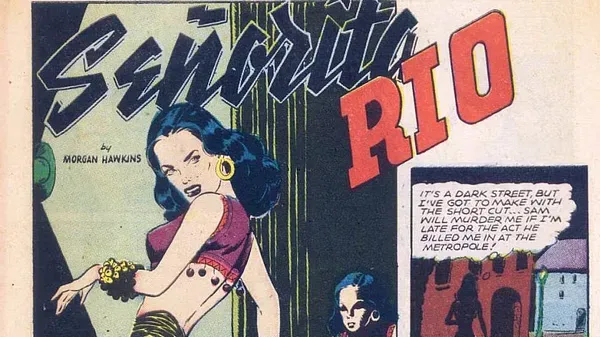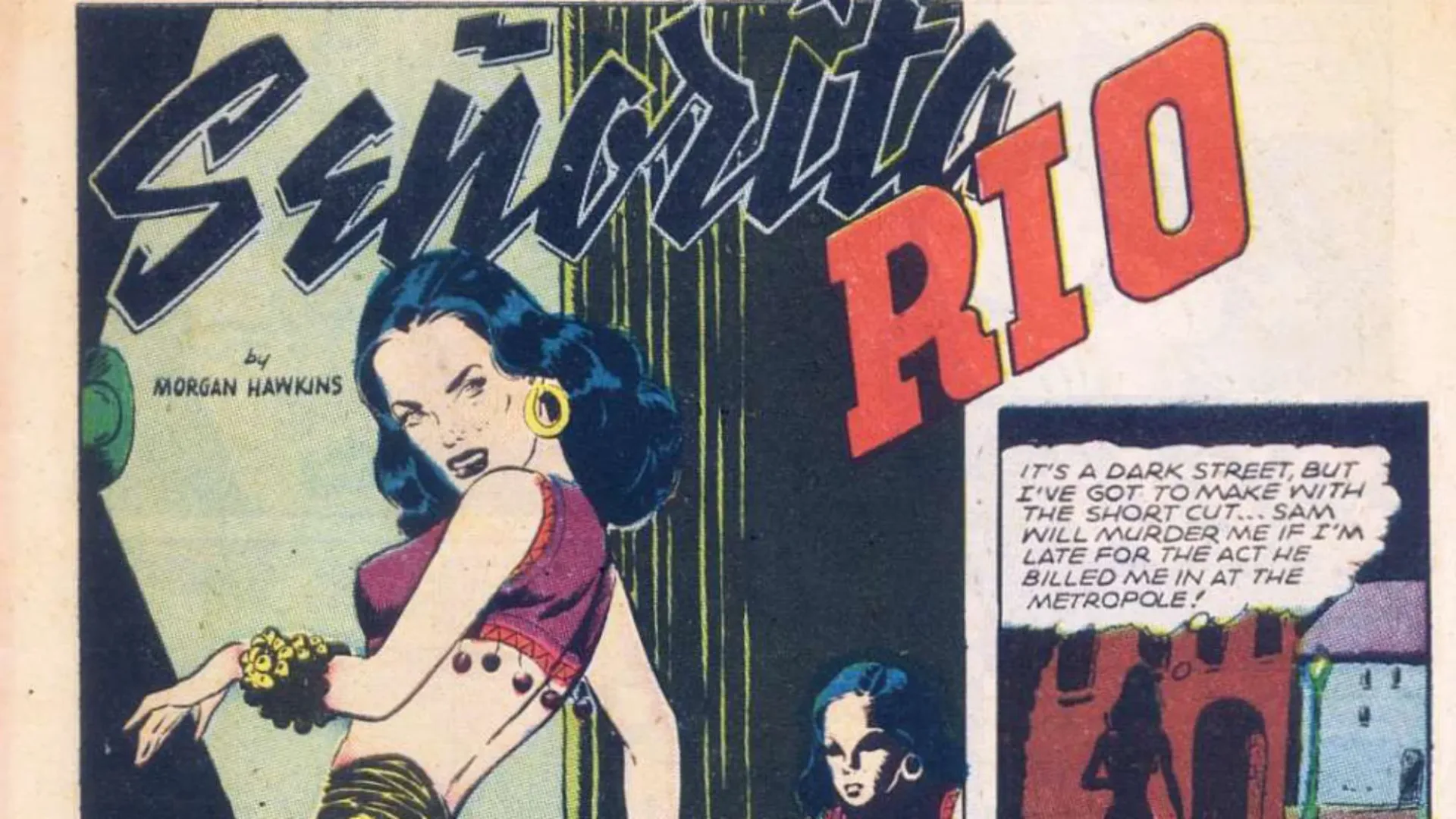
Fight Comics #41, a 1945 Fiction House comic, captures a strikingly uneasy moment in wartime-popular fiction: Germany has been defeated, but the danger in the story is deliberately not over. In the issue’s Señorita Rio feature, illustrated by Lily Renée, a clandestine Nazi organization called Werewolf is trying to build toward a “fourth Reich.” The plot sends an intelligence officer to Natal, Brazil, with information for Señorita Rio—and turns a list of underground operatives into a cipher concealed in counterfeit banknote serial numbers.
That is a clean pulp-thriller premise, but it is also rooted in a real postwar anxiety. The story’s December 1945 cover date placed it in the immediate aftermath of World War II, when the Nazi Operation Werewolf project remained a potent name. The real initiative envisioned elite soldiers operating covertly with guerrilla tactics behind enemy lines. Its tangible successes were limited, yet propaganda around it considerably magnified its apparent menace. That gap between real capability and public fear is exactly the kind of space that espionage comics can exploit.
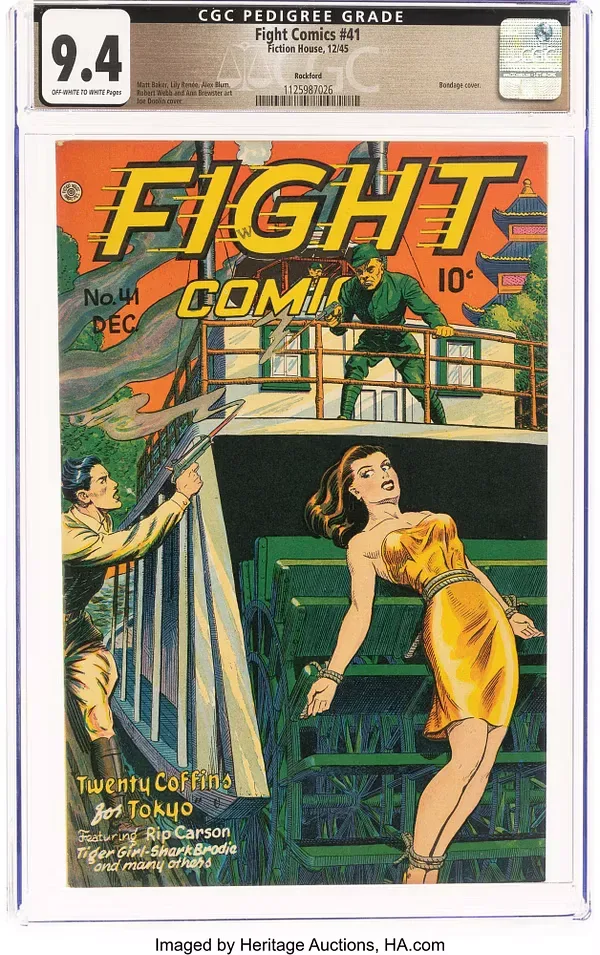
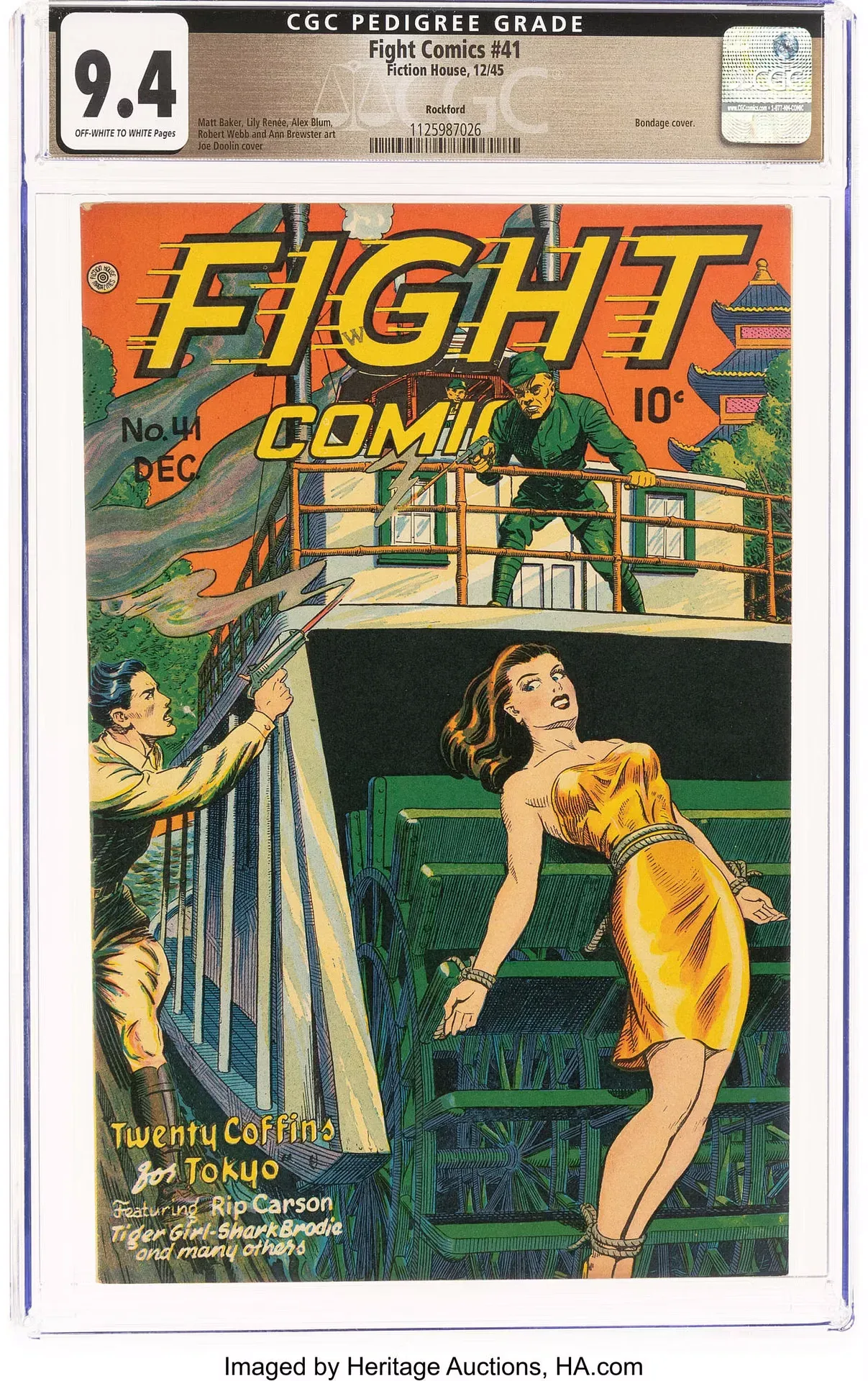
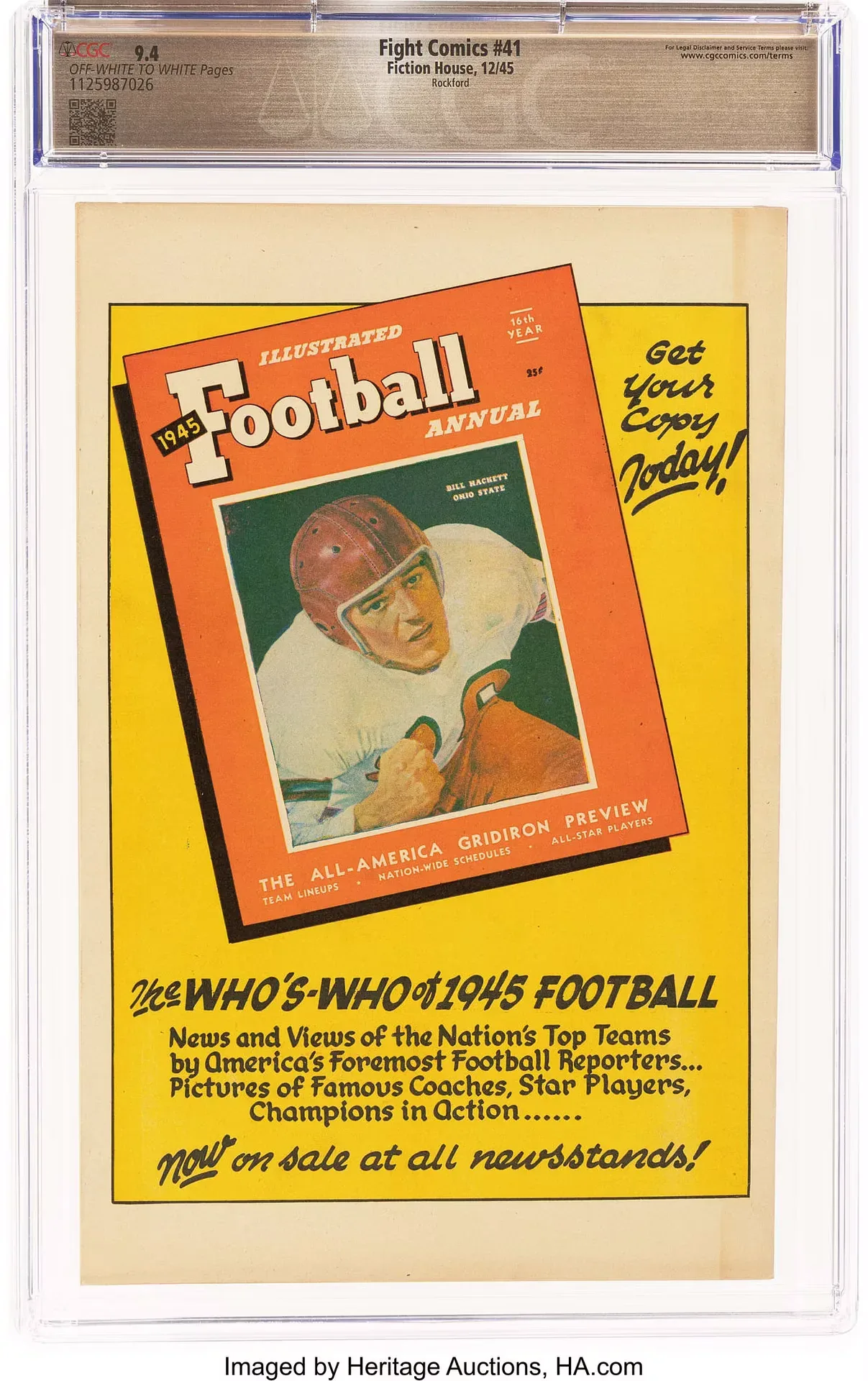
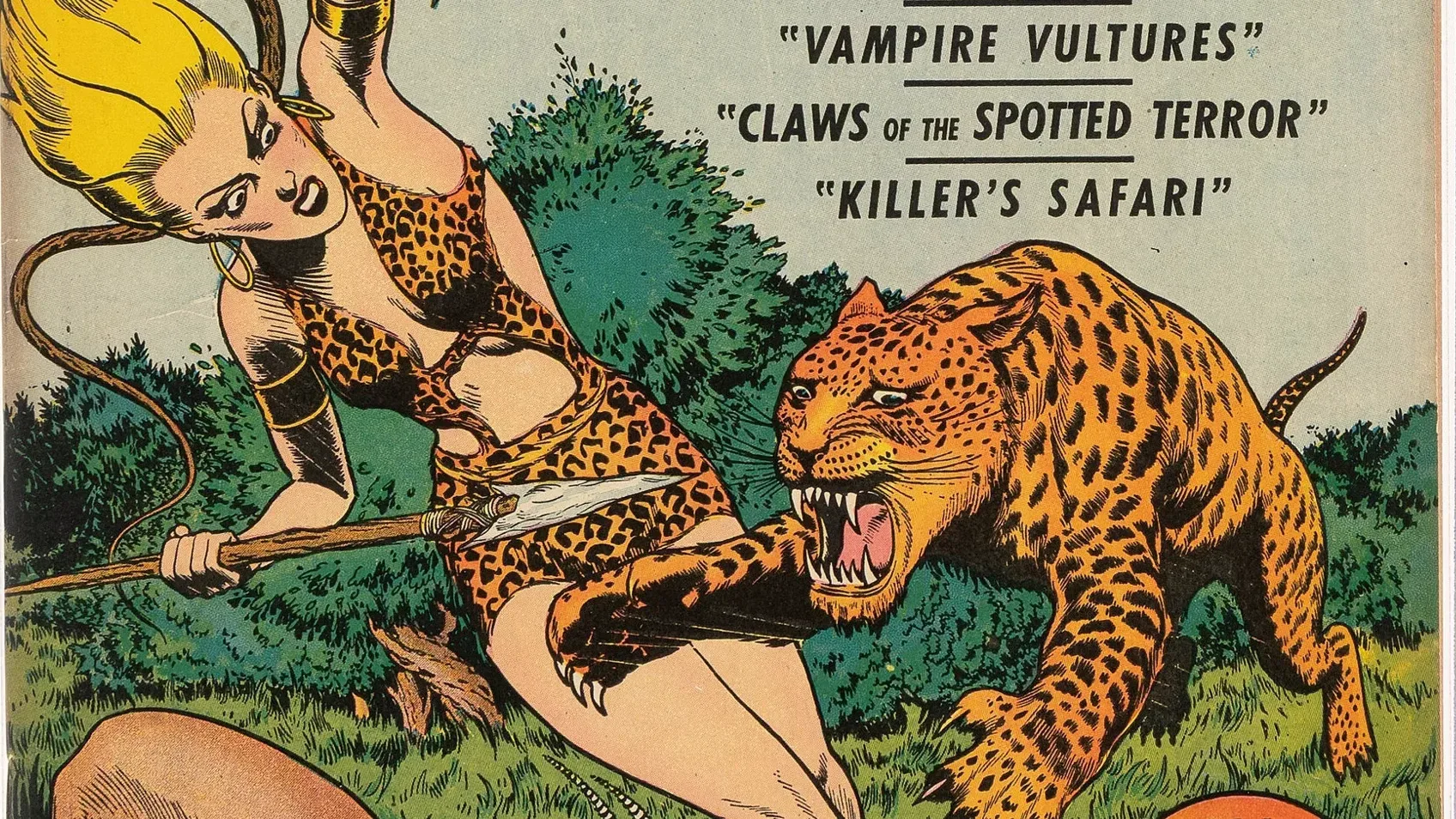
A CGC NM 9.4 copy with off-white to white pages, identified as a Rockford pedigree copy, is scheduled for the September 24–26, 2026 Comic Books Signature Auction #7469. The issue has a Joe Doolin cover and also includes a continuing Tiger Girl feature by Matt Baker.
A postwar conflict instead of a victory lap
Señorita Rio’s assignment begins from a pointed reversal: a formal military victory has occurred, while hidden political violence and conspiracy persist. Rather than presenting the war as neatly concluded, the feature recasts it as an intelligence problem. A surviving Nazi network is no longer a visible army. It is a list of names, an attempted transfer of information, a secret code and a figure who must reach the right contact before the conspiracy can erase the evidence.
The choice of a hidden membership list embedded in forged currency does more than provide a convenient MacGuffin. A MacGuffin is a plot object or goal that drives characters into action; here, the counterfeit notes give the story a physical object that contains information without looking like a conventional dossier. Serial numbers are especially useful to a spy-fiction setup because they appear mundane. The list is not simply written down. It has been transformed into a pattern that requires interpretation, making possession of the money—and understanding its code—equally important.
It also fits the feature’s broader premise of a covert remnant. Counterfeit notes can circulate, cross borders and conceal data in plain sight. The storytelling logic is fictional, but the technique makes the threat feel less like an army waiting over a hill and more like a network hidden in everyday systems. That distinction matters in a story published just after a global war: it changes the hero’s task from confronting an enemy force to untangling an enemy presence.
What Operation Werewolf meant—and what the comic changes
The historical foundation for the title’s villainous organization was Operation Werewolf, a late-war Nazi plan for secret operations and guerrilla activity on enemy-held territory. It had limited practical success. However, the idea carried a psychological force out of proportion to that record, aided by propaganda and by the uncertainty surrounding the final stages and aftermath of the conflict.
Guerrilla tactics generally refer to irregular methods used by smaller or concealed forces rather than conventional armies facing one another in open battle. In the context invoked by the comic, that concept gives the antagonists a useful fictional identity: they can be anywhere, are difficult to identify and supposedly remain active even after the defeat of the state they served.
Fight Comics #41 does not present a documentary account of Operation Werewolf. The fourth-Reich ambition, the coded notes and the specific mission in Brazil are components of an adventure narrative. The important historical connection is tonal and thematic. The feature takes a name that was tied to contemporary fears and reshapes it into a high-stakes espionage plot. Its premise therefore reflects an early postwar question: what happens when a defeated regime’s remaining supporters are imagined not as soldiers in uniform, but as an underground network?
That is also why the issue is more interesting than a standard wartime “hero versus Nazi” story. Its danger comes after the surrender, at least within the fiction. The story’s conflict is about aftermath, infiltration and unfinished business. The Nazi villains are still defined by the ideology and crimes of the war, but their function in the plot has shifted from battlefield enemy to clandestine threat.
Natal, Brazil, gives the fiction an international stage
The setting is Natal, Brazil, where the intelligence officer intends to meet Señorita Rio. Natal had real wartime relevance: its naval base supported Brazilian and Allied forces. That background makes it a plausible location for an international-intrigue story without suggesting that the comic’s specific conspiracy occurred there.
For the narrative, Natal works because it sits outside the European battlefield while retaining wartime strategic meaning. The choice broadens the visual and dramatic scope of the feature. A postwar story need not return to a ruined European capital to communicate the persistence of a Nazi underground; it can show the alleged network reaching into a wider world. In practical storytelling terms, a meeting in a distant port city also creates immediate tension. An officer is traveling with vital intelligence, a hero awaits it, and enemies have reason to stop the handoff.
That setting should be read as a fiction writer’s use of genuine wartime geography, not as a claim about the real Operation Werewolf’s reach. The distinction is important for readers approaching old comics through a historical lens. The issue gains texture from contemporary reference points, but its plotting remains deliberately sensational: it is an espionage yarn designed to transform recognizable concerns into suspense.
Lily Renée’s perspective is central to the issue’s resonance
Renée’s involvement gives the Señorita Rio installment a particularly significant context. She was a Jewish refugee from Nazi Austria who escaped after Austria’s annexation by Nazi Germany and later became a comic-book artist in New York. In Fight Comics #41, she drew a story centered on Nazism’s lingering shadow at the close of the war.
Biographical context should not be used to claim thoughts or intentions that are not stated on the page. It can, however, clarify why the convergence is meaningful. This is an artist directly affected by Nazi expansion working within American popular comics on a narrative where Nazi power has not vanished with defeat. The story does not treat the historical end of the war as emotional closure. Instead, it puts its heroine against an imagined attempt at continuation.
That makes the feature notable both as entertainment and as a period artifact. Golden Age comics are often discussed through superheroes, cover imagery, scarcity and grade. Those factors matter to collectors, but the story’s perspective and timing matter as well. A comic can be a collectible object while also preserving evidence of the kinds of fears, fantasies and unresolved anxieties circulating when it was made.
What the listing details tell collectors
The offered copy is described as CGC NM 9.4. CGC is a third-party comic grading service; NM, or Near Mint, is the grade descriptor attached to 9.4. The provided description also notes off-white to white pages. Page color is a separate physical-condition detail from the assigned numerical grade, and it is useful to state it precisely rather than treating it as interchangeable with grade.
The copy is additionally identified as a Rockford pedigree. In comic collecting, a pedigree designation points to a recognized original collection or provenance. Here, it distinguishes this particular copy from another copy that may carry the same issue number and even a similar grade. Provenance can be part of the object’s collecting identity, alongside the specific condition information, its artwork and the historical interest of the material inside.
Joe Doolin’s cover is another component of the issue’s appeal. Meanwhile, the presence of Matt Baker’s continuing Tiger Girl feature means the book is not solely a Señorita Rio item. For anyone evaluating the comic, those elements are best understood as separate but overlapping reasons for attention: the cover, Renée’s espionage story, Baker’s feature, the period setting and the particular graded copy’s stated pedigree and condition.
A checklist for reading the auction description carefully
- Issue and publisher: Fight Comics #41, published by Fiction House in 1945.
- Feature significance: Lily Renée’s Señorita Rio story uses a postwar Werewolf conspiracy as its premise.
- Condition statement: CGC NM 9.4 with off-white to white pages.
- Provenance: The auction description identifies the copy as a Rockford pedigree.
- Additional creative credits: Joe Doolin cover; Matt Baker’s Tiger Girl continues inside.
- Sale timing: September 24–26, 2026, in Comic Books Signature Auction #7469.
Why this issue’s premise still stands out
Fight Comics #41 is a snapshot of an early postwar popular culture that did not regard victory as the end of the story. Its fictional villains are defined by the fear of survival: the notion that the enemy could reorganize, hide and continue through coded communication and covert travel. By placing that anxiety in an international setting and building the plot around counterfeit-currency serial numbers, the Señorita Rio feature turns a broad geopolitical fear into a direct personal mission.
The comic’s underlying historical reference needs careful framing. Operation Werewolf was real, but the comic’s scale of conspiracy and its plot mechanics are fiction. That separation does not reduce the issue’s interest; it explains it. Comics frequently take the vocabulary of current events and convert it into dramatic shorthand. Here, “Werewolf” signals an enemy that is concealed, unpredictable and supposedly active after the visible war has ended.
For readers following vintage comics as cultural history, this kind of issue rewards looking beyond the cover. For collectors, the stated 9.4 grade, page quality and Rockford pedigree detail define the particular auction copy. For students of comics craft, Renée’s work is the focal point: a postwar espionage chapter that uses real-world dread as the foundation for a compact adventure. Readers interested in how current comics continue to use high-concept settings and genre framing can also browse this look at Keenspot’s December comics lineup.