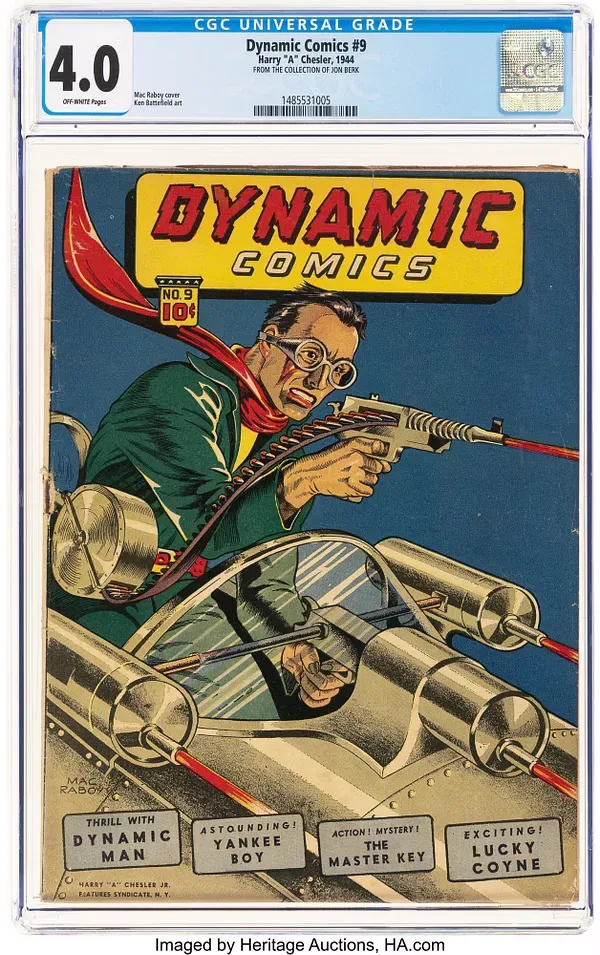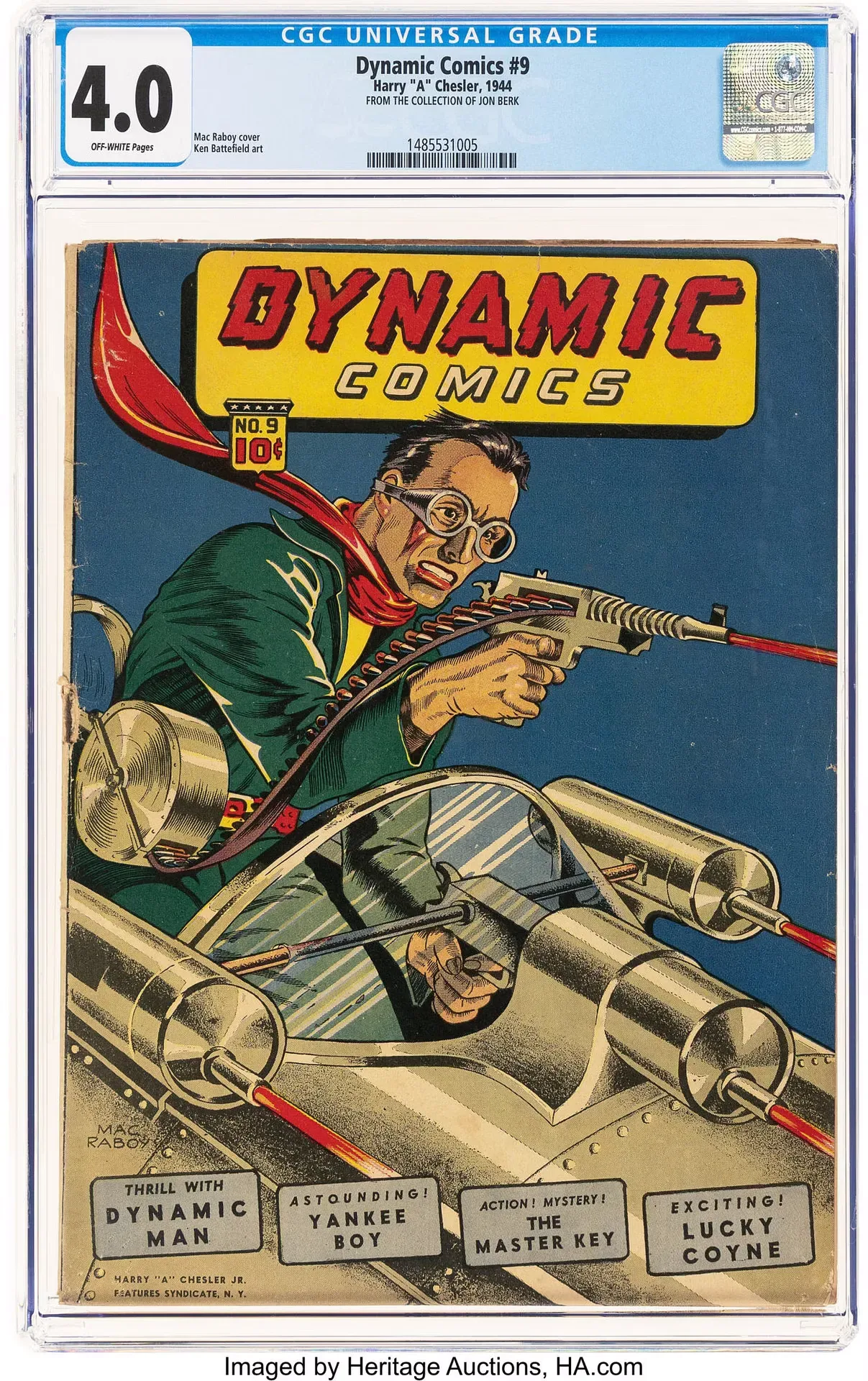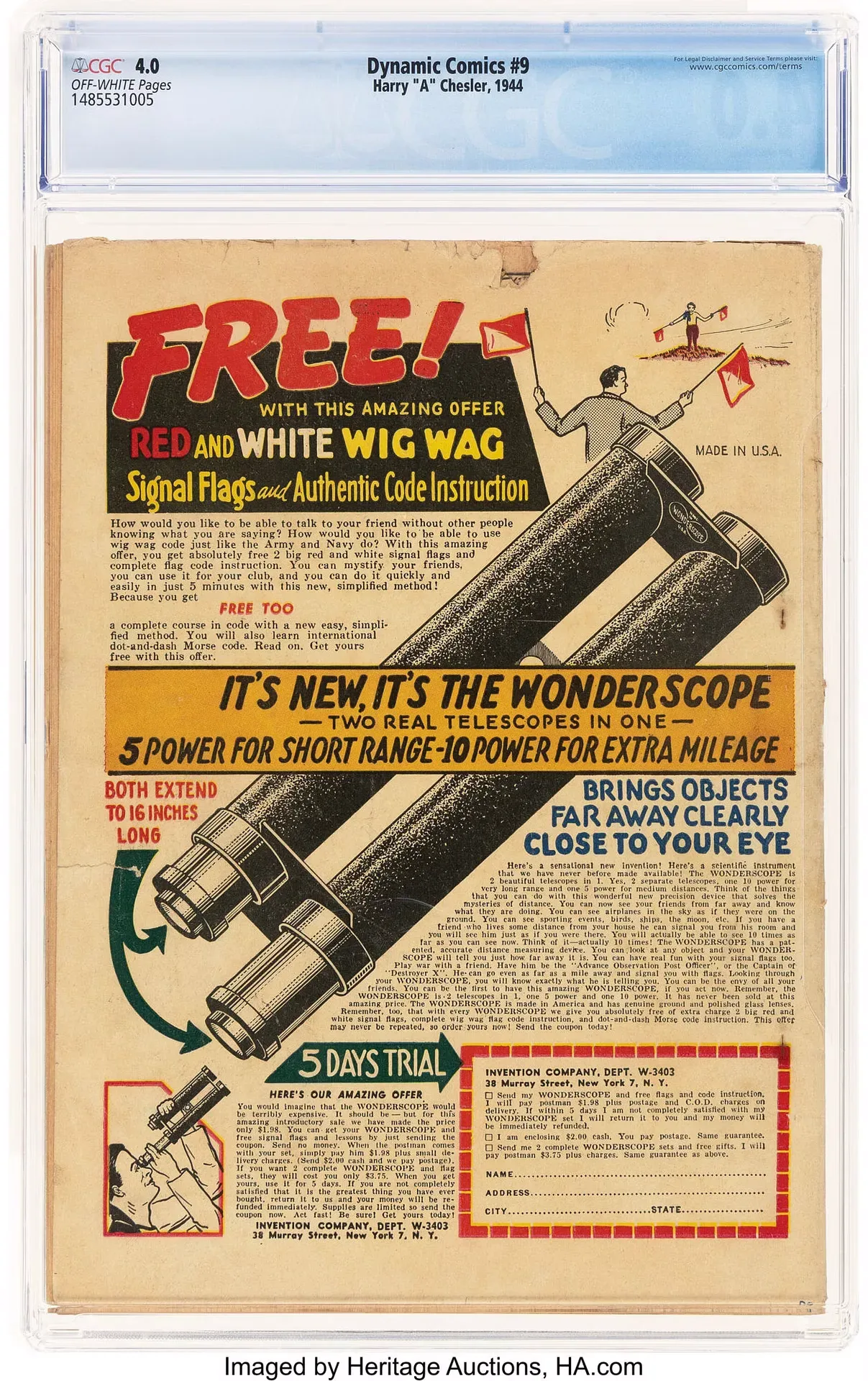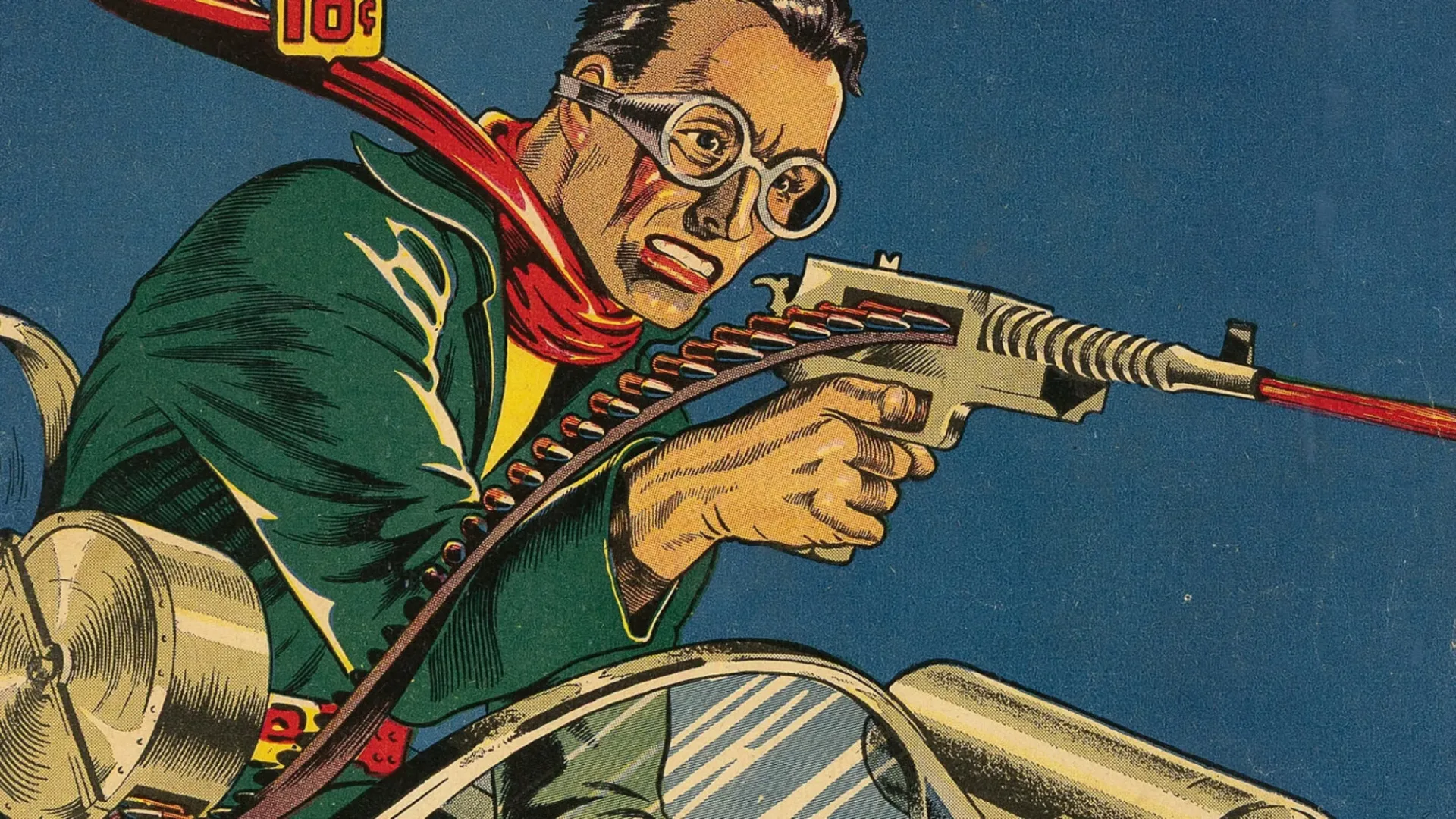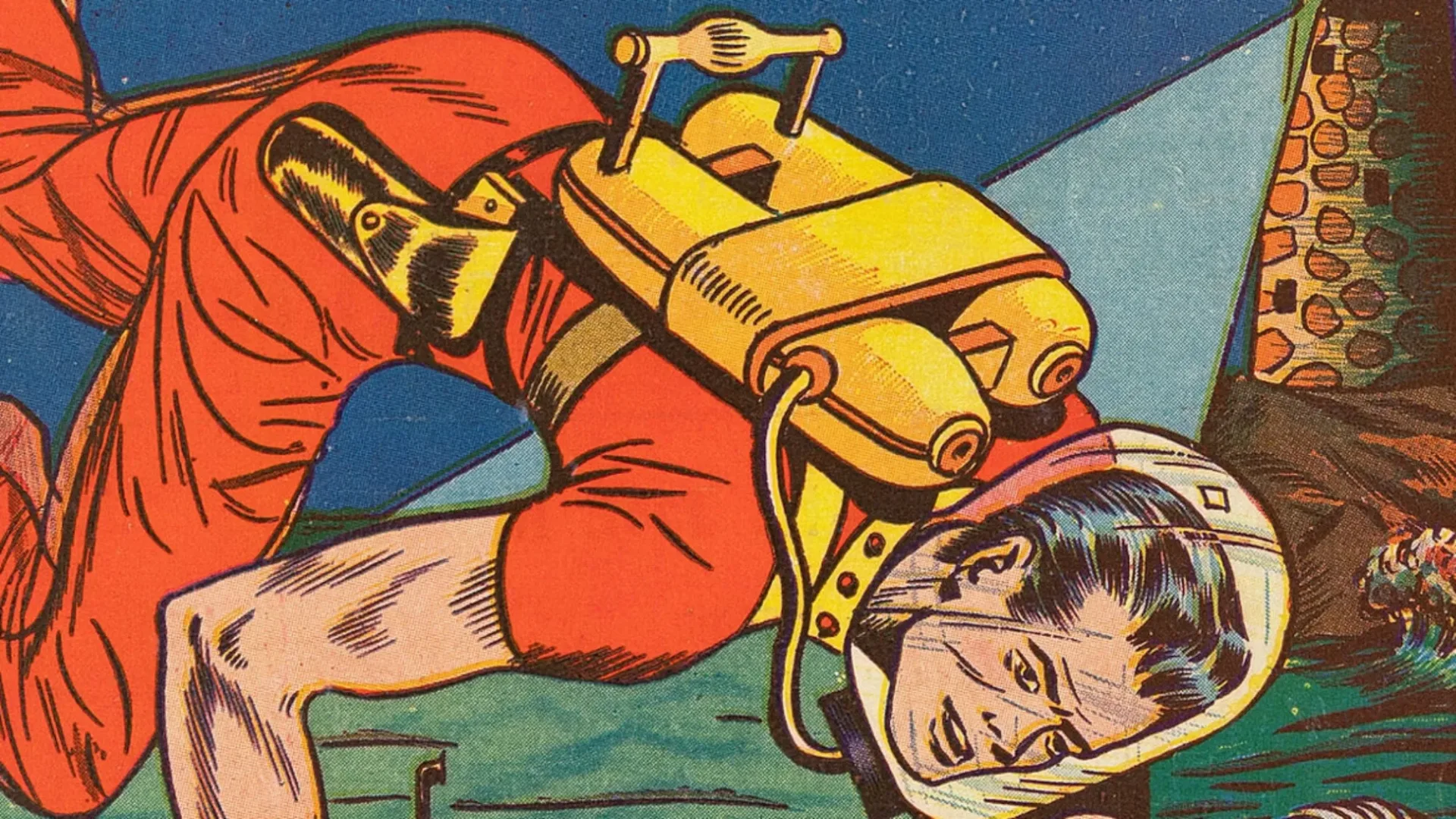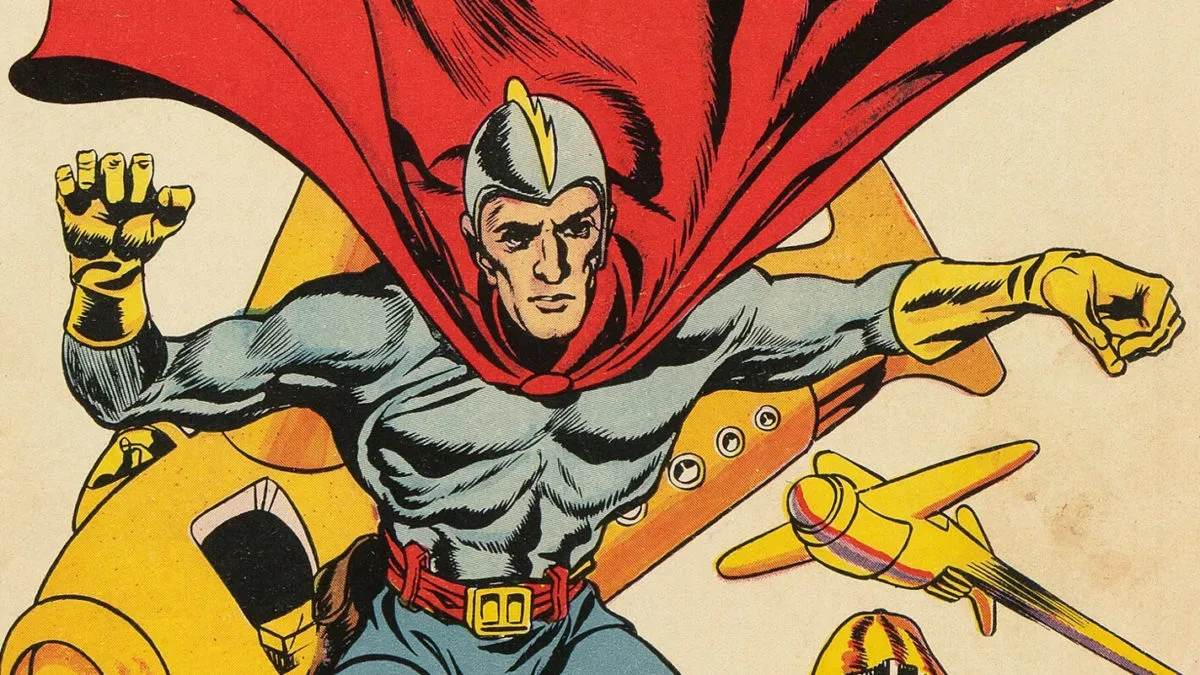
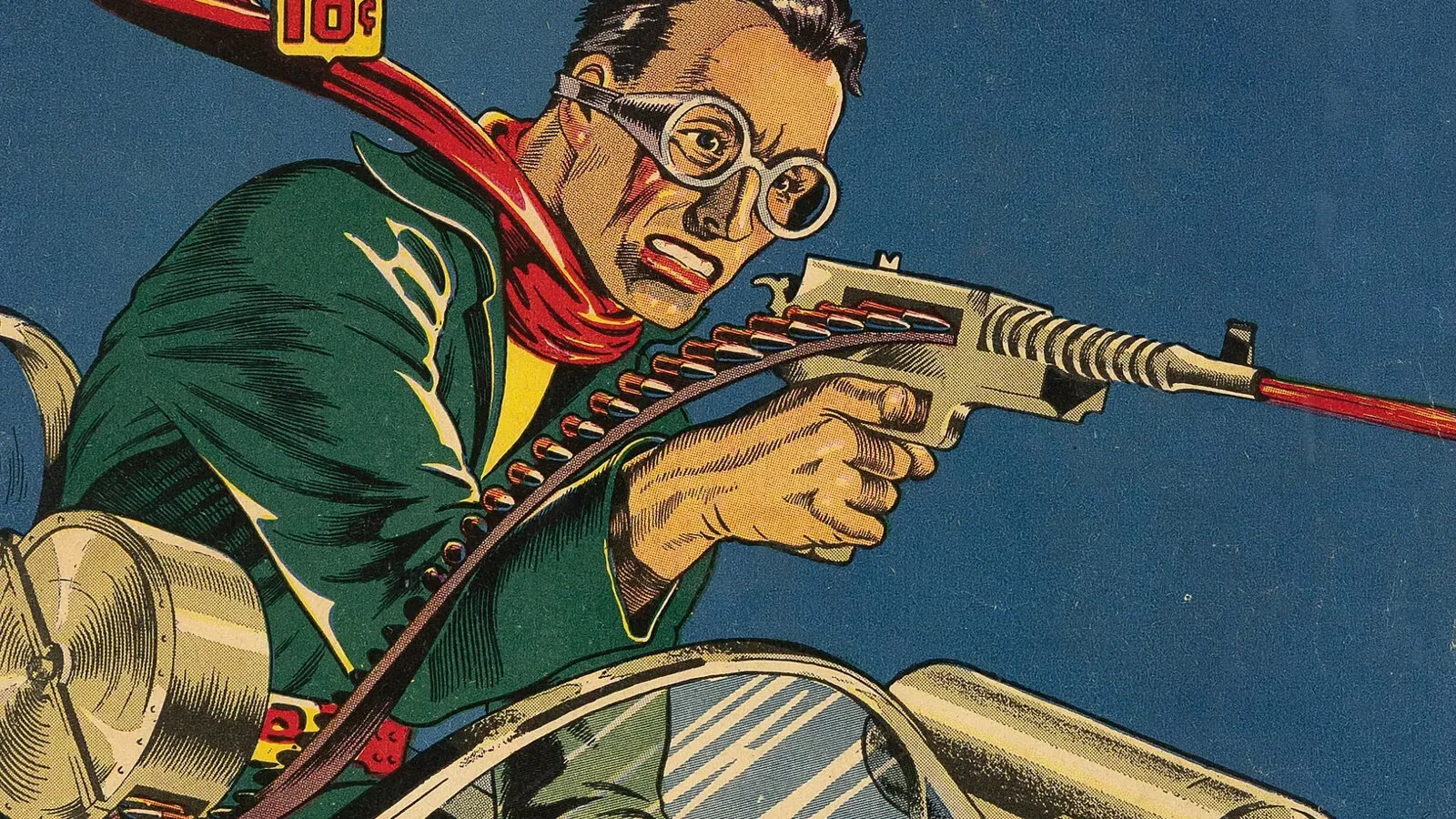
A wartime comic built around espionage at the Kremlin is heading to auction. Dynamic Comics #9, published by Chesler in 1944, is scheduled to appear in the Golden Age Century Comics Showcase Auction VI #40378 on November 5, 2026. The offered book comes from the collection of Jon Berk and carries a CGC Universal VG 4.0 grade with off-white pages.
The issue pairs a cover by Mac Raboy featuring Mr. E. with a Master Key adventure that turns a recent real-world diplomatic event into heightened comic-book sabotage. Master Key, operating through his alter ego FBI agent Ray Cardell, travels to Moscow to protect a senior U.S. State Department figure at a Kremlin meeting. The threat is not simply an attack: a Nazi operative scheme centers on replacing the official with an impostor before sensitive Allied plans can be discussed.
A 1944 comic drawing on a 1943 conference
The story’s political setting closely reflects the Moscow Conference held from October 19 through October 30, 1943. That gathering brought together U.S. Secretary of State Cordell Hull, Britain’s Foreign Secretary Anthony Eden, and Soviet First Deputy Premier Vyacheslav Molotov. Joseph Stalin was also involved in the meetings at the Kremlin and appears near the conclusion of the comic’s story.
The conference addressed military planning intended to shorten World War II and preparations for an invasion of northern France. For a 1944 adventure comic, those circumstances gave the creative team a ready-made framework: a vital international meeting, military intelligence worth stealing, and a Nazi plot intended to undermine cooperation among the Allies.
The book does not present a documentary account of the conference. Its Secretary of State character is described as a high-ranking State Department representative and is likely meant to evoke Hull, while the replacement plot is a fictional thriller device. But the connection to the real diplomatic moment is unusually direct. The fictional danger comes from the possibility that Nazi spies could access or manipulate the confidential planning taking place among the Allies.
Contemporary reporting treated the Moscow Conference as a meaningful public demonstration of Allied unity. A November 2, 1943 newspaper headline characterized the agreement as a major blow to Nazi propagandists. Dynamic Comics #9 translates that wider atmosphere into its own compressed stakes: if the enemy cannot stop the meeting outright, it will attempt to infiltrate it.
How the Master Key plot uses espionage
Master Key’s Moscow assignment puts Ray Cardell into a conventional wartime-spy setup, but with a particularly consequential target. Rather than guarding an anonymous military secret or a single official, he is protecting the integrity of a meeting between Allied powers. The story makes the official’s assistant a Nazi spy, then builds its central crisis around the planned substitution of an impostor for the State Department representative.
That is an important distinction in the issue’s dramatic logic. The plot is about deception and access, not merely force. An impostor at the table could hear plans, shape the discussion, or pass intelligence to Nazi forces. Master Key ultimately stops the operation before the decisive plan is discussed.
The premise also shows how rapidly wartime popular fiction could react to world events. The Moscow Conference ended in late October 1943; this comic arrived in 1944 with a story visibly shaped by its diplomatic significance. Its version of Moscow is not a neutral backdrop. It is a setting where public news about Allied coordination becomes material for a superhero-adjacent espionage serial.
Mac Raboy’s cover and the issue’s collecting profile
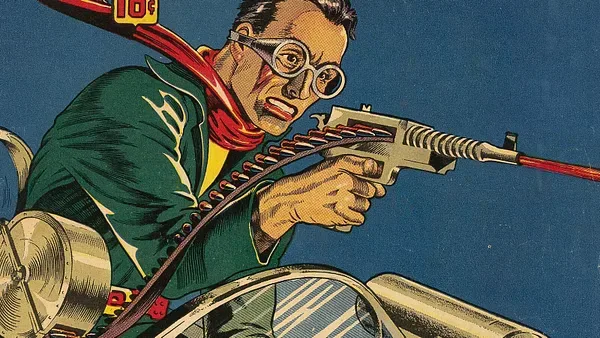
The auction copy is identified with a Mac Raboy Mr. E. cover. Raboy’s name is a central part of the issue’s appeal alongside the Master Key feature and its wartime subject matter. The combination gives the book several distinct points of interest: a named cover artist, a Chesler Golden Age issue, and a story rooted in a major event from the final phase of World War II.
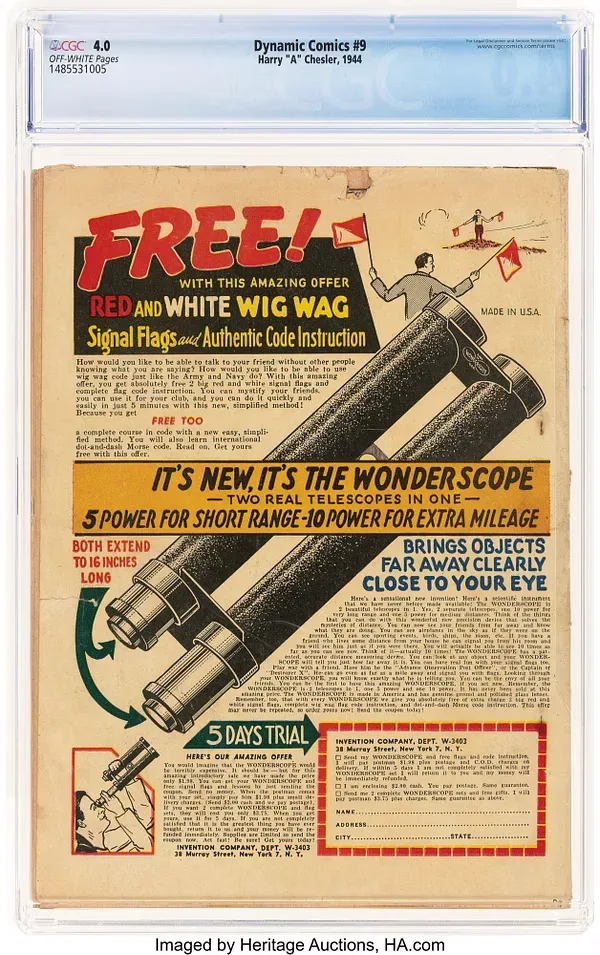
For prospective bidders, the grade language is worth reading precisely. CGC Universal identifies the standard blue-label category used for comics without a qualifying restored, incomplete, or otherwise special-label designation. VG 4.0 means “Very Good” on CGC’s 10-point scale. It is an assessment of the individual copy, not a claim that every surviving copy of the issue is in comparable condition. The listed off-white pages are likewise a description of this particular book’s paper quality.
Scarcity indicators need similarly careful interpretation. Five Universal-graded copies stand above this 4.0 on the CGC census. Of those higher-graded books, only one is reported to have appeared at public auction: a CGC 6.0 copy that sold for $16,800. That earlier result is a documented sale for a higher-graded example, not a promised value or a direct prediction for the 4.0 now being offered.
In other words, the available census and auction information provides context rather than a simple pricing formula. Grade matters, but so do the individual copy, auction participation, cover interest, and demand for the book’s historical subject. Auction observers should separate the confirmed facts—the 4.0 Universal grade, off-white pages, Berk provenance, and the known 6.0 result—from assumptions about where this example will finish.
Why this issue stands out beyond its condition
Many wartime comics used broad patriotic imagery or enemy agents as familiar adventure elements. What makes Dynamic Comics #9 more specific is its reliance on a recognizable diplomatic event that had taken place only months earlier. The conference was real; Hull, Eden, Molotov, and Stalin were real participants; and the questions under discussion included the direction of the war and planning for northern France. The Nazi infiltrator and replacement scheme are the comic’s fictional intervention into that setting.
That specificity gives the issue value as an artifact of its publishing moment. It captures how a 1944 comic could reframe current affairs as fast-moving genre fiction while leaving the underlying stakes recognizable to its readers. Master Key is not sent on a vague overseas assignment. He is sent to Moscow, to a meeting connected with the Allied effort to end the war, where a single compromised official could become a conduit for enemy intelligence.
It is also a reminder that physical-comic collecting combines narrative context with object-specific details. A buyer may be drawn by Raboy’s cover, the Master Key story, the Kremlin setting, or the book’s CGC data. None of those elements erases the others. The offered copy’s appeal lies in their overlap: it is a graded 1944 Golden Age comic with a named cover artist and a plot that directly fictionalizes a pivotal piece of wartime diplomacy.
Collectors weighing older print artifacts may also find a useful parallel in the continued role of physical media across adjacent hobbies. Physical copies remain a significant part of paid console-game play, even as access and ownership habits shift elsewhere. Comics and games are distinct markets, but both underscore why the condition, completeness, history, and survival of a particular physical copy can remain central to collecting discussions.
What is confirmed for the November sale
- Comic: Dynamic Comics #9 (Chesler, 1944).
- Feature: A Master Key adventure in which Ray Cardell protects a State Department representative at a Moscow meeting threatened by Nazi spies.
- Cover: Mac Raboy’s Mr. E. cover.
- Offered copy: From the Jon Berk collection; CGC Universal VG 4.0 with off-white pages.
- Census context: Five CGC Universal copies are graded higher; one higher-graded public-auction appearance is noted, a CGC 6.0 that sold for $16,800.
- Sale timing: November 5, 2026, in Golden Age Century Comics Showcase Auction VI #40378.
For readers interested in the collision of Golden Age adventure storytelling and World War II history, the key appeal is plain: Dynamic Comics #9 preserves a fictional Nazi-spy thriller that was built around the real Moscow Conference and the urgent significance it carried in 1943 and 1944.