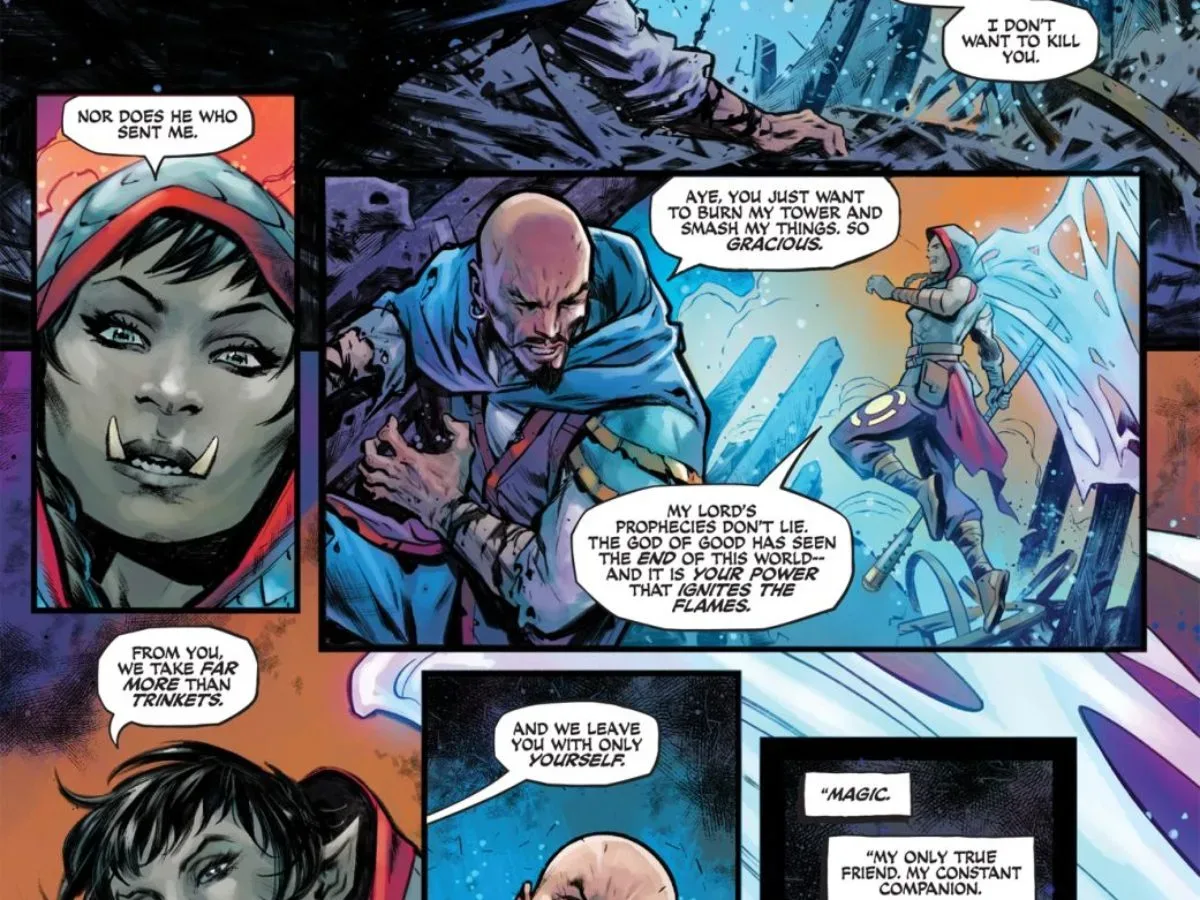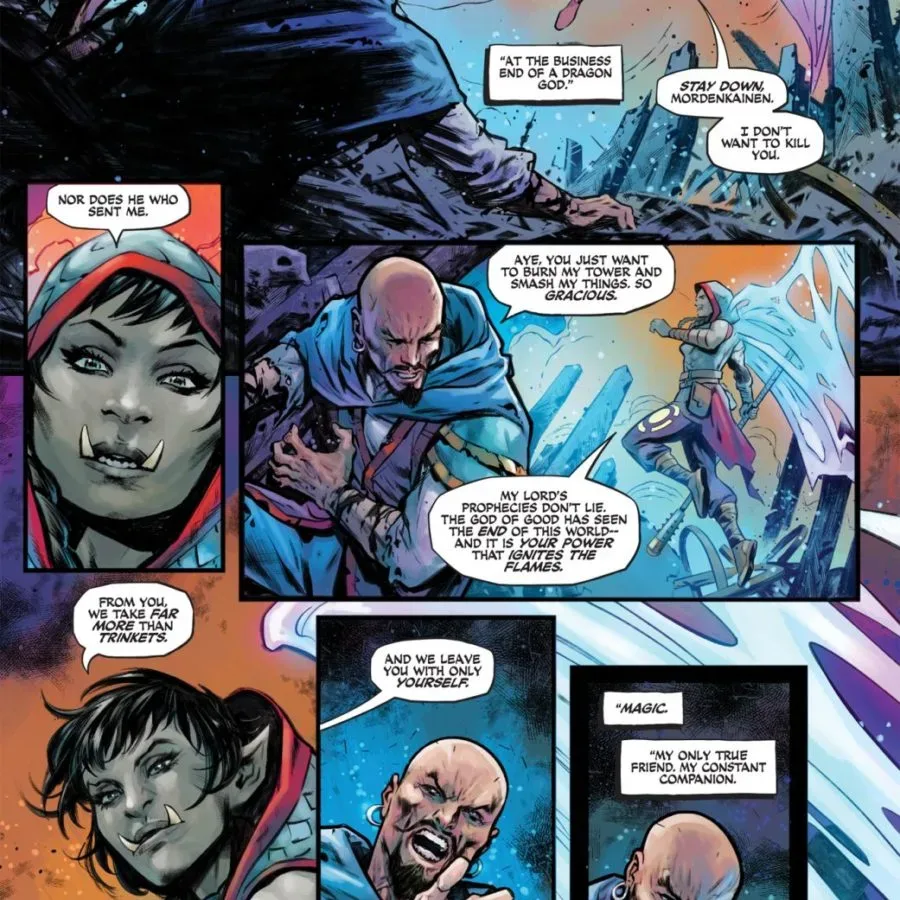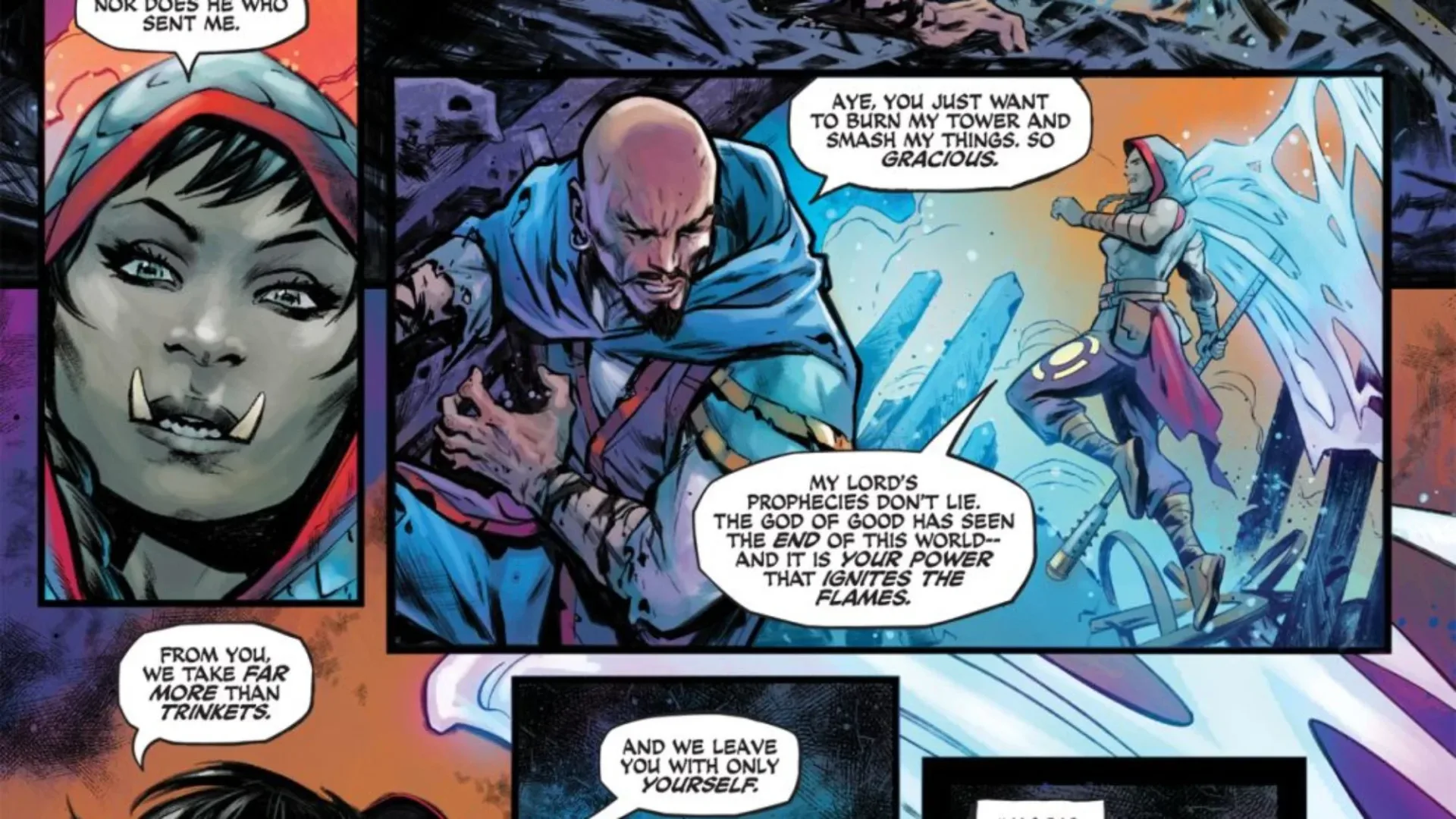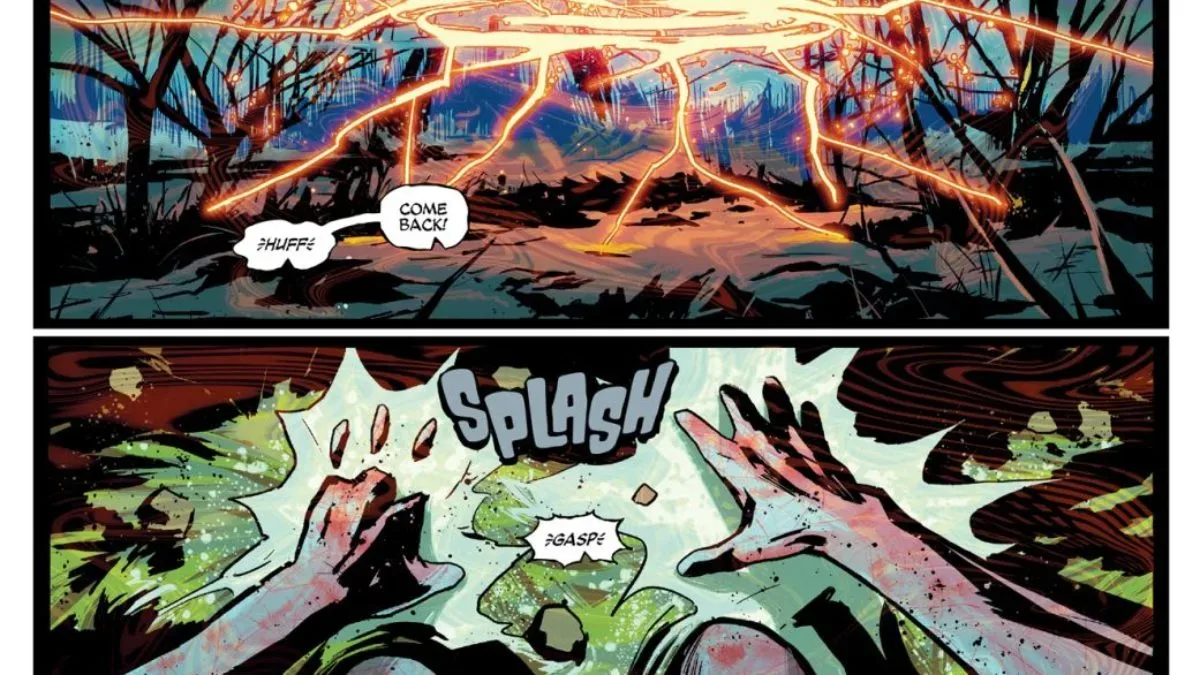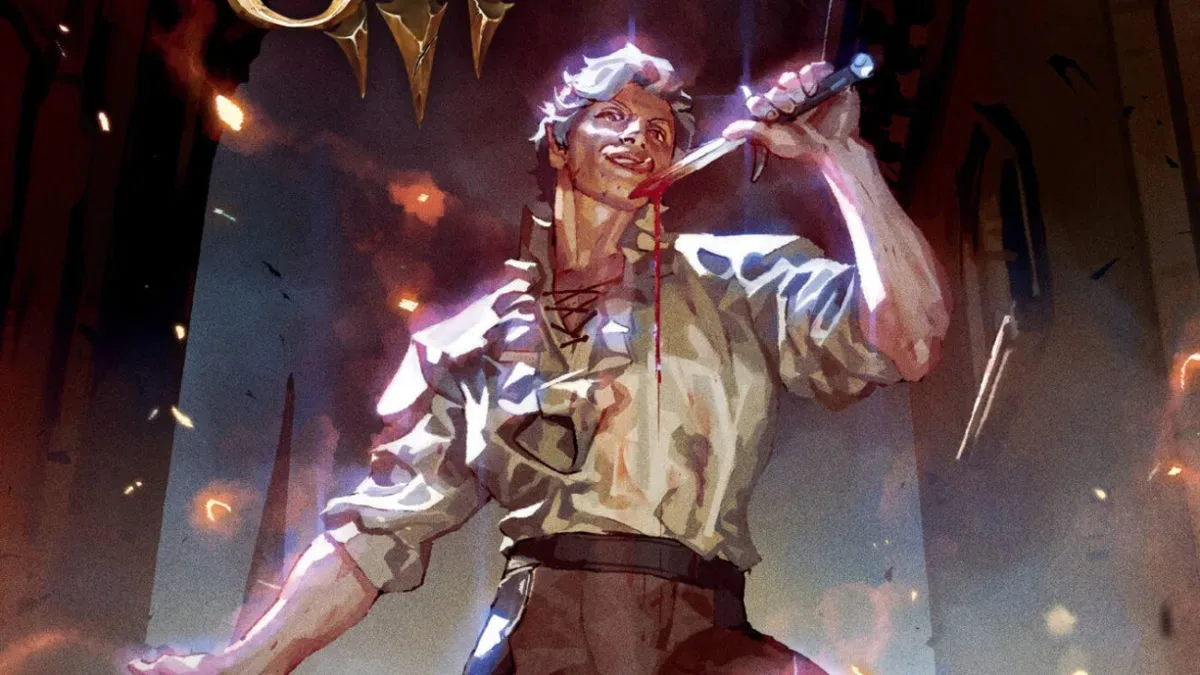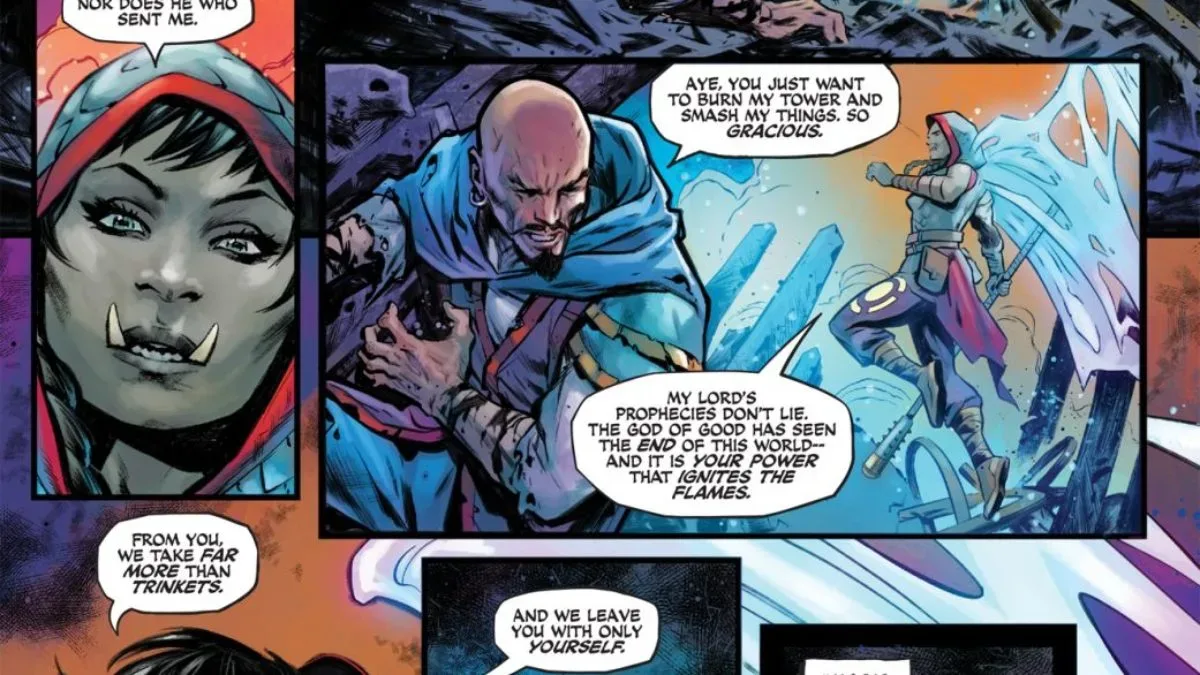
Dungeons & Dragons #1 is set to launch a new ongoing comic series from Dark Horse Comics on November 4, 2026. Its opening premise puts a sharp limitation on one of the setting’s biggest names: Mordenkainen has lost his magic just as a draconic apocalypse bears down on the Forgotten Realms.
The setup is deliberately larger than a routine monster problem. Dragons are not simply an encounter to be cleared by a small party; the threat is presented as a crisis aimed at Mordenkainen himself and capable of upsetting the balance across the world—or worlds—of Dungeons & Dragons. With his usual abilities gone, the wizard must seek out Faerûn’s legendary heroes instead.
That makes the debut issue a story about vulnerability as much as spectacle. A character described as the most powerful wizard in reality starts the series unable to rely on the trait that has long defined him. For readers, that gives the comic a clear entry point even amid the scale of its apocalypse: its central figure has a problem that cannot be solved simply by being the most prepared person in the room.
A flagship D&D comic built around a crisis of power
Jackson Lanzing and Collin Kelly lead the new series, with Ibraim Roberson on the creative team alongside Arabson Oliveira, Dan Brown and Haley Rose-Lyon. Esad Ribić provides the main cover. The book is described as an ongoing rather than a one-shot or limited series, an important distinction for a premise that begins with the Forgotten Realms facing a foundational threat.
An ongoing series is a comic intended to continue beyond a pre-announced, fixed number of issues. That does not reveal how long this particular run will last, but it does suggest that the first issue needs to do two jobs at once: establish the immediate disaster and create a durable framework for more adventures. Mordenkainen’s search for allies offers precisely that kind of framework, since the early story can introduce major figures while the wider dragon danger develops.
The publisher’s description places the action in Faerûn and the Forgotten Realms, two terms that matter for anyone approaching the book from tabletop gaming. Faerûn is the continent where many Dungeons & Dragons stories take place, while the Forgotten Realms is the broader fantasy setting associated with it. In practical terms, the setting label signals a familiar corner of D&D rather than an entirely separate original world.
Mordenkainen’s presence also raises the story’s ceiling immediately. He is characterized here as exceptionally powerful, so removing his magic is not merely an inconvenience. It changes the expected shape of the conflict. A magical solution from a singular archmage is off the table, leaving recruitment, cooperation and strategy as the announced path toward restoring balance.
Why the missing magic matters
Fantasy stories often make power loss useful because it changes the questions a protagonist must answer. A character who normally resolves danger through overwhelming magical capability must instead identify whom to trust, what knowledge still matters, and how to lead when their most obvious advantage has disappeared.
That is the compelling implication of Dungeons & Dragons #1’s premise—not a promised plot point beyond the solicitation, but a natural dramatic consequence of it. Mordenkainen will need legendary heroes, and the story’s stakes are already described in collective terms. The survival of the setting depends less on a lone wizard’s force and more on an alliance responding to a threat no individual can contain.
The “draconic apocalypse” wording should also be read as a statement of scale, not as a detailed description of the dragons’ plan. The available information does not identify the dragon forces, their motive, the specific heroes Mordenkainen will recruit, or the mechanism by which balance will be restored. Those are core mysteries the first issue will need to introduce or preserve. Readers looking for answers should treat the premise as a starting line, not a complete synopsis.
That restraint is especially valuable for a Dungeons & Dragons adaptation. The tabletop game is associated with parties whose players pool distinct talents, and the comic’s premise creates room for a similarly ensemble-driven approach. It does not establish game mechanics or campaign rules for the comic itself, but it does put cooperation at the center of the dramatic situation.
Creative team and format details
Lanzing and Kelly have prior credits including Star Trek, Captain America and NYX. Roberson’s listed work includes Annihilation 2099, Star Wars and Weapon X. Those credits do not tell readers exactly what this D&D series will look or feel like, but they establish a team with experience working in expansive shared universes and high-concept genre stories.
The debut will be a 32-page, Rated T comic with a US cover price of $4.99. Its main edition carries the identifier 76156801658100111. The issue is scheduled to include exclusive backmatter, including essays from RPG personalities and game assets for Dungeons & Dragons campaigns.
Backmatter refers to material that appears after the main comic narrative. In this case, it means the issue is meant to offer something beyond the sequential story itself. The campaign assets are especially notable because they suggest a connection between reading the comic and bringing ideas to a tabletop D&D session. However, no details have been provided about the form, rules content or scope of those assets, so prospective readers should not assume a particular kind of supplement until the issue is available.
Fantasy franchises frequently move between formats, and this kind of bonus material places the comic within that broader cross-media tradition. For another recent look at how established fantasy properties are discussed across entertainment formats, see this report on The Rings of Power’s third season.
Edition and cover choices for comic buyers
Readers who buy physical single issues will have several cover options for Dungeons & Dragons #1. The standard edition is priced at $4.99 in the US and $6.99 in Canada. Tyler Jacobson’s Cover B, Karen Darboe’s Cover D and Mateus Manhanini’s Cover E carry the same listed prices.
Antonino José Manzanedo’s Cover C is a foil edition, listed at $6.99 US and $9.50 Canadian. A foil cover uses a reflective material treatment, distinguishing it physically from a conventional printed cover. The publisher is also promoting dragon foil variants across the series, with one open-order dragon foil variant per issue.
The phrase open order generally means retailers can order copies without needing to meet a stated ratio-based threshold. That differs from the listed Eric Canete Cover F, marked 1:25. A 1:25 incentive variant is a retailer-ordering ratio: the designation indicates that a retailer’s eligibility to order one copy is connected to ordering 25 copies of the qualifying edition. Its listed cover price remains $4.99 US and $6.99 Canadian, but the ratio designation is relevant to how easily shops may be able to stock it.
None of these edition details establish future rarity or value. They do, however, give readers a practical choice. Those interested chiefly in the new story can select the standard edition. Buyers with a preference for a particular artist can seek the matching cover, while anyone drawn to the reflective finish can choose Manzanedo’s foil version. Readers looking for the Canete incentive edition should ask a local comic shop about availability and ordering policies rather than presuming it will be stocked in the same quantities as open-order covers.
What to watch for in the first issue
The important unanswered questions are built into the premise. Why has Mordenkainen lost his magic? What does “restore the balance” demand? Which legendary heroes will answer his call? And how directly are the dragons tied to the crisis bearing his name? The solicitation confirms the ingredients, but the first issue will determine the story’s personality, its supporting cast and the immediate consequences of the apocalypse.
For Dungeons & Dragons readers, the appeal is straightforward: a new ongoing set in the Forgotten Realms, structured around a well-known wizard at his least secure, with dragons positioned as a world-threatening force. For comic readers unfamiliar with every piece of D&D lore, the hook is equally accessible. An immensely capable figure has been stripped of his defining resource, and the only way forward is to build a team before the danger becomes irreversible.
Dungeons & Dragons #1 goes on sale November 4, 2026. Alongside the standard issue, readers can choose from covers by Tyler Jacobson, Antonino José Manzanedo, Karen Darboe, Mateus Manhanini and Eric Canete.