Dark Horse’s February 2027 comic-book lineup is led by three very different new series: an ongoing Baldur’s Gate III book starring Astarion Ancunín, the time-traveling Barbie: Together in Time, and Blue Eye Samurai: Cry of the Yurei, a four-issue Mizu prequel. It is a notably broad month even by licensed-comics standards: murder mystery in Waterdeep, a supercollider mishap, historical fantasy, paranormal investigation, cyberpunk noir and a substantial run of finales all share space on the schedule.
The headline releases are all priced at $4.99 for 32 pages, but their formats and intended audiences are meaningfully different. The practical takeaway for readers is that February has several genuine starting points rather than merely another month dominated by middle chapters. That matters in serialized comics: issue ones are the clearest opportunity to try a property without doing continuity homework, while endings are the natural moment for readers who prefer to wait for a complete story.
Astarion moves from Baldur’s Gate III to Waterdeep
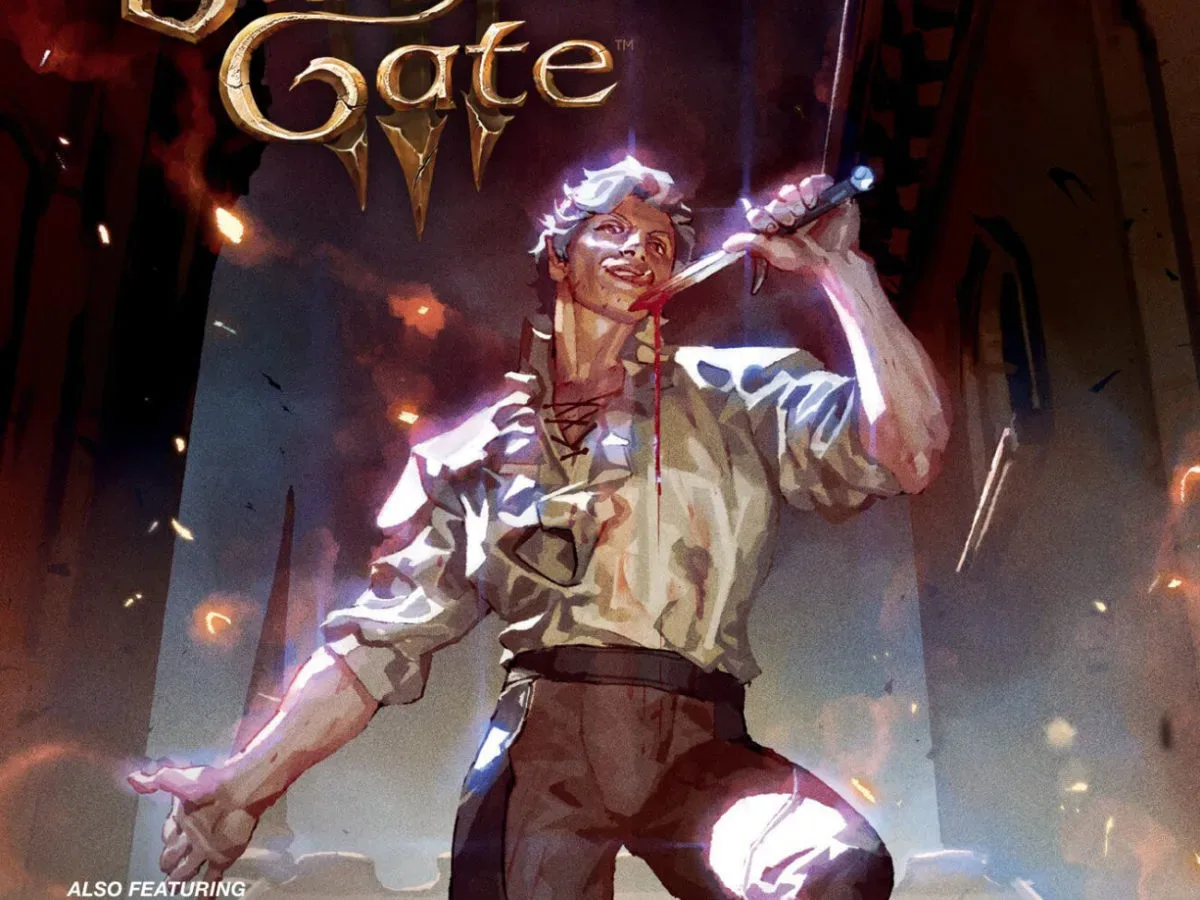
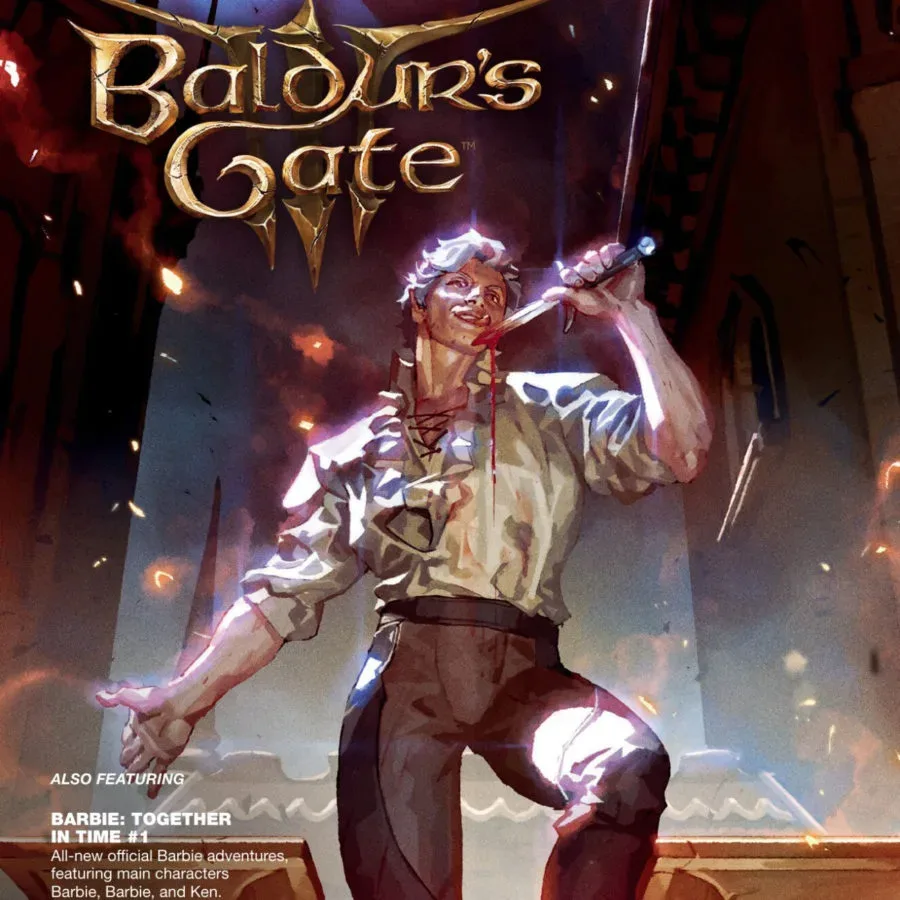
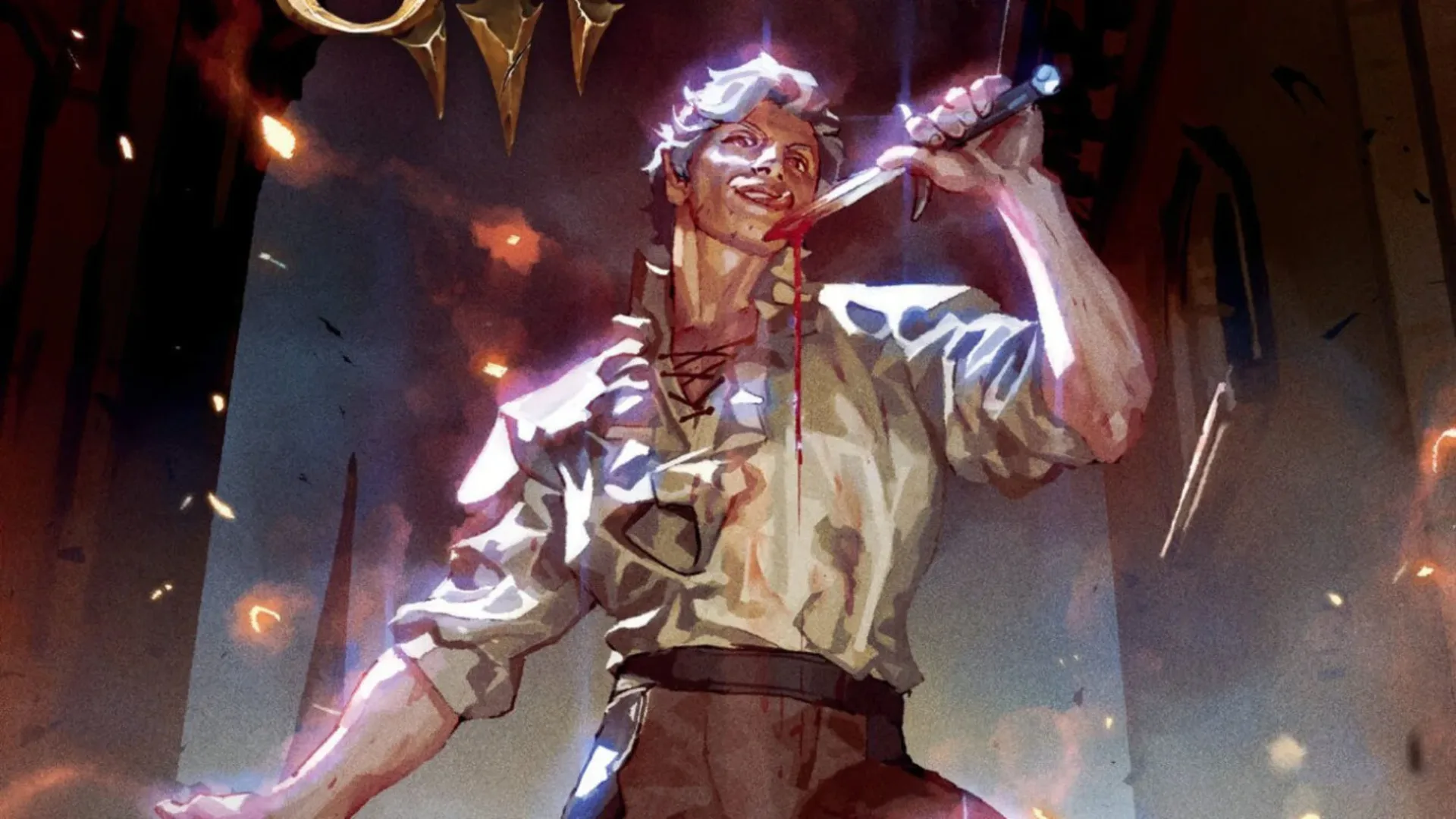
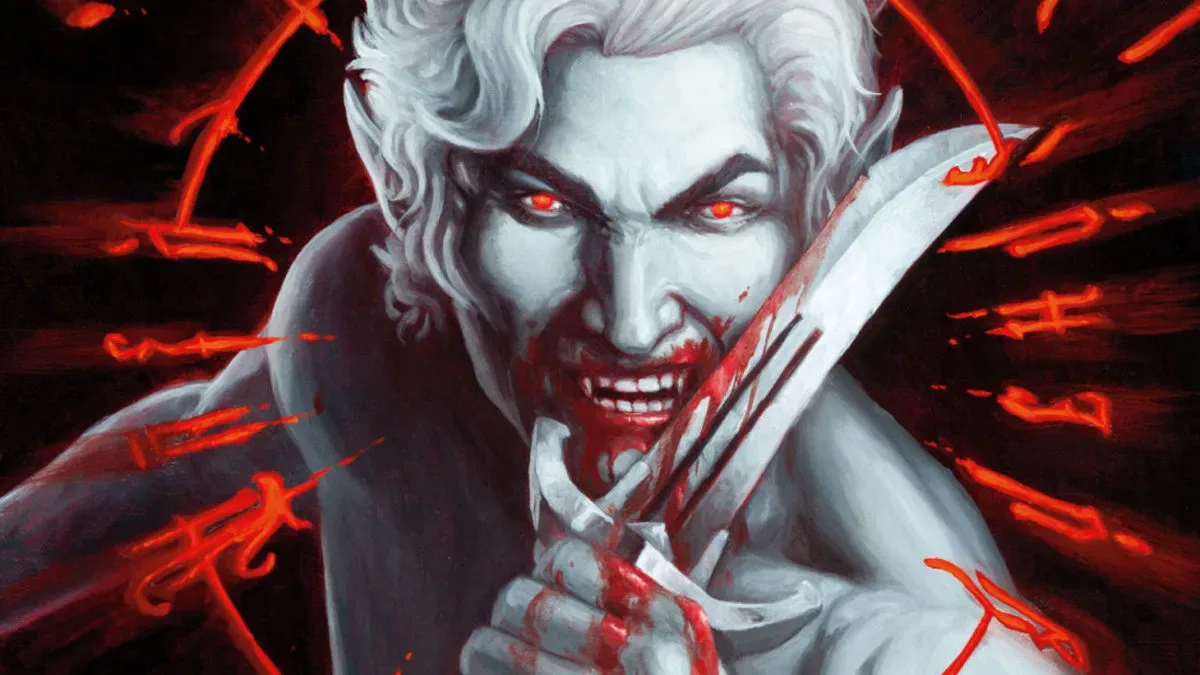
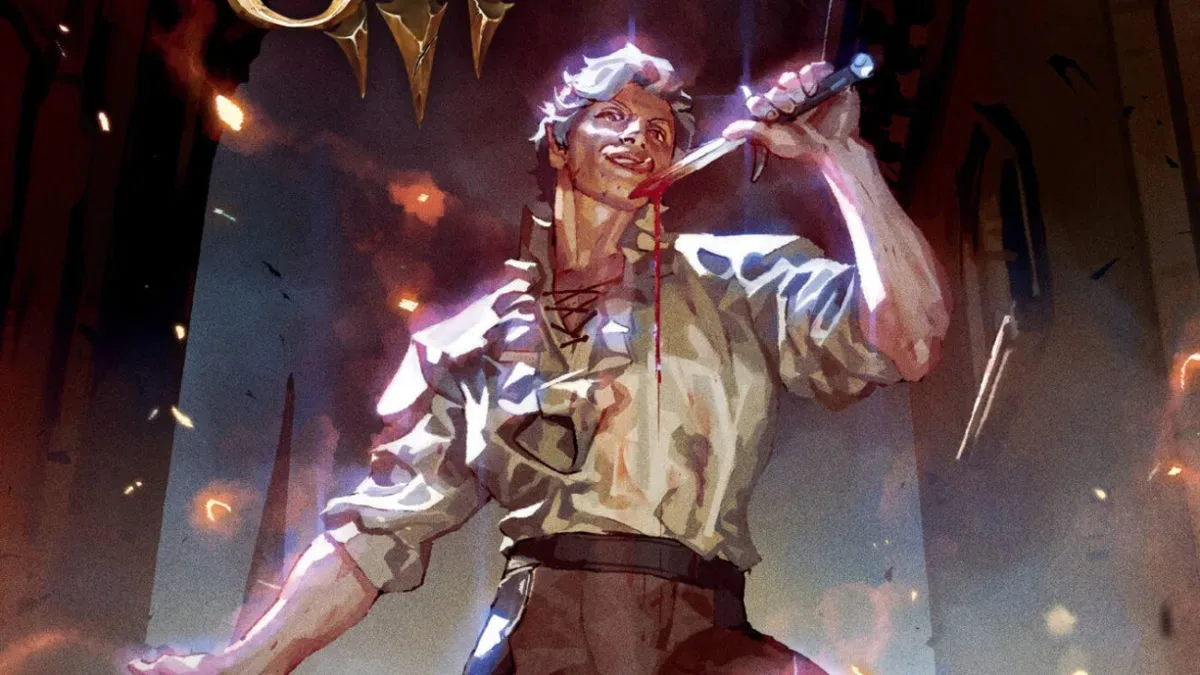
Baldur’s Gate III #1 arrives February 24, 2027, and begins an ongoing comic series written by Alyssa Wong, with art by Vincenzo Carratù and Elisabetta D’Amico. Its premise follows Astarion after his escape from Cazador Szarr. Ritual murders are shaking Waterdeep, and Astarion is drawn into the case before he becomes prey himself.
The shift in location is important. Although both places belong to the Forgotten Realms setting, the story is positioned in Waterdeep rather than simply retelling events from the game. That gives the comic room to build a fresh crime story around one of the game’s characters, with a clear hook that does not depend on recreating the player’s own campaign choices. The series is described as accessible for newcomers as well as game fans, which suggests the murder investigation will function as its entry point.
In tabletop and fantasy terminology, Astarion is a vampire spawn: a vampire-bound undead figure rather than an ordinary mortal adventurer. The solicitation’s “hunter becomes hunted” framing makes that status more than a character label. It puts his freedom and survival at the center of a supernatural thriller rather than treating him as a guest in a generic fantasy quest.
Collectors and cover readers will have several options for the debut: covers are credited to Gerald Parel, Scott Fischer, Tyler Walpole and Angela Wu, alongside a blank “Character Creation” edition. A blank cover is designed to be drawn on, commonly by artists at signings or conventions; it is not a story variant and should not be mistaken for additional narrative material.
February also includes Dungeons & Dragons #3, due the same day. Jackson Lanzing and Collin Kelly write, with Ibraim Roberson and Arabson Oliveira on art. Mordenkainen’s party faces Black Viper, an agent of Xanathar attempting to return Volo to Waterdeep, while Drizzt Do’Urden confronts the threat. The issue additionally promises the comic debut of an unspecified Baldur’s Gate III favorite. That creates a possible point of overlap between two D&D books, but the available details do not identify the character or establish a crossover.
For readers who want a standalone D&D package later, Dungeons & Dragons: Total Party Killers collects its first four issues on March 23 for $19.99. Its adventuring party is made of monsters: Tilli the lycanthrope rogue, Mucus Cubus the gelatinous-cube wizard, Strago the undead paladin, Q’Laxx the mind flayer, and Looksy the baby beholder. That is a distinct premise from the Astarion series, and a useful reminder that the February schedule is adding multiple routes into the Forgotten Realms rather than one unified reading order.
Barbie’s new ongoing turns a science accident into a time chase
Barbie: Together in Time #1 launches February 10. Ben Kahn writes, Natalie Nardozza supplies the art, Heather Breckel handles colors and Frank Cvetkovic letters the series. Ken wanders into a supercollider test after feeling brushed off during a visit to Barbie’s science internship, then vanishes. Barbie and Barbie, guided by Dr. von Science, have to trace and collect his scattered time energy from different eras to return him to the present.
A supercollider is a machine that accelerates particles and directs them into collisions for scientific study. Here, it is a fictional story device that explains the time-displacement problem; the listing does not claim a real-world scientific mechanism for time travel. What is clear is the issue-to-issue structure: each chapter visits another era and spotlights a historical Barbie doll on its back cover.
That makes the series an ongoing adventure with a built-in educational or reference-oriented feature, rather than a one-off comic tied only to a current toy release. It also gives the series a predictable rhythm: the main plot can move Ken’s rescue forward while each setting offers a different period-specific lens. Covers are credited to Bowen McCurdy, Laia López, Paulina Ganucheau and Gretel Lusky, with a blank sketch edition also planned.
Blue Eye Samurai goes backward for Mizu’s new story
Blue Eye Samurai: Cry of the Yurei #1 reaches shelves February 3. The four-issue limited series is written by K. Perkins and Mike Johnson, illustrated by Aviv Or, and developed in consultation with the show’s creators. It explores an earlier episode in Mizu’s life: after Daisuke discovers both her gender and mixed-race identity, she escapes into the woods and encounters Sachiko, a wronged housemaid.
The distinction between a prequel and a continuation is useful here. A prequel tells events set before an existing story, potentially expanding a character’s motivations and history without advancing the original story’s present timeline. In this case, the book is explicitly presented as backstory, so prospective readers should set expectations accordingly. The central question is not what happens after the show’s established events, but how Mizu and Sachiko might overcome fear and suspicion while Daisuke pursues them.
David Mack, Ito and Angela Wu are credited on covers, with a 1:15 Angela Wu incentive variant and a blank sketch version. “1:15” denotes an incentive ratio: one copy of that cover is generally made available to retailers for every 15 qualifying copies ordered. It is a distribution designation, not an indication that the variant contains a different story.
Mignola worlds, Black Hammer and a packed finale list
February offers several familiar-universe entry points beyond the three headline launches. B.P.R.D.: Declassified #1 begins a five-issue supernatural investigation on February 17. Mike Mignola and Chris Roberson write, Mike Norton provides art, and Dave Stewart colors. Agents Susan Xiang and Victor Koestler travel to Honolulu in search of missing aerospace engineer Henry Rouch, whose disappearance is connected to classified work and troubling supernatural circumstances.
The same date brings the final issue of Ghost of a Ghost, where captured superspy agent Jian faces Dr. Szasz, and Canto: The Clockwork Chronicles #3, in which Canto and Lokanar race toward a cure for Mico while the Mechanical Sea turns hostile. Hellboy in Hell: Parade of Horrors #2 ends February 10, while the final chapter of Groo: The Prophecy arrives February 3.
For Black Hammer readers, the February 10 facsimile of Black Hammer #1 reproduces the original issue’s design, advertisements and backup material. A facsimile is meant to recreate an earlier single issue’s original presentation, rather than simply reprint the story in a modern collection format. The release is timed with the tenth anniversary of Black Hammer and precedes Black Hammer Forever, an upcoming ongoing series described as a reset with new characters.
Other series reach key endpoints throughout the month. Arrivals #3 is a 40-page, $6.99 finale on February 3; The Big Shakedown #4 concludes February 10; and The Smart Division #5 ends February 17 as Stevie and William trace an AI crime app to its origin. February 3 also closes Starcrossed, while Dungeons & Dragons: Ravenloft #4 completes its four-issue run February 10.
The continuing-book side includes Cyberpunk 2077: Jayk’s Case #3, Magic: The Gathering: Untold Stories—Liliana #3, Masters of the Universe: Genesis #5, Vampire Hunter D: Fortress of Blood #2, Six of Us #4, Space Usagi: Warrior #2 and two February issues from the Minor Threats line. The combined effect is a schedule that serves ongoing readers without leaving every franchise inaccessible to a newcomer.
Books beyond the February single issues
The catalog also lays out several collected editions and books coming in March and later. These are not February releases, but they help map where current stories are headed in print. Operation Fulcrum Dawn: Introductory Narrative Modules for Lancer arrives March 16 for $29.99. It contains two structured missions designed to teach the sci-fi tabletop roleplaying game Lancer, each with six combat scenes and illustrated tactical maps, plus player options including mechs, talents and gear.
For newcomers to tabletop RPG language, a Game Master, or GM, is the player who runs the scenario and adjudicates the world and rules. A narrative module is a prepared adventure framework rather than a complete standalone game system. The companion Lancer: Setting Guide Volume 1, out March 30 for $29.99, collects the Karrakin Trade Baronies and The Long Rim expansions in print and adds systems for maps, characters and campaign play.
Among comic collections, March includes a 616-page Birdking Library Edition for $79.99, Paul Chadwick’s Concrete: Stars Over Sand, the second edition of The Goon Library Edition Volume 1, and the 712-page Lone Wolf and Cub Deluxe Edition Volume 4. The latter preserves right-to-left reading order and collects material from volumes 8 through 10. Those format notes matter: deluxe and library editions emphasize durable, oversized or archival-style presentations, whereas compact editions prioritize smaller dimensions and portability.
That latter approach is represented by The Witcher Compact Edition: The Bear and the Butterfly and The Ballad of Two Wolves, due May 25 for $9.99. It collects eight issues across two stories in a 5.5-by-8.5-inch format. Elsewhere, Minecraft: Heart of Cobblestone Volume 3 brings Cobb, Flint and Rochelle to a Stonegate City spleef tournament on March 16. Spleef is described here as the Overworld’s most popular sport, setting up a competition story with Flint’s rival Steel and an alleged scandal.
February’s most notable theme is therefore not one shared crossover, but range. Astarion’s Waterdeep mystery, Barbie’s period-hopping rescue mission and Mizu’s earlier hardship are three sharply separated approaches to licensed storytelling. Alongside them are original and returning series at both beginnings and endings, plus collections and roleplaying books for readers who want a different format entirely.
For more comic-book discussion around major character universes, see our look at Clayface’s DCU timeline and the bigger Batman question.