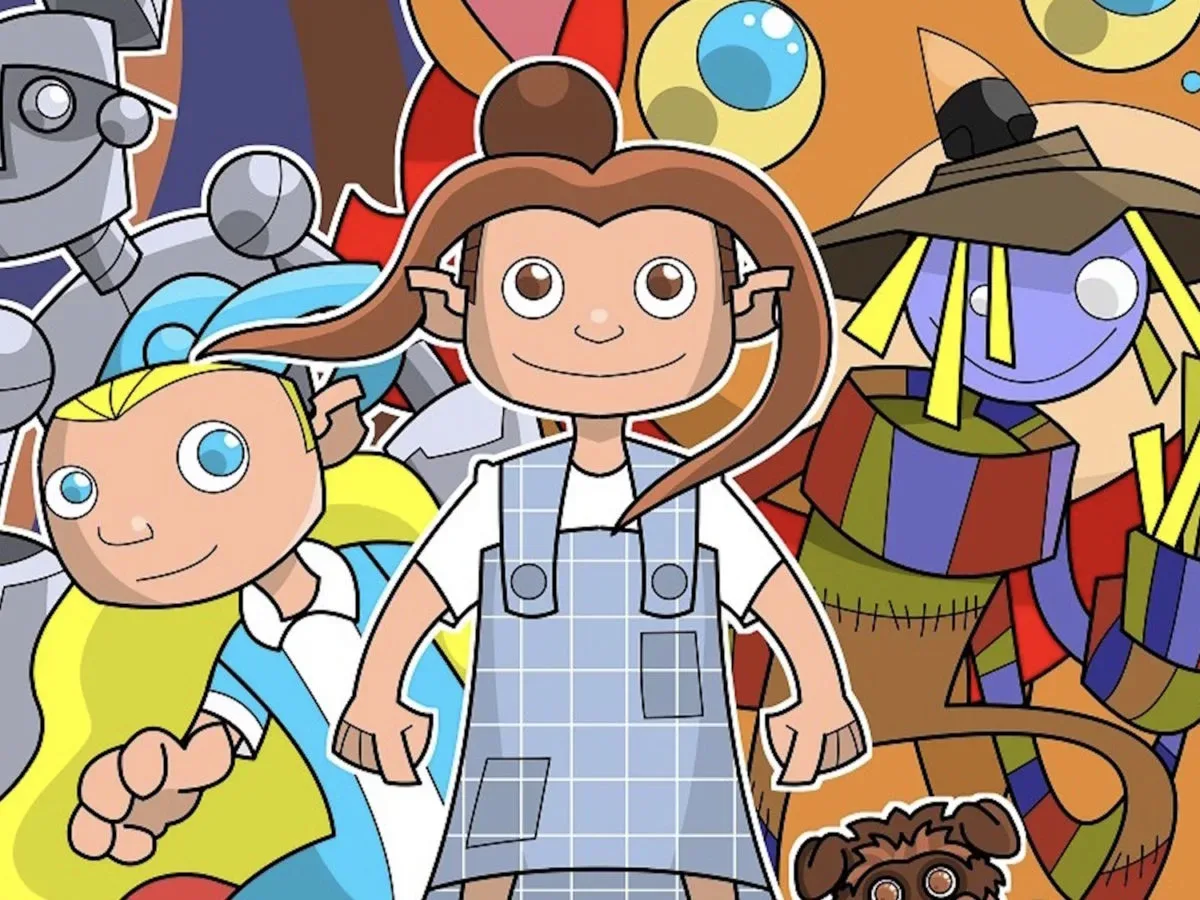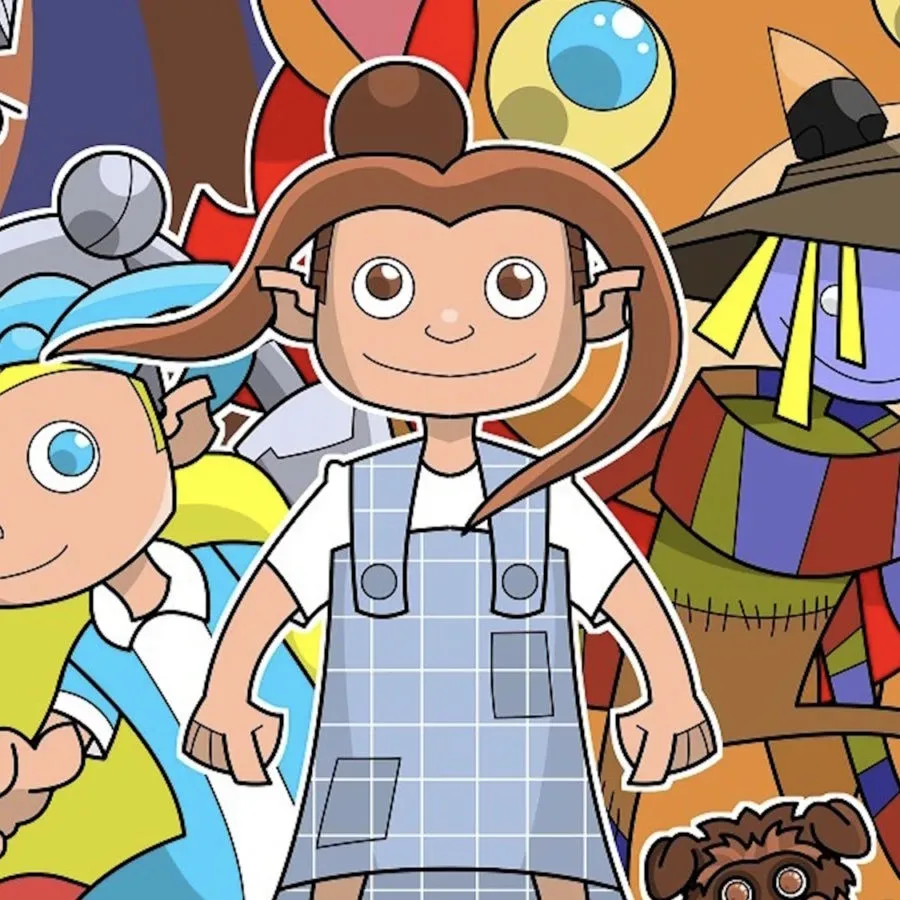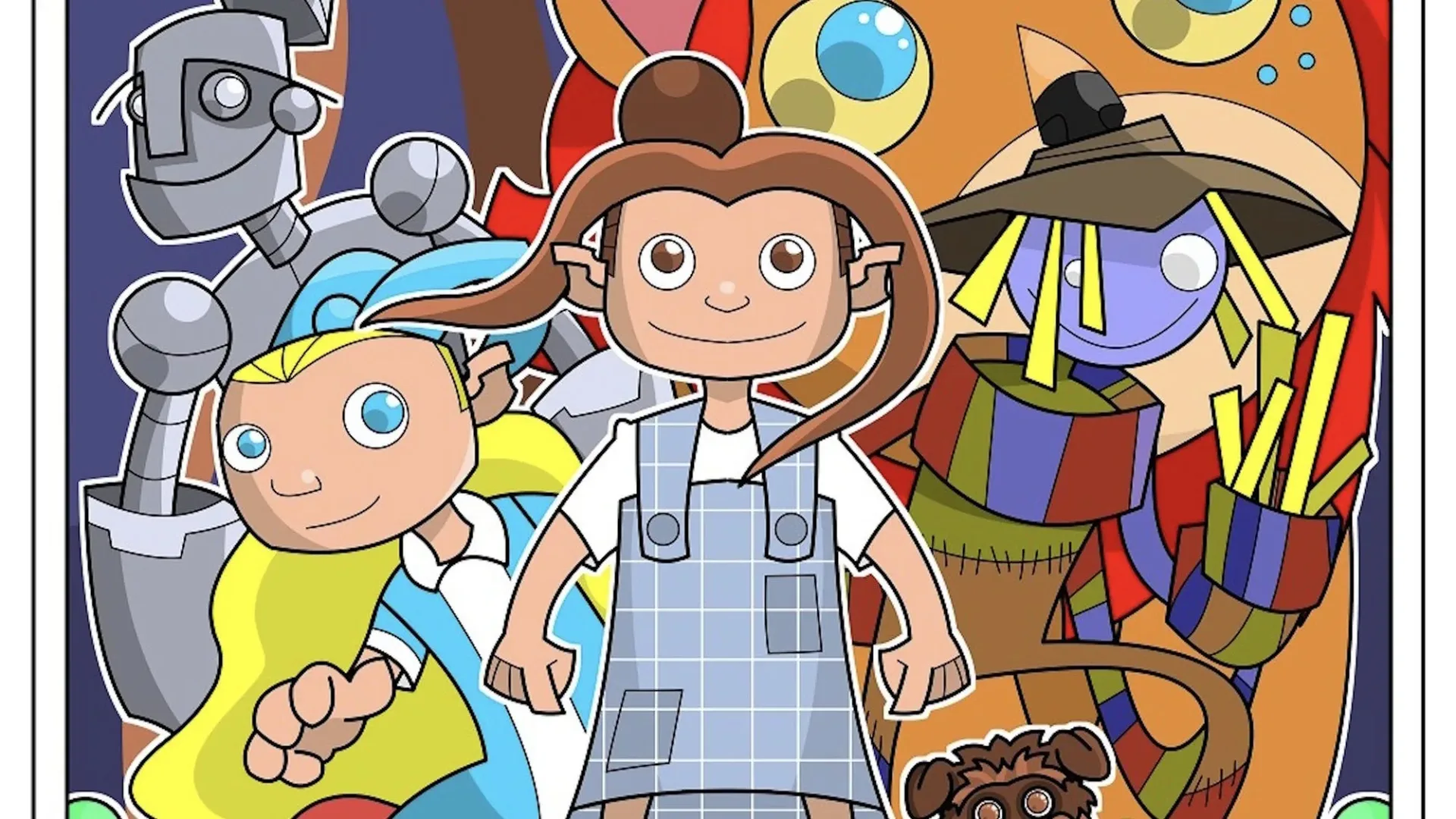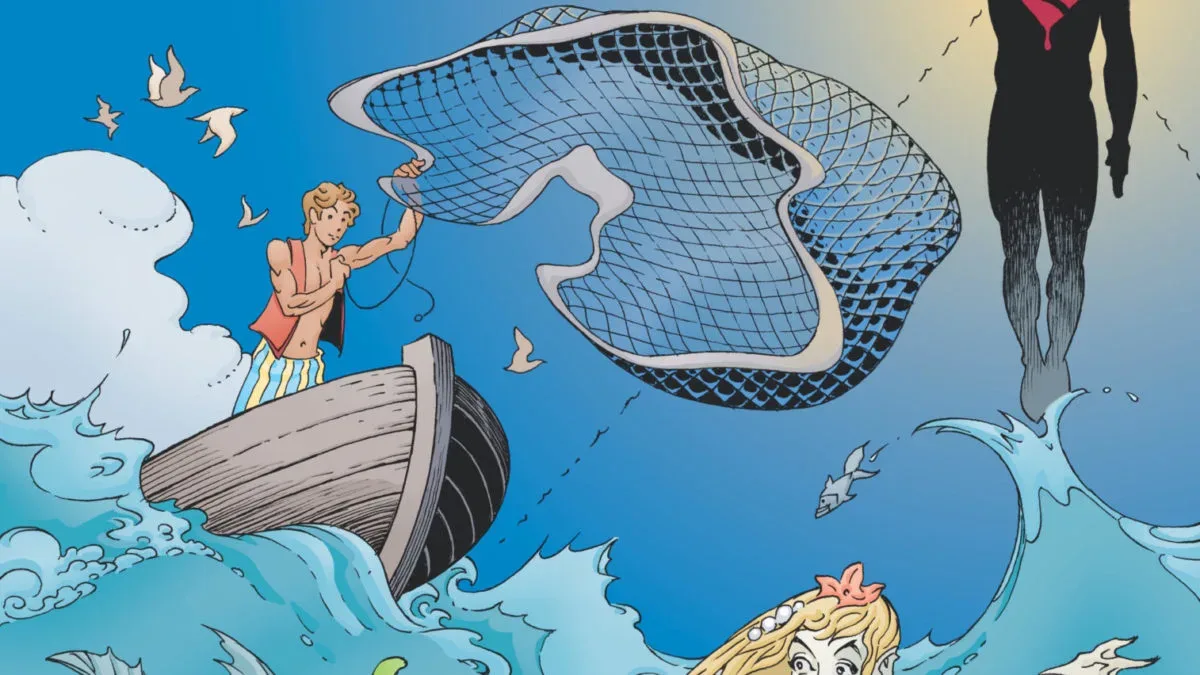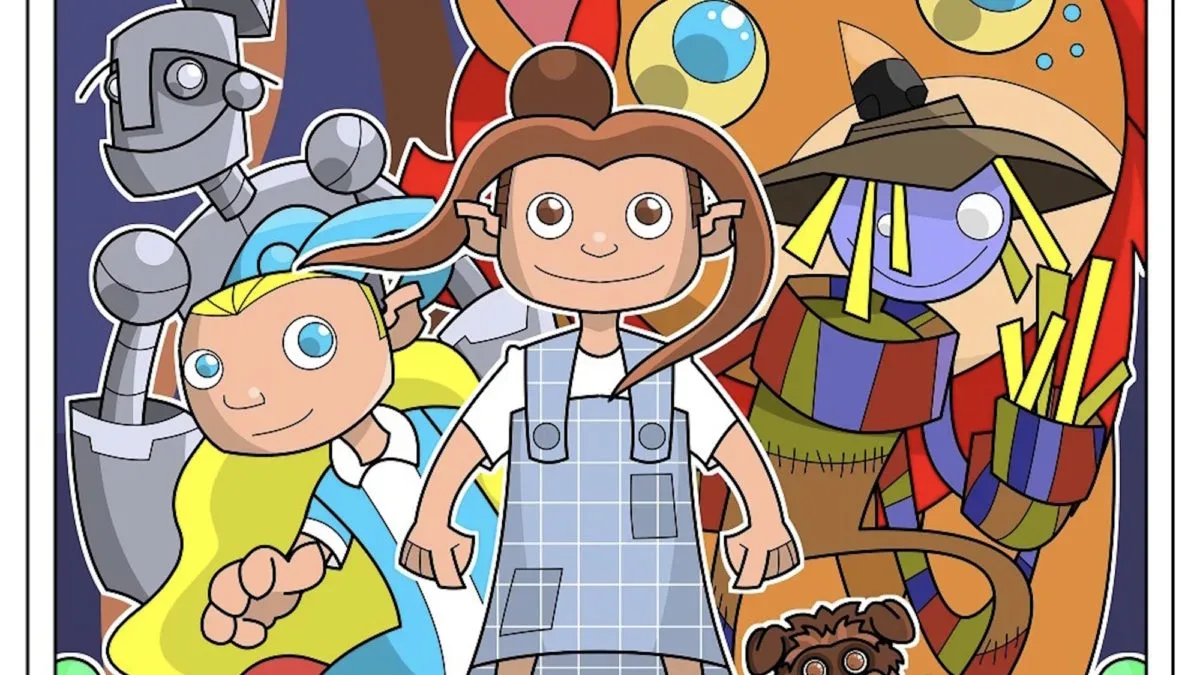
Two landmark fantasy settings are sharing a page in Dorothy and Alice: The Green Looking Glass, a forthcoming all-ages graphic novel by British artist and writer Grant Perkins. The full-colour project brings Dorothy of Oz and Alice of Wonderland together for a 50-page, A4-format hardcover adventure, with every part of the story written in rhyme.
The book is currently being crowdfunded through Kickstarter and is positioned as a picture-book-style comic for readers of all ages. Its crossover cast includes Dorothy and Alice alongside the Tin Man, Lion, Scarecrow, a Witch, a Queen, the Tweedles and the Mad Hatter, with a tea party and the kind of escalating trouble that fits both of its fantastical inspirations.
Perkins says the artwork and text are complete, making printing the central remaining objective of the campaign. As reported during the campaign, it had raised $614 from 14 backers toward a $933 goal, with the campaign scheduled to end on October 30, 2026. Crowdfunding totals and campaign status can change before a project closes, so prospective backers should consult the campaign page for its current position and terms.
A crossover built for strange worlds
Oz and Wonderland make a natural pairing on a basic storytelling level: both are places where an ordinary young protagonist enters a heightened, unpredictable world and encounters a procession of eccentric companions, rulers and dangers. The Green Looking Glass makes that overlap literal, giving Dorothy and Alice the same adventure rather than merely drawing inspiration from both traditions.
The available description does not establish a detailed plot, so it would be premature to assume how the two worlds connect or which familiar character drives the conflict. What is clear is that Perkins is building the book around a large ensemble. Dorothy’s travelling companions—the Tin Man, Lion and Scarecrow—sit beside Wonderland fixtures including the Queen, Tweedles and Hatter. That provides a broad visual and comedic palette for a compact, 50-page format.
The title itself combines imagery associated with both settings. “Green” immediately recalls Oz, while “looking glass” is inseparable from Alice’s second major adventure. It signals a mash-up rather than a retelling limited to either one world.
What an entirely rhyming comic means
A comic told entirely in rhyme is more than a story with occasional verse. The dialogue, narration and page-to-page movement must all work within a recurring sound and rhythm pattern while still leaving room for clear visual storytelling. In prose comics, a line can simply explain a turn in the action. In a rhyming comic, it also has to lead naturally to its paired sound, avoid feeling forced, and remain readable in a speech balloon or caption.
That approach can be especially suited to a book described as a classic picture-book adventure with a modern comics sensibility. Rhyme creates a read-aloud quality, while comics use sequential art—images arranged so readers interpret motion, timing and cause between panels—to keep the narrative moving. The form may offer different entry points for a shared reading experience: one reader can enjoy the cadence aloud, while another follows character expressions, staging and colour.
Rhyming comics are comparatively uncommon, though the technique has a notable lineage. The supplied background points to verse work involving Etrigan the Demon, Wordburglar, The Bishop and the Actress, The Sage in Groo, and The Bojeffries Saga, as well as rhyming material in V for Vendetta and Songbook. Perkins’ project takes the device in a distinctly younger-skewing direction: a complete, colourful hardcover adventure centered on two widely recognized children’s-story heroines.
Perkins moves from established comics work to an all-ages hardcover
Perkins has previously drawn work connected with 2000 AD, Titan Comics, WWE, Doctor Who and The Toxic Avenger. That background covers properties with very different tones and visual demands, while Dorothy and Alice: The Green Looking Glass is presented as a personal project shaped by long-standing affection for both Oz and Wonderland.
“Alice in Wonderland and The Wizard of Oz have been two of my favourite stories for as long as I can remember,” Perkins said. “I’ve always loved these characters, these strange worlds and the wonderful sense that absolutely anything could happen.”
That emphasis on possibility is important to the project’s premise. Neither setting needs a conventional realism to function; impossible rules, sudden changes in scale, unusual creatures and nonsensical social rituals are part of the appeal. Combining them gives the book permission to be playful, though a 50-page story will still need enough structure to make the crossover feel like a complete adventure rather than a sequence of recognizable cameos.
For readers and parents, the hardcover designation and A4 page size are practical points as well as format labels. A4 is a larger page format than many standard comic books, potentially giving a full-colour art-heavy story more space for character groups and expressive scenes. The actual reading experience, print quality and final presentation remain matters for the finished book, but the announced format suggests that the visual component is intended to carry equal weight with the verse.
Why the project’s campaign stage matters
Kickstarter is a crowdfunding platform: supporters pledge toward a project’s funding target before its production is completed. In this case, Perkins has said that the art and writing are finished and that printing is the outstanding need. That is a materially different stage from a campaign seeking funds to begin making a book, but it does not eliminate the usual need for prospective backers to read the campaign details carefully, including any delivery information and conditions set by the creator.
The stated target of $933 is modest for a full-colour hardcover print project, and the reported $614 total put the campaign within reach at the time of the update. The figures are best understood as a snapshot, not a guarantee of funding or delivery. A reader interested chiefly in the creative work can nevertheless take one useful point from the project’s progress: the full comic is described as already made, rather than being a proposal without completed pages.
There is also a broader pop-culture appeal in seeing classic literary figures reinterpreted in new forms. That process is different from a direct adaptation: this book is a crossover that creates a new meeting between established characters and worlds. Readers looking for more entertainment-world news can also find coverage of David Harbour’s Avengers: Doomsday comments.
An all-ages pitch with a specific creative hook
“All ages” can be an imprecise label, but the disclosed ingredients give it some meaning here. The story has two young heroic leads, familiar fantastical supporting characters, full colour, rhyme and a hardcover picture-book presentation. At the same time, the comics format and the collision of two major fantasy traditions may offer an additional layer for older readers who know the source worlds.
Perkins’ central hook is therefore unusually easy to describe: Oz meets Wonderland, and the entire comic rhymes. Whether that combination lands will depend on the final balance of meter, jokes, pacing and artwork, none of which can be fully judged from a campaign description alone. But it is a clear creative proposition, and one with a finished manuscript and art package behind it.
Dorothy and Alice: The Green Looking Glass is slated as a 50-page, full-colour A4 hardcover. Its Kickstarter campaign is set to run through October 30, 2026.