DC is revisiting the opening chapter of Watchmen with DC W.I.P.: Watchmen #1, a facsimile-format release scheduled for comic shops on September 23, 2026. Credited to writer Alan Moore and artist Dave Gibbons, the issue is positioned as part of the series’ 40th-anniversary celebration.
The key word is facsimile. In comics publishing, a facsimile edition is intended to reproduce an earlier comic in a form that closely recalls its original issue presentation, rather than reframing it as a new adaptation, sequel, or revised edition. For readers who want to approach Watchmen one chapter at a time, that format puts the focus squarely on the initial installment and its original storytelling rhythm.
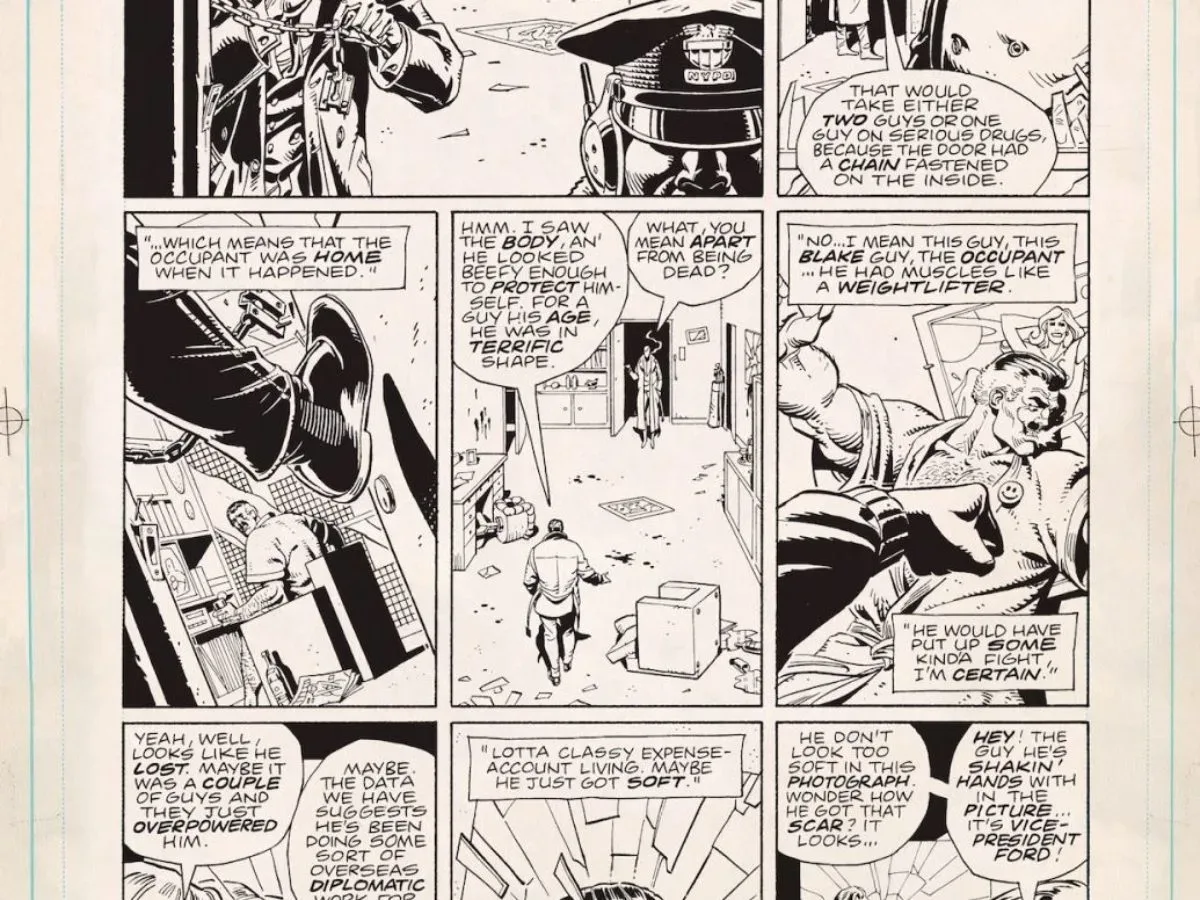
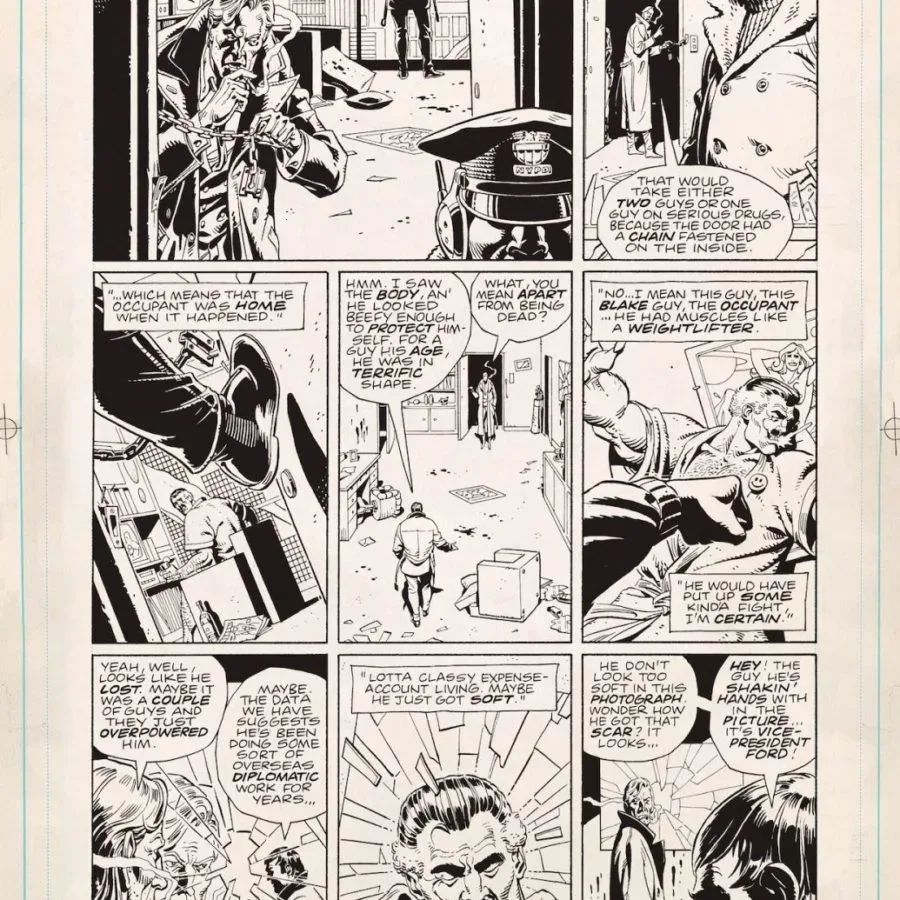
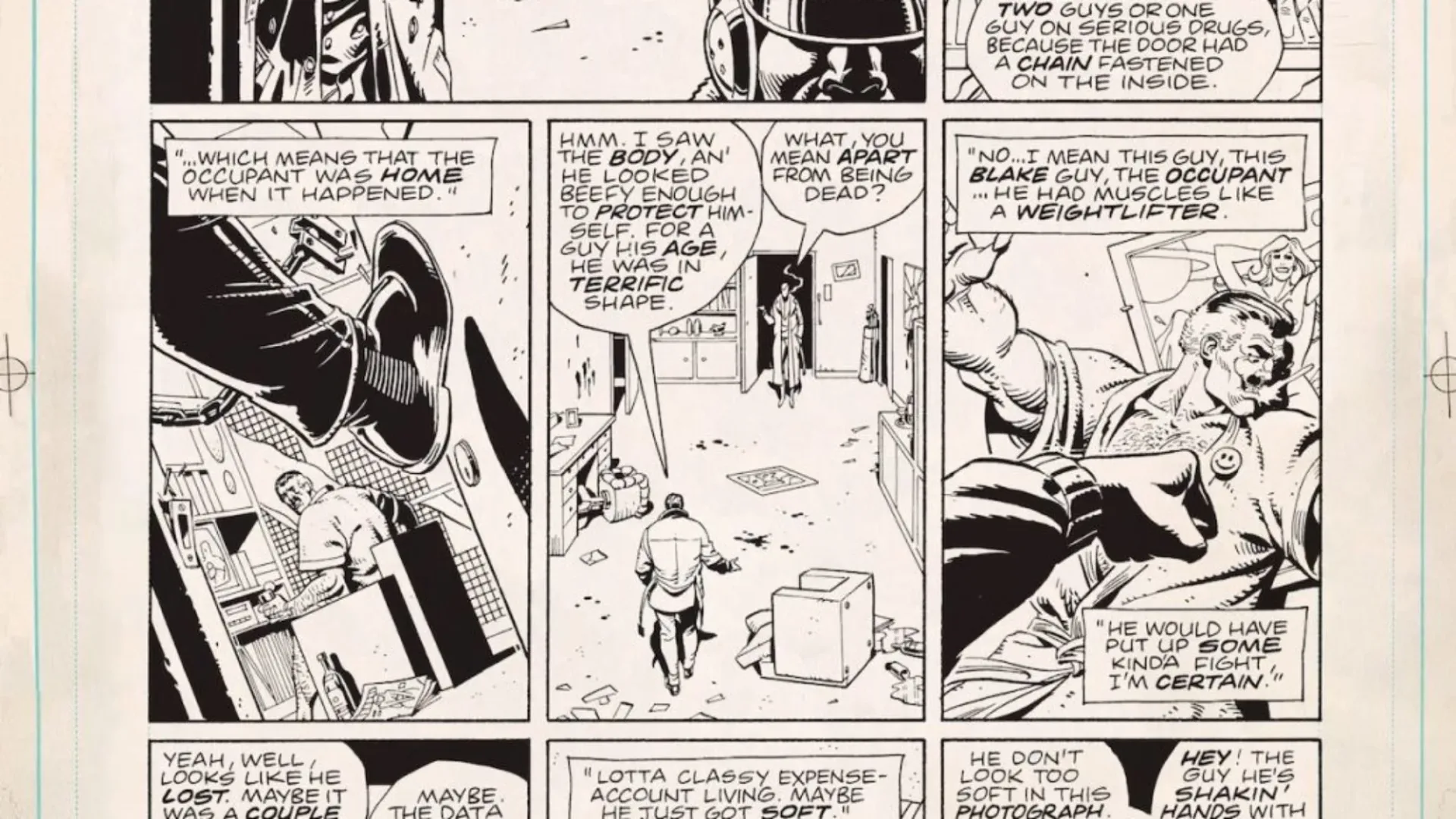
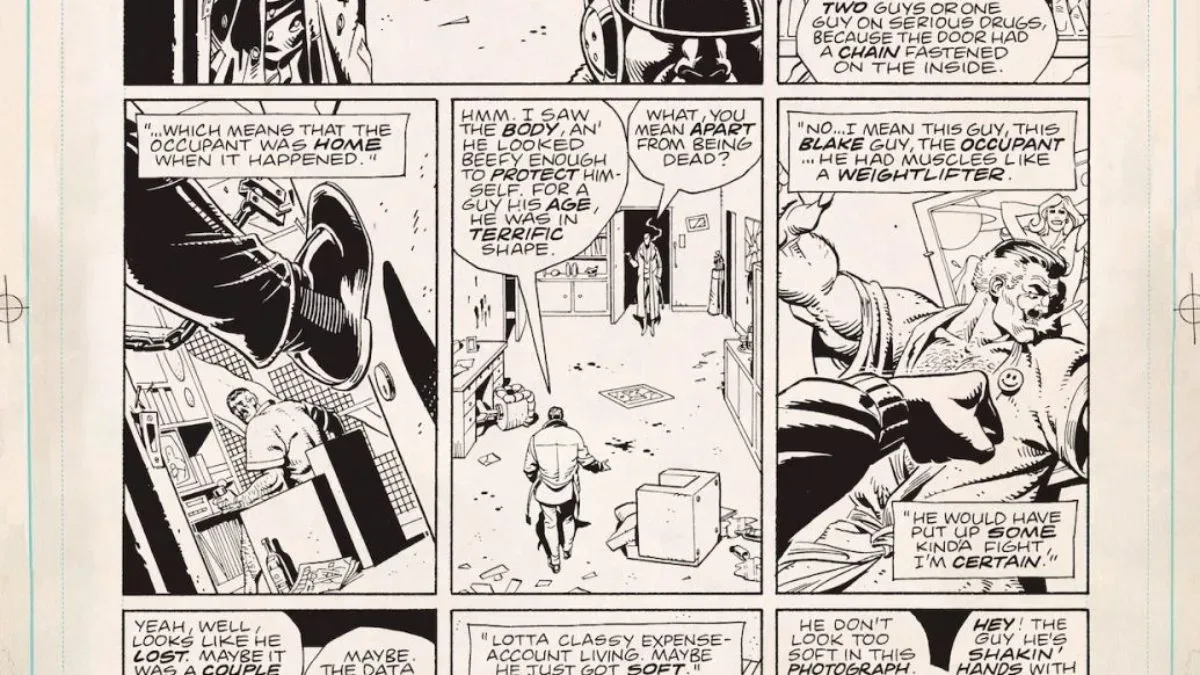
That matters especially for a series whose opening has such a clear identity. The preview material returns to Rorschach’s journal narration, the investigation into the murder of a seemingly ordinary “weightlifter,” and the blood-marked smiley-face imagery that has become inseparable from the comic’s visual vocabulary. Those elements establish a mystery before the book explains its larger world, inviting readers to follow the detectives’ questions and Rorschach’s darker interpretation of events in parallel.
A return to the beginning, not a new Watchmen story
DC W.I.P.: Watchmen #1 is a reprint of the original first issue, not newly created material. That distinction sets appropriate expectations for prospective buyers. The appeal is the chance to pick up a single issue built around the first chapter of Moore and Gibbons’ story, in a release expressly tied to its anniversary, rather than a promise of an expanded narrative or additional scenes.
The credited creative pairing remains central. Moore is listed as writer, while Gibbons is credited for art and cover art. In a comic like Watchmen, separating those roles can be useful for newcomers: the writer determines the dialogue, narration, scenes, and underlying plot construction; the artist turns those directions into the page layouts, character acting, settings, visual clues, and transitions that guide how a reader experiences the story. The first issue’s grim city streets, police inquiry, distinctive iconography, and journal fragments all rely on that combined work.
For a reader encountering the series for the first time, the issue’s detective-story entry point is practical. A death is being investigated, facts do not immediately line up, and Rorschach’s narration supplies a second, far more suspicious account of the world. There is no need to know the entire 12-issue storyline before opening the book. The opening chapter starts by presenting an incident and a mood, then lets the uncertainty around that incident do the work.
What the preview establishes
The available preview pages point toward several of the first issue’s most recognizable devices. Rorschach frames the city through his journal, deploying a bleak voice that sees decay and danger everywhere. Meanwhile, detectives examine the death of a man described as a weightlifter, noting physical details including a scar. Above and around this procedural setup is the image of the smiley-face button streaked with blood.
Even without moving beyond the supplied preview material, these details show why the first issue has such a durable reputation as an opening. The comic places multiple kinds of information side by side:
- Direct evidence: detectives at a death scene, trying to establish what happened.
- Interpretation: Rorschach’s journal voice, which is not neutral and immediately pushes readers toward a harsher view of the city.
- Visual symbolism: a cheerful smiley image disrupted by blood, creating a contrast between simple optimism and violence.
That structure makes the issue accessible as a mystery while also making its tone clear. The reader is not simply asked to identify a culprit; they are asked to consider whether the world around the investigation is as unstable as Rorschach believes. It is a compact way to introduce a superhero-adjacent setting through suspicion rather than spectacle.
Why facsimile format fits this release
Anniversary reprints can serve different audiences, and a facsimile issue has a particularly direct use. Longtime readers may want a stand-alone commemorative copy of the first chapter. Readers who know Watchmen by reputation but have not read it can sample its original beginning in issue form. And comic collectors who enjoy physical editions can choose a contemporary publication connected to a major anniversary without treating it as an original-era issue.
That final distinction is worth making. A new facsimile printing is a modern release, even when it reproduces older material. Its value to a buyer is primarily in the reading experience, presentation, and commemoration of the original work—not in confusion with a historic first printing. Anyone building a physical comics library can make a clearer decision by treating this as its own 2026 edition.
The format also restores an episodic perspective. Collected editions are an efficient way to read a complete series, but a single-issue reprint asks readers to stop after chapter one. That can sharpen appreciation for how the debut establishes its case, deploys its visual motif, and leaves questions open. The original series is commonly discussed as a whole, but the facsimile gives its first installment room to function as an individual comic.
Release details and cover listings
DC lists the book for September 23, 2026, with a stated SRP of $3.99. The solicitation information also includes separate cover listings at $4.99 and $6.99. Readers interested in a particular version should check with their local comic shop before release, since the supplied listings distinguish the covers by price and catalogue number.
- Title: DC W.I.P.: Watchmen #1
- Writer: Alan Moore
- Artist and cover artist: Dave Gibbons
- Format: Facsimile reprint
- In shops: September 23, 2026
- Listed SRP: $3.99
- Additional listed covers: $4.99 and $6.99
For the broader conversation around DC and Warner-related pop culture news, readers can also follow this Warner Bros. deal challenge story.
What to know before buying
This release is best understood as an anniversary reintroduction to a specific comic-book chapter. If the goal is to experience the full story with no pauses between issues, a complete collected edition may be the more convenient route. If the goal is to read, display, or preserve the launch of the series as a distinct periodical experience, DC W.I.P.: Watchmen #1 is designed for that purpose.
New readers should also expect a deliberately grim opening. The preview’s journal language, murder investigation, and blood-streaked smiley imagery are not incidental decoration; they establish the story’s atmosphere from page one. The juxtaposition between police procedure and Rorschach’s ominous internal account creates an immediate tension over how much can be trusted, what the murder means, and whether the case points to something larger.
Four decades after the series began, the new facsimile returns attention to the fundamentals that make an opening issue memorable: a striking central image, a death that prompts unanswered questions, a narrator with an unmistakable voice, and pages that make readers want to keep investigating. For anyone curious about where Watchmen starts, September’s release offers a focused, physical way back to that first mystery.