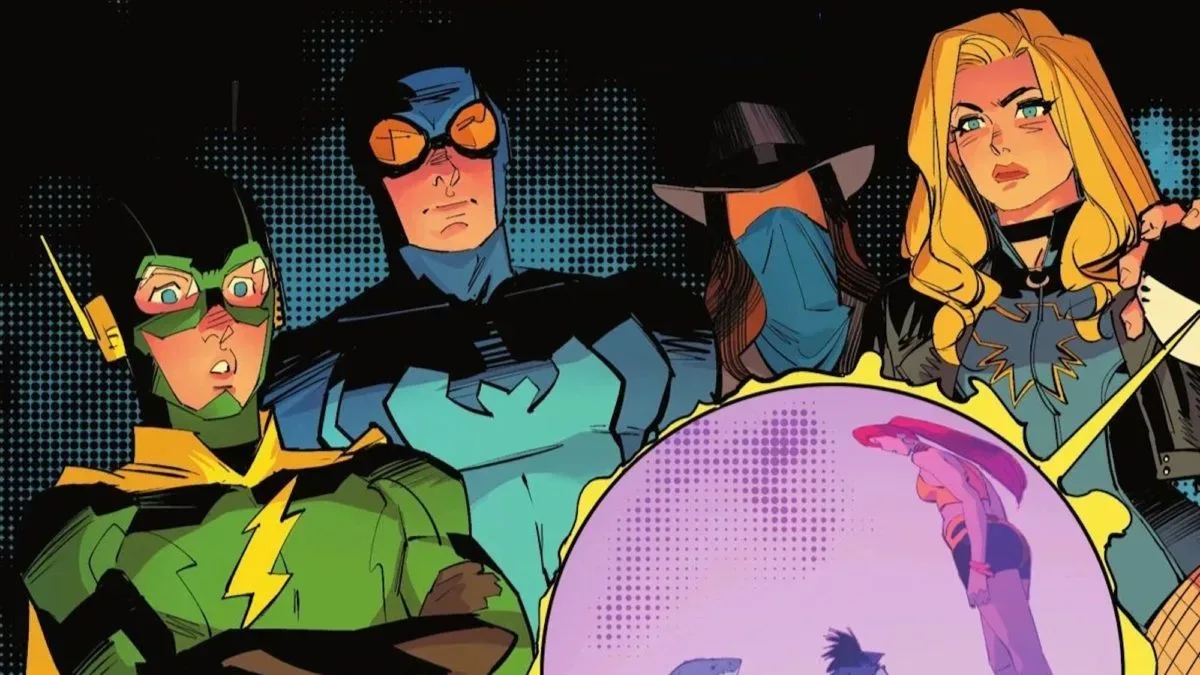
Warning: this article discusses plot developments in Superman #42, Justice League Unlimited #23, The Flash #37, Green Lantern #39 and Harley Quinn #66.
Five DC issues dated September 23, 2026 may belong to very different corners of the line, but they converge on one unnerving idea: what happens when the people trusted to save everyone acquire the power to decide everything? Across stories involving future visions, mass healing, villain rehabilitation, magical power and city-wide ecological chaos, heroes and antiheroes are being pushed beyond ordinary superheroics. The immediate result is not simply bigger spectacle. It is a question of oversight.
The Flash #37, Justice League Unlimited #23, Green Lantern #39, Superman #42 and Harley Quinn #66 all position extraordinary power as something morally complicated even when it is used with a benevolent intention. That shared thread is particularly important with material still unfolding after DC K.O. and as Absolute Crisis approaches. The stories do not present a clean divide between heroic action and villainous action. Instead, they test how far a protector can go before protection starts to resemble control.
The Flash’s future knowledge turns prevention into preemption
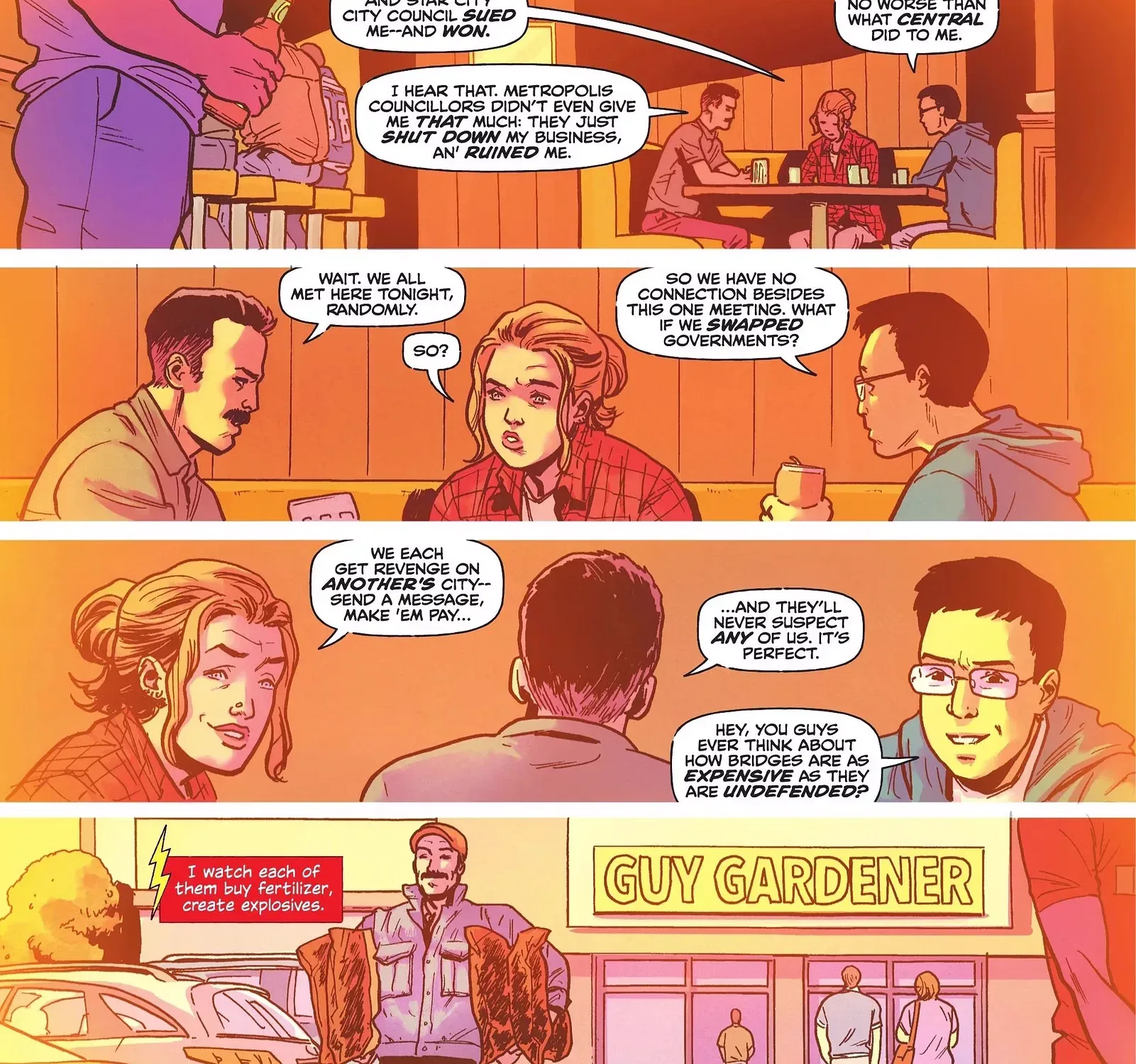
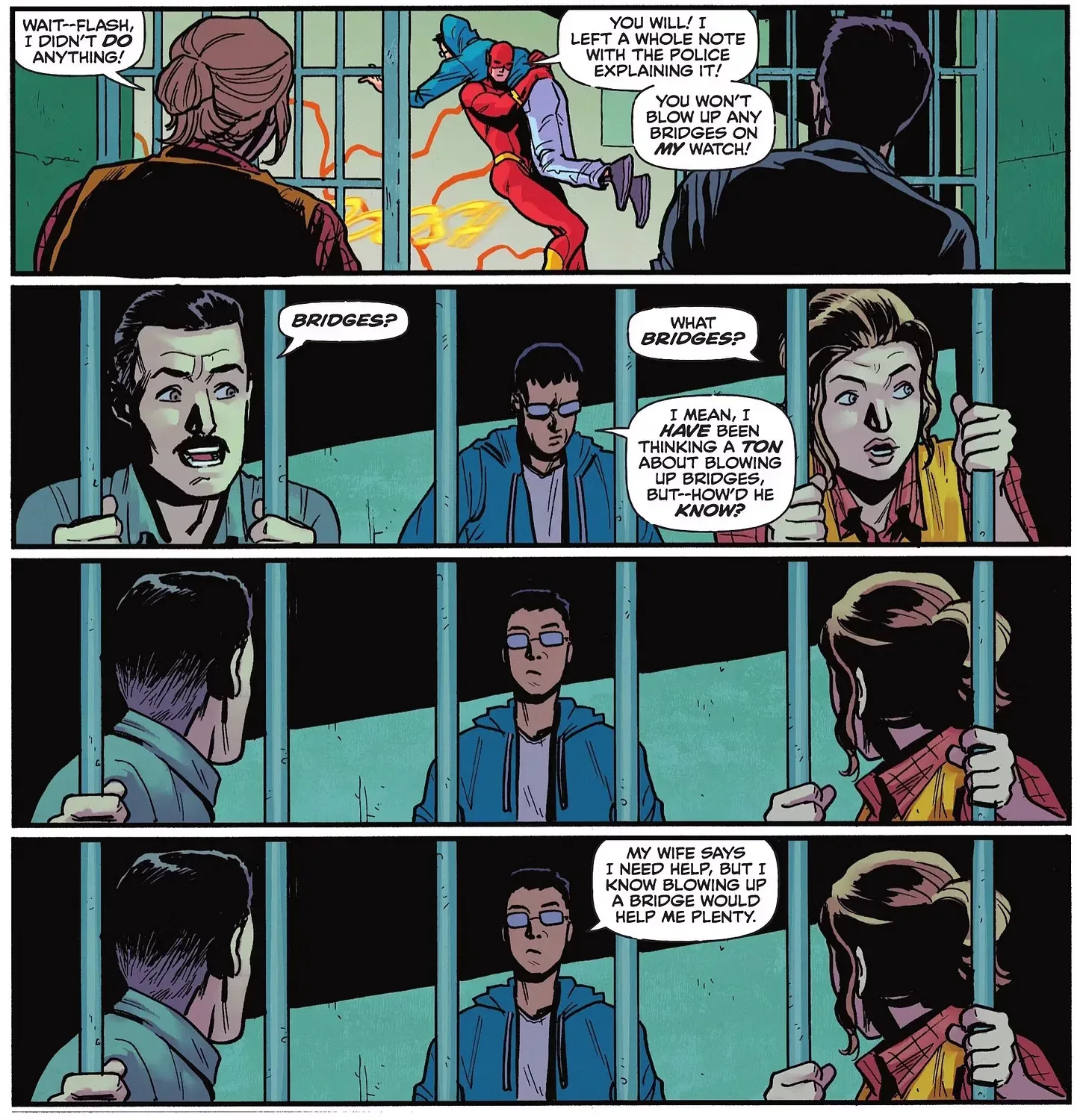
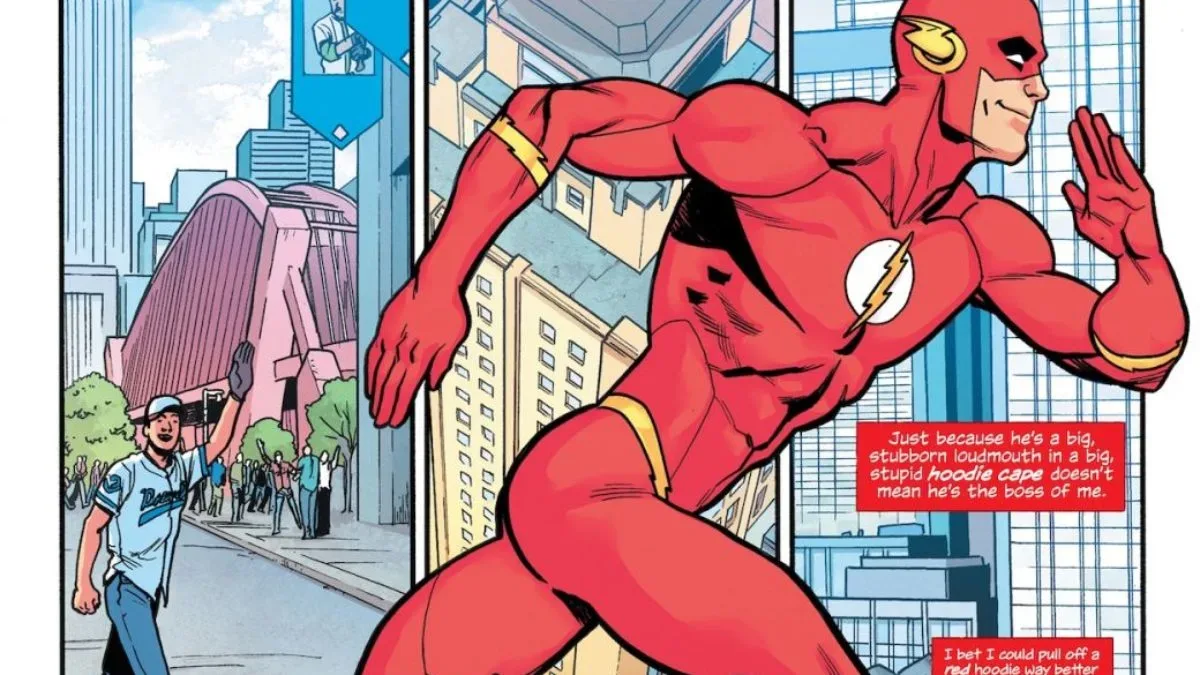
The clearest version of that tension appears in The Flash #37 by Ryan North and Gavin Guidry. Wally West’s Omega-powered “Flashes of Insight” have expanded his view into the future. He can see accidents and crimes before they occur, and the issue’s setup includes simultaneous planned attacks on bridges in Central City, Keystone City and Metropolis.
On its face, this is the dream scenario for a speedster: Wally is not merely fast enough to respond to a disaster, but informed early enough to prevent it. The stakes change, however, when future knowledge is detailed enough to identify people before they act. The issue raises the prospect of Wally imprisoning individuals a week before they have even settled on their plan to commit a bombing.
That is the difference between prevention and preemption. Prevention means stopping an imminent harmful event. Preemption acts against a presumed future threat before it becomes action. In a superhero setting, the distinction becomes especially volatile when the hero has access to evidence nobody else can independently verify: a vision of what may happen.
Wally’s moral problem is not that the danger is trivial. The threat to three cities is plainly severe. It is that certainty about an outcome can make due process appear inconvenient. A hero who can see the future may feel an obligation to interfere, but the people around him still have to ask whether the future he sees is fixed, whether an envisioned action establishes guilt, and who sets the limits on his intervention.
The comic’s three-city structure also makes Wally’s role feel larger than a local rescue. The solicitation calls him the savior of Central, Keystone and Metropolis. This is a protector operating across jurisdictions and acting on predictive information. It is superhero fiction pressing directly on the discomfort built into any system where one exceptionally capable person can act first and explain later.
Justice League Unlimited turns the question inward
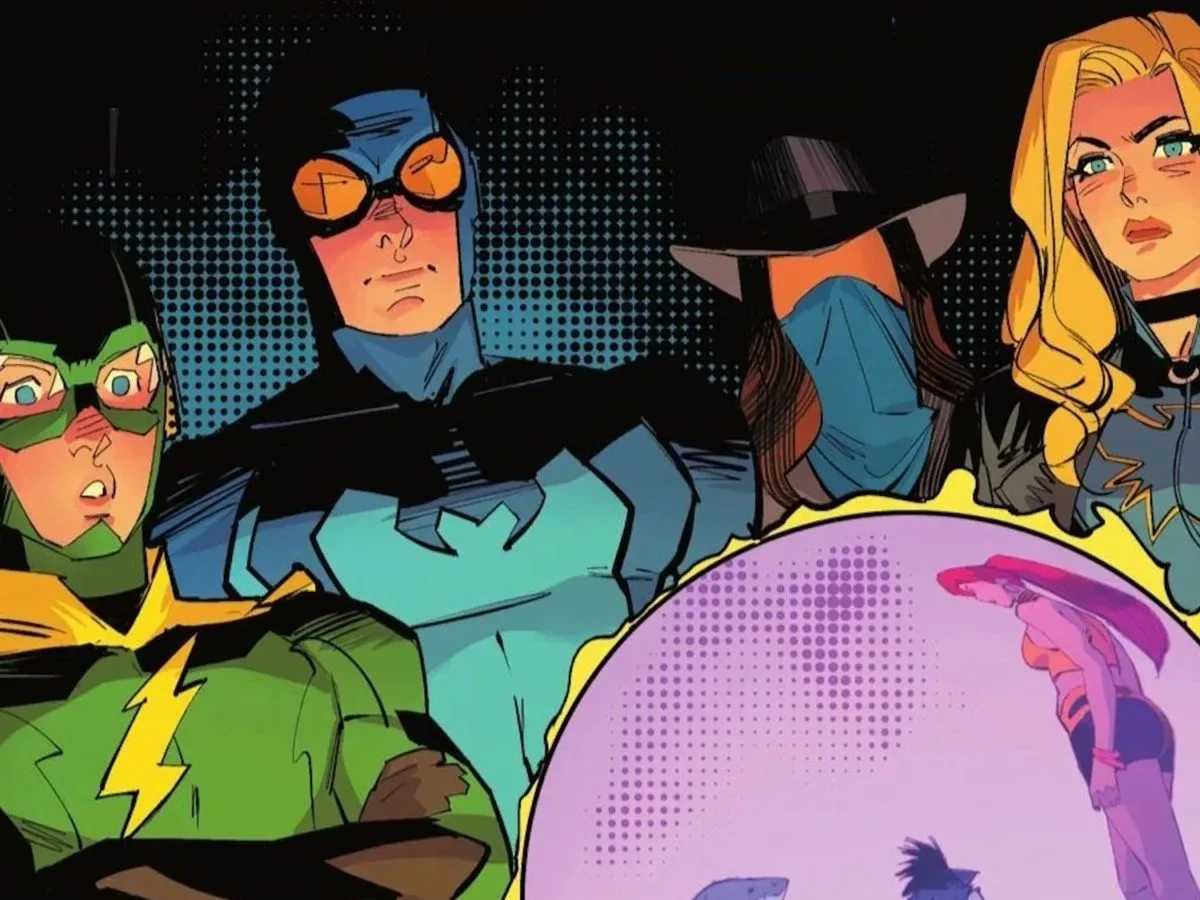
Justice League Unlimited #23 by Mark Waid and Dan Mora brings the oversight issue to the team designed to represent superheroic legitimacy. The solicitation frames its central crisis bluntly: the Justice League are compelled to incarcerate members of their own ranks, and the villain-amnesty storyline reaches a turning point that includes a new leader for the team’s future.
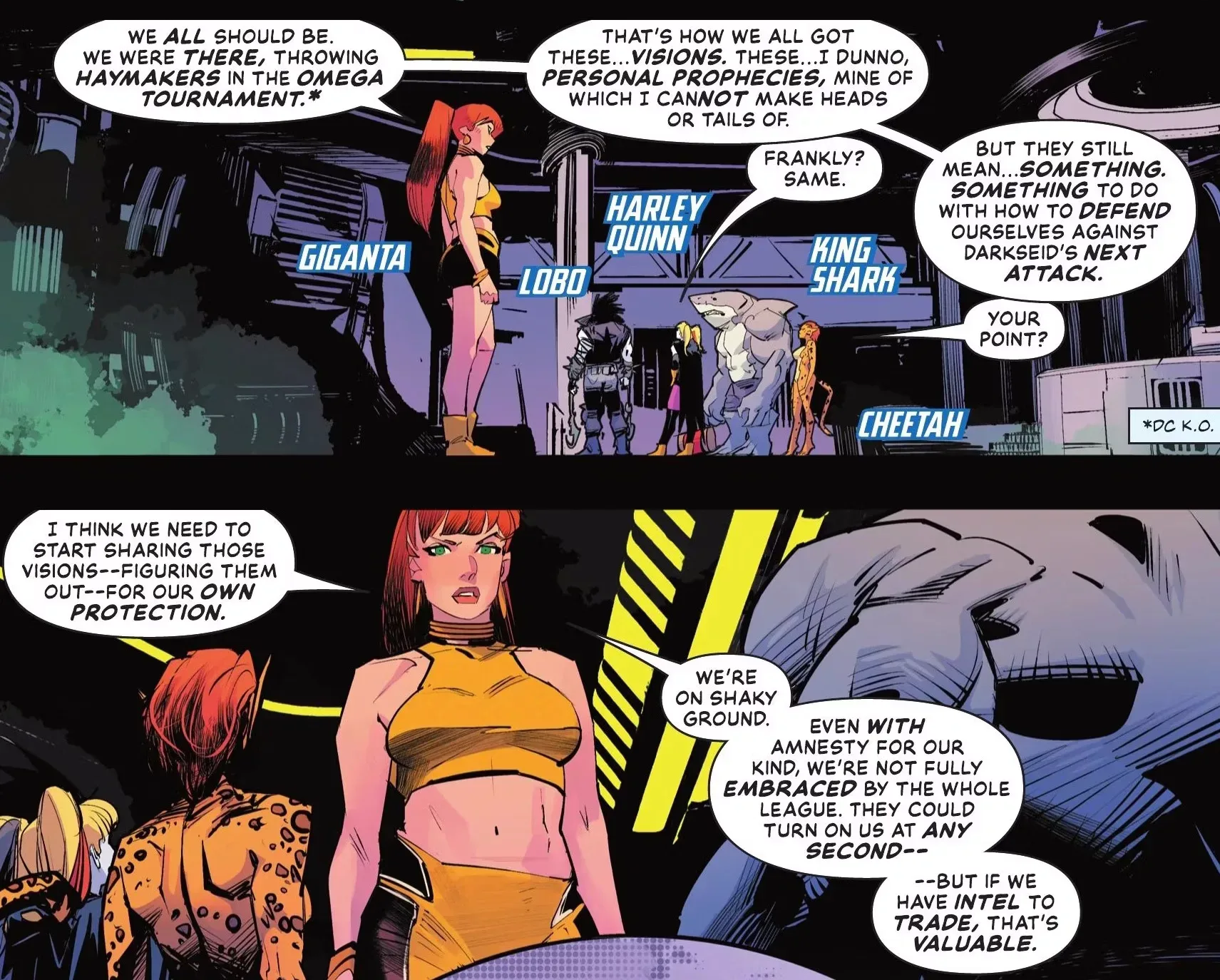
That premise is loaded even before considering the heightened powers in play. The League is not just facing external enemies; it is deciding when fellow heroes must be contained. Meanwhile, former villains brought into the orbit of the Justice League through amnesty receive future visions through Omega Energy and discuss what they may do next. The organization is therefore attempting several hard jobs at once: offering a route toward reform, evaluating threats, confronting potential future wrongdoing and policing its own members.
Mister Terrific’s position makes the scale of that task more dramatic. He has inherited the powers of every Justice Leaguer, including Aquaman’s. In practical narrative terms, a character described as the team’s great strategist now also wields abilities normally distributed among numerous people. That is an enormous concentration of capability.
Concentrated power is not inherently corrupt, and these issues do not need to argue that it is. The more interesting point is that concentration creates dependency. If one person can solve a world-threatening crisis in an instant, everyone else may be relieved—but the institution becomes dependent on that person’s judgment. The question stops being whether the power can save lives and becomes whether anybody can meaningfully challenge its use.
The League’s answer appears structurally circular: the Justice League watches the Flash; League members connected to the former Legion of Doom are watched by the League; and the League itself is monitored by a further subset of the League. A system of peer review can be valuable, particularly in a world where peers understand the dangers of super-powers. But it also has an obvious weakness. An internal check is only as independent as the people conducting it.
That is why the amnesty plot matters beyond its immediate cast. Rehabilitation requires some willingness to believe people can change. Predictive visions, however, encourage everyone to treat possible future behavior as an already-delivered verdict. Justice League Unlimited #23 puts those two impulses in direct conflict: faith in redemption versus fear of what people may become.
Healing can be a miracle—and a warning sign
The day’s releases repeatedly use healing as a marker of near-divine power. Kyle Rayner takes on a White Lantern-like role in Green Lantern #39 by Jeremy Adams, Adriana Melo, Szymon Kudranski and Jack Herbert, healing people across the world from infection. Superman has recently performed a comparable act, while Mister Terrific employs Zatanna’s magic to produce healing on a similarly immense scale.
These are not villainous acts. Healing an infection is, on every normal moral measure, an extraordinary good. Yet the cluster of scenes is still thematically significant because it changes the perceived place of heroes in the world. A character able to cure mass suffering with a gesture is no longer just an emergency responder or defender. They resemble an authority over life itself.
That is the useful meaning of “godhood” in this context. It does not necessarily mean a character has literally become a deity. It means their abilities operate at a scale beyond ordinary human institutions: cities, populations and perhaps whole planets are affected by an individual decision. When that happens, the public cannot realistically give informed consent to each use of power, and governments cannot easily regulate it. The ethical burden moves onto the person with the power and anyone capable of holding them accountable.
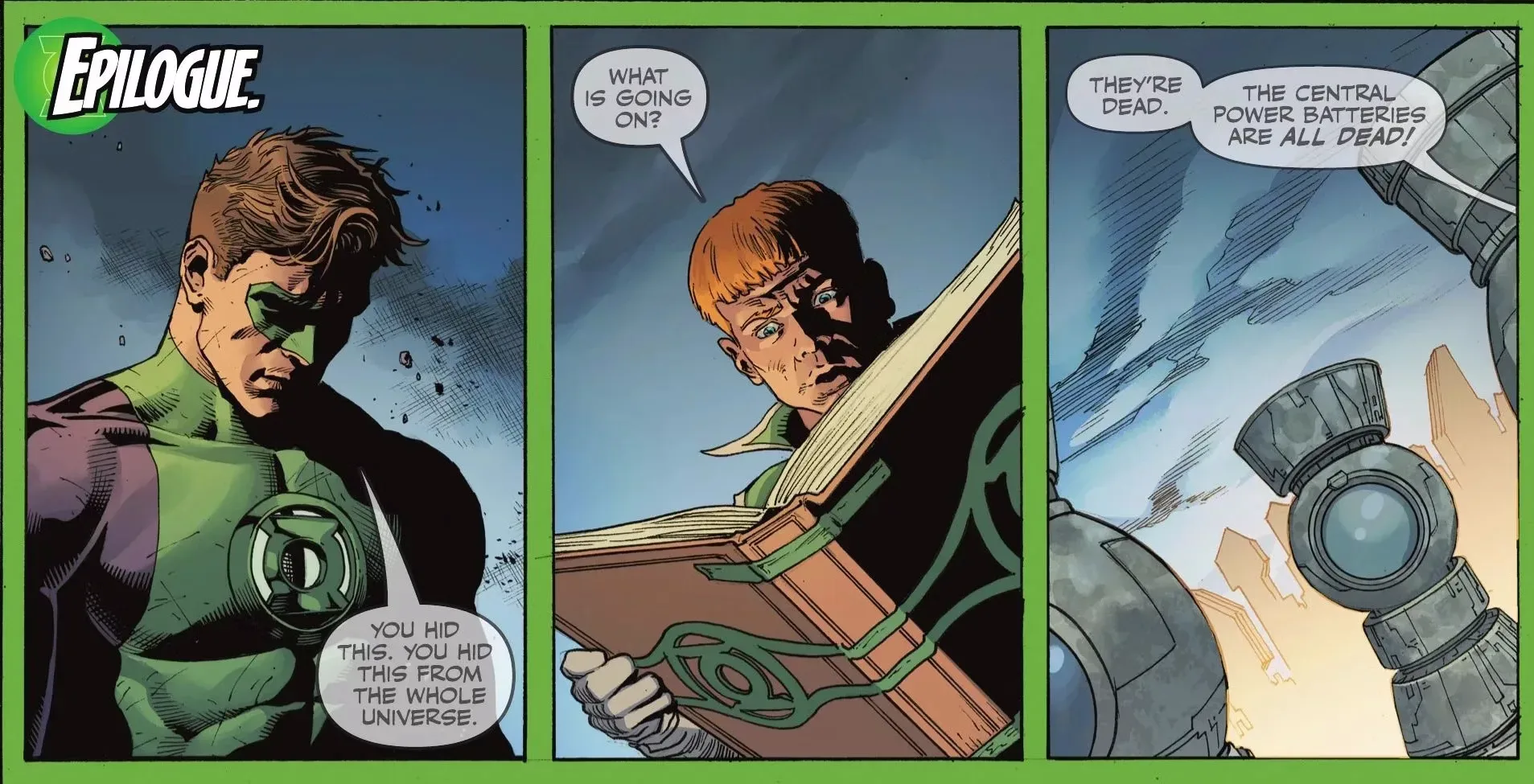
Green Lantern #39 pairs this escalation with other forms of instability. Guy Gardner, changed by the Omega power burst into a cosmic religious authority among the Green Lanterns, is connected to a vision concerning Oa’s future. Kyle, meanwhile, must contend with villains granted Justice League amnesty who still want to save the world on their own terms. The important phrase there is “their own terms.” Saving the world does not automatically settle the question of who has the right to define salvation.
That conflict gives the issue’s cosmic material a grounded ethical edge. A villain may claim the same objective as a hero—protecting lives, ending suffering, preserving a civilization—while rejecting restraint, consent or accountability. The stories around Kyle and Guy suggest that heroism is not established solely by the scale of one’s results. Method, responsibility and willingness to be challenged remain essential.
Aquaman, Poison Ivy and the danger of unilateral stewardship
Other titles make the theme more personal and more territorial. Aquaman is already under criticism in Emperor Aquaman for operating as a godlike figure. His current status as the Avatar of the Blue, coupled with his visions and his recent defeat of Poseidon, places him in a role that reaches well beyond conventional kingship or superhero leadership. His connection to the sea and broader cosmic forces may give him an unrivaled perspective, but it also risks separating him from the people affected by his decisions.
Poison Ivy offers a harsher reflection of the same dynamic in Harley Quinn #66 by Elliott Kalan and Carlos Olivares. Gotham is engulfed by prehistoric plants and poisonous pollen, with the situation pointing Harley toward Ivy. The issue positions Ivy’s influence as massive and destructive at a city-wide level. Where Kyle, Superman and Mister Terrific use exceptional power to heal, Ivy’s actions show power reshaping a city in the opposite direction.
The contrast is valuable. It prevents the shared theme from becoming too simple. The issue is not merely “big power is bad” or “healing is good.” Power can repair, dominate, protect, punish or transform. What ties the threads together is the lack of easy external control. Harley is the person positioned to confront Ivy, just as the League is positioned to confront Wally and its own members. Relationships become the nearest available safeguard when formal institutions cannot keep pace with superhuman capability.
That is also where hypocrisy enters. Heroes can insist on limits for allies or former enemies while making exceptions for themselves. A League that places a speedster under scrutiny must be ready to scrutinize its own leaders. A world that fears an eco-terrorist’s sweeping transformation of Gotham must still reckon with a beloved hero using sweeping power over millions, even for compassionate reasons.
Why Watchmen remains the useful reference point
The philosophical shorthand for all this is the old question quis custodiet ipsos custodes?: who guards the guards themselves? The phrase is closely associated in comics with Alan Moore and Dave Gibbons’ Watchmen, first published in 1986. It remains relevant because it addresses a persistent superhero-fiction problem. If extraordinary people are trusted to stand above ordinary systems during a crisis, what system can stand above them?
DC’s September 23 issues do not offer a single answer. Their tentative answer is mutual observation: teams watch teammates, partners challenge partners, and heroes assess former villains. But each book simultaneously exposes the limitations of that approach. People inside the system may share the same blind spots, the same urgency or the same belief that their own good intentions justify an exception.
The comics also make readers part of the equation. Serial fiction allows audiences to see the chain of cause and effect across titles, compare actions by different heroes and decide whether a character’s rationale is convincing. A future vision, a miraculous cure or a new leadership choice can look different once its consequences unfold in later issues. Readers cannot govern the DC Universe, of course, but the stories explicitly invite judgment rather than passive admiration.
For anyone tracking the wider comics calendar, the broader publishing slate remains busy beyond this DC cluster; the forthcoming TMNT #25-led comics slate is another reminder of how many continuing universes are currently asking readers to follow major turning points.
What to watch as Absolute Crisis approaches
These five issues are connected less by a single plot event than by a shared escalation in scale. Wally can act on the future. Mister Terrific channels the powers of the League. Kyle heals infection on a global level. Guy’s status carries cosmic and religious weight. Aquaman’s reach has become godlike. Poison Ivy can remake Gotham. Superman’s storyline continues through the Kryptonite Kingdom conflict involving the Super-Force, Zod and Ursa.
Those developments make Absolute Crisis feel positioned to test the DC Universe’s framework for authority, not simply its capacity for combat. A crossover can always ask whether heroes are powerful enough to stop a threat. This run of stories is asking the tougher companion question: are they restrained enough to remain the people who should be stopping it?
- The Flash #37 focuses on Wally’s longer-range future sight and a threat spanning three cities.
- Justice League Unlimited #23 concludes its villain-amnesty arc while the League faces imprisonment within its own ranks and a leadership change.
- Green Lantern #39 places Kyle Rayner, Guy Gardner, future visions and amnesty-era conflicts on a cosmic stage.
- Superman #42 continues the effort by Superman, Supergirl, Lois Lane and the Super-Force to restore the Kryptonite Kingdom.
- Harley Quinn #66 sends Harley into Gotham’s plant-ravaged Throatcutter Hill, with Poison Ivy seemingly central to the crisis.
That is a potent shared premise for books that otherwise travel from Metropolis to Gotham to Oa. In each case, the central struggle is not only defeating an enemy. It is determining whether the guardian, healer, ruler or visionary can still be trusted with the authority they now possess.
Shop the products
Check current price, model and availability at the retailer.