December’s DC slate is built around a rather pleasingly unstable idea: the heroes and villains who are supposed to have their identities sorted out absolutely do not. Poison Ivy loses her powers and is reduced to an ordinary human body. Bruce Wayne is apparently assassinated, leaving Batman to investigate his own murder. Clark Kent remains jailed under suspicion of murder. Wally West has no super-speed when he believes the fate of civilization is on the line. It is the sort of month in which a cape is less a solution than an administrative complication.
The biggest immediate Gotham release is Poison Ivy #50, on sale December 2 for $4.99. Written by G. Willow Wilson with art by Pius Bak, the 48-page milestone finds Pamela Isley confined at Arkham Towers without her allies, patrons, or botanical abilities. The premise pushes a vital question to the front: if Pamela is no longer empowered, what remains of Poison Ivy? Batman wants redemption from her; her doctors regard her as an ordinary person. The issue’s setup plainly does not believe that ordinary is going to last.
Poison Ivy #50 is both a milestone and a pressure point
Issue numbering can be more than a collector-friendly round number. A milestone issue often becomes a place for a series to restate its central idea, deliver a sharp status-quo change, or launch the next major storyline. Poison Ivy #50 looks positioned to do all three. Pamela’s loss of powers strips the character down to competing identities: scientist, villain, activist, ruler, and something potentially more supernatural. The premise is not merely “can she get her abilities back?” It is asking whether the person behind them can be separated from the damage she has done and the ideals she claims to serve.
That makes the timing especially notable beside the forthcoming Batman: Bad Seeds collected editions. Those 2027 books describe Pamela, then Gotham’s mayor, carrying out an eco-terror attack that turns the city into a hostile landscape of prehistoric vegetation while Vandal Savage’s militarized police force hunts the Bat-Family. The main Batman: Bad Seeds volume arrives February 16, 2027 and gathers Batman #13-14, Poison Ivy #48-49, Detective Comics #1113-1114, and the event’s Sunset and Sunrise specials.
That collection description provides useful context, but readers should distinguish it from a spoiler-proof roadmap. It establishes that the story lines leading into December have consequences, not the exact route Poison Ivy #50 takes after them. The December solicitation frames Pamela as isolated and depowered, which makes it a potentially important aftermath chapter rather than simply an oversized victory lap.
Harley Quinn’s own December issue brings the emotional side of that story into view, albeit with a Dracula-bitten truck-man problem attached. Harley Quinn #69, by Elliott Kalan and Carlos Olivares, is due December 23 for $3.99 and promises Harley’s long-awaited reunion with Poison Ivy. Its second plot involves Convoy the Entruckulated Man becoming Count Trucukula, so readers should anticipate a deliberately broad, horror-comedy register rather than a sober companion piece to Ivy’s institutional crisis. Still, the reunion is significant given the apparent collapse of Pamela’s support network.
Gotham’s major titles turn identity into a crime scene
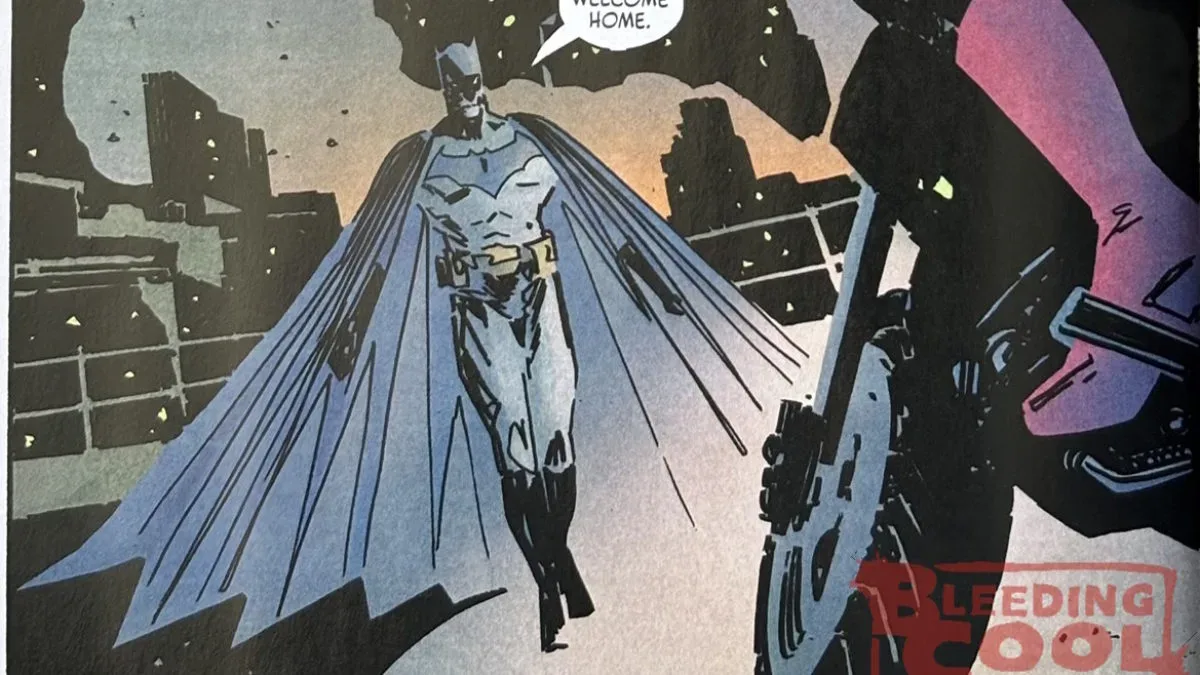
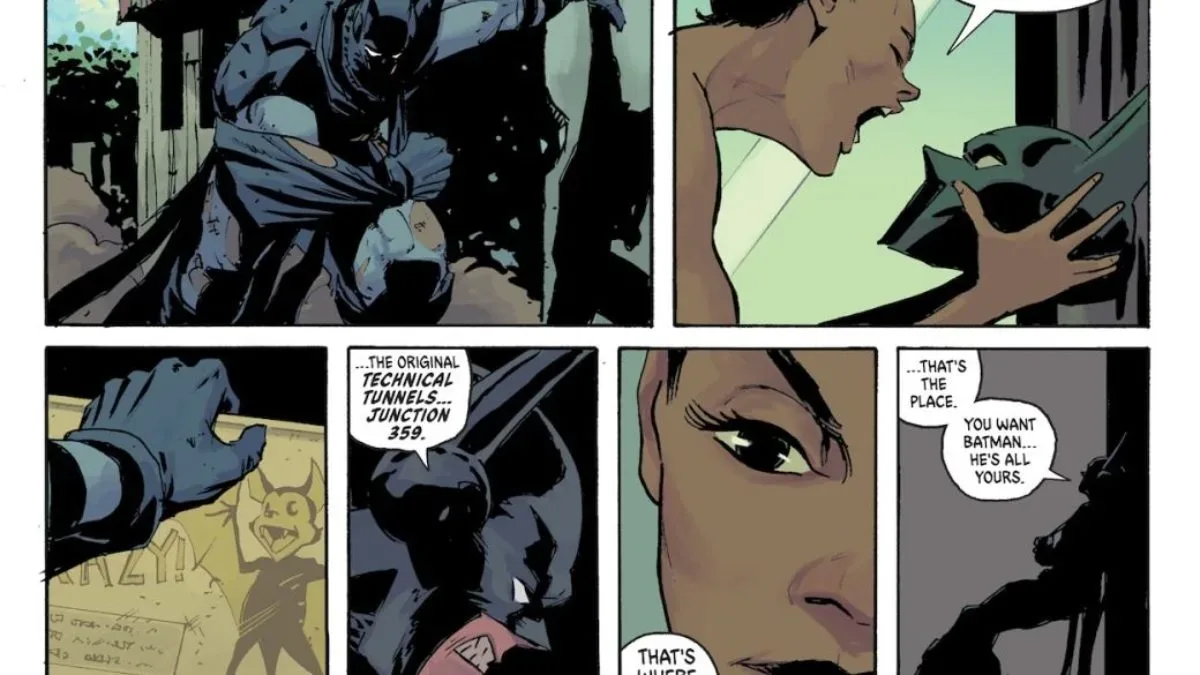
Batman #16 arrives December 2 from writer Matt Fraction and artist Jorge Jiménez. It is a 40-page, $4.99 issue in which Bruce Wayne has been struck down by an assassin and Batman must find the killer. The apparent impossibility is, of course, the engine: Batman is investigating an attempt on the life of his public identity while trying to protect the secret relationship between detective and victim. The solicitation also promises a larger conspiracy, putting this beyond a simple whodunit.
Elsewhere in Gotham, Detective Comics #1116 brings Batman into Clark Kent’s incarceration. Tom Taylor and Mikel Janín’s December 16 issue asks whether Clark really committed murder. That makes December’s Batman and Superman books unusually complementary: one mystery treats Bruce as the victim, the other treats Clark as the accused. Neither premise requires readers to assume a permanent change in either hero’s status, but both use the civilian identity as a vulnerability rather than a convenient disguise.
Other Gotham threads remain busy enough to warrant a cave map. Batgirl #26 pits Cassandra Cain against David Cain on December 2; Barbara Gordon: Breakout #8 places Barbara’s life in Two-Face’s hands on December 9; and Nightwing #145 sees Dick Grayson facing a subway hostage crisis on December 16. Gangs of Gotham #2 puts Anarky, Stephanie Brown, and Damian Wayne into the city’s gang politics on December 2, while Catwoman #94 continues Selina’s pursuit through a carnival setting on December 16.
For readers who prefer a self-contained festive detour, The Joker’s Christmas Carol #1 arrives December 2. Paul Dini writes, Kevin Altieri draws, and the 64-page special costs $7.99. The concept borrows the structure of Dickens’ ghostly Christmas visitation for the Joker, which is certainly an ambitious rehabilitation plan for a man who considers murderous clowning a personality trait.
Superman, Wonder Woman, and the larger DCU are all in escalation mode
The Superman corner has several distinct lanes. Superman #45, by Joshua Williamson and Xermánico, turns Metropolis toward noir and horror as Superman enters a district corrupted by Nekron’s Deadlands; it goes on sale December 23 for $4.99. Action Comics #1105, by Mark Waid and Adrián Bonilla, continues “Lex Luthor: Year One” on December 9, exploring the developing connection between a young Clark Kent and Lex Luthor, with Pa Kent increasingly suspicious.
Superman Unlimited #20, by Dan Slott and Lucas Meyer, takes a stranger route on December 16. Toyman turns Superman and Tomorrow Man into living action figures amid a plot involving thefts of super-science secrets from organizations including Stagg Laboratory, Steelworks, S.T.A.R. Labs, and Lexcorp. The toy perspective is the story’s stated investigative mechanism, not merely holiday window dressing. Meanwhile, Supergirl #20 has Kara, currently without powers, investigating thefts at Stanhope on December 9.
Wonder Woman #40 is one of the month’s clearest stopping points. Tom King and Daniel Sampere’s December 16 issue concludes the “Wonder War” and their run, with Diana and her family defending Themyscira from the Matriarch, the Sovereign, and a gathering of violent foes. It is a 32-page, $4.99 release. Readers following the run should treat this as the month’s most explicit finale, rather than mistaking the normal monthly numbering for a routine middle chapter.
Justice League Unlimited #26, by Mark Waid and Dan Mora, also has the architecture of a major turning point. Dreamer has identified the oncoming crisis, but the League believes it cannot survive what is coming. Ray Palmer leads an effort to unite magic, technology, villainy, and cosmic forces to strengthen the universe. That is a broad mission statement, but the exact form of the threat and the involved titles remain unstated here.
The Absolute line continues—without a new Absolute Batman issue
December brings five ongoing Absolute Universe issues: Absolute Superman #26, Absolute Wonder Woman #27, Absolute Green Lantern #21, Absolute Flash #22, and Absolute Catwoman #6. There is no newly solicited Absolute Batman single issue for the month.
That absence is notable because Absolute Batman Vol. 4: The Straw Man is also listed for March 2, 2027. The collection gathers Absolute Batman #19-25, a framing that confirms those issues as the contents of the book but does not, by itself, explain the December gap. The volume’s premise has Batman framed for murder at the Ark M facility, with the Joker and Jonathan Crane involved and a Robin strike force led by Deathstroke pursuing him.
For the December issues, Absolute Superman #26 begins after issue #25’s shock ending with Superman leaving Earth for deep space. Absolute Flash #22 has Wally facing Eleonore Thawne’s H.I.V.E. facility, packed with science-based weapons. Absolute Green Lantern #21 follows Jo Mullein and Cameron as the Manhunters investigation develops. And Absolute Catwoman #6 puts Selina at a crossroads after the return of the Calicos.
There is a credit inconsistency worth flagging rather than smoothing over. The December listing for Absolute Wonder Woman #27 credits Jason Aaron and Rafa Sandoval, while the description for the May 2027 Absolute Wonder Woman Vol. 1 Deluxe Edition identifies Kelly Thompson, Hayden Sherman, Jordie Bellaire, and Becca Carey as the creative team behind the first 14 issues. Those statements concern different material and do not necessarily conflict on their face, but readers looking for a complete creator-by-issue history should verify final publication credits when the books arrive.
Green Lantern’s power crisis spreads across several books
The main Green Lantern books share an unmistakable crisis. Green Lantern Corps #23 and Emperor Aquaman #24, both on sale December 9, state that Oa’s Central Power Batteries are dead, the Starbreakers are free, and the Corps’ rings are malfunctioning or powerless. Green Lantern #42, on December 23, carries the same core situation. A Central Power Battery is, in these stories, the large-scale power source associated with the Lantern Corps; its failure logically places ring users at a severe disadvantage.
Green Lantern Corps #23, from Morgan Hampton, Fernando Pasarín, and Oclair Albert, adds a separate revelation: the emotional electromagnetic energy behind the rings comes from an individual, described as the last child of Maltus, newly awake after centuries in an induced coma and consumed by rage. It is a character-focused explanation for a system-wide calamity, a useful contrast to the more immediate siege imagery in the other two solicitations.
December also includes Tales of the Green Lantern Corps: Training Day #1, a 48-page $5.99 special on December 16. With stories by Jeremy Adams, Noah Sellman, Marc Guggenheim, and Joe Corallo, it looks backward to early-career Hal Jordan, Sinestro, and Kilowog. A training-day anthology is a smart counterweight to the present-day books: it defines heroism through formative choices rather than through whether a ring can currently charge.
Hitman returns, while the collections lineup offers very different entry points
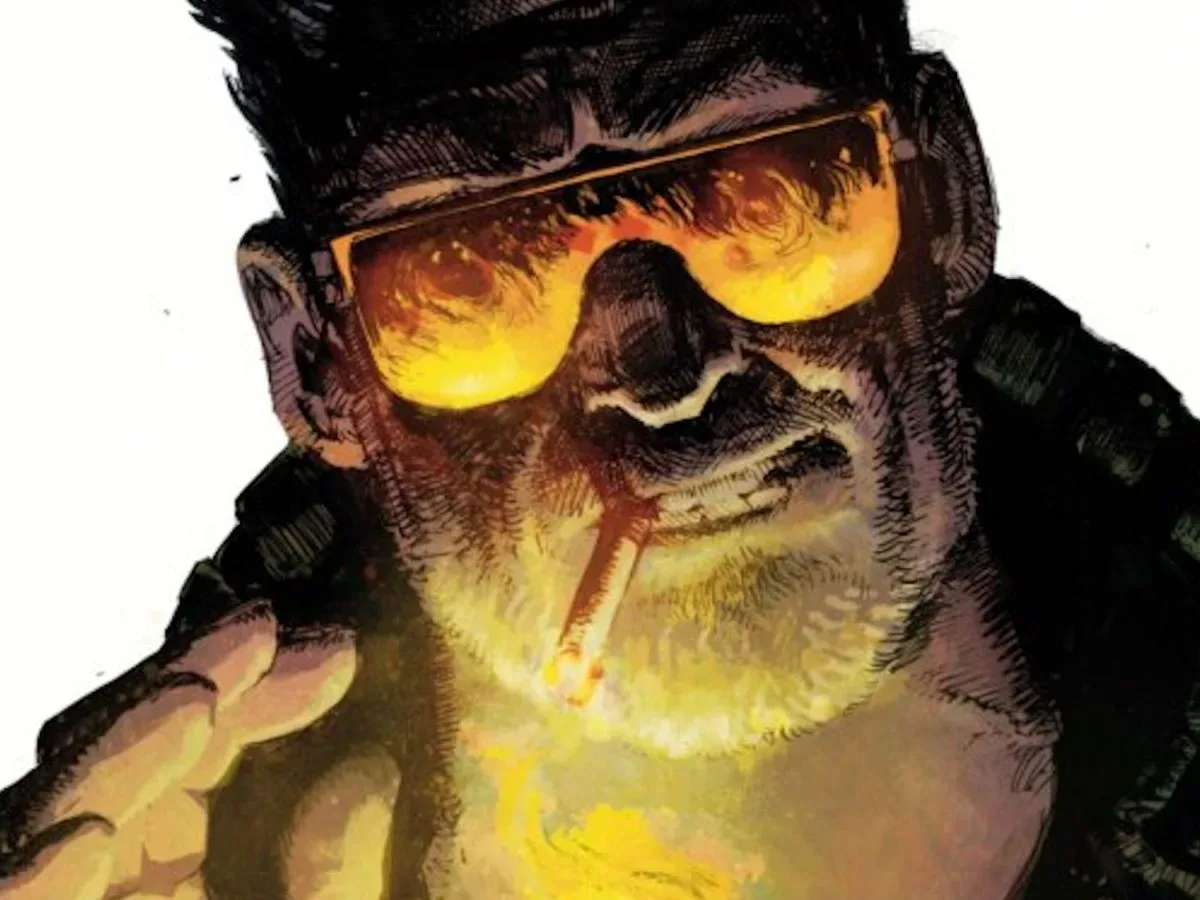
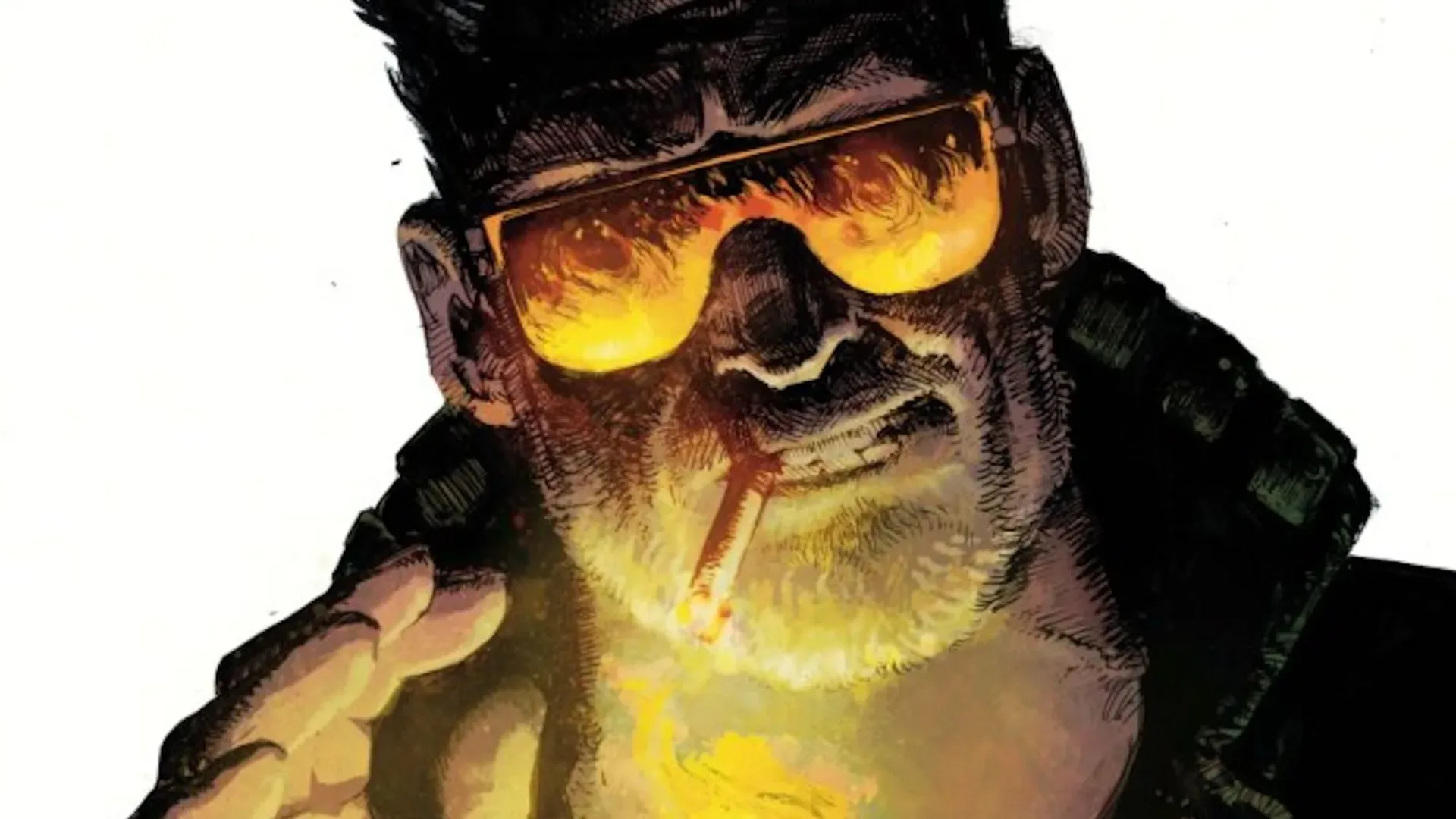
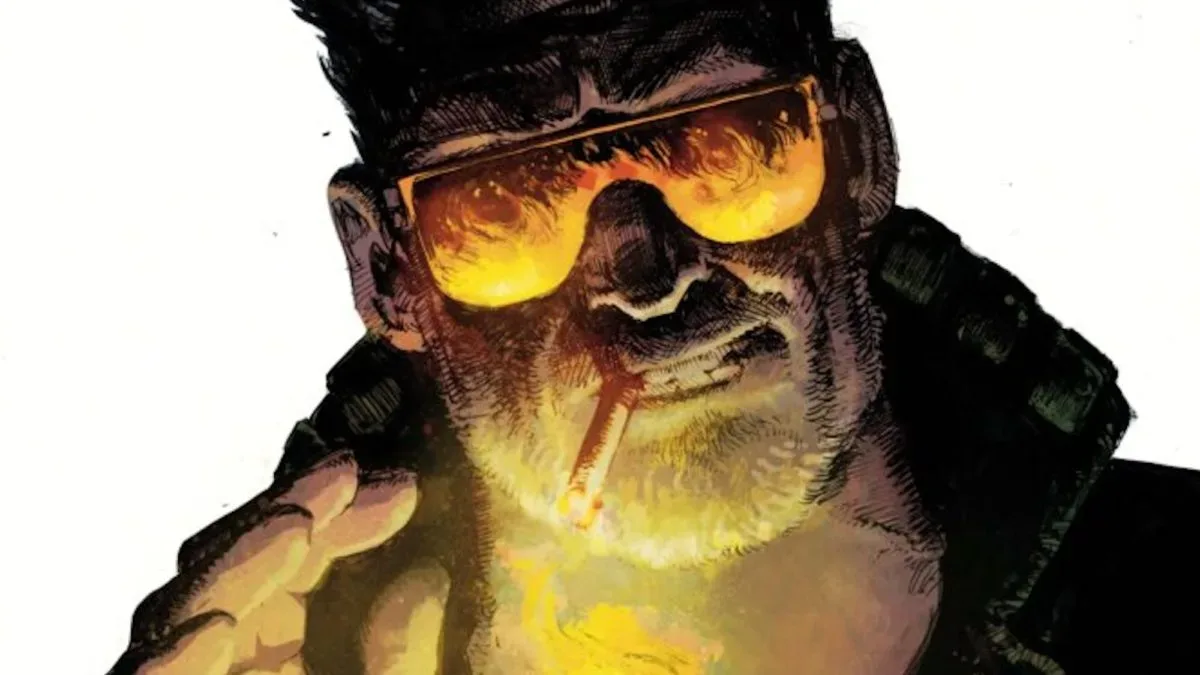
December 9 brings Hitman: It Was the Nineties Special #1, a 48-page, $5.99 return for writer Garth Ennis and artist John McCrea. The pair revisit Tommy Monaghan after 25 years for two holiday stories: one sends Tommy on a seemingly simple search for a tree-topper while killers pursue him, and the backup has Baytor working behind the bar before crossing paths with one of DC’s signature heroes. It is a reunion special, not a relaunch announcement, and its deliberately period-minded setup makes that distinction part of the appeal.
The collected-edition schedule is extensive. Of particular note, the Swamp Thing by Alan Moore Omnibus is scheduled for July 6, 2027 at $175 and 1,600 pages, collecting Moore-era Swamp Thing material alongside related appearances, extras, and archival content. A Swamp Thing #34 facsimile edition arrives much sooner, December 16, for $3.99. A facsimile edition is a reproduction of a previously published comic issue, aimed at presenting that original issue format rather than a newly created sequel.
Other December facsimiles include Kamandi #1, Detective Comics #500, and Watchmen #4. The latter focuses on Dr. Manhattan revisiting pivotal moments of his life while on Mars. For a separate current example of comics craft and production details entering public discussion, see this look at a UV-mapping issue in Marvel’s Wolverine; UV mapping is the process of laying a 2D texture across a 3D game model, a reminder that visual storytelling can be shaped by technical choices as much as by the script.
December’s DC books therefore offer several clean choices. Readers invested in the present Gotham continuity should prioritize Poison Ivy #50, Batman #16, and Detective Comics #1116. Readers after a stated ending have Wonder Woman #40. Lantern followers have a multi-title power-system collapse to track. And anyone who wants their holiday comics with equal portions of nostalgia, violence, and a tree-decoration assignment has the newly reunited Hitman team waiting on December 9.