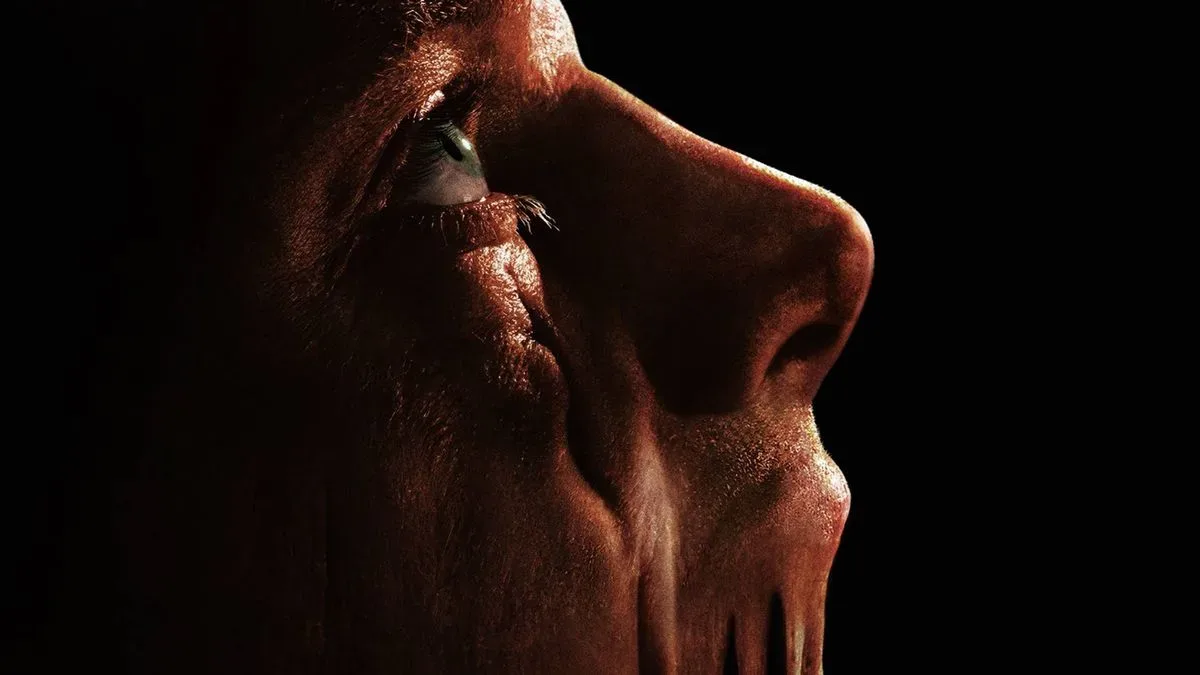
Clayface is bringing one of Gotham’s most unsettling villains into the foreground, but Matt Hagen’s path to the big screen is not a straight lift from one comic-book page. The character has existed in more than one form across DC history, and the upcoming film chooses a version shaped most strongly by Batman: The Animated Series rather than the original comic-book Matt Hagen.
That distinction matters. “Clayface” is not simply one person with one unchanging origin. It is a villain identity used by several characters, each connected to transformation, mimicry, and a body that no longer behaves like a normal human body. The new DCU film centers on Matt Hagen, played by Tom Rhys Harries, and frames his change through Hollywood stardom, injury, failed reconstruction, and a medical procedure with catastrophic consequences.
Directed by James Watkins and written by Mike Flanagan and Hossein Amini, Clayface is positioned as a body-horror origin story. That genre label is useful here: body horror focuses on physical transformation and the terror, pain, or loss of identity bound up in it. For Clayface, the frightening element is not only that his body becomes powerful; it is that his face, form, and apparent humanity become unstable.
Matt Hagen is one of several Clayfaces
DC has had eight iterations of Clayface. The first was Basil Karlo, a struggling movie actor who debuted in Detective Comics #40 around 1940. Karlo’s connection to acting is significant because it planted an idea that later versions could develop: performance, identity, and disguise are already part of Clayface’s DNA, even before shapeshifting enters the picture.
Matt Hagen arrived later, in Detective Comics #268 around 1962. In that original comics incarnation, he was a treasure hunter—not an actor. Hagen found a radioactive pool of protoplasm and was transformed into Clayface. Protoplasm is a biological term for the living material within cells, but in this fantastical context it describes the strange mutable substance responsible for his monstrous new form.
That comic-book version supplies the name and one branch of Clayface lore, but it is not the direct template for the film. The movie’s Matt Hagen is a working actor at the height of his career, a choice that substantially changes the emotional premise. A treasure hunter’s transformation begins with discovery and exposure. An actor’s begins with public image, physical damage, and a desperate chance to reclaim the face that supported his life and profession.
The animated Matt Hagen is the key influence
The closest creative ancestor for the movie is the Matt Hagen seen in the first season of Batman: The Animated Series, specifically the two-part story “Feats of Clay.” Mike Flanagan has confirmed that this animated interpretation, rather than the treasure-hunting comic version, was the principal inspiration.
In that animated story, Hagen is a successful actor whose face is permanently disfigured in a car accident. He turns to Renuyu, a supposed miracle cosmetic chemical sold through corrupt businessman and Gotham mobster Rolan Daggett. Renuyu repairs Hagen’s appearance, but it also gives him the ability to alter his face into that of people he has touched.
That is the essential dramatic hook that carries forward: the cure works, at least initially, but carries an extraordinary and dangerous cost. The ability to take another person’s face sounds like a useful power in a superhero setting. It is also profoundly invasive. Shapeshifting allows a character to cross borders other people cannot: private spaces, personal relationships, professional identities, and even the simple trust that someone is who they appear to be.
Hagen’s situation escalates after a confrontation with Daggett and his men. They force him to swallow an entire vat of Renuyu, triggering the mutation that makes him Clayface. The result is not merely cosmetic flexibility. His body becomes fully unstable and monstrous.
Daggett also has comic-book connections as an enemy of the Wayne family, a detail that further ties the animated story’s corruption and criminal pressure to Gotham’s wider world. In practical story terms, though, he represents the danger behind the miracle product: a vulnerable person’s need is turned into leverage by someone powerful enough to sell salvation and weaponize dependence.
How the DCU film changes the transformation
The live-action film does not reuse Renuyu as its stated cause. Its Matt Hagen is injured when a Gotham mob boss cuts up his face. Reconstructive surgeries fail, and he ultimately seeks help from Dr. Caitlyn Corr, played by Naomi Ackie. An experimental cell-regeneration procedure restores his face, but its success becomes the beginning of something far worse.
Cell regeneration refers to restoring or replacing damaged tissue through cellular repair or growth. In the film’s fictional scenario, the procedure does not simply heal the injury; it pushes Hagen’s biology into a condition that produces Clayface. The change preserves the premise of a treatment gone wrong while giving the movie its own mechanism and its own cast of characters.
It also retains the traits most audiences associate with the character. Matt gains shape-shifting, regeneration, and superhuman strength. Shape-shifting is the ability to alter physical form, potentially including a convincing imitation of another person. Regeneration means recovering from damage at an abnormal rate or to an abnormal degree. Superhuman strength is the comparatively straightforward part of the package, but it becomes much more alarming when paired with a body that can reshape and recover.
Those powers mean Clayface is a very different kind of threat from a conventional Gotham criminal. A villain with a weapon can be dangerous while remaining visible and limited by ordinary injury. Clayface can be dangerous before anyone realizes he is present, and physical force may not work as expected against someone whose anatomy is mutable. That makes identity itself part of the suspense, not merely an action-movie obstacle.
The body-horror framing gives the origin an added human dimension. Hagen begins as an actor whose professional and personal identity are bound closely to his face. The attempt to restore that identity instead makes the face endlessly changeable. It is a cruel reversal: he receives the means to look like anyone, while the ability to remain securely himself is thrown into question.
Where Clayface sits in the DCU chronology
Clayface takes place before the first season of Creature Commandos. That animated series already features Clayface in his fully transformed state: goopy, toothy, and unmistakably monstrous. He joins Princess Ilana Rostovic and impersonates Professor Aisla MacPherson. By the end of the season, he is taken to Arkham Asylum.
Both projects are canon to the DCU, so the placement provides a clear broad outline without requiring viewers to know every stage of the character’s future. The film covers Hagen’s descent into Clayface; Creature Commandos shows him after that transformation has progressed into outright supervillain territory. The animated appearance is therefore not a separate continuity detour. It is a later point on the same character’s path.
This timeline also makes the standalone movie more consequential than a self-contained villain experiment. Its ending does not erase the possibility of Matt Hagen’s return; the later animated story confirms that he remains part of the shared DCU picture. James Gunn has also indicated that Hagen will appear again in other DCU projects.
What the connection means for Batman
Batman appears briefly in Creature Commandos. That small appearance establishes that the Caped Crusader exists in this continuity and suggests he may already know about Clayface, whether or not the two have fought by that point. The available information does not settle the exact nature of their relationship, so it is best not to assume a specific prior encounter.
Still, Clayface is a particularly natural Gotham adversary. His powers turn urban paranoia into a literal problem: the person standing beside you could be an infiltrator, a hostage could be an impostor, and a familiar face could be part of a trap. He is also an opponent whose tragedy is inseparable from his menace. Hagen’s fall starts with injury and the pursuit of restoration, then evolves into an identity-destroying mutation.
That combination helps explain why a Clayface origin can support a standalone film before a fuller Batman encounter is shown. Batman stories are often built around detection, crime, and a hero confronting theatrical villains. Hagen’s story can instead begin with performance, bodily trauma, medical ambition, and exploitation—then grow into the kind of nightmare that would eventually demand Batman’s attention.
What to know before watching
- This is Matt Hagen, not Basil Karlo: Karlo was the earliest Clayface and an actor in the comics, while the original comics Hagen was a treasure hunter.
- The film’s strongest predecessor is animated: the actor-focused Hagen and the “miracle” restoration that mutates him come from Batman: The Animated Series’ “Feats of Clay.”
- The exact cause is different: Renuyu drives the animated origin; the film uses an experimental cell-regeneration procedure involving Dr. Caitlyn Corr.
- The DCU link is already in place: the film occurs before Creature Commandos season 1, where Clayface is later seen and ultimately sent to Arkham Asylum.
- Batman’s awareness remains uncertain: his brief Creature Commandos appearance establishes his presence, not a confirmed battle with Hagen.
Clayface reaches theaters on October 23. For another recent story about comic-book work outside the superhero lane, see the announced graphic novel The Butcher.