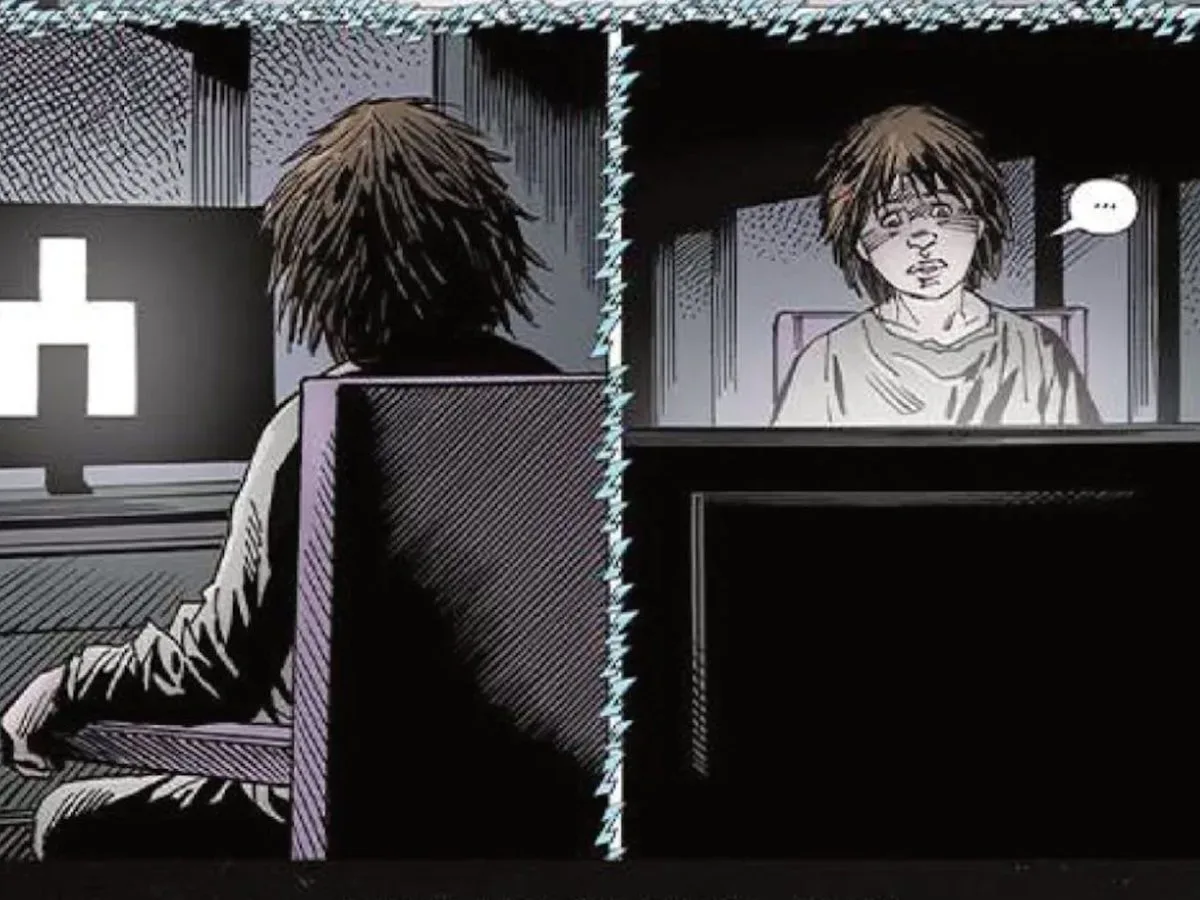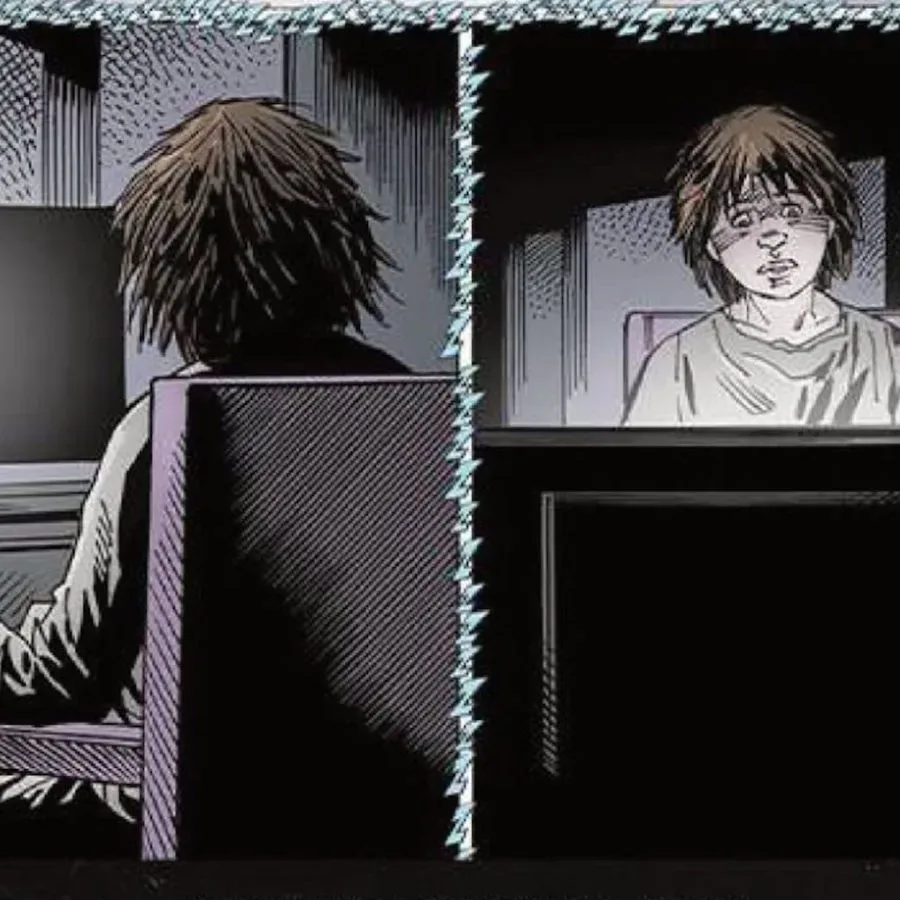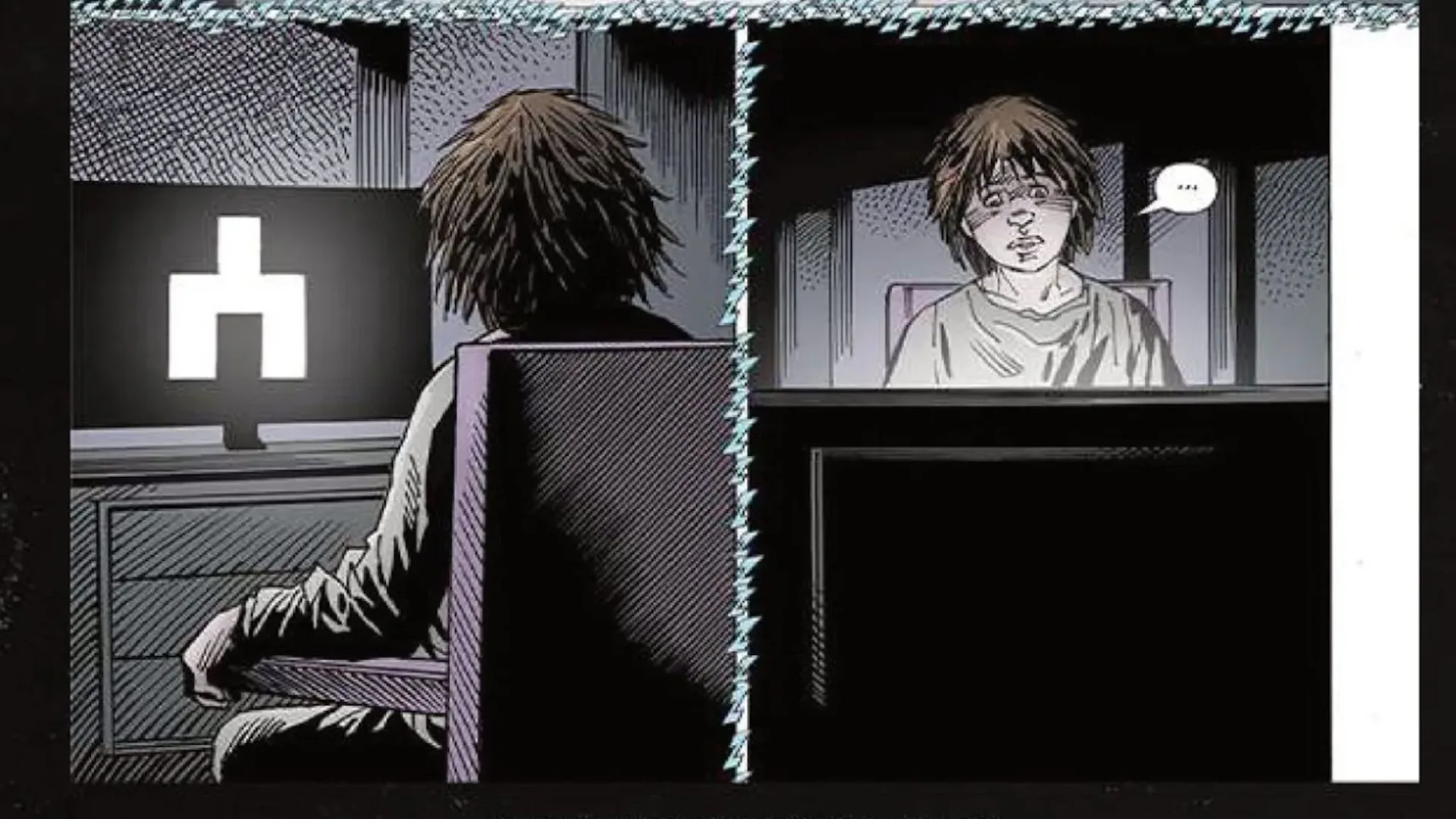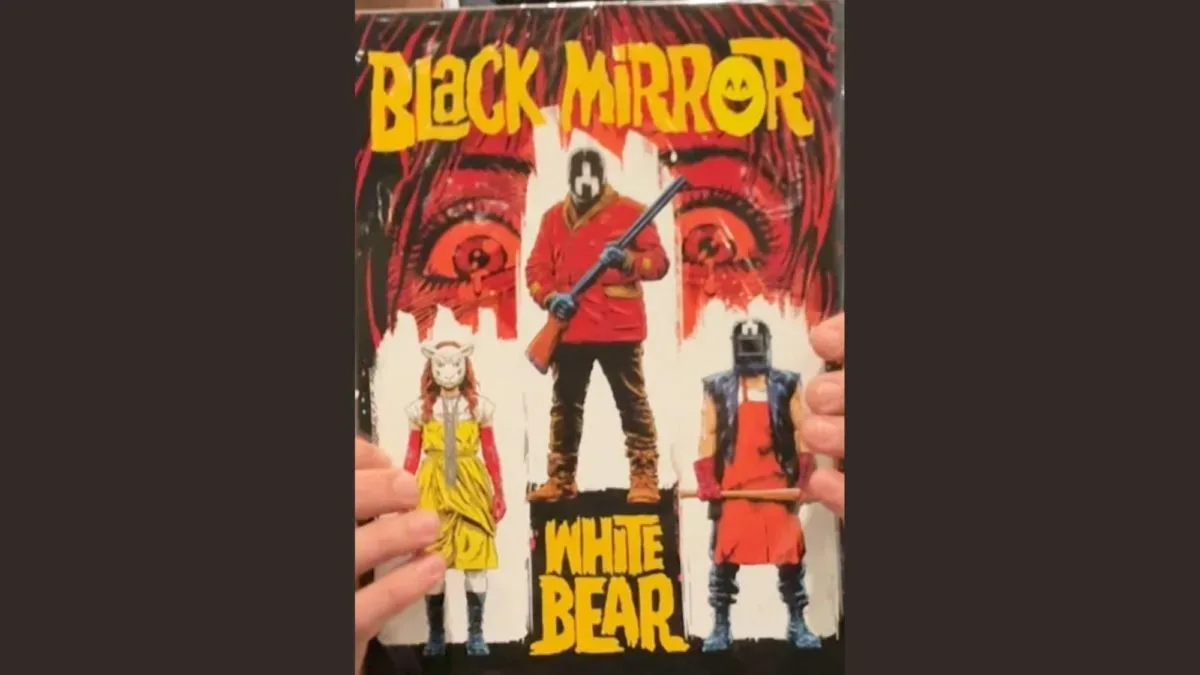
Black Mirror: White Bear is headed to comic shops as a premium full-colour hardcover on February 24, 2027. The officially licensed graphic novel adapts Charlie Brooker’s unsettling television story, with Neil Gibson writing the adaptation, Piotr Kowalski handling interior art and Butcher Billy creating the cover.
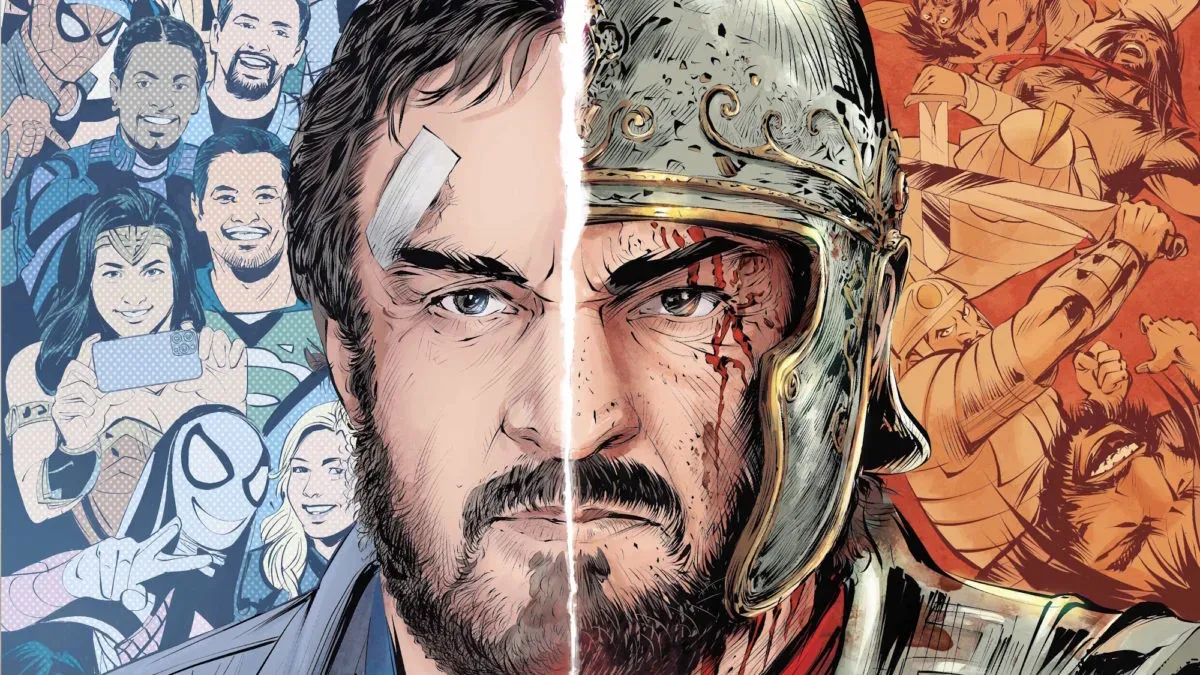
The book is the third announced Black Mirror graphic-novel adaptation from Twisted Comics, following San Junipero and USS Callister. It carries a listed price of $32.99 and is intended for mature readers. The creative credits also make clear that this is an adaptation rather than a wholly new sequel or spin-off: the comic will revisit the central scenario of White Bear in the sequential-art format.
For readers who collect comics as well as follow screen adaptations, the most important practical detail is that the hardcover is positioned alongside the existing San Junipero and USS Callister volumes. That gives the line a developing shelf identity rather than making White Bear a one-off licensed release. U.S. retailers will also have access to the earlier books through the same distribution push. An incentive program will provide one free copy each of USS Callister and San Junipero for every 10 copies of White Bear ordered.
What the White Bear adaptation is bringing to comics
White Bear originated as the second episode of Black Mirror’s second season. Written by Brooker and directed by Carl Tibbetts, it first aired in 2013. Its lead character, Victoria Skillane, played on screen by Lenora Crichlow, wakes in a house with almost no memory of who she is or how she got there.
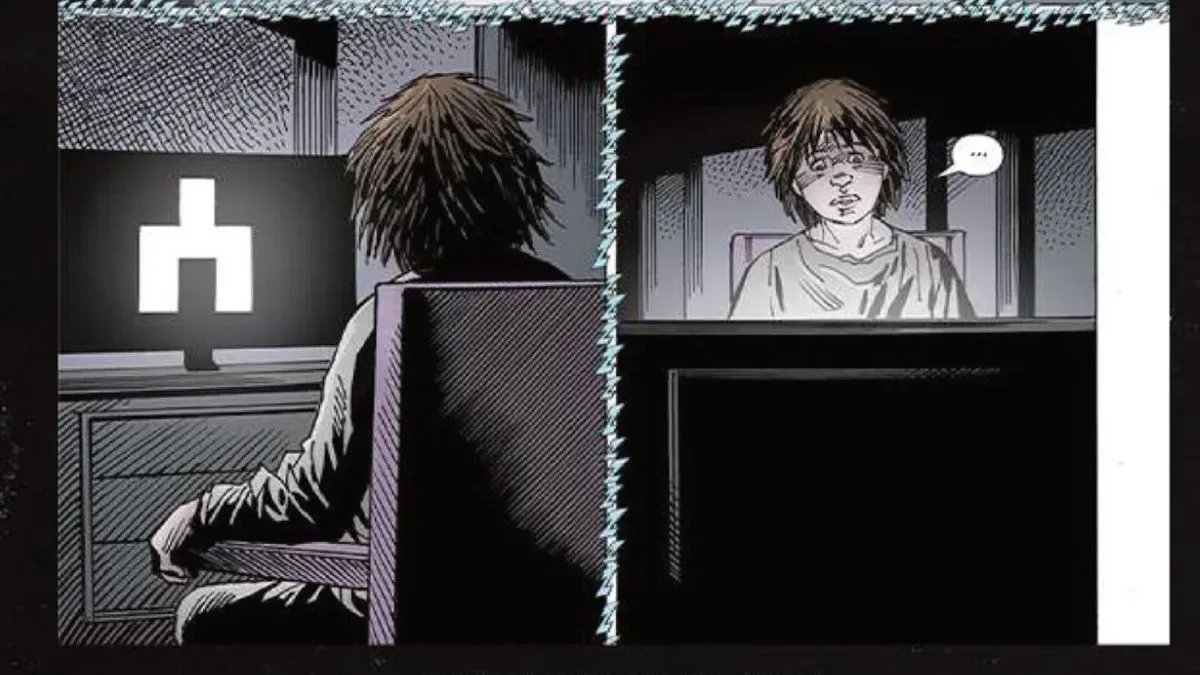
The initial premise is deliberately disorienting. Outside, Victoria encounters people who hold up their phones and record her but do not offer help. She is pursued by masked figures described as hunters, while a small group explains that a strange signal has rendered much of the population passive. As Victoria flees, partial clues emerge: an ominous symbol, the White Bear name and the growing feeling that the crisis has been staged around her for a reason.
That setup is a natural fit for a comic, but it also presents an adaptation challenge. The story’s tension does not depend simply on a monster, gadget or far-future setting. It comes from the unnerving behaviour of bystanders: people close enough to intervene, yet committed to filming instead. Comics are particularly equipped to make that image linger. A panel can hold the central character in motion while surrounding figures remain frozen behind glowing phone screens, forcing the reader to take in the imbalance of attention and inaction at their own pace.
That is an observation about the medium rather than confirmation of any specific scene construction in the new book. The preview and solicitation establish the basic situation, but readers should not assume the comic will reproduce every beat, shot or reveal from the screen version in precisely the same way. “Adapted” means the original narrative is being translated into a medium built from pages, panels, captions, speech balloons and page turns, rather than moving images, editing and sound.
Why the premise remains potent
At its core, White Bear examines spectatorship: the act of watching an event without meaningfully participating in it. The episode turns that concern into a physical threat. Victoria is surrounded by witnesses, but their cameras do not provide safety. Recording becomes an act of distance, and the presence of an audience makes her predicament more frightening rather than less.
The story also uses the language of science fiction to focus on crowd psychology and punishment. The signal is an important piece of its imagined world, yet the larger discomfort comes from what people choose to do around it. The premise raises questions about guilt, public retribution, empathy and the way suffering can be made into spectacle. Those themes explain why the episode has remained one of the most discussed early entries in the anthology.
For a graphic novel, those ideas can extend beyond dialogue. Comics routinely use repetition, juxtaposition and framing to establish a character’s isolation. Repeated images of observers can make a crowd feel faceless even when every figure is physically present. A page turn can delay a piece of information or abruptly alter a reader’s understanding of an earlier scene. And the fixed nature of the page allows readers to revisit a visual clue immediately, a different relationship to suspense than a television episode that keeps moving forward.
None of that guarantees a particular interpretation of the new edition. It does, however, clarify why selecting White Bear for adaptation makes sense. Its narrative is memorable not merely because it is frightening, but because its images—phones raised, strangers watching, a woman trying to understand the rules of the world around her—are already strongly visual.
The creators behind the hardcover
Gibson is credited as writer on the adaptation and is also known for Twisted Dark. Kowalski is credited for the art, while Butcher Billy is credited for the cover. In comics terms, those roles matter: the writer shapes the page-level version of the narrative, the interior artist determines how characters, locations, action and pacing appear throughout the book, and the cover artist creates the image that represents the volume at first glance.
That division also means a striking cover should not be treated as evidence that the interiors share an identical look. Covers and sequential pages perform different jobs. The cover must sell the atmosphere and identity of a book in one image; interior art must guide readers through the entire story clearly, including its shifts in information and tension.
The book is produced under licence from Banijay. Licensed adaptations can be especially attractive to readers who enjoy comparing how a familiar screen narrative changes when it no longer has performance, soundtrack or editing to lean on. It is also a route into the story for comic readers who may know the Black Mirror name but have not watched every episode.
A growing Black Mirror comics shelf
The key collecting point is continuity of format and branding, not rarity claims. White Bear is presented as a premium hardcover that sits with Black Mirror: San Junipero and USS Callister. Readers interested in a matched trio may want to check with their preferred retailer about availability of the earlier volumes, particularly since the retailer incentive is intended to widen access to them through White Bear orders.
An incentive copy is a retailer-facing ordering arrangement, not necessarily a special consumer edition. Here, the stated offer is straightforward: retailers ordering 10 copies of White Bear receive a free copy of each of the two previous graphic novels. Shoppers should therefore avoid assuming that every store will stock all three books in the same quantity, or that the incentive itself denotes a unique variant. Store ordering decisions still determine what arrives on local shelves.
There is a broader appetite for comic-book material that treats established characters and concepts in new formats, as seen in coverage of increased attention around Marvel comics. White Bear is a different kind of project: it is not a superhero serial, but a prestige-style adaptation of a self-contained television story. Its appeal lies in seeing how a tightly constructed psychological thriller functions as a book readers can pause, reread and place next to companion adaptations.
What to know before release
- Title: Black Mirror: White Bear
- Format: Premium full-colour hardcover
- Release date: February 24, 2027
- Listed price: $32.99
- Writer/adaptor: Neil Gibson
- Interior artist: Piotr Kowalski
- Cover artist: Butcher Billy
- Original story: Charlie Brooker’s Black Mirror episode
- Companion volumes: Black Mirror: San Junipero and USS Callister
The release gives one of Black Mirror’s most unsettling stories a new form without changing what makes its premise compelling: a person in crisis surrounded by an audience that prefers to watch. With Gibson, Kowalski and Butcher Billy attached, the 2027 hardcover is set to expand the developing line of Black Mirror comics while giving readers another way to confront the story’s questions about observation, accountability and cruelty as entertainment.