Spoilers for Batman 2026 Annual #1 follow.
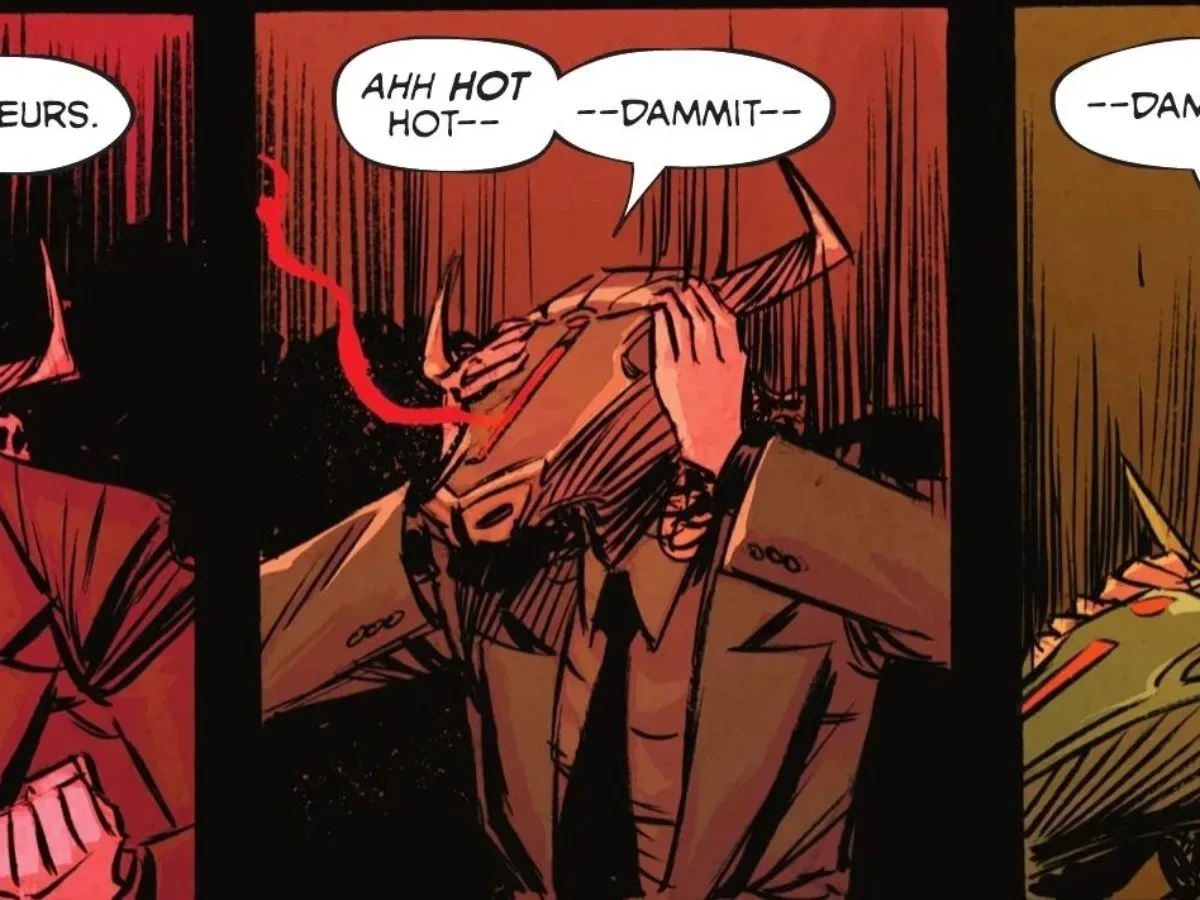
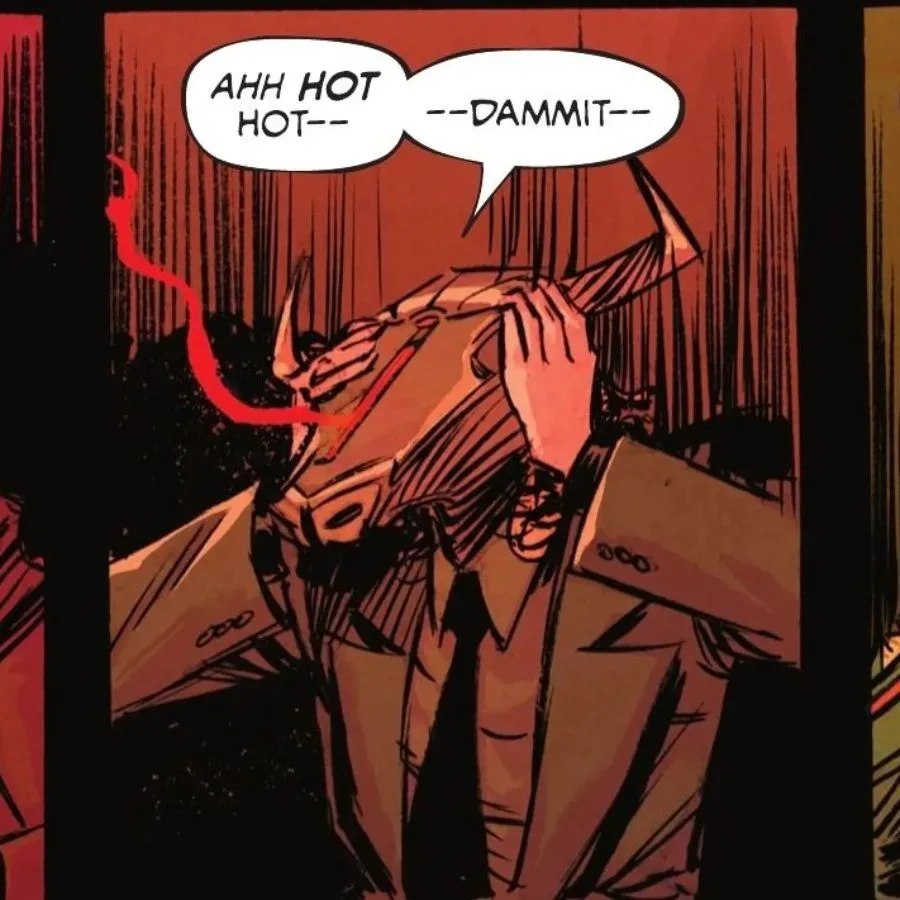
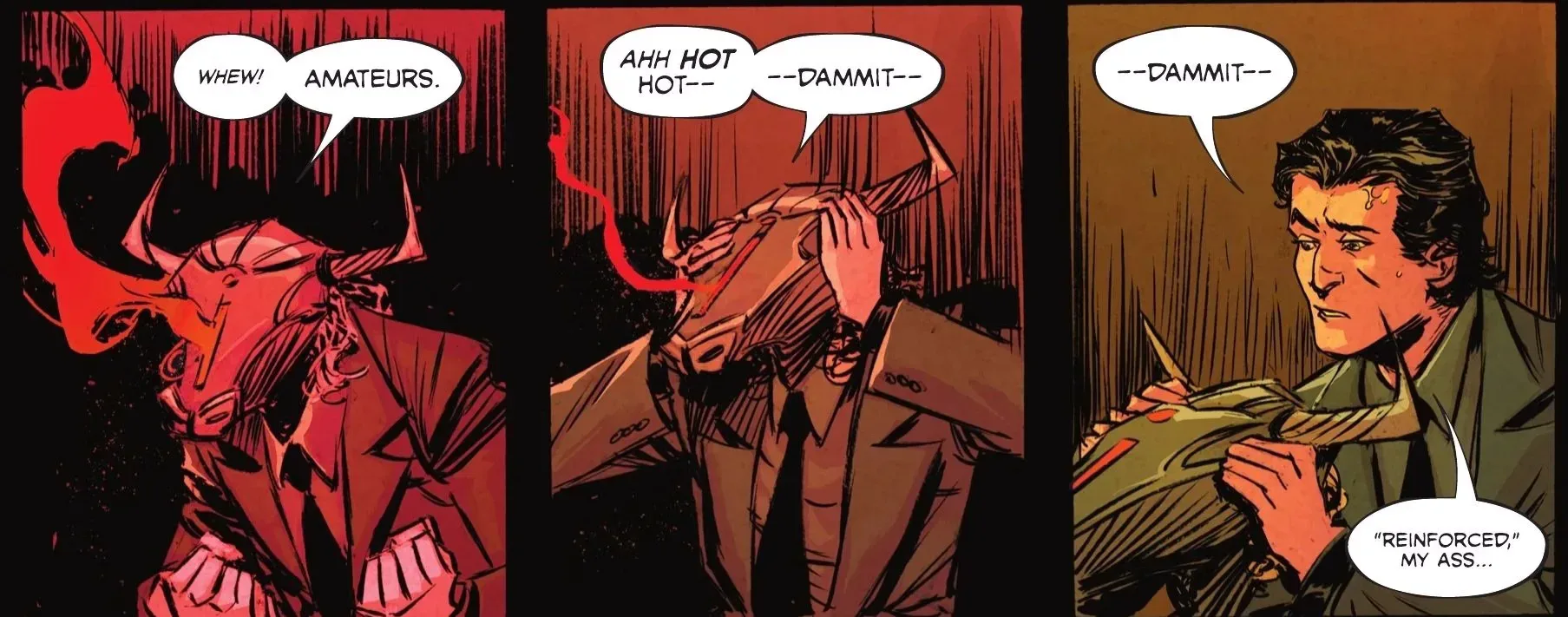
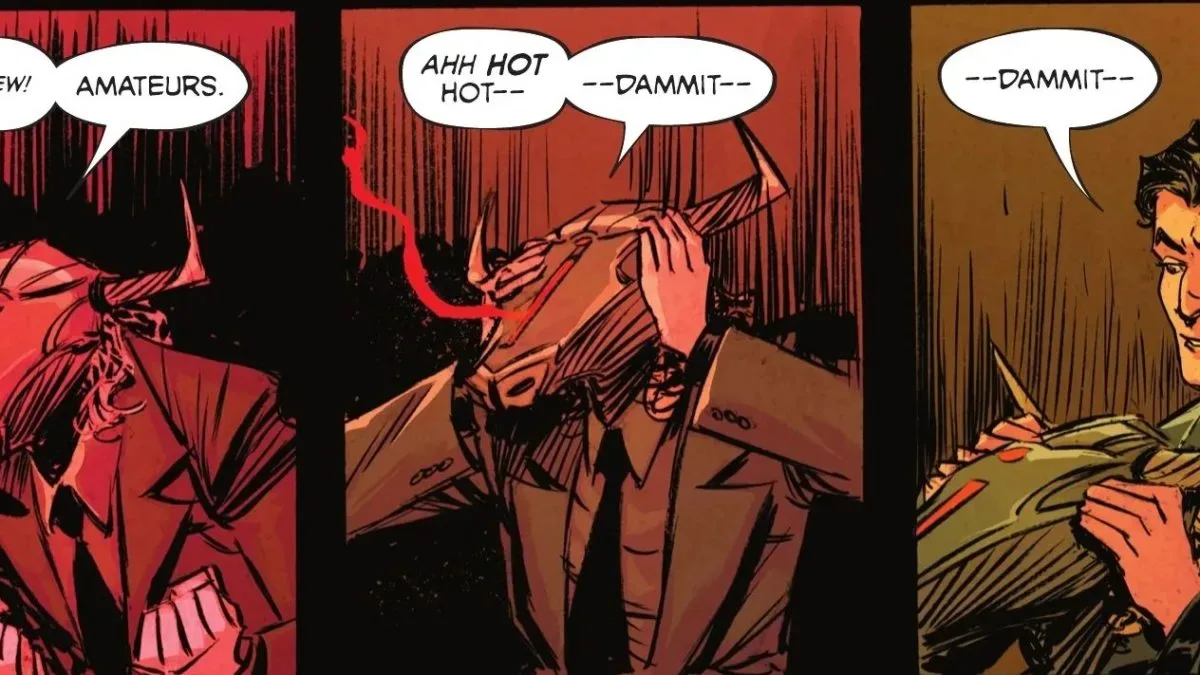
Batman 2026 Annual #1 turns its attention away from a single rooftop confrontation and toward the architecture of Gotham’s criminal world. Written by Matt Fraction, with art by Brian Ching and Jesse Lonergan, the annual links two figures at the core of the current threat: the Minotaur, leader of the organization called Torus, and Noah Kuttler, better known as the Calculator.
The issue supplies a major piece of the Minotaur’s identity puzzle: his name is Max. It also gives Kuttler a darkly formative origin and positions him as something more complicated than a willing lieutenant. The Calculator understands the logic Max is using to consolidate Gotham’s underworld. Crucially, he also seems convinced that the model has a built-in endpoint—because Batman has repeatedly defeated him despite every effort to turn crime into a solvable equation.
Two stories, one criminal system
The annual reportedly uses intertwined narratives to trace the Calculator’s past and the Minotaur’s expanding plan. That structure matters because the pair represent distinct approaches to control. Max is building an organization that treats Gotham’s criminal families and rogues as parts of a portfolio: assets to be rewarded when productive and punished when they create risk. Kuttler supplies the local knowledge, calculations, and logistical instincts of someone who knows precisely how Gotham’s underworld operates.
Torus has spent months taking hold of that underworld. The Minotaur is not presented simply as another costumed adversary claiming territory. His stated operating logic borrows the language of venture capital, predatory investment, and algorithmic systems. In plain terms, he wants to impose a centralized order on a criminal scene that normally depends on competing families, independent villains, and constantly shifting loyalties.
That is an important distinction in a Batman story. A gang leader may seek money or turf; a system-builder seeks to redefine the incentives that make everyone else act. Torus promises wealth to those who fall in line, assembles players into a larger plan, and answers defiance with violence. The annual’s description of punishment as a price paid in blood makes clear that Max’s version of efficiency is not abstract business jargon. It is coercion.
Max’s “move fast” philosophy has a Gotham-sized flaw
The Minotaur’s worldview invokes the technology-industry phrase “move fast and break things,” a slogan associated with Facebook’s early internal culture. Within the comic’s context, it is less a tribute to innovation than a statement of menace. Max applies the idea to people, organizations, and an entire city’s criminal infrastructure. Disruption is not collateral damage to his strategy; it is the strategy.
Calling the approach algorithmic does not mean it is magic or that the annual establishes a literal computer program running Gotham. An algorithm is simply a step-by-step method for reaching an outcome. Max’s apparent method is to identify the city’s pressure points, distribute incentives, make examples of dissenters, and keep every participant dependent on the Torus structure. The Calculator is naturally valuable to such a project because he has long been defined by analysis, information, and predicting other people’s choices.
But the annual gives the partnership a tension that makes it more than a straightforward villain team-up. Max believes his model can account for Gotham. Noah has already experienced the limits of calculation when Batman enters the equation. The key question is not whether the Calculator can see the numbers in Max’s plan; it is whether he can meaningfully alter the outcome he believes those numbers predict.
The Calculator’s origin reframes his obsession with patterns
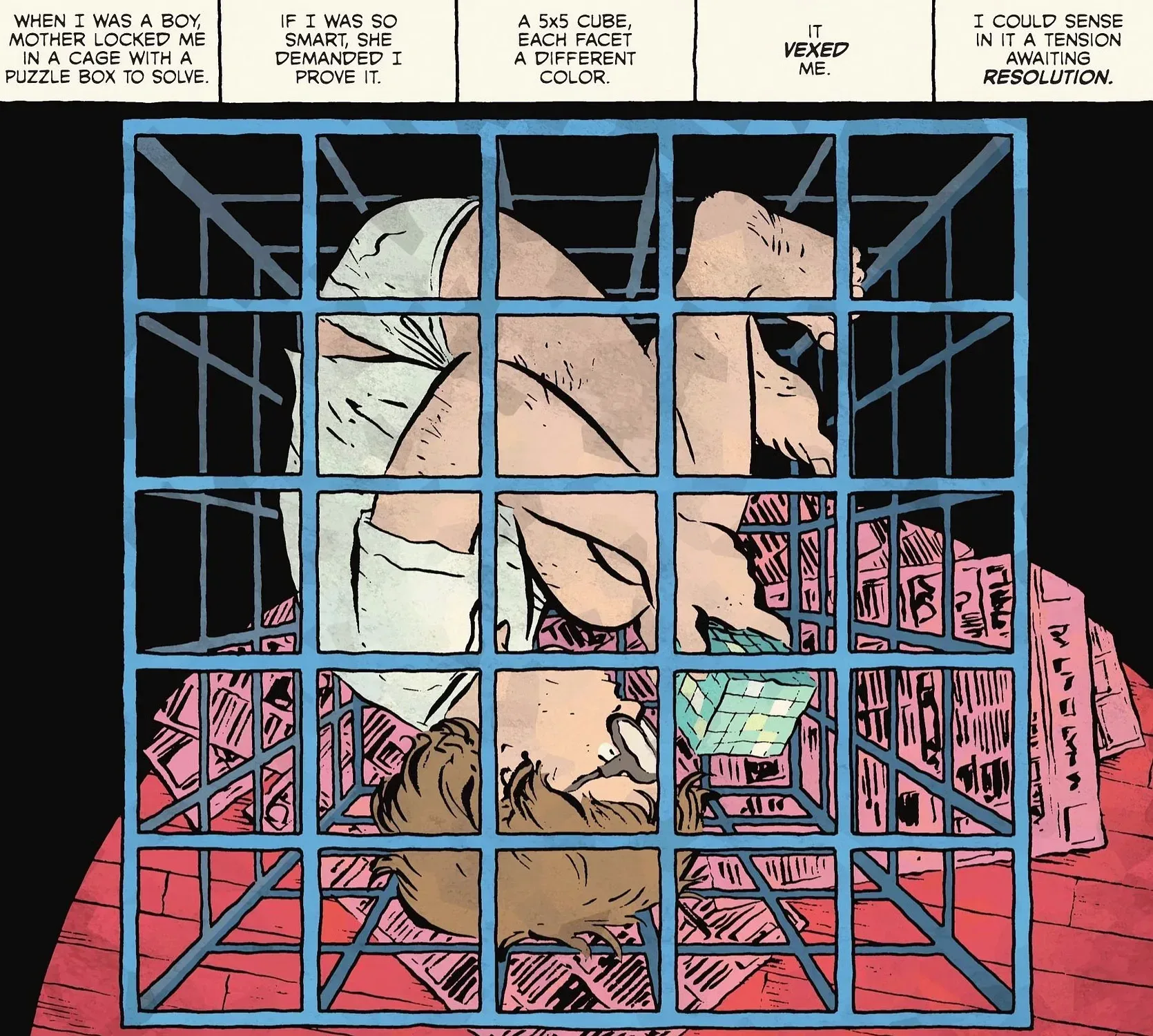
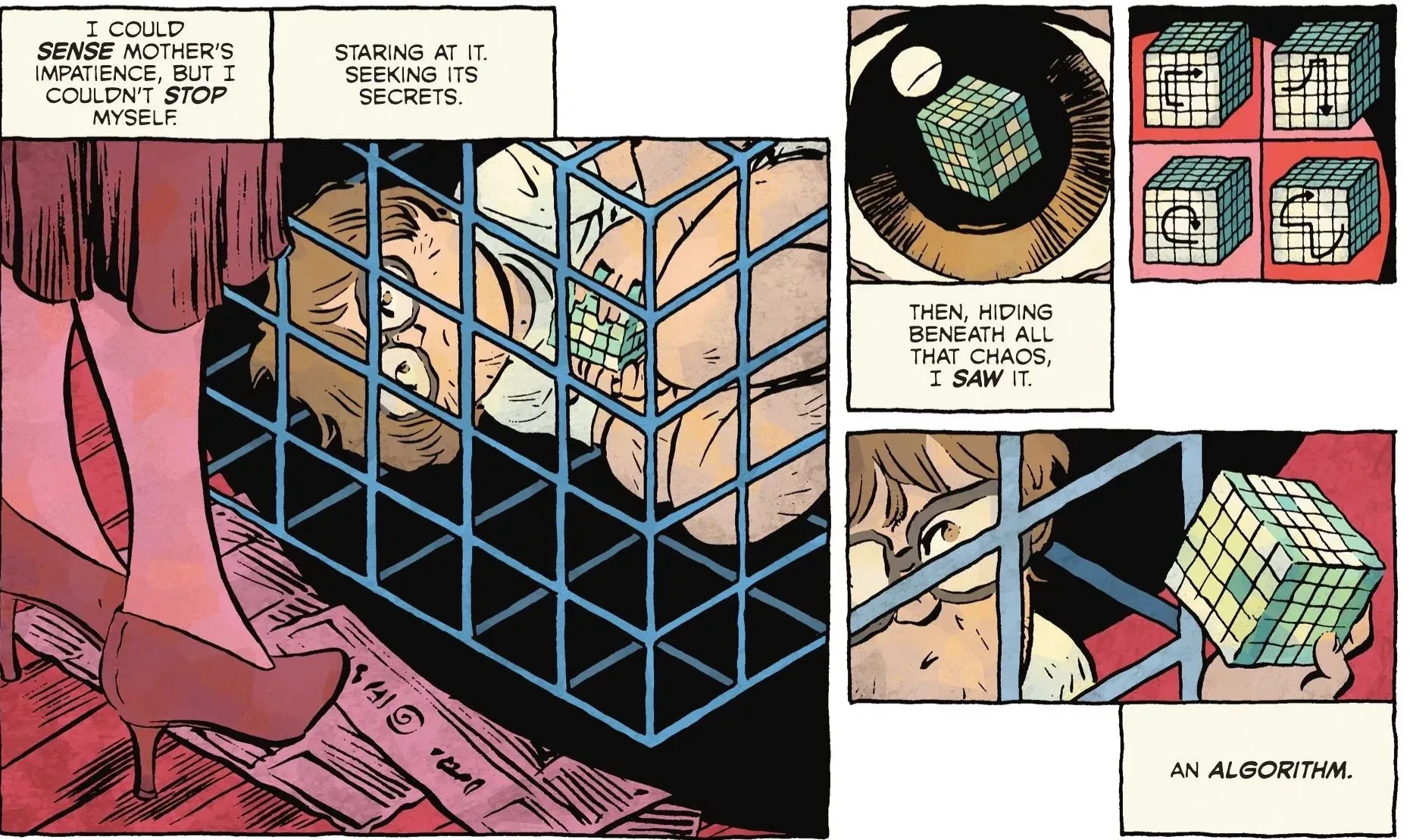
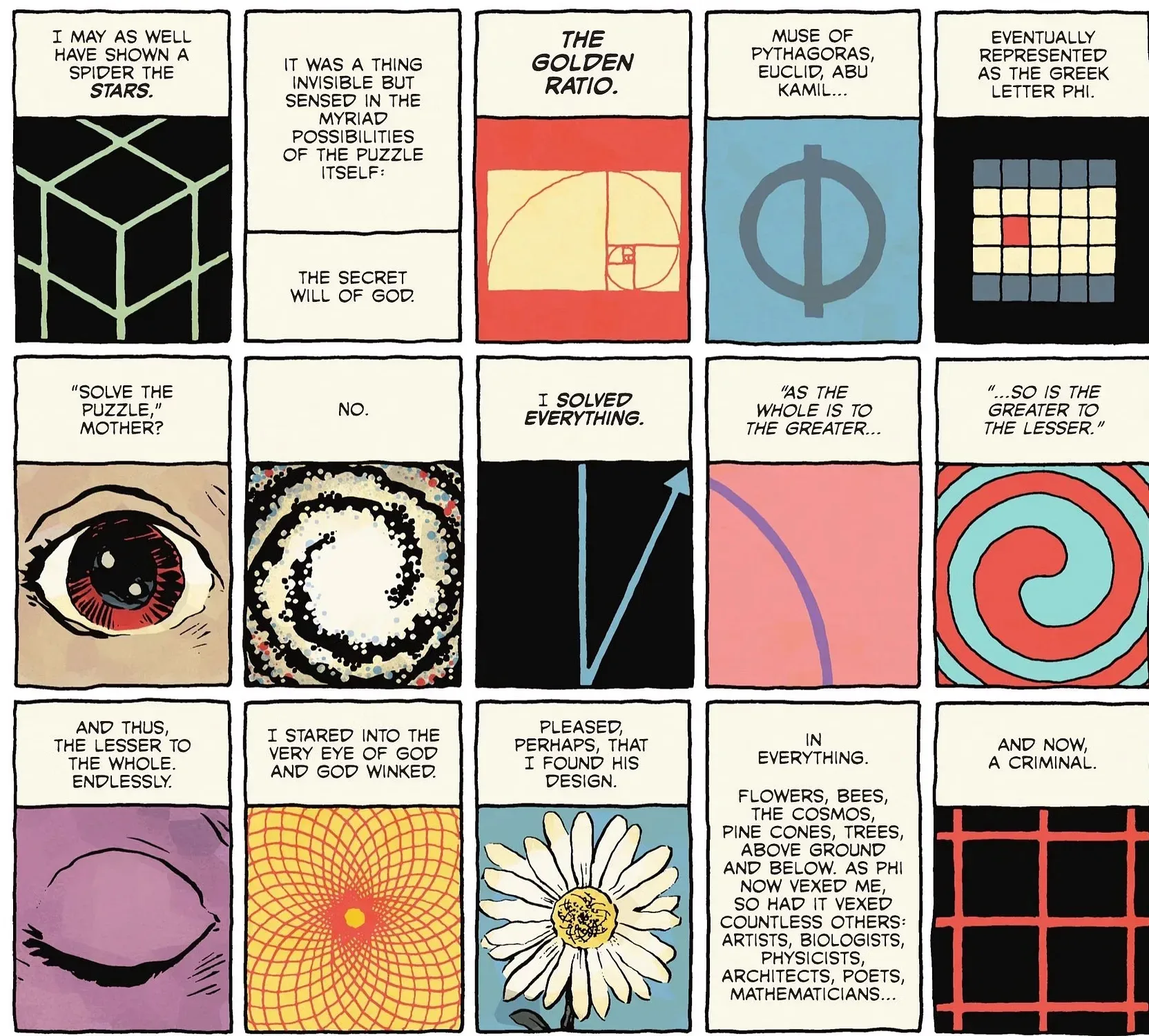
Kuttler’s side of the annual goes back to a brutal childhood in which his mother imprisoned him in a cage as a test. The story connects that trauma to his fixation on the Golden Ratio, a mathematical relationship often associated with patterns found in the natural world. The comic references examples such as snail shells, fern branches, and ice crystals to convey the appeal of recurring structure: the notion that a larger whole can be reflected in its smaller parts.
It is worth separating the term from the character’s interpretation. The Golden Ratio is a mathematical concept, but in fiction it can also serve as a metaphor for a character searching for order, destiny, or a hidden pattern behind events. Kuttler’s fascination appears to turn Gotham itself into a pattern to be read. The families, villains, Batman, and Torus are all variables in a grand calculation.
That makes the annual’s use of the concept particularly uneasy. A character shaped by confinement and cruelty seeks safety in predictability, but Gotham is a city built to upset predictions. Batman’s interventions, shifting alliances, and individual decisions keep introducing factors that a neat model cannot fully contain. Kuttler may see an elegant design where others see chaos, yet his history provides evidence that his certainty can fail.
Why the Calculator is the right foil for this story
The Calculator was created by Bob Rozakis and Mike Grell in Detective Comics #463 in 1975. His original concept was rooted in the then-new cultural visibility of pocket calculators. Kuttler wore a battlesuit with a numerical keypad across the chest and an LED display on his headgear. Commands entered through the keypad could produce hard-light constructs and analyze an opponent’s tactics.
His defining gimmick was particularly suited to superhero fights: after losing to a hero, he could record the encounter and prepare countermeasures that would make him effectively immune to that opponent in a later rematch. His early appearances pitted him against figures including the Atom, Black Canary, Green Arrow, Elongated Man, Hawkman, Batman, Blue Beetle, and Air Wave. Batman eventually overcame Kuttler by overwhelming the system.
That outcome is more than a piece of continuity trivia in light of the annual. The Calculator’s original power depended on reducing an opponent to recorded inputs and predictable responses. Batman’s answer was to break the model through sheer overload. The new story’s question—whether Max’s criminal algorithm can survive Gotham and Batman—therefore echoes the character’s foundational weakness.
In 2004’s Identity Crisis, the Calculator was reworked as an uncostumed information broker for supervillains. Rather than personally fighting heroes in a keypad suit, he offered logistics, tactical guidance, weapons suggestions, and real-time support, charging $1,000 per question. That version transformed him into a criminal counterpart to Oracle: a remote operator whose value came from information and connections.
Batman 2026 Annual #1 builds naturally on that latter role. Kuttler is not just a man with a scheme; he is an accountant of criminality, a person who can quantify risk, advise powerful clients, and track a sprawling network. That makes him indispensable to Torus—but potentially dangerous to Max if his analysis says the enterprise is doomed.
Batman is the variable neither villain can fully own
The annual casts Batman as the recurring disruption in the Calculator’s worldview. Kuttler has made calculations before, and Batman has beaten him before. His apparent expectation is not that the Minotaur’s plan will fail immediately or painlessly. Instead, he sees an eventual conclusion approaching, with the timing still uncertain.
That uncertainty gives the larger Torus storyline stakes beyond an identity reveal. Max appears to have prepared for an environment in which Gotham’s criminals can be organized, incentivized, and frightened into compliance. But Batman cannot be treated merely as a hostile market condition or a rival piece on a board. He is an active moral and physical force who changes the behavior of everyone around him.
The source material also places Batman under pressure from Vandal Savage, assassins focused on Bruce Wayne, and the Bad Seeds event. Those distractions may be part of why Torus has been able to advance. Yet they also raise the practical story question for readers following the run: is Max taking advantage of a temporary opening, or has he mistaken Batman’s divided attention for a permanent weakness?
For a comparable pop-culture story focused on the way identity and memory can reshape an ending, see this breakdown of the memory at the center of Blade Runner 2099.
What the annual establishes for Torus
The issue does not resolve the Minotaur’s campaign. Instead, it clarifies the terms of the conflict. Max has a name, a businesslike framework for taking control, and a willingness to enforce his structure ruthlessly. The Calculator has a personal history that explains why patterns and mathematical order hold such power over him, as well as a professional history proving he understands Gotham’s criminal ecosystem.
Most importantly, the annual places an implied countdown inside the alliance. Max wants the Calculator’s expertise because he speaks the language of systems. Noah appears to believe the system will eventually meet the one opponent it cannot price, predict, or permanently neutralize.
Batman 2026 Annual #1 is credited to Matt Fraction, Brian Ching, and Jesse Lonergan, with a cover by Ching. It is listed at $5.99 and dated November 25, 2026. For readers tracking the Torus plot from Batman #1 onward, the annual functions as both a backstory chapter and a warning: Gotham’s newest order may be carefully calculated, but calculation has never guaranteed control over Batman.