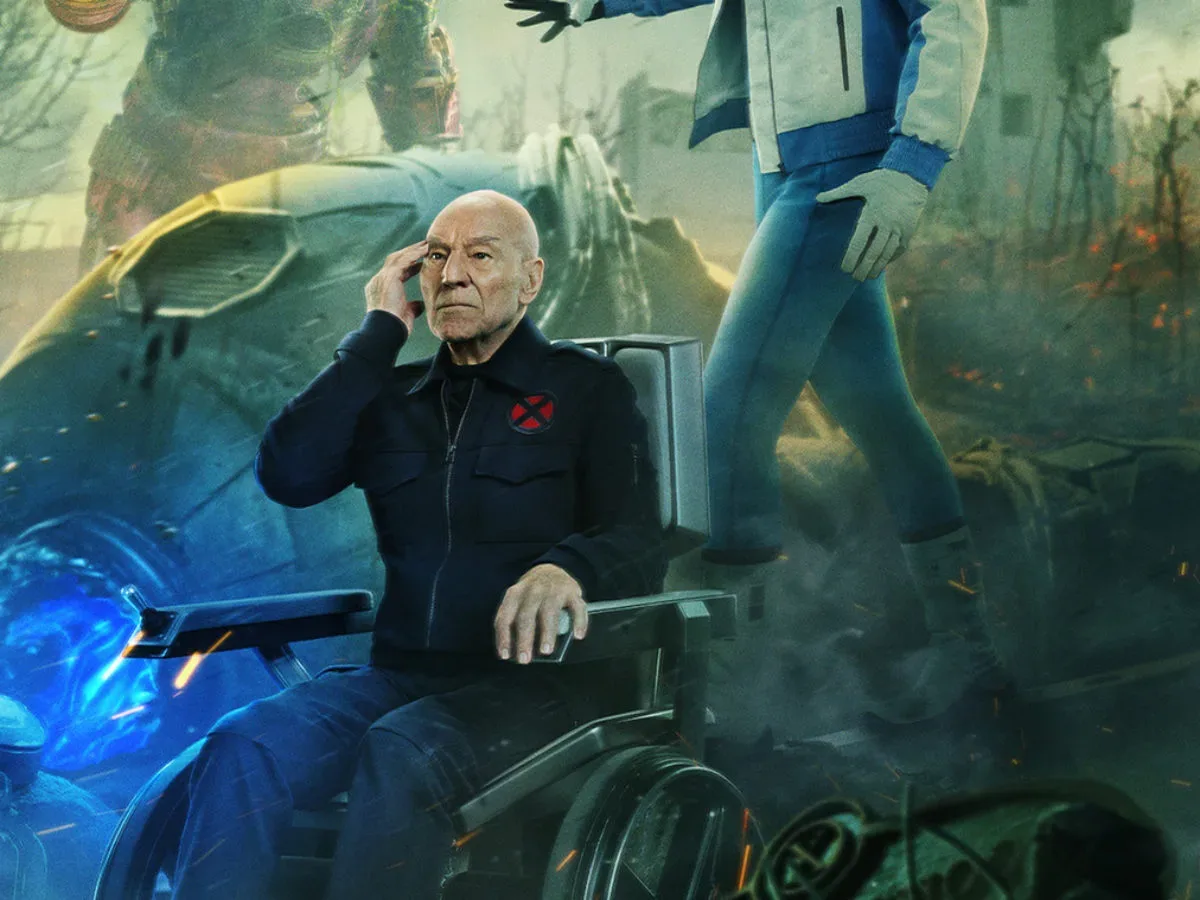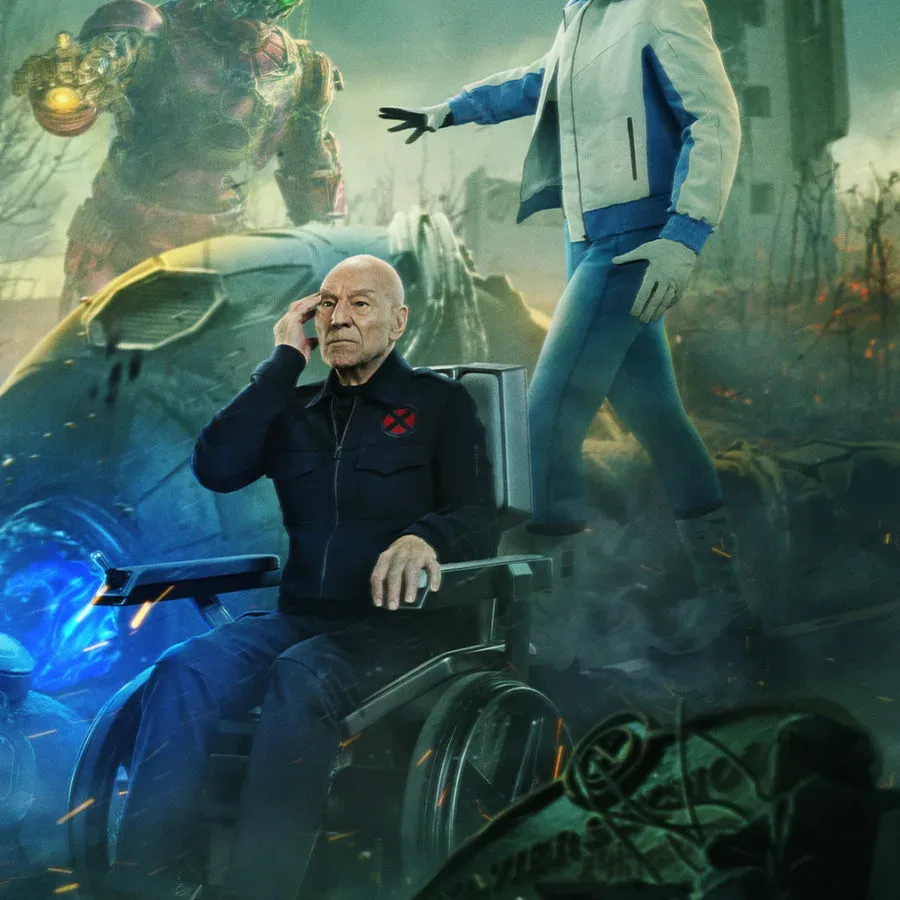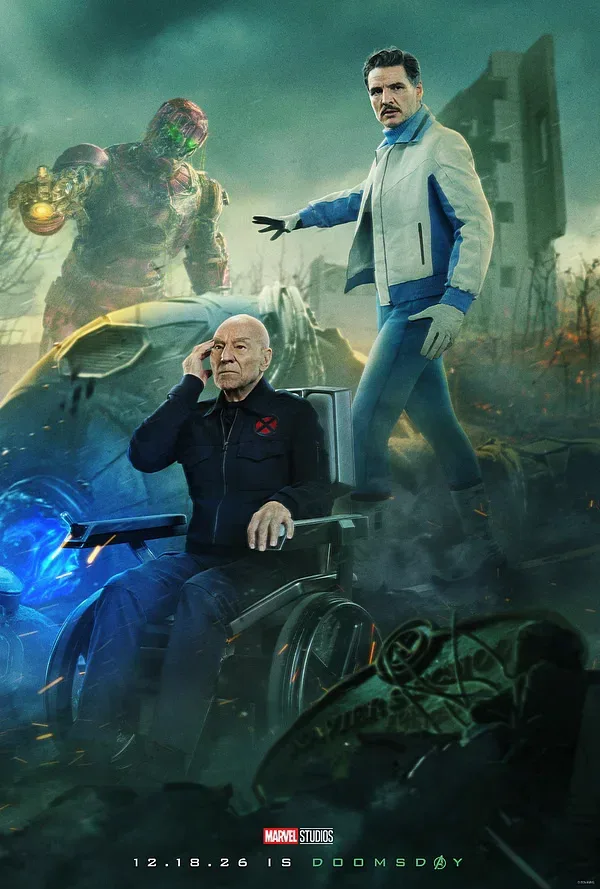
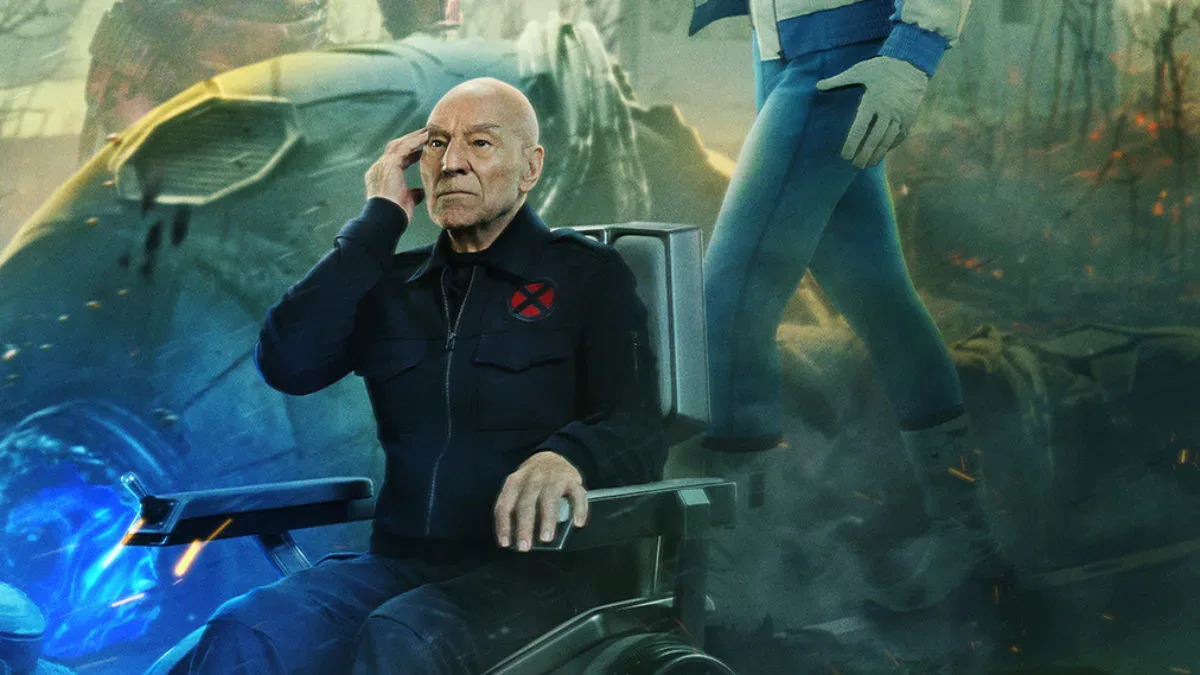
Avengers: Doomsday is winning the attention battle before the conversation even gets to a trailer, a plot reveal, or any of the usual blockbuster machinery. A newly released set of 11 interconnected character posters was the most-read item in a broad pop-culture roundup, placing ahead of upcoming comics publishing information, superhero continuity developments, collectible merchandise, and a major Magic: The Gathering crossover.
That matters less as a declaration of what is “best” and more as a snapshot of what fans are actively trying to decode. Connected poster art is built for that behavior. One image can introduce a familiar face; a linked group of images asks viewers to compare backgrounds, poses, visual motifs, composition, and placement. The individual poster is an advertisement. The full arrangement is a puzzle with officially supplied pieces.
For a project carrying the Avengers name and the Doomsday subtitle, a character-poster rollout is especially suited to speculation. The supplied information confirms that there are 11 posters and that they interconnect. It does not establish what the poster layout reveals about story, alliances, chronology, characters beyond the headline description, or release plans. Readers should keep that boundary in mind: promotional artwork can be a prompt for analysis, but it is not automatically a plot synopsis.
Why interconnected posters generate repeat attention
Film posters have always had a simple job: establish title, tone, stars, and a visual identity quickly. Interconnected posters perform a more social version of that job. Instead of delivering one complete image, they make completion contingent on seeing the series together. Fans circulate individual designs, assemble the wider composition, and debate whether a recurring object or a gap in the layout carries meaning.
In practical terms, the word interconnected can mean the designs join into a larger composition, share continuous scenery, or use layouts intended to be displayed as a set. It does not, on its own, tell us how much narrative information the finished display contains. But the format turns attention into participation. A single poster may take seconds to absorb; a multi-image mosaic gives people a reason to return and compare.
That is likely part of why this release stayed atop the day’s reading. A poster campaign can be experienced at several levels at once:
- Casual viewers can simply enjoy the character art.
- Franchise followers can look for relationships, visual echoes, and possible omissions.
- Comics readers can consider whether the imagery evokes material or ideas associated with Marvel’s publishing history.
- Collectors can assess the appeal of a coordinated physical or digital art set, while remembering that no collectible product details are established here.
The result is an unusually efficient piece of publicity: it is immediate enough for a scroll, but incomplete enough to sustain conversation.
A reading list where comics still sit at the center
The day’s top entries show an audience moving fluidly across connected hobbies rather than staying inside one lane. Behind Avengers: Doomsday, the list included 21 official Marvel Comics solicitations for February 2027, a Wendy’s holiday box with four collectible knit hats, and the first blind-bag issue tied to DC’s Absolute Universe for Absolute Justice #1.
A solicitation is advance sales and catalogue material for a forthcoming comic. It commonly supplies a cover image, a creative team, a short premise, format information, and ordering details. It is useful for readers planning purchases and for fans mapping out the direction of a line, but it is also promotional material. A solicitation may tease a development without conveying the full issue, so it should not be treated as a complete account of the story.
Blind-bag comics, meanwhile, package an issue so buyers do not know precisely which edition or cover they will receive until opening it. The listing for Absolute Justice #1 shows that format itself is a point of interest, not merely a sales detail. It connects comic readership to the collecting side of fandom: presentation, editions, scarcity, and the experience of opening a surprise all become part of the conversation.
Elsewhere in the same cluster were items concerning the child of Absolute Batman and Catwoman, developments in Midnight X-Men #2, more Absolute Universe debuts in Absolute Flash #21, and writer Kelly Thompson’s response to Black Cloak and The Cull. Taken together, those subjects demonstrate the usual rhythm of comics attention. Readers follow long-running shared-universe continuity, issue-by-issue spoilers, publishing formats, and creator-centered news simultaneously.
Magic: The Gathering and Dune show the crossover economy at work
The top ten also contained the full reveal of Magic: The Gathering Secret Lair x Dune. Secret Lair is a Magic: The Gathering product line associated with themed releases, and the interest in a Dune collaboration underscores how franchise crossovers can pull distinct communities into the same news cycle.
There is a useful difference between that kind of crossover and the Avengers posters. A card-game collaboration invites fans to evaluate a product through the specific language of cards, treatments, themes, and collectibility. A connected poster campaign is primarily visual branding. Both, however, depend on a shared instinct: audiences want to see how one established property has been interpreted through another medium or product format.
That crossover appetite helps explain why a list led by a superhero film campaign can comfortably include comics, restaurant merchandise, trading-card news, and creator interviews. The common thread is not one medium. It is fandom’s interest in how familiar worlds expand, recombine, and are packaged for different audiences.
What the wider mix says about fandom attention
The list is not a box-office chart, sales report, or official measure of a property’s total popularity. It is a narrow measure of what readers chose to open during a particular day. Still, it offers a useful view of the kinds of information that cut through the noise.
Visual reveals have an advantage because they can be grasped and shared instantly. Solicitations appeal to readers who want structured future information. Spoiler discussion captures those already following a story in progress. Collectibles create interest through finite objects and unusual formats. And crossovers make each participating fanbase curious about the other.
The Avengers poster release sits at the intersection of the first and last of those categories. It is visual, immediately legible, franchise-driven, and designed to make a group of separate images feel like one event. It also arrives in a pop-culture environment where comic-book and movie audiences are trained to read composition for clues, even when the image may simply be emphasizing a campaign’s aesthetic.
The sensible approach is to enjoy that interpretive game without letting it harden into certainty. An image may suggest a theme, but a suggestion is not confirmation. For readers following future Marvel developments, the most dependable details will come from explicitly stated official information, rather than from assumptions drawn solely from poster placement.
Practical takeaways for readers and collectors
For fans who encounter a connected poster rollout, a little discipline makes the discussion more rewarding.
- Separate observation from inference. “These designs form a larger image” is an observation. “This confirms a particular plot event” is an inference unless it has been stated outright.
- Check whether the material is promotional art or a purchasable item. Artwork used in a campaign does not necessarily mean prints, physical poster sets, or limited editions are being sold.
- Use solicitations as previews, not verdicts. They can help identify forthcoming issues and creative teams, but they are purpose-built to entice and may withhold context.
- Be cautious around blind-bag purchases. The unknown component is central to the format. Buyers should be comfortable with the possibility of receiving an edition other than the one they hoped for.
- Remember that a daily popularity list is temporary. It identifies a moment of intense interest, not a permanent ranking of cultural importance.
That last point is particularly relevant in a news cycle that includes everything from superhero art to comics continuity and card-game collaborations. Attention shifts rapidly as new images, solicitations, and issue releases arrive. For a look at the gaming side of that same daily churn, readers can also check the games releasing on November 19, 2026.
Seven years of recurring comics conversation
The accompanying retrospective reached back through prior years of comics and entertainment discussion, highlighting how the subjects that dominate a given day can range from publishing lineups to adaptation news, creator issues, auctions, television, toys, and games. The names and projects change, but the underlying pattern remains recognizable: major superhero announcements share attention with the granular details that keep comics communities engaged between blockbuster moments.
Past highlighted subjects included Marvel and DC solicitations, Batman/Deadpool, Planet of the Apes versus Fantastic Four, Transformers, G.I. Joe, Pokémon GO, Fallout 76, and Dune. That range is a reminder that pop-culture readership is rarely siloed. A person interested in a Marvel movie poster may also care about a new comic issue, an upcoming card release, a toy reveal, or a game event.
For now, the clearest takeaway is uncomplicated: the 11-piece Avengers: Doomsday poster release has given audiences a visual event to inspect, share, and discuss. Until more concrete information accompanies the campaign, the posters are best appreciated for what they are confirmed to be—an interconnected collection of character art—and not burdened with plot claims they have not been shown to support.