Spoilers for Amazing Spider-Man #1001 follow.
Spider-Man battles are often sold on the obvious stakes: a villain in the sky, a city on the line, a hero trying to stop the next impossible disaster. Amazing Spider-Man #1001, written by Joe Kelly with art by Pepe Larraz, pushes its conflict somewhere more intimate. Ravage’s attack is aimed at the relationship that has anchored Peter Parker for much of his life: Aunt May.
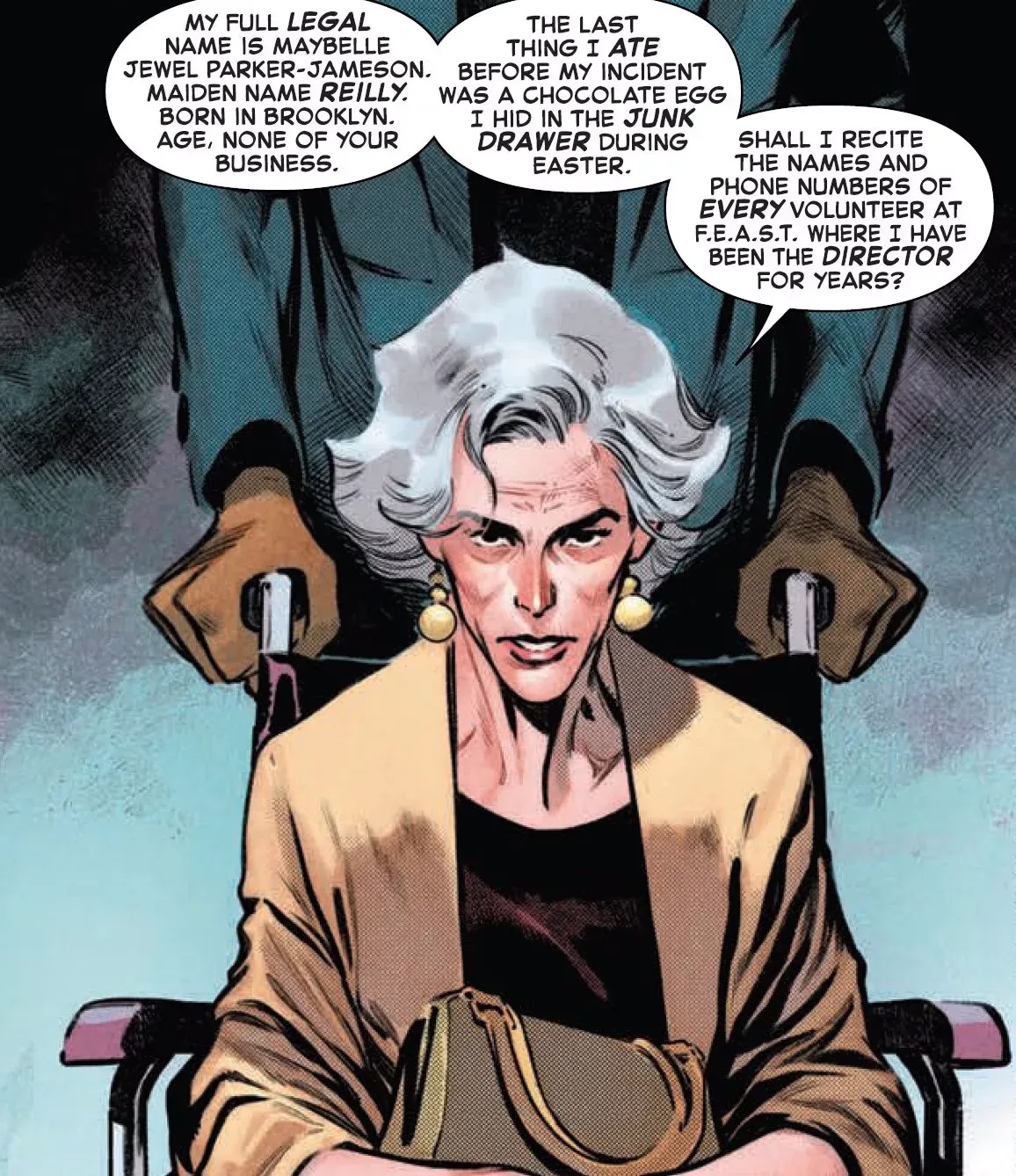
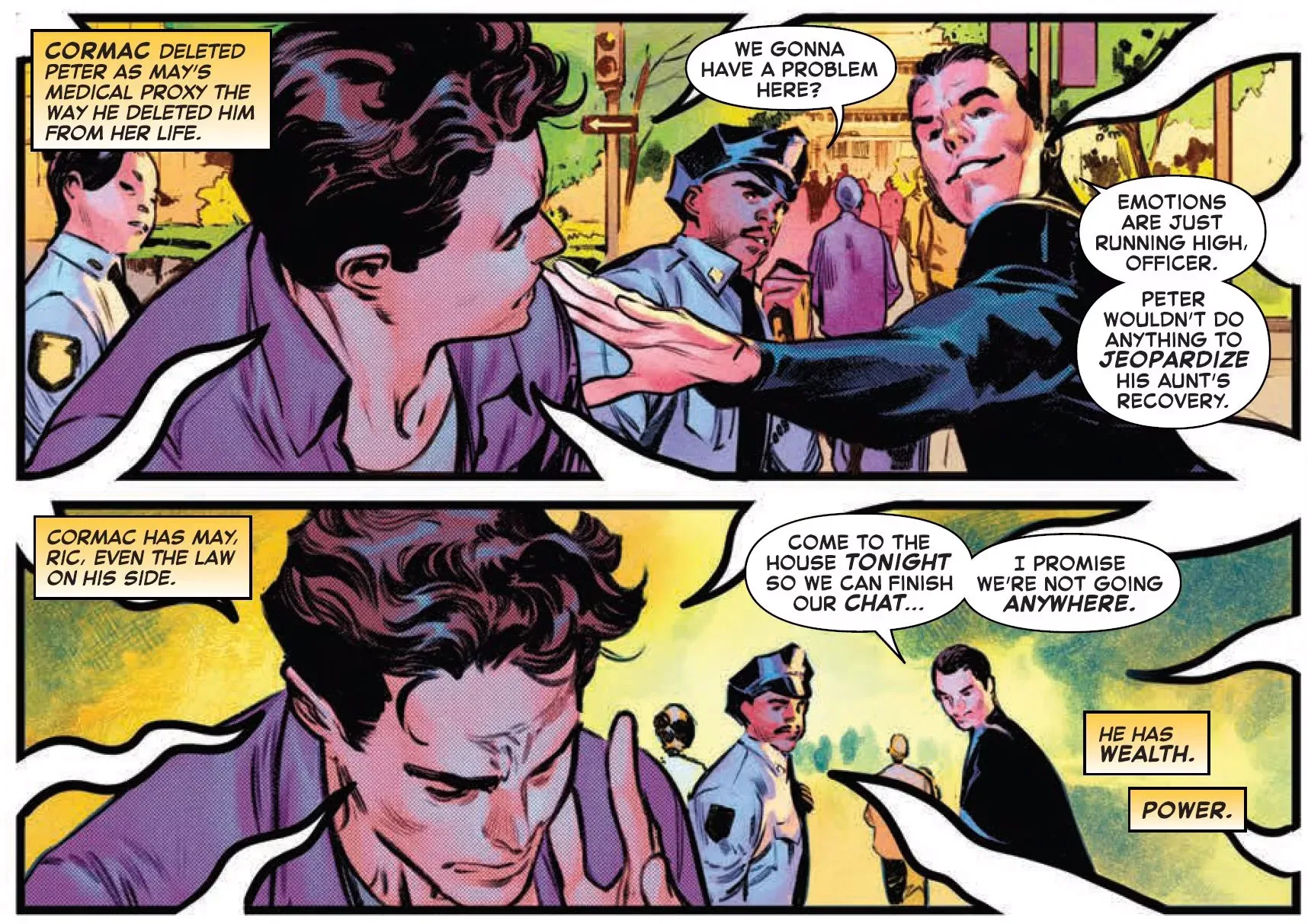
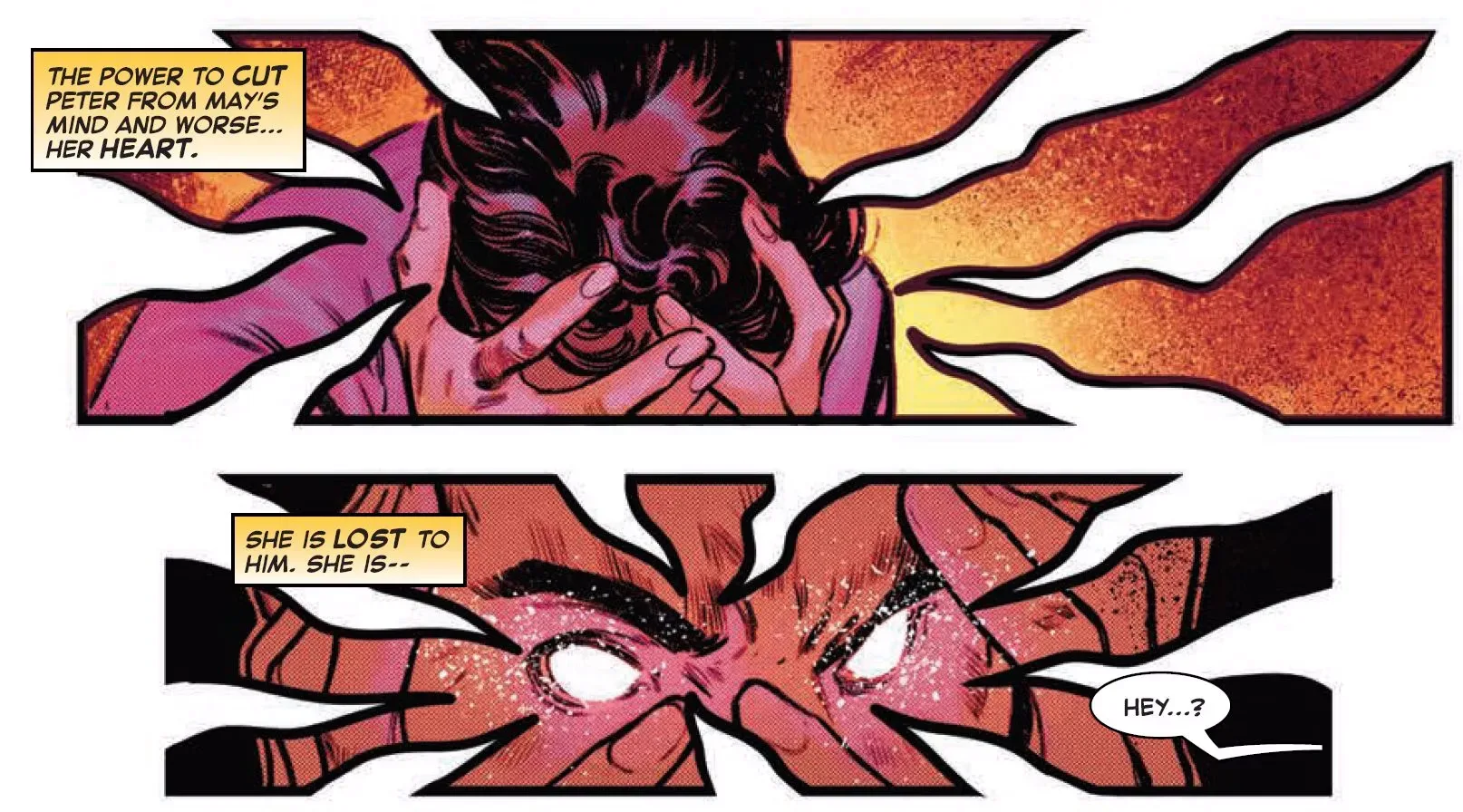
The issue follows the fallout of #1000 and frames Ravage’s plan as more than an attempt to overpower Spider-Man. Cormac Crane, Aunt May’s son and Peter’s cousin, has removed Peter from May’s memories and the traces of their shared life while leaving the rest intact. The result is a deeply targeted form of harm: May is still May, but the history connecting her to Peter has been taken from her, and her own strengths are turned against Spider-Man.
That makes the conflict especially painful because Peter cannot solve it with the standard superhero playbook. He can confront a criminal scheme, protect civilians, investigate a conspiracy, or trade punches with a super-powered adversary. He cannot simply argue a lost lifetime back into existence. Ravage has made Peter’s personal history the battlefield.
Ravage attacks the person behind the mask
Ravage’s advantage is not presented as ordinary wealth alone. His power has made him wealthy, and that status in turn insulates him from the kinds of consequences Spider-Man might otherwise exploit. It is an important distinction. A rich antagonist can buy resources; an antagonist whose abilities and influence produce that wealth can potentially operate beyond the usual pressure points of exposure, evidence, or financial loss.
For Peter, the more immediate problem is emotional rather than strategic. Aunt May’s relationship with him is described as the longest of his life, and its destruction sends his sense of self-worth into a spiral. In superhero comics, a villain’s “weapon” is not always a device or an army. Here, it is memory: the shared emotional record that tells two people why they trust and love one another.
Continuity is the term comics readers use for the ongoing history of characters and events within a shared fictional universe. This plot turns continuity into drama in a very direct way. The details of Peter and May’s past are not merely references for longtime readers; they are the core of what Ravage has tampered with. Removing Peter from May’s life effectively leaves him facing someone he loves who no longer possesses the context needed to recognize that love.
The issue also leaves Peter in a difficult moral position. Ravage can use May’s altered memories as a weapon, but Peter cannot answer by treating her memories as a tool to manipulate in return. That difference matters. It separates Peter’s commitment to May as a person from Ravage’s readiness to use her as leverage.
Mary Jane is the voice Peter can still hear
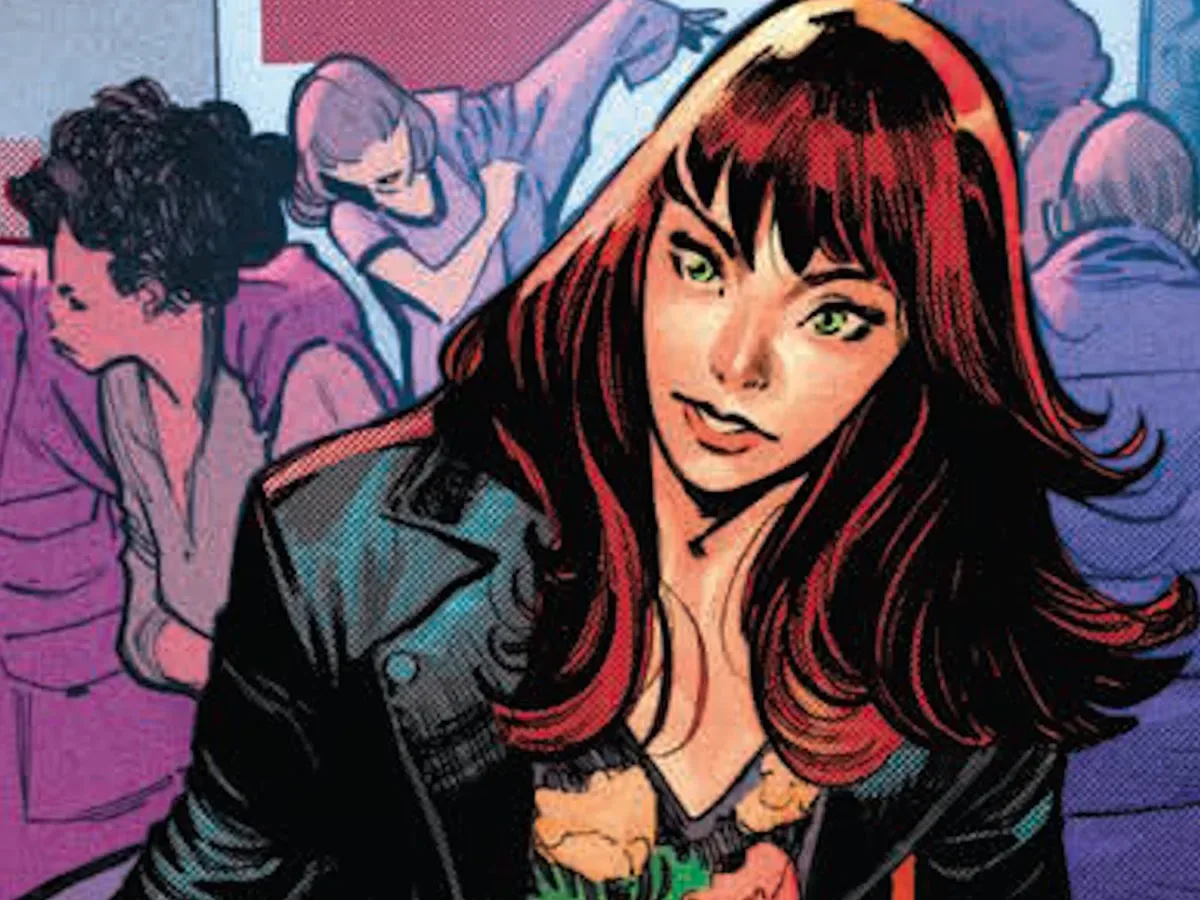
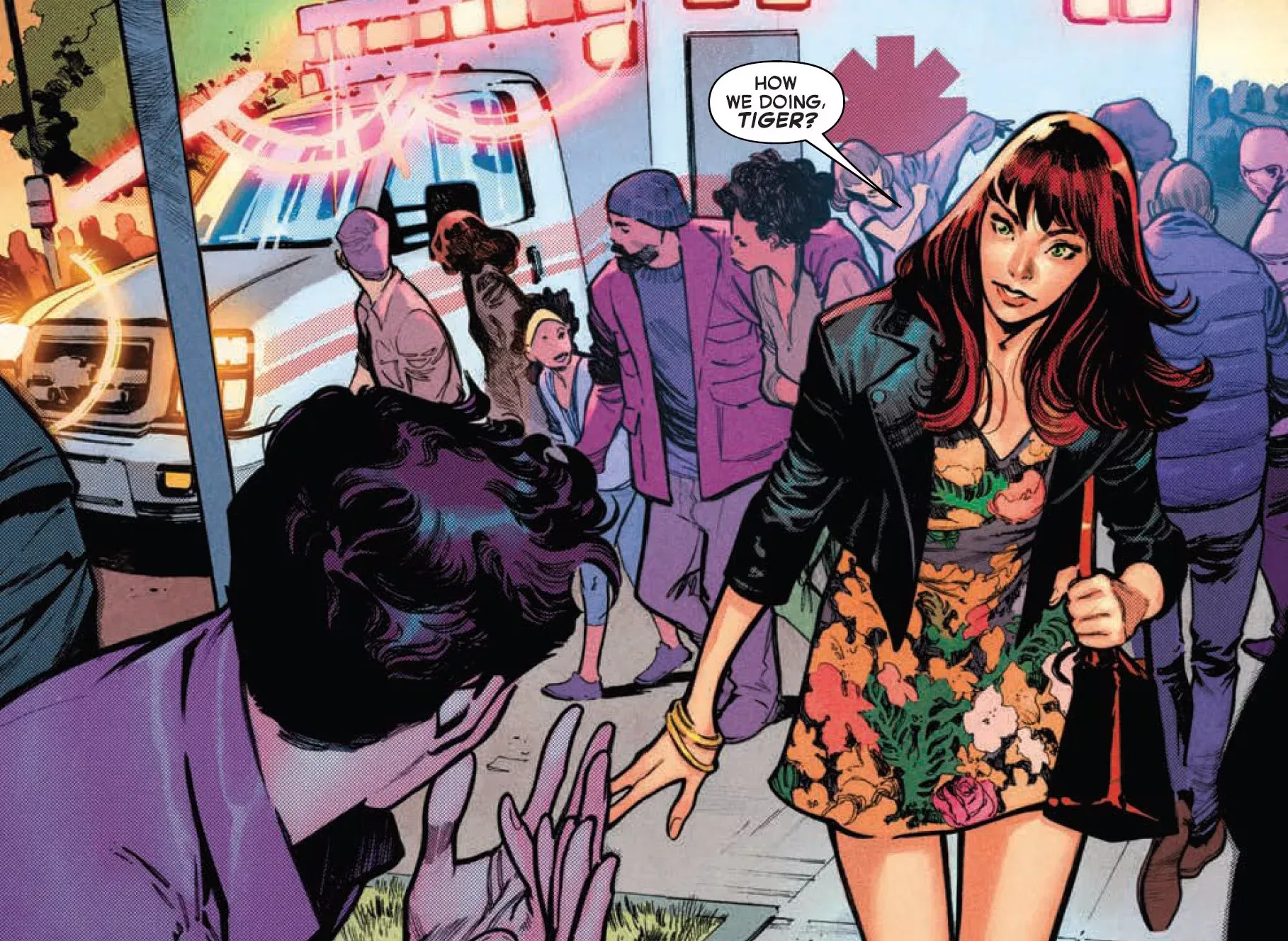
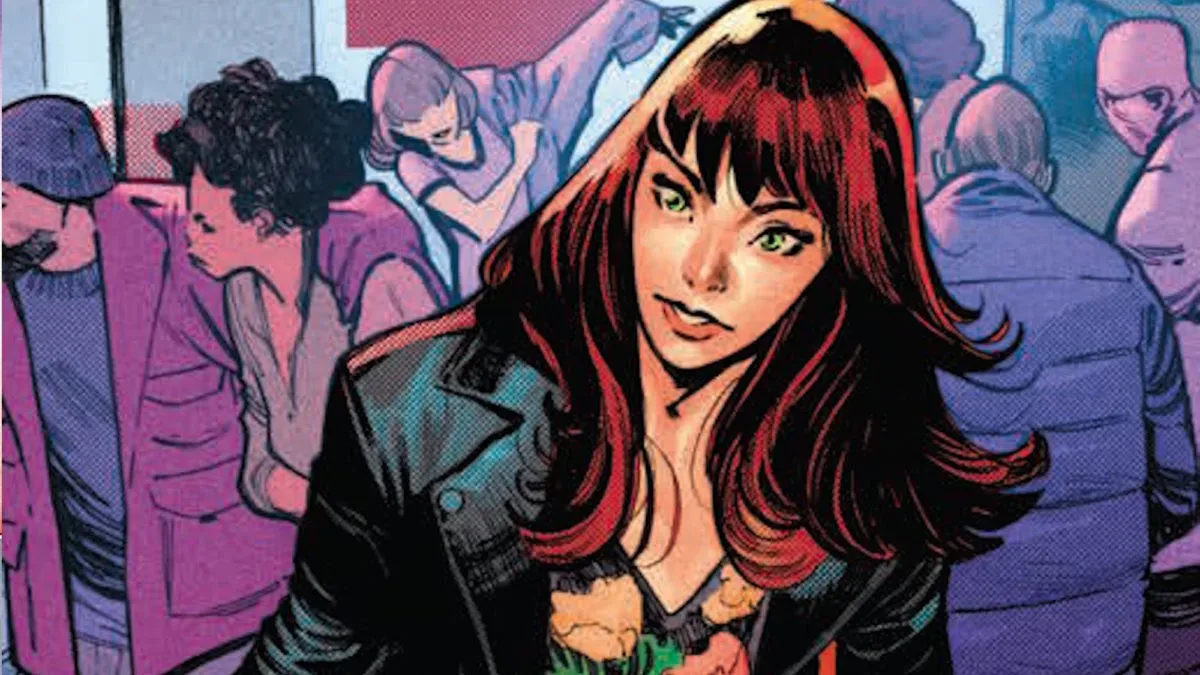
Against that collapse, Mary Jane Watson emerges as a key emotional lifeline for Peter. Her role is not just an appearance designed to place a familiar character on the page after a milestone issue. In the context of Peter’s self-doubt, she is the voice that reaches him while Ravage’s attack threatens to strip away one of the defining relationships in his life.
Larraz’s art is especially central to that material. The supplied story emphasizes Mary Jane’s visual presence as much as her narrative return, which fits an issue driven by reaction, grief, and connection. When the central threat is an absence in somebody’s memory, facial expression and body language carry unusual weight. The story needs readers to feel the gap between what Peter knows his relationship with May has been and what May is now able to understand.
For readers who felt Mary Jane had limited space in the main story of Amazing Spider-Man #1000, #1001 provides a much more immediate role. Her importance is rooted in the present crisis, not simply in nostalgia. Peter needs someone who can recognize the damage Ravage has done without accepting Ravage’s framing of Peter as disposable or powerless.
Norman Osborn’s shadow remains over Peter’s history
The issue’s emotional pressure also brings Norman Osborn into the conversation. Peter is dealing with the man associated with Gwen Stacy’s death, an event that remains one of the defining wounds in Spider-Man’s life. The story contrasts that history with the current threat without pretending they are identical.
Norman’s soul was turned inside out, but the material raises uncertainty over whether such a transformation can truly settle the question of what he is capable of. Ravage, meanwhile, represents a different kind of cruelty: he has manipulated Aunt May’s memories both literally and metaphorically. One threat is tied to Peter’s most infamous loss; the other risks changing the meaning of a foundational family bond.
The comparison highlights why #1001’s stakes can feel so severe even without relying on a conventional city-level catastrophe. Spider-Man stories work best when the mask and the civilian life cannot be cleanly separated. Ravage understands that Peter Parker’s loved ones are not an incidental vulnerability attached to the hero. They are the reason Peter’s victories matter in the first place.
Ravage even brings Christmas into the attack, turning an occasion generally associated with family and warmth into another pressure point. It is a small detail with large implications: the villain’s plan does not merely remove a person from May’s recollections. It contaminates the places, rituals, and feelings that could otherwise help restore a sense of belonging.
A Spider-Man week full of old relationships
Amazing Spider-Man #1001 is not the only book in this group of releases to put Peter in contact with complicated history. In Black Cat #15 by G. Willow Wilson and Gleb Melnikov, Spider-Man arrives as Felicia Hardy is dealing with a heist. The official setup makes the job’s nature deliberately slippery: is Spider-Man there to assist with a heist, or stop one?
That ambiguity is a fitting setup for Peter and Felicia. Their relationship has moved between enemies, lovers, and other uneasy arrangements, and the new job threatens to push them back toward outright opposition. Peter’s appearance is initially the last thing Felicia wants, though she quickly regains her composure.
The larger pattern is clear without requiring every title to be part of one plot. Peter’s relationships are under pressure in different ways across these stories: family memory in Amazing Spider-Man, romantic and criminal entanglement in Black Cat, and an intervention involving another former relationship in Venom #1.
Venom #1, by Charles Soule and Tommaso Bianchi, reunites Eddie Brock and Venom after years apart. Eddie is determined to be the best host he can be and to act as the hero he believes he can be, regardless of objections from other superheroes. A symbiote is the alien partner connected to Venom; the term describes a relationship in which the host and symbiote operate together rather than as fully separate heroes. That reunion gives Peter’s involvement in an intervention a different but compatible angle on the broader theme of former bonds and difficult reunions.
Meanwhile, Iron Man #10 by Joshua Williamson and Carmen Carnero focuses on the new Citizen V, who has been stalking Tony Stark. The issue promises answers about Citizen V’s identity and history, his connection to the Thunderbolts name previously associated with Baron Zemo, and whether he can protect Iron Man from Whiplash’s final attack. It is not a Spider-Man chapter, but it reinforces how much of this set of superhero stories is preoccupied with identity, legacy, and people carrying names loaded with past consequences.
What #1001 means for Peter Parker
The central question posed by Amazing Spider-Man #1001 is stark: has Spider-Man already lost the war against Ravage? The wording is significant. It does not ask only whether Peter can win a fight. It asks whether a victory is possible after the villain has already damaged something irreplaceable.
Peter’s likely route forward cannot be just to defeat Ravage physically. The injury in this story is relational. Any meaningful resolution has to contend with Aunt May’s altered memories, her changed stance toward Spider-Man, and Peter’s crisis of confidence. That gives the series a conflict whose consequences are likely to persist even if an immediate confrontation ends in Peter’s favor.
It also makes Mary Jane’s support more consequential. If Ravage’s scheme is designed to isolate Peter from the person who has known him longest, then a character who can ground him in the present becomes essential. The issue’s drama lies in that tension: Peter is still Spider-Man, but being Spider-Man does not automatically tell him how to survive the loss of May’s recognition.
For a broader pop-culture example of characters moving between comics, games, and physical merchandise, see how Spawn’s Diablo Immortal Warlock skin is becoming a 7-inch deluxe figure. Spider-Man’s current conflict, however, is firmly about the storytelling weight of long-running comic-book relationships rather than a crossover or collectible tie-in.
Amazing Spider-Man #1001 is listed at $4.99 and dated October 14, 2026. Its premise makes the immediate appeal plain: Ravage has found a way to hurt Peter that bypasses strength, speed, and webbing, leaving Spider-Man to face the possibility that protecting Aunt May may no longer mean she can recognize who he is to her.
Shop the products
Check current price, model and availability at the retailer.