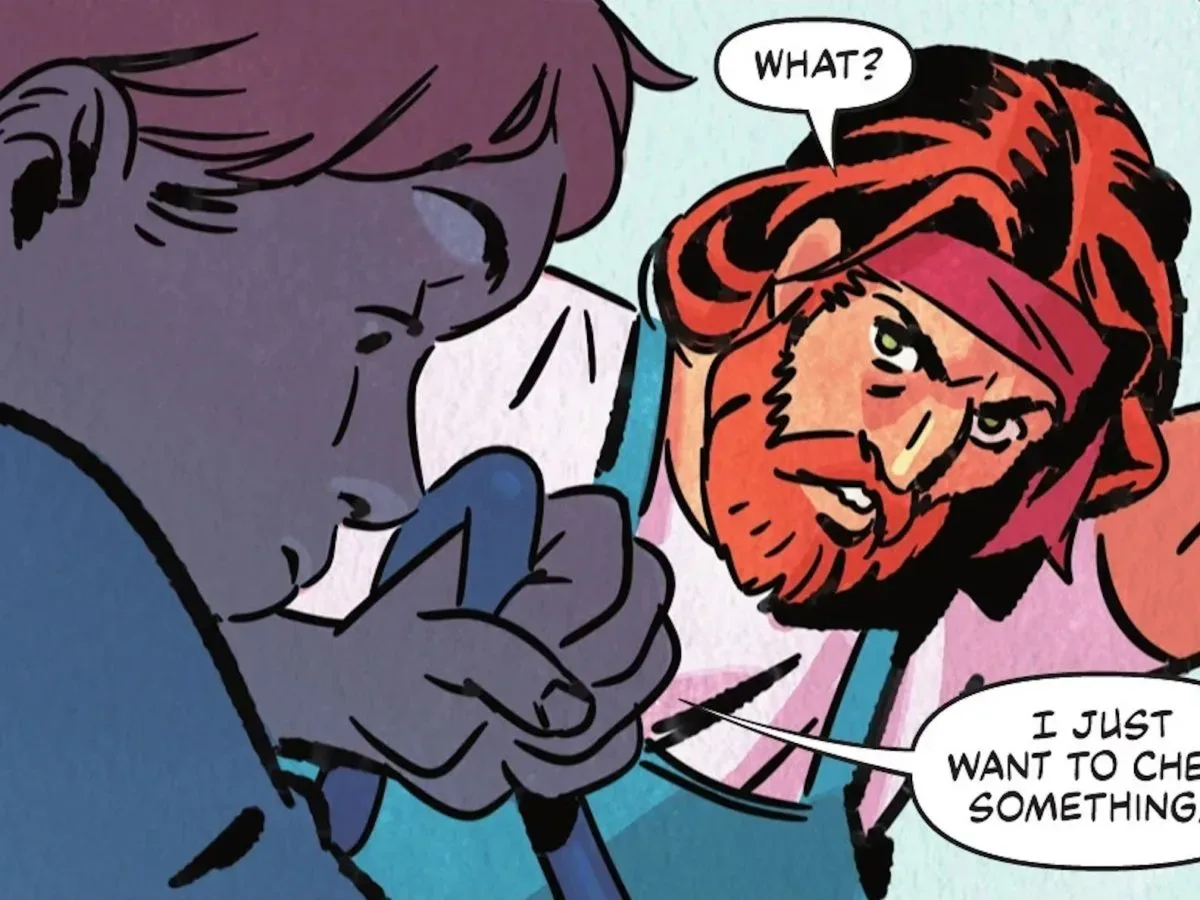
Spoilers for Action Comics #1103 follow.
Lex Luthor’s past has rarely been fixed for long, and Action Comics #1103 adds another consequential piece to the Superman villain’s continually revised family story. The issue returns Lex, Lionel Luthor and Letitia Luthor to Kansas, specifically the town of Shelby, but it changes the emotional architecture of that setting. Letitia is no longer only a passive figure in Lex’s recollections or a mother who later escaped the family: she is presented as the person who set an escape plan in motion, including the faking of deaths.
That matters because every version of Lex’s childhood asks a slightly different question about the man he becomes. Is he principally the product of cruelty? A calculating survivor who remade himself after abandoning a damaged home? The heir to a legacy of manipulation? Or someone who took the ruthless lessons of his family and elevated them into an ideology? Issue #1103 does not erase the fact that Lex becomes Superman’s greatest enemy, but it gives his mother a more active role in the event that separated the family from Lionel.
What Action Comics #1103 establishes
The story places Lex with both parents in Shelby, Kansas. Lena Luthor, who has appeared in some versions of Lex’s family history, is not part of this particular flashback setup. The key development is Letitia’s agency: she is shown planning to get herself and Lex away from Lionel. The plan involves staging deaths rather than simply enduring the household or waiting for an outside rescue.
It is a meaningful shift in emphasis. Earlier accounts described Lionel as abusive toward Lex and Lena while Letitia stood by. In a later layer of continuity, Lionel was recontextualized as an exceptional intellect working for Vandal Savage. That version also complicated Lex’s understanding of his father: Lionel was ultimately removed by Savage, leaving behind the broken man Lex remembered.
Now the family narrative is being adjusted again. Letitia’s planning does not automatically make every prior memory false, nor does the material supplied establish that each older account has been cleanly overwritten. But it does change the apparent cause of at least one defining rupture in Lex’s childhood. Rather than a simple story of Lionel’s death, or Lex personally killing his father for insurance money as happened in a previous continuity, the new account points toward an orchestrated escape and a staged death.
Why Letitia’s role changes the reading of Lex
Letitia has already become a major corrective to the simpler idea that Lex built everything by himself. Recent continuity revealed that she survived while the world believed her dead, fled Lionel for Metropolis, and founded the company that would eventually become LexCorp. Lex later lived with her and took the company from her.
Those facts place the Luthor empire inside a family struggle rather than solely in the hands of a lone self-made genius. Lex may be a brilliant strategist and industrialist, but the corporate foundation beneath his name was first built by Letitia. Issue #1103 extends that pattern backward: the mother whose work became the basis for LexCorp was also, in this telling, the architect of the family’s escape from Lionel.
The effect is not to soften Lex’s later choices. Taking control of his mother’s company remains an act of betrayal and appropriation. Instead, the change makes the Luthor family more structurally important to understanding his obsession with command. Lex’s life is increasingly framed by contested ownership: ownership of a company, ownership of the family narrative, ownership of the past, and ownership of the version of himself that the public sees.
For a character who routinely insists on his superiority and self-determination, that is a sharp tension. The more that Lex’s history reveals hidden plans, erased memories and inherited assets, the less straightforward his claim to having created himself becomes.
A continuity rewrite, explained
In superhero comics, continuity is the accumulated set of stories treated as relevant to a character’s current history. A retcon, short for retroactive continuity, is a later story that changes how readers understand an earlier event. Retcons can replace a detail outright, reconcile conflicting stories, or reveal that a character’s knowledge was incomplete.
Lex is especially suited to that last approach. The earlier revelation that Lionel worked for Vandal Savage introduced the notion that Lex’s memories did not offer a full, reliable picture of his father. A fractured recollection can preserve emotional truth—Lex remembers a damaged, abusive father—while the surrounding facts prove more elaborate than he knew.
Letitia’s new role appears to work in a similar space. Her apparent death and later survival were already part of the family’s unstable record. Giving her responsibility for a planned disappearance makes the uncertainty feel less like a random contradiction and more like a central Luthor trait. The family is defined by concealment, reinvention and the strategic use of public identities.
That does not mean readers must treat every inconsistency as deliberately planned from the beginning. Long-running comic universes change creative teams and priorities over time. The useful question is what the newest story is doing with those changes now. Here, the revision makes Letitia a driver of events and positions Lex’s origin as a story not merely about paternal violence, but about a mother’s survival strategy and its consequences.
Shelby’s place in the Superman corner of DC
Bringing the Luthors back to Kansas also places Lex’s formative history closer to Superman’s. Lex is identified as Clark Kent’s school-age contemporary, so the shared regional grounding reinforces one of the most enduring contrasts in their relationship: two men shaped near the same heartland, developing radically different moral identities.
The Shelby name has prior associations in DC continuity. In one version, it was the name of the Kents’ golden retriever; it has also been used for a dog subjected to Luthor experimentation. Those connections do not, by themselves, prove an additional mystery in issue #1103. They do show how small names can carry accumulated echoes in a universe built across many stories.
The more direct implication is thematic. Kansas is often associated with Clark’s early life and the values readers connect to his humanity. Locating Lex’s family trauma and escape there makes the contrast more intimate. Superman and Luthor are not simply an alien hero and a Metropolis power broker who collided later in life. Their stories are presented as having roots in nearby cultural and geographic territory, even when their paths diverge.
That focus on revision, memory and identity also makes this a useful companion conversation to a recent look at continuity as a story about memory, family and identity. Different fictional universes use different rules, but both illustrate why an altered backstory can matter most when it changes a character’s relationships rather than merely revising a timeline entry.
Lionel, Vandal Savage and the question of responsibility
Lionel remains a crucial part of the Luthor story even as Letitia becomes more active. The established picture includes him as an abusive father and, in another revelation, a gifted mind working under Vandal Savage. Savage’s eventual disposal of Lionel leaves Lex with a broken version of the man, complicating the question of what Lex directly witnessed and what had already been done to his father.
That framework is important because it separates explanation from absolution. Lionel’s association with Vandal Savage may provide context for how he became what Lex remembers. It does not undo the harm attributed to him. Likewise, Letitia’s effort to escape can make her more sympathetic and capable without making the family’s damage disappear.
For Lex, that distinction is central. An origin story can explain why a character fears weakness, craves control or expects betrayal. It cannot excuse the choices that make him a global criminal, a former U.S. president, and Superman’s enduring adversary. The strongest version of this family revision is therefore not one that argues Lex was destined to become evil, but one that shows how he learned to interpret power as the only dependable protection.
What readers should watch for next
The issue is described as part of a Lex-focused origin story from Mark Waid and Patricio Delpeche, while the family-history material is credited to Mark Waid and Patricio Angel. Its framing promises a major account of the character rather than a passing flashback, so subsequent chapters may clarify how much of Lex’s remembered childhood has been altered, omitted or reinterpreted.
Several questions remain open from the material at hand:
- How much did young Lex understand about Letitia’s escape plan and the staged deaths?
- What becomes of Lionel after the events shown, especially alongside the prior Vandal Savage connection?
- How will the absence of Lena in this segment relate to versions where she was central to Lex’s upbringing?
- Will the story directly reconcile Letitia’s role in founding the future LexCorp with Lex’s takeover of that company?
- How will this revised Kansas history affect the story’s portrayal of Lex and Clark as contemporaries?
For now, Action Comics #1103 makes one point clear: Lex Luthor’s origin is not being treated as a static dossier. It is a battlefield of memory and control. By making Letitia the instigator of an escape from Lionel, the issue gives Lex’s mother more than a hidden-survivor role. She becomes an active figure in the first great deception of the Luthor family—and another reason the man called Lex Luthor can never entirely own the story of how he was made.
Shop the products
Check current price, model and availability at the retailer.