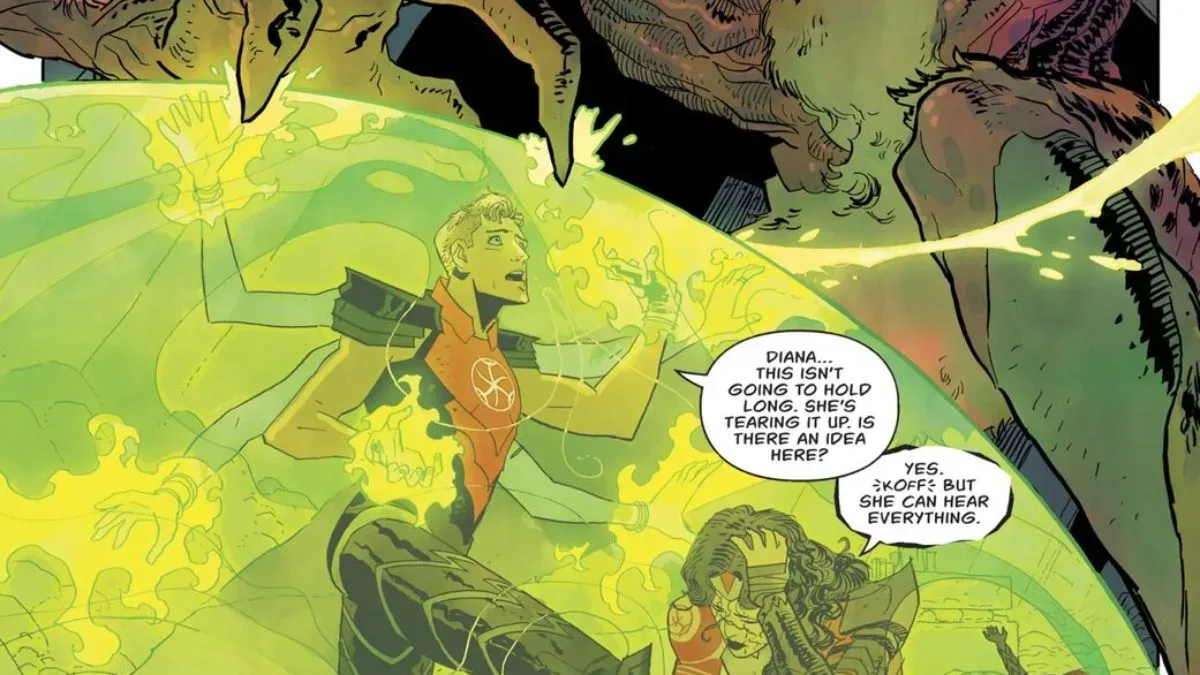
Absolute Wonder Woman #26 is scheduled to reach comic shops on November 25, 2026, bringing three concurrent pressures into focus: Diana’s attempt to process both a loss and a discovery, Steve Trevor’s response to escalating fear in Gateway City, and Etta Candy’s fresh trail toward Cale after a disappointing search in Gotham.
Kelly Thompson writes the issue, while Hayden Sherman provides the interior art and main cover. The solicitation makes Steve’s expanded role the headline, but the setup suggests an issue built around coordination under pressure rather than a simple side-character detour. Diana, Steve and Etta are all pursuing different problems, with the potential for each thread to change the others.
Steve Trevor moves from supporting presence to active partner
The central promise is straightforward: Steve Trevor steps up as Gateway City is gripped by fear. That language does not define the cause of the panic, its scale, or how long it has been unfolding. It does, however, put Steve at the center of the immediate crisis instead of treating him as someone standing outside the action.
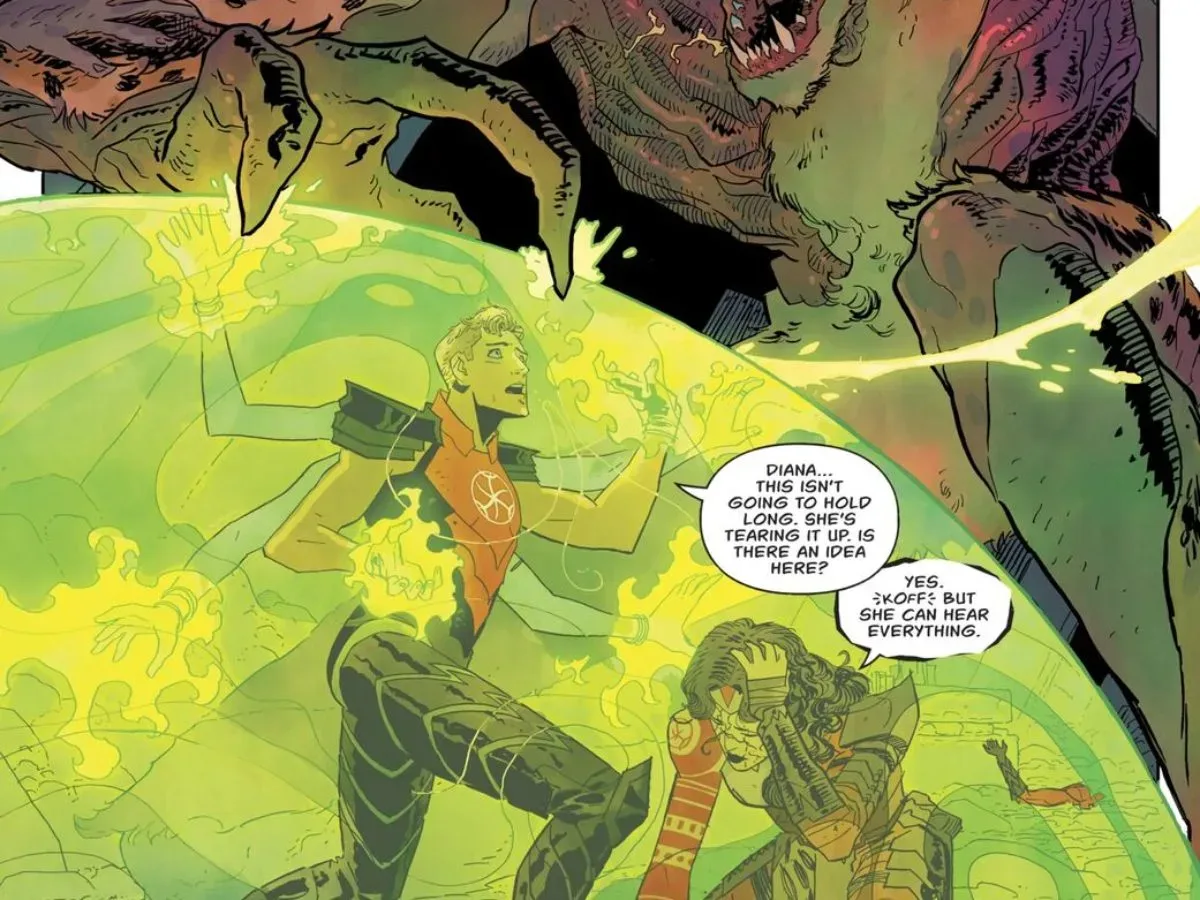
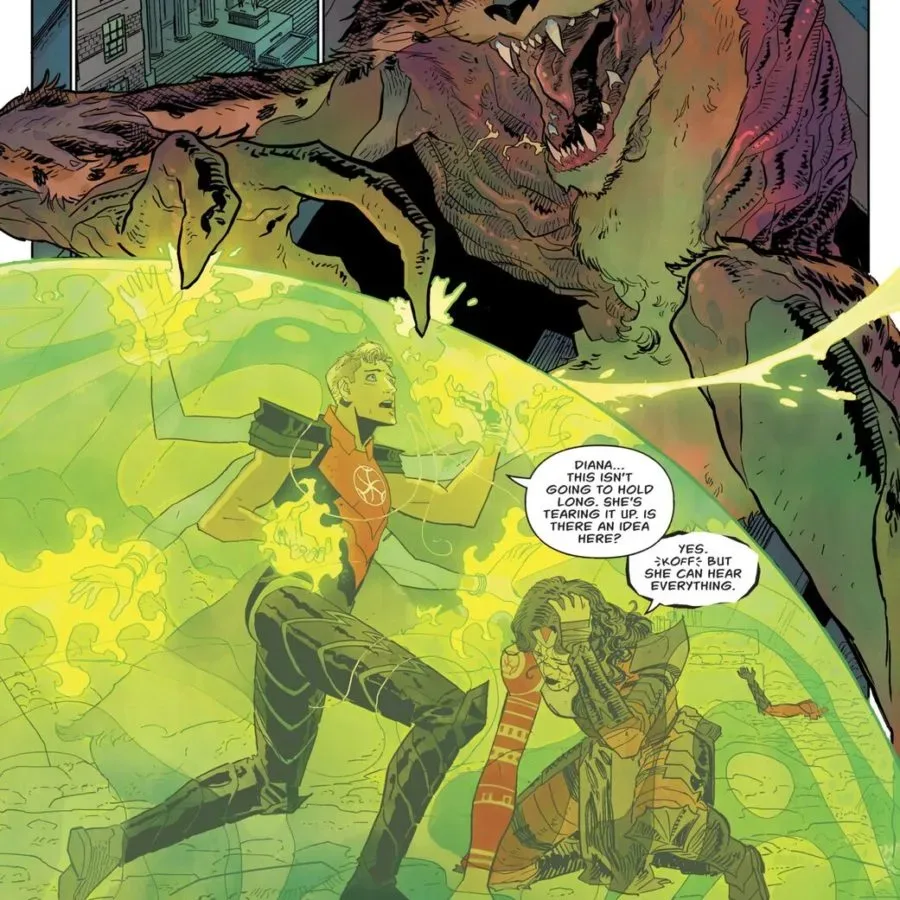
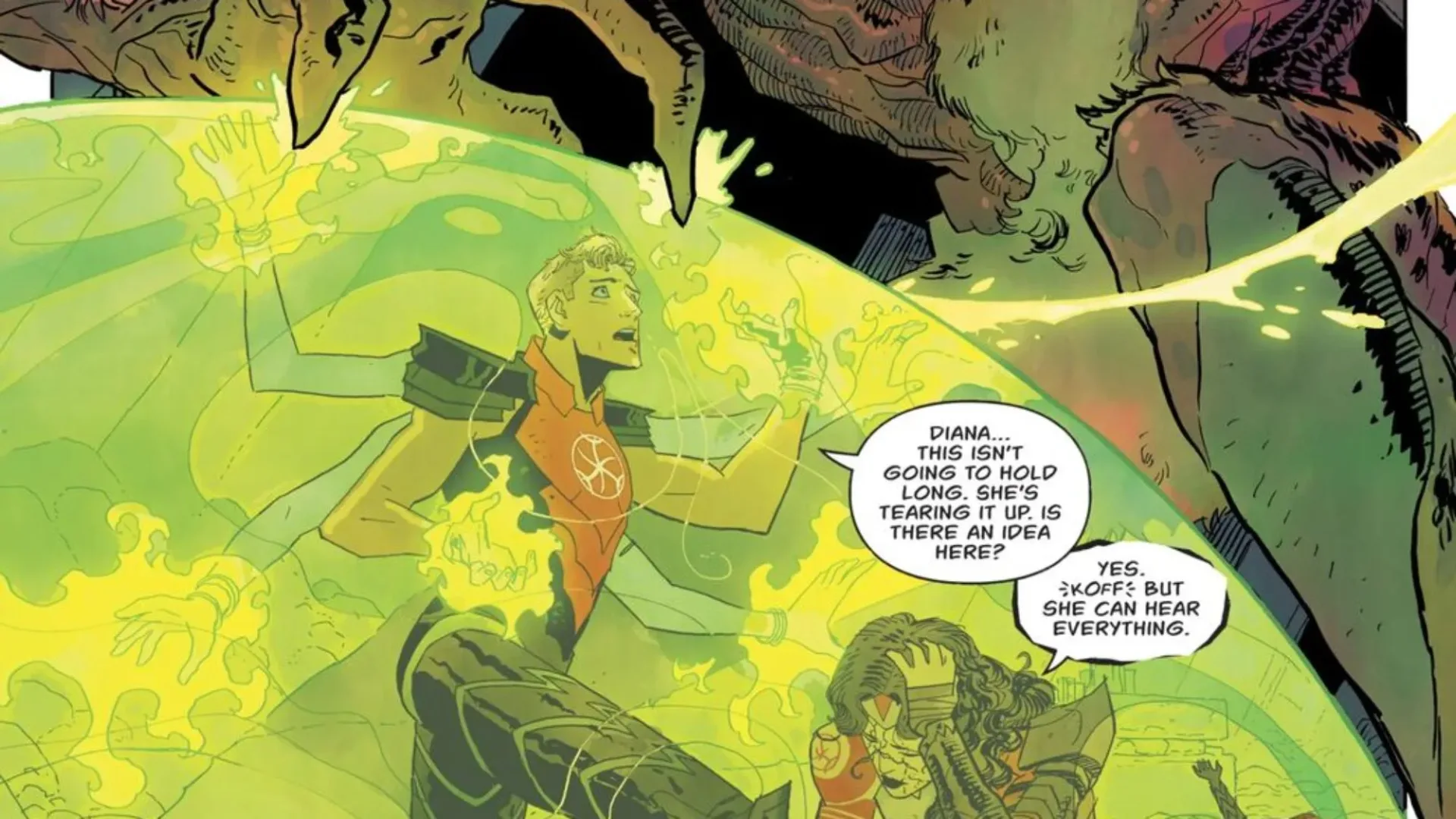
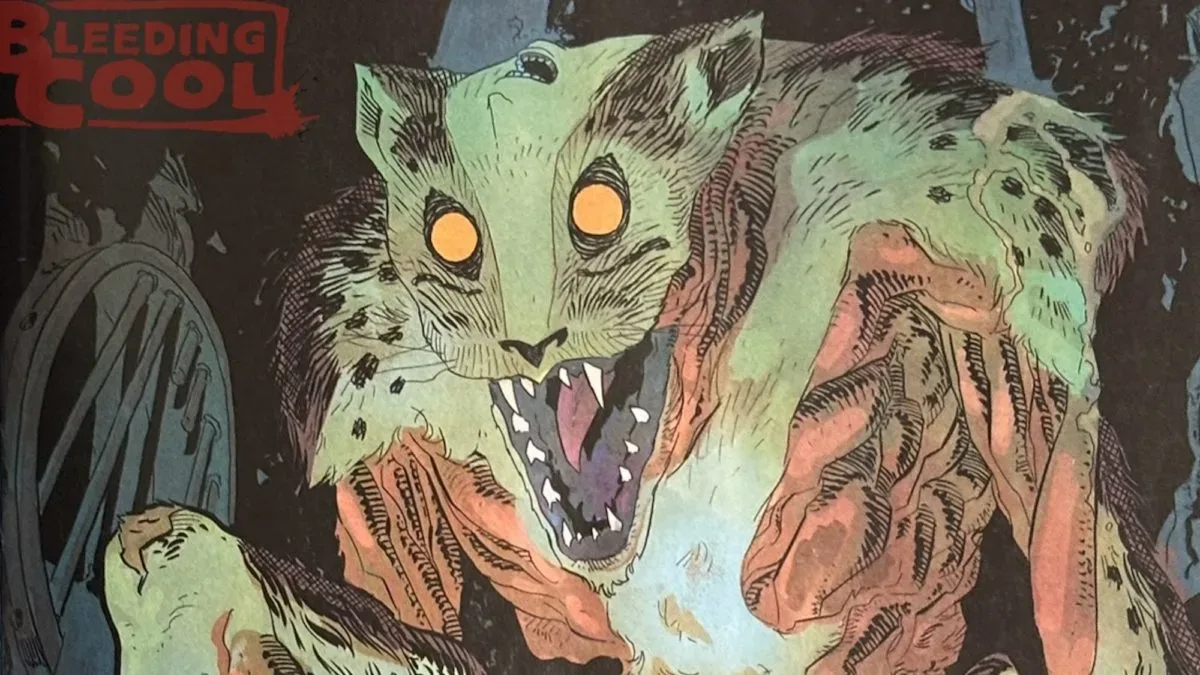
The previewed sequence takes place at Gateway City’s Natural History Museum, where Diana and Steve take cover behind a barrier as a monstrous opponent tears through it. The creature’s heightened hearing creates the scene’s key tactical limitation. Diana stops speaking and switches to signing; Steve understands the adjustment and follows her plan.
It is a small but meaningful storytelling choice. A fight scene generally communicates danger through big gestures, shouted warnings and quick exchanges of information. Removing speech changes the rules. The characters must make decisions without alerting their opponent, and readers are invited to watch how well they can interpret one another under extreme pressure.
That also gives Steve something more useful to do than merely witness Diana’s battle. He is positioned as a responsive teammate: he recognizes the danger in speaking, adapts to Diana’s nonverbal strategy, and participates in the solution while the physical threat is actively breaking through their shelter.
Why the museum setting matters to the preview
A natural history museum is an especially vivid location for a monster encounter. Its galleries are associated with preserved specimens, reconstructions and displays meant to make enormous forces of nature comprehensible. The preview turns that sense of control upside down. Rather than safely observing something monstrous from behind a label or a glass case, Diana and Steve are confronted by an immediate, destructive threat.
The source material does not identify the creature or explain its connection to the wider Gateway City panic, so readers should not assume that the museum assault answers every question raised by the solicitation. Still, the setting gives the sequence an appropriate visual tension: an institution organized around knowledge and preservation becomes a place where its defenders are forced into silence and improvisation.
Diana’s personal conflict sits alongside the physical danger
The issue’s description says Diana is reeling from what she has lost while trying to cope with what she has found. That deliberately broad phrasing signals a personal storyline without revealing exactly what has been taken from her or what discovery has complicated matters further.
What is clear is that the emotional stakes are not separated from the action. Diana is not entering Gateway City’s crisis from a position of uncomplicated confidence. She is carrying unresolved grief or upheaval while confronting a monster, a terrified city and whatever consequences follow from her recent discovery.
For readers tracking character dynamics, that creates an important contrast with Steve’s role. Diana is described as struggling to absorb major change; Steve is identified as the person stepping forward amid the fear. The preview scene does not suggest that he takes command away from her—Diana makes the tactical call—but it does show a partnership in which he can act decisively and reliably when she needs help.
Etta’s Cale investigation changes direction
Elsewhere, Etta has found little in Gotham but gains an unexpected lead on Cale. The issue does not disclose where that lead appears, what form it takes, or who Cale is within this storyline. Those omissions matter. A lead is not the same as a solved mystery, and “unexpected” establishes surprise without telling readers whether the new information is trustworthy, dangerous or decisive.
Even so, Etta’s thread adds an investigative dimension to an issue otherwise framed by a city in fear and a direct monster attack. Gotham has not supplied the answer she wanted, but the dead end appears to be productive in a different way: it sends her toward a new direction. That makes her plotline feel less like a pause between action sequences and more like a parallel search whose result could have broader consequences.
The contrast between locations is notable. Gateway City is associated here with an overt public crisis, while Gotham is associated with a search that failed to provide enough information. Etta’s new lead bridges that gap, potentially giving the story a momentum that does not depend only on the museum confrontation.
What readers can reasonably expect from issue #26
The available material supports a few clear expectations and leaves much else intentionally open:
- Steve has a proactive role. The issue’s central billing and the museum preview both place him directly in the response to Gateway City’s threat.
- Diana’s emotional arc remains important. Her recent losses and discoveries are described as ongoing burdens, not background details already resolved.
- The immediate danger requires stealth as well as strength. The creature’s ability to hear changes how Diana and Steve communicate.
- Etta’s investigation advances. Her Gotham search comes up short, but her pursuit of Cale gains a new and surprising direction.
- Major answers remain under wraps. The identity of the monster, the nature of Diana’s discovery, and the details of Etta’s lead are not confirmed in the preview material.
That balance is often the point of a preview: establish pressure, demonstrate a character relationship in motion, and withhold the information that would make the next issue too easy to predict. Here, the silent coordination between Diana and Steve does the most work. It conveys the immediate threat, shows their ability to operate together, and supports the larger claim that Steve is stepping into a more consequential moment.
The release copy also includes a comic riff about connected home devices taking over a mystery hunt. That is clearly playful promotional framing, not a real-world claim about an automated puzzle program. Readers interested in the actual question of how shared smart-home displays and connected devices are configured can find a more grounded overview in this look at Apple HomeView setup.
Creative team, covers and price
Absolute Wonder Woman #26 is written by Kelly Thompson, with art and the main cover by Hayden Sherman. The standard edition carries a suggested retail price of $4.99. Additional listed covers are by Kaare Andrews, Carlo Pagulayan, Dan Hipp and a Game Art variant, each listed at $5.99.
For readers choosing among editions, the supplied information identifies the artists and prices but does not provide details about print quantities, retailer incentives or the artwork on each variant. The clearest decision is therefore the basic one: the $4.99 main-cover edition is the standard release, while the named alternatives offer different cover options at the listed $5.99 price.
Absolute Wonder Woman #26 goes on sale November 25, 2026. Its setup promises a pressure-cooker chapter in which Diana confronts both external danger and personal fallout, Steve proves essential in a moment of tactical crisis, and Etta follows a clue that could finally move the Cale search forward.