Spoiler warning: This article discusses major plot and character details from Absolute Wonder Woman #25.
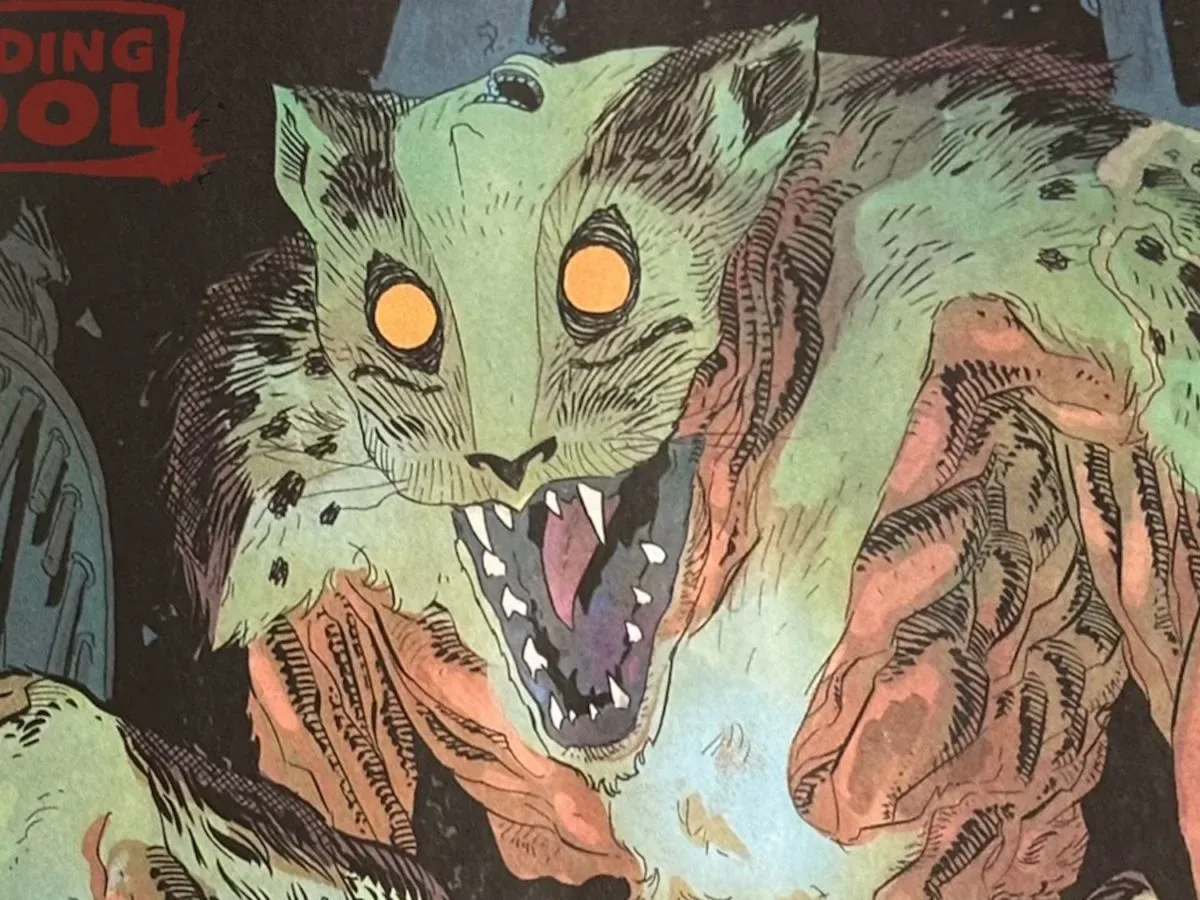
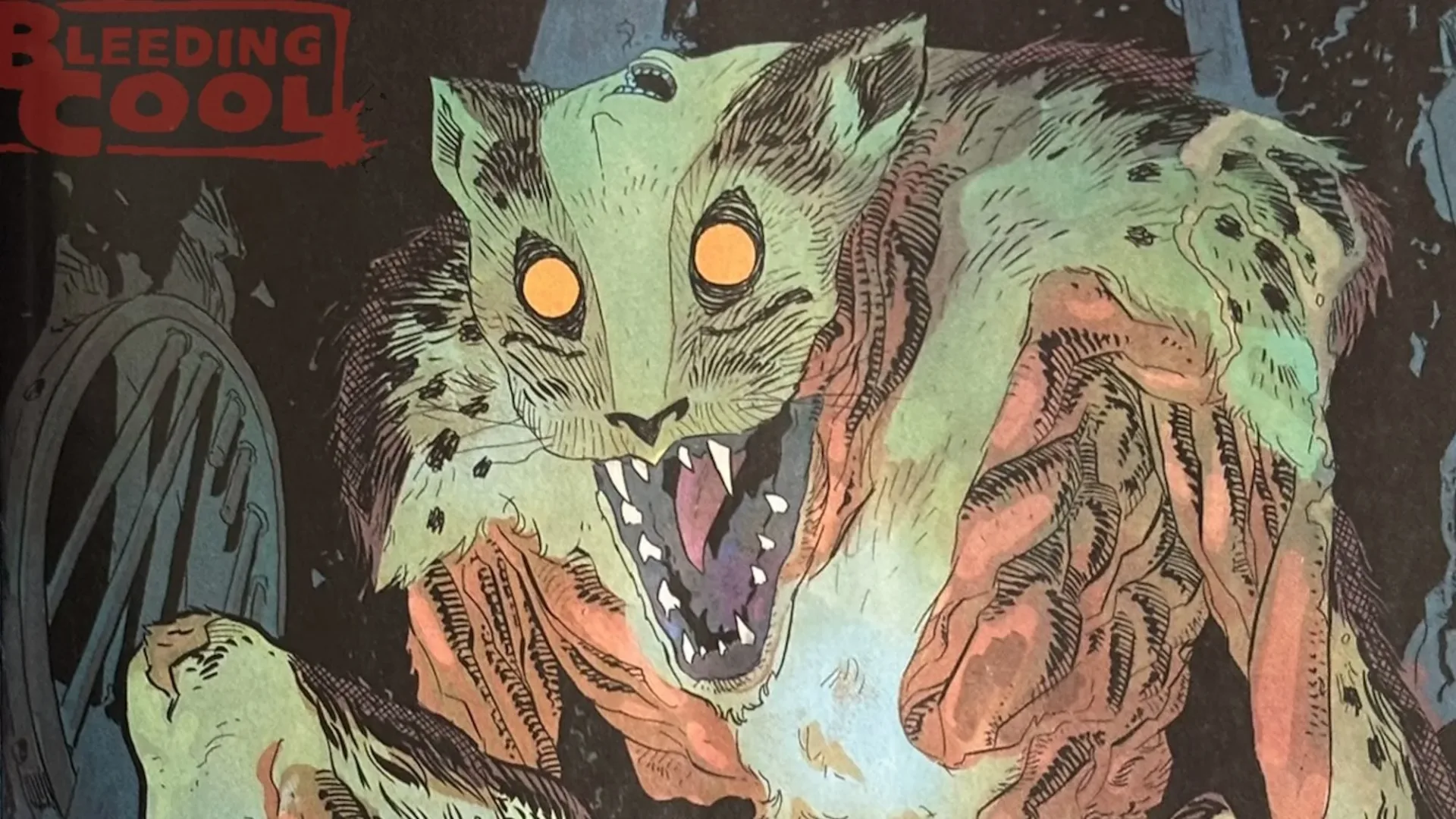
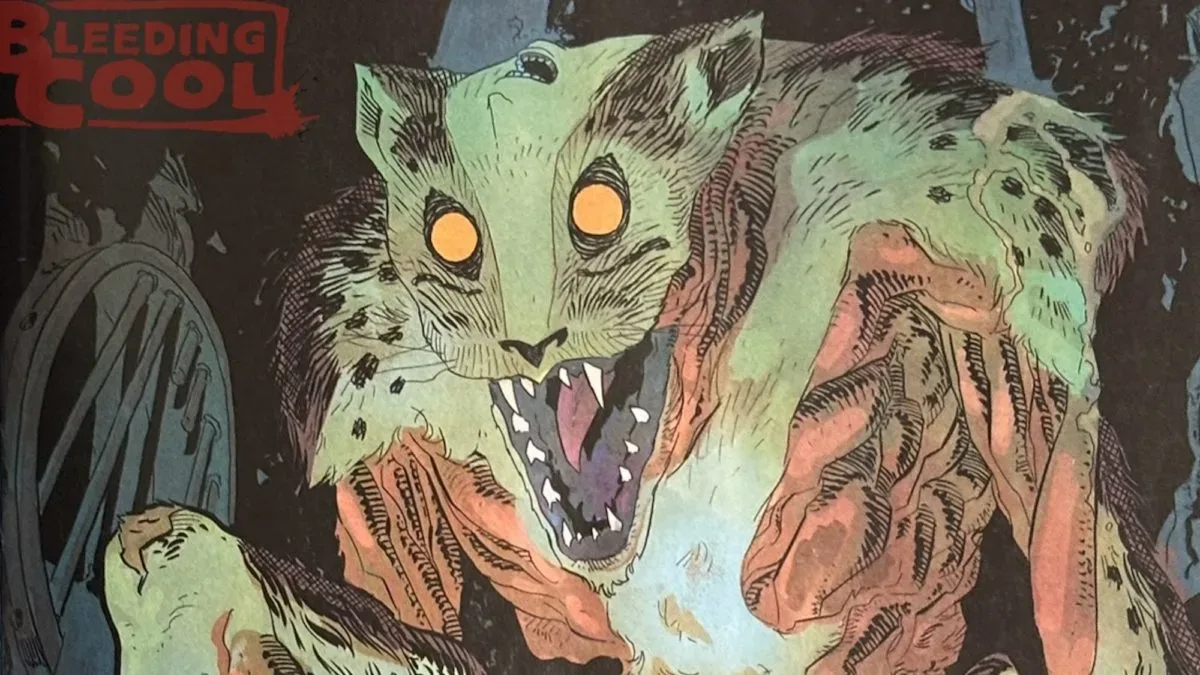
Absolute Wonder Woman #25 pushes its “Heretic” storyline into far more disturbing territory with the arrival of Barbara Minerva’s Absolute-universe Cheetah. The issue, written by Kelly Thompson with art and cover art by Hayden Sherman, does not frame the character’s transformation as a familiar supervillain entrance. Instead, it presents Cheetah as a grotesque, predatory figure whose power and physical form immediately alter the balance of danger around Diana.
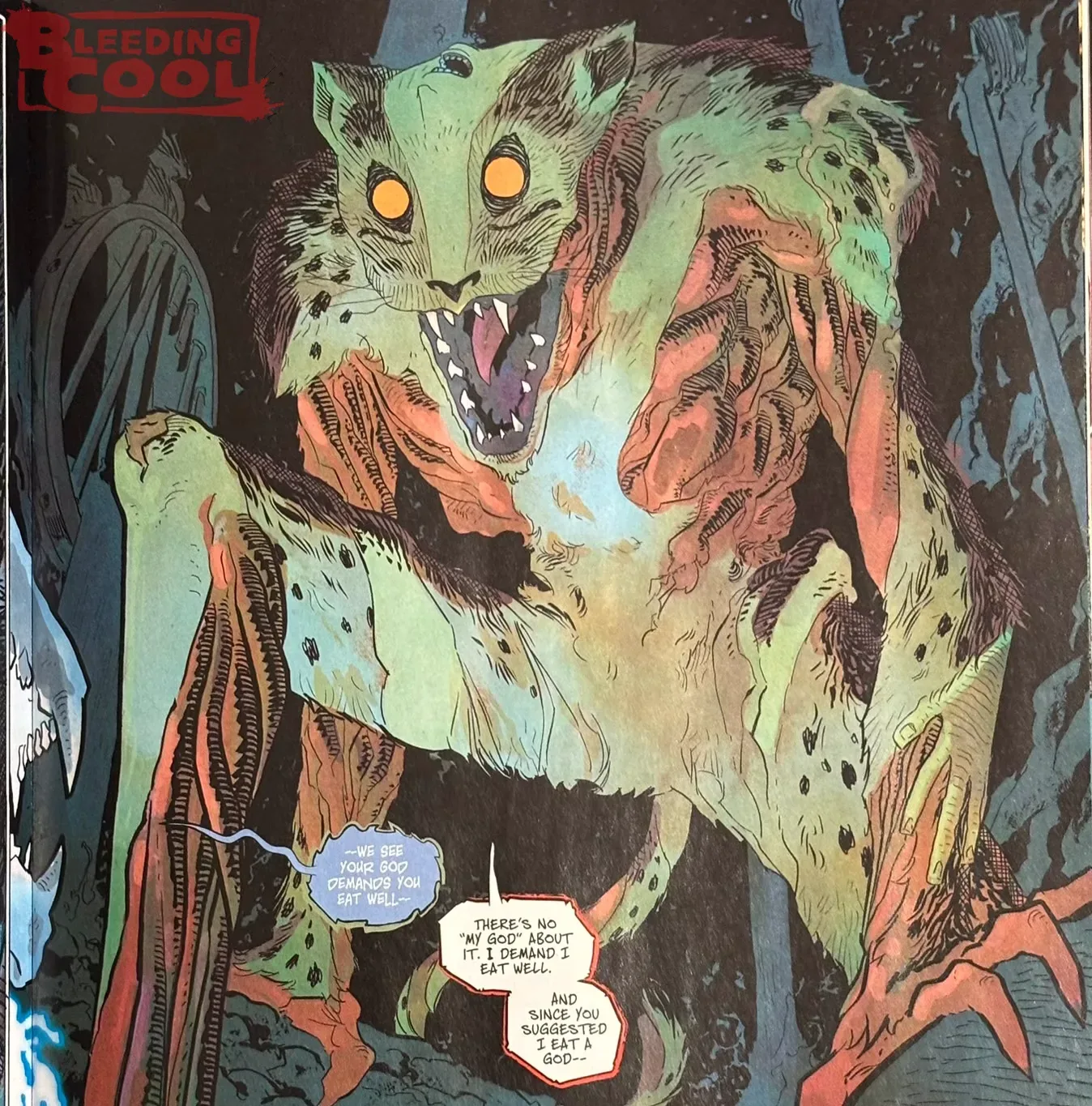
The premise is blunt: Diana’s search for Barbara Minerva reaches a bloody outcome, and the resulting Absolute Cheetah is positioned as something much worse than a standard adversary. She is not simply another costumed obstacle waiting to be overcome. The issue’s material depicts a creature placed high in a hierarchy described as a god tree, capable of consuming gods, while remnants of Barbara’s human body remain entwined with the new cheetah form.
That is a deliberately uncomfortable image, and it signals what this version of the character is meant to be. Absolute Cheetah is a threat built from loss of bodily autonomy, transformation and appetite—not just rivalry.
Barbara Minerva’s Cheetah is not a clean transformation
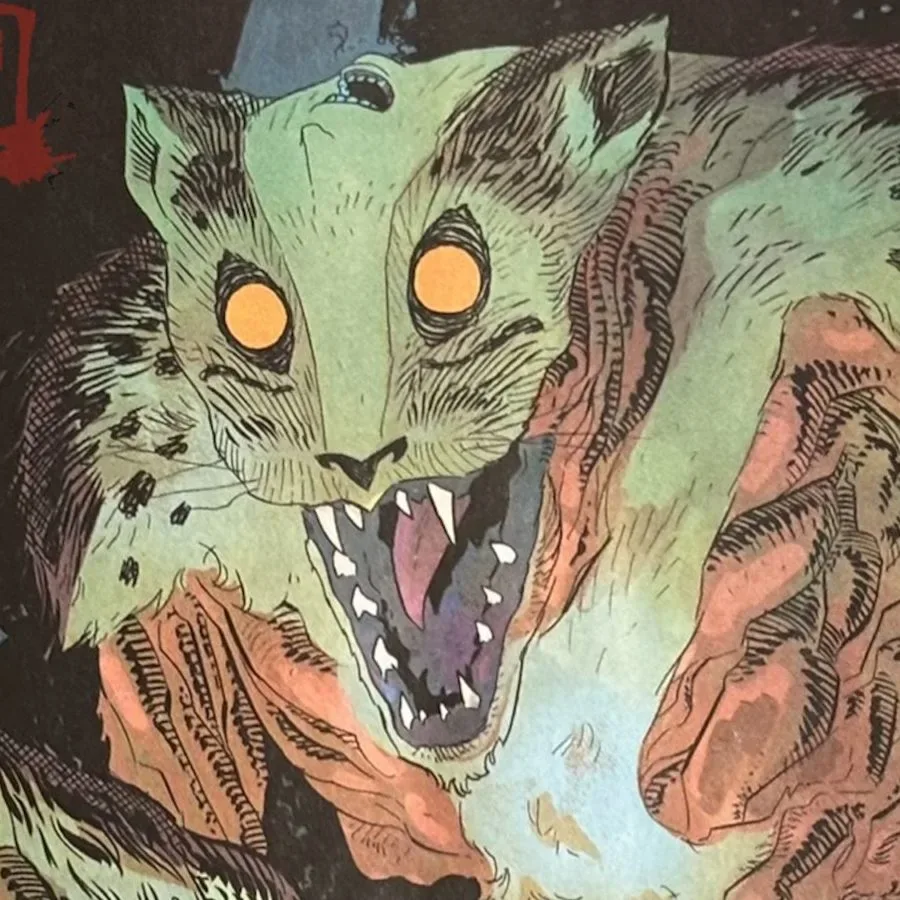
The key horror in the issue is that Barbara’s change is not presented as a tidy switch from human to monster. The former host has died, Barbara assumes the Cheetah form, and her human remains are still visibly associated with the beast. That turns the design into body horror: a horror approach centered on physical change, fragmentation or violation of the body.
Body horror is useful here because it makes the character’s danger more immediate than a statement of power levels. A villain can say she is stronger than Diana; a visual in which a human body appears to persist in pieces around an animalistic god-eater communicates a much uglier proposition. Barbara’s identity has not simply been upgraded. It appears to have been absorbed, displaced or left incomplete by the process.
That uncertainty also matters. The material raises an unnerving question about how this Cheetah can speak, given the strange relationship between Barbara’s human remains and the creature’s head. It is an intentionally surreal detail rather than a technical explanation. The unanswered mechanics are part of the effect: readers are meant to see a being that does not operate by comfortable human rules.
For a character such as Cheetah, whose conflict with Wonder Woman is commonly grounded in personal hostility as well as physical opposition, the approach gives the confrontation an extra layer. Diana is not merely facing Barbara at greater strength. She may be confronting what Barbara has become after being folded into a horrifying supernatural ecosystem.
A predator at the top of the food chain
The god-tree language establishes a hierarchy, or pecking order, among these beings. Absolute Cheetah sits near its upper reaches. Her apparent ability to eat gods is the most direct measure of that position. In superhero stories, gods are often used as shorthand for an extreme level of durability or authority; describing Cheetah as a god-eater is a concise way to say that conventional assumptions about who should be afraid of whom may no longer apply.
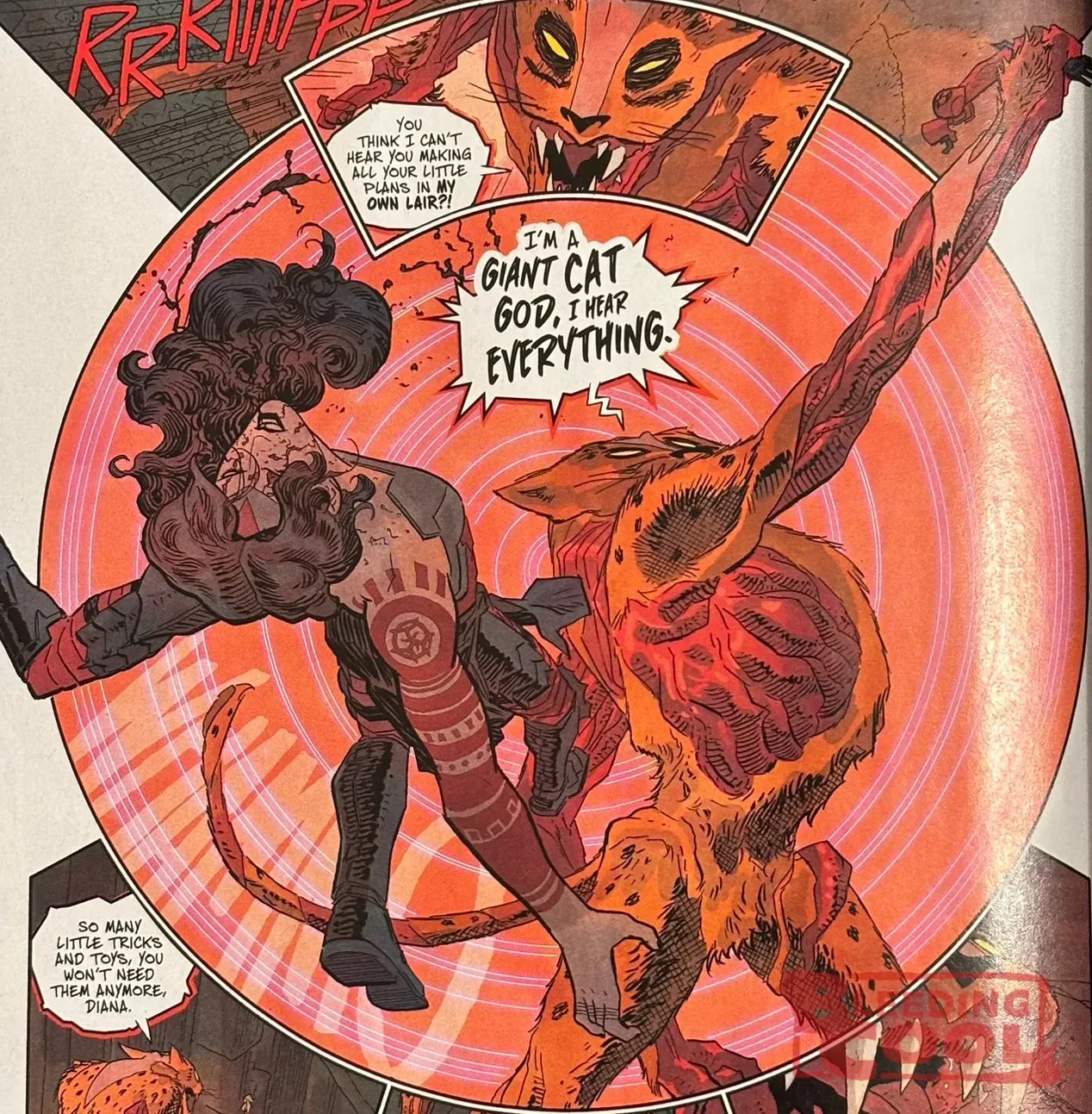
That leaves Diana in a precarious place. The issue’s setup suggests that Wonder Woman may look less like an equal combatant and more like prey from Cheetah’s perspective. This is not proof that Diana cannot win, nor does it settle how their confrontation will unfold. But it is a major tonal reversal from a simple hero-versus-villain matchup. The new Cheetah’s attention is focused specifically on Diana, and she enters the story with an appetite and status that make that fixation feel lethal.
There is a practical storytelling benefit to that imbalance. A powerful antagonist can make a hero’s choices more important than a straight contest of force. If Cheetah’s standing is as high as it appears, Diana may need to contend with the rules of the god tree, Barbara’s altered condition and the cost of helping others—not merely the immediate physical threat.
The solicitation calls the issue oversized and a milestone installment. That fits the scale of what is being introduced. A major villain debut, a bloody end point for Diana’s search and a clear escalation within the “Heretic” arc all converge in one chapter. The comic is therefore doing more than adding an enemy to its cast; it is redefining the terms on which Diana has to survive the arc.
Steve Trevor may be headed toward a painful reversal
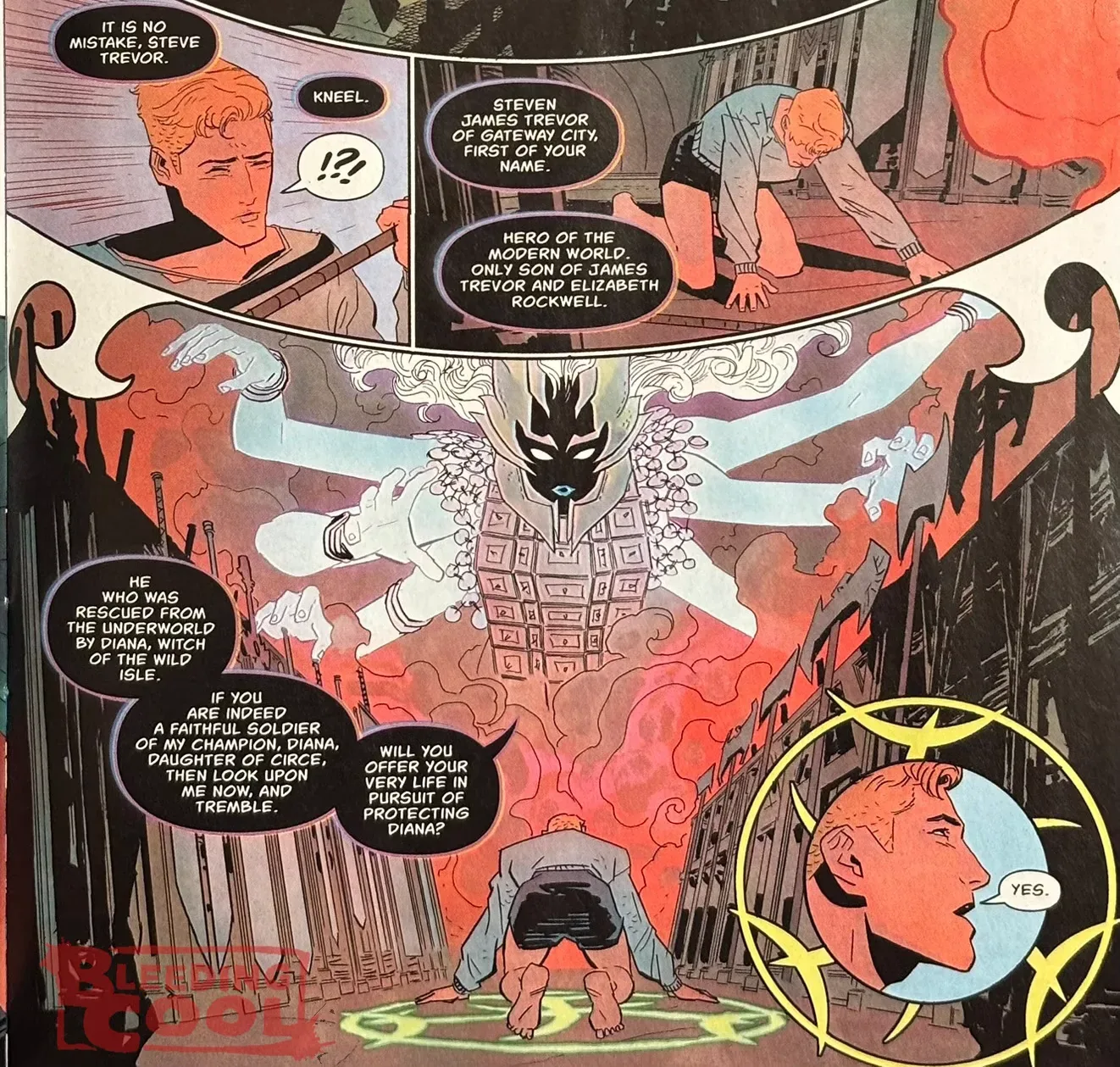
The other significant thread involves Steve Trevor. The material points toward a possible sacrifice on his part, apparently intended to help Diana by letting him climb the same brutal hierarchy that has empowered or elevated Cheetah.
It is important to treat that as a possibility rather than a confirmed outcome. The previewed events indicate that Steve may be prepared to give up everything in order to rise, but they do not establish precisely what he would sacrifice, whether the attempt succeeds or what form he would take afterward.
Even so, the direction is clear enough to be worrying. If Barbara’s arrival demonstrates the cost of becoming something powerful within this system, Steve’s potential decision becomes more than a heroic gesture. It raises the prospect that helping Diana may demand a transformation or loss that cannot be easily reversed.
This is the role reversal at the center of the issue’s tension. Diana, who has been searching for Barbara, may now require help against a creature that outclasses normal expectations. Steve, meanwhile, may be the one voluntarily stepping toward the same kind of dangerous order. The contrast between Barbara’s horrific emergence and Steve’s possible ascent makes the latter feel ominous, even before the consequences are known.
That uncertainty is likely the point. Sacrifice in superhero fiction can be noble, but this setup presents it as transactional and potentially corrupting. Rising through a pecking order is not automatically the same as gaining a useful weapon. It may mean submitting to the logic of the hierarchy itself.
What “Heretic” appears to be building toward
The “Heretic” arc has now reached a phase where its threat is visible in both personal and mythic terms. Barbara Minerva is personally tied to Diana’s search, but the Absolute Cheetah reveal places her in a far larger supernatural structure. Steve Trevor’s apparent willingness to risk himself connects Diana’s immediate fight to another human cost.
That combination gives the arc three distinct pressures:
- Physical danger: Cheetah is depicted as powerful enough to consume gods and hunt Diana.
- Psychological horror: Barbara’s incomplete, mutilated connection to the new form makes the transformation disturbing rather than triumphant.
- Moral risk: Steve may be forced—or choose—to pay an enormous price in an effort to help Diana.
None of those elements requires an answer in issue #25 alone. In fact, the comic’s next steps may be more compelling if it keeps the essential questions open: Is Barbara still truly present within the creature? What does it take to climb the god tree? Can Steve seek power without repeating the horror visible in Cheetah’s creation? And what can Diana do when the opponent pursuing her sees gods as food?
The issue is also a reminder that the Absolute line can use recognizable names without relying on familiar versions of their roles. “Cheetah” immediately communicates a historic Wonder Woman foe to many readers, but the details here are built around a new visual and narrative identity: a body-horror predator linked to a dead host and a supernatural hierarchy. Recognition becomes the starting point, not the destination.
Readers following other DC magic-driven conflicts may also be interested in the latest look at Zatanna’s confrontation with the Prime Magus and Lady White, another story where power struggles carry personal stakes.
Creative team, format and issue details
Absolute Wonder Woman #25 is credited to writer Kelly Thompson and artist/cover artist Hayden Sherman. It is an oversized issue with a listed price of $5.99. The cover description emphasizes the debut of Absolute Cheetah and presents the chapter as a turning point for “Heretic.”
For readers approaching the issue primarily for the debut, expectations should be set accordingly: this is not presented as a routine first appearance with an uncomplicated origin. Absolute Cheetah arrives as a shocking development in Diana’s search for Barbara Minerva, with the visual design and apparent power level doing much of the narrative work. The issue’s most consequential questions—the state of Barbara, Steve’s possible sacrifice and how Diana answers a predator of this scale—are positioned as ongoing concerns rather than neatly resolved facts.
That makes #25 an escalation chapter in the strongest sense. Cheetah’s debut expands the horror of the world around Diana, while Steve’s apparent path suggests the arc may test what people are willing to become for her. The immediate monster is frightening. The more lasting concern is whether anyone can engage with this god-eating hierarchy without being changed by it.