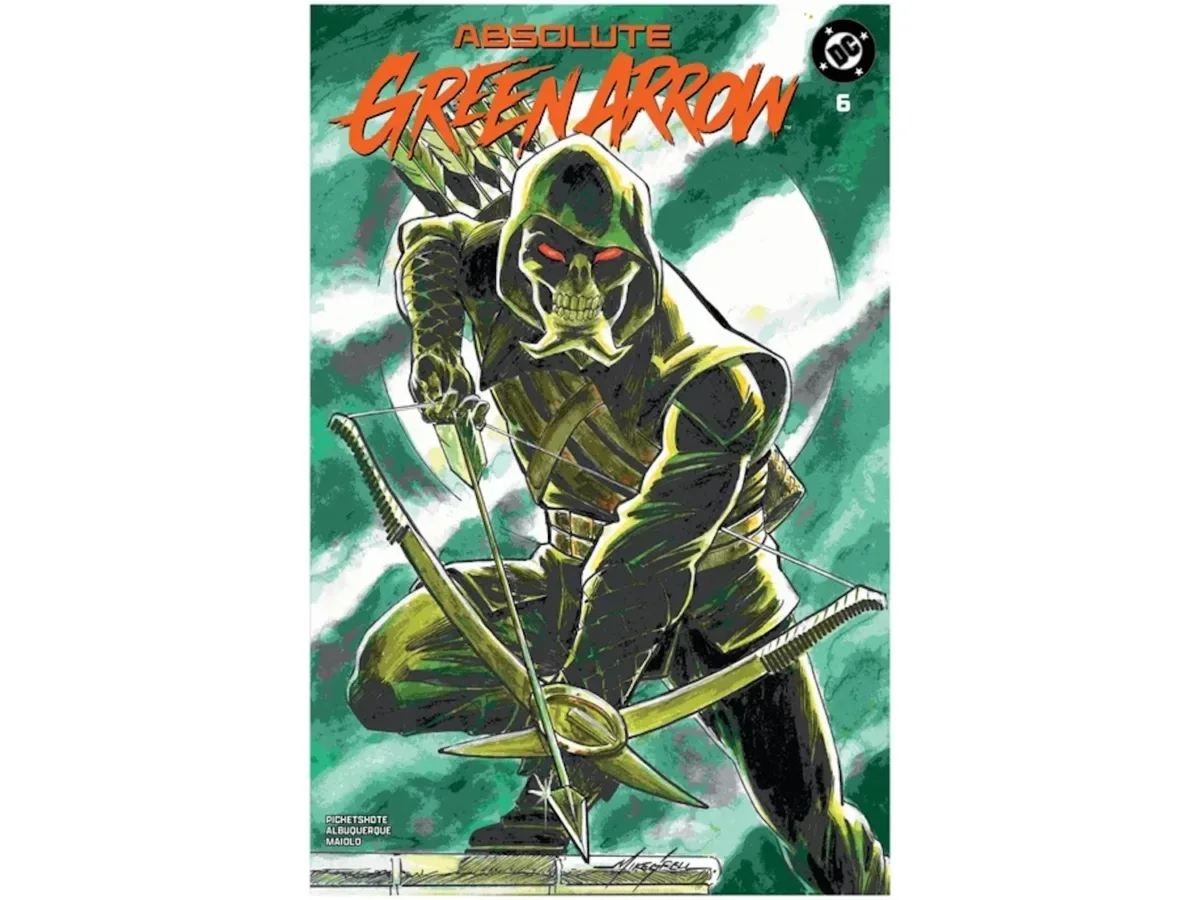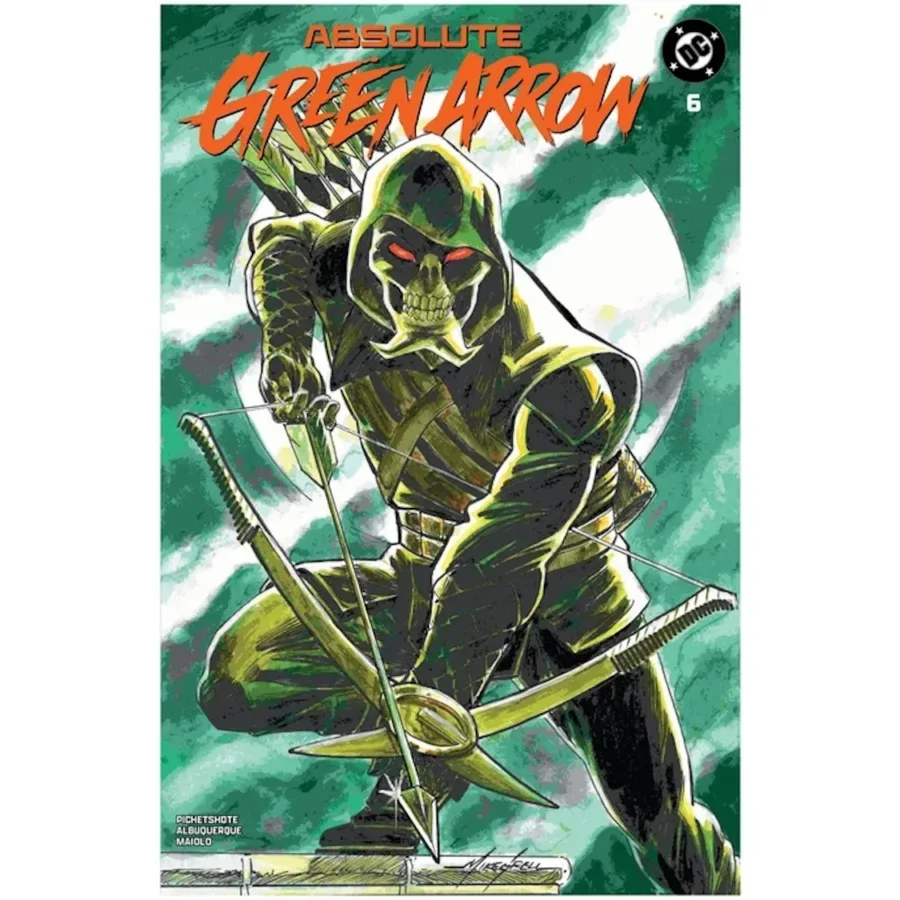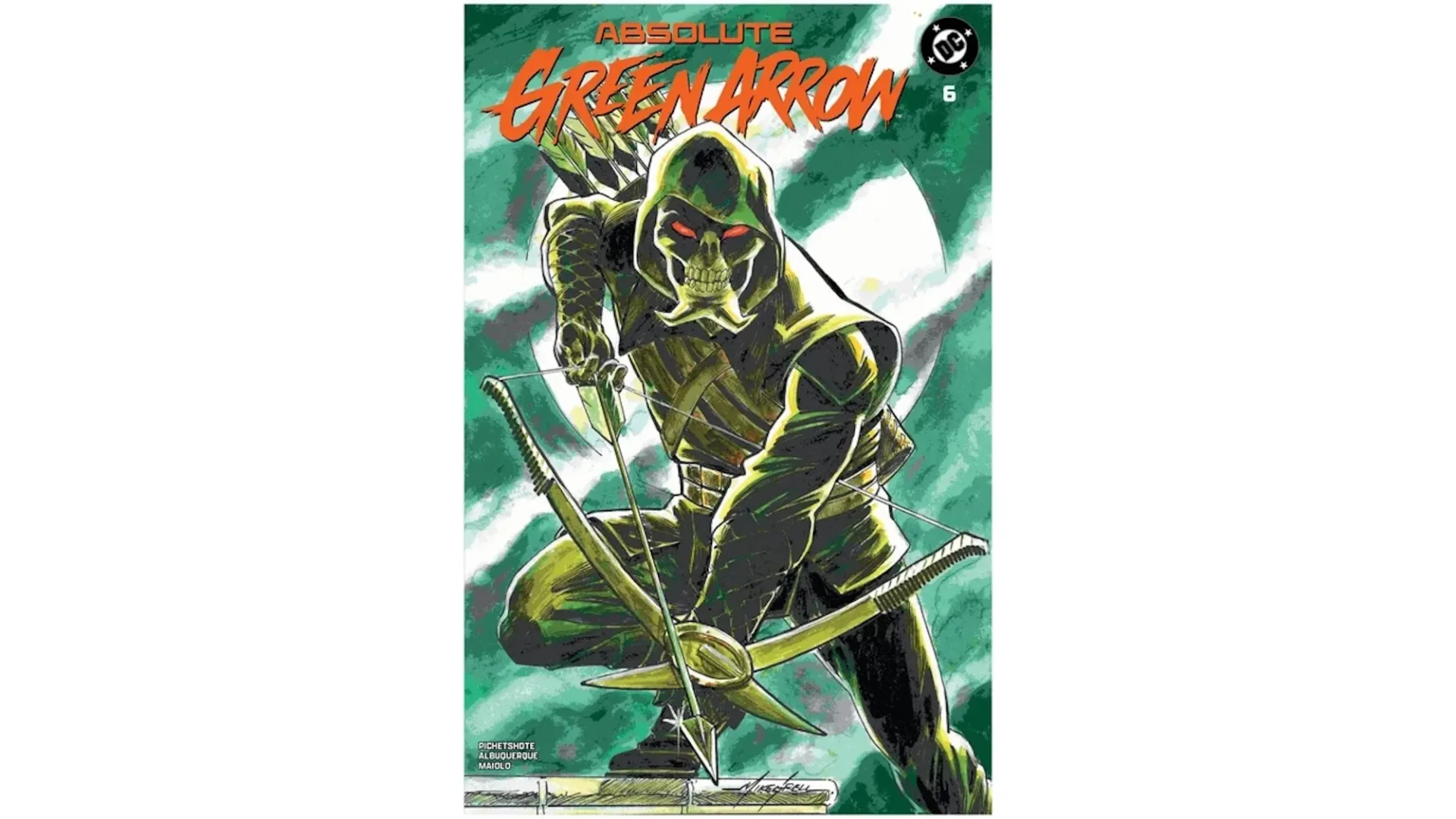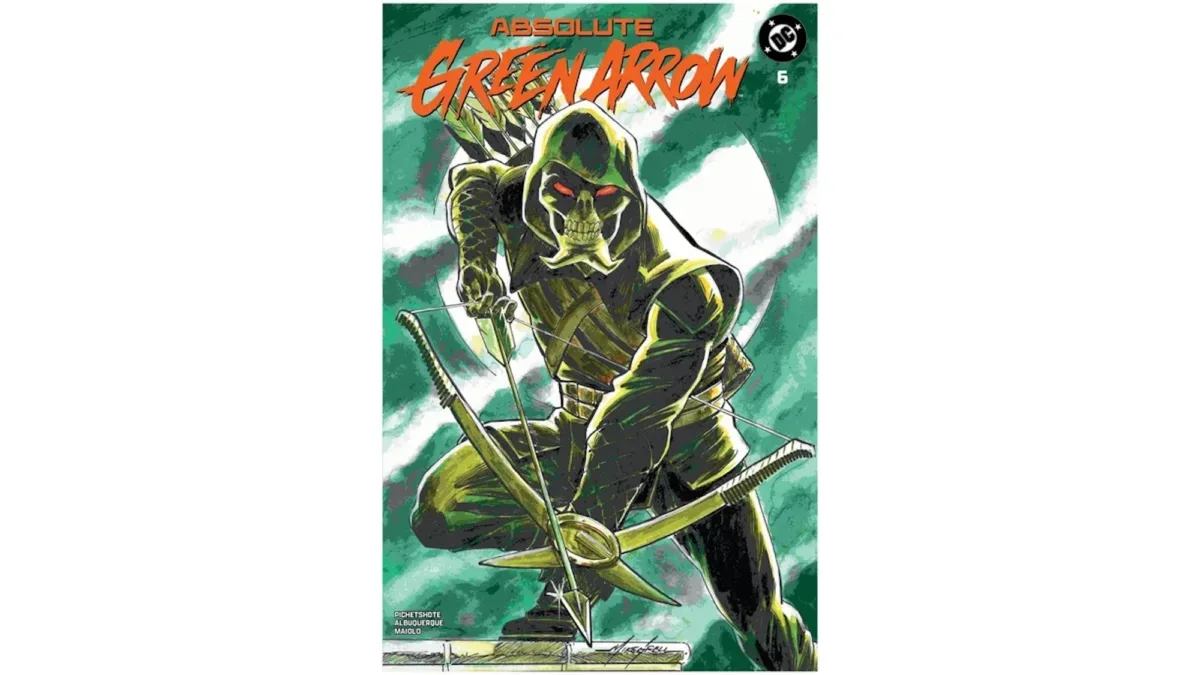
Absolute Green Arrow #6 was the biggest-selling comic in the surveyed specialty-store market for the week of October 13–19, finishing ahead of Avengers Armageddon #5 at No. 2 and Absolute Flash #20 at No. 3. It is a strong week for DC’s wider slate, but the chart is not a simple one-publisher blowout: Marvel fills much of the upper tier, while Image, Bad Idea, Dark Horse, IDW, Dynamite, BOOM! Entertainment and others all place books across the 400 entries.
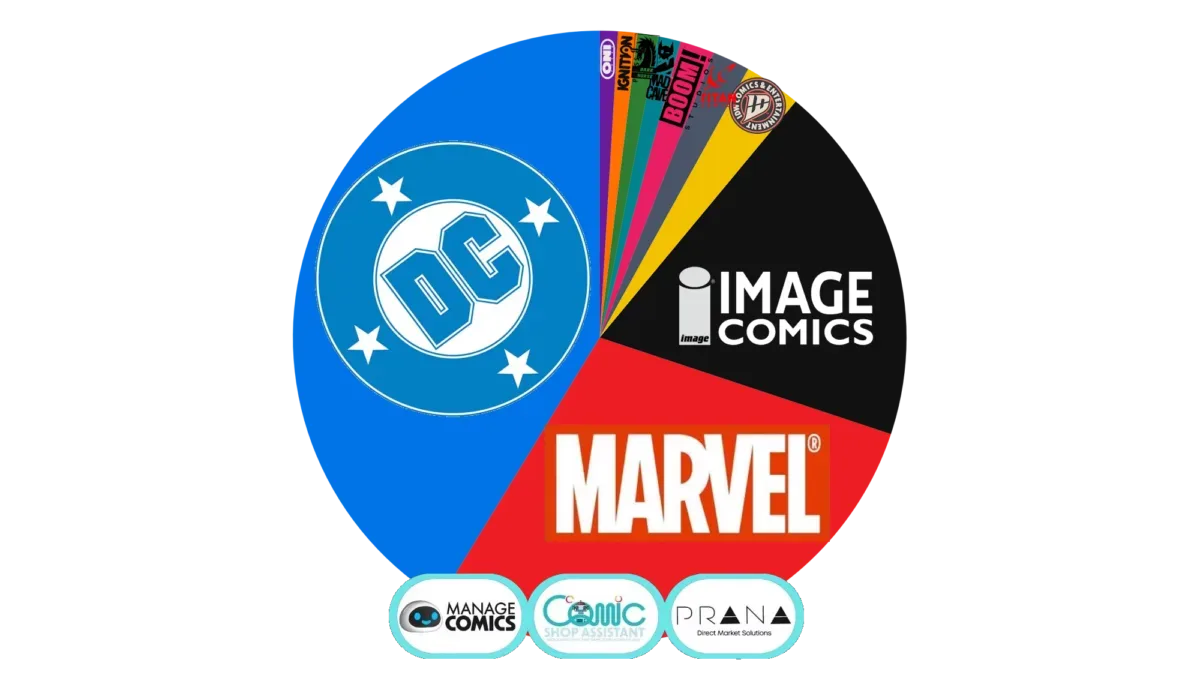
The ranking is built from point-of-sale data submitted by more than 600 comic shops using the Manage Comics and Comic Shop Assistant systems. That distinction matters. Point-of-sale, often shortened to POS, records sales through participating retailers’ checkout systems. It offers a useful view of what moved through those shops in the stated period, rather than a universal count of every comic sold everywhere or a definitive measure of readership.
Still, the chart gives a valuable weekly snapshot of the direct-market conversation: which single issues commanded the most attention at comic stores, how series issues held up next to fresh No. 1s, and how much room remained for publishers beyond the two superhero giants.
Green Arrow lands the week’s bullseye
DC’s top placing came from Absolute Green Arrow #6, while the series’ earlier issues also appear deeper in the 400: No. 5, No. 4, No. 3, No. 2 and No. 1 are all listed. Their presence is worth separating from the new issue’s No. 1 finish. The chart is item-based, so older issues appearing in it can reflect continued purchases of available back issues, rather than indicating that all of those copies sold during the original release weeks.
For the newest installment, though, the outcome is unambiguous within this retailer sample: it finished first. DC also claimed several of the next high positions with Absolute Flash #20 at No. 3, Detective Comics #1114 at No. 5, Nightwing #143 at No. 6 and Batwoman #8 at No. 8.
That is a varied set of properties rather than a chart driven by one Batman-related release alone. DC has Batman represented prominently—Batman #14, Catwoman #92, Batman/Superman: World’s Finest #56, Absolute Batman #24 and several other Gotham books are present—but its high-performing titles also include Flash, Green Arrow, Wonder Woman, Firestorm, Aquaman, Superman, Teen Titans and Legion of Super-Heroes.
The upper end of the ranking suggests sustained store demand for established continuity books and alternate-line “Absolute” branding alike. That is an interpretation of the assortment, not a claim about the creative or commercial reasons behind it; sales positions alone cannot show whether readers arrived for a specific story, a character, retailer ordering patterns, variant-cover buying or some combination of all four.
Marvel remains close behind—and extremely broad
Avengers Armageddon #5 gave Marvel the No. 2 book of the week. Marvel’s breadth is especially apparent in the top 15, where Amazing Spider-Man Halloween Special #1 ranks fourth, Uncanny X-Men #37 seventh, Doomquest #5 ninth, Midnight Spider-Man #1 10th, Miles Morales: Spider-Man #3 11th, Marc Spector: Moon Knight #9 12th and Midnight X-Men #1 14th.
The chart’s Marvel showing has two clear dimensions. First is the power of long-running core franchises: Spider-Man and the X-Men place multiple books, while Avengers, Fantastic Four, Moon Knight, Iron Man, Venom, Wolverine, Hulk, Captain America, Daredevil and Deadpool all show up. Second is the sales usefulness of accessible launch points. Multiple No. 1s ranked well, including Midnight Spider-Man #1, Midnight X-Men #1, Midnight Fantastic Four #1, Venom #1, Doom All-On-One #1, Wolverine Paradise #1, Infernal Hulk Vs. Fantastic Four #1 and Iron Man: Racing Towards Doom #1.
A No. 1 is not automatically a better seller than a later issue, and the chart shows that clearly: Green Arrow’s sixth issue and Avengers’ fifth issue lead the field. But a first issue is a straightforward onboarding point for a shopper who is not already following every chapter. It also has a simpler pitch for retailers putting together a weekly recommendation shelf. The strength of both formats here—ongoing chapters and debuts—illustrates a market where familiar series momentum and clean entry points can coexist.
Spider-Man, in particular, is everywhere in the first stretch of the list. Beyond the Halloween special and Midnight Spider-Man, the ranking includes Amazing Spider-Man #1001, Amazing Spider-Man #1000, Spider-Man/Hulk: Fire and Brimstone #2, Black Cat #15, Amazing Spider-Man: Amazing Visions #1 and additional Spider-Man-related issues further down. That does not identify one single winning Spider-Man format; instead, it demonstrates how many distinct shelf lanes the character family occupied during this reporting window.
Bad Idea’s No. 15 debut stands out
Among the week’s most striking placements, It Demands Sacrifice #1 from Bad Idea debuted at No. 15. It lands just behind Marvel’s Midnight X-Men launch and ahead of Image’s Dorc #9, DC’s Lobo #8 and Image’s G.I. Joe #27.
That position is notable because it puts the book in a top-20 group otherwise dominated by DC, Marvel and Image. The achievement should be read precisely: No. 15 is a strong result in the participating-store POS ranking, not proof of a particular total sales figure. The data supplied provides positions, but not unit counts, dollar volume, print runs or the gap between any two titles. A No. 15 finish could be close to No. 14 or far from it; the ranking alone does not tell us.
Even with that limitation, a top-20 debut is meaningful visibility for a publisher outside the chart’s largest recurring players. Hab #4, also from Bad Idea, appears later in the 400 as well, giving the publisher two represented releases in the overall list.
Image’s depth extends well beyond one headline title
Image does not take a top-15 position this week, but it supplies a substantial cross-section of the chart. Dorc #9 is No. 16, G.I. Joe #27 No. 18, Last Driver #3 No. 20, Exquisite Corpses: Rascal Randy #4 No. 29 and If Destruction Be Our Lot #5 No. 30. Other prominent Image placements include ReDCoat #21, Transformers #37, King Spawn #60, Gunslinger Spawn #59, Witchblade #26, Walking Dead Deluxe #147, Savage Dragon #282 and Radiant Black #44.
This is a useful reminder that a weekly chart measures a catalogue as much as it measures a single breakout. Image’s representation ranges from lower-numbered current series to legacy-numbered titles and recognizable licensed properties. It also contains multiple issues of some series, such as Last Driver, Dorc, Exquisite Corpses: Rascal Randy and G.I. Joe, reflecting the same long-tail dynamic seen in DC and Marvel catalogues.
For readers trying to use a sales list as a recommendation engine, this is where a little caution helps. High placement can point toward books that stores are actively selling, but it cannot judge whether a book is a new-reader-friendly start, an end-of-arc issue, a continuation requiring prior context or a special edition. A chart is a map of retail activity, not a substitute for a synopsis or a conversation with a comics retailer.
A busy field for licensed and genre comics
Outside the largest superhero publishers, the ranking shows an eclectic spread of licensed series, horror, fantasy and creator-led books. Dark Horse places Six of Us #2, Arrivals #1, Cyberpunk 2077: Jayk’s Case #1, Young Hellboy: Thrilling Sky Adventures #4 and Star Wars: The High Republic Adventures—Pathfinders #6. IDW appears with The Twilight Zone #11, Teenage Mutant Ninja Turtles #23, Sonic the Hedgehog x Godzilla #3, several Star Trek releases, and more.
Dynamite’s entries include Space Ghost Vs. The Herculoids #2, Thundercats (2026) #1, Vampirella, Gargoyles, Archie Vs. The Terminator #1 and two Supernatural launches. BOOM! Entertainment has Hello Halloween #2, Power Rangers Green #3, Something Is Killing the Children #50 and other releases in the ranking. Titan, Oni, Mad Cave, Ignition Press, Vault, Udon, Tokyopop, Keenspot and additional publishers each have titles in the list.
The list’s variety does not erase the top-heavy pull of DC and Marvel, but it does show specialty shops serving a much wider range of tastes than capes alone. Horror readers can find Creepshow, Hellraiser, The Twilight Zone and Halloween-themed one-shots. Science-fiction and media-franchise audiences have Transformers, Star Trek, Star Wars, Cyberpunk 2077, Godzilla, Sonic and Teenage Mutant Ninja Turtles. Fantasy and adventure have Conan, He-Man, Dungeons & Dragons and more.
For another look at comics news on the site, see The Foundry #3 and its paranormal investigation setup.
What this ranking can—and cannot—tell readers
The best way to read a chart like this is as a defined retail sample. It covers sales captured at more than 600 participating stores through two named POS systems during one week. That is a substantial data set, and it makes the ranking more grounded than a simple popularity poll. However, it does not encompass every physical retailer, digital storefront, library circulation channel, subscription shipment or sale outside those participating systems.
- It can show: relative sales placement among listed products in the surveyed stores for the reporting period.
- It can suggest: which characters, lines, launches and publishers had notable comic-shop visibility that week.
- It cannot show: exact copies sold, revenue, reader satisfaction, worldwide demand, or why a specific book outranked another.
- It also cannot settle: whether an old issue’s listing reflects fresh reader discovery, restocks, back-issue availability or another store-level factor.
Within those boundaries, the October 13–19 results tell a clear story. DC’s Absolute line had the week’s biggest individual winner in Absolute Green Arrow #6. Marvel stayed tightly competitive through Avengers, Spider-Man, X-Men and a large collection of new launches. Bad Idea broke into the upper tier with It Demands Sacrifice #1. And the rest of the 400 demonstrated the durable shelf presence of Image and a broad group of publishers working in genres and licenses far beyond the traditional superhero center.