The Wii is usually remembered for motion-controlled party games, platformers and family adventures, but its RPG library rewards a wider definition of role-playing. This ranking includes Wii games with meaningful character growth, party or class development, equipment and skill systems, social progression, persistent strategic improvement or a clearly defined action-RPG structure. That puts a tactical game such as Fire Emblem: Radiant Dawn beside a farming-focused game such as Rune Factory: Frontier, even though they ask very different things from the player.
The order weighs story and world-building, combat depth, role-playing variety, accessibility, Wii identity and how clearly each game communicates its strengths. It is an editorial ranking, not an objective scorecard. Regional availability also matters. Some entries received releases across Japan, North America and Europe, while others require a player to check the specific Wii edition and territory before buying or importing.
10. Fragile Dreams: Farewell Ruins of the Moon
Fragile Dreams is the most atmospheric choice here and one of the least conventional. Seto travels through the remains of a largely empty world, examining abandoned spaces, collecting objects and following traces of the people who disappeared. Equipment, items, weapons and basic character progression support the journey, but the game’s real emphasis is exploration, loneliness and environmental storytelling.
That focus is both its greatest strength and its clearest limitation. The ruined setting creates a distinctive emotional rhythm for players who enjoy quiet discovery and melancholy stories. Combat is comparatively simple and can feel awkward beside the stronger action systems elsewhere in this ranking. Fragile Dreams is best approached as an action-RPG and adventure hybrid rather than a deep build-crafting game. The game received releases in Japan, North America and Europe, with XSEED Games handling North America and Rising Star Games publishing the European edition.
- Best for players who value atmosphere, melancholy stories and exploration.
- Choose another entry if you want elaborate party composition or complex combat builds.
- Treat its RPG classification as a broad hybrid category, not a promise of traditional JRPG depth.
9. Opoona
Opoona earns its place through personality. Its science-fiction world, social systems and job progression give it a different flavor from the usual medieval fantasy adventure. The entire game can be controlled with the Nunchuk, including movement and combat, while the protagonist attacks by throwing the Bonbon weapon. Jobs and relationships give players reasons to engage with communities instead of treating towns as brief pauses between battles.
The tradeoff is a slow and eccentric opening. Opoona does not immediately deliver the dramatic momentum or polished spectacle associated with the Wii’s better-known RPGs. Its unusual structure can feel charming to patient players and aimless to anyone seeking a fast-moving quest. It received releases in Japan, North America and Europe, making it one of the more broadly available curiosities here. Pick it for its setting, social progression and oddball design, not for a conventional heroic power fantasy.
- Best for players who enjoy unusual worlds and job-based progression.
- Its one-handed control scheme is a defining idea, not a substitute for traditional button-heavy combat.
- Expect a patient, exploratory RPG rather than an immediately dramatic campaign.
8. Muramasa: The Demon Blade
Muramasa is an action RPG first and a party-building RPG second. Its side-scrolling battles are fast and built around switching between weapons with different properties. Forging and collecting blades create a persistent progression loop, while two protagonists provide separate routes through a folklore-inspired version of Japan. Vanillaware’s hand-drawn presentation gives every region and enemy encounter a strong visual identity.
Its narrow focus keeps the game moving, but it limits the role-playing variety compared with the entries above it. There is no large party to arrange, no elaborate social simulation and no grid of tactical units. Character development is mainly expressed through weapons, combat technique and route progression. That makes Muramasa an excellent recommendation for players who want stylish action with RPG structure, but a weaker fit for anyone seeking a long dialogue-heavy adventure. The Wii version was released in Japan, North America and Europe and should not be confused with the later PlayStation Vita version, Muramasa Rebirth.
- Best for players who want stylish action, weapon switching and brisk progression.
- Its strongest RPG systems are forging and equipment choice rather than party management.
- The Wii version and Muramasa Rebirth are different editions with different content and presentation.
7. Shiren the Wanderer
The Wii version released internationally as Shiren the Wanderer represents the system’s most system-driven form of role-playing. As a Mystery Dungeon roguelike, it changes the player’s priorities from memorizing a fixed campaign to evaluating constantly changing situations. Dungeon layouts, enemies, items and available resources create a sequence of tactical problems. Food, equipment, positioning and risk management matter because a promising run can unravel after one poor decision.
That structure makes Shiren unusually replayable, but it also creates a sharp emotional divide. Players who enjoy learning from failure and making decisions with incomplete information may find its rules endlessly compelling. Players who want a carefully paced story, predictable equipment growth or forgiving checkpoints may find it punishing. Its role-playing appeal comes from becoming better at reading systems, not merely from watching the hero accumulate power. The Wii title received a Japanese release and a North American release; PAL readers should not assume that a standard European Wii edition exists, and should distinguish it from the better-known DS release.
- Best for players who enjoy tactical risk, resource management and replayable runs.
- Do not judge it by the standards of a linear cinematic JRPG.
- Expect failure to be part of the learning structure rather than an unusual interruption.
6. Tales of Symphonia: Dawn of the New World
Dawn of the New World brings the Tales series’ real-time battles to a Wii sequel built around Emil, Marta and a changing group of allies. Movement, attacks, artes and positioning make battles feel active rather than menu-driven, while recruitable monsters add another layer of party customization. The game also benefits from its connection to the earlier Tales of Symphonia, giving returning players a familiar setting and continuing threads without making the Wii title simply a port of the GameCube game.
Its limitations are important. The sequel has a smaller scope than the original Symphonia, and its story and character presentation can be uneven. New players may also lack context for returning characters and world history. That makes it a better recommendation for fans of the earlier game than for someone seeking the Wii’s most self-contained RPG. Still, its combination of real-time combat, monster recruitment and series continuity gives it a distinct place between traditional JRPGs and action RPGs. The Wii game was released in Japan, North America and Europe, with the Japanese edition using the title Tales of Symphonia: Ratatosk no Kishi.
- Best for Tales fans who want real-time combat and a connected story.
- Monster recruitment adds variety but does not erase the sequel’s narrower scope.
- Playing the original Symphonia is helpful context, not a requirement for the Wii game itself.
5. Rune Factory: Frontier
Rune Factory: Frontier combines farming, relationships, crafting, village development and real-time dungeon combat into a daily routine. A morning spent tending crops or building relationships can lead into an afternoon of gathering materials and an evening fight, so progression is not limited to combat experience. Monster care and equipment creation connect the peaceful and dangerous sides of the game. It is one of the clearest examples of the Wii supporting a simulation RPG rather than only a conventional quest.
The same breadth can create friction. Frontier asks players to manage time and long-term routines, and its slower pace may frustrate anyone expecting a direct dungeon-to-dungeon adventure. Relationships and village activities are not decorative extras; they are part of the game’s rhythm. The game supports Wii Remote and Nunchuk controls as well as Classic Controller input, giving players a conventional option for combat and navigation. Choose Rune Factory: Frontier if you want role-playing to include daily life, cultivation and community rather than only battles and a final villain.
- Best for players who want farming and relationships alongside dungeon combat.
- Its pace rewards routine and patience more than rapid progression.
- Classic Controller support gives players an alternative to motion-oriented input.
4. Arc Rise Fantasia
Arc Rise Fantasia is the Wii’s strongest choice for players seeking a traditional turn-based Japanese RPG designed specifically for the system. Its party battles emphasize coordination, linked attacks and elemental abilities, giving encounters more structure than simply selecting the strongest command each turn. The fantasy setting, traveling party and world-saving premise are familiar, but that familiarity can be appealing when the goal is a straightforward adventure with menus, equipment and a steadily expanding cast.
Its position reflects both its strengths and its caveats. The game does not offer Xenoblade’s open scale or Fire Emblem’s tactical campaign structure, and its English localization is not universally loved. Most importantly, the western release was North American; a planned European release was cancelled. PAL players therefore face a regional limitation rather than a universally available Wii option. Arc Rise Fantasia is worth seeking when conventional turn-based combat is specifically what a player wants, but it is not the broadest or most accessible RPG here.
- Best for players who miss classic turn-based party RPGs on Wii.
- The western release is North American; do not assume a standard European Wii edition exists.
- Its appeal comes from party coordination and traditional structure, not experimental controls.
3. Fire Emblem: Radiant Dawn
Fire Emblem: Radiant Dawn is the Wii’s definitive strategic role-playing game. Battles unfold on grids where terrain, range, class abilities and unit placement determine survival. Characters gain experience, change roles and develop support relationships, while permanent death gives ordinary decisions lasting weight. The campaign’s shifting armies and multiple perspectives also make its story feel larger than a single hero’s journey. It is a demanding game, but that demand is part of its identity rather than an accidental obstacle.
The story continues the world of Path of Radiance, so returning players gain useful context, though Radiant Dawn remains a separate Wii title and does not require the GameCube game to function. Completed Path of Radiance save data can provide bonuses, but the Wii RPG is playable without that transfer. The difficulty curve and the consequences of losing a unit can discourage newcomers, particularly those accustomed to freely retrying every battle. For players who want character growth expressed through tactical decisions rather than real-time attacks, Radiant Dawn offers the richest strategic role-playing on the system.
- Best for players who enjoy grid tactics, permanent consequences and class development.
- Path of Radiance adds story context, but it is not required to play Radiant Dawn.
- Consider the difficulty and permanent-death structure before choosing it as a first Fire Emblem.
2. The Last Story
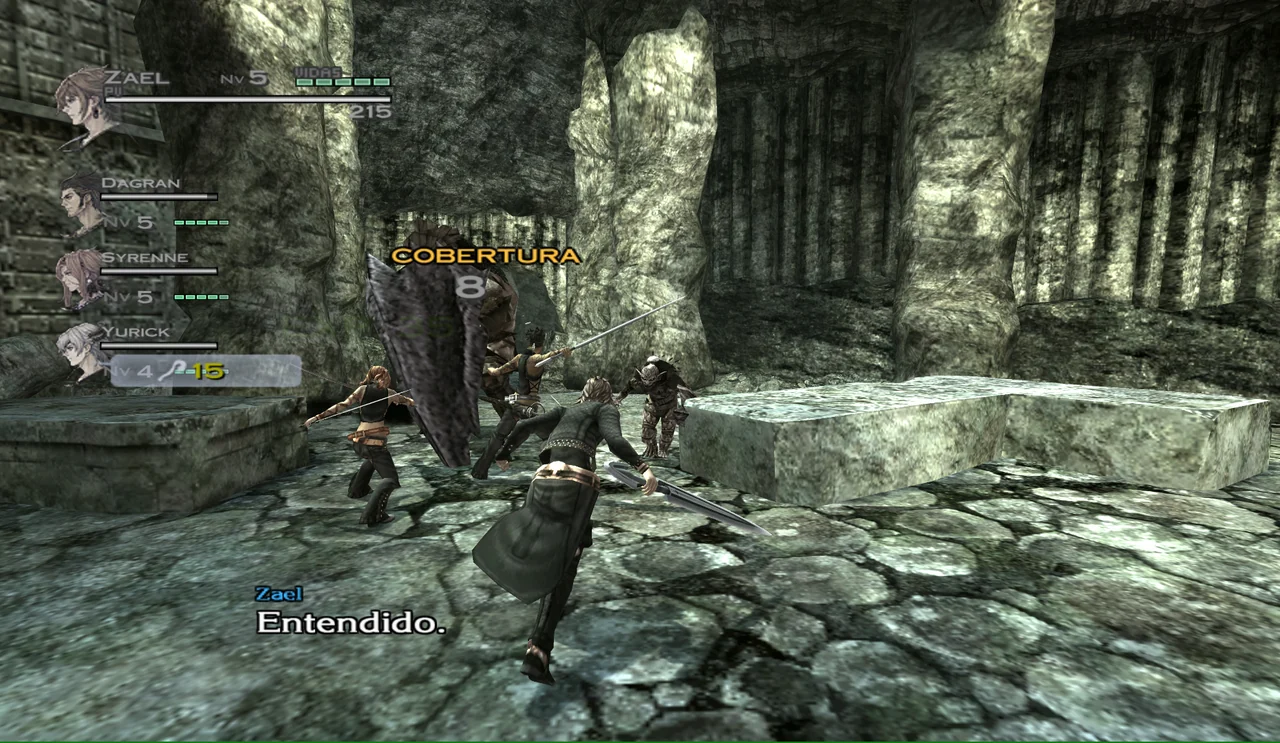
The Last Story turns party-based RPG combat into a more immediate squad experience. Battles use real-time movement, commands, positioning and environmental interactions, while the player can direct allies and exploit relationships between abilities. Magic effects and battlefield placement encourage players to think about the whole group rather than simply controlling one attacker. Its mercenary cast and focused story give the adventure a strong sense of momentum without demanding the sprawling commitment associated with the largest RPGs.
That compact design is a major advantage. The Last Story is easier to recommend to players who want a substantial narrative RPG but do not want an enormous map or an endless list of side systems. Its equipment and customization are less elaborate than Xenoblade’s, and the battle interface can take time to understand. The original Wii online features are no longer available because Nintendo Wi-Fi Connection ended on May 20, 2014, so the game should be judged as a single-player RPG today. Nintendo’s European release arrived on February 24, 2012; North American availability was handled through the limited-operation Project Rainfall campaign and later retail distribution.
- Best for players who want focused story progression and real-time party combat.
- Its smaller scale is a strength for some players and a limitation for those seeking a huge world.
- Do not present the original Wii online mode as currently operational.
1. Xenoblade Chronicles
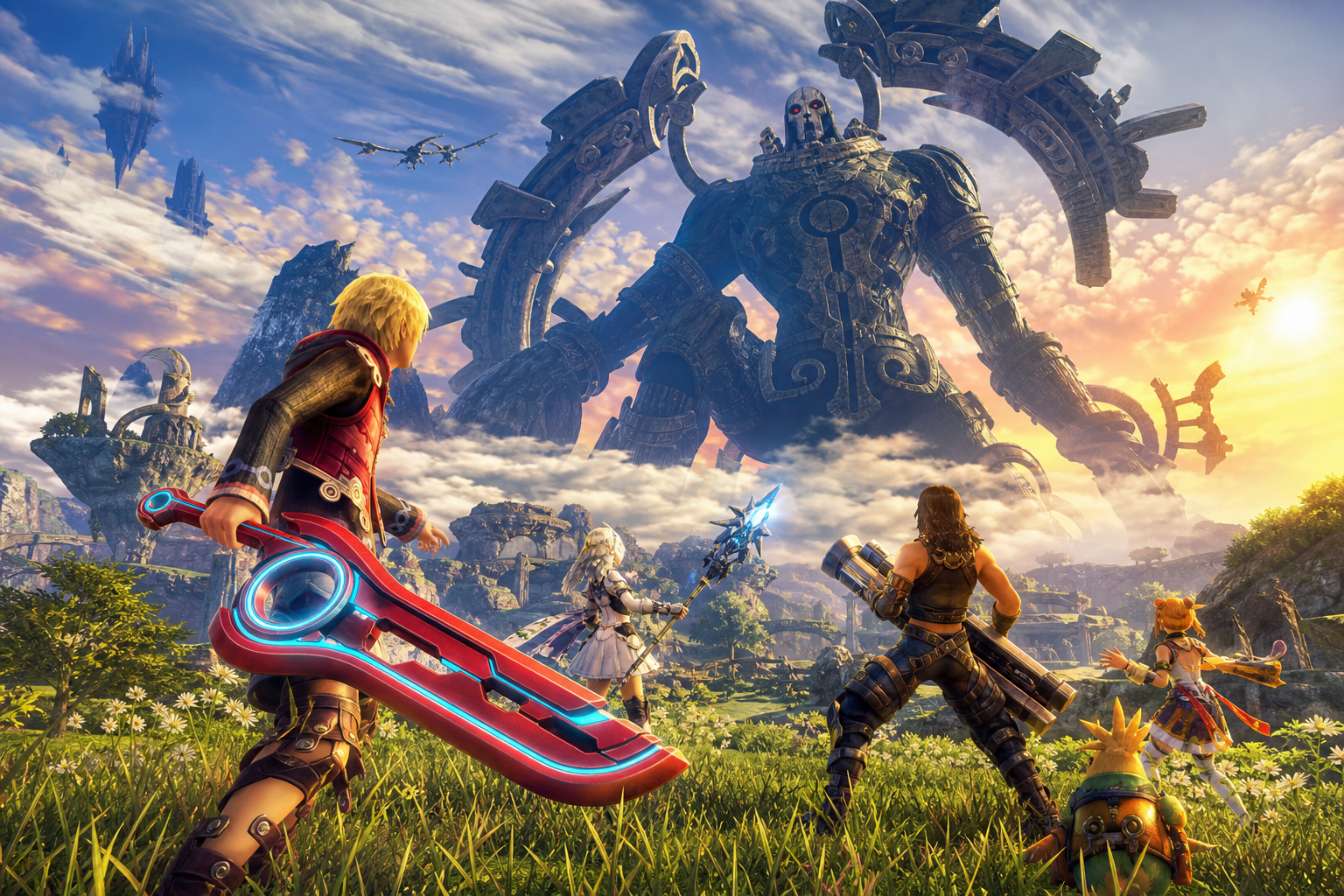
Xenoblade Chronicles is the Wii’s most complete expression of large-scale role-playing. Its environments turn exploration into a central reward, while real-time battles combine auto-attacks, selectable Arts, party roles and Chain Attacks. The Monado’s visions add predictive information to combat, allowing the player to respond to impending danger instead of merely reacting after it happens. Equipment, quests, party relationships and a substantial story give the world enough systems to support both a long campaign and optional exploration.
Its ambition also produces real barriers. The interface is dense, the runtime is substantial and the number of quests and equipment choices can overwhelm players who prefer a tightly directed adventure. The Wii hardware’s visual limitations are noticeable across large environments, but they do not erase the game’s sense of scale. Xenoblade ranks first because it combines story, exploration, party management and mechanical identity more successfully than the other nine games. It is the best starting point for a player who wants one Wii RPG to show how far the system’s role-playing library can reach.
- Best for players who want a large world, real-time party combat and an expansive story.
- Learn the combat vocabulary gradually; its systems are deeper than a simple action-RPG control scheme suggests.
- Expect a long, menu-heavy adventure rather than a compact campaign.
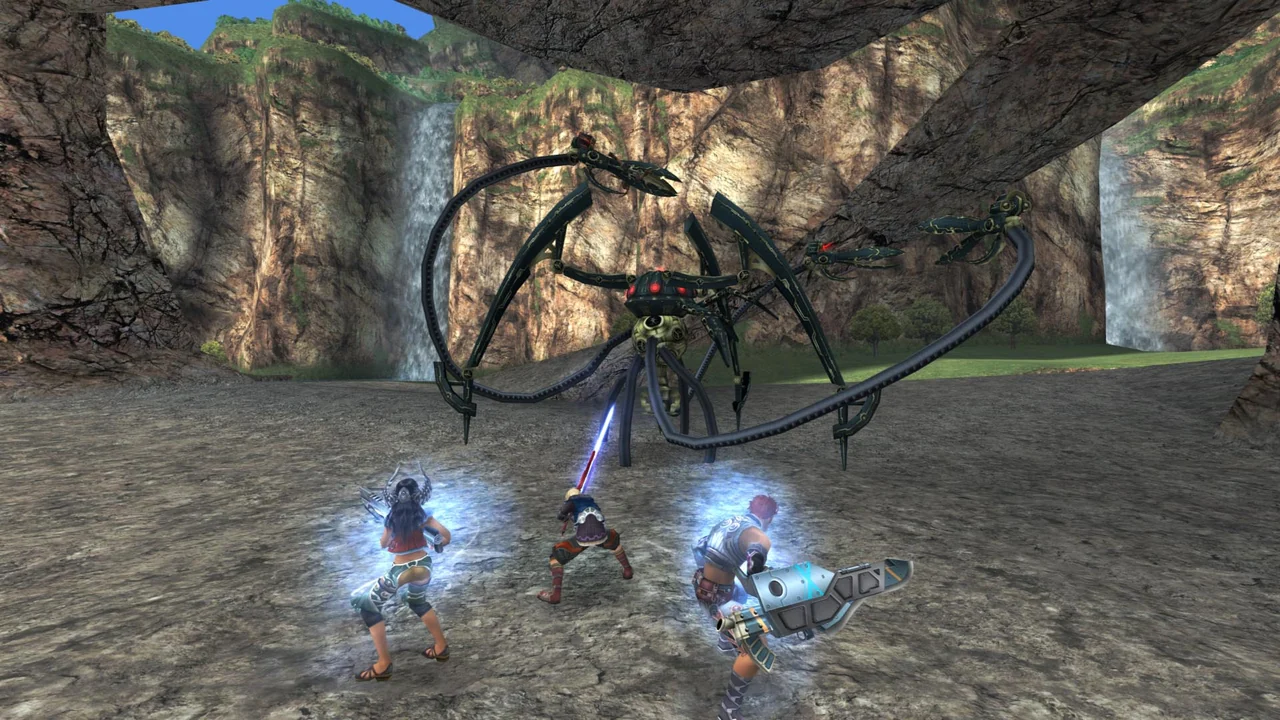
The ten games cover several different meanings of role-playing. Xenoblade Chronicles and The Last Story favor real-time party combat, Fire Emblem: Radiant Dawn makes tactical planning the central form of character growth, and Arc Rise Fantasia serves players who want a conventional turn-based campaign. Rune Factory: Frontier expands the genre into farming and relationships, Shiren turns progression into mastery of changing systems, and Muramasa emphasizes weapon-based action. Opoona and Fragile Dreams are the most unusual hybrids, while Tales of Symphonia: Dawn of the New World sits between a traditional sequel and an action RPG.
For a first choice, start with Xenoblade Chronicles if you want scale, Radiant Dawn if you want strategy, Rune Factory: Frontier if you want simulation, or The Last Story if you want a focused story. Regional editions matter, especially for Arc Rise Fantasia, Shiren the Wanderer and the differently localized releases of Fragile Dreams and Tales of Symphonia: Dawn of the New World. The Wii may not have been marketed primarily as an RPG machine, but this selection shows that its library offers more variety than its reputation suggests.