The Wii platformer library is broad enough to support a genuine top ten without padding the list with action-adventure or role-playing games. This ranking includes games where jumping, traversal, route selection, environmental movement or platform-based problem solving is the primary activity. That leaves out The Legend of Zelda: Skyward Sword, Metroid Prime 3: Corruption, Xenoblade Chronicles, The Last Story and Final Fantasy Crystal Chronicles: Echoes of Time, even though each contains occasional movement challenges. Wii Sports is excluded because it is a sports compilation, not a platformer.
The order weighs movement quality, stage variety, challenge design, replay value, local multiplayer usefulness and Wii-specific identity. North American names are used throughout. Regional differences matter: Kirby's Return to Dream Land was sold in Europe as Kirby's Adventure Wii, while Wario Land: Shake It! was released there as Wario Land: The Shake Dimension. Later versions such as Donkey Kong Country Returns 3D, Rayman Legends and Kirby's Return to Dream Land Deluxe are not treated as Wii releases. Super Mario Galaxy is also omitted in favor of its sequel, not because it is ineligible, but because Galaxy 2 offers the stronger combination of stage density, pacing and challenge variety for this particular ranking.
10. A Boy and His Blob
A Boy and His Blob is the gentlest entry here, built around cooperation between the boy protagonist and a shapeshifting companion. Feeding Blob different jelly beans produces transformations that solve traversal problems, create platforms, reach distant areas or deal with hazards. The result is a puzzle-platformer in which observation and experimentation matter more than reflex speed.
Its hand-drawn presentation and deliberate rhythm make it a good recommendation for younger players, families and anyone who prefers figuring out a room to sprinting through a demanding obstacle course. The game includes 40 levels and a substantial collection of blob transformations, giving its central idea room to develop. The limitation is equally clear: players looking for tight jumps, escalating speed or severe precision will find its measured problem solving comparatively soft. Its appeal comes from Blob's changing toolbox rather than from athletic movement.
- Best for: relaxed puzzle-platforming and younger players.
- Strongest feature: Blob transformations that turn familiar spaces into small mechanical puzzles.
- Tradeoff: slower pacing and lighter action than the rest of this list.
9. Klonoa
Klonoa gives the Wii a compact, carefully authored platforming adventure centered on the Wind Bullet. The tool captures enemies, allowing Klonoa to throw them at targets, use them to attack or convert them into movement options. That simple idea gives each enemy more importance than a standard obstacle: it can be ammunition, a key to a puzzle or part of a jump sequence.
The game's 14-level structure makes it easier to appreciate its design than to get lost in a huge collectible map. Enemy manipulation, hidden objects and set-piece moments provide variety without abandoning the central mechanic. Klonoa suits players who want platforming with a puzzle-solving edge and a strong visual identity. Its smaller campaign and narrower mechanical vocabulary may disappoint players expecting the scale or constant reinvention of a major Mario adventure. The Wii version supports Wii Remote and Nunchuk controls, as well as the Classic Controller and GameCube Controller, so its motion input is optional rather than foundational.
- Best for: puzzle-platforming and authored set pieces.
- Strongest feature: the Wind Bullet gives enemies multiple uses.
- Tradeoff: a more compact experience than the Wii's largest platformers.
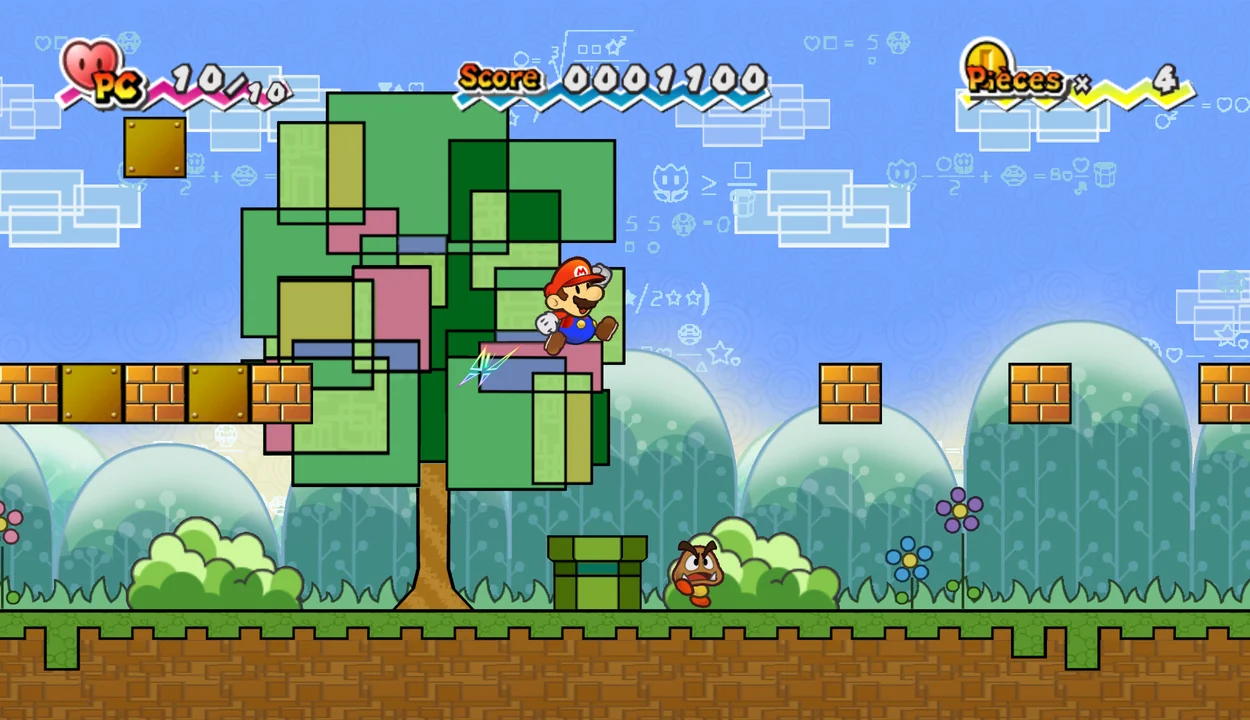
8. Kirby's Epic Yarn
Kirby's Epic Yarn turns its textile art direction into a mechanical language. Kirby is made of yarn, and the game uses thread, fabric and stitched surfaces for transformations, attacks and environmental interaction. The hero can become vehicles or other forms, while collectible-focused stages reward looking beyond the obvious route. The presentation is charming, but the important point is that the theme affects how spaces behave.
Failure is unusually forgiving, which makes Epic Yarn an inviting choice for children, relaxed solo players and families learning platforming fundamentals. Its low-pressure design also gives exploration room to breathe. That generosity is a limitation for experts who want demanding jumps or meaningful punishment: the game is more interested in expression, discovery and collecting than in testing execution. It is a platformer for players who value personality and accessibility over a hard edge.
- Best for: low-pressure play, visual charm and collectible exploration.
- Strongest feature: textile transformations that connect art direction to movement.
- Tradeoff: limited failure pressure for experienced platforming players.
7. Wario Land: Shake It!
Wario Land: Shake It! is a mission-driven 2D platform adventure rather than a simple run to the goal. Stages contain treasures, destructible scenery, alternate routes and an escape sequence that changes the mood once the main objective is complete. Wario's heavy movement and aggressive interactions give the game a different physical character from Mario's lighter precision.
The Wii Remote adds shaking and tilting actions to attacks and environmental interactions. Those gestures support the conventional side-scrolling structure instead of replacing it, which makes the game a useful example of motion control used as a punctuation mark. It is a strong pick for players who enjoy searching each stage and completing objectives. The limitation is that motion commands can feel less exact than button inputs, especially for players who prefer every action to remain on the face buttons. Players who dislike optional collectibles may also find the mission structure more demanding than its bright presentation suggests.
- Best for: treasure hunting, destructible environments and mission-based stages.
- Strongest feature: stages that continue with an escape run after the main objective.
- Tradeoff: shake and tilt inputs may feel less precise than traditional controls.
6. Sonic Colors
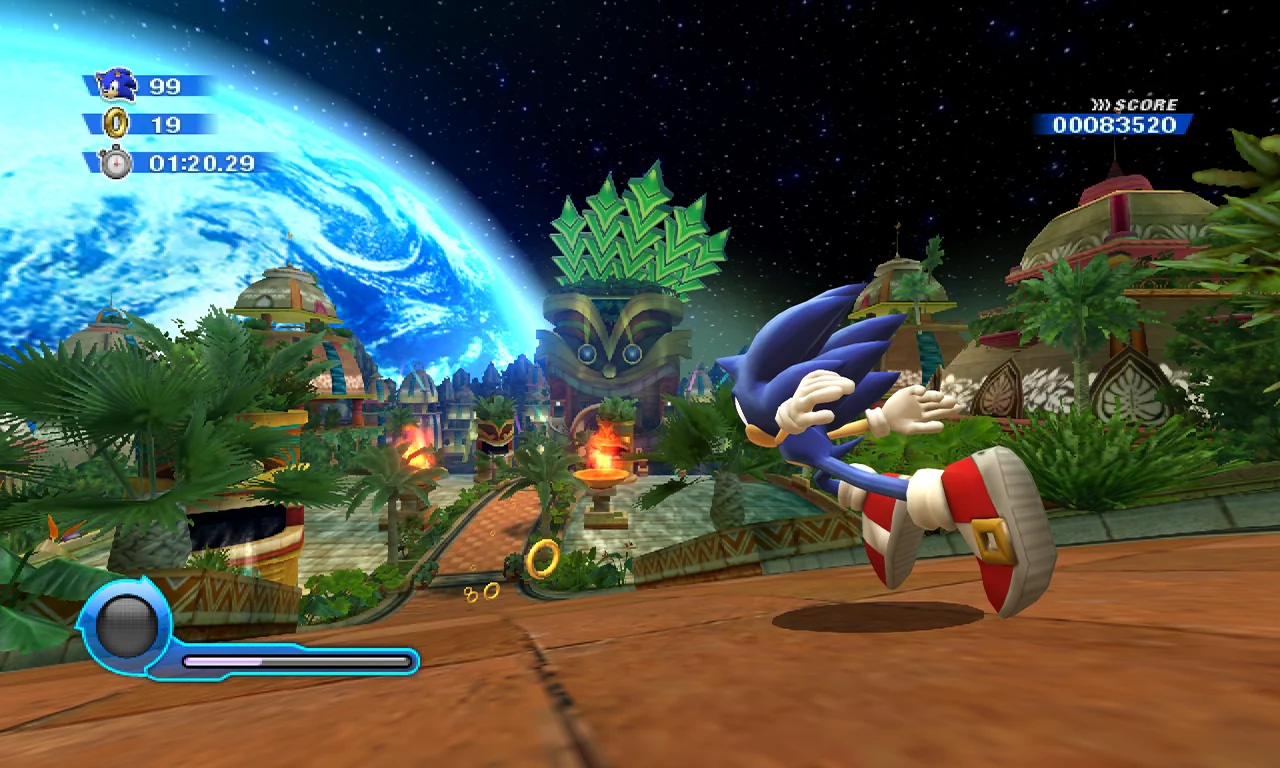
Sonic Colors combines speed-focused platforming with route choices created by Wisps. These abilities alter Sonic's movement and open paths that are unavailable through ordinary running and jumping. The best stages therefore ask two questions at once: how quickly can Sonic move, and which ability or route produces a better result? That gives the game more structure than a straight dash from left to right.
The Wii edition combines 2D and 3D perspectives, with theme-park environments built around speed and alternate routes. It is a natural recommendation for players who want momentum, bright stages and a platformer that rewards replaying familiar areas with better route knowledge. Wisp powers also give the Wii release a mechanical identity beyond Sonic's established speed. The cost is readability. Fast movement can hide hazards, obscure collectible routes and make early attempts feel less controlled. Sonic Colors works best for players willing to learn stages through repetition rather than demanding perfect clarity on the first pass. Its Wii version also supports two-player co-operative play, although the main platforming campaign remains primarily a solo experience.
- Best for: momentum, speed and route experimentation.
- Strongest feature: Wisp powers change both movement and level routes.
- Tradeoff: speed can make hazards and alternate paths harder to read initially.
5. Kirby's Return to Dream Land
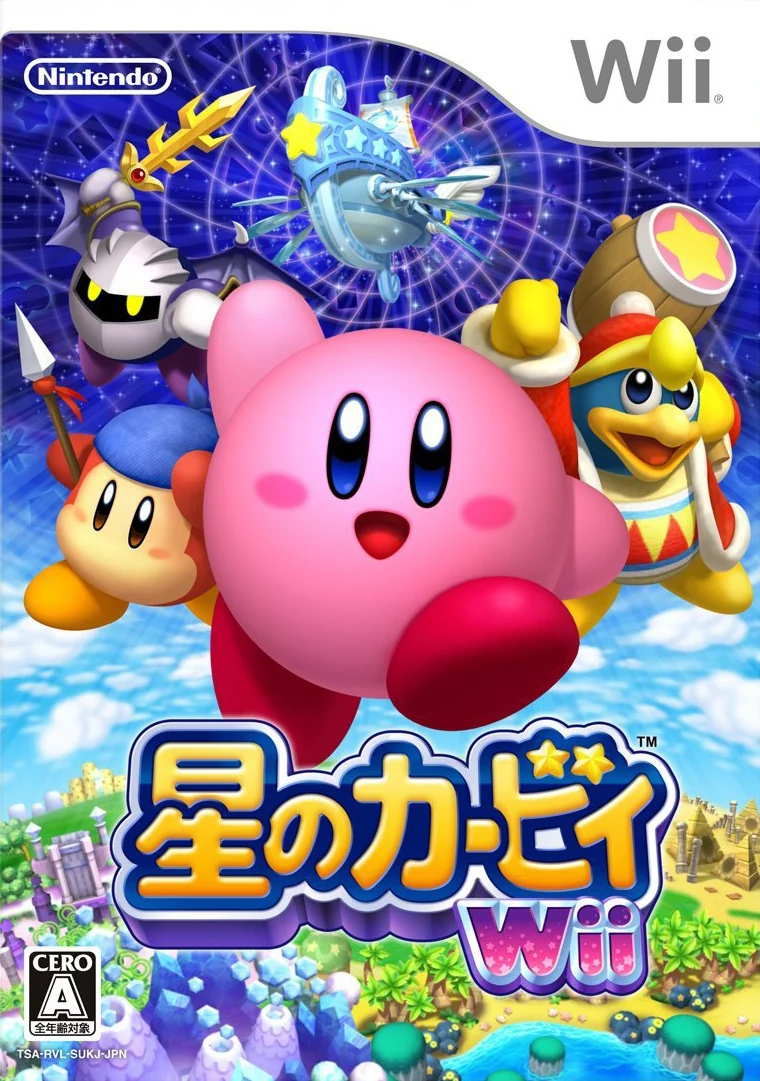
Kirby's Return to Dream Land is the Wii's most accommodating traditional group platformer. Kirby's copy abilities provide a broad set of attacks and movement possibilities, while the stages steadily introduce new hazards, scenery and encounters. Solo players can enjoy the forgiving fundamentals, but the game's defining feature is simultaneous local play for up to four people. Kirby, Meta Knight, King Dedede and Waddle Dee give the group different visual identities and play preferences.
The four-player format makes this one of the easiest recommendations for a mixed-skill room. Experienced players can move ahead while less confident players experiment with abilities and recover from mistakes. Players can also join or leave during the adventure, reducing the pressure to organize a complete session around one group. That accessibility is also the main limitation for veterans: the opening stretch does not demand much precision, and crowded multiplayer can make the action visually busy. Players seeking a severe solo challenge should look elsewhere, but families and groups get a polished, flexible platformer.
- Best for: four-player local co-op and mixed-skill groups.
- Strongest feature: a generous ability system that supports several playable characters.
- Tradeoff: early solo play is less demanding than the sharper entries here.
4. New Super Mario Bros. Wii
New Super Mario Bros. Wii brings precise side-scrolling movement back to the foreground while adding simultaneous support for up to four players. Mario and his companions navigate familiar hazards with jumps, power-ups and secrets, including the distinctive movement opportunities offered by the Propeller and Penguin suits. The level design works alone, but the multiplayer rules change every space: players can bounce off one another, lift each other and rescue a failed run, or simply collide at the worst possible moment.
That tension makes it the strongest social choice in the ranking. A group can laugh through mistakes, then return to stages to find hidden exits and improve coordination. Solo play is cleaner and often more precise, while crowded co-op can undermine careful jumps and create accidental interference. Nintendo also included the Super Guide, which can help players progress past a difficult course without turning every stage into an automatic success. It is more conventional than Galaxy, Rayman Origins or Wario Land. Choose it for dependable 2D movement and group play, not for the Wii's most unusual platforming ideas.
- Best for: local multiplayer and classic side-scrolling movement.
- Strongest feature: four-player cooperation that can also become controlled chaos.
- Tradeoff: screen-space collisions and player interference can hurt precision.
3. Rayman Origins
Rayman Origins is one of the Wii's richest 2D platformers because it treats movement, collectibles and stage spectacle as parts of one flowing system. Its hand-drawn presentation gives each environment a strong personality, while the stages steadily expand the vocabulary of jumps, attacks, escapes and environmental timing. More than 60 levels provide room for both straightforward progression and repeated attempts at better collectible runs.
Local co-op for up to four players broadens its audience, but the game is not merely a casual group showcase. Later challenges demand sharper timing, and recovering collectibles often requires understanding a stage rather than simply reaching its exit. That combination makes Rayman Origins especially attractive to players who want animation and replay value together. Its limitation is the same quality that makes it rewarding: the later precision can be punishing for casual players, particularly when several people are learning the same stage at once. Its Wii release also sits below the top two because its most memorable strengths are shared with other versions, whereas Galaxy 2 and Donkey Kong Country Returns are more tightly associated with the Wii's first-party platforming identity.
- Best for: animated 2D movement, co-op and collectible replay.
- Strongest feature: consistently inventive stages with a clear escalation of precision.
- Tradeoff: later levels can be demanding for casual players.
2. Donkey Kong Country Returns
Donkey Kong Country Returns builds its platforming around momentum and timing. Running, rolling, grabbing, barrel launching and environmental hazards all ask the player to read the next beat of a stage. Mine-cart and rocket sections shift the rhythm without abandoning the central demand for controlled movement. Hidden collectibles and alternate goals give skilled players reasons to revisit stages after simply reaching the end.
The game earns this high position through its challenge curve. Early stages teach the physical language, while later sections combine hazards in ways that reward familiarity rather than random luck. Two-player support makes the adventure more approachable, although the second character does not remove the need to understand the level. The Wii version was designed around simultaneous two-player action, but its single-player structure remains the clearest expression of the game's precise timing demands.
The main divisive feature is the Wii Remote motion input used for actions such as the ground pound. Some players will enjoy its immediacy; others will prefer a fully button-based control scheme. That control friction keeps it from the top spot, but the quality of its stage construction and movement still make it the best choice here for players who want a demanding 2D test.
- Best for: demanding 2D movement and collectible-focused replay.
- Strongest feature: momentum-driven stages that build toward precise set pieces.
- Tradeoff: motion-based actions may not suit every player's control preference.
1. Super Mario Galaxy 2
Super Mario Galaxy 2 is the strongest all-round Wii platformer when stage density, pacing and challenge variety carry the most weight. It keeps the series' gravity-based movement and spherical worlds, then presents them through a more direct sequence of stages. New power-ups, Yoshi and a broader range of focused objectives make the game easier to approach in short sessions without reducing the potential for demanding collectible hunts and late challenges.
Its design is unusually good at changing the question from stage to stage. One level may test gravity and orientation, another may ask for careful timing, and another may turn a power-up into the entire point of the route. Yoshi's abilities, including his different fruit-based transformations, give selected stages their own movement language rather than functioning as a cosmetic extra. Co-operative support also lets a second participant help with selected tasks without transforming the experience into a chaotic four-player brawl.
Players seeking the original game's most surprising sense of discovery may prefer Super Mario Galaxy, whose first encounter with gravity feels more transformative. Galaxy 2 nevertheless wins this ranking because its tighter pacing and wider challenge range make it the more complete platforming package. The original Galaxy remains a major omission only in the sense that a ten-game list cannot include every excellent Wii platformer; its absence should not be read as a claim that it is an inferior game.
- Best for: players wanting the broadest and most varied 3D platforming set on Wii.
- Strongest feature: dense stages that give gravity, power-ups and Yoshi distinct jobs.
- Tradeoff: the original Galaxy has a stronger claim to novelty and first-time wonder.
The Wii's platformers cover several moods rather than repeating one formula. Galaxy 2 is the broadest 3D choice, Donkey Kong Country Returns is the sharper 2D test, Rayman Origins combines animation with replayable co-op, and New Super Mario Bros. Wii remains the clearest group recommendation. Kirby's games lower the pressure, Sonic Colors prioritizes speed, while Wario Land and Klonoa show how much room the genre has for unusual tools.
Start with the game that matches the kind of challenge you want, not simply the character you recognize. Players seeking invention should choose Galaxy 2 or Klonoa, players seeking precision should choose Donkey Kong or Rayman, and players sharing the Wii with family or friends should begin with Kirby's Return to Dream Land or New Super Mario Bros. Wii. For a gentler puzzle-led introduction, A Boy and His Blob is the strongest alternative.