The Wii is often remembered for making motion controls approachable, but its rhythm and music library used that idea in several very different ways. Some games turn short button presses into demanding timing tests. Others ask players to dance, strum, drum, scratch, shake maracas or improvise arrangements. That variety makes a simple soundtrack-size ranking inadequate.
These selections are ranked by three main criteria: how clearly each game communicates timing, how meaningfully its control method shapes play and how well its central activity supports repeat sessions or multiplayer energy. The list includes conventional rhythm games, dance software, peripheral-driven band simulations and creative music games. A guitar, drum kit, turntable, microphone or dance pad may be required or supported depending on the title and edition, so these are not interchangeable Wii experiences. The ranking favors games whose controls give them a distinct identity rather than treating a larger song list as an automatic advantage.
10. Dance Dance Revolution: Hottest Party 2
Dance Dance Revolution: Hottest Party 2 represents the most physically committed branch of this list. Its foundation is still the familiar dance-pad language of arrows and beats, but the Wii setting adds motion-oriented prompts that can involve the Wii Remote or Nunchuk alongside the player’s footwork. That combination makes it a useful contrast with games that keep the player seated and use only buttons or instrument replicas.
The attraction is immediate: timing is visible on the screen, while successful play requires the player to translate that information into coordinated movement. The tradeoff is equally clear. A dance pad takes more floor space than a Wii Remote and demands more physical effort, which can make casual sessions less convenient. It is strongest for players who want rhythm to become movement rather than merely accompany it. Check the specific package before assuming a dance pad is included, since software and accessory bundles were not identical across regions.
- Best fit: players who want full-body timing and dance-pad play.
- Main tradeoff: greater physical commitment and accessory dependence.
- The Wii Remote and Nunchuk additions complement, rather than replace, the dance-pad foundation.
9. DJ Hero
DJ Hero earns its place by refusing to imitate the standard guitar-game format. Its turntable-style controller asks players to combine beat timing with disc movement, button presses and scratching, creating a rhythm vocabulary that feels closer to manipulating a deck than fretting a guitar. That distinction matters: the peripheral is not decoration, because the central challenge depends on coordinating several distinct gestures.
The game is a good choice for players who find ordinary note highways familiar but want a different kind of hand coordination. It also demonstrates one of the Wii music library’s recurring compromises. Dedicated hardware can make a game memorable, yet it also narrows the circumstances in which it is easy to play. DJ Hero’s unusual control identity gives it more personality than a generic button-based music package, but prospective players need the correct Wii turntable controller for the intended experience.
- Best fit: players seeking a distinctive peripheral rather than a guitar simulation.
- Main tradeoff: the turntable controller is essential to the intended experience.
- Ranked for control identity and coordination demands, not soundtrack size alone.
8. The Beatles: Rock Band
The Beatles: Rock Band sits between an artist-focused interactive album and a full band rhythm game. Its identity comes from the way a carefully defined musical catalogue is presented through performance, progression and multiple instrumental roles. That focus gives the package a stronger sense of occasion than an interchangeable playlist, while the underlying rhythm structure remains accessible to players who want recognizable band-game rules.
Its greatest strength is collective performance. Different players can contribute through guitar, bass, drums or vocals, turning a living-room session into a coordinated arrangement. The cost is equipment: the experience is far less complete with ordinary Wii controls alone, and platform versions should not be assumed to share every feature. It ranks below broader band packages because its appeal is tied so closely to one group, but that focus is exactly what makes it distinctive. The game’s artist-specific presentation also gives it a clear identity that many general-purpose music compilations lack.
- Best fit: Beatles fans and groups wanting a curated band-performance experience.
- Main tradeoff: dedicated instruments and microphone support can be necessary.
- Treat the Wii edition as its own version rather than assuming feature parity with other consoles.
7. Just Dance 2
Just Dance 2 shows why the Wii became such a natural home for accessible dance games. Rather than placing a miniature instrument in the player’s hands, it uses the Wii Remote as part of a larger physical routine. The appeal is not technical simulation; it is the quick connection between visible choreography, recognizable songs and a room full of people attempting the same broad movements.
That accessibility gives it strong multiplayer energy. A newcomer can understand the premise quickly, while experienced players can return to songs to improve their timing and movement. The compromise is precision: motion-led dance play does not offer the same tightly defined input language as a dedicated guitar or button-timing game. It belongs here because its control design turns music into a social activity without requiring every player to learn a complicated interface. Its strength is immediate participation, not the detailed instrumental mastery demanded by the games higher on the list.
- Best fit: mixed-skill groups and players who want approachable motion play.
- Main tradeoff: broad movement is less exact than a note-by-note instrument interface.
- Confirm the exact edition, since Just Dance releases differ by year, region and platform.
6. Samba de Amigo
Samba de Amigo brings an arcade-style maraca fantasy to Wii through motion-oriented input. The Wii Remote and Nunchuk become virtual maracas, while the game asks players to respond to directional and rhythmic prompts with shakes, poses and other gestures. That physical expressiveness separates it from both dance-pad games and button-only rhythm challenges.
Its strongest quality is the sense that the controller is part of the performance rather than merely a substitute for an arcade button. The weakness is that motion-based rhythm games can feel less exact than systems with unambiguous button presses, especially when a player wants to understand precisely why an input failed. Even so, Samba de Amigo is valuable as a design experiment and as a colorful multiplayer choice for players who want rhythm games to feel theatrical. The option to use two Wii Remotes instead of a Remote and Nunchuk also gives the game a different physical arrangement, although the basic idea remains simulated maraca play.
- Best fit: players who enjoy expressive motion and arcade-inspired presentation.
- Main tradeoff: motion input can feel less sharply defined than buttons or instrument keys.
- Its appeal depends on treating the maraca gesture as the game’s central idea.
5. Guitar Hero World Tour
Guitar Hero World Tour broadens the familiar guitar formula into a fuller band structure. Guitar remains an important entry point, but the wider instrument setup changes the social shape of play. A group can divide musical responsibilities rather than simply taking turns with one controller, making coordination and listening part of the session’s appeal.
That breadth also creates practical friction. More roles mean more hardware, and the Wii version should not be treated as identical to releases on other systems. Compared with Guitar Hero III, World Tour is less focused on the elegant simplicity of one guitar and more interested in the fantasy of assembling a band. It ranks highly because its controls create different kinds of participation, even though the extra equipment makes spontaneous play harder. For a group, the broader format can be more engaging than a guitar-only package; for a solo player, it may add hardware without changing the central timing challenge enough to justify the burden.
- Best fit: groups that want several instrumental roles.
- Main tradeoff: a broader band format requires more compatible peripherals.
- Compare the intended Wii instrument set with the specific edition before planning multiplayer.
4. Rock Band 2
Rock Band 2 is one of the Wii’s clearest examples of rhythm design built around coordination. Its four-player structure gives each participant a defined contribution, while the shared song performance makes mistakes and recoveries part of the group’s story. The game is not merely a collection of timing lanes; it is a cooperative arrangement in which different roles must coexist.
That structure gives it considerable replay value for groups, but it also creates the list’s most obvious barrier to entry. A player needs the appropriate instruments and enough space for a full performance setup. Someone seeking a precise solo timing game may find the band framework excessive, while a household with several players can find its role separation immediately rewarding. Its Wii identity is therefore strongest in the room, not in the controller alone. The game’s value comes from the tension between individual performance and collective survival: each player follows a separate chart, but the group still shares the consequences of failure.
- Best fit: groups looking for cooperative four-player performance.
- Main tradeoff: instrument requirements can make the complete experience difficult to assemble.
- Do not assume downloadable, online or peripheral features match other platform versions.
3. Guitar Hero III: Legends of Rock
Guitar Hero III: Legends of Rock is the most focused instrument game in this ranking. Its guitar-controller note patterns make the timing relationship easy to understand: read the lane, prepare the correct fret input and strum in rhythm. That clarity gives the game a strong solo loop, while its progression structure supplies a reason to keep learning harder patterns.
The guitar is a meaningful interface rather than a novelty accessory. It translates musical phrasing into recognizable hand positions and turns improvement into a physical skill. Compared with later band-oriented packages, Guitar Hero III is narrower, but that narrowness is an advantage for players who want the central guitar challenge without managing several roles. It ranks above World Tour because its basic idea is unusually clean, even if World Tour offers more ways for a group to participate. The campaign structure also gives the game a stronger sense of forward motion than a collection of disconnected practice songs.
- Best fit: solo players who want a focused guitar timing challenge.
- Main tradeoff: it offers less instrumental variety than full band games.
- The intended experience depends on a compatible guitar controller.
2. Wii Music
Wii Music deserves a high position because it expands the definition of a music game. Its appeal is not limited to chasing perfect note streaks. Nintendo presented it as a space for playing instruments, arranging material and recording performances, with more than 60 virtual instruments, more than 50 songs and multiplayer jam possibilities. That makes it closer to a musical sandbox than a conventional score-attack rhythm title.
This freedom is also its central tradeoff. Players who want strict failure states, escalating note charts and competitive rankings may find it too loose. Players who enjoy experimenting with arrangements or making a group performance sound different from the last one may find much more to explore. Wii Music is an important Wii release because it asks what a music game can be when participation and improvisation matter as much as accuracy. Its arrangement tools and recording features give solo players something to revisit, while its shared jam structure lets several people contribute without requiring everyone to master an instrument-shaped controller.
Wii Music should not be judged by the standards of Rhythm Heaven Fever or Guitar Hero III. Its musical framework is deliberately forgiving, and its central pleasure comes from changing instrumentation, experimenting with performance styles and building arrangements. That makes it a weaker choice for precision practice but a stronger one for creative play.
- Best fit: creative players, families and groups who prefer improvisation to strict scoring.
- Main tradeoff: it is not a conventional precision rhythm game.
- Judge it by its instruments, arrangement tools, recording features and jam sessions rather than by arcade-style difficulty.
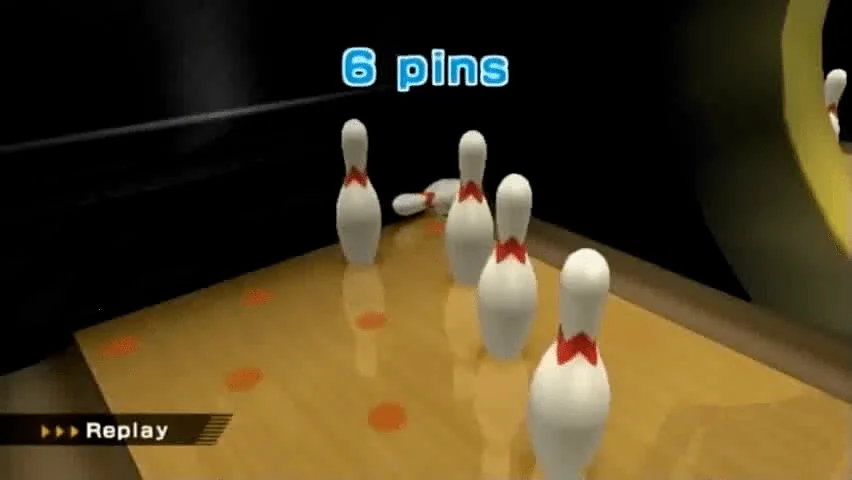
1. Rhythm Heaven Fever
Rhythm Heaven Fever is the Wii’s strongest pure timing game because it reduces rhythm interaction to compact, readable ideas and then pushes those ideas through escalating challenges. Its stages are built around short musical tasks, button presses and distinctive visual cues. The player is not managing an elaborate instrument or trying to reproduce a full performance; the task is to understand the beat and respond at exactly the right moment.
That focused design gives the game a remarkably strong identity. The Wii version’s emphasis on button input, rather than making every challenge depend on motion gestures, keeps the timing language direct. Nintendo’s developers considered motion controls but found that repeated swinging made the game tiring and less suitable for its dense input demands. Remix stages then combine earlier ideas into tests of memory, listening and adaptability. Rhythm Heaven Fever lacks the spectacle of a full band setup and the social immediacy of Just Dance, but its precision, variety and compact replay loop make it the best recommendation for players who want the Wii’s rhythm design at its most concentrated.
Its simplicity is not the same as ease. A single button can carry an entire challenge, but the timing window and changing musical context still demand attention. That makes the game inviting to begin and satisfying to refine. It also gives the Wii a rhythm title that feels unmistakably designed around the console’s shared-screen setting without treating motion control as mandatory.
- Best fit: solo players who want precise timing without instrument peripherals.
- Main tradeoff: its short challenges are less suited to players seeking a long-form band simulation.
- The Wii edition is defined by button-based rhythm play and should not be confused with later entries on other systems.
The Wii’s music catalogue is strongest when its games commit to different ideas about participation. Rhythm Heaven Fever and Guitar Hero III are the clearest choices for focused timing. Just Dance 2 and Samba de Amigo turn rhythm into physical group activity, while Rock Band 2 and Guitar Hero World Tour make equipment and role division central to the experience. Wii Music takes the broadest view, treating musical play as creation rather than only successful input.
There is no single best control method for every player. Choose buttons for precision, a guitar or turntable for tactile specialization, a dance pad for full-body timing, or a band setup for shared performance. The most important distinction is not which game has the largest playlist, but whether its controls make the music feel like something the player is actively shaping. That is why this list includes both strict timing games and more permissive music sandboxes: together, they show how many different answers the Wii offered to the question of what it means to play music.