The Nintendo Wii did not need a traditional light gun to make an arcade shooter feel at home. Its infrared pointer turned the Wii Remote into a practical aiming device, while the optional Wii Zapper frame gave that pointer a more familiar arcade shape. The result was a varied group of games: direct Sega conversions, horror campaigns, score-attack challenges, full-motion-video experiments and ambitious pointer-controlled action games.
This is a ranking of Wii releases rather than a list of individual arcade machines. A compilation counts as one choice, so The House of the Dead 2 & 3 Return and Gunblade NY and LA Machineguns Arcade Hits Pack each occupy one place. The selection favors games in which guided movement, pointer aiming or light-gun-style shooting is central. Broad first-person shooters are excluded unless their design genuinely belongs to this format. The criteria are aim responsiveness, stage and route variety, arcade identity, replay value, co-op usefulness and meaningful Wii control.
10. Mad Dog McCree: Gunslinger Pack
Mad Dog McCree: Gunslinger Pack represents the strangest branch of Wii light-gun design: an interactive western assembled from filmed actors, quick reactions and deliberately simple point-and-shoot encounters. The Wii release is a three-game compilation containing Mad Dog McCree, Mad Dog II: The Lost Gold and The Last Bounty Hunter. It is not competing with the three-dimensional combat systems higher on this list. Its appeal comes from the contrast between an old arcade formula and the Wii Remote’s accessible pointer control.
The full-motion-video presentation makes every target feel like part of a small stage show. Enemies appear, timing matters and the player responds rather than freely navigating a battlefield. That narrow structure can feel limited beside games with upgrades, branching routes or elaborate boss encounters, and its regional release history is worth checking before treating it as a standard Wii recommendation. Still, it earns a place because it preserves a distinct light-gun tradition instead of merely borrowing the control scheme. Choose it for novelty, western atmosphere and historical curiosity, not mechanical depth.
- Best fit: players interested in filmed arcade shooters and western pulp.
- Tradeoff: much simpler interaction and less replay variety than the other entries.
- Why it ranks here: memorable format contrast, but limited combat breadth.
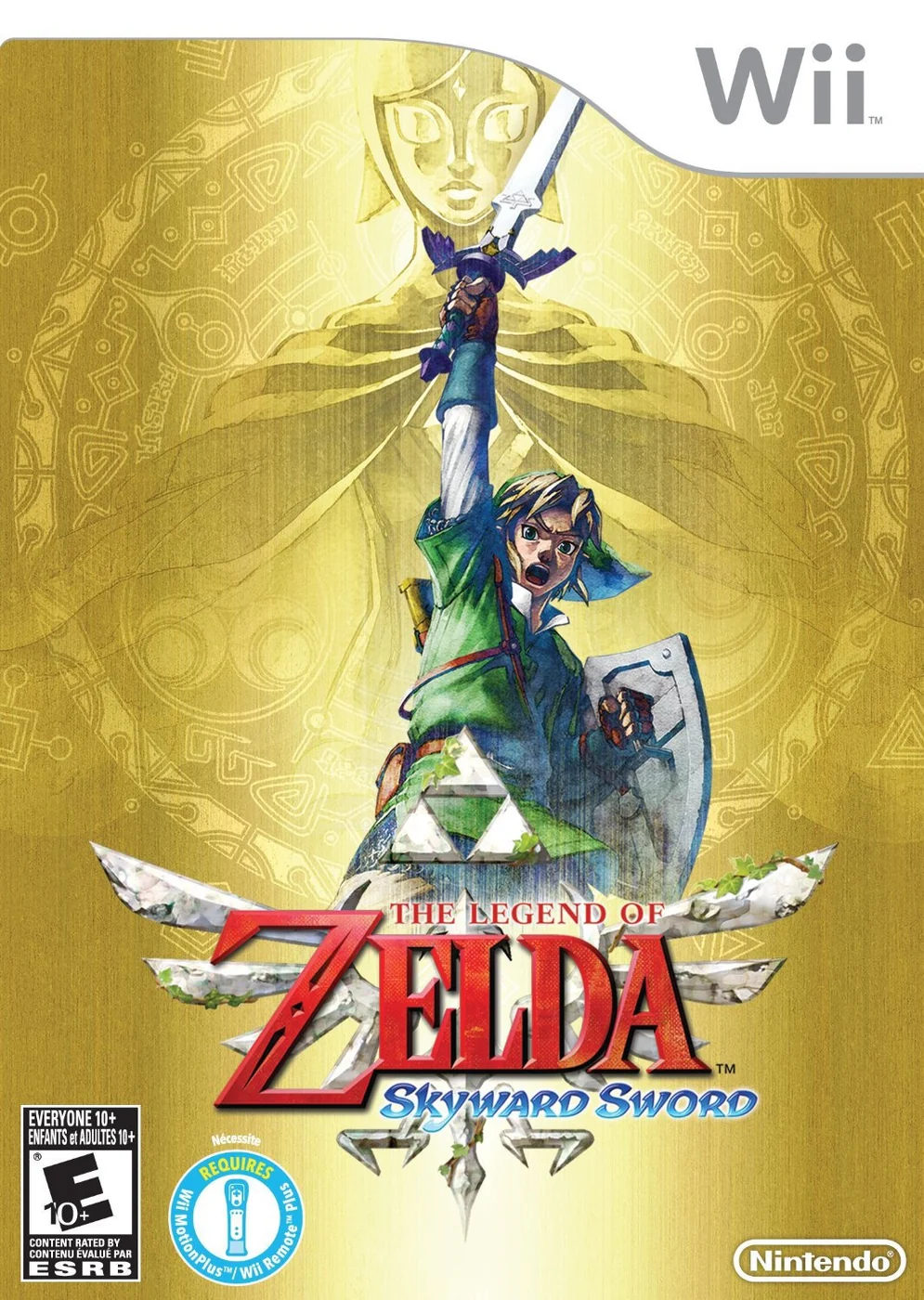
9. Link’s Crossbow Training
Link’s Crossbow Training is the clearest introduction to the Wii Zapper concept, but it is better understood as a collection of timed shooting challenges than as a conventional rail-shooter campaign. Its structure moves through target practice, fixed-combat situations and sections with more movement, using short stages and medal-oriented performance goals to keep the focus on accuracy.
That compact design is both its strength and its limitation. A new player can understand the basic pointer action quickly, while a score-minded player has reasons to repeat familiar scenarios and improve timing. The game does not offer the narrative scale or weapon variety of the horror entries, and its Zelda setting is used to frame shooting exercises rather than build a full adventure. It ranks above the most novelty-driven pick because it makes the Wii hardware’s central idea unusually legible: point, fire, react and try to do it more cleanly next time.
The Wii Zapper was an optional frame for the Wii Remote and Nunchuk, not a separate aiming technology. That distinction matters. Link’s Crossbow Training works as a demonstration of the accessory’s shape and handling, but the essential interaction comes from the pointer.
- Best fit: first-time light-gun players and short score-attack sessions.
- Tradeoff: challenge stages are more compact than a full campaign.
- Why it ranks here: an unusually clear explanation of Wii pointer shooting.
8. Gunblade NY and LA Machineguns Arcade Hits Pack
This compilation brings two Sega helicopter-mounted arcade shooters to Wii, and both games understand the pleasure of relentless spectacle. Targets arrive in dense bursts, the player sweeps the pointer across the screen and the action emphasizes immediate reactions over exploration. Two-player support helps preserve the social character of an arcade cabinet, while combo-oriented scoring and unlockable weapon options give repeated runs a purpose beyond simply reaching the ending.
The package is less interested in horror atmosphere or character progression than in mechanical momentum. Its stages are showcases for helicopters, city-scale destruction and enemy formations, so the best reason to return is learning patterns and improving performance. That also exposes the limits of the format: once the spectacle becomes familiar, the underlying loop remains deliberately narrow. The compilation ranks above Link’s Crossbow Training because it offers a stronger arcade identity and more substantial stage flow, although players wanting a story campaign or nuanced weapon system should look elsewhere.
- Best fit: arcade fans who want spectacle and two-player shooting.
- Tradeoff: limited exploration and a deliberately repetitive score-focused loop.
- Why it ranks here: energetic conversion of Sega’s mounted-gun format.
7. Ghost Squad
Ghost Squad turns a military arcade shooter into a Wii game built around repeatable routes rather than a single fixed run. Its branching paths encourage players to learn the stages, choose different approaches and return for more than a one-time completion. That structure gives it a stronger arcade afterlife than a straightforward conversion with only one sequence of encounters.
The military framing is functional rather than deeply character-driven. Ghost Squad is most persuasive when targets, route decisions and unlockable elements create a reason to replay familiar missions. The pointer makes ordinary enemies easy to understand, while tougher encounters test reaction speed and prioritization. It does not have the horror atmosphere of the Resident Evil games or the expressive movement of Sin & Punishment: Star Successor, but it offers a clean answer to the question of why an arcade shooter should be replayed at home. Its route variety and score-minded design place it above the more linear compilation entries.
- Best fit: players who enjoy branching routes and repeat runs.
- Tradeoff: lighter storytelling and less tonal variety than horror-focused games.
- Why it ranks here: replay structure does meaningful work.
6. The House of the Dead 2 & 3 Return
The House of the Dead 2 & 3 Return is valuable because it preserves two recognizable pieces of Sega’s light-gun history in one Wii release. The pair lets players compare different arcade campaigns while keeping the essential loop intact: guided movement, fast target recognition, vulnerable civilians or environmental hazards and stage-by-stage pressure. It is a useful bridge between arcade preservation and Wii living-room play.
The compilation’s greatest strength is authenticity of format. It does not need to reinvent the genre to communicate why light-gun games worked in public spaces. Short encounters, visible threats and the possibility of playing with another person remain immediately readable. Its age also shows. Players seeking modern horror pacing, elaborate progression or more flexible movement may find the structure blunt, and the two included games do not offer the same level of narrative integration as the later Resident Evil entries. Still, the package earns sixth place through historical clarity and dependable arcade rhythm.
- Best fit: Sega arcade enthusiasts and players comparing two classic campaigns.
- Tradeoff: older design assumptions and less progression than newer Wii productions.
- Why it ranks here: a strong format-preservation package.
5. Resident Evil: The Umbrella Chronicles
Resident Evil: The Umbrella Chronicles uses rail-shooter movement to turn a broad franchise history into a sequence of guided combat scenarios. Rather than treating the player as a freely exploring survivor, it controls the route and concentrates attention on enemies, destructible objects, incoming threats and story beats. That approach makes the series’ major incidents easier to stage cinematically while retaining the immediate satisfaction of pointer aiming.
Its progression gives the format more continuity than a collection of disconnected arcade levels. The game also supports two players, allowing one person to concentrate on one section of the screen while another helps manage threats. Multiple weapons, interactive paths and destructible scenery add more texture than a bare arcade conversion. The tradeoff is that the narrative framework can sometimes dominate the simple pleasure of mastering a route. It ranks fifth because it successfully translates Resident Evil’s chronology into guided action without abandoning the accessibility that makes Wii shooting work.
- Best fit: Resident Evil fans who want franchise history through shooting scenarios.
- Tradeoff: more story framing and progression can reduce arcade purity.
- Why it ranks here: strong co-op and series-spanning structure.
4. Resident Evil: The Darkside Chronicles
The Darkside Chronicles takes a related formula but gives it a more cinematic and unstable presentation. Its scenarios revisit material associated with Resident Evil 2 and Code: Veronica while adding original story material, so the game is less a neutral archive and more a dramatic retelling built around movement through hostile spaces. The guided camera, sudden threats and emphatic set pieces make the player feel carried through an action-horror sequence rather than stationed in front of a series of targets.
That emphasis separates it from The Umbrella Chronicles. The earlier game is the broader franchise tour and progression package; The Darkside Chronicles is the more overtly cinematic experience, with heavier storytelling and combat pressure. Its active camera and evade-focused encounters make the action feel more urgent, even when that urgency reduces the clean rhythm of a traditional score shooter. It ranks near the top because the pointer format supports horror pacing when the route, camera and enemy entrances are all part of the design.
- Best fit: players who prefer cinematic horror and franchise retellings.
- Tradeoff: less straightforward arcade purity than Sega’s conversions.
- Why it ranks here: guided shooting and dramatic presentation reinforce each other.
3. Sin & Punishment: Star Successor
Sin & Punishment: Star Successor is the list’s most movement-intensive game. It belongs here because pointer aiming and guided shooting are fundamental, but it refuses to reduce the player to a stationary gunner. The character moves through a three-dimensional space, avoids attacks, uses melee options and responds to dense enemy patterns while the pointer remains the center of offensive control.
That combination gives the game an unusually high skill ceiling. Aim is only one part of success; positioning, evasive movement, target priority and timing matter just as much. Nintendo’s creator interviews describe the Wii Remote pointer and Nunchuk as foundations for the control design, which helps explain why the game feels more like a Treasure arcade experiment than a conventional light-gun conversion. It can be demanding, and players expecting a relaxed horror shooter may find its pace unforgiving.
The game also supports different control approaches, making it less dependent on a single prescribed method than its reputation might suggest. Its score systems reward players for experimenting with target order, aerial attacks and controller choices. It ranks third because it makes the Wii interface serve a complete action language rather than merely imitate an arcade weapon.
- Best fit: score-minded players who want movement and aiming together.
- Tradeoff: higher difficulty and greater control complexity.
- Why it ranks here: the most technically expressive pointer shooter in the group.
2. Dead Space: Extraction
Dead Space: Extraction is the atmospheric horror standout. Built specifically for Wii, it uses guided first-person movement to control pacing while the Wii Remote handles aiming, weapon use and the deliberate targeting of dangerous body parts. Puzzle sequences and exploration beats interrupt the shooting, giving the campaign more texture than a chain of arcade stages. The result is a game that uses rail movement as a way to stage horror rather than as an excuse to remove all tension from navigation.
Two-player co-op expands its appeal without erasing the mood. One player can help manage enemies while both participants experience the same tightly directed sequence of spaces, threats and revelations. The format also suits Dead Space’s emphasis on anticipation: the route controls what appears, but the player still has to identify where to aim and which threat deserves attention first. Weapon variety and the need to respond to enemy anatomy keep the pointer work from becoming a simple matter of shooting the largest target.
It ranks second because its pointer shooting, horror presentation, puzzle rhythm and co-op structure feel designed as one system, not simply placed beside one another. Players who want free exploration should look elsewhere, but that restriction is part of the game’s controlled tension.
- Best fit: horror players who want atmosphere without free-roaming controls.
- Tradeoff: guided movement limits exploration by design.
- Why it ranks here: excellent balance of shooting, tension, puzzles and co-op.
1. The House of the Dead: Overkill
The House of the Dead: Overkill is the strongest overall answer to what a Wii rail shooter can be. It combines direct pointer shooting with a deliberately exaggerated grindhouse presentation, giving every stage a recognizable personality without losing the clean arcade loop. Enemies arrive in readable formations, the route keeps the action moving and the campaign’s episodic structure makes each level feel like another piece of a knowingly excessive exploitation movie.
Its success is not simply nostalgia for light-gun cabinets. Overkill understands that a home version needs reasons to replay: stage mastery, score improvement, challenge-oriented play and the satisfaction of becoming faster at target selection. The Wii Remote is not a gimmick attached to the presentation; it is the central interface that turns the television into a firing lane. The game also supports the Wii Zapper, though the accessory is an optional housing rather than a requirement.
Players who want realistic military tension or slower survival-horror pacing may prefer another entry, but Overkill offers the most complete blend of accessible aim, strong stage rhythm, memorable tone and specifically Wii-shaped arcade identity. Its exaggerated violence and coarse humor are deliberate parts of the presentation, so the game is a poor fit for anyone seeking restrained horror.
That balance gives it the top spot over Dead Space: Extraction. Extraction is the richer horror campaign, while Overkill is the more concentrated rail-shooter statement. It knows the genre’s limits, then fills those limits with personality, rhythm and replay pressure.
- Best fit: players wanting the clearest all-round Wii light-gun experience.
- Tradeoff: deliberately exploitative tone and less serious horror atmosphere.
- Why it ranks first: pointer shooting, presentation, stage rhythm and replay goals align.
The ten games divide naturally by the question you want the Wii Remote to answer. Choose The House of the Dead 2 & 3 Return or Ghost Squad for arcade history and repeat routes; choose Dead Space: Extraction or the Resident Evil Chronicles games for guided horror; choose Sin & Punishment: Star Successor for demanding movement and precision; choose Link’s Crossbow Training for a compact introduction to the Zapper idea.
The ranking is therefore less about declaring one universal champion than identifying different strengths inside a narrow format. The Wii could make a pointer feel like a crossbow, a machine gun, a futuristic weapon or a tool for score chasing. The best entries understand that the control method is not the whole game: it becomes memorable when aim, movement, stage rhythm and presentation all point in the same direction.