The Nintendo Wii is often remembered for approachable party games and motion-controlled sports, but its adventure library is much stranger and more varied. It includes traditional dungeon journeys, melancholy post-apocalyptic exploration, psychological mystery, survival horror and puzzle games that treat the Wii Remote as a pointer, brush, flashlight or tool.
This list defines adventure broadly but deliberately. A game qualifies when investigation, traversal, environmental problem-solving or story-led discovery forms a major part of its identity. Action-adventure and horror-adventure games are included when exploration matters as much as combat. Platformers, role-playing games and strategy games are left to their own rankings.
The ranking considers world and level structure, puzzle variety, atmosphere, story momentum, control identity, replay value and regional accessibility. It is an editorial order rather than a universal score. A game lower on the list may be the better choice for a player seeking a particular mood or mechanical idea.
10. Another Code: R, A Journey Into Lost Memories
Another Code: R is the most focused mystery game in this selection. Rather than building its appeal around combat or a large action system, it centers on investigation, conversations, item discovery and the gradual reconstruction of personal history. That narrower scope gives it a distinctive place in the Wii library: it is an adventure about paying attention to people, places and clues rather than mastering a character’s battle moves.
The Wii Remote supports the genre’s familiar vocabulary of searching and interaction. Nintendo’s own promotional material highlights puzzles that use the controller as a pipette for testing samples and as a tool for decrypting codes. Players examine objects, move through story locations and connect physical evidence with narrative information. The result is closer to a playable mystery novel than a conventional action-adventure, which will appeal to players who prefer dialogue and deduction to pressure.
Its ranking reflects both that strong identity and its limitations. The structure is less expansive than Zelda, and its pace depends heavily on story scenes and clue hunting. Regional availability also matters: the Wii release appeared in Japan and Europe, but not North America. For players who can access the appropriate release, it is a thoughtful choice for a quieter, investigation-first adventure.
- Best for players who want dialogue, clues and item-based investigation.
- Japan-and-Europe Wii release; there was no standard North American release.
- Choose it for mystery structure, not combat variety.
9. Cursed Mountain
Cursed Mountain gives the Wii an unusual adventure setting: a haunted Himalayan climb in which environmental danger and spiritual encounters shape the journey. Its mountaineering premise immediately separates it from the usual castles, islands and fantasy villages. Exploration is tied to altitude, isolated locations and the search for a missing brother, while the supernatural atmosphere turns the landscape into something to interpret rather than merely cross.
The game sits between action-adventure and survival horror. The Wii Remote is used for looking around, sensing the environment and fighting, while gesture inputs appear during certain spirit encounters and finishing moves. That is a more limited use of motion than the pre-release concept might suggest, but it still gives the game a hardware-specific character that many conventional ports lack.
Cursed Mountain ranks below the list’s more refined puzzle adventures because its combat and progression systems are more limited. Its value is atmospheric and historical as much as mechanical. Players interested in overlooked Wii software, unusual settings or horror that favors isolation over constant shock will find a clearer reason to play it than someone seeking a polished, broadly flexible adventure system.
- Best for a haunted expedition and an unusual setting.
- Combines environmental exploration with action-adventure and survival-horror elements.
- Motion controls are most noticeable during aiming, environmental interaction and spirit finishing sequences.
8. Fragile Dreams: Farewell Ruins of the Moon
Fragile Dreams is built around wandering through the remains of a collapsed society. Its abandoned spaces create a strong sense of discovery, while objects found during exploration carry stories about the people who are no longer there. That focus on traces, loneliness and ruined architecture makes the game feel less like a race toward the next objective and more like an act of listening to a vanished world.
The Wii Remote’s flashlight function is an important part of the experience. Searching dark spaces with a beam of light reinforces the game’s atmosphere and makes attention itself feel mechanical. Ghost encounters and light role-playing elements add danger, but the strongest reason to remember Fragile Dreams is the way exploration, environmental storytelling and melancholy reinforce one another. The Remote speaker also contributes to the presentation through voices and sound cues tied to the world.
Its combat can interrupt the reflective mood, and the overall experience is more uneven than the Wii’s best adventure games. Even so, few other console adventures use abandoned places and scavenged objects with the same emotional emphasis. It earns this position because it offers a type of exploration that is intimate rather than expansive: every room feels like a question about what happened before the player arrived.
- Best for atmospheric ruins and object-based storytelling.
- Uses the Wii Remote as a flashlight during exploration and also makes use of its speaker.
- Expect light role-playing and ghost encounters alongside the quieter investigation.
7. Pandora’s Tower
Pandora’s Tower adds a distinctive form of narrative pressure to the action-adventure template. Its thirteen towers provide the main exploration structure, but the journey is connected to timed returns to a central hub and the relationship between the protagonist and Elena. That arrangement means progress is not only about defeating enemies or reaching the next room; it is also about deciding how to spend limited opportunities between expeditions.
The towers offer combat, traversal and environmental challenges, while the central relationship gives the adventure a sense of consequence. Multiple endings and relationship decisions encourage players to think about how they approach the campaign rather than treating every visit as a purely linear route. The result is more combat-heavy than the other mystery games here, but its structure keeps discovery tied to emotional stakes.
Pandora’s Tower ranks seventh because its ideas are memorable even when the action can dominate the puzzle design. Regional accessibility is a major limitation: it was released in Japan and Europe and did not receive a standard North American Wii release. A North American Wii U eShop release arrived later, but that is not the same as a North American Wii disc release. For players able to access the original Wii version, the combination of tower exploration, timed returns and narrative branching makes it one of the system’s most unusual adventure hybrids.
- Best for players who enjoy combat mixed with timed exploration and relationship decisions.
- Japanese and European Wii releases; no standard North American Wii disc release.
- Its thirteen-tower structure is the main reason to seek it out.
6. Silent Hill: Shattered Memories
Silent Hill: Shattered Memories reimagines the premise of the original Silent Hill instead of presenting a direct remake. Its approach to adventure is unusually resistant to conventional power fantasy: there is no standard combat system, so investigation, escape and interpretation carry the forward momentum. The player explores uncertain spaces, gathers information and tries to understand both the world and the person searching through it.
The Wii Remote works naturally as a flashlight and pointing device, supporting the game’s emphasis on looking, moving and reacting. Psychological profiling also changes how the story frames the player’s behavior. Rather than treating every choice as a simple moral score, the game uses the idea of observation and interpretation to make the mystery feel personal.
This is a compact, focused adventure rather than a huge world to roam. Its chase sequences may not suit players who want traditional combat, and its storytelling is intentionally unstable. Those qualities are strengths for anyone seeking psychological horror, but they also explain why it sits below broader adventures. Shattered Memories is one of the Wii’s clearest examples of a game making absence—the absence of weapons, certainty and familiar geography—into its central mechanic.
- Best for psychological horror, investigation and escape rather than fighting.
- A reimagining of Silent Hill, not a direct remake.
- The Wii version uses pointer-oriented interaction and flashlight exploration.
5. Resident Evil 4: Wii Edition
Resident Evil 4: Wii Edition is the list’s most action-forward choice, but it earns a place through the way its campaign combines traversal, environmental discovery, puzzles and story progression with combat. Leon’s journey moves through villages, interiors, underground spaces and more elaborate set pieces, creating a sustained adventure structure rather than a sequence of disconnected arenas.
Its defining Wii feature is pointer aiming. The Wii Remote makes targeting enemies and interacting with the environment feel direct, while the Nunchuk handles movement and the broader control scheme. That arrangement gives the game a strong hardware identity even though the adventure itself originated elsewhere. It is a port, not a Wii-exclusive design, but its control approach became a major reason to consider this edition.
The package also includes the main Leon campaign and the Separate Ways side story, giving it more narrative and structural breadth than a short motion-control showcase. Nintendo’s Wii listing also identifies additional version-specific content, including a movie browser, a new weapon, a new costume and another bonus mode. It ranks fifth because combat is still the dominant activity, and players seeking pure puzzle design may prefer the entries above it. For anyone wanting a tense, substantial action-adventure with pointer aiming, it remains an easy recommendation.
- Best for action-adventure with pointer aiming and substantial campaign structure.
- Includes the main campaign and Separate Ways side story.
- Its Wii identity comes primarily from control design and bonus content, not exclusive story content.
4. Zack & Wiki: Quest for Barbaros’ Treasure
Zack & Wiki is the clearest dedicated puzzle-adventure on the list. Each treasure hunt presents a compact environment filled with objects, mechanisms, hazards and creatures that must be understood before they can be manipulated. The pleasure comes from learning what a location is asking rather than simply moving through it. That gives the game a strong sense of place even when its stages are self-contained.
The Wii Remote is central to the design. Capcom’s manual describes a wide range of object-specific actions, including holding the controller sideways, balancing it, turning it, pushing and pulling it. Pointing, selecting and operating tools make the player feel involved in the problem-solving process. The gestures are not just decorative flourishes; they help define what kind of adventure this is. A mechanism invites a physical response, and the player must connect the visible object with the correct action.
Zack & Wiki can be demanding when its logic is not immediately clear, and its stage-based structure lacks the seamless world of Zelda. Still, it ranks fourth because its puzzles and controls support one another so consistently. It is the strongest recommendation here for players who want the Wii Remote to behave like an adventure-game instrument rather than a conventional pointer attached to an action game.
- Best for self-contained treasure hunts and environmental puzzle logic.
- Uses pointing and gestures for object manipulation, tools and mechanisms.
- Choose it over Zelda if puzzle experimentation matters more than a continuous world.
3. The Legend of Zelda: Skyward Sword
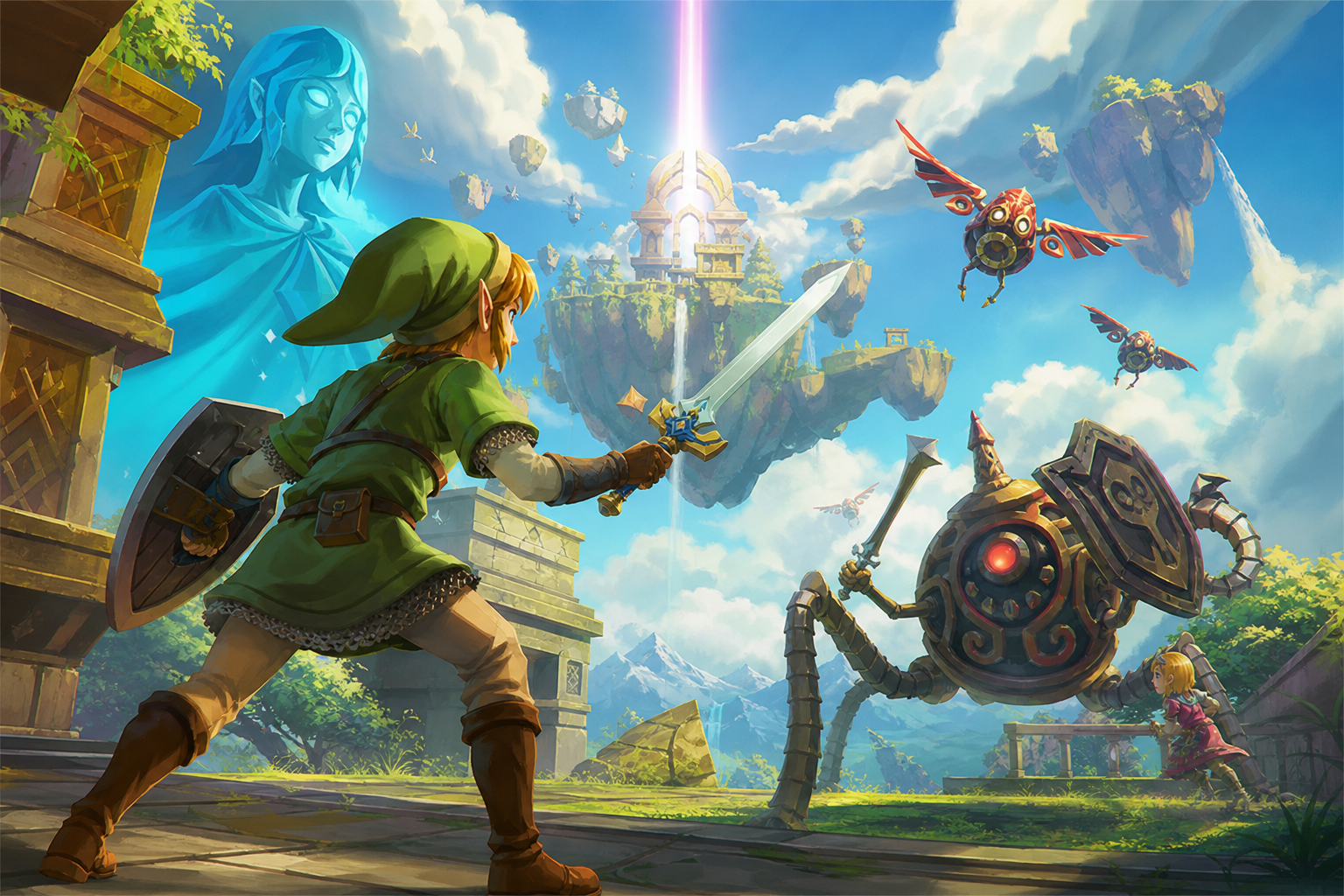
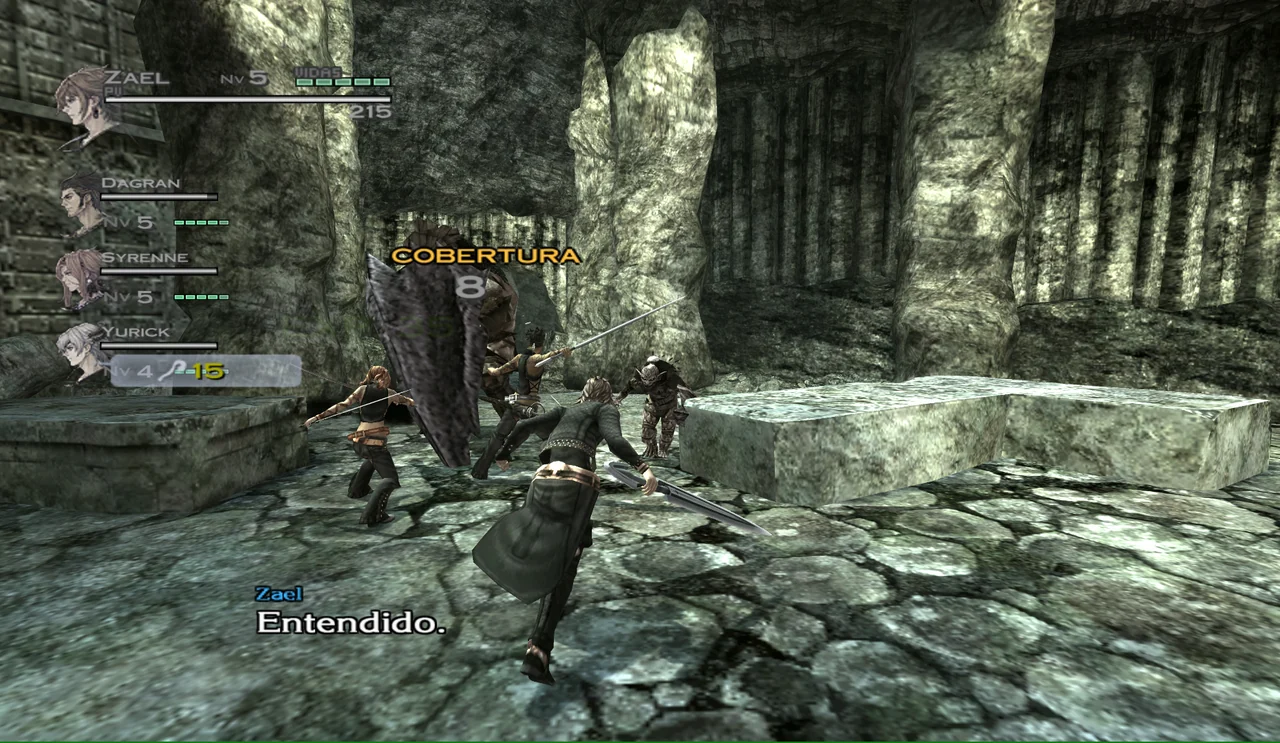
Skyward Sword makes the Wii’s motion technology part of its central adventure grammar. The Wii Remote Plus, or a Wii Remote with MotionPlus functionality, is required alongside the Nunchuk, and sword direction matters during encounters. Enemies defend particular angles, so attacking is not simply a matter of pressing a button at the right time. The control idea also informs environmental interactions and puzzle design.
Its adventure structure links a sky hub with surface regions and densely designed dungeons. Items open new routes, puzzles ask players to observe patterns and revisit areas, and upgrades give familiar tools additional uses. The result is a highly authored journey with a strong sense of progression. The world is less freely open than some later Zelda games, but that constraint allows its dungeons and environmental sequences to be carefully staged.
Skyward Sword ranks third because it integrates exploration, puzzles, combat and motion control more thoroughly than nearly any other Wii adventure. Its required hardware is also its biggest barrier. Players who dislike gesture precision or repeated visits through connected regions may prefer Twilight Princess, while those seeking a Wii adventure that could not be separated cleanly from its controls should start here.
- Best for motion-controlled swordplay and structured dungeon exploration.
- Requires Wii MotionPlus functionality or a Wii Remote Plus, plus the Nunchuk.
- A more directed adventure than an open-ended overworld game.
2. Okami
Okami is a visually distinctive action-adventure built around restoration, mythology and the Celestial Brush. The brush is more than a combat tool: it can alter the environment, create paths, solve puzzles and repair damaged spaces. That broad role gives exploration a creative rhythm. The player is not merely searching for an item that opens a door; the player is learning which kind of mark can change the world in front of them.
The Wii version is a port of the PlayStation 2 original, so its adventure identity did not originate exclusively on Nintendo hardware. Its pointer-oriented controls nevertheless give the brush a particularly natural relationship with the Wii Remote. Capcom’s manual confirms that holding the B Button brings up the drawing screen, after which the player positions and draws the Celestial Brush with the Wii Remote. That makes the central fiction feel immediate and distinguishes this version from a standard button-based presentation.
Okami ranks second because its core mechanic connects story, traversal, puzzle solving, combat and visual identity. Its large mythic journey can become dialogue-heavy, and the port’s presentation is not the sole reason to play it. Even so, the Celestial Brush remains one of the strongest examples of an adventure game turning a control method into a world-changing ability.
- Best for mythology, environmental restoration and creative puzzle solving.
- The Wii version is a port; its pointer controls are the main platform-specific distinction.
- The Celestial Brush affects combat, traversal, puzzles and damaged environments.
1. The Legend of Zelda: Twilight Princess
Twilight Princess is the broadest complete adventure package on Wii. Its overworld connects villages, wilderness, caves and dungeons, while story-led quests continually introduce new reasons to return to familiar spaces. Dungeon design, item-based progression and environmental puzzles give the campaign a dependable rhythm, but the adventure also makes room for horseback travel, fishing, character-driven errands and the wolf form’s distinct abilities.
The Wii version uses the Wii Remote and Nunchuk for sword attacks, aiming, fishing and projectile tools. Nintendo’s documentation and development interviews also identify the pointer as a major advantage for bows and other first-person items. Motion is not as deeply tied to enemy defense as it is in Skyward Sword, but that restraint makes the controls easier to understand. Sword movement gives the campaign a recognizable Wii flavor without making every encounter depend on exact gestures.
Twilight Princess takes the top position because it balances the most categories successfully. It offers a substantial world without abandoning dungeon focus, puzzles without becoming a pure puzzle game, and motion controls without requiring the player to rebuild their understanding of swordplay. Players wanting a darker, traditional Zelda journey should begin here. Those seeking the most experimental control design may prefer Skyward Sword or Okami, but Twilight Princess is the strongest all-round adventure on Wii.
- Best overall for overworld exploration, dungeons, puzzles and story-led progression.
- The Wii version uses pointer aiming and motion-assisted sword controls.
- Choose Skyward Sword instead if MotionPlus sword direction is the main attraction.
The Wii’s adventure library is valuable precisely because it does not settle on one definition of discovery. Another Code: R treats exploration as investigation, Fragile Dreams turns ruins into emotional evidence, Silent Hill removes conventional combat, Zack & Wiki makes the Wii Remote a puzzle tool, and Zelda expands the familiar dungeon adventure through motion-assisted interaction.
There is no single correct starting point for every player. Choose Twilight Princess for the broadest traditional journey, Skyward Sword for MotionPlus swordplay, Okami for brush-based world manipulation, Zack & Wiki for concentrated puzzles, or Silent Hill: Shattered Memories for psychological mystery. Together, these games show how much room the Wii had for adventures that were stranger, quieter and more mechanically inventive than its reputation suggests.