The Nintendo Wii was never primarily sold as a fighting-game machine, but its library contains more than enough distinct combat systems for a worthwhile top ten. This ranking includes traditional 2D fighters, arena-based anime battles, weapon fighters, boxing and platform-based combat. That broader definition reflects the games people could actually play on Wii rather than forcing every choice into the mold of an arcade tournament fighter.
The order weighs combat depth, control options, multiplayer identity, content, Wii-specific design and historical interest. A game does not need to be the most technically demanding fighter to earn a place here. It may instead offer a memorable control idea, a strong local multiplayer format, an unusual license or a useful snapshot of how developers adapted combat to Nintendo’s hardware.
Online functionality is treated as historical context rather than a present-day selling point. Nintendo Wi-Fi Connection service for Wii software was discontinued on May 20, 2014, so launch-era online modes should not be presented as ordinary modern features. Regional releases also matter, particularly for Tatsunoko vs. Capcom, Guilty Gear XX Accent Core Plus and Naruto Shippuden: Clash of Ninja Revolution III.
10. Castlevania Judgment
Castlevania Judgment earns the final place because it is an unusually bold experiment, even when its one-on-one 3D combat does not feel as naturally suited to the series as a side-scrolling adventure. Its roster draws from across Castlevania history, giving fans the novelty of seeing familiar heroes and villains compete in a dedicated arena rather than simply sharing a platforming campaign.
Its value grows through its range of modes. Story, training, versus, Castle and Survival options give the combat more context than a brief character showcase, while the visual presentation makes it a recognizable Wii-era spin on a long-running Konami property. It is not the pick for the deepest competitive system here, but it is a defensible choice for players who want a fighting game with a particularly unusual license and structure.
Judgment also helps establish the lower end of this list. It has enough content and character-specific appeal to justify attention, but its strongest argument is distinctiveness rather than refinement. That makes it a better fit for a Wii fighting-games feature than a generic licensed brawler with no meaningful mechanical identity.
- Best for Castlevania fans who want an alternate take on the series.
- Tradeoff: its 3D combat experiment is less refined than the strongest traditional fighters on this list.
9. Bleach: Shattered Blade
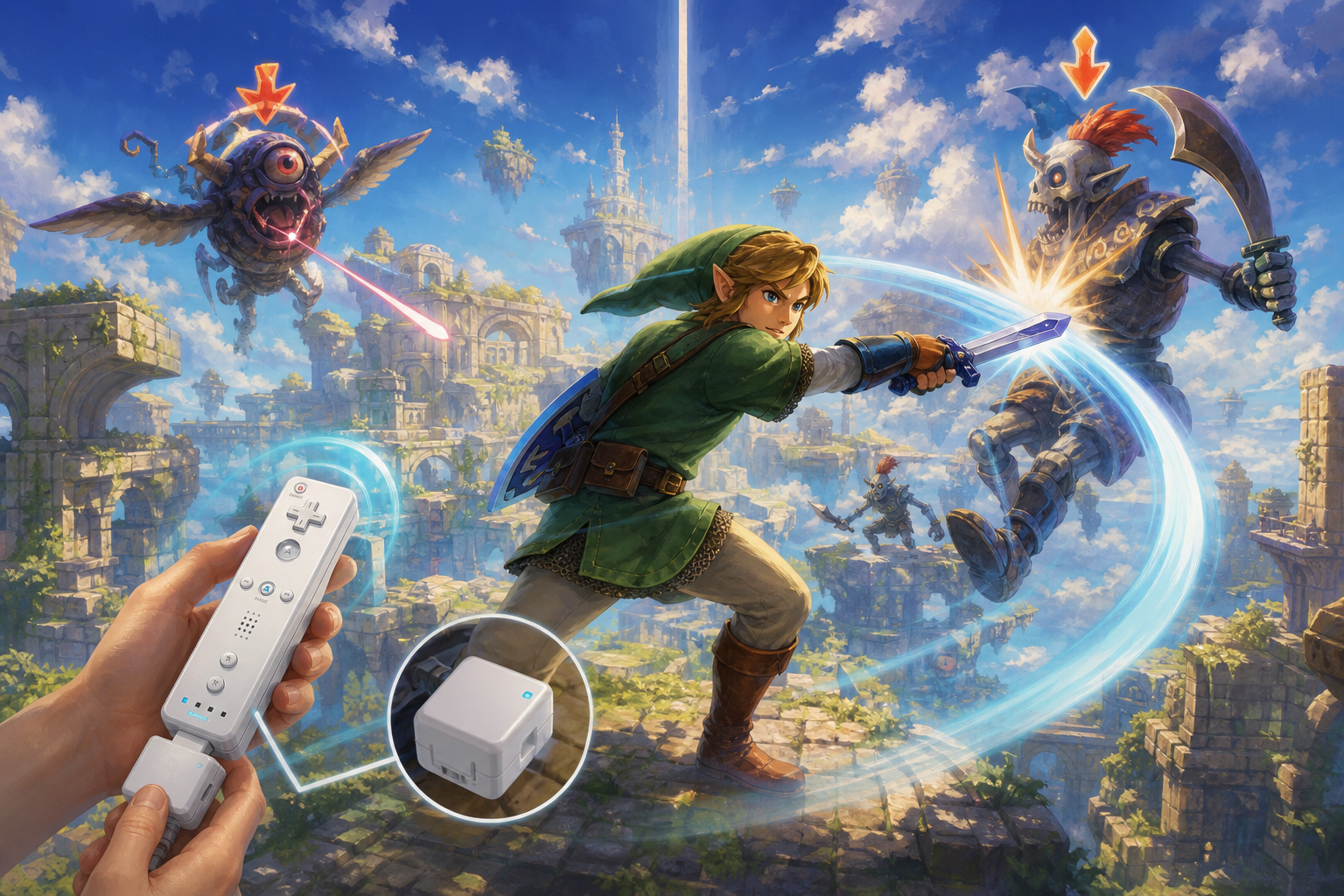
Bleach: Shattered Blade is one of the clearest examples of a Wii fighting game built around motion rather than merely adding a gesture to a conventional control scheme. The Wii Remote handles sword attacks, while the Nunchuk controls movement and blocking. That arrangement gives each encounter a physical rhythm: positioning, defending and choosing attack directions are all part of the central interface.
The game’s strongest identity comes from that control relationship and its anime presentation. It is not simply a port of a standard pad fighter with a new button layout. Nintendo’s contemporary description emphasized one-on-one battles, Wii Remote sword swings, Nunchuk movement and a stamina system that discourages constant attacking. Those details give the game a more specific combat loop than its license alone would provide.
Players looking for a deep tournament system may find the design narrower than Guilty Gear, but fans of swordplay and Wii-specific input experimentation get something more distinctive than the ranking’s lower placement might suggest. Its story and versus modes also give the roster more context than a bare exhibition mode.
- Best for players curious about directional sword attacks with the Wii Remote.
- Tradeoff: the motion-focused design is more historically interesting than universally precise.
8. Mortal Kombat: Armageddon
Mortal Kombat: Armageddon brings an enormous amount of series history to Wii. Its appeal is not limited to ordinary matches: character creation, the Konquest adventure and a very broad roster make it feel like a large Mortal Kombat package rather than a compact arcade fighter. The Wii version also includes Khameleon, a character detail that separates this release from the PlayStation 2 and Xbox versions.
That breadth comes with important limitations. The Wii edition does not include the online mode found in some other versions, so it should not be selected on the assumption that its feature set is identical across platforms. Its controller implementation is also part of the experience, with motion-based input alongside Classic Controller and GameCube controller support. Players accustomed to a conventional pad may prefer another version for straightforward fighting.
On Wii, Armageddon is best understood as a content-heavy combat sandbox with a famous roster. It ranks above Bleach and Castlevania because it offers more ways to engage with its combat systems, but the quantity of modes does not make it the cleanest competitive fighter on the platform.
- Best for Mortal Kombat fans who value modes, roster size and character creation.
- Tradeoff: Wii-specific omissions and controller differences make platform comparison essential.
7. Godzilla: Unleashed
Godzilla: Unleashed wins its place through scale and chaos. Its roster of Toho monsters fights across destructible environments, turning the arena itself into part of the spectacle. That emphasis changes the multiplayer question: this is less about carefully controlling a small character in a clean tournament space and more about managing a huge combatant while buildings, factions and other monsters create constant disruption.
The game’s multiplayer identity is especially important. Up to four monsters can take part in local battles, allowing Godzilla: Unleashed to function as a party-friendly arena fighter without becoming a conventional mascot brawler. The factions and destructible stages give matches a different shape from the one-on-one structure found in most of the list.
The ranking does not place it higher because spectacle cannot replace the technical control and character balance found in the top entries. Motion-based attacks can also make the game feel less exact than a traditional pad fighter. Still, its monster scale, environmental destruction and group format make it one of the Wii’s most clearly differentiated combat games.
- Best for local groups who want giant-monster mayhem.
- Tradeoff: arena spectacle and destruction matter more than traditional fighting-game precision.
6. Naruto Shippuden: Clash of Ninja Revolution III
Naruto Shippuden: Clash of Ninja Revolution III is a stronger competitive-minded arena fighter than its license alone might suggest. Its direct-control martial-arts combat, 40 playable characters and four-player local battles give it a substantial foundation. It also supported four-player online battles as a historical launch feature, although that should not be confused with guaranteed present-day functionality.
The game works because its combat is built around movement, attacks and character differences rather than merely presenting a series of flashy anime animations. The Western Wii release refines the established Clash of Ninja structure with additional balancing and combat adjustments, including changes to attacks and techniques. Fans of Naruto receive a large cast, while newcomers can approach it as an accessible arena fighter with more structure than a simple party brawler.
Its regional availability and release naming deserve attention. Clash of Ninja Revolution III is not interchangeable with earlier Clash of Ninja releases, and the European version is also known under different naming from the North American edition. That makes edition verification part of understanding the game, even though the core reason to play it remains straightforward: it offers one of the Wii’s better four-player fighting formats.
- Best for Naruto fans and groups wanting four-player arena battles.
- Tradeoff: the original online feature is historical, and the game’s regional release details can be confusing.
5. Dragon Ball Z: Budokai Tenkaichi 3
Dragon Ball Z: Budokai Tenkaichi 3 is the spectacle specialist. Its large playable roster and open arenas support the kind of battles the license promises: characters move through space, fly, launch attacks and turn the environment into a stage for dramatic exchanges. That design makes it a natural choice for players who want anime-scale combat rather than the compact spacing of a traditional 2D fighter.
Its position reflects a real tradeoff. The huge roster and cinematic freedom create variety, but they do not automatically produce the same kind of careful neutral game, matchup study or input precision associated with Guilty Gear. Budokai Tenkaichi 3 succeeds on its own terms by making every match feel expansive and character-driven.
The Wii version is particularly interesting because the series’ movement and attack ideas fit the console’s emphasis on physical input, even though players can also approach the game through more conventional control options. For Dragon Ball fans, that identity can matter more than conventional fighting-game purity. It is the best choice here for players who want every round to feel like an animated battle rather than a measured duel.
- Best for players who want a broad Dragon Ball roster and open three-dimensional battles.
- Tradeoff: spectacle and movement take priority over traditional 2D fighting fundamentals.
4. Punch-Out!!
Punch-Out!! is the ranking’s precision outlier. It has opponents, rounds and defensive reactions, but its central challenge is not trading ordinary blows until a health bar empties. Each opponent presents tells, patterns and timing problems that the player must learn to read. Dodging, blocking and countering at the right moment are more important than selecting from a conventional fighting-game move list.
That structure makes it especially valuable on Wii. Wii Remote and Nunchuk controls are supported, while the Wii Remote can also be held sideways for a simpler control scheme. The Wii Balance Board adds an optional method for ducking and dodging, and two-player Head-to-Head play gives the game a competitive side without changing its primary identity.
Punch-Out!! belongs here because combat variety can come from opponent design and timing, not only from a large roster of fighters. Its 13 main opponents are individually constructed tests, with visual tells and attack patterns that encourage observation. It is the best recommendation for players who prefer learning a set of demanding combat puzzles, although its boxing-specific structure should be disclosed clearly.
- Best for players who enjoy readable patterns, defensive timing and opponent-specific strategy.
- Tradeoff: it is boxing-focused and should not be mistaken for a standard arcade fighter.
3. Samurai Shodown: Anthology
Samurai Shodown: Anthology earns third place by offering a substantial slice of weapon-based fighting history in one Wii compilation. The collection contains six games from the series, spanning Samurai Shodown I through VI. That makes its appeal cumulative: players can compare different approaches to spacing, weapon reach, dramatic damage and deliberate exchanges across several entries rather than judging a single modern interpretation.
The compilation’s identity is especially useful for anyone interested in how fighting games can be built around tension instead of constant combination pressure. A well-placed weapon strike carries a different emotional weight from a long air combo, and the series’ emphasis on range gives local matches a distinctive rhythm. The six-game structure also makes the package historically valuable, since the player can see the series’ combat ideas develop across multiple releases.
It ranks above several newer-looking games because it offers both a coherent fighting philosophy and a meaningful archive of series development. The compromise is obvious: this is a compilation, not one newly designed Wii-exclusive fighter. Its place is earned by breadth, lineage and mechanical contrast rather than by pretending six older games are one unified modern release.
- Best for players who want weapon-based duels and multiple historical entries in one package.
- Tradeoff: its value depends on appreciating a compilation and older arcade design.
2. Guilty Gear XX Accent Core Plus
Guilty Gear XX Accent Core Plus is the Wii’s strongest choice for players seeking a technical 2D fighter. Arc System Works’ game offers character variety, air movement, cancel-heavy offense and multiple modes, including Mission, Survival and Story. The Plus edition also includes balance changes and restored playable characters compared with the earlier Accent Core release, so it must not be treated as the same game under a slightly different title.
Its second-place position recognizes both depth and limitation. The combat system has substantially more room for practice and mastery than most Wii arena fighters, but controller choice matters. The Wii release supports traditional inputs through the Classic Controller and GameCube controller, while also offering Wii Remote-based motion options. Those alternatives give the game unusual platform identity, although players whose priority is competitive precision may prefer a dedicated arcade-style setup elsewhere.
Guilty Gear’s movement, air attacks, Roman Cancels and character-specific tools reward deliberate practice. That gives it a higher mechanical ceiling than most entries here. Its position below Tatsunoko vs. Capcom reflects the latter’s stronger combination of Wii identity, tag-team structure and accessible controller flexibility, not a claim that Accent Core Plus is the less serious fighter.
- Best for players who want demanding 2D mechanics and character-specific mastery.
- Tradeoff: verify that the release is Accent Core Plus, not the separate Wii Accent Core edition.
1. Tatsunoko vs. Capcom: Ultimate All-Stars
Tatsunoko vs. Capcom: Ultimate All-Stars takes the top spot because it combines a focused fighting system with unusually strong Wii identity. Its tag-team structure gives matches a clear strategic rhythm: choose a pair, manage exchanges and use the team format to create variety beyond a single-character duel. The crossover roster also gives the game a personality that is different from both Nintendo’s platform battles and the licensed arena fighters elsewhere on this list.
The control flexibility strengthens the case. Nintendo lists support for the Wii Remote and Nunchuk, Classic Controller, Classic Controller Pro and GameCube controller. That gives different players a practical way into the system without reducing the game to motion gestures. The release offered one-to-two-player local play and historical online functionality through Nintendo Wi-Fi Connection. It should not be described as a four-player offline fighter.
Brawl remains the broadest multiplayer package on Wii, but Ultimate All-Stars wins this ranking’s particular decision because its combat is more concentrated: it feels designed first as a fighting game, then expanded into a memorable crossover. Aerial Rave combos, Assault attacks, the Baroque system and character-specific abilities give the tag format more mechanical purpose than a simple team-selection screen.
Its regional history is part of the appeal and part of the complication. Ultimate All-Stars received a Western Wii release, while earlier Japanese Tatsunoko vs. Capcom material should not be assumed to represent the same edition. For players who want the Wii’s most distinctive dedicated fighter, this is the strongest recommendation.
- Best for players who want tag-team mechanics, crossover character identity and broad controller support.
- Tradeoff: regional release differences matter, and its historical online feature should not be treated as a current guarantee.
The Wii’s fighting library is smaller and less conventionally organized than its platformer or racing catalog, but that is exactly what makes it interesting. Its strongest games do not all chase the same definition of combat: Punch-Out!! is about reading patterns, Samurai Shodown is about weapon spacing, Godzilla is about destruction and scale, and Guilty Gear rewards technical control. That variety makes the system more valuable than a simple list of familiar names suggests.
For a broad multiplayer night, Super Smash Bros. Brawl remains an important alternative even though it is not the number-one dedicated fighter here. Nintendo’s own Wii listing identifies Brawl as both an action and fighting game, supports simultaneous multiplayer and documents several controller configurations, including the sideways Wii Remote, Wii Remote and Nunchuk, Classic Controller and GameCube controller.
For focused fighting mechanics, start with Tatsunoko vs. Capcom or Guilty Gear. For motion-control history, try Bleach: Shattered Blade. For a demanding solo challenge with a different idea of combat, choose Punch-Out!! The right choice depends less on a universal winner than on which kind of combat the Wii’s unusual hardware and library can make memorable.