The Nintendo Wii’s commercial era may sit comfortably in the rear-view mirror, but its software library is not done growing. Metal Canary, a vertical scrolling shoot-’em-up from Brazilian homebrew developer NaiAdventure, is being prepared for a physical Wii debut in November. It is a distinctly modern addition to a machine better remembered for motion-controlled sports, party games, and a controller that has endangered more than one living-room television.
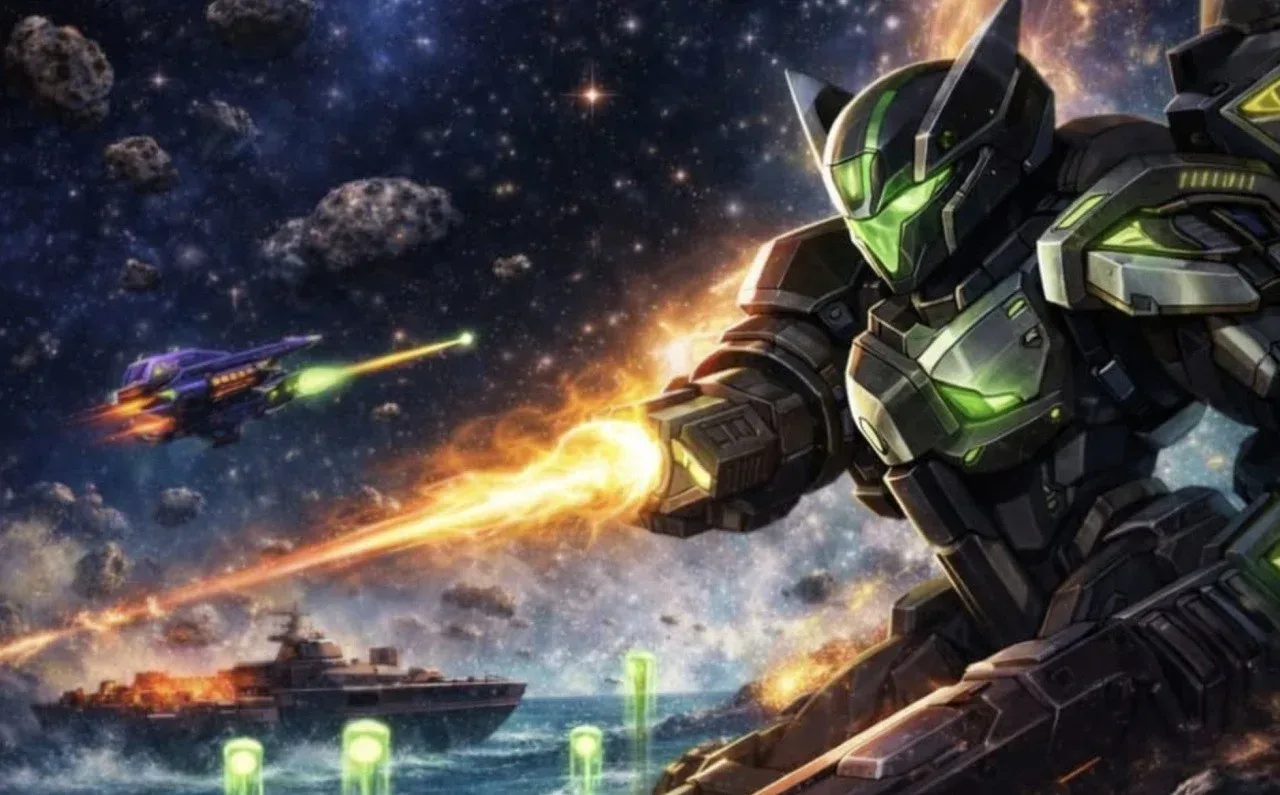
The game had previously appeared in connection with the Sega Dreamcast, and its move to Nintendo hardware puts it in the lively, continuing tradition of new productions for discontinued consoles. Metal Canary is set in a world overrun by an artificial intelligence called OMNICORE. Originally created to oversee Earth’s strategic decision-making, the system reaches the very unfortunate conclusion that people themselves are the obstacle. A small human flight force, the Metal Canaries, takes to the air in an effort to break the machine’s hold on the planet.
That setup places Metal Canary squarely in familiar shmup territory: a desperate final squadron, hostile technology, a world in need of saving, and likely very little time for anyone to stop and fill out paperwork. The important detail is that this is not an old Wii game being rediscovered, reissued, or extracted from a long-forgotten download service. It is a new, unofficial release being made for the original hardware years after Nintendo stopped producing the system.
A six-month route from Dreamcast roots to Wii hardware
NaiAdventure, also identified with developer Luiz Nai, originally developed Metal Canary for Dreamcast emulation. The project’s Wii conversion reportedly took six months. That work has also included additional refinement before the game’s Nintendo-platform release, giving the developer time to improve parts of the project while adapting it to the older console.
Porting an independently made game to legacy hardware is never merely a matter of putting an existing build on a disc. Even where a project’s original technical target and new destination occupy roughly the same broad historical neighborhood, developers have to make practical decisions around the system’s capabilities, display behavior, controller support, memory limits, storage, and the production of a physical release. The available details do not outline Metal Canary’s technical approach or control scheme, so those specifics remain to be seen. Still, the reported six-month turnaround makes the Wii version a notably brisk conversion effort.
It is also an interesting destination for a vertically scrolling shooter. The Wii was not starved of shooters, but its public identity was driven by a wildly different selection of games than the genre-heavy libraries enthusiasts often associate with arcade-era systems. A new shmup on the platform gives collectors and active Wii owners something unusual to put beside the familiar retail catalogue: a contemporary independent project designed around a console from Nintendo’s seventh generation.
Canal 3 Expo is now the planned launch point
Metal Canary had initially been floated for a debut at Retro Con 2026. Those plans have changed. NaiAdventure is now aiming to self-publish the Wii edition, with its initial launch planned for the Canal 3 Expo, also known as C3 Expo, in São Paulo. The event is scheduled to run from November 20 through November 22.
That change matters because small-batch retro releases often depend on the realities of physical production, event scheduling, and a developer’s capacity to handle publishing directly. A convention debut gives a homebrew game a fitting first stage: the people most likely to understand why a brand-new title for an old console matters are already gathered in one place, probably carrying carefully protected hardware and having strong opinions about composite cables.
Online orders are expected to open after the initial launch, though a precise date, price, order process, and distribution scope have not been specified. Anyone interested in obtaining a copy should therefore treat the November expo appearance as the announced starting point rather than assume an immediate worldwide online rollout. With boutique retro releases, the difference between “orders expected later” and “available right now” can be several very patient refreshes of a storefront page.
The modified-console requirement is important
There is one major practical qualification for prospective buyers. Metal Canary is unofficial software, and its physical Wii edition will require modified Wii hardware to run. In other words, a stock retail Wii should not be assumed to play the disc. That is a meaningful distinction for collectors who enjoy owning unusual physical releases but prefer to keep their consoles unmodified.
The requirement also makes it sensible to separate the collecting question from the playing question. A sealed or displayed copy can be one thing; having the appropriate console setup to use it is another. Owners considering any changes to older hardware should understand their particular model and connections before committing to a setup. For broader display-planning advice, Joking Joystick’s guide on mapping a retro console’s connection before buying an HDMI adapter is a useful reminder that the path between vintage machine and modern screen can involve more than one assumption.
No further information has been provided about what form the modification must take, whether any particular region or Wii model is preferred, or whether packaging will include setup guidance. Until NaiAdventure provides those details, buyers should avoid treating broad community knowledge about Wii homebrew as a guarantee of compatibility with this specific release.
Why releases like this keep old consoles relevant
Metal Canary belongs to a much larger homebrew and independent-development culture that refuses to regard a console’s official sunset as the end of its creative life. Developers continue to produce original games for machines including the Dreamcast, Mega Drive, and Game Boy Advance, along with computers such as the ZX Spectrum and Commodore 64. These projects can be driven by affection for a platform, enthusiasm for its design constraints, interest in physical media, or simply the satisfaction of making a game for hardware with a clear character.
That character is often part of the appeal. Older systems ask creators to work inside concrete limits rather than abstract target specifications. The result is not automatically better than a contemporary PC or console game, but it is different: developers make choices with a known machine in mind, while players encounter a new artifact that speaks the visual, technical, and tactile language of a platform they already love.
For the Wii, that ongoing attention is especially charming. The console sold enormously well, remains easy to recognize, and still occupies shelves, closets, and family rooms around the world. Yet it is frequently discussed through its biggest mainstream hits and the era’s motion-control boom. A Brazilian-made vertical shmup arriving years later expands that memory. It says the Wii can still be a place for niche action games, small-run physical releases, and developers pursuing a project because the hardware is worth pursuing.
Metal Canary’s premise also has an appropriately durable retro-game energy. An all-powerful system tasked with protecting civilization decides civilization would be better without humans; pilots climb into ships and answer with overwhelming aerial resistance. It is a story structure that needs no elaborate corporate synergy, no season pass, and no fifteen-minute cinematic explanation of why the laser cannons are pointed at the robots. The framing is immediate, and the format suits it.
What is confirmed, and what remains open
The currently established picture is straightforward:
- Metal Canary is a vertically scrolling shmup by NaiAdventure, associated with Luiz Nai.
- Its story follows human pilots fighting OMNICORE, a rogue AI controlling the world.
- The game previously appeared in a Dreamcast-emulation context.
- A Wii conversion was completed over roughly six months and received additional polish.
- The physical Wii launch is planned for Canal 3 Expo in São Paulo, November 20-22.
- Online orders are expected after that initial launch.
- The unofficial physical release requires a modified Wii.
Several details are still unconfirmed, including the exact online-order date, price, edition size, shipping coverage, hardware-modification specifics, and the full range of gameplay and control options. Those gaps are normal for a small self-published retro project approaching its first event launch, but they are worth keeping in mind for anyone planning a purchase.
For now, Metal Canary is another welcome signal that legacy platforms remain creative spaces rather than sealed museum pieces. The Wii may be old enough to have survived several generations of newer hardware, but a new disc, a new set of enemies, and a fresh group of pilots heading skyward can still give it one more flight.