The Super Nintendo RPG library is broad enough that “best” depends heavily on what you want from the genre. This ranking covers the original SNES and Super Famicom generation, including traditional menu-driven role-playing games and action RPGs. Both qualify because character growth, equipment or abilities, exploration and a sustained adventure are central to the experience. Strategy RPGs, adventure games with only light progression and titles that were not released for either the SNES or Super Famicom are excluded.
The ranking weighs the clarity and depth of each game’s systems, pacing, story and character work, exploration, originality, replay value and regional accessibility. Regional availability is not treated as a quality score. A Japanese-only or Europe-only release can rank highly on design, but language, hardware and edition limitations matter when deciding where a new player should begin. The North American numbering differences for Final Fantasy IV and Final Fantasy VI are also identified directly, since the cartridge names do not match the series chronology used today.
10. Final Fantasy V
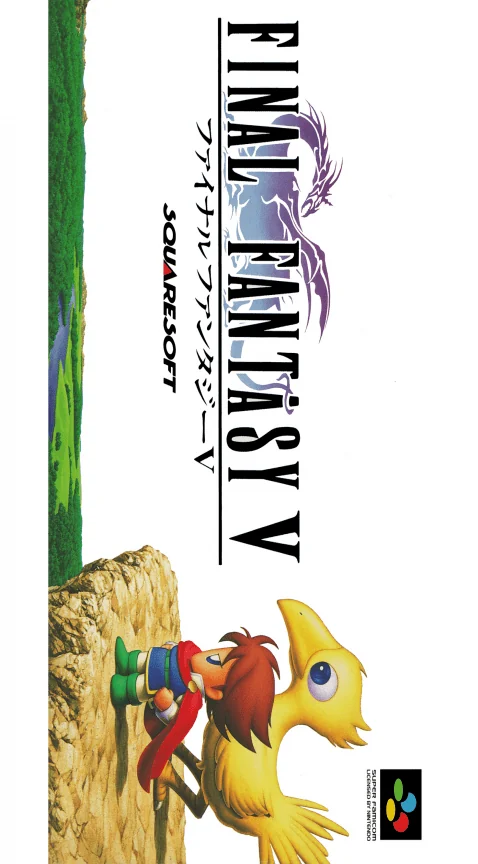
Final Fantasy V earns the tenth position because its job system remains one of the most enjoyable character-building sandboxes on the Super Famicom. Characters can change jobs, learn abilities and combine those learned abilities in ways that turn a small party into a flexible toolkit. A character might borrow spellcasting from one job while retaining another job’s equipment or combat identity, encouraging experimentation instead of locking each hero into a permanent role.
That freedom gives Final Fantasy V a mechanical advantage over more rigid entries in the series. Bosses and difficult areas invite preparation, and the system rewards players who enjoy asking what different abilities can do together. The party can be rebuilt repeatedly, so a second run can feel meaningfully different even when the broad story remains familiar. It is one of the clearest examples on the system of an RPG making character development itself the main playground.
The tradeoff is presentation. Final Fantasy V generally has a lighter, more playful story and character tone than Final Fantasy VI, and its original release was for the Japanese Super Famicom in 1992 rather than the North American SNES. Players who want a serious ensemble drama or an officially localized original North American cartridge should begin elsewhere. Players who enjoy party optimization, skill combinations and mechanical experimentation should move it much higher in their personal rankings.
9. Breath of Fire II
Breath of Fire II is a substantial traditional RPG with a broader sense of community than many of its peers. Its party draws from a larger cast, and characters bring distinct combat identities, transformations and dragon powers to the journey. The town-building system adds a personal layer to the adventure: the community can develop over time, giving the player a reason to think about the world beyond the next dungeon.
Its turn-based battles are familiar but effective, and the darker themes give the colorful presentation more weight than its first impression suggests. The larger character pool also makes party decisions feel meaningful, even when the game does not always explain every system as clearly as a modern RPG would. The result is an adventure with more texture than its straightforward command menus initially imply.
Breath of Fire II sits below the upper tier because the original English localization can be awkward, objectives are sometimes unclear and the balance is uneven. Those problems can obscure the game’s character work and make progression feel less polished than in the best SNES RPGs. It is a good choice for players who want a traditional adventure with a stranger social structure and a larger cast, but it is not the safest first recommendation for someone demanding the smoothest possible presentation.
8. Terranigma
Terranigma is one of the Super Famicom’s most ambitious action RPGs. Its story follows a world-restoration premise that expands into a sweeping creation-and-rebirth narrative, while its real-time combat gives the adventure a more immediate rhythm than a conventional menu-driven RPG. Sword attacks, movement abilities and exploration work together to make progress feel physical rather than purely statistical.
The game’s strength is momentum. Terranigma moves confidently between intimate character moments, dramatic changes to the world and increasingly broad ideas about civilization and life. Its action systems are direct, making it a strong recommendation for players who want RPG progression without waiting for every encounter to become a menu exchange. The game’s identity comes from combining personal movement with world-scale consequences rather than from offering a huge roster or elaborate party construction.
Its position is limited by regional access rather than a lack of ambition. Terranigma was released in Japan for the Super Famicom and in Europe and Australia for the SNES, but it did not receive an original North American SNES release. The European version includes English-language availability, but regional hardware and edition differences still matter for anyone approaching the original cartridge. Those barriers should not be confused with a design weakness: for players able to approach it comfortably, Terranigma is one of the system’s most distinctive action RPGs.
7. Secret of Mana
Secret of Mana is the clearest choice on this list for players who want real-time combat and local multiplayer. Its heroes attack directly, charge weapons, cast magic through a ring-menu interface and explore a colorful world without repeatedly transitioning into a separate battle screen. Support for up to three local players gives the adventure a social identity that few other large SNES RPGs can match.
The weapon and magic systems create a steady sense of growth, while the party structure lets players approach areas with different tools. The game is especially appealing to a group that wants a cooperative adventure rather than a solitary turn-based campaign. Its visual and musical presentation also give the journey a strong sense of place, and the ring menu keeps items and abilities accessible without abandoning the game’s action-oriented rhythm.
Secret of Mana’s action is not consistently precise. Enemy overlap can make encounters feel messy, and computer-controlled allies do not always behave intelligently. Its story can also feel less focused than the game’s atmosphere suggests. Choose Secret of Mana for its immediate feel, ring-menu rhythm and multiplayer identity, not because it turns every fight into a perfectly controlled action game.
6. Lufia II: Rise of the Sinistrals
Lufia II occupies a valuable middle ground between a classic turn-based RPG and a puzzle-focused dungeon adventure. Battles use familiar commands, but the surrounding dungeons ask players to push blocks, interpret environmental clues and use special abilities attached to selected weapons and armor. That combination gives each area a second layer of purpose instead of treating exploration as a corridor between fights.
The capsule-monster system adds another form of party development, while the game’s prequel relationship to Lufia & the Fortress of Doom gives its story a built-in sense of historical tension. It still works as a standalone adventure, however, and its journey toward a known conflict gives the narrative a distinctive shape. The prequel structure also gives the opening and ending a different emotional rhythm from a typical story in which the player begins with no knowledge of the world’s ultimate threat.
Lufia II is not as immediately famous as Square’s biggest SNES releases, and its dungeon pacing can be less appealing to players who want a constant story focus. Its best qualities appear when battles, equipment and environmental puzzles reinforce one another. It is an excellent selection for players who believe an RPG dungeon should test observation as well as statistics, and a weaker fit for anyone who regards puzzles as an interruption.
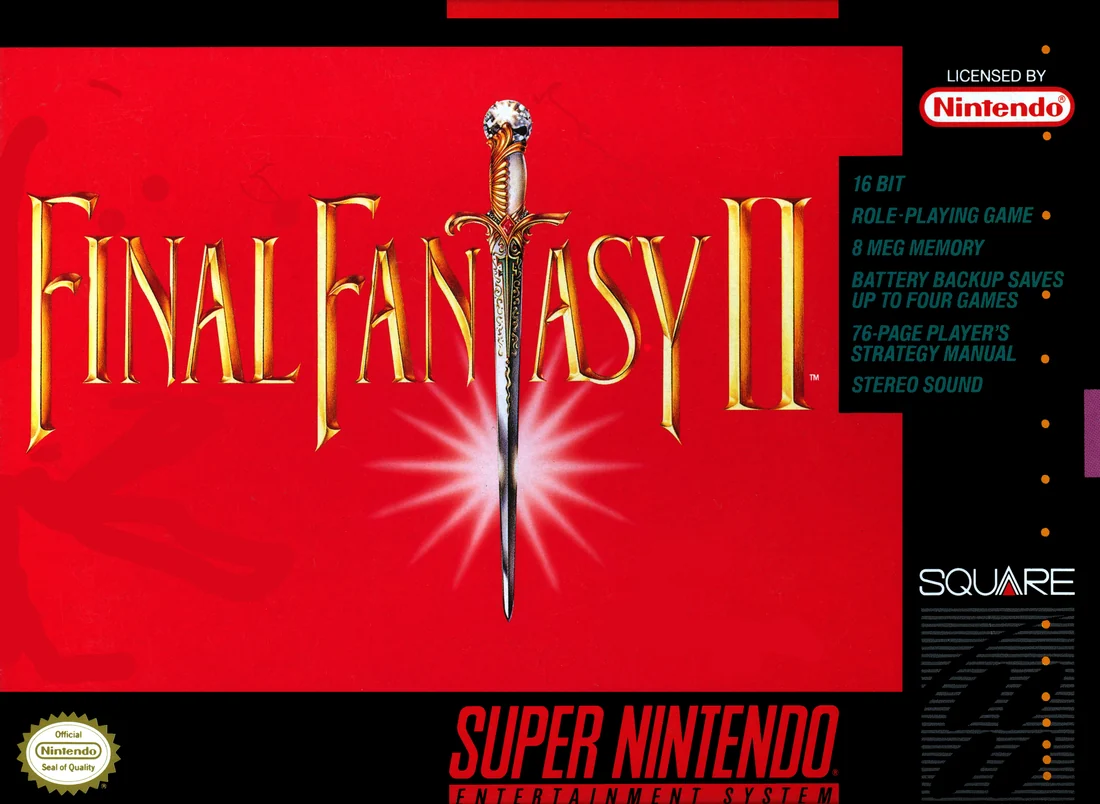
5. Final Fantasy IV, released in North America as Final Fantasy II
Final Fantasy IV is the most focused traditional Final Fantasy in this ranking. Its North American SNES release was titled Final Fantasy II, a regional numbering difference that can cause confusion when comparing cartridges, manuals and later catalogs. The game uses active-time battles and a largely fixed cast, giving each character a defined role rather than asking the player to build every party member from a blank template.
That structure supports a direct dramatic story. Characters enter and leave the party with clear identities, and the adventure moves from one major development to the next without demanding extensive system planning. The result is an approachable introduction to active-time RPG combat and to the series’ increasingly theatrical storytelling style. Its party design also makes encounters easier to read because a character’s role is usually clear before the player begins experimenting with equipment or commands.
The same focus limits customization. Players looking for the job combinations of Final Fantasy V or the broad ability choices of Final Fantasy VI will find fewer ways to reshape the party. Final Fantasy IV ranks fifth because it does not offer the same mechanical range as the games above it, but its clarity is a virtue. Choose it when you want memorable fixed characters, a straightforward progression path and a classic story-driven RPG rather than a character-building laboratory.
4. Super Mario RPG: Legend of the Seven Stars
Super Mario RPG is the most approachable game in the ranking. Developed by Square and published by Nintendo, it translates the familiar Mario world into a traditional role-playing structure without losing the series’ readable visual language or comic timing. Battles use turn-based commands, but timed button inputs make attacks and defenses more active than a purely menu-driven system.
That design gives new RPG players useful feedback. A command is not simply selected and forgotten; paying attention can improve its result. Outside combat, platforming-style movement and expressive environments make the world easy to read, while the cast and presentation give the adventure a personality distinct from both mainline Mario and conventional fantasy RPGs. The crossover works because the game does not merely place Mario in a generic RPG: it turns familiar characters, locations and physical comedy into part of the role-playing structure.
Super Mario RPG is less interested in deep long-term customization than Final Fantasy V or VI. Its systems are built to be understandable, and that means some experienced RPG players may find the character-building ceiling comparatively low. It ranks fourth because accessibility is not the same as shallowness: the timed inputs, polished pacing and confident crossover identity make it one of the strongest gateways into the genre. Start here if you want an RPG that explains itself through play.
3. EarthBound
EarthBound earns its high position by making almost every familiar RPG expectation feel slightly unfamiliar. Instead of relying on a medieval fantasy setting, it follows young heroes through a version of modern life filled with unusual enemies, suburban spaces, strange businesses and unsettling turns. PSI abilities, distinctive equipment and a rolling HP system give its battles a recognizable identity, while the humor keeps the world from settling into a standard heroic template.
The game’s originality extends beyond its jokes. Everyday objects become part of the adventure’s language, music and enemy designs create a strong tonal signature, and the cast gradually develops an emotional weight beneath the comedy. Exploration often feels like a trip through a warped version of somewhere ordinary, which is a major reason the game remains so memorable. Its unusual setting also gives the player a different relationship with danger: a hostile encounter can emerge from an everyday place rather than from a dungeon with obvious fantasy signposts.
EarthBound can be uneven in rhythm. Its tonal shifts will not work for every player, and its humor sometimes sits beside darker material without a conventional transition. The presentation is deliberately odd rather than universally inviting. Choose it for personality, atmosphere and a setting unlike the usual castles and airships. Choose something else if you want a tightly conventional fantasy quest with constant dramatic momentum.
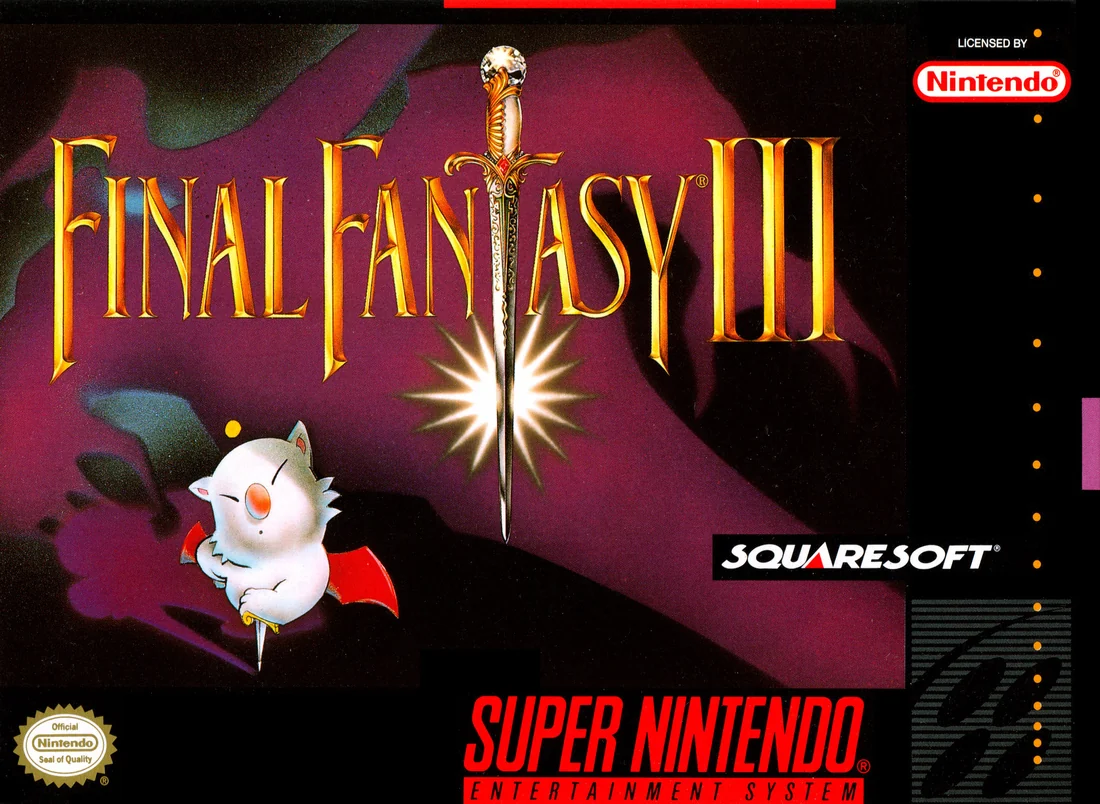
2. Final Fantasy VI, released in North America as Final Fantasy III
Final Fantasy VI is the broadest dramatic achievement on the SNES. In Japan it was released as Final Fantasy VI, while the North American cartridge was titled Final Fantasy III. That distinction is essential when researching regional releases, but it does not change the game’s central strengths: a large ensemble cast, a dramatic world, flexible party construction and an unusually expansive sense of scale for a 16-bit RPG.
Its characters are defined by specialized abilities rather than a single universal command list. Tools, Blitz, Rages, Bushido and Magitek each give different party members their own combat language. The player can also draw from a large roster, which makes group composition feel like a statement about how to approach the game rather than a fixed requirement. The story’s structure allows the world and its cast to develop beyond a simple march from town to dungeon to final boss, and its later shift in scale gives the adventure a different shape from the more linear entries in the series.
That scope creates occasional unevenness. A very large cast means not every character receives equal dramatic attention, and the abundance of options can make the game feel less tightly curated than Final Fantasy IV. Some of the game’s systems also become so generous that careful party planning is not always necessary. Even so, Final Fantasy VI ranks second because few SNES RPGs combine ensemble storytelling and mechanical variety so effectively. Pick it when you want the richest traditional party system and a story with a genuinely large dramatic canvas.
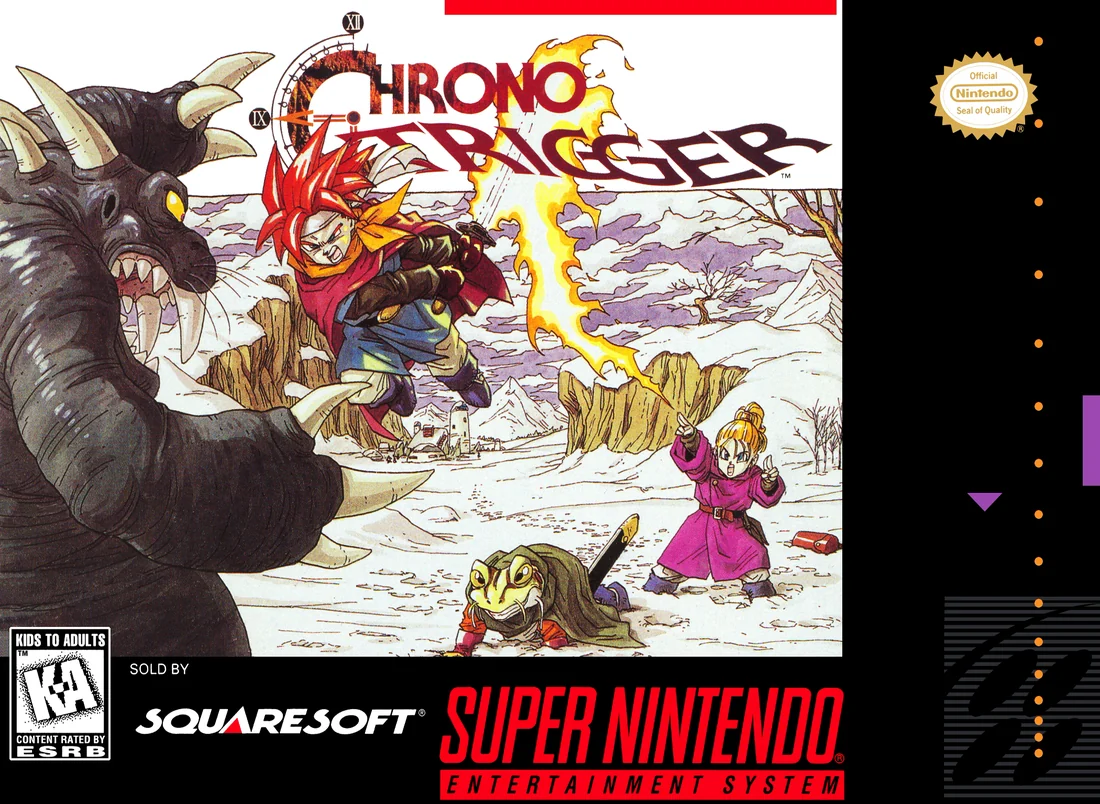
1. Chrono Trigger
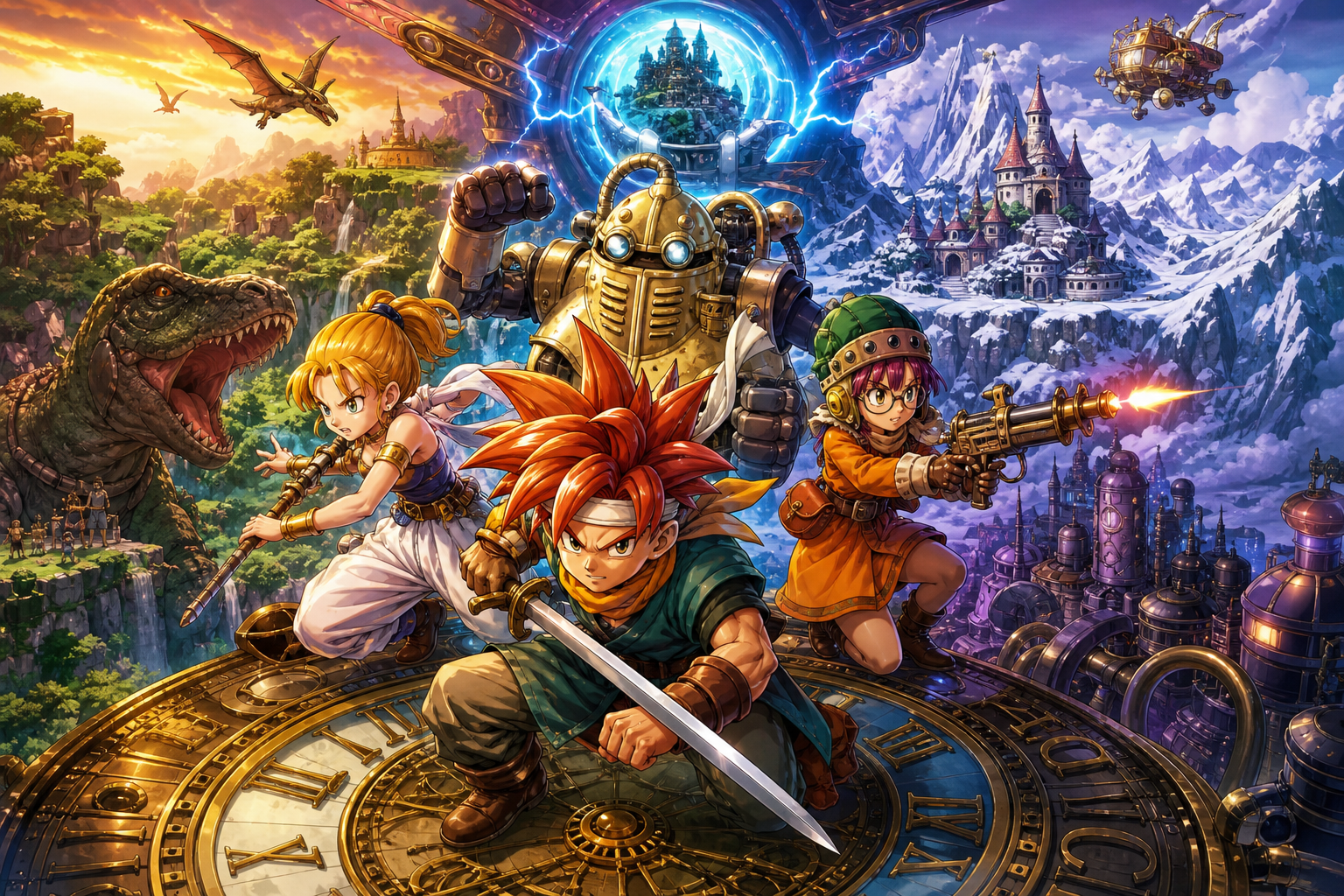
Chrono Trigger is the best overall SNES RPG because its individual parts reinforce one another with exceptional consistency. Its time-travel structure gives exploration a clear identity, and changes across eras make the world feel responsive rather than static. The party develops through equipment, levels and techniques, while dual and triple abilities turn relationships between characters into combat choices. Multiple endings and optional objectives also give the adventure more replay value than its relatively compact structure might suggest.
Its active-time battles are unusually readable. Enemies are generally visible during normal exploration instead of appearing through constant random encounters, which keeps the journey moving and allows players to consider positioning and area attacks. Battles feel connected to the surrounding space, and the game rarely allows grinding, menus or backtracking to overwhelm its forward momentum. The combat is not the most customizable on the system, but its clarity makes each character’s strengths and each combined technique easy to understand.
Chrono Trigger is also more approachable than its reputation might suggest. The story has a large scope without losing its central cast, and its pacing makes it easier to sustain interest through a long adventure. Its limitation is customization: compared with Final Fantasy V’s job combinations or Final Fantasy VI’s large ability roster, the characters offer fewer ways to be rebuilt from scratch. That is a fair trade for clarity. Chrono Trigger wins by balancing combat, exploration, music, character work and replay-friendly structure better than any other selection here.
The best starting point depends on the kind of RPG you want. Choose Super Mario RPG for the clearest introduction, Final Fantasy VI for the largest cast and richest party variety, Chrono Trigger for the strongest all-round journey, EarthBound for modern-world strangeness, Secret of Mana for local multiplayer and Terranigma for direct action and sweeping themes. Final Fantasy V is the mechanical experimenter’s choice, while Lufia II is the standout for puzzle-heavy dungeons. Breath of Fire II is the deeper-cut recommendation for players willing to work around an uneven localization and rougher progression.
Regional context matters when selecting a version. Final Fantasy IV is Final Fantasy II on the North American SNES, Final Fantasy VI is Final Fantasy III there, Final Fantasy V originated on the Japanese Super Famicom, and Terranigma did not receive an original North American SNES release. Those labels and availability differences affect how you approach each game, but they do not diminish the remarkable variety of role-playing design found across the SNES and Super Famicom library.