The Question Needs a Smaller “Yes”
“Was the original Xbox a Dreamcast 2?” sounds like a question with a binary answer. Historically, it contains at least three different questions. The first asks whether Microsoft’s console was, in some corporate sense, the next Sega machine. The second asks whether Xbox inherited Dreamcast hardware, operating software, or enough of its architecture to count as a direct technological successor. The third asks whether Xbox became an important destination for Sega’s software, creative teams, online ambitions, and design habits after Sega stopped making consoles.
Those propositions do not stand or fall together. The first is false. Xbox was Microsoft hardware, designed and controlled by Microsoft. Sega was a software partner and publisher, not the manufacturer behind the machine. The second is unsupported. Dreamcast and Xbox used materially different processors, graphics hardware, media, storage, networking equipment, and platform software. The third is defensible, provided it remains specific. Xbox became one of the most visible places where selected Dreamcast-era Sega projects and ambitions continued, alongside PlayStation 2, GameCube, and later other platforms.
This distinction matters because a company’s creative migration is not the same thing as a hardware succession. A former console maker can publish games on another company’s machine without that machine becoming its own next console. Sega’s transition after Dreamcast was precisely an attempt to separate its software assets from the expensive responsibility of manufacturing and supporting a platform.
The literal theory fails first on ownership. Microsoft selected Xbox’s processor, graphics hardware, storage format, networking equipment, system software, developer tools, and commercial strategy. Sega did not design the console as a replacement for Dreamcast, and Microsoft did not announce Xbox as a Sega machine. The later presence of Sega franchises and internal studios on Xbox cannot change who owned and controlled the platform.
The technological theory fails for a different reason. Dreamcast used a Hitachi SH-4 processor, PowerVR2 DC graphics, 16 megabytes of main memory, GD-ROM media, and a standard-equipped removable modem in the Japanese specification. Microsoft announced Xbox around an Intel processor, NVIDIA graphics, DVD media, integrated Ethernet, and an internal hard drive. These were different technical targets with different development assumptions. A relationship through Microsoft technology did not make the systems binary-compatible or architecturally identical.
Windows creates the most tempting bridge. Sega and Microsoft had a real partnership before Xbox existed. Dreamcast supported a customized Windows CE environment and DirectX-related services, with Windows-oriented development tools intended to make the system more approachable to developers familiar with PC production. That relationship is historically important. It helps explain why Microsoft and Sega already had a working institutional connection when Xbox entered development.
It does not mean that Dreamcast was an early Xbox, that every Dreamcast game used an identical Windows CE runtime, or that Dreamcast software could run on Xbox. An operating environment can supply selected services and tools without determining every layer of a console’s hardware and software. The Windows CE connection demonstrates cooperation, not shared architecture.
The chronology also resists the literal interpretation. Sega’s 2001 annual report records that the company decided to discontinue Dreamcast production on January 31, 2001. Xbox did not launch in North America until November 15 of that year, with Japanese and European launches following in 2002. By the time Microsoft’s machine reached consumers, Sega had already decided that its future would depend on supplying software to other manufacturers’ platforms.
That timing does not make Xbox irrelevant to the Dreamcast story. It makes the relationship more interesting. Xbox arrived after Sega’s hardware strategy had ended, at the moment when Sega needed outside platforms and Microsoft needed distinctive software. Microsoft’s platform became an important landing place for several Sega teams and franchises. For players, this could look like a continuation of Dreamcast’s creative identity. For the companies, it was a business alliance between a platform holder and a newly platform-agnostic publisher.
The March 30, 2001 Microsoft-Sega announcement captures that ambiguity. It described an 11-title publishing alliance and identified projects including “Jet Grind Radio Future,” “Panzer Dragoon,” “GUNVALKYRIE,” and “Sega GT.” It also emphasized Xbox’s broadband capabilities. Sega brought recognizable properties and development expertise. Microsoft brought a new machine, its own distribution structure, and a platform whose hard drive and Ethernet connection could support ambitions that had been difficult to realize on dial-up console hardware.
The announcement was not a final catalog. Some titles were provisional or generic. The project announced as “Panzer Dragoon” became Panzer Dragoon Orta. The future “Sega GT” project became Sega GT 2002. “Jet Grind Radio Future” also reflects announcement-era and regional naming. The broad pattern is secure, but the details matter. A careful history must distinguish an announced project from a released game, a franchise from a developer, and a publisher from the studio that actually built the software.
The most useful version of the question is therefore narrower:
- What did Sega and Microsoft already share before Xbox?
- What changed when Sega left the hardware business?
- Which Sega teams and franchises actually moved to Xbox?
- How did Xbox extend or redirect Dreamcast-era online and design ambitions?
- Where does the analogy stop?
Those questions produce a qualified answer. Xbox was not Dreamcast 2 in corporate ownership, hardware design, software compatibility, or official succession. It was a partial institutional and cultural successor because it became a major external platform for Sega’s post-Dreamcast software and because some of the ideas associated with Dreamcast—accessible development, experimental identity, arcade-derived design, and connected console play—continued there in altered form.
Dreamcast Was Windows-Linked, Not a Windows Xbox Prototype
The Windows CE connection is the historical hinge on which many exaggerated Xbox theories turn. In 1998, Microsoft and Sega announced that Dreamcast would use an optimized version of Windows CE with integrated DirectX services. The agreement offered developers a Windows-oriented route into console production. Microsoft presented Win32 compatibility, DirectX-related APIs, and development tools that could be used from familiar PC environments. Sega gained a relationship with a major software company whose technology could make parts of console development more accessible to teams already working with Microsoft tools.
This was a genuine technical and institutional collaboration. It was not a marketing fiction. Microsoft supplied technology specifically adapted for Dreamcast, and Sega’s platform documentation identified a customized Windows CE version as part of the system’s specification. The relationship also gave Microsoft experience working with a fixed game-console target and gave Sega access to a development environment associated with the larger Windows ecosystem.
The mistake is to turn that relationship into an identity. Dreamcast did not run desktop Windows in the ordinary PC sense. Nor did Windows CE replace every layer of Sega’s own technology. A console operating environment is assembled around a particular processor, graphics system, memory arrangement, input design, storage medium, boot process, and development model. A modular environment can provide some services while leaving other work to platform-specific libraries, custom drivers, native code, or a developer’s own engine.
Microsoft’s description of Windows CE for Dreamcast emphasized that the environment was modular. Components could be omitted, replaced, or supplemented by developer libraries. That point is more important than the presence of the Windows name. It means that “Dreamcast used Windows CE” does not identify one uniform software stack used in exactly the same way by every game. It identifies an available platform environment whose components could be configured around the needs of the console and the title.
The later Windows CE Toolkit 2.0 announcement supports this narrower reading. Microsoft described the toolkit as a development environment tailored for Dreamcast hardware. A toolkit can provide compilers, libraries, debugging support, and APIs without making every resulting game a portable Windows application. It can help developers target a platform while still requiring platform-specific work in graphics, memory, input, sound, storage, and networking.
The distinction can be expressed in four layers:
| Layer | What the evidence supports | What it does not prove |
|---|---|---|
| Corporate relationship | Microsoft and Sega collaborated before Xbox. | Microsoft and Sega jointly designed Xbox. |
| Development tools | Dreamcast developers could use Windows-oriented tools and APIs. | Dreamcast binaries were automatically portable to Xbox. |
| Runtime environment | Dreamcast had a customized, modular Windows CE option. | Every Dreamcast game used an identical Windows CE runtime. |
| Hardware target | Windows CE was adapted to Dreamcast hardware. | Dreamcast and Xbox shared a processor or graphics architecture. |
Dreamcast’s official Japanese specifications provide the necessary hardware context. They list a 200 MHz Hitachi SH-4 processor, PowerVR2 DC graphics, 16 megabytes of main memory, GD-ROM media, a 33.6 Kbps modem, and a customized Windows CE version. The operating environment appears in the same specification record as the console’s Sega-specific hardware. Windows CE did not replace the SH-4 or PowerVR2, and it did not make their constraints disappear.
The phrase “Windows-based development” also needs careful handling. It generally describes the computer and tools used to create software, not a promise that the resulting game shares executable compatibility with every other Microsoft-related device. Developers could work from Windows PCs while targeting a console with a different processor and graphics system. Modern development pipelines regularly separate the host computer from the target hardware; the fact that the host uses Windows says little by itself about the target’s architecture.
The Windows CE logo on a game’s startup screen is similarly limited evidence. It can indicate an association with Microsoft’s Dreamcast runtime technology. It cannot, by itself, identify the complete engine, libraries, compiler path, or memory strategy used by that title. A title-specific claim requires title-specific evidence: an original manual, technical document, developer account, or other direct record.
This matters when comparing Dreamcast games with later Xbox releases. A sequel may preserve a team, a franchise, a visual style, or a design idea while being rebuilt for a different platform. A port may retain content while replacing low-level systems. A re-release may be handled by a later external developer. These categories should not be collapsed into the phrase “the same game on a different machine.” The existence of Windows CE on Dreamcast does not settle any of them.
Shenmue II illustrates the distinction between software and hardware continuity. The Xbox version continued the story of a Dreamcast game and was identified by Microsoft as a SEGA-AM2 project under Yu Suzuki. That makes it a strong example of franchise and team continuity. It does not make Xbox a Dreamcast machine. The developers still had to target Microsoft’s processor, graphics system, storage, input, and system software.
Phantasy Star Online offers a parallel case. Sonic Team carried a network role-playing concept from Dreamcast into Xbox. The series’ online identity continued, but the platform context changed from a modem-equipped Sega console to Microsoft’s broadband-oriented machine. Continuity in the design goal did not require continuity in the underlying code or network infrastructure.
The Windows CE relationship is therefore best understood as a bridge between institutions rather than a bridge between binaries. Microsoft and Sega had already learned how to work together on a console platform. Developers had encountered Microsoft tools in a fixed hardware context. Executives had a reason to view one another as potential partners. Those facts help explain the later alliance. They do not establish that Xbox inherited Dreamcast’s operating system or architecture.
The correction is not meant to make the connection disappear. It makes the connection more precise. Dreamcast was one of the places where Microsoft’s console-oriented Windows technology met Sega’s hardware and software expertise. Xbox was a later Microsoft platform that benefited from Sega’s post-hardware partnership. The relationship runs through tools, people, companies, and business circumstances—not through an undocumented shared machine design.
The Hardware Break
A succession claim should survive a direct comparison of the components that determine how a console operates. It does not require a complete engineering survey. The useful question is whether Dreamcast and Xbox shared enough of their processing, graphics, memory, media, storage, and networking design to count as one platform generation continuing into another. The documented answer is no.
Dreamcast’s official Japanese specification lists a 200 MHz Hitachi SH-4 processor. Microsoft announced Xbox around a 733 MHz Intel processor. The processor specifications are different, and the documented relationship between Microsoft and Sega does not make software written for one target native to the other.
The graphics systems were also different. Dreamcast used PowerVR2 DC graphics, while Xbox used a custom NVIDIA graphics processor. Both machines could present fast three-dimensional games, but that shared goal says nothing about a shared rendering pipeline. A game designed for one graphics system would have to account for the other system’s commands, memory behavior, texture handling, effects, and performance characteristics.
Dreamcast’s listed main memory was 16 megabytes. Microsoft’s launch material identified a much larger Xbox memory capacity, but the available evidence for this article does not require a detailed claim about the exact Xbox memory model. The important point is that the two consoles offered developers different amounts and arrangements of resources. A capacity comparison can demonstrate a changed development target without pretending that a launch announcement explains every allocation rule or access pattern.
Media and storage establish an even clearer divide. Dreamcast used GD-ROM discs. Xbox used DVD media and included an internal hard drive. The hard drive was not a minor accessory added to imitate Dreamcast. It was a standard part of Microsoft’s platform design. It supplied persistent local storage for saves and supported later functions connected with downloads, statistics, and other online features. Dreamcast did not ship with an equivalent internal drive.
The distinction between GD-ROM and DVD also affected how developers and publishers thought about content. Dreamcast’s disc format belonged to Sega’s own hardware ecosystem. Xbox’s DVD format provided a different capacity and manufacturing environment, alongside a platform strategy that treated the console as part of a wider Microsoft entertainment system. A game moving from Dreamcast to Xbox could gain storage room, but it also had to move between different media assumptions and system interfaces.
Networking reveals the strongest conceptual connection and one of the clearest technical differences. The Japanese Dreamcast specification lists a standard-equipped removable 33.6 Kbps modem. That made dial-up access a standard feature of the Japanese model, though regional arrangements and online services varied. Xbox instead used integrated Ethernet and was promoted around broadband. A modem and an Ethernet port can serve the same broad purpose—connecting a console—but they involve different speeds, equipment, service providers, and expectations about how games communicate.
This difference is central to the “Dreamcast 2” feeling. Dreamcast made online access unusually visible in a console at a time when most living-room systems treated networking as optional or peripheral. Xbox made broadband and persistent local storage part of the machine’s core proposition. The idea continued, but the technical and commercial infrastructure changed substantially.
| Category | Dreamcast | Original Xbox | What the comparison establishes |
|---|---|---|---|
| Processor | Hitachi SH-4 at 200 MHz | Intel processor at 733 MHz | Different documented processor targets |
| Graphics | PowerVR2 DC | Custom NVIDIA graphics processor | No documented shared graphics architecture |
| Main memory | 16 MB listed in the Japanese specification | Exact Xbox memory comparison omitted here | The available sources do not establish a like-for-like memory architecture comparison |
| Media | GD-ROM | DVD | Different distribution and content assumptions |
| Storage | Removable save media and no equivalent internal hard drive | Internal hard drive | Xbox treated persistent local storage as standard |
| Network hardware | 33.6 Kbps modem in the Japanese specification | Integrated Ethernet | Connected-console ambitions used different infrastructure |
The table should not be read as a claim that every regional Dreamcast unit was identical. The modem specification cited here is Japanese, and online hardware and bundled software varied by territory. The same caution applies to Xbox launch details, revisions, and later service changes. The comparison is useful because it describes the documented platforms, not because it erases regional differences.
Nor should the comparison imply that hardware specifications determine a game’s entire identity. A console with different components can host a sequel that feels recognizably related to an earlier game. Developers can preserve a control concept, an art direction, a level structure, or a network feature while rewriting the implementation. Hardware difference limits claims about direct descent; it does not prevent creative continuity.
The hard drive deserves particular attention because it changed what Xbox could make ordinary. Dreamcast had explored networked communication through a modem and supported online titles such as Phantasy Star Online. Xbox paired Ethernet with local storage and eventually with a centralized online service. Microsoft described Xbox Live in terms of shared player identities, friends lists, matchmaking, voice communication, downloadable content, and hard-drive use. Those features were not a renamed Dreamcast service. They were Microsoft’s distinct platform architecture, made possible by a different machine and business model.
A similar point applies to development tools. Related APIs or Windows-based workflows can reduce some conceptual distance between two platforms, but they do not remove the need to target each machine’s processor, graphics hardware, memory, storage, and system software. The presence of a Microsoft toolchain in Dreamcast development may have made later cooperation more familiar. It did not turn Dreamcast code into Xbox code.
Xbox therefore represents a hardware break even where it represents a design continuation. The machine’s capabilities were organized around Intel processing, NVIDIA graphics, DVD distribution, internal storage, Ethernet, and Microsoft-controlled services. Dreamcast’s capabilities were organized around Sega’s SH-4 and PowerVR2 platform, GD-ROM, a modem, and Sega’s own console ecosystem. Similar ambitions moved between them; the underlying platform did not.
January 31, 2001: Sega Leaves Hardware
The date January 31, 2001 is more important to this history than any resemblance between the two consoles. Sega’s 2001 annual report records the decision to discontinue Dreamcast production on that day. The decision marked the end of Sega’s home-console manufacturing strategy and the beginning of a business model built around supplying content to other companies’ platforms.
The report describes a move toward content and amusement, with lower capital investment, lower business risk, and greater flexibility as important advantages. Manufacturing a console requires more than designing a box. It requires component commitments, factories or production contracts, distribution, technical support, software development tools, developer relations, customer service, and a plan for sustaining the installed base. By leaving hardware, Sega could concentrate on games and other content while allowing Sony, Microsoft, and Nintendo to carry the manufacturing burden.
Sega’s plan was explicitly multiplatform. The annual-report record names PlayStation 2, Xbox, and Nintendo GameCube as platforms for software supply. That statement should remain central because it prevents Xbox from being treated as the single official destination of Sega’s hardware identity. Sega was not transferring Dreamcast to Microsoft. It was trying to make its software valuable across competing ecosystems.
The change also reframed Sega’s internal resources. Studios, franchises, network experience, arcade knowledge, and production techniques could now be deployed wherever the business case was strongest. A team formerly associated with Dreamcast could work on Xbox without becoming a Microsoft team. A Sega franchise could appear on PlayStation 2 or GameCube without losing its Sega ownership. A game could be Sega-published while being developed by an outside studio. The hardware exit made these distinctions more important, not less.
The chronology explains why Xbox nevertheless became such a powerful symbol of the transition. Dreamcast production ended before Xbox reached consumers in North America. Microsoft’s console arrived during the period when Sega’s former hardware identity was still fresh, but its software future was being renegotiated. Several notable Sega projects were announced for Xbox, and some came from teams whose Dreamcast work had attracted unusually strong attention. Players could therefore experience Xbox as the place where a portion of Sega’s interrupted creative program resurfaced.
That perception was strengthened by the kinds of games involved. Jet Set Radio Future continued the visual and cultural vocabulary of Dreamcast’s Jet Set Radio. Shenmue II carried forward a major Dreamcast narrative and the work of SEGA-AM2. Phantasy Star Online brought Sonic Team’s network role-playing concept into Microsoft’s broadband strategy. GUNVALKYRIE and Panzer Dragoon Orta connected Xbox with Sega’s appetite for stylized, demanding, arcade-influenced action. Sega GT 2002 continued a Sega racing line through a documented WOW Entertainment credit.
These examples do not all represent the same kind of continuity. They can be sorted into separate categories:
- Direct narrative continuation: Shenmue II followed the story of a Dreamcast title.
- Franchise continuation: Jet Set Radio Future, Panzer Dragoon Orta, Sega GT 2002, and other titles extended established series.
- Studio continuity: Smilebit, Sonic Team, SEGA-AM2, and other Sega-affiliated teams carried work into a new hardware environment.
- Design continuity: Some games retained an interest in stylized worlds, unusual controls, arcade-derived pacing, or online interaction.
- Publisher continuity: Sega placed games on Xbox even when the developer was not necessarily the same internal studio associated with the earlier Dreamcast work.
Those categories should not be merged into one claim that “Sega moved to Xbox.” Sega did not move as a single unit. Its business moved across platforms, and individual teams and properties followed different paths. Some Xbox projects were sequels. Some were new games. Some continued arcade lineages that were older than Dreamcast. Some were Sega-published projects involving external developers. The historical value lies in mapping the connections accurately.
The annual report’s inclusion of PlayStation 2 and GameCube also matters when considering what Xbox did not inherit. Sega’s post-hardware strategy included Nintendo’s platforms, and new Sega software appeared on Game Boy Advance as well. Sonic Advance, listed by Nintendo as a Game Boy Advance release developed by Sonic Team, demonstrates that the company’s multiplatform transition extended beyond the three home consoles named in the annual report. This is evidence of a broad business migration, not evidence of a Dreamcast-to-Xbox hardware pathway.
Xbox still offered particular advantages. Microsoft was introducing a new platform that needed recognizable software and experienced partners. Its integrated Ethernet and hard drive suited Sega’s interest in network games and downloadable or persistent features. Microsoft’s own announcements emphasized the importance of Sega’s projects to the Xbox lineup. For Sega, Xbox could provide technical room and a platform holder eager to support distinctive games. For Microsoft, Sega supplied credibility among players who remembered the Dreamcast’s unusual software identity.
The relationship was therefore mutually useful without being symmetrical. Microsoft owned the platform and set its technical rules. Sega supplied content, teams, and brands. Microsoft could present Sega games as part of Xbox’s software portfolio, while Sega could use Xbox as one of several routes out of the hardware business. The arrangement resembled a transfer of creative momentum rather than a transfer of console ownership.
This is also why the phrase “replacement platform” needs care. Xbox was a replacement destination for particular Sega projects, not the replacement for Dreamcast as a corporate product. Sega’s annual report does not describe Xbox as the sole or official successor. It describes a multiplatform strategy. A later player may remember Xbox as the strongest concentration of Dreamcast-adjacent Sega games, but that retrospective concentration should not be projected backward onto Sega’s original decision.
The hardware exit made cultural continuity possible in a new form. When Sega manufactured consoles, its software, hardware, online services, and brand identity were joined inside one platform. After January 31, 2001, those elements could separate. Sega’s design culture could appear on Microsoft hardware. Its franchises could spread across several systems. Its network experience could influence games running on infrastructure it did not control. That separation is the real historical event behind the Dreamcast 2 comparison.
Xbox was not the machine Sega had secretly meant to build. It was one of the machines on which Sega’s post-Dreamcast future became visible. The distinction is not a technicality. It explains why the connection can feel powerful while the succession claim remains wrong.
The March Alliance: A New Destination, Not a New Sega Console
The March 30, 2001 Microsoft-Sega announcement is the clearest contemporary reason the original Xbox could later be remembered as a “Dreamcast 2.” It arrived only weeks after Sega had decided to discontinue Dreamcast production, and it placed a conspicuous group of Sega projects on Microsoft’s forthcoming console. The announcement described an 11-title publishing alliance, named recognizable Sega properties, and emphasized Xbox broadband capabilities. For players who had just seen Sega leave the hardware business, the message seemed almost paradoxical: Dreamcast was ending, but many of the ideas associated with it were appearing on Xbox.
The appearance was real, but its meaning was narrower than the shorthand suggests. Sega’s games were entering Xbox; Sega was not transferring ownership of its hardware platform to Microsoft. The agreement was a publishing and development partnership within an Xbox business that Microsoft controlled. Microsoft selected the processor, graphics hardware, storage, media, networking equipment, system software, developer environment, and commercial strategy. Sega supplied software, properties, production expertise, and the credibility of teams that had helped define the Dreamcast period.
This distinction makes the announcement more revealing, not less. It records two companies with different needs meeting at a precise historical moment. Sega had to make its creative resources valuable without manufacturing a console. Microsoft needed a library that could make an unfamiliar platform look distinctive and attract players who already cared about Japanese games. Their interests overlapped, but their roles did not.
The initial Xbox projects helped establish that overlap. Microsoft identified “Jet Grind Radio Future,” “Panzer Dragoon,” “GUNVALKYRIE,” and “Sega GT” among the early Sega projects. These were not generic licensed products. They signaled stylized action, arcade lineage, racing, and a willingness to support games that did not resemble the safest forms of launch software. The announcement therefore made Xbox look like a home for Sega’s creative identity at the moment when Dreamcast itself was disappearing.
The names were not all final catalog entries. “Jet Grind Radio Future” reflected announcement-era and regional naming. “Panzer Dragoon” referred to a project that became Panzer Dragoon Orta. “Sega GT” became Sega GT 2002 in the relevant Xbox release period. The announcement itself warned that products and details could change. A historical account should therefore treat the release as evidence of intention and partnership, then use final manuals, period credits, and release documentation to establish what actually shipped.
That distinction is particularly important when discussing Sega’s role. A company announcement can identify a publisher, a franchise, a planned title, or a strategic partner without proving which studio performed every part of development. Sega’s internal structure included multiple teams, and Sega also published projects made by outside companies. The phrase “Sega game” can describe ownership, publishing, development, or brand association. Each possibility tells a different story about continuity.
| Question | What the March announcement establishes | What requires separate evidence |
|---|---|---|
| Was Sega involved? | Yes. Sega and Microsoft announced a strategic publishing alliance. | The exact role Sega played on each released title. |
| Was Xbox a Sega machine? | No. The announcement presents Xbox as Microsoft’s platform. | Nothing in the release supports Sega hardware ownership. |
| Were Dreamcast-era properties involved? | Yes. Several named projects belonged to recognizable Sega series or teams. | Whether a particular title was a sequel, port, remake, or new project. |
| Was broadband important? | Yes. Microsoft presented Xbox connectivity as useful to Sega’s future software. | Which final games used which online services and features. |
| Did every announced project ship as named? | No such assumption is justified. | Final title, release date, region, developer, and credits. |
The alliance also explains why Xbox could feel more Sega-oriented than Sega’s broader business plan would predict. Sega’s annual report named PlayStation 2, Xbox, and GameCube as target platforms. The company was not choosing Xbox as its sole successor. Yet Microsoft’s announcements concentrated several visually distinctive Sega projects in one new console’s marketing story. Xbox benefited from the coincidence of timing: Sega’s hardware exit created a supply of recognizable content, and Microsoft’s launch campaign needed that content to establish a personality.
The relationship was mutually useful. Sega gained another platform with a hard drive, Ethernet, and a platform holder eager to promote network-oriented games. Microsoft gained access to teams and properties that could make Xbox feel less like an untested corporate product. The arrangement was therefore a transfer of creative momentum rather than a transfer of console technology.
Who Actually Moved to Xbox?
“Sega on Xbox” is not one category. Some games were direct sequels to Dreamcast titles. Some continued older arcade or Saturn-era franchises. Some came from internal Sega studios. Some were Sega-published projects involving other developers. Some are associated with Dreamcast because of their timing and style even when their primary lineage is older. A useful history has to separate those relationships.
The strongest direct narrative connection is Shenmue II. Microsoft’s October 2001 announcement identified SEGA-AM2 as the developer of the Xbox version, and a later Microsoft release described the game as developed by SEGA-AM2 under Yu Suzuki. The Xbox project continued the story established by the Dreamcast’s Shenmue, preserving both the fictional world and the association with AM2. For players, this was an unusually powerful form of continuity: a major unfinished Dreamcast story had found a new home on Microsoft’s console.
Even here, the correct description is “sequel and platform adaptation,” not “Dreamcast hardware continuation.” The Xbox version had to target Microsoft’s processor, graphics system, storage, controller, media, and system software. Its narrative and authorship connected it to Dreamcast; its execution belonged to Xbox. A sequel can carry a creative work forward while being rebuilt for a different machine.
Phantasy Star Online offers a different but equally important connection. Microsoft’s October 2001 announcement identified Sonic Team as developing the Xbox version and placed the game within Microsoft’s broadband strategy. The Dreamcast original had made online role-playing central to its identity. The Xbox version carried that concept and that team into a platform built around Ethernet, a hard drive, and later Xbox Live infrastructure.
The continuity here is best described as network-design and studio continuity. Sonic Team’s experience with online role-playing mattered because Microsoft wanted games that could demonstrate why broadband belonged in a console. That does not mean Microsoft adopted Sega’s online service or that the Xbox version was an untouched Dreamcast binary. The same creative problem—how to make a console role-playing game persistent and social—was being addressed in a different technical environment.
Jet Set Radio Future represents franchise and aesthetic continuity. It followed the Dreamcast’s Jet Set Radio through stylized urban spaces, graffiti, music-led presentation, and skating-based movement. The Xbox game was not simply a Dreamcast title moved to a larger machine. It was a new project whose identity was made legible by the earlier game. Its presence on Xbox allowed players to interpret Microsoft’s console as a place where one of Dreamcast’s most distinctive creative directions could continue.
Smilebit’s association with GUNVALKYRIE and Panzer Dragoon Orta adds studio continuity. Official Xbox listings credit Smilebit as developer for both titles, although modern backward-compatible listings should be paired with original Xbox manuals or period release documentation when making definitive claims about historical production credits. The available evidence is sufficient to treat Smilebit as a central part of the Xbox-era Sega story, but not to claim shared code, a common engine, or automatic portability from Dreamcast.
GUNVALKYRIE is especially useful because it shows a Sega team developing a new Xbox-specific action game rather than delivering a direct Dreamcast sequel. Its movement and combat emphasize expressive analog control, rapid traversal, and vertical action. Those qualities can be discussed as part of Sega’s design culture without asserting that they were technically inherited from Dreamcast. A design preference can survive a platform change even when the implementation is new.
Panzer Dragoon Orta demonstrates why franchise lineage must extend beyond Dreamcast. Panzer Dragoon was rooted in Sega’s arcade and Saturn history as much as in the Dreamcast period. Its Xbox continuation connected Microsoft’s console to Sega’s broader identity: lock-on shooting, high-speed stages, dramatic creatures, and an arcade-derived demand for precision. It is therefore a strong Sega-on-Xbox example, but not a simple Dreamcast sequel in the same sense as Shenmue II.
The original Sega GT 2002 manual supplies a more specific corporate record. It credits WOW ENTERTAINMENT INC. and SEGA CORPORATION. That credit identifies a particular development relationship and is more useful than treating the game as an undifferentiated Sega product. The title continued Sega’s racing identity on Xbox, while the manual makes clear that the responsible studio and corporate owner should be named separately.
Crazy Taxi 3: High Roller can be used more narrowly. The franchise had an established arcade and Dreamcast identity, and its presence on Xbox illustrates Sega’s willingness to continue recognizable properties on outside hardware. The available evidence in this project does not establish the original Xbox-era developer credit with sufficient precision, so the title should not be used as proof of a particular studio transfer. It is safer as a franchise-continuity example than as a team-history example.
The same discipline applies to Sega’s sports and arcade catalogs. A Sega logo could signify publisher, owner, distributor, or developer, depending on the project and territory. Sega’s post-hardware business included software partnerships and internal teams with different histories. Calling every Sega-published Xbox title a former Dreamcast project would obscure the very transition the article is trying to explain.
| Title or series | Continuity type | What can be said securely | What should not be inferred |
|---|---|---|---|
| Shenmue II | Direct narrative and studio continuity | SEGA-AM2 and Yu Suzuki’s project continued the Dreamcast story on Xbox. | That Xbox shared Dreamcast hardware or code. |
| Phantasy Star Online | Network, franchise, and Sonic Team continuity | Sonic Team brought a Dreamcast-era online RPG concept to Xbox broadband. | That Xbox Live was SegaNet renamed. |
| Jet Set Radio Future | Franchise and design continuity | The Xbox game extended the visual and mechanical identity of Jet Set Radio. | That it was a direct Dreamcast port. |
| GUNVALKYRIE | Studio and design continuity | Smilebit is associated with an Xbox-specific Sega action project. | That it used Dreamcast code or technology. |
| Panzer Dragoon Orta | Older Sega franchise and studio continuity | Smilebit carried an arcade-rooted Sega series onto Xbox. | That its primary lineage was exclusively Dreamcast. |
| Sega GT 2002 | Series and documented corporate-development continuity | The original manual credits WOW ENTERTAINMENT and Sega. | That all Sega-branded racing games had the same studio history. |
This census produces a stronger result than a simple list. Xbox did become a concentrated destination for selected Sega teams and properties, but Sega did not move as a single department. The company’s post-Dreamcast identity was distributed among sequels, new games, arcade continuations, online experiments, and publishing partnerships. The connections are real precisely because they can be named and classified.
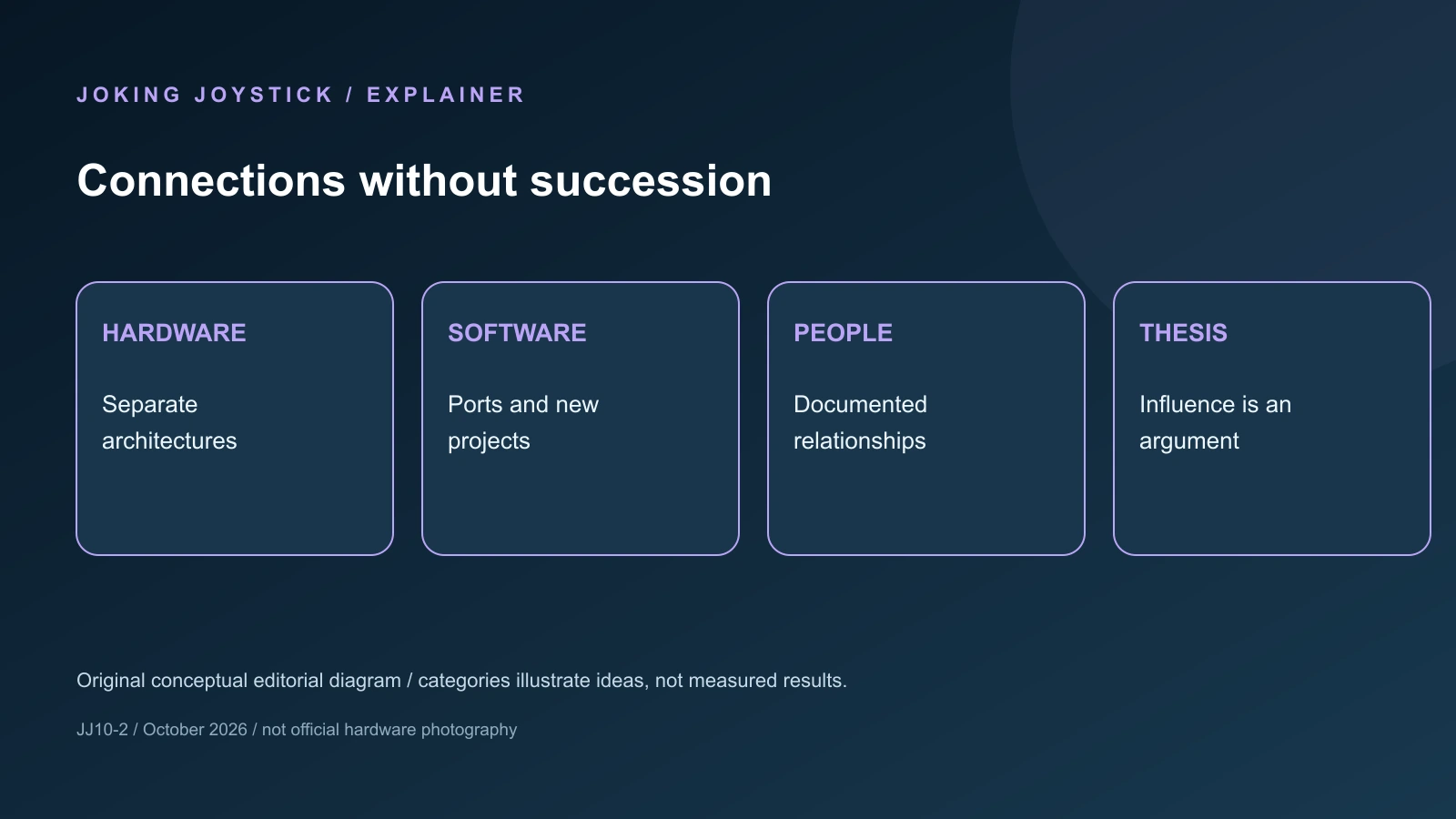
Dreamcast’s Network Precedent Meets Xbox Infrastructure
Dreamcast’s online history supplies the most convincing conceptual bridge to Xbox, but the bridge is about ambition and experience rather than service ownership. Sega’s Japanese hardware specification listed a standard-equipped removable 33.6 Kbps modem, making network access a standard feature of that model. Sega’s corporate record also treated experience with network games as an asset after the company left hardware. These facts establish a platform and a business culture that took connected play seriously.
Phantasy Star Online is the clearest documented example. Sega’s own history presents it as a network role-playing game capable of connecting players across the world. The title showed that a console game could be organized around persistent communication and shared play rather than treating networking as a minor competitive option. Its significance was not that every Dreamcast game became online, but that Sega had produced a recognizable model for a connected console experience.
The original hardware imposed limits. A 33.6 Kbps modem and a game-specific service environment were not equivalent to broadband Ethernet and a centralized account system. Online performance, provider arrangements, regional availability, and title support could vary. The available evidence supports the modem, the existence of network-oriented games, and Sega’s stated experience. It does not justify a single generalized description of every Dreamcast online service.
Xbox approached the same broad problem through different infrastructure. Microsoft’s launch material identified integrated Ethernet and an internal hard drive. The company later described Xbox Live as a broadband service that combined matchmaking, friends, voice communication, downloadable content, and persistent player information. Those functions made online gaming a platform-level proposition rather than merely a collection of individual publisher arrangements.
The distinction between a title-level service and a platform-level service explains why Xbox Live should not be described as “SegaNet renamed.” Dreamcast’s network games could rely on Sega, a developer, a publisher, and regional service arrangements. Xbox Live placed Microsoft in a central role, supplying common account and communication functions around which different games could be built. Sega’s experience could help its teams design connected games, but Microsoft owned the service architecture.
Timing matters too. Xbox launched in North America in November 2001, while Xbox Live launched in North America in November 2002. The console’s Ethernet port and hard drive existed before the unified service. Microsoft was designing the machine to accommodate a broadband future, then delivering that future through a later service launch. The original Xbox should not be described as if every launch title already operated inside the completed Xbox Live system.
Nor did every Xbox game support online play. The hardware created a common opportunity, not a compulsory feature. Some titles were offline-only. Others supported online functions through particular systems or at particular times. The same principle applies to Dreamcast: a standard-equipped removable modem made networking possible, but it did not make every game networked.
The continuity is therefore best framed in three stages. First, Dreamcast normalized the idea that network access could belong to a console’s identity. Second, Sega gained practical knowledge from building and operating network-oriented games. Third, Xbox supplied a different platform in which broadband, local storage, voice communication, and a centrally managed service could make connected play more systematic.
This is a significant form of succession, but it is not technological succession. Xbox did not inherit Dreamcast’s modem, provider arrangements, or software binaries. It inherited an opportunity that Sega had helped demonstrate and that Microsoft had the resources and platform control to expand.
The Hard Drive Changes the Meaning of Connected Play
The Xbox hard drive gave the online comparison a material foundation. Dreamcast had made connectivity standard in the Japanese specification, but it did not include an equivalent internal hard drive. Xbox paired Ethernet with persistent local storage, DVD media, four controller ports, and support for voice-oriented peripherals. Together, these features made the machine feel like a more capacious and organized version of the connected-console idea.
The hard drive mattered because it was always present. Developers could plan around a storage device that did not depend on a separate accessory or a removable memory unit. Microsoft connected that capacity with online features such as downloadable information, statistics, levels, and characters. The exact use varied by game, but the platform’s design made persistent local data part of the expected environment.
That difference should not be overstated into unsupported technical claims. The available evidence does not require a detailed account of Xbox memory allocation, filesystem behavior, or the amount of data each title cached. It establishes a simpler and more useful distinction: Xbox provided internal storage as a standard platform resource, while Dreamcast did not provide a comparable internal hard drive.
The hard drive also changed the relationship between disc and service. A game could ship on DVD while expecting some information to remain on the console or arrive later through the network. Microsoft’s Xbox Live description treated storage and online communication as linked parts of the platform. This did not make Xbox a personal computer, and it did not make Dreamcast primitive in every respect. It gave Xbox a different set of ordinary assumptions.
Ethernet contributed a similar shift. The port did not guarantee broadband access, but it made the console ready for a network environment faster and more persistent than the dial-up model associated with Dreamcast. Microsoft could design service features around that expectation, while developers could consider communication and matchmaking without treating every connection as a scarce dial-up resource.
Voice support extended the change into social design. Xbox Live’s headset and communication features encouraged players to treat the console as a place for live conversation as well as game input. Dreamcast had experimented with communication and online worlds, but Xbox made voice, accounts, and matchmaking parts of one platform proposition. The shared idea was social connection; the implementation and ownership were Microsoft’s.
DVD completed the hardware break. Dreamcast’s GD-ROM belonged to Sega’s own format and distribution strategy. Xbox’s DVD drive served a platform built around Microsoft’s processor, graphics system, Ethernet, and hard drive. The larger and more familiar medium could support different content assumptions, but it did not turn Xbox into an upgraded Dreamcast. It was one element of a new design.
These choices explain why Sega developers could find Xbox attractive after Dreamcast. The platform offered room for network-oriented software, persistent storage, and large projects at the same time that Microsoft needed distinctive content. Sega did not have to abandon its interest in online role-playing, stylized worlds, or arcade-derived systems. It could redirect those interests into a machine designed for different resources.
But redirection is not inheritance. Microsoft’s hardware made its own demands. A game moving from Dreamcast to Xbox needed to address a different processor, graphics system, storage model, controller environment, and service layer. Even when a team retained a franchise or design philosophy, its engineering work belonged to Xbox. The hard drive and Ethernet port made the new platform suitable for Sega’s ambitions without making the platform Sega’s.
Design Continuities Without Shared Code
The strongest cultural case for “Dreamcast 2” appears in the games themselves. Xbox-era Sega projects often preserved qualities that players associated with Dreamcast: unusual visual identities, arcade-derived pacing, stylized worlds, demanding controls, and a willingness to build around a strong concept rather than a generic genre template. These qualities are important evidence of creative continuity, but they should be described as design and studio links, not as proof of a shared engine or codebase.
Jet Set Radio Future: an urban identity continues
Jet Set Radio Future made the Xbox feel like a destination for one of Dreamcast’s most recognizable experiments. Its connection to Jet Set Radio was visible in its music, graffiti, stylized urban spaces, and movement vocabulary. The games treated traversal, attitude, and visual presentation as central rather than decorative. That continuity helped players recognize Sega’s voice on unfamiliar Microsoft hardware.
Yet the relevant evidence is creative. The franchise relationship and design vocabulary establish continuity; they do not establish that the Xbox game used Dreamcast code or that the two consoles shared a rendering system. A sequel can preserve an identity while revising its systems for a new target. In this case, the Xbox destination mattered because it allowed the series’ ideas to continue after Sega’s own hardware had ended.
GUNVALKYRIE: control as a Sega design problem
GUNVALKYRIE illustrates Sega’s interest in games that demanded expressive control. Its action depends on movement, aiming, and vertical mobility rather than treating the player’s inputs as simple menu commands. The game belongs to Xbox’s technical environment, but its willingness to make control central fits the broader Sega design culture visible across the Dreamcast period.
The correct comparison is therefore about priorities. Both generations included games that asked players to learn a distinctive relationship between movement and action. That does not mean the Xbox title was a Dreamcast project transferred unchanged. Official Xbox metadata associates it with Smilebit, while final historical production claims should be checked against original Xbox documentation. Nothing in the available evidence establishes shared Dreamcast code.
Panzer Dragoon Orta: arcade lineage on Microsoft hardware
Panzer Dragoon Orta connected Xbox to Sega’s arcade and console history through lock-on shooting, rapid stage movement, and dramatic creature design. Its relevance to this story is not that it descended exclusively from Dreamcast. The series’ roots were older. Its relevance is that Xbox became a place where Sega could continue presenting a highly authored arcade tradition after abandoning its own hardware.
This is an important limit on the Dreamcast analogy. Not every Sega identity visible on Xbox was born in 1998 or 1999. Some came from Sega’s longer history and simply found a new platform after the hardware exit. Xbox’s cultural association with Dreamcast can therefore include older Sega lineages that were revitalized during the same transition.
Shenmue II: narrative continuity and platform discontinuity
Shenmue II offers the cleanest example of a game that is directly continuous with Dreamcast while also proving the platform break. The story, characters, and AM2 association connect it to the earlier game. Its Xbox release demonstrates that a major Dreamcast narrative could continue on Microsoft hardware. At the same time, the need to target Xbox’s systems shows that creative succession and technical succession are separate questions.
The distinction is useful beyond Shenmue. A franchise can carry its world, tone, and authorship across platforms. The new machine can change loading, presentation, control, storage, and performance without erasing the series’ identity. That is exactly the kind of continuity visible in the Sega-to-Xbox transition.
Phantasy Star Online: the connected-console identity
Phantasy Star Online ties design continuity to the online argument. Its importance is not merely that it had a network mode. The network relationship was part of what the game was. Moving that concept from Dreamcast to Xbox showed that Sega’s connected-console ambition could survive the loss of Sega hardware.
The Xbox context changed the meaning of the project. On Dreamcast, the game helped demonstrate that a console with a standard-equipped removable modem could host a worldwide role-playing experience. On Xbox, the same broad ambition could be associated with Ethernet, a hard drive, and Microsoft’s developing broadband ecosystem. The game therefore belongs to both histories without making them identical.
Across these examples, the evidence supports a pattern of design continuity without shared code. Sega’s teams continued to value strong visual identities, arcade-derived interaction, unusual control demands, persistent worlds, and recognizable fictional universes. Xbox gave those values a new technical and commercial home. That is enough to explain the cultural memory of a Dreamcast successor; it is not enough to rewrite Xbox as Sega hardware.
What the Corporate Record Actually Says
The contemporary announcements are most useful when read as records of motive rather than as proof of later fan interpretations. Microsoft presented Sega as a strategic partner whose properties could strengthen Xbox. Sega presented external platforms as necessary destinations after its hardware withdrawal. Neither company described Xbox as Dreamcast’s official successor.
Peter Moore’s documented role illustrates the institutional bridge. He was president and chief operating officer of Sega of America when the 2001 alliance was announced, and the announcement records his comments about Sega’s studios being impressed by Xbox’s hardware and network capabilities. That statement is valuable because it shows how Sega’s leadership publicly framed the partnership: the appeal lay in what Microsoft’s machine could offer Sega’s developers, not in a hidden identity between the two consoles.
The wording also reveals Microsoft’s objective. Xbox needed a distinctive software portfolio, and Sega could provide recognizable franchises and experienced teams during a period of transition. Microsoft was not merely licensing nostalgia. It was using Sega’s current production capacity and brand associations to make Xbox credible. Sega, meanwhile, could use Microsoft’s platform without bearing the cost of manufacturing it.
Those motives explain why the alliance produced a concentrated group of Sega titles without becoming a formal merger or hardware succession. The platform holder and content company each retained their roles. Microsoft controlled Xbox. Sega controlled its properties and decided how to deploy its software across several platforms. The relationship was strategically close while remaining institutionally separate.
The annual report supplies the wider frame. Sega’s chosen future was content and amusement, supported by a multiplatform software strategy. Xbox mattered because it offered a capable new machine and an eager partner, not because Sega had narrowed its future to Microsoft. Nintendo’s Game Boy Advance and GameCube, as well as PlayStation 2, belong in the same business story. Nintendo lists Sonic Advance as a Game Boy Advance release developed by Sonic Team, providing concrete evidence that Sega’s creative migration was broader than Xbox.
The title record consequently points to a layered conclusion. Sega’s institutional relationship with Microsoft predated Xbox. Sega’s hardware exit made outside platforms essential. Microsoft’s machine offered features that suited several Sega ambitions. Sega teams and franchises appeared prominently on Xbox. But all of those facts describe a partnership and a destination, not a transferred console line.
A Multiplatform Transition, Including Nintendo
Sega’s move into Xbox becomes clearer when it is placed beside the company’s other post-Dreamcast destinations. The hardware exit was not a transfer from one console manufacturer to another. It was a change in business model. Sega’s annual-report record described a strategy centered on content and amusement, with software supplied for PlayStation 2, Xbox, and Nintendo GameCube.
That context limits the temptation to treat Xbox as Sega’s official replacement. Microsoft’s console became unusually important for particular franchises and studios, but Sega’s plan was broader. The company was trying to make its software assets valuable across several platforms rather than concentrate them inside one successor machine.
Why Xbox looked more Sega-oriented than the wider strategy
If Sega supported several platforms, why did Xbox acquire such a strong association with the company? Timing and concentration explain much of the effect. Microsoft’s alliance announcement gathered several conspicuous Sega projects into the marketing story of a new console. Titles associated with unusual visual styles, arcade traditions, racing, action, and online play appeared together at a moment when Xbox needed a recognizable identity.
PlayStation 2 had a larger installed audience and received Sega software, but its relationship with Sega did not produce the same symbolic contrast. Xbox was new, Microsoft-owned, and arriving after Sega had abandoned hardware. When a Sega game appeared there, the juxtaposition was more visible. Players could read the release as evidence that Sega’s creative world had moved somewhere else.
GameCube likewise belongs to the transition. Sega’s annual report named Nintendo’s platform as part of the post-hardware strategy, even though the Xbox-focused alliance created a particularly noticeable cluster of titles. The existence of GameCube support demonstrates that Sega was not choosing a single corporate heir. It was distributing software according to audience, project, and business opportunity.
Sonic Advance and the Game Boy Advance
Nintendo’s Game Boy Advance supplies an especially useful counterexample because it shows Sega’s software transition outside the home-console comparison. Nintendo lists Sonic Advance as a Game Boy Advance release developed by Sonic Team. Sega’s own Sonic history places the game alongside early multiplatform releases involving GameCube and Xbox.
This matters for two reasons. First, it confirms that Sega’s post-Dreamcast software strategy reached Nintendo hardware as well as Microsoft and Sony platforms. Second, it prevents the Xbox story from becoming a disguised claim that all Sega talent or all Sega franchises moved in one direction. Sega’s new business model was defined by distribution across platforms.
Sonic Advance does not support any technical link between Game Boy Advance and Dreamcast or Xbox. Its value is institutional. A Sega-owned character and a Sega-published project could now appear on Nintendo hardware because the company no longer needed to protect a competing console business. The same corporate shift that made Xbox a destination also made Nintendo platforms available in a way that would have been strategically difficult while Sega was still manufacturing Dreamcast.
Different platforms, different kinds of continuity
The post-Dreamcast catalog should therefore be read as a set of different continuities. Xbox received games that made Microsoft’s machine look like a home for Sega’s late-console identity. GameCube received projects connected to Sega’s broader software portfolio. Game Boy Advance received new Sonic software suited to handheld play. PlayStation 2 received other Sega franchises and partnerships. These releases were not equivalent, and they should not be combined into one migration narrative.
The distinction between platform destination and cultural successor is helpful here. A cultural successor can be one of several destinations if it preserves a recognizable part of the earlier platform’s identity. Xbox became a particularly important destination for Dreamcast-associated teams, sequels, and online ambitions, but it did not absorb the whole Sega catalog or the whole meaning of Dreamcast.
The multiplatform record also changes how Sega’s relationship with Microsoft should be described. Microsoft’s Xbox strategy benefited from Sega’s presence, but Sega retained the ability to negotiate with several platform holders. The alliance was valuable because it gave both companies something the other lacked: Microsoft gained distinctive software, while Sega gained access to an external platform with hardware and network features suited to selected projects.
This arrangement explains why some Xbox titles feel unusually concentrated as a group. They were not the output of a single new Sega division. They were products of a transition in which Microsoft actively promoted Sega content, Sega redirected teams and properties, and individual projects found different homes according to their requirements.
The business meaning of “destination”
Calling Xbox a destination is more accurate than calling it a successor. A destination is where software, personnel, and ideas arrive after a change in direction. It does not imply that the destination was designed by the organization that departed, or that it reproduces the departing platform’s technology.
This term also accommodates uneven movement. Shenmue II moved a narrative forward. Jet Set Radio Future continued a franchise identity. Phantasy Star Online carried a network design into a new infrastructure. Panzer Dragoon Orta extended an older Sega lineage. Sonic Advance demonstrated that the same corporate transition reached Nintendo’s handheld. These are related outcomes of Sega’s post-hardware strategy, not chapters in a single hardware replacement program.
The broader catalog therefore strengthens the Xbox argument by limiting it. Xbox was important precisely because it was one part of a wider shift. Its concentration of Sega projects was historically distinctive, but it was not exclusive. Sega’s decision to become a software company made multiple platforms relevant, and each platform preserved a different fragment of the company’s former console identity.
Regional Memory and the Uneven Handoff
The regional record changes how the Xbox connection was experienced. Dreamcast did not arrive everywhere at the same time, and Sega’s withdrawal from hardware did not produce one simultaneous global handoff. Players encountered different combinations of hardware availability, software localization, online access, and sequel availability. The same Xbox release could therefore feel like a continuation in one market and like an introduction in another.
This is especially important for Shenmue II. Its Xbox presence carried the story and AM2 association forward, but the significance of that release depended on what audiences had previously received on Dreamcast. A game that functioned as a direct sequel for one audience could also serve as a first practical encounter with the series for another. That uneven experience strengthened the impression that Xbox had inherited part of Dreamcast’s unfinished future, even though the corporate transition had been multiplatform.
The same principle applies to naming. The announcement-era phrase “Jet Grind Radio Future” reflects a regional and preliminary context, while the final released title and its presentation belonged to a later catalog. Treating one name as universal can hide how Sega’s properties were localized and marketed across territories.
Regional variation does not weaken the continuity argument. It explains why the argument was never uniform. Xbox became a particularly visible destination for selected Sega franchises and teams, but the route from Dreamcast to Xbox was filtered through territory, release order, platform availability, and the uneven distribution of Sega software.
Chronology, Territory, and the Uneven Handoff
The phrase “Dreamcast to Xbox” compresses events that occurred across different regions and over several years. Dreamcast launched in Japan on November 27, 1998 and reached North America and Europe in 1999. Sega decided to discontinue production on January 31, 2001. Xbox launched in North America on November 15, 2001, Japan on February 22, 2002, and Europe on March 14, 2002.
The sequence matters. Xbox did not arrive as a replacement announced by Sega at the moment Dreamcast ended. By the time Microsoft’s console reached its first market, Sega had already chosen to leave hardware and pursue software across several platforms. The timing supports the description of Xbox as a post-Dreamcast destination.
Regional experience was not uniform. The Japanese Dreamcast specification lists a standard-equipped removable 33.6 Kbps modem, but that information should not be generalized automatically to every regional model or online arrangement. Hardware, service access, software packaging, and provider relationships could vary. A player’s experience of Dreamcast’s network identity depended partly on territory.
Software naming also complicates the chronology. The game known in North America as Jet Grind Radio was known elsewhere as Jet Set Radio. The alliance announcement’s “Jet Grind Radio Future” reflects an announcement and regional naming context, while the final Xbox title and its presentation must be treated as a later catalog fact. Using one name as if it were universal can make a multinational history look simpler than it was.
Shenmue II likewise had different release and localization histories across territories. The Xbox version became especially important for audiences who did not receive the same Dreamcast path to the story. That uneven availability helped make Xbox feel like a successor in some markets even though the corporate and technical history was more complicated.
The same caution applies to Phantasy Star Online. Different revisions and regional versions should not be collapsed into one timeless product. The title’s importance to this article comes from the documented continuation of the network role-playing concept and Sonic Team’s involvement, not from assuming that every version used identical services or features.
Online chronology contains another important gap. Xbox hardware launched in 2001, but Xbox Live launched in North America on November 15, 2002. The console’s Ethernet port and internal storage preceded the centralized service. The platform was designed to support a broadband-oriented future, but that future was delivered in stages. Dreamcast’s network identity also developed through individual games and arrangements rather than through one uniform global service.
These staggered dates help explain the strength of the cultural analogy. Players did not experience a clean handoff from one console to another. Instead, they saw a series of fragments: Sega ended hardware, Microsoft promoted Sega software, familiar teams appeared on Xbox, and online ambitions resurfaced in a new infrastructure. Memory later compressed those fragments into the idea of a successor.
The compression is understandable, but history benefits from restoring the gaps. Sega’s hardware ended before Xbox launched. Sega supported Nintendo and Sony platforms as well as Microsoft. Some Xbox titles were direct sequels, others were older franchise continuations, and others were new projects by associated studios. The handoff was real as a movement of software and creative identity, but uneven as a business and technical process.
Verdict: Cultural Successor, Not Hardware Successor
The evidence answers different versions of the question differently. If “Dreamcast 2” means a Sega-made console that followed Dreamcast, the answer is no. Xbox was Microsoft hardware, controlled by Microsoft and built around Microsoft’s platform strategy. Sega supplied software, franchises, development expertise, and a valuable partnership; it did not supply the console itself.
If the phrase means a technological successor, the answer is also no. Dreamcast’s documented specifications and Xbox’s documented launch features describe materially different platforms. Dreamcast used Sega’s chosen processor, graphics hardware, GD-ROM media, and modem-centered connectivity. Xbox used an Intel processor, NVIDIA graphics, DVD media, Ethernet, and an internal hard drive. The comparison establishes a platform break without requiring speculative claims about every low-level architectural detail.
The Windows CE connection is genuine but limited. Microsoft and Sega collaborated on a customized Windows CE environment and related DirectX and Windows-based development tools for Dreamcast. Microsoft later announced a Dreamcast toolkit. Those facts establish a development relationship and a shared corporate history before Xbox. They do not establish shared Xbox hardware, common binaries, universal Dreamcast Windows CE usage, or Dreamcast software compatibility on Xbox.
The business evidence is stronger than the hardware analogy. Sega announced its January 31, 2001 decision to discontinue Dreamcast production and redirect the company toward content and amusement. Its strategy named PlayStation 2, Xbox, and GameCube as software platforms. Microsoft and Sega announced an 11-title alliance soon afterward. The timing made Xbox an important destination for Sega’s post-hardware output.
The software evidence supplies the cultural connection. Jet Set Radio Future extended a Dreamcast franchise and its stylized urban design. Shenmue II continued a Dreamcast narrative through SEGA-AM2. Sonic Team’s Phantasy Star Online carried a network role-playing ambition into Xbox’s broadband-oriented environment. Smilebit’s GUNVALKYRIE and Panzer Dragoon Orta demonstrated that Sega-associated teams could make distinctive new Xbox games, while Sega GT 2002 provides a documented example of a Sega and WOW Entertainment production relationship.
These continuities are not interchangeable. A direct sequel is not a port. A franchise connection is not a studio transfer. A publisher credit is not a developer credit. A recognizable design style is not shared technology. Keeping those distinctions intact makes the conclusion stronger because it rests on named relationships rather than on atmosphere.
The online comparison reveals a similar pattern. Dreamcast made network access visible through its modem and Sega’s network-oriented software, especially Phantasy Star Online. Xbox took connected play into a different infrastructure built around Ethernet, internal storage, voice communication, and eventually Xbox Live. Dreamcast supplied a precedent and a creative culture; Microsoft supplied a distinct platform service.
The multiplatform evidence prevents Xbox from being treated as Sega’s sole future. Sonic Advance on Game Boy Advance, along with Sega’s stated support for PlayStation 2 and GameCube, demonstrates that the company’s transition was broad. Xbox became a particularly concentrated home for certain Sega projects, but Sega’s new identity depended on being able to publish across manufacturers.
The most accurate interpretation is therefore institutional and cultural. Xbox became a place where some Dreamcast-era ideas, teams, franchises, and ambitions continued after Sega stopped making consoles. It was not the next Sega machine. It was an external platform that gained significance because Sega’s hardware exit and Microsoft’s platform ambitions happened to meet at the right moment.
“Dreamcast 2” is consequently useful only as qualified shorthand. It captures the feeling that Sega’s creative identity, unfinished stories, and online interests had found a new home. It becomes misleading when used to describe ownership, architecture, compatibility, or a formal succession that the record does not support.
The strongest final formulation is simple: the original Xbox was a cultural and institutional successor to selected Dreamcast-era possibilities, but it was never a Sega console, never a Dreamcast-compatible machine by virtue of Windows CE, and never the literal next generation of Sega hardware.
That distinction explains both halves of the history. The connection was strong enough to shape how players remembered Xbox, because Sega’s teams and properties were visibly present and because Microsoft’s network-oriented platform amplified ambitions Dreamcast had helped make imaginable. The limit was equally real: the machine, its architecture, its service infrastructure, and its business strategy belonged to Microsoft.
Xbox was not Dreamcast 2 in silicon. It was where parts of Dreamcast’s unfinished future resurfaced.
Related reading and hardware searches
Check the exact item, edition, seller, compatibility, regional fit, price and availability before buying.
Affiliate disclosure: As an Amazon Associate, Joking Joystick earns from qualifying purchases. Search results do not guarantee stock or price.