The original PlayStation became a remarkable home for role-playing games because its library made room for several different ideas about what an RPG could be. Traditional menu-driven adventures sat beside tactical campaigns, action hybrids, horror experiments and systems built around recruiting enormous casts. That variety matters here more than simply counting famous releases.
This ranking weighs five things: how clearly each game defines its combat, how meaningful its party or character-building choices feel, how exploration supports the larger adventure, how memorable its world is, and how well its design remains distinctive beside its peers. The list covers games released for the original PlayStation, including regional versions where relevant. It is not a sales chart or a judgment of technical polish, and the order favors mechanical identity over name recognition.
10. Wild Arms
Wild Arms earns its place by combining a familiar turn-based RPG structure with a setting that feels different from the usual medieval fantasy template. Its world blends frontier towns, ancient technology, gunslingers and supernatural ruins, creating a Western-influenced atmosphere without abandoning the party-based adventure framework. That contrast gives the journey a strong visual and thematic identity.
Its most memorable contribution is outside the battle screen. Dungeon exploration uses character-specific tools to solve puzzles, reveal paths and interact with the environment. Bombs, tools and other abilities make the party feel useful between encounters rather than treating towns and ruins as corridors between fights. Combat remains comparatively traditional, which may disappoint players looking for deep tactical experimentation, but it also makes Wild Arms an approachable starting point. Choose it for its atmosphere, puzzle rooms and sense of expedition rather than for the most elaborate build system on the console.
- Best fit: players who want turn-based battles paired with dungeon puzzles and frontier fantasy.
- Tradeoff: character development is less open-ended than in the higher-ranked tactical and equipment-heavy games.
9. Breath of Fire IV
Breath of Fire IV is more conventional on the surface, but its familiar structure conceals several systems that give party management real texture. Characters have defined strengths and roles, while the master system lets them study under mentors and alter the direction of their development. That arrangement encourages planning without turning every party member into an unrestricted blank slate.
Dragon transformations add another layer to combat, and timing-based commands give certain actions a little more involvement than simply selecting an item from a list. The game’s world also benefits from a distinctive tension between colorful fantasy adventure and a darker story about power, identity and separation. It does not offer the same freedom as a job-based RPG, and its battles can still feel methodical. Its appeal lies in how smoothly it improves a traditional formula without losing the clarity that makes classic party RPGs easy to follow.
- Best fit: players who want a recognizable fantasy RPG with extra customization.
- Tradeoff: the game’s systems are supportive rather than radically experimental.
8. The Legend of Dragoon
The Legend of Dragoon gives ordinary physical attacks a specific rhythm through its timed button inputs. Successful additions extend an attack sequence, so familiar commands demand attention instead of resolving entirely through statistics. The system creates a clear combat identity, although the timing requirement can become tiring when repeated across a long campaign or when precision matters more than tactical planning.
Its transformation system provides the other major pillar. Dragoon forms change characters’ abilities and presentation, creating a strong sense of escalation as the adventure develops. The game is also built around cinematic set pieces and a dramatic party journey, making it an easy recommendation for players who enjoy spectacle and a clearly authored cast. It ranks below more flexible RPGs because its customization is narrower and its distinctive battle inputs can feel like an obligation. Still, few PlayStation RPGs make the basic act of attacking so visibly performative.
- Best fit: players who enjoy cinematic presentation and active attack timing.
- Tradeoff: timed additions reward execution but do not provide the same strategic breadth as jobs, weapon construction or timeline manipulation.
7. Grandia
Grandia’s action timeline gives its battles unusually readable structure. Characters and enemies move toward their turns on a shared bar, allowing the player to delay, cancel or coordinate actions. That information changes the question from “What command is strongest?” to “When should this command happen?” Interrupting an enemy spell or arranging a group attack can matter as much as choosing the ability itself.
The system makes Grandia especially appealing to players who enjoy combat as a puzzle of timing and positioning, even though battles remain menu-driven. Its world design supports a classic journey from a small beginning toward a much larger adventure, with exploration and discovery carrying emotional weight. The limitation is that the campaign can sometimes feel like a lengthy tour through familiar RPG structures, and the combat’s best decisions are not equally important in every encounter. Grandia ranks highly because its timeline remains one of the clearest examples of information improving turn-based decision-making.
- Best fit: players who want to read enemy intentions and manipulate turn order.
- Tradeoff: its story and exploration are more traditional than its combat system.
6. Parasite Eve
Parasite Eve is a boundary case, and that is precisely why it belongs in this ranking. It combines RPG statistics, equipment and character growth with real-time movement during battles. The result is neither a conventional turn-based adventure nor a straightforward action game. Players must move around threats, manage distance and select abilities while still thinking about weapons, armor and limited resources.
Its modern Manhattan setting and biological horror premise also separate it from the fantasy-heavy PlayStation RPG field. The compact structure gives the game a different rhythm: it is focused, atmospheric and closer to a horror thriller than a sprawling world tour. That concentration is a strength for players who prefer a distinctive campaign over a huge cast, but a weakness for anyone expecting extensive party building or a broad overworld. Parasite Eve’s RPG identity comes from the way its statistics and equipment support movement-based survival, not from offering the largest number of traditional role-playing systems.
- Best fit: players who want RPG progression inside a modern horror setting.
- Tradeoff: it has less party management and less conventional exploration than the other entries.
5. Wild Arms 2nd Ignition
Wild Arms 2nd Ignition expands the first game’s central ideas while giving the party and setting a broader scale. Its world retains the series’ mixture of frontier imagery, ancient machinery and supernatural danger, but the campaign introduces a larger cast and a more involved political backdrop. The result feels less like a simple wandering adventure and more like a conflict spreading across an entire society.
Exploration remains one of the game’s defining strengths. Field tools and dungeon puzzles encourage players to think about what each character can do outside combat, while turn-based battles provide a dependable foundation for the larger story. The game is not as immediately simple as its predecessor, and the additional systems and longer narrative can make it a less convenient introduction. It ranks above the first Wild Arms because it develops a more ambitious relationship between its world, party and adventure structure without abandoning the puzzle-solving identity that makes the series recognizable.
- Best fit: players who want Wild Arms’ puzzle-and-battle formula on a larger scale.
- Tradeoff: its expanded story and systems ask for more patience than the original.
4. Vagrant Story
Vagrant Story is the most specialized game in this list. Instead of building a conventional party, it places one protagonist inside a dangerous labyrinth and makes equipment the center of progression. Weapons have different properties, affinities and effectiveness against enemy types, while attacks can target specific body parts. Weapon chains and risk management turn each confrontation into a test of preparation and judgment.
That design gives Vagrant Story extraordinary mechanical identity, but it also creates its main barrier. Players who prefer transparent upgrades and straightforward damage growth may find its systems opaque or demanding. The game rewards experimentation and careful attention rather than simply accumulating experience. Its ruined-city setting, political intrigue and tightly directed presentation reinforce the sense that every room is part of a larger, hostile puzzle. It does not offer the social breadth or party dynamics of Suikoden II, but as a focused study of equipment and combat decisions, it is almost impossible to confuse with another PlayStation RPG.
- Best fit: players who enjoy weapon testing, enemy analysis and deliberate risk.
- Tradeoff: its specialized systems can feel less welcoming than traditional party RPG progression.
3. Xenogears
Xenogears stands out through scale and ambition. Its story-driven science-fiction world combines political conflict, religious imagery, psychological themes and giant machines, while its combat is split between battles fought by human characters and separate Gear encounters. That dual structure gives the game a dramatic sense of escalation: party abilities and martial-arts-style input strings matter in one layer, while machine equipment and fuel management matter in another.
The design is not perfectly even. The story demands concentration, the pacing changes noticeably as it progresses, and the Gear system does not always have the same depth as the game’s ideas suggest. Those limitations are part of the decision when choosing Xenogears. It is best for players who value atmosphere, thematic ambition and a memorable setting over uniformly paced progression. It ranks third because few PlayStation RPGs attempt to connect personal trauma, political history and mechanical combat systems on such a large canvas, even when the construction shows strain.
- Best fit: players drawn to ambitious science fiction and layered narrative themes.
- Tradeoff: uneven pacing and a demanding story can make it a difficult recommendation for casual RPG players.
2. Suikoden II
Suikoden II combines the intimacy of a personal story with the scale of a political campaign. Its recruitable Stars of Destiny turn party building into a world activity: characters are not merely discovered in random battles or handed over by the plot, but found through relationships, events and exploration. Recruitment also supports the growth of a base, giving the player a visible sense that the campaign is gathering people and momentum.
The game broadens its conflict through multiple battle formats, including large-scale war encounters and other specialized confrontations. These systems are not always equally deep, but together they make the world feel larger than a sequence of dungeon fights. The tradeoff is that the enormous cast means not every recruit receives the same narrative attention, and players who want a tightly controlled party may prefer another RPG. Suikoden II ranks second because it connects character collection, settlement growth, political drama and conventional combat more successfully than almost any other PlayStation release.
- Best fit: players who want recruitment, base development and political storytelling.
- Tradeoff: the breadth of its cast can come at the expense of equally deep characterization for everyone.
1. Final Fantasy Tactics
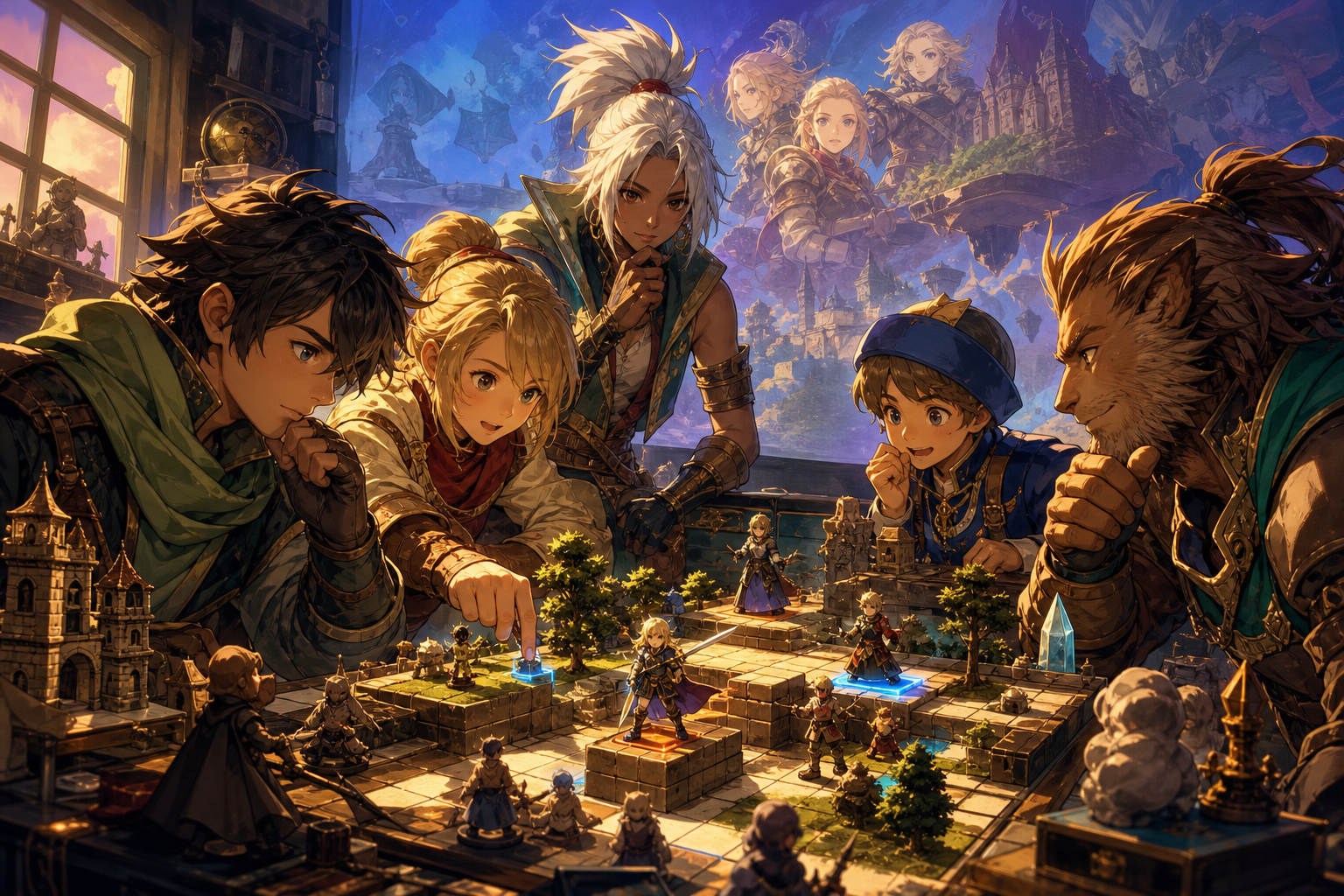
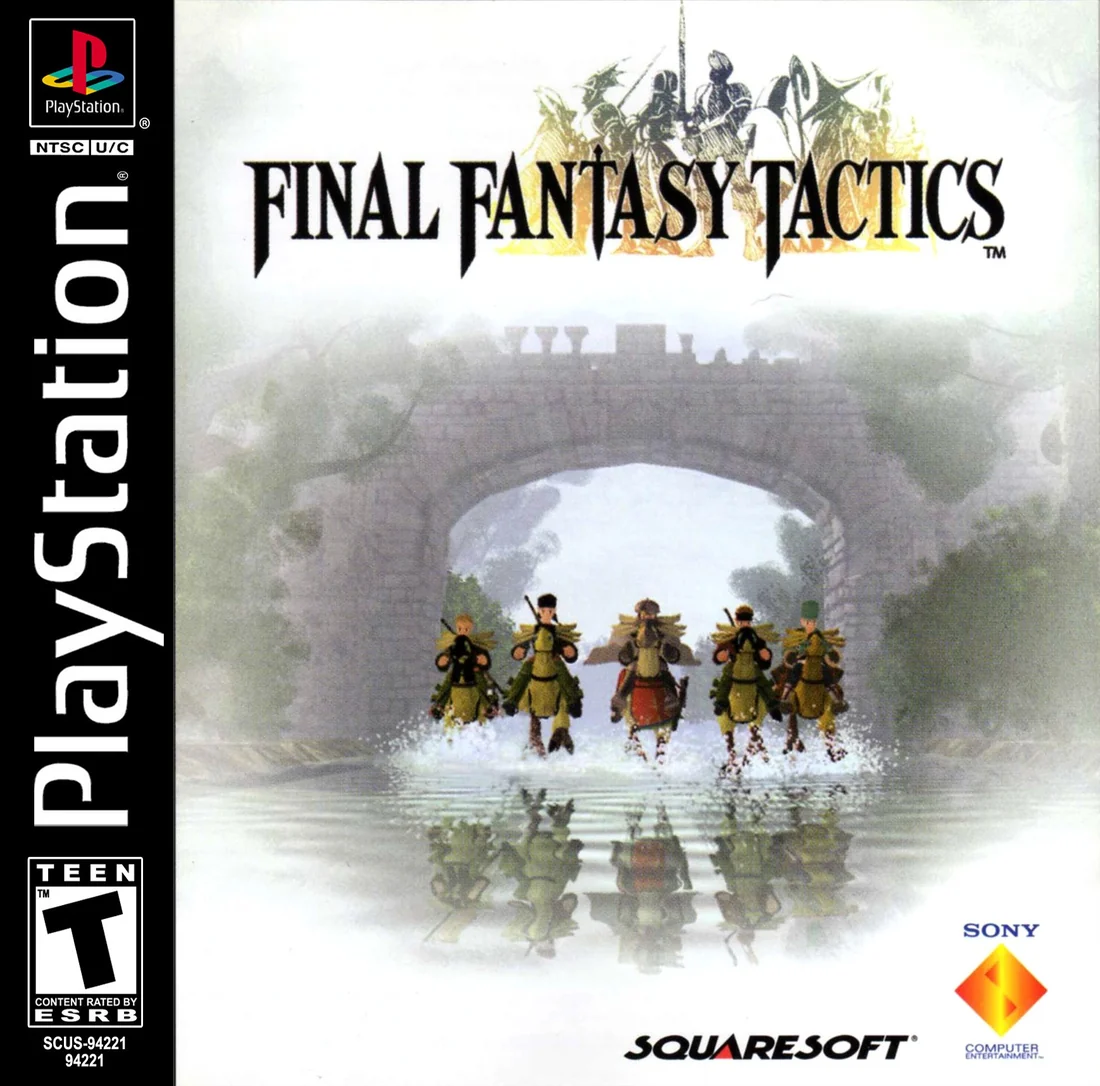
Final Fantasy Tactics is the strongest overall choice because its combat, progression and story reinforce one another. Battles take place on grid-based maps where height, facing, movement and ability range shape every decision. A character’s job affects what they can do, but the job system becomes especially powerful when abilities can be learned, combined and carried into new roles. That structure makes party building an ongoing design exercise rather than a one-time choice.
The game’s political story gives those battles context. Conflicts over succession, class and power are not decorative background; they shape the campaign’s tone and explain why armies, institutions and individuals collide. Final Fantasy Tactics can be demanding, particularly when a player enters a battle without understanding its objective or the value of preparation. It is also less immediately welcoming than a straightforward menu-driven RPG. Those drawbacks do not weaken its identity. They explain why it remains the best PlayStation RPG for players who want every map, class decision and recruited character to contribute to a larger tactical framework.
- Best fit: players who want deep job experimentation and map-based tactical battles.
- Tradeoff: its difficulty spikes and opaque objectives can punish unprepared parties.
The original PlayStation’s RPG legacy is strongest when viewed as a collection of design experiments rather than a single golden formula. Wild Arms uses tools and puzzles, Grandia makes turn order visible, Parasite Eve turns movement into survival, Vagrant Story makes equipment the central mystery, and Suikoden II treats recruitment as world-building. Even the more traditional entries find ways to establish a clear personality.
Final Fantasy Tactics takes the top position because its combat map, job system and political story form one unusually coherent design. But the best choice depends on what kind of role-playing experience you want: a focused hybrid, an enormous recruitable adventure, a cinematic party journey or a system-heavy tactical campaign. That range is what keeps the PlayStation RPG library worth revisiting.