A famous-name list can still produce a repetitive shelf. Ten celebrated action adventures may look impressive together, but they can leave a collection without a long-form RPG, a stealth game, a horror experience, or something designed around movement rather than combat. This selection starts with a different question: what activity does each game add?
The order is therefore not a universal quality ranking. It weighs role clarity, meaningful differences from the other nine games, accessibility for a new player, and the friction that defines each experience. Every entry is the original PlayStation 2 edition named here, not a later remake, HD collection, Director’s Cut release, or another platform version.
How this collection is organized
The ten games are divided by the reason you might reach for them. Some are quick, directed adventures; others demand a longer commitment or a willingness to sit with unusual pacing. The list includes overlapping broad genres, but each overlap has a practical distinction: Ratchet & Clank is colorful platform-shooting, while God of War is a direct melee spectacle; ICO is a companion puzzle game, while Shadow of the Colossus is a sequence of giant traversal-and-boss problems.
That distinction matters when choosing physical copies. Check the title, region, and edition before buying, particularly with Silent Hill 2, which received multiple PlayStation 2 releases and special packages. A later collection or remake may be an excellent way to play, but it does not represent the same original-edition object on a PS2 shelf.
- Choose roles before chasing a ranking.
- Confirm that a copy is the original PS2 release you intend to collect.
- Treat the friction notes as selection guidance, not defects that every player must overlook.
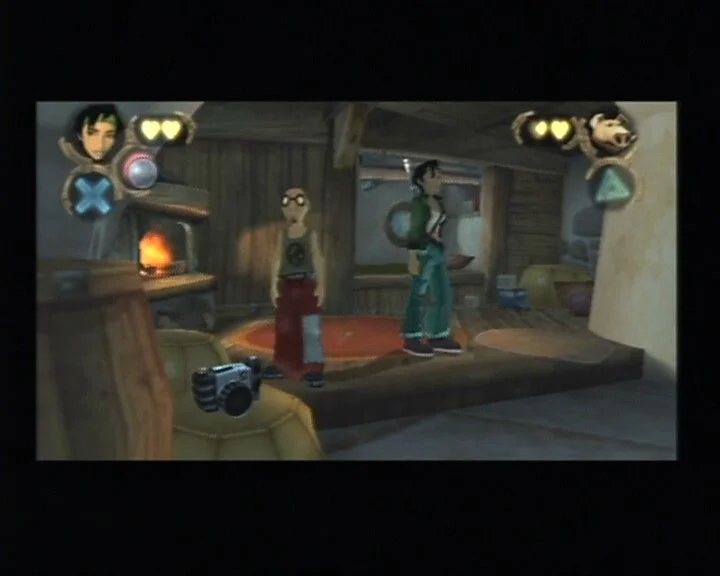
10. Beyond Good & Evil: the investigation slot
Beyond Good & Evil earns its place by making observation and evidence part of the adventure. Jade’s work includes photography, conversations, stealth, combat, vehicle travel, collectibles, and missions that ask for more than simply clearing a room. The photography angle gives the game a civic and investigative flavor that none of the other nine provides. Its hovercraft travel, pearls, vehicle upgrades, and mixed mission structure create a distinctive mixture of fieldwork and progression.
The tradeoff is uneven rhythm. A story mission, stealth passage, vehicle section, and optional collecting task do not always create the same kind of momentum. That variety is exactly why it belongs in a broad collection, but readers seeking a single polished activity may find the transitions distracting. Start here if you want a compact adventure with personality and investigation rather than another combat-first campaign.
- Best for: players who enjoy photography, evidence gathering, and mixed mission types.
- Main friction: pacing shifts between stealth, vehicles, combat, and optional collecting.
- Sensible starting point: begin when you want something smaller and more experimental than a long RPG.
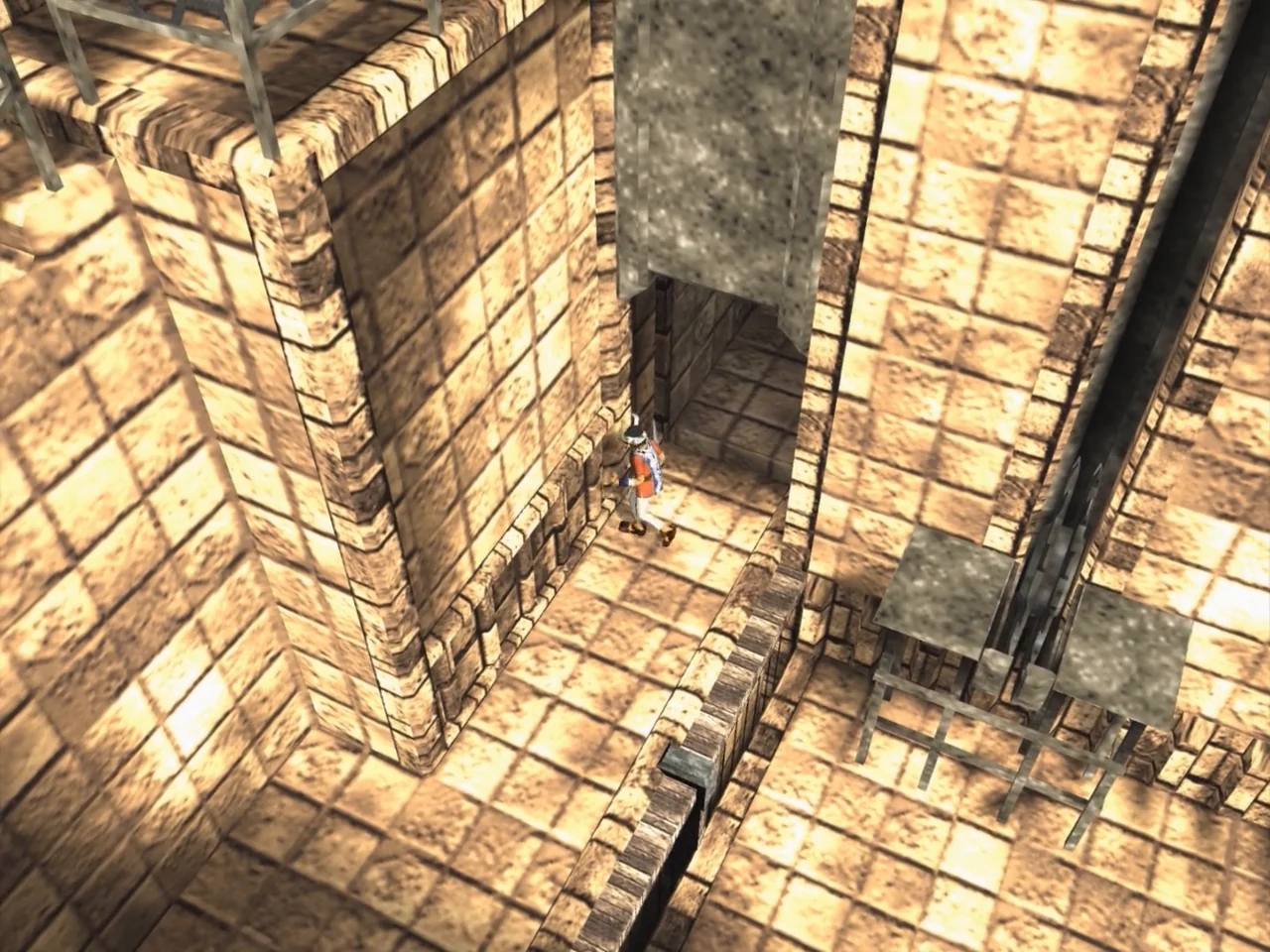
9. ICO: the companion puzzle slot
ICO builds its identity around reading spaces and protecting Yorda while moving through a mysterious fortress. The challenge is less about building a powerful character than understanding doors, switches, ledges, routes, and the consequences of leaving a companion behind. Yorda is not merely a story passenger; her presence changes navigation and gives ordinary movement a continuing responsibility. That makes ICO a useful counterweight to the combat-heavy games elsewhere in this list.
Its deliberate pace is both its attraction and its main barrier. The game offers quiet stretches, restrained storytelling, and puzzles that expect careful observation rather than constant rewards. Readers who dislike escort mechanics should not treat it as essential just because it is highly regarded. Start with Prince of Persia or Ratchet & Clank if you want more immediate feedback, then return to ICO when a slower, spatially focused adventure sounds appealing.
- Best for: players who like environmental puzzles, atmosphere, and companion responsibility.
- Main friction: escorting and interpreting spaces can feel slow when you want direct action.
- Sensible starting point: play it when you want a compact change of pace, not as a substitute for a combat game.
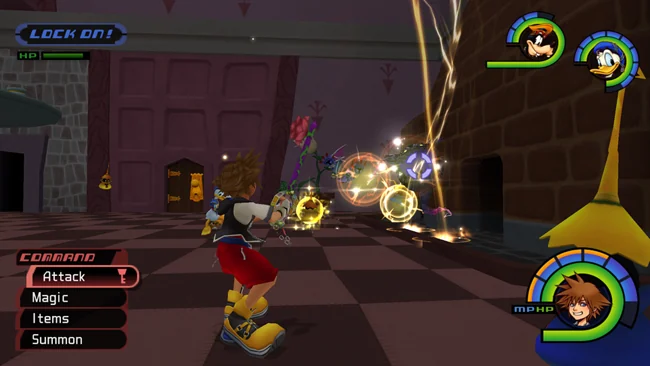
8. Kingdom Hearts: the crossover action-RPG slot
Kingdom Hearts gives the shelf a real-time action-RPG built around recognizable Disney-inspired worlds and a Square-created cast. Battles are immediate rather than turn-by-turn, while exploration, equipment, party management, and progression connect the separate settings. It is a useful bridge for someone who wants role-playing structure without committing to the slower planning rhythm of Final Fantasy X.
That difference also explains why the two games should not be collapsed into one RPG category. Final Fantasy X emphasizes visible turn order, deliberate party choices, and a more formal development system. Kingdom Hearts asks for movement, timing, positioning, and comfort with a dense crossover premise. Its story presentation can be earnest and crowded, so it suits readers who enjoy maximalist character combinations. Start here if real-time combat matters more to you than carefully sequencing every turn.
- Best for: players who want action combat, party play, and crossover worlds.
- Main friction: story density and real-time encounters may not suit deliberate RPG players.
- Sensible starting point: choose it before Final Fantasy X when you want an RPG that feels active from moment to moment.
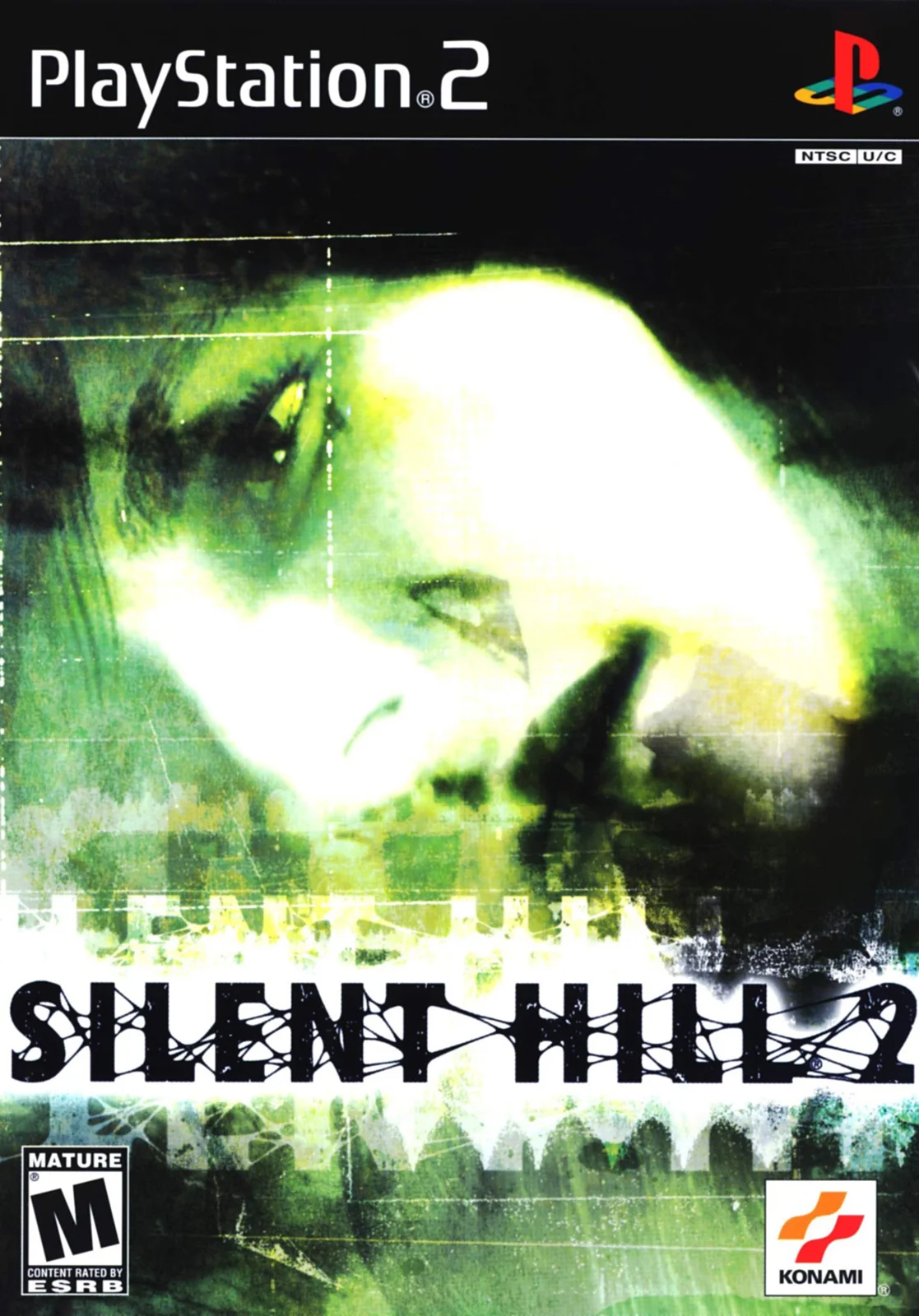
7. Silent Hill 2: the psychological horror slot
Silent Hill 2 supplies the collection’s most specialized mood. Exploration, environmental puzzles, cinematic framing, resource-limited combat, and oppressive uncertainty work together to create psychological survival horror rather than an ordinary action campaign. Its mature themes include grief, guilt, obsession, sexuality, and mental distress. Those subjects are important context for choosing the game, but explaining their later meanings would spoil the experience.
The friction is intentional discomfort. Progress may involve searching dim spaces, interpreting clues, and managing supplies while combat remains a source of danger rather than empowerment. It should not be recommended as a general-purpose action game or treated as an obligation for completing a PS2 starter shelf. Start here only if you actively want horror and mature psychological subject matter. Readers who dislike that material can leave this specialist slot empty without creating a problem elsewhere in the collection.
- Best for: players seeking atmosphere, interpretation, and psychological survival horror.
- Main friction: mature themes, anxiety, limited resources, and deliberately uncomfortable exploration.
- Sensible starting point: use the original PS2 edition that matches your regional collecting goal and avoid spoilers before playing.
6. Ratchet & Clank: the platform-shooting slot
Ratchet & Clank is the friendliest entry point into this group because it combines platforming, gadgets, puzzles, weapons, multiple planets, and a playful tone. Its weapon variety encourages experimentation, while revisiting earlier areas and side activities such as turret sections and space combat broaden the campaign beyond a single repeated encounter type. The result is more colorful and forgiving in spirit than the list’s heavier action games.
It earns a separate slot from God of War through friction and texture. God of War is built around forceful melee combat and large confrontations; Ratchet & Clank asks you to switch between movement, shooting, gadgets, and platforming. That makes it a strong first purchase for a new PS2 collection, especially when the goal is to establish variety quickly. Its main limitation is that players wanting solemn drama or a slow-burn mystery may find its humor and weapon-focused design too light.
- Best for: players who want approachable platforming, shooting, gadgets, and colorful worlds.
- Main friction: its playful tone and weapon sandbox may feel too light for horror or serious drama fans.
- Sensible starting point: make it one of the first three games in a new collection.
5. Metal Gear Solid 2: Sons of Liberty: the stealth-and-systems slot
Metal Gear Solid 2 changes the question from “How do I defeat this room?” to “How do I understand this room without being noticed?” Observation, concealment, equipment, patrol patterns, alert states, and decisions about when to avoid conflict give it a systems-focused identity. The game rewards attention to surroundings and experimentation with the tools available, making it substantially different from the direct combat games.
Its largest friction is not mechanical difficulty alone. Long conversations, codec sequences, scripted events, and sharp pacing changes are central to the experience. The narrative structure can be divisive, and the game expects patience with story delivery that frequently interrupts play. That is a meaningful collecting criterion, not a footnote. Start here if you enjoy stealth and dense story presentation; choose Ratchet & Clank or Prince of Persia first if you want an uninterrupted action rhythm.
- Best for: players who enjoy patrol observation, concealment, equipment, and systems.
- Main friction: frequent story interruptions and a demanding, unusual narrative structure.
- Sensible starting point: begin with it when stealth itself is the reason you want another PS2 game.
4. Prince of Persia: The Sands of Time: the traversal slot
Prince of Persia: The Sands of Time is the cleanest movement-led adventure in the set. Acrobatic traversal, timing-based platforming, environmental puzzles, sword combat, and the Sands mechanic form a coherent language: observe a route, commit to movement, and use the ability to reverse mistakes when a jump or fight goes wrong. Its guided structure makes it easier to approach than the more open-ended or systems-heavy entries.
The principal friction is visual timing and spatial confidence. The game is not asking you to optimize a character build or manage a large inventory; it asks you to read surfaces, judge momentum, and respond to a sequence of physical challenges. That makes it an excellent starting point for someone who wants a clear adventure with a strong pace. It also separates itself from Ratchet & Clank by putting traversal at the center rather than treating movement as one part of a weapons playground.
- Best for: players who want acrobatics, environmental puzzles, and a directed adventure.
- Main friction: platforming demands timing, route reading, and confidence with movement.
- Sensible starting point: use it as the first game when you want action without RPG preparation or stealth management.
3. God of War: the combat spectacle slot
God of War supplies the collection’s most direct combat showcase. Combo-based melee, ranged attacks, platforming, environmental puzzles, and large encounters combine into an experience designed to keep physical action in the foreground. It fills a role that neither Prince of Persia nor Ratchet & Clank quite covers: the pleasure of learning a forceful combat vocabulary and applying it against escalating groups and set pieces.
The overlap with those games is useful rather than redundant. Prince of Persia is about movement and recovery from mistakes; Ratchet & Clank is about weapons, gadgets, and playful platform-shooting; God of War centers melee pressure and spectacle. Its mature violence and aggressive tone may not suit every shelf, and readers looking for quiet exploration should start elsewhere. For a collector who wants one obvious action-heavy representative, however, this is the clearest choice.
- Best for: players who want immediate melee combat, combos, ranged attacks, and spectacle.
- Main friction: mature violence and a more aggressive tone than the platform-focused entries.
- Sensible starting point: choose it after Ratchet & Clank if you want to compare playful shooting with heavier melee action.
2. Final Fantasy X: the long-form RPG slot
Final Fantasy X gives the collection its substantial role-playing commitment. Its turn-based battles use a visible turn order, allow party-member changes during encounters, include Aeons, and connect character growth to the Sphere Grid. Those systems make it materially different from Kingdom Hearts: battles invite deliberate planning and party composition rather than continuous movement and real-time attacks.
The commitment extends beyond combat. The original PS2 manual identifies Save Spheres as field save points and notes that each save file uses at least 64KB on a PS2 Memory Card. That makes save planning a practical part of the original-hardware experience, particularly for a collector sharing limited card space across several games. Start here when you want a long journey, structured progression, and a story that rewards sustained attention. Do not choose it merely because your collection “needs an RPG” if you are currently looking for a short session.
- Best for: players who want turn planning, party swapping, Aeons, and character development.
- Main friction: long-form commitment and greater save-management pressure than most entries here.
- Sensible starting point: make it the third opening purchase after Ratchet & Clank and Prince of Persia when you are ready for a larger project.
1. Shadow of the Colossus: the scale-and-boss-puzzle slot
Shadow of the Colossus gives the collection its most unusual large-scale activity. Instead of filling a map with ordinary enemy-clearing, it structures the adventure around sixteen colossus encounters. Exploration, environmental interpretation, climbing, grip management, and finding a route across a moving body are the central verbs. The result feels closer to solving a sequence of enormous physical puzzles than progressing through a conventional action campaign.
It should not be treated as a second ICO. Both games reward patience and spatial reading, but ICO is a compact companion-and-puzzle adventure, while Shadow is built around solitary travel and giant set-piece confrontations. The main friction is the commitment to searching for each encounter and learning how its environment works. Start here when you want scale, quiet travel, and boss fights that ask for observation instead of a standard combat routine. Its role is so distinct that it can anchor a small collection by itself.
- Best for: players who want exploration, climbing, grip management, and colossal encounters.
- Main friction: solitary travel and environmental interpretation replace constant conventional combat.
- Sensible starting point: choose it when you want the collection’s most singular experience, not simply another action game.
How to choose your first three
A varied starter trio should cover different rhythms immediately. Ratchet & Clank is the safest approachable choice because it combines movement, weapons, gadgets, and light platforming. Prince of Persia adds a directed movement challenge without repeating Ratchet’s shooting focus. Final Fantasy X then supplies the long-form RPG commitment that neither shorter action adventure represents.
Other preferences point to different openings. Choose Metal Gear Solid 2 for stealth, Shadow of the Colossus for scale, or ICO for quiet companion puzzles. Choose Silent Hill 2 only when psychological horror and its mature themes are specifically welcome. Choose Kingdom Hearts when you want an active RPG rather than turn-based planning. Choose Beyond Good & Evil when investigation and mixed activities matter more than mechanical purity. God of War is the straightforward pick for a combat-first shelf.
- Approachable variety: Ratchet & Clank, Prince of Persia, Final Fantasy X.
- Quiet and unusual: ICO, Shadow of the Colossus, Beyond Good & Evil.
- Heavy or specialized moods: God of War, Metal Gear Solid 2, Silent Hill 2.
- Action-RPG crossover: Kingdom Hearts.
The best ten-game PS2 collection is not necessarily the one with the ten most repeated recommendations. It is the one that gives you a reason to choose a different disc on a different night: a long RPG after a short platformer, stealth after melee combat, horror after cheerful exploration, or a giant encounter after a quiet puzzle.
If you are building gradually, start with Ratchet & Clank, Prince of Persia, and Final Fantasy X for the broadest foundation. Add the specialist games according to your tolerance for escort mechanics, story interruptions, mature themes, or solitary exploration. That approach keeps every purchase tied to a missing experience instead of turning the shelf into ten variations on one familiar adventure.