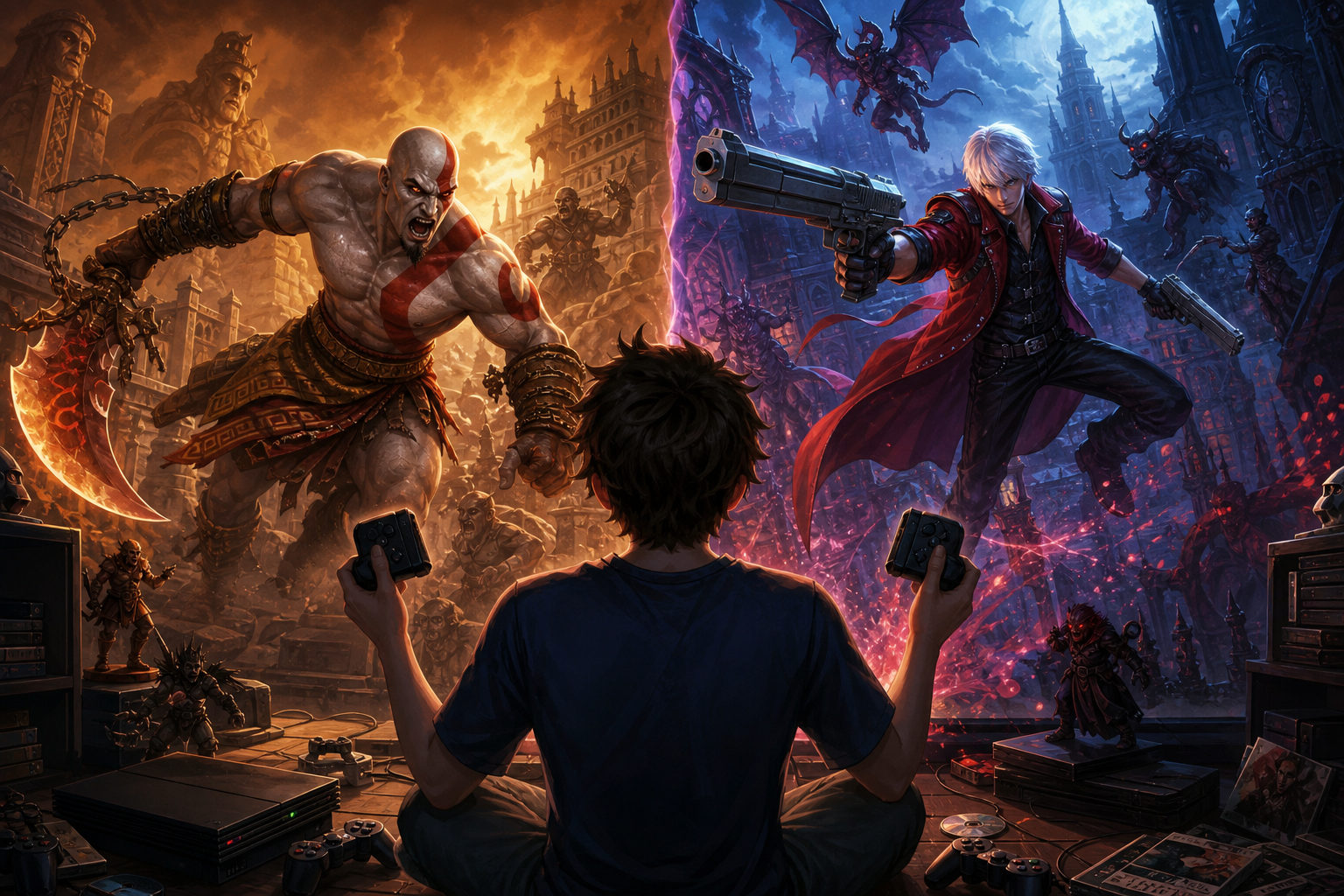
God of War and Devil May Cry are often grouped together as influential PlayStation 2 action games. That comparison is useful, but only up to a point. The original 2005 God of War is a directed adventure built around steady ability growth, environmental puzzles and large combat set pieces. The original 2001 Devil May Cry is a mission-based action game that expects more experimentation, route memory and repeated practice.
The important choice is not which game has more attacks or the tougher reputation. It is how each game teaches. God of War usually explains progress through new abilities, visible upgrades and clear immediate objectives. Devil May Cry asks you to learn enemy behavior, spacing, room layouts and performance rules, then demonstrates your progress through mission results. Both can reward mastery, but they make different kinds of players feel that mastery happening.
The short decision: campaign momentum or combat examination?
Choose God of War if you want a substantial adventure that steadily introduces tools and lets those tools make you feel stronger. Its combat, platforming, puzzles and cinematic encounters are arranged as parts of one forward-moving campaign. A failed attempt normally costs progress within a challenge rather than forcing you to reconsider the entire mission structure.
Choose Devil May Cry if you want each mission to expose your habits. It rewards players who repeat encounters to understand enemy reactions, improve positioning, reduce damage and finish with a better result. The game is less interested in making every attempt feel smooth than in giving you reasons to refine the attempt that came before.
That distinction also explains why a player can enjoy one and bounce off the other. God of War makes learning feel like expansion: you acquire more options. Devil May Cry makes learning feel like correction: you discover why the option you already had was not being used well enough.
- Pick God of War for guided progression, frequent upgrades and a lower penalty for ordinary failure.
- Pick Devil May Cry for mission grades, repeated practice and combat improvement that remains visible after the campaign.
Combat goals: power, control and style
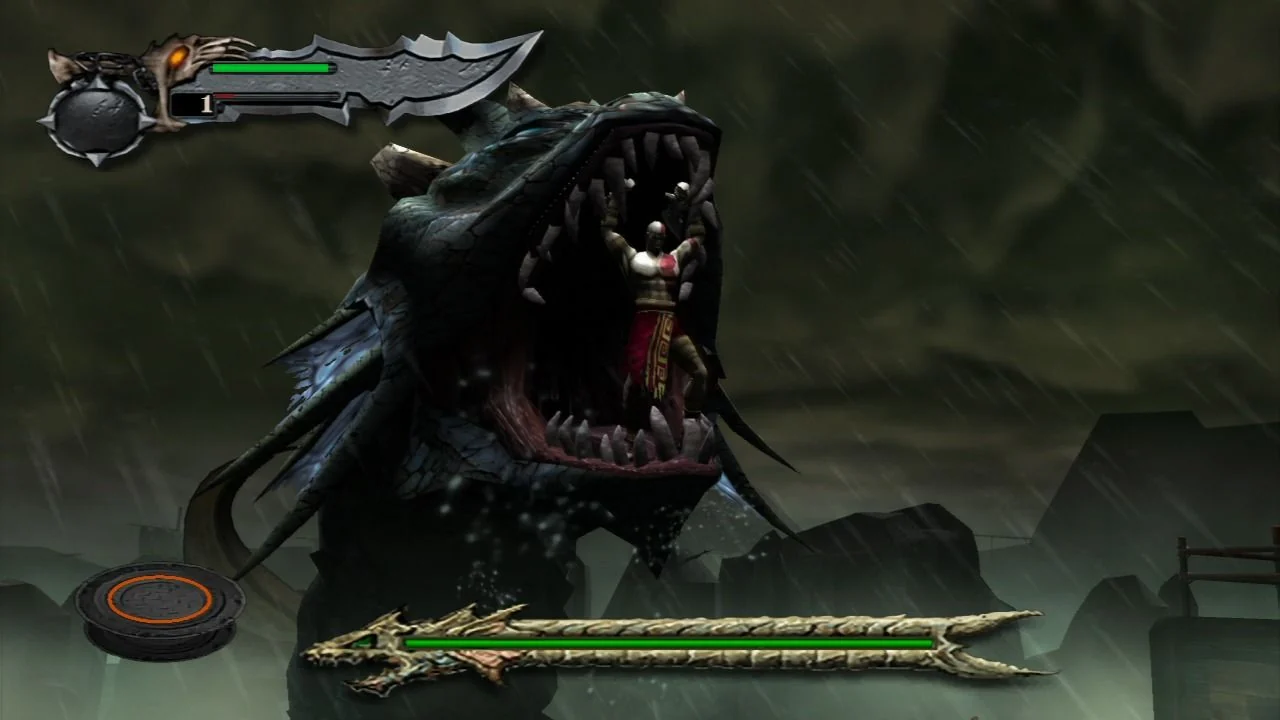
God of War gives Kratos a broad action vocabulary without making the player manage a character build in the role-playing-game sense. Normal and heavy attacks, grabs, jumping, blocking, dodging, magic and Rage of the Gods all have obvious battlefield purposes. Grabs and contextual finishing prompts help turn a dangerous group into a sequence of manageable decisions, while magic offers a way to reshape a crowded encounter when ordinary attacks are not enough.
Its combat goal is therefore readable dominance. You identify a threat, choose a strong response and use the growing toolset to control the room. The game still asks for timing and positioning, but it generally communicates the immediate problem through enemy placement, prompts and environmental framing. Players who like to feel their character become more capable will find that structure reassuring.
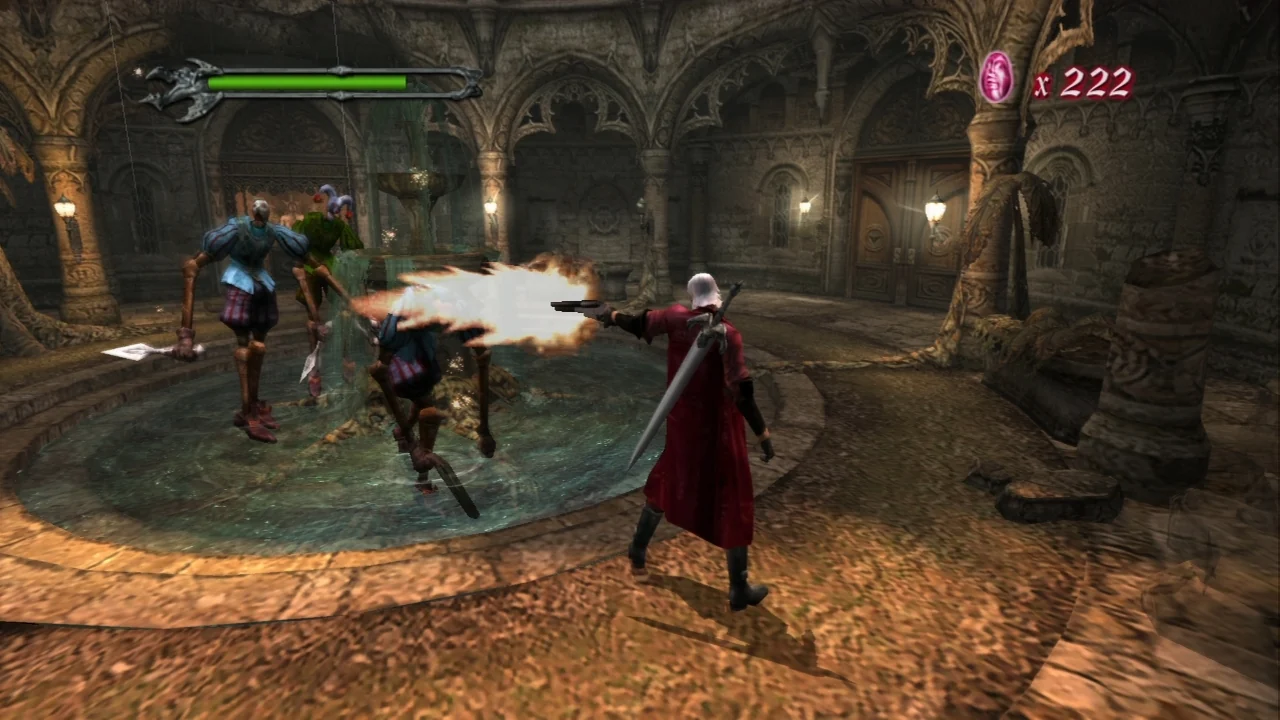
Devil May Cry has a more deliberate separation between close and long range. Dante combines melee weapons and firearms, uses lock-on targeting, jumps and evasive movement, and can enter Devil Trigger. Different weapons are not just cosmetic alternatives: range, timing and enemy reactions affect which tool makes sense. Firearms can maintain pressure or manage distance, while sword attacks demand more commitment.
Its combat goal is controlled expression. The combat style ranking rewards continued offense, variation and avoidance of damage, so simply surviving is not the whole task. The game wants you to understand when to attack, when to disengage and how to keep an encounter from collapsing into repetitive button presses. God of War asks, “Can you overcome this room?” Devil May Cry increasingly asks, “Can you overcome it cleanly?”
- Favor God of War if blocking, grabs, magic and direct finishers sound more appealing than maintaining a style rhythm.
- Favor Devil May Cry if lock-on, weapon switching, spacing and varied attacks are the parts you most want to study.
How the two games teach combat
God of War’s teaching is layered into the campaign. New weapons, magic abilities and upgrade purchases expand the range of possible solutions. Encounters then give you opportunities to apply those additions before the game introduces another complication. This approach does not remove the need to learn, but it makes the learning path easy to recognize: understand the new tool, spend red orbs carefully and notice how it changes a familiar kind of problem.
That structure suits players who need context before complexity. A new attack has a visible place in the overall adventure, and an upgrade can make a previously awkward enemy group feel more manageable. The risk is that a player may lean too heavily on the most comfortable upgraded option and postpone learning the full system. The campaign remains approachable, but its generosity can hide weaknesses until later challenges ask for more flexibility.
Devil May Cry provides fewer such safety rails. It gives Dante several tools, but it expects the player to infer what enemies invite, resist or punish. Rooms and missions are part of the lesson. Repeating an area can reveal an attack tell, a safer angle or the amount of space needed for a particular move. Improvement often comes from recognizing a pattern rather than unlocking a replacement for the mistake.
That makes Devil May Cry a stronger fit for players who enjoy deliberate repetition. It can also feel opaque when a player expects a new ability to solve a problem automatically. The game’s lesson is usually not “buy a stronger answer.” It is “understand the situation well enough to choose the right existing answer.”
- God of War teaches through progression and escalation; Devil May Cry teaches through observation and repetition.
- If you prefer learning one new system at a time, start with God of War. If you enjoy extracting rules from failure, start with Devil May Cry.
Resource management: upgrades versus survival choices
In God of War, red orbs are primarily upgrade currency. Combat and exploration provide opportunities to collect them, then the player chooses whether to improve weapons, add magic options or strengthen tools already in use. That creates a meaningful spending decision without turning the campaign into an inventory spreadsheet. Green orbs restore health, blue orbs restore magic, and the flow of those resources affects whether a player can enter the next encounter aggressively or cautiously.
The best way to think about this economy is as planned power. Spending everything immediately may improve the attacks you use most often, while saving can preserve flexibility for another weapon or spell. There is no need to treat red orbs as conventional experience points. They are a currency that lets the player shape which part of Kratos’s combat identity develops first.
Devil May Cry also uses red orbs, but their role sits closer to a survival-and-performance budget. They can be spent at Divinity Statues and mission shops on abilities, items and other useful options. Because mission performance considers more than simply reaching the exit, using supplies can carry a cost beyond the immediate room. A healing item may save an attempt while also making a high result harder to achieve.
This creates a sharper tension between security and evaluation. God of War’s resources mostly ask how you want to grow. Devil May Cry’s resources also ask how much assistance you are willing to consume before the mission judges the result. Players who like making a build-like priority list may prefer God of War; players who like preserving a clean run may prefer Devil May Cry.
- Spend God of War red orbs according to the attacks and magic you genuinely use, rather than spreading upgrades automatically.
- In Devil May Cry, treat healing and other purchased help as part of the mission decision, not as consequence-free emergency buttons.
Checkpoints, saves and the cost of failure
God of War separates manual saving from in-level recovery. Save Altars let you record campaign progress, while checkpoints can return Kratos to a recent challenge after death. That distinction matters during platforming, puzzle timing and extended combat sequences. A checkpoint is not a replacement for saving your overall progress, but it reduces the emotional cost of trying a difficult section again.
This arrangement supports experimentation. You can attempt a different spell, test a more aggressive route through an arena or take another run at a traversal sequence without automatically losing the entire surrounding segment. The game can still punish carelessness, especially when a player relies on a checkpoint and stops making manual saves, but its ordinary retry rhythm favors forward momentum.
Devil May Cry treats failure more harshly through its mission framework. Yellow Orbs act as limited continuation resources after death, returning Dante to a recent door or checkpoint when spent. Without one, the player may have to restart the mission from the beginning. Saving is important, but it does not function like a modern automatic record of every current position inside a mission.
That difference changes how players approach risk. In God of War, failure usually encourages another attempt at the immediate obstacle. In Devil May Cry, failure can make the player reconsider item use, route knowledge and whether the current mission is being approached as practice or as a serious result attempt. If you dislike repeating completed rooms, God of War is the safer choice. If limited retries make improvement feel meaningful, Devil May Cry gains appeal.
- Use God of War’s manual saves deliberately even when a checkpoint has recently appeared.
- In Devil May Cry, conserve Yellow Orbs when possible and recognize that mission restarts are part of the original structure, not a modern autosave failure.
Exploration, objectives and camera friction
God of War’s adventure structure is comparatively directed. Combat arenas, platforming, environmental puzzles and story progression are woven into a forward route. There are still moments that ask you to inspect the surroundings or understand an interaction, but the immediate objective is usually framed clearly enough to keep the campaign moving. The fixed camera can limit visibility, yet the composition often points attention toward the next fight, ledge, mechanism or doorway.
Devil May Cry’s castle-and-mission structure asks for more memory. Doors, key items, enemy rooms and environmental interactions connect through backtracking, and the player may need to remember a route rather than simply follow the next dramatic set piece. Exploration can include hidden routes and secret challenges, which makes curiosity valuable but also makes wandering part of the learning burden.
Both games use fixed cameras, so neither offers unrestricted modern third-person control. The difference is how much the camera becomes part of the game’s knowledge test. God of War more often uses its viewpoint to frame a directed challenge. Devil May Cry more often asks you to compensate for an obstructed angle by knowing where threats usually enter, how much room Dante needs and when to reposition before the camera changes.
This is a tradeoff rather than a simple technical defect. Fixed views can create tension, guide attention and give rooms a deliberate visual shape. They can also hide enemies, obscure movement paths or make a familiar action feel unreliable until the player learns the space. Readers who want exploration to support a larger cinematic journey should lean toward God of War. Readers who enjoy mapping a hostile place through repetition may find Devil May Cry more rewarding.
- Choose God of War for guided traversal and puzzles that support a continuous adventure.
- Choose Devil May Cry if remembering rooms, doors and routes sounds like part of the appeal rather than an interruption.
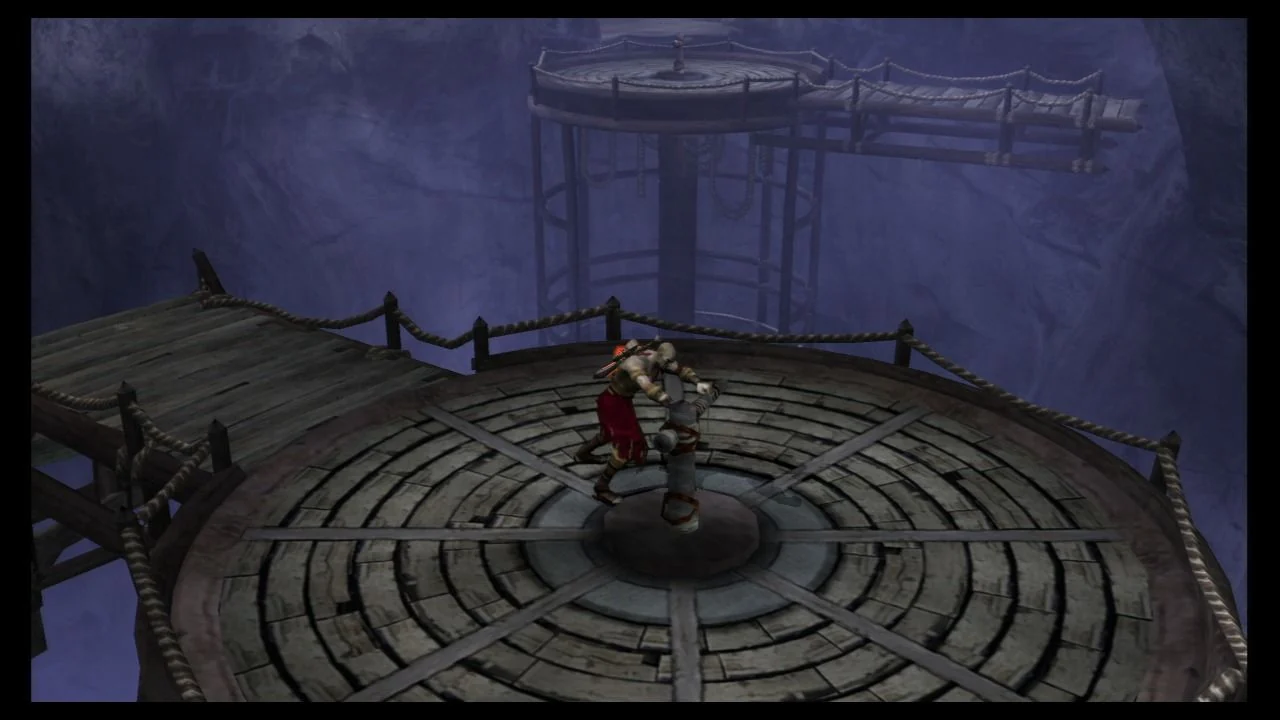
Difficulty choices and what they really change
The original God of War offers four named difficulty settings: Mortal, Hero, Spartan and God. God difficulty is unlocked after completing the game on Mortal, Hero or Spartan. For a first run, the most useful decision is not whether the hardest label sounds attractive; it is whether you want room to learn the upgrade economy, combat spacing and puzzle rhythm before adding greater pressure.
Its difficulty structure works well with the game’s campaign teaching. A player can complete the adventure, understand which tools feel natural and then return at a higher setting with better knowledge of the system. Challenge of the Gods provides a separate challenge-based reason to continue after the main campaign, so replay does not depend only on raising the difficulty.
Devil May Cry’s original PS2 release includes Normal, Hard and Dante Must Die difficulty paths, along with an Easy Automatic route that can become available early under particular recovery or continuation circumstances. The exact availability and wording can vary across versions, so it is best to think of Easy Automatic as a reactive accessibility path rather than a standard menu equivalent across every edition.
The deeper difference is what difficulty is testing. God of War mainly increases the pressure placed on a campaign toolkit. Devil May Cry’s harder settings expose knowledge gaps in enemy behavior, movement and resource use. A player who wants a clean first completion should not treat either game’s hardest setting as the default measure of enjoyment. The right setting is the one that leaves enough attention for learning the kind of action the game is actually asking you to learn.
- Begin God of War on the setting that leaves room to understand upgrades and encounter roles.
- Approach Devil May Cry’s harder modes as a second learning phase focused on enemy knowledge and execution, not merely larger damage numbers.
Replay incentives: challenge tasks or measurable refinement
God of War’s replay value is built around the completed adventure. Higher difficulty, upgrades and Challenge of the Gods give players reasons to return after they know the route. A second run can feel cleaner because the player understands which abilities deserve investment and which encounters reward a particular response. The satisfaction comes from turning a dramatic campaign into a more controlled one.
That design favors completion-minded players. You may replay because you want a tougher version of the same journey, because you want to use the upgrade system differently or because the challenge tasks offer a distinct test. The game does not need to grade every mission to make improvement visible; the comparison is between how the campaign felt before and after you learned it.
Devil May Cry makes replay performance more explicit. Numbered missions produce results influenced by completion time, red orbs gathered, damage taken, item use and combat performance. The style system adds another layer by rewarding offensive variety and pressure without damage. This turns a finished mission into a document of what still needs work.
That structure is especially attractive to players who enjoy self-imposed targets. You can replay a room to improve spacing, revisit a mission to reduce wasted movement or pursue a stronger result without needing new story content. The tradeoff is that the game’s evaluation can make a merely successful run feel incomplete. God of War more often says, “You made it farther.” Devil May Cry more often says, “Now make that success cleaner.”
- Replay God of War when you want a tougher or more polished campaign route.
- Replay Devil May Cry when you want visible evidence that your timing, movement, resource use and combat variety have improved.
Which PS2 action style fits your learning habits?
God of War is the stronger first choice for players who want combat to sit inside a clearly directed adventure. Its upgrades provide an understandable sense of growth, its resources support planning without overwhelming the campaign, and its checkpoints make ordinary experimentation less costly. You still need to learn blocking, dodging, magic selection and enemy control, but the game usually gives you a clear reason to learn each tool.
It is also the better fit if you prefer a mixture of action, puzzles, platforming and spectacle rather than a campaign organized primarily around combat evaluation. The fixed camera can still create awkward moments, and the most generous parts of the progression may let players avoid fully understanding every option. Those are fair tradeoffs for the momentum and clarity it provides.
Devil May Cry is the better choice for players who want the game to notice their habits. Its mission structure, style system, enemy patterns and resource costs make improvement concrete. It rewards patience with rooms, a willingness to repeat sections and an interest in choosing the right weapon or movement response instead of forcing one favorite attack through every encounter.
It is less suitable if you need frequent checkpoints, dislike revisiting spaces or expect every new ability to clarify the next objective. Yet those same qualities make it compelling for players who enjoy turning confusion into knowledge. The first successful completion is only one layer; the more durable reward is recognizing why the next attempt is cleaner.
- Choose God of War for structured learning, campaign momentum, upgrades and forgiving recovery.
- Choose Devil May Cry for strict feedback, enemy study, mission scoring and repeat practice.
- If you are unsure, ask whether you would rather unlock a stronger answer or understand an existing answer more deeply.
The original God of War and Devil May Cry are not interchangeable demonstrations of PS2 action design. God of War organizes its lessons around progression: new tools, upgrade decisions, directed challenges and a campaign that keeps moving. Devil May Cry organizes its lessons around refinement: enemy knowledge, route memory, careful resources, style and mission results.
For a readable first adventure with room to grow, choose God of War. For a stricter combat school that keeps asking you to improve the quality of each success, choose Devil May Cry. The better match depends less on which game is harder than on whether your preferred way to learn is expanding your options or repeating a challenge until your decisions become precise.