The PlayStation 2 was home to far more than one kind of role-playing game. This list includes traditional Japanese RPGs, action RPGs and hybrids when they offer sustained character progression, meaningful ability or equipment choices, and a substantial adventure. Tactical RPGs are outside the boundary here so the combat comparisons remain coherent. Games such as God of War, Devil May Cry, Shadow of the Colossus and Prince of Persia: The Sands of Time may contain upgrades or exploration, but they do not qualify as RPGs for this ranking.
The order weighs combat depth, character building, world and dungeon design, narrative payoff, mechanical originality and accessibility. It evaluates the original PlayStation 2 editions rather than quietly importing features from later remasters. That distinction matters especially for Final Fantasy XII, Persona 4, Persona 3 FES and Dark Chronicle, whose later or regional versions can look very different in available content and presentation.
Regional availability also matters. Dark Chronicle is the title used in Japan and Europe, while North America received the same game as Dark Cloud 2. Persona 4 and Shin Megami Tensei: Nocturne are being judged as their original PS2 releases, not later enhanced editions. Final Fantasy X and Final Fantasy XII likewise remain separate from their later HD and Zodiac Age versions.
10. Dark Chronicle, also known as Dark Cloud 2 in North America
Dark Chronicle is one of the PlayStation 2’s most inventive action RPGs because it keeps adding new ways to interact with its world. Real-time dungeon combat sits beside weapon growth, invention, fishing, photography and the reconstruction of towns. The Georama system gives exploration a visible purpose: restoring communities changes the adventure rather than merely filling a checklist. The result is a game that feels like several charming experiments sharing one long journey.
Its breadth is also the main limitation. Weapon durability and upgrading require attention, while invention recipes and town reconstruction can make progress feel diffuse if you prefer a tightly directed campaign. The combat is enjoyable but less nuanced than the highest entries here, and the many side systems do not always reinforce one another. It is best for players who enjoy tinkering, collecting ideas and watching a damaged world become lively again. Dark Chronicle and Dark Cloud 2 are regional names for the same PlayStation 2 RPG, not separate games.
- Best fit: players who want an action RPG with invention, weapon development and town rebuilding.
- Main tradeoff: variety sometimes overwhelms the central adventure.
- Edition note: Japan and Europe used the name Dark Chronicle; North America used Dark Cloud 2.
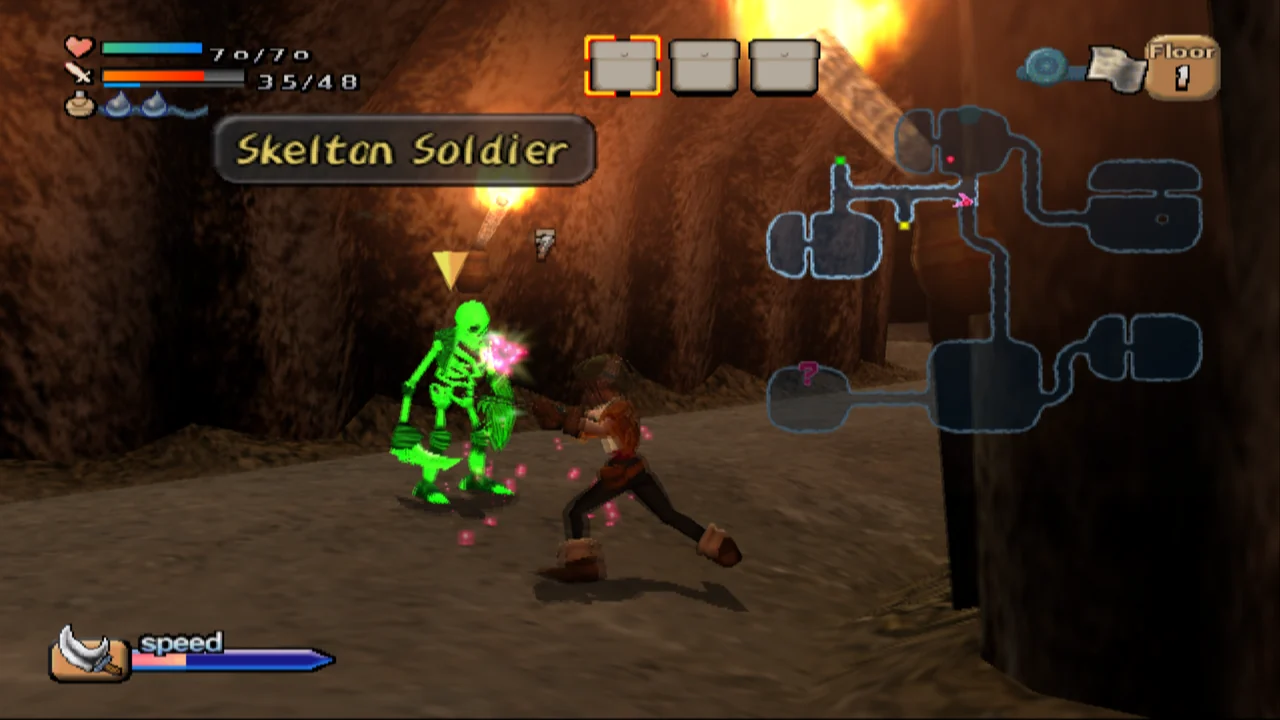
9. Rogue Galaxy
Rogue Galaxy takes the familiar structure of a party RPG and sends it into a bright spacefaring adventure. Its real-time battles are quick to understand, but party development, weapon upgrading and character abilities provide more long-term texture than a straightforward action game. Switching active characters lets different fighters answer different threats, while weapon synthesis gives equipment a reason to remain part of the player’s planning rather than becoming disposable loot.
The large scope can work against its pacing. Combat encounters and upgrade routines may begin to feel repetitive, and the story does not always maintain the same momentum as its strongest stretches. Its appeal is clearest for players who want direct control without giving up equipment, party development or the sense of a long campaign. It is less suitable for someone seeking the careful turn-by-turn planning of Persona 4 or the tightly controlled encounter design of Final Fantasy X.
- Best fit: action RPG fans who want a sizable party adventure with science-fiction flavor.
- Main tradeoff: combat repetition and uneven pacing soften its ambitious presentation.
- Why it ranks here: its systems are attractive, but the whole package is less consistently focused than the games above it.
8. Shadow Hearts: Covenant
Shadow Hearts: Covenant stands apart through its combination of supernatural history, dark comedy and the Judgment Ring. Attacks, spells and defensive actions ask for timed input, giving ordinary turn-based commands a physical rhythm. Party members also feel meaningfully different, and the setting moves beyond standard fantasy into an alternate early-twentieth-century world filled with occult threats and strange tonal contrasts.
That identity is its greatest strength and its biggest barrier. The humor can be deliberately broad beside grim subject matter, and the story benefits from familiarity with the wider Shadow Hearts continuity even though Covenant remains a substantial adventure on its own. Availability is also less straightforward than for the major Square Enix releases, particularly for players looking for a specific regional PS2 edition. Players who want a conventional, gently explained entry point may find its systems and tone unusual; players looking for something genuinely different will find much to value.
- Best fit: RPG players who want timing-based turns and an unconventional supernatural setting.
- Main tradeoff: tonal swings and regional availability make it less universally accessible.
- Standout system: the Judgment Ring turns routine commands into timing decisions.
7. Kingdom Hearts II
Kingdom Hearts II is an action RPG built around momentum. Sora’s combat grows from simple Keyblade strikes into a broad set of abilities, Drive Forms and situational options, while party members and equipment support the sense of a developing team. Its Disney and Square Enix worlds provide a varied travel structure, and the game is unusually good at using recognizable settings as spaces for battles, platforming and story scenes rather than treating them as simple decoration.
The cost of that spectacle is strategic consistency. Battles often reward aggressive movement and ability use more than careful resource planning, especially compared with the turn-based games on this list. Its story also assumes that players are willing to follow a complicated series mythology, and the original PS2 presentation should not be confused with later collections or remastered editions. Kingdom Hearts II is a strong recommendation for players who value stylish real-time combat, character drama and cinematic variety over austere tactical challenge.
- Best fit: players who want an accessible action RPG with crossover worlds and spectacle.
- Main tradeoff: story continuity can be demanding, and combat is not always deeply tactical.
- Genre note: its equipment, growth and party systems make it an action RPG rather than a pure action game.
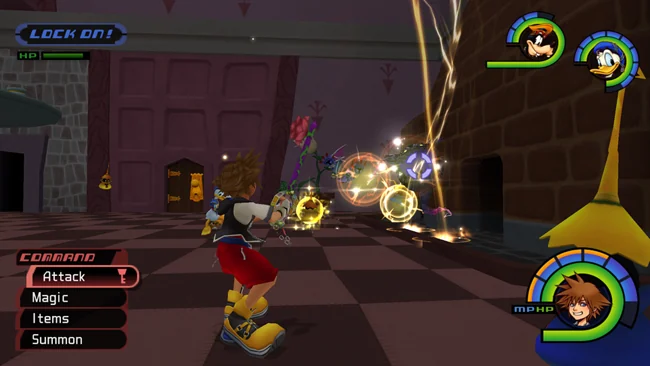
6. Persona 3 FES
Persona 3 FES combines dungeon crawling, turn-based battles, Persona fusion and a calendar-based social structure. Every day presents a planning question: strengthen relationships, improve personal attributes or prepare for the next climb through Tartarus. Social Links are not merely optional story scenes; they connect personal relationships to character development and make time itself one of the game’s central resources.
The design is powerful but repetitive by intention. Tartarus can feel uniform, and the calendar creates pressure that may frustrate players who prefer to explore at their own pace. FES is a specific PS2 edition containing the original Journey campaign and the additional The Answer scenario. It is not Persona 3 Reload, and later quality-of-life changes should not be used to describe the original release. The North American FES release is the most familiar edition for many English-speaking players, while regional availability elsewhere was more limited and varied by market.
- Best fit: players who enjoy social simulation woven directly into RPG progression.
- Main tradeoff: Tartarus repetition and calendar pressure demand patience.
- Edition note: FES includes the original Journey and The Answer; it is not the later remake.
5. Shin Megami Tensei: Nocturne
Nocturne makes preparation feel like part of combat rather than something that happens between battles. The Press Turn system rewards exploiting weaknesses and punishes wasted actions, while demon recruitment and fusion constantly push the player to rethink the party. Skill inheritance gives experimentation lasting value, and the post-apocalyptic setting is stark enough to make every new location feel isolated and hostile.
Its difficulty and sparse storytelling are deliberate, but they narrow its audience. Players who want a large cast of continuously developed human companions may find the demon-focused structure less emotionally direct. The original PS2 game also requires more tolerance for repeated battles, uncertain outcomes and long-term preparation than Final Fantasy X or Dragon Quest VIII. It ranks highly because its combat systems interact so cleanly: exploration supplies possibilities, fusion creates tools, and battles test whether the player prepared intelligently. The original North American PS2 release should not be confused with the later Nocturne HD Remaster, which adds presentation and content differences.
- Best fit: experienced RPG players who enjoy weakness exploitation, fusion and hard tactical choices.
- Main tradeoff: difficulty, repetition and limited conventional storytelling.
- Edition note: assess the original PS2 Nocturne, not later remastered additions.
4. Persona 4
Persona 4 is one of the PS2’s strongest character-driven RPGs because its investigation story and daily routine reinforce one another. School life, friendships and Social Links provide a human rhythm between dungeon visits, while elemental weaknesses and Persona fusion keep battles from becoming simple attacks followed by healing. The rural setting gives the game a distinctive sense of place, and the party feels shaped by relationships rather than existing only as a menu of combat roles.
Its dungeon structure is less imaginative than its characters, with repeated visual language and a routine that can become familiar over a long campaign. The original PS2 release should also be distinguished from Persona 4 Golden, which adds content and quality-of-life features on later platforms. The North American PS2 version launched in December 2008, and the article’s ranking applies to that original release rather than Golden’s expanded structure. Even with that limitation, Persona 4 is an excellent entry point for players who want a readable RPG foundation with substantial social systems. It asks for time, but it makes that time feel connected to the people and mysteries at the center of the story.
- Best fit: newcomers seeking a character-focused RPG with approachable turn-based combat.
- Main tradeoff: dungeon variety and pacing are less consistent than the social writing.
- Edition note: this ranking covers the original PS2 Persona 4, not Persona 4 Golden.
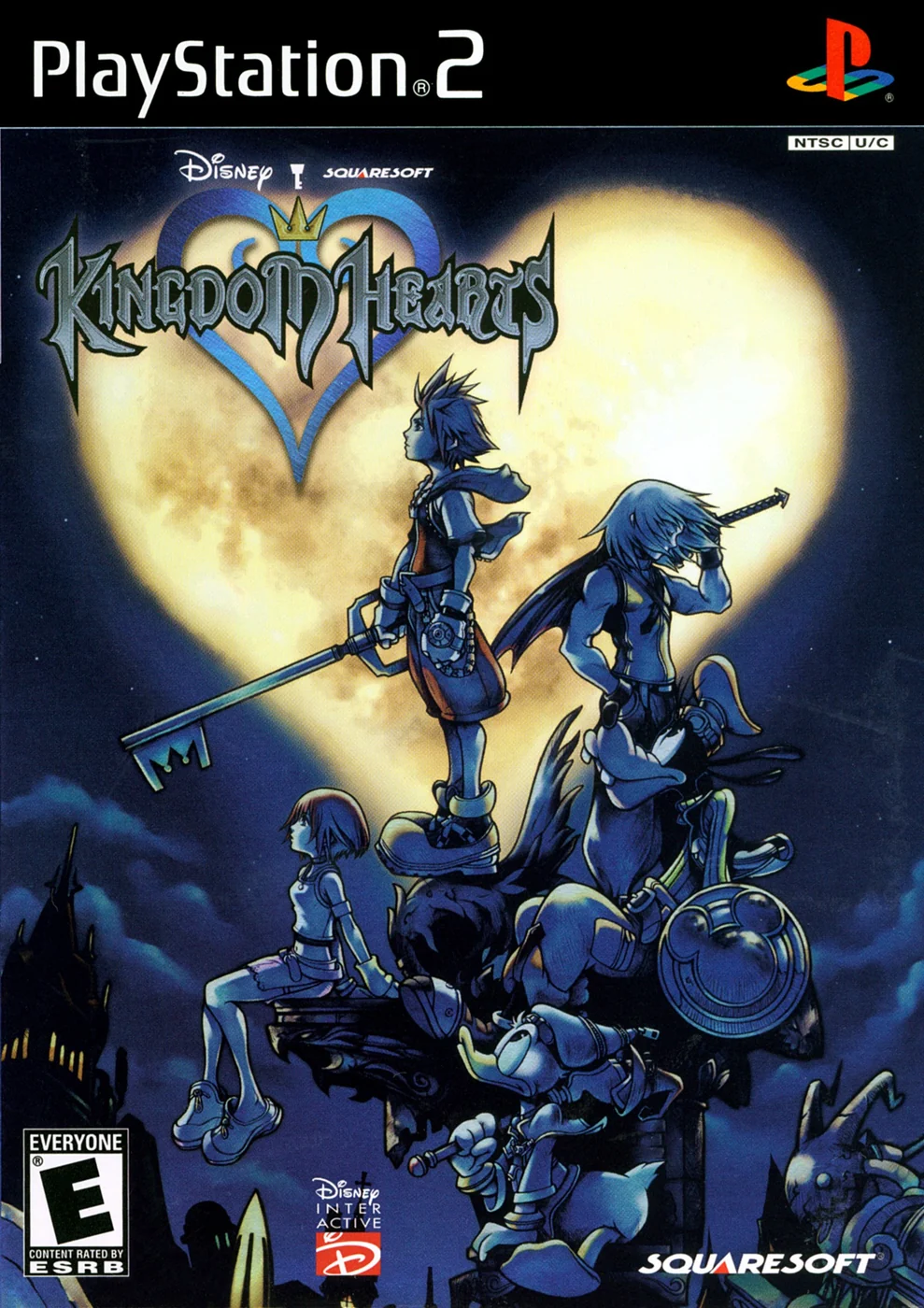
3. Dragon Quest VIII: Journey of the Cursed King
Dragon Quest VIII is a superb example of a traditional RPG made readable without becoming shallow. Its fully 3D world gives travel and discovery a strong sense of scale, while party roles remain clear enough for newcomers to understand. Skill Points let characters develop in different directions, Psyche Up adds a risk-and-reward layer to turns, and the Alchemy Pot turns exploration into a reason to examine what the world provides. The game also supports a monster team system that gives field exploration another practical reward.
The game’s conventional structure is a feature for some players and a limitation for others. It moves at a measured pace, and its battles favor dependable planning over constant mechanical surprise. Dragon Quest VIII launched in Japan in 2004 and reached North America in 2005, with regional versions differing in presentation and release details. For players who want a warm, humorous and straightforward introduction to PS2 RPGs, its clarity makes it one of the safest recommendations here.
- Best fit: players who want a classic party RPG with a fully 3D world.
- Main tradeoff: slower pacing and traditional structure may feel conservative.
- Edition note: Japanese, North American and European releases should not be treated as identical in every presentation detail.
2. Final Fantasy X
Final Fantasy X’s Conditional Turn-Based Battle system is one of the clearest combat designs in the PS2 library. The visible turn order makes changing party members feel purposeful, and enemy traits encourage the player to use different characters rather than relying on one permanent lineup. The Sphere Grid then extends that clarity into progression, presenting growth as a network of decisions instead of a simple stream of automatic level increases.
Its world is comparatively linear, but that structure lets the game stage locations, encounters and story beats with unusual control. The tradeoff is reduced freedom during much of the journey, along with optional challenges and minigames that can test patience. Final Fantasy X was also notable as the numbered series’ first entry with voiced characters. This ranking concerns the original PS2 release, not the later X/X-2 HD Remaster, whose presentation and convenience features should not be retroactively assigned to the disc version.
- Best fit: players who want polished turn-based combat and a strong narrative journey.
- Main tradeoff: linear travel and some optional activities can feel restrictive or frustrating.
- Edition note: do not substitute HD remaster features for the original PS2 experience.
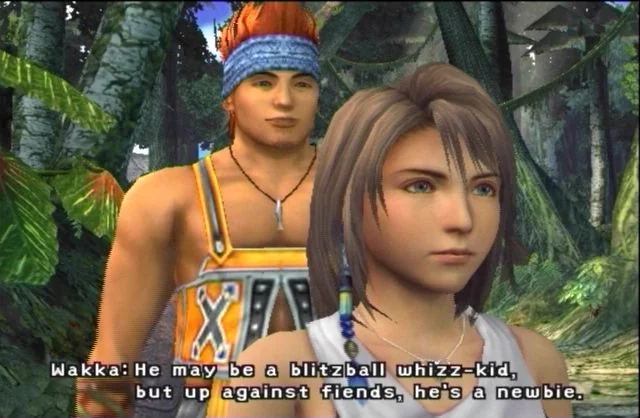
1. Final Fantasy XII
Final Fantasy XII is the most mechanically ambitious RPG on this list because it turns party behavior into a system the player designs. Battles occur in real time as characters move through visible environments, while Gambits allow the player to establish conditional responses such as healing an ally at low health or exploiting a known weakness. The result is not passive automation; it is a form of tactical authorship. Good Gambit choices make a party feel intelligently prepared, while bad priorities reveal exactly where the plan needs revision.
The license board supplies another layer of progression, and hunts, optional areas and Ivalice’s political world give exploration a broader purpose than simply moving between story scenes. The original PS2 release is not Final Fantasy XII: The Zodiac Age: later job boards, license changes, respecialization and other refinements belong to that later edition. Some players may prefer the stronger direct control and more conventional storytelling of Final Fantasy X, but XII earns first place through the way combat, progression and world design continually influence one another.
- Best fit: systems-focused players who enjoy planning party behavior and exploring optional content.
- Main tradeoff: Gambits can feel over-automated, and the political narrative is less intimate than Persona’s.
- Edition note: the original PS2 license system must be separated from The Zodiac Age’s job-board design.
The best starting point depends on what you want an RPG to emphasize. Dragon Quest VIII is the clearest traditional introduction, Persona 4 is the strongest choice for character-driven play, and Final Fantasy X offers a focused story with exceptionally readable turn-based battles. Players seeking tougher tactical preparation should choose Nocturne, while Kingdom Hearts II and Rogue Galaxy deliver more immediate action.
Final Fantasy XII is the standout for players who want an RPG to make them think about systems rather than simply commands. Its Gambits and license progression give the PlayStation 2 library one of its most distinctive combat identities. Together, these ten games show why the console’s RPG strength was not limited to a single formula: its best adventures made progression, combat and world design feel like parts of the same idea.