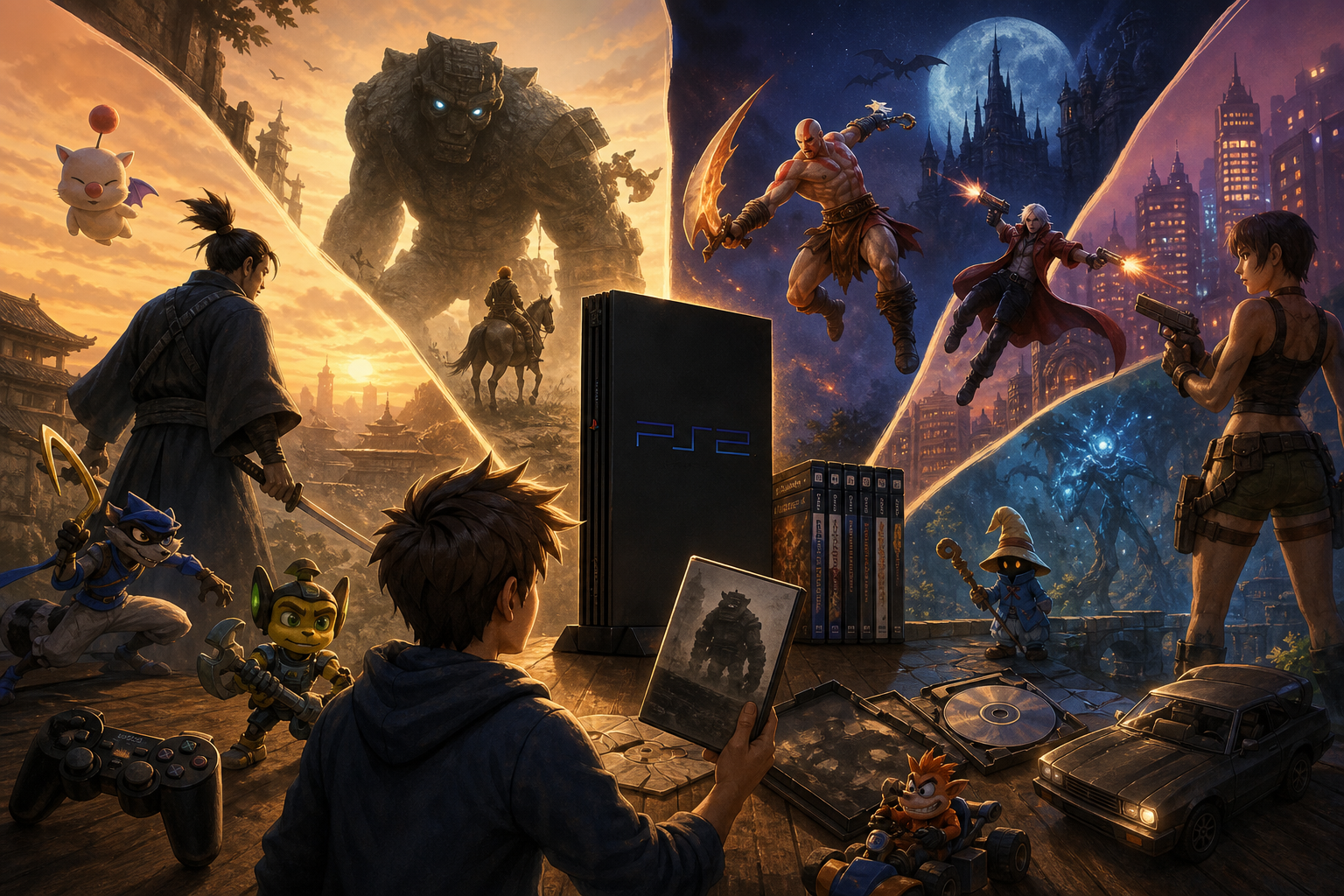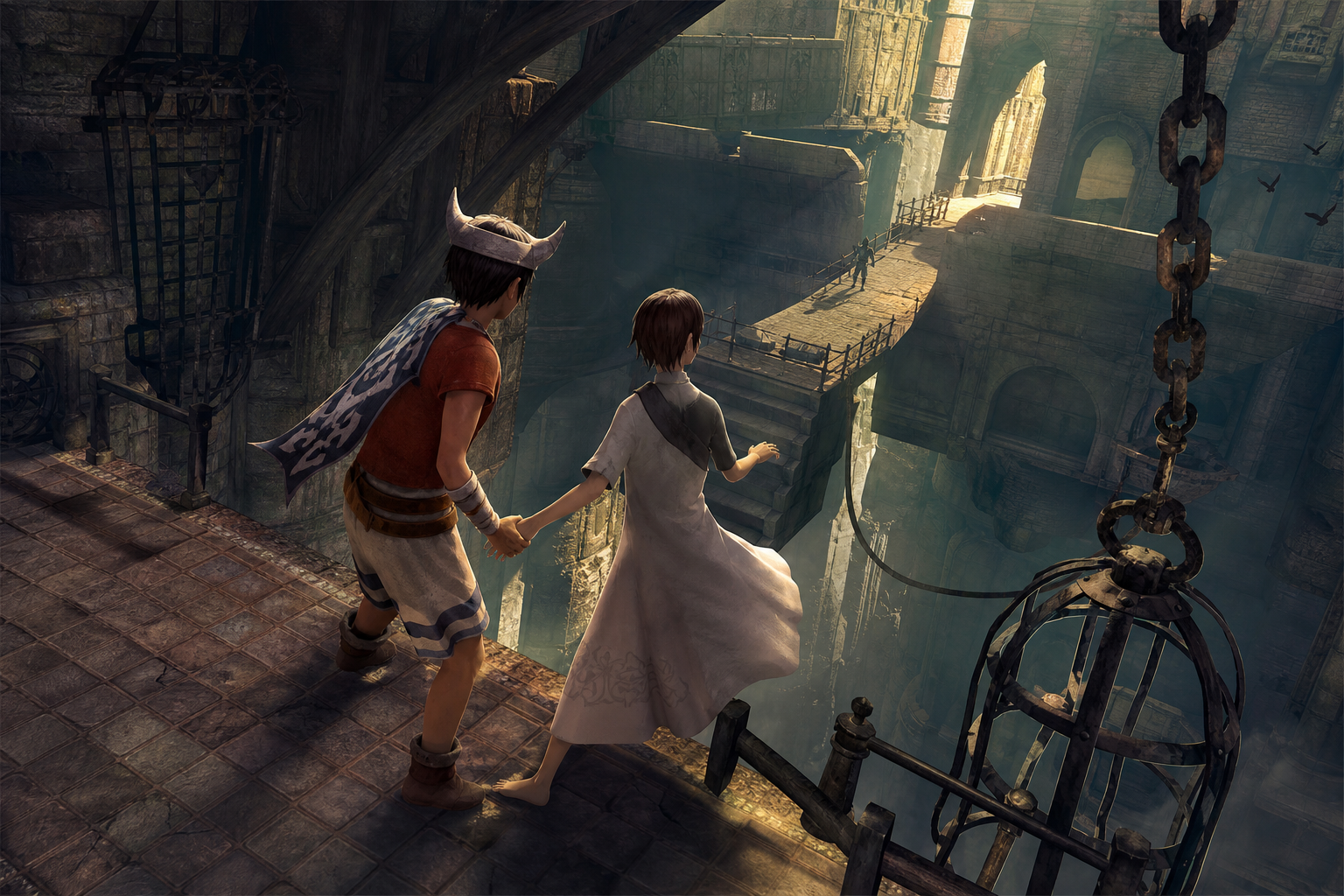
The action label covers more than hack-and-slash games here. This ranking includes action-adventure, stealth-action, action-platforming, beat ’em up and combat-focused exploration when real-time decisions are the dominant way you play. It excludes games built primarily around turn-based battles, MMO progression or menu-driven role-playing systems. That is why Final Fantasy X, Final Fantasy X-2, Final Fantasy XI, Final Fantasy XII and similar borderline choices are not included, even though some contain substantial combat systems.
The order weighs the strength of each game’s central action loop, meaningful variety, encounter design, control quality, replay value and identity on PlayStation 2. A shorter or stranger game can outrank a larger production if its mechanics are more focused. Regional names and release details can differ, particularly for Ōkami, Viewtiful Joe, Onimusha 3 and Devil May Cry 3, so the edition context matters when identifying what a particular disc includes.
The list also avoids treating production scale as a substitute for action design. Some entries are built around spectacle, while others make stealth, traversal, environmental interaction or timing the main event. That variety is the point: PlayStation 2 action games did not need to share one formula to reward quick decisions and active play.
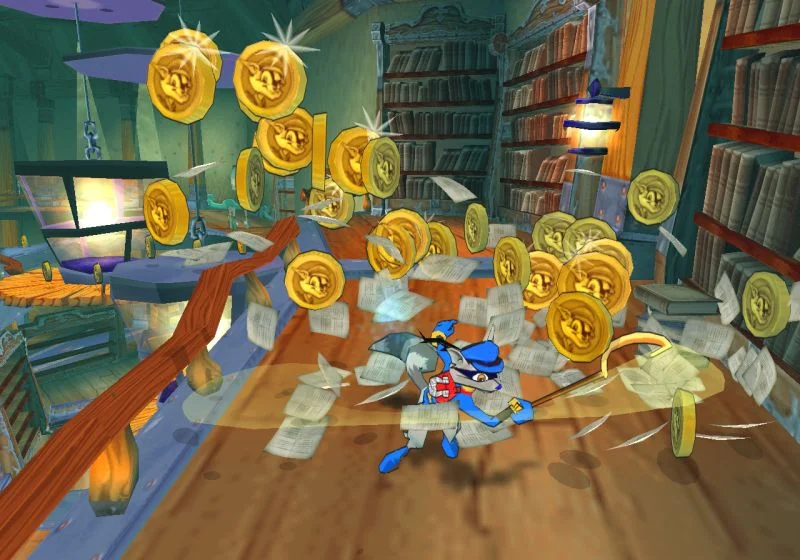
10. Sly 2: Band of Thieves
Sly 2 earns the final place by making stealth and traversal matter as much as fighting. Its gang-based missions move between patrolled spaces, objectives and escape routes, while Sly, Bentley and Murray bring genuinely different movement and ability sets. Switching characters is not merely a story flourish: the game changes how you approach a target, cross a hazard or handle a confrontation.
The cartoon presentation makes Sly 2 approachable, but its action design is more thoughtful than a conventional platformer label suggests. Sly’s stealth tools reward observation, Bentley supports planning and gadgets, and Murray is the direct-combat solution when subtlety collapses. The tradeoff is that combat lacks the depth of the character-action games higher on this list, and mission structures can repeat their infiltration-and-escape rhythm. Choose it for readable stealth, expressive movement and a lighter tone rather than constant spectacle.
- Best for players who want stealth, platforming and character variety.
- Expect lighter combat and some repeated mission patterns.
- The PlayStation 2 release is the version discussed here; later ports and collections may differ.
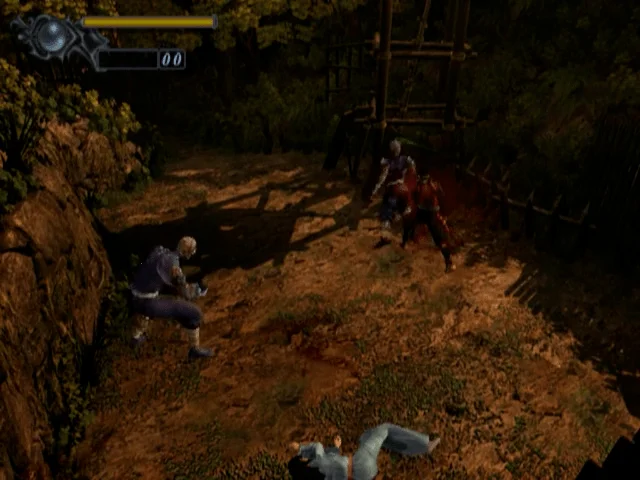
9. Onimusha 3: Demon Siege
Onimusha 3 combines swordplay, fixed-camera exploration and supernatural horror with an unusually bold setting shift between feudal Japan and modern Paris. Samanosuke’s weapons can absorb enemy souls, and those resources feed weapon enhancement and combat progression. The system gives ordinary encounters a useful rhythm: defeat demons, decide what to collect and improve the tools that suit the next stretch.
Its multiple playable characters add contrast without turning the game into a sprawling role-playing system. Sword attacks feel deliberate, elemental weapons create tactical differences and the fixed-camera rooms encourage attention to positioning. Onimusha 3 is more linear and less combo-focused than Devil May Cry 3, which is both its charm and its limitation. Players wanting open-ended mastery may find it restrictive, while fans of compact campaigns and survival-horror presentation will appreciate its controlled pace.
The North American subtitle is Demon Siege, while regional releases can use different naming conventions. That distinction matters for collectors and researchers because the Japanese release is generally identified simply as Onimusha 3.
- Best for players who like sword combat, supernatural settings and fixed-camera exploration.
- Soul collection and weapon enhancement give fights more purpose than simple button mashing.
- The linear structure and older camera conventions can feel dated.
8. Viewtiful Joe
Viewtiful Joe turns a side-scrolling brawler into a timing puzzle. Joe’s VFX powers let him slow action, accelerate it or zoom into attacks, and each ability changes what enemies and hazards demand from the player. Slow motion can expose an opening, Mach Speed can turn a counterattack into a burst of damage and Zoom changes the scale and force of selected moves. The result is action built around reading situations rather than simply memorizing a combo string.
The same concentration makes Viewtiful Joe demanding. Its visual language is distinctive, but the difficulty can rise sharply when several powers must be combined under pressure. The side-scrolling format also limits exploration compared with the larger adventures here. The PlayStation 2 version followed the original GameCube release, arriving in North America and Japan in 2004 before later European releases. In Japan, the PS2 version carries the subtitle A New Hope, a useful regional distinction when identifying editions.
Pick it for compact encounters with unusual mechanical rules. It is less suitable for players seeking a broad world, extensive equipment systems or a gentle difficulty curve.
- Best for players who enjoy timing, counters and challenge built around special abilities.
- Its side-scrolling structure is focused rather than exploratory.
- Do not confuse the Japanese subtitle A New Hope with a separate numbered sequel.
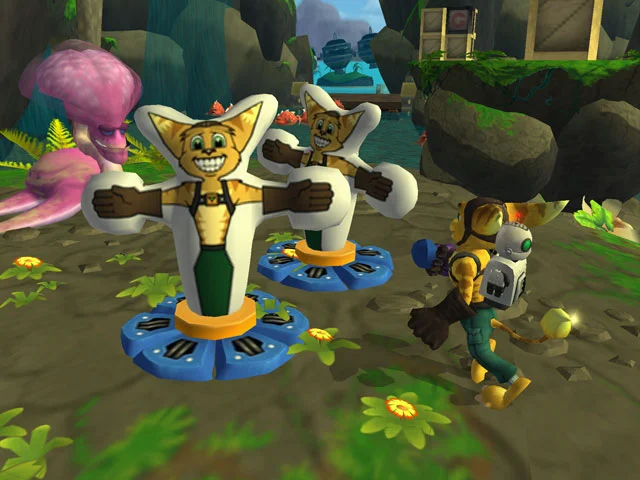
7. Ratchet & Clank: Up Your Arsenal
Ratchet & Clank: Up Your Arsenal is one of the PlayStation 2’s clearest demonstrations of weapon-driven action-platforming. Its arsenal covers firearms, explosive tools and melee options, and upgrades give familiar weapons new reasons to remain useful. Enemy groups, vehicles, platforming routes and bosses all encourage switching tools instead of treating one attack as a universal answer.
The game’s humor and colorful worlds make the action easy to enter, but the weapon design provides more depth than its tone suggests. Experimentation is especially rewarding when a weapon’s area control or crowd management solves a problem more cleanly than raw damage. Some tools can also flatten encounters into spectacle once sufficiently upgraded, reducing the need to engage with enemy behavior.
The original PlayStation 2 release included local multiplayer and online features. Those features belong to the historical edition, not a current service recommendation. The single-player campaign is the reason the game remains relevant to this ranking, since its arsenal creates more moment-to-moment variety than many action-platformers of the same period.
- Best for players who want a broad arsenal and approachable shooting-platforming.
- Weapon upgrades encourage experimentation, although powerful tools can simplify later fights.
- The online and multiplayer features belong to the original release context.
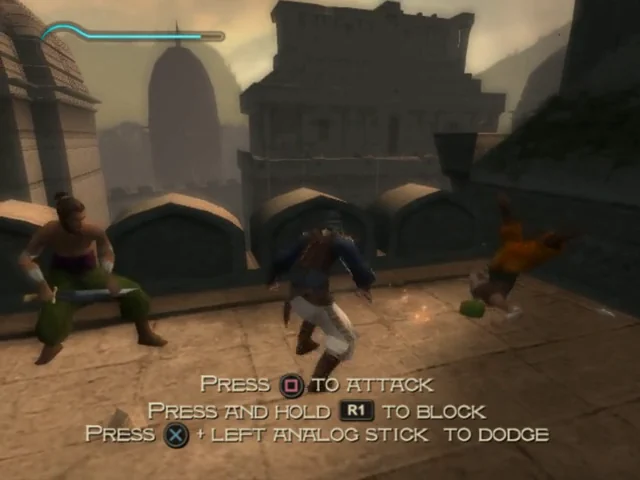
6. Prince of Persia: The Sands of Time
The Sands of Time builds its action identity around movement. Wall runs, ledge grabs, swings and carefully staged jumps turn traversal into a flowing sequence of decisions, while environmental puzzles make the player read architecture rather than simply search for enemies. The rewind mechanic is the crucial safety net: a failed jump or trap does not always mean repeating a long section, because a limited reversal can convert an error into another attempt.
Combat is comparatively simple, and that is the game’s most important limitation for action fans seeking weapon mastery. Its linear structure also leaves less room for improvisation than the stealth and exploration games above it. Occasional camera friction can interrupt otherwise elegant movement. Even so, the combination of acrobatics, puzzle spaces and recoverable mistakes remains unusually coherent.
Choose it when traversal should be the star, not when combat variety is your primary criterion. The game is particularly effective for players who enjoy learning a route through a space and then executing it with increasing confidence.
- Best for players who value acrobatics, environmental puzzles and forgiving recovery.
- The rewind system changes how failure feels without removing the need for precise movement.
- Combat is functional but not the main reason to play.
5. Metal Gear Solid 3: Snake Eater
Snake Eater broadens action through stealth, survival and infiltration rather than filling every room with enemies. Camouflage, close-quarters combat, hunting, injury treatment and multiple approaches to guarded spaces create a slower but richer action loop. A player can observe patrols, manipulate the environment, use a quiet takedown or decide that a noisy escape is worth the consequences. Boss encounters then turn those systems into more specialized tests.
That breadth comes with a substantial pacing tradeoff. Long story sequences, deliberate movement and survival procedures make Snake Eater a poor fit for anyone who wants uninterrupted fighting. Its action is about preparation, patience and improvisation, not constant forward momentum.
The PlayStation 2 game belongs on this list because its systems make stealth a form of active play rather than a pause between set pieces. Camouflage and Close Quarters Combat are not decorative additions; they change how players read spaces and respond to danger. Choose it for open-ended infiltration and atmosphere, while accepting that the story frequently takes control of the pace.
- Best for players who enjoy stealth routes, observation and tactical improvisation.
- Camouflage, food, injuries and close-quarters combat are meaningful parts of the action design.
- Expect lengthy cutscenes and a slower rhythm than the games ranked above.
4. Ōkami
Ōkami makes interaction itself an action mechanic. The Celestial Brush lets Amaterasu alter the environment and affect combat through drawing-based techniques, so the player is not merely choosing attacks from a list. Restoring damaged spaces, solving environmental problems and exploiting enemy weaknesses all connect to the same visual language. That gives the game a distinct identity among PlayStation 2 action adventures.
Its length and structure are less disciplined than the most focused games here. Backtracking can become routine, the story frequently interrupts momentum and the combat does not always demand the same precision as Devil May Cry 3. Those are real limitations, but they also explain the audience. Ōkami is strongest for players who want a world that responds to abilities across exploration, puzzles and fights.
Ōkami released for PlayStation 2 in Japan in April 2006, with other regional releases following later that year and into 2007. Later ports and HD editions can differ in presentation and controls, so this ranking refers to the original PlayStation 2 action design rather than assuming every version plays identically.
- Best for players who want action-adventure systems tied to environmental interaction.
- The Celestial Brush connects puzzles, exploration and combat in one central idea.
- Long runtime, backtracking and uneven pacing may frustrate players seeking a compact campaign.
3. Shadow of the Colossus
Shadow of the Colossus strips action down to a sequence of monumental problems. Each colossus is less a conventional enemy than a moving environment: the player studies its behavior, finds a route upward, manages grip and searches for vulnerable points. Climbing, traversal and environmental reasoning replace the enemy variety, loot systems and crowded arenas common to other action games. That focus gives every major encounter a clear identity.
The sparse world and limited ordinary combat are deliberate, but they can feel like omissions if approached as a traditional character-action game. Movement and camera behavior can also feel less immediate than in a combo-driven brawler. Those limitations are part of why it ranks so highly rather than disqualifying it: the game commits completely to scale, discovery and uneasy confrontation.
Shadow of the Colossus is action-adventure with platforming and puzzle elements, not a conventional hack-and-slash title. Its strength lies in the way every major fight asks the player to interpret an environment, identify a weakness and execute a route under pressure. Choose it for memorable encounters built around observation and traversal.
- Best for players who prefer giant-scale encounters to crowds of ordinary enemies.
- Climbing, grip management and weak-point discovery form the central action loop.
- The sparse world and occasional control friction are essential tradeoffs, not missing content.
2. Devil May Cry 3: Dante’s Awakening
Devil May Cry 3 has the deepest combat ceiling in this ranking. Dante can combine multiple weapons, firearms and combat styles, while enemy patterns demand that the player learn spacing, timing and the right response to different threats. The style system rewards expressive play, and the ranking feedback makes stylish variation part of the game’s language rather than a cosmetic flourish. Replays remain valuable because mastery changes what the same encounters can produce.
Its demanding difficulty is both the attraction and the barrier. Players expecting a straightforward cinematic adventure may find early fights punishing, and the fixed camera or encounter design can occasionally complicate a clean response. The game’s original release also asks players to commit to a more demanding experience than the later Special Edition’s adjusted balance and added content.
Edition identification is important: the original Devil May Cry 3 and the 2006 Special Edition are separate PlayStation 2 releases, and the Special Edition adds Vergil as a playable character. This ranking’s core discussion applies to Dante’s combat foundation; Vergil content should not be attributed to every original release.
Choose Devil May Cry 3 for technical combat, enemy knowledge and replayable mastery. It ranks below God of War II only because its brilliance is concentrated primarily in combat, while the top entry offers a broader action package.
- Best for players who want technical combat, enemy knowledge and replayable mastery.
- Weapon switching and combat styles create more mechanical headroom than most cinematic action games.
- Check the edition before assuming Vergil is included.
1. God of War II
God of War II takes the top spot because it delivers the most complete action package on PlayStation 2. Its combat has broad attacks, crowd control, magic and upgrade decisions, but the game does not stop there. Platforming, environmental puzzles, timed events, boss encounters and large set pieces continually change what the player is being asked to do. The transitions are not always subtle, yet the variety keeps the campaign from relying on one combat pattern for too long.
That breadth makes God of War II a stronger overall action recommendation than a narrower technical specialist. It offers immediate spectacle while still giving upgrades and weapon choices a practical role, and its encounters are designed to make the player use the full toolkit. The game’s PlayStation 2 release arrived in 2007 and is identified as a single-player action game with hack-and-slash, puzzle and platforming elements.
The limitations are equally clear: progression is fixed, some sequences prioritize spectacle over experimentation and the mature violence will not suit every audience. Players seeking the highest possible combat ceiling may prefer Devil May Cry 3, while those wanting a quieter or more exploratory experience may prefer Shadow of the Colossus or Ōkami. For players choosing one PlayStation 2 action game, however, God of War II best balances combat, movement, puzzles, bosses, scale and forward momentum.
- Best for players who want combat, platforming, puzzles, bosses and spectacle in one campaign.
- Its variety is broader than the more specialized combat focus of Devil May Cry 3.
- Expect fixed progression, spectacle-driven sequences and mature violence.
The right starting point depends on which part of action you want to emphasize. Choose Devil May Cry 3 for technical combat, God of War II for a broad cinematic package, Shadow of the Colossus for giant-scale problem-solving, Snake Eater for stealth and Ōkami for world interaction. The lower-ranked games are not lesser versions of the same formula: Sly 2, Viewtiful Joe and Onimusha 3 occupy distinct mechanical spaces.
Taken together, these games show why the PlayStation 2 action library remains unusually varied. Its strongest titles do not all chase the same definition of excitement. Some reward mastery, some reward observation, some reward movement and some make environmental interaction the central event.
For a compact starting path, Prince of Persia and Viewtiful Joe offer focused campaigns. For a longer, broader action adventure, God of War II is the safest recommendation. For players willing to trade immediacy for depth, Devil May Cry 3 and Metal Gear Solid 3 provide the most demanding systems in very different ways.