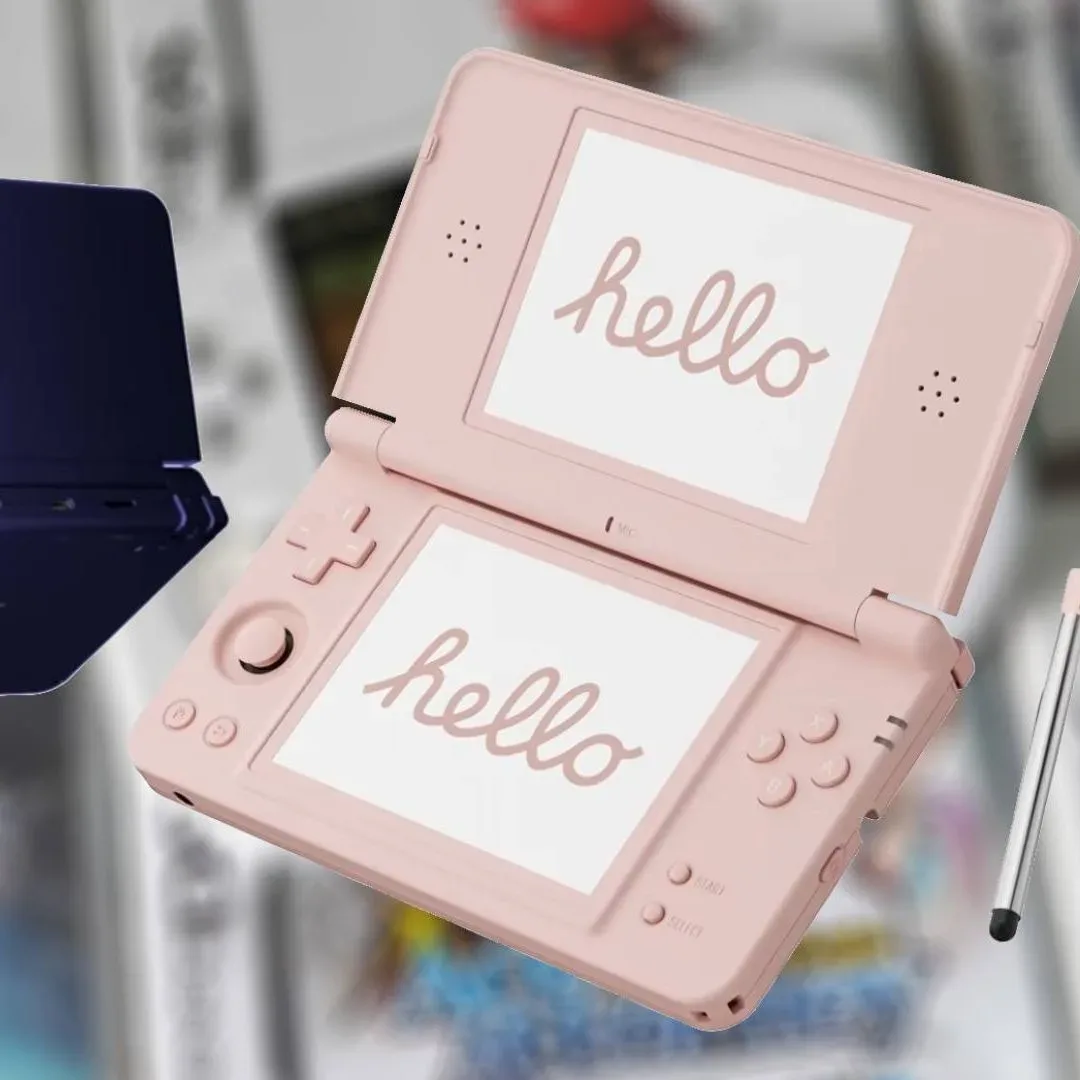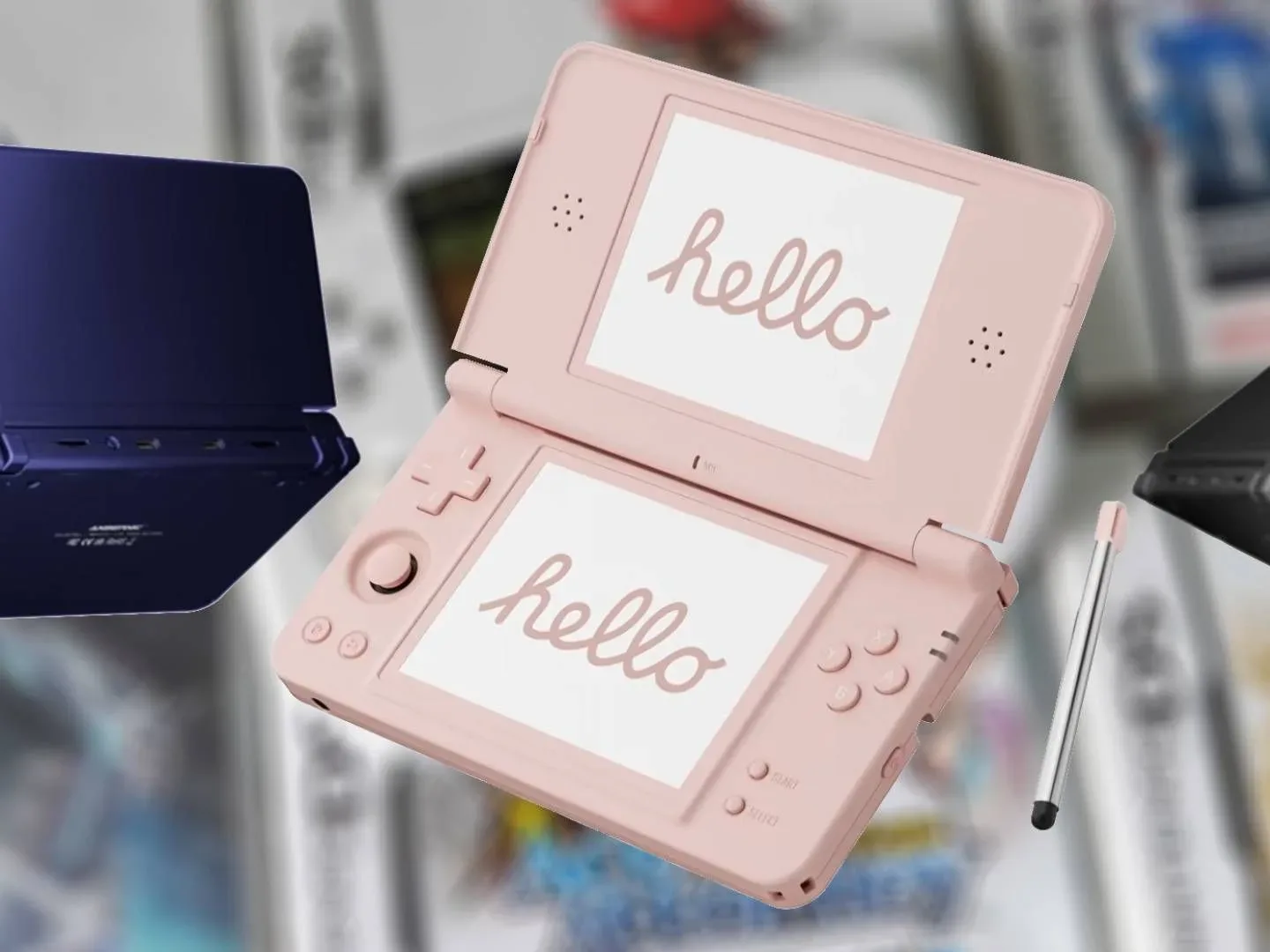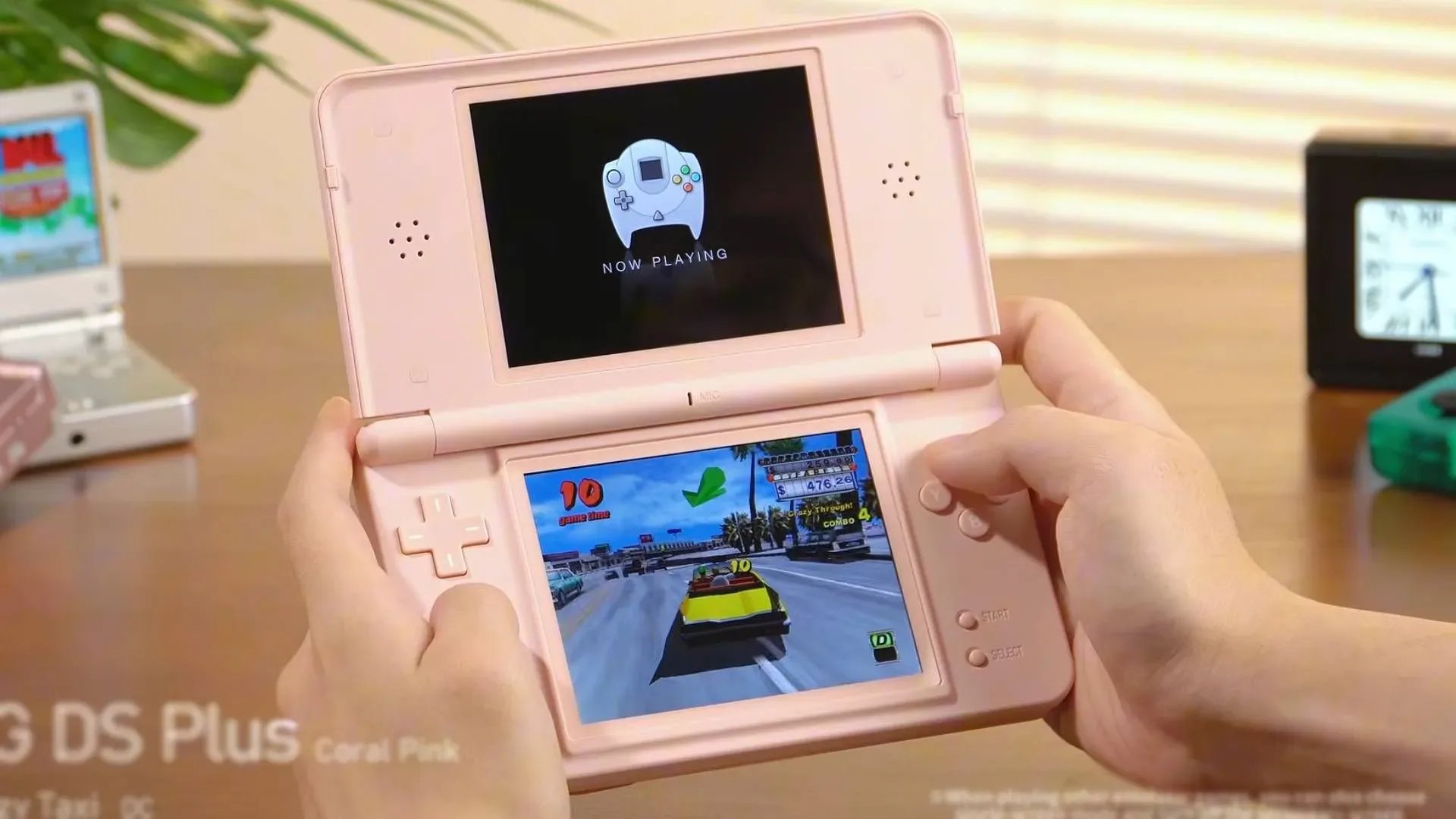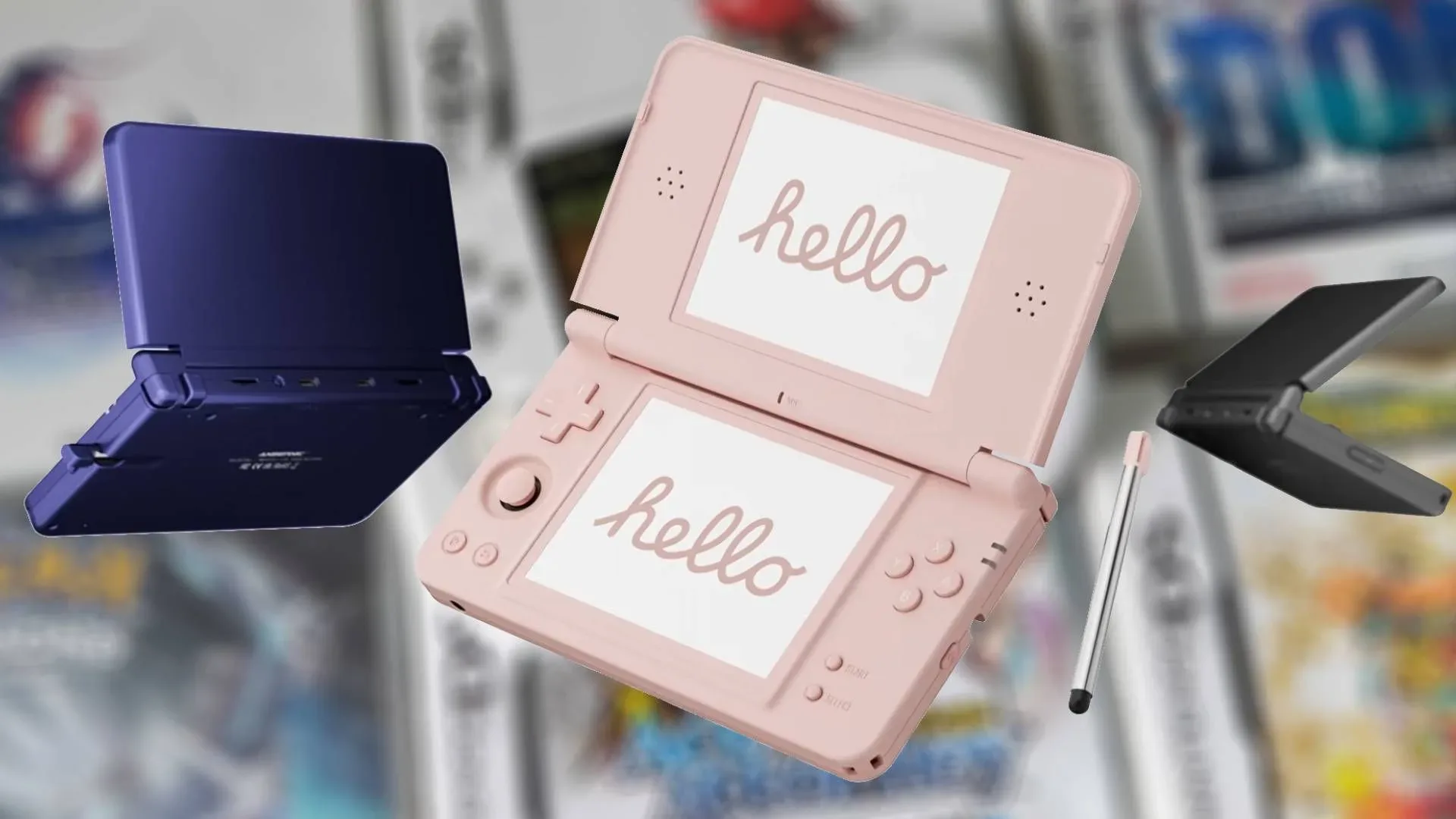
The Anbernic RG DS Plus is shaping up as a deliberately narrow kind of retro handheld: a clamshell designed to make Nintendo DS-era games look and feel more at home, rather than an everything machine dressed in a familiar shell. That distinction matters. Its outline may invite instant comparisons to Nintendo’s larger 3DS models, but the currently revealed details point much more squarely at the original dual-screen DS experience.
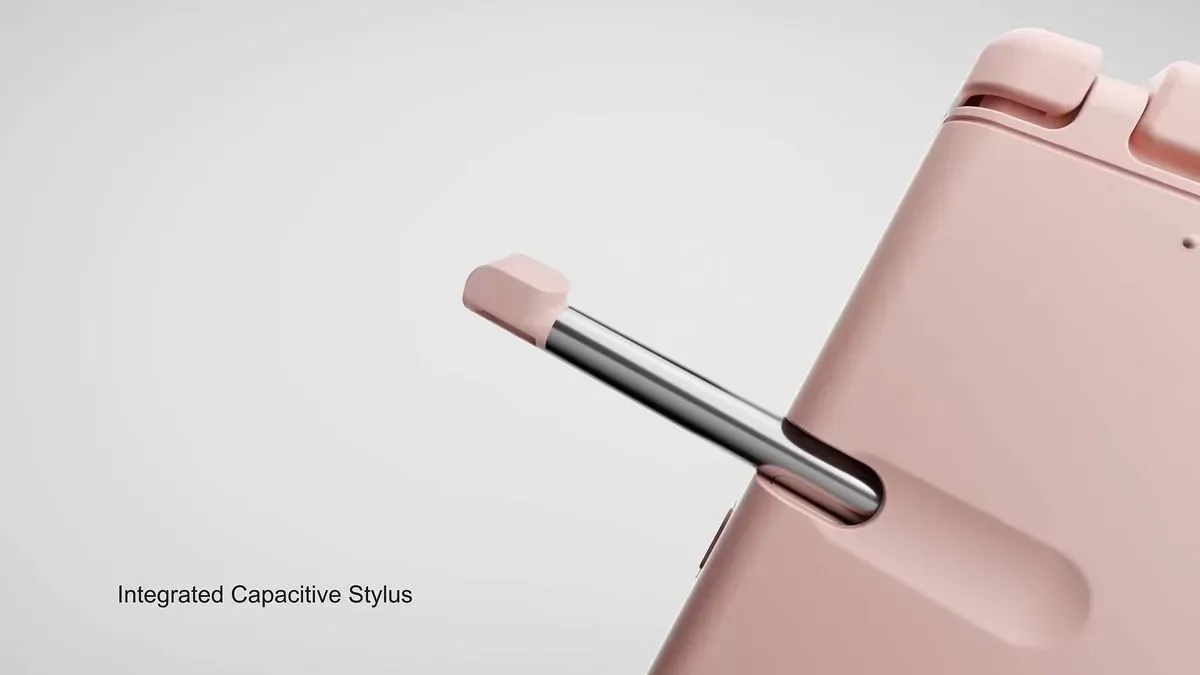
For fans of the era, that may be less disappointing than it sounds. The DS was never only about raw horsepower. It was about two displays working together, a library built around touch input, and hardware eccentricities that made a stylus feel as essential as a D-pad. Anbernic’s revised device appears to be addressing those basics with a higher-resolution panel, Linux software, a two-screen-oriented front end and, crucially, a stylus that stores along the side of the unit.
There is still important information missing. Anbernic has not yet supplied a complete official specification list or a release date for the RG DS Plus. The company is also positioning the machine below $100, rather than confirming an exact final price. For now, prospective buyers should treat the revealed configuration as an early picture rather than a final shopping checklist.
A DS-focused upgrade with a much denser display
The headline change is resolution. The RG DS Plus is expected to use a 1024 x 768 display, a major increase over the 640 x 480 screen used by the preceding RG DS. It also far exceeds the original Nintendo DS resolution of 256 x 192 pixels per screen. Anbernic is framing the result around four-times pixel-perfect scaling and a 16-in-1 pixel-density claim, with the aim of making classic DS visuals appear cleaner without losing their intended proportions.
That is a more useful promise than simply saying a screen is bigger or sharper. DS games were composed for very low-resolution displays, often with crisp pixel art, stylized menus and touch targets designed around a particular visual scale. A display that can present those pixels in an even, integer-scaled fashion has the potential to avoid some of the softness that comes from uneven scaling. It will not transform a 2000s handheld game into a modern high-definition release, nor should it. The value is in preserving its look while making it easier to see.
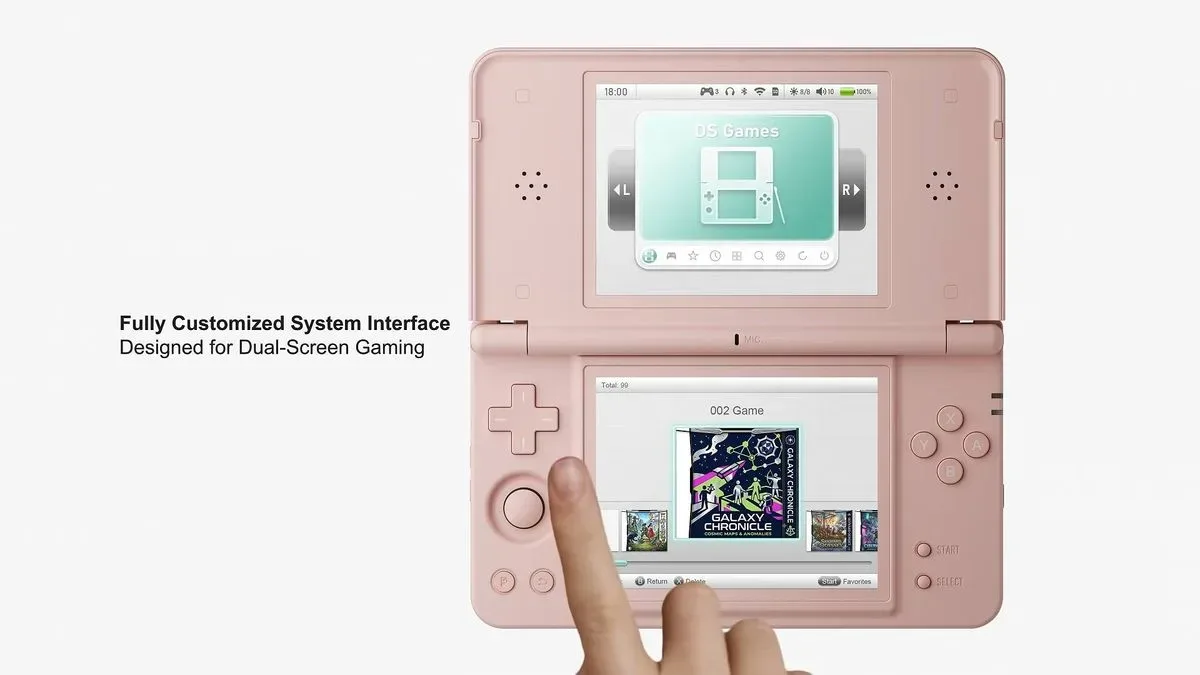
The new interface is similarly specific to the format. Rather than forcing players to navigate a standard single-screen handheld launcher around a two-screen setup, the RG DS Plus is said to include a front end tailored to dual displays. It is also expected to ship with the NNDDSS emulator integrated into its software. Those choices suggest Anbernic understands that a DS library needs more than an extra screen bolted onto a generic retro device.
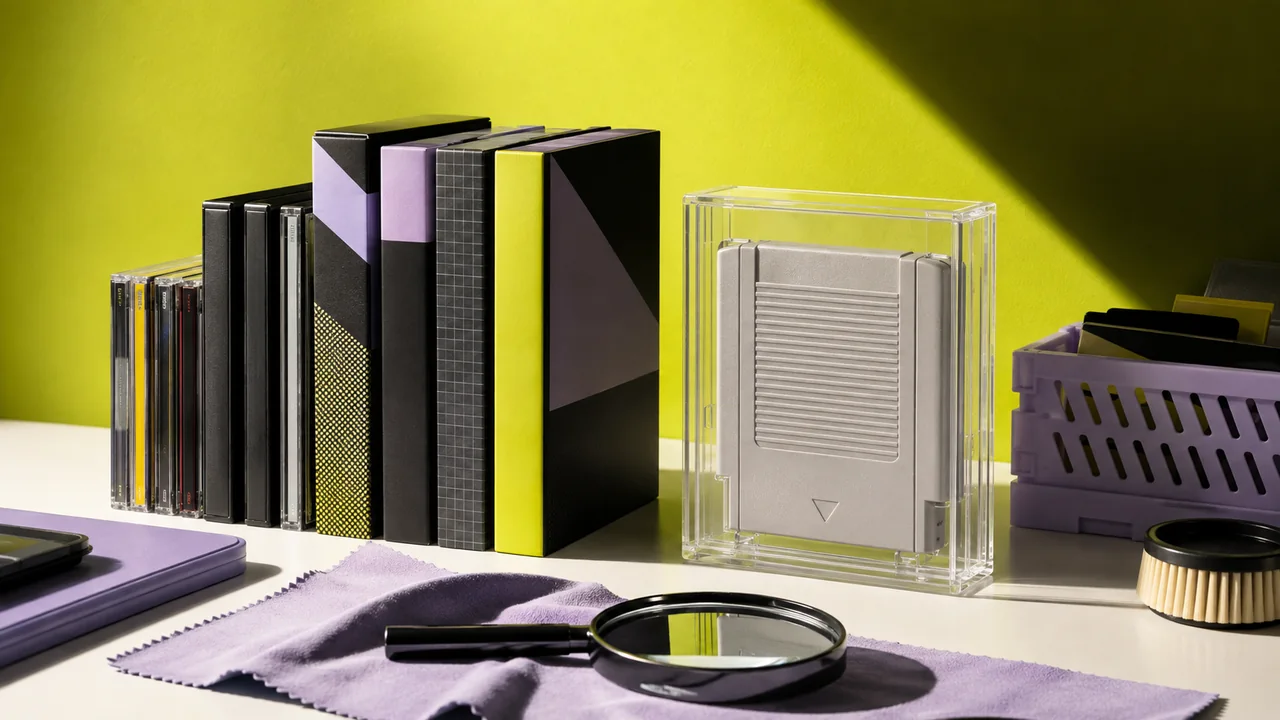
Anyone building a broader physical archive should also remember that the handheld itself is only one part of preservation. Original cartridges, cases and accessories still need sensible organization if they are meant to remain playable rather than become a drawer full of mystery rectangles. Our guide on how to store retro games covers the practical side of keeping a collection accessible.
The stylus is a small detail with a large job
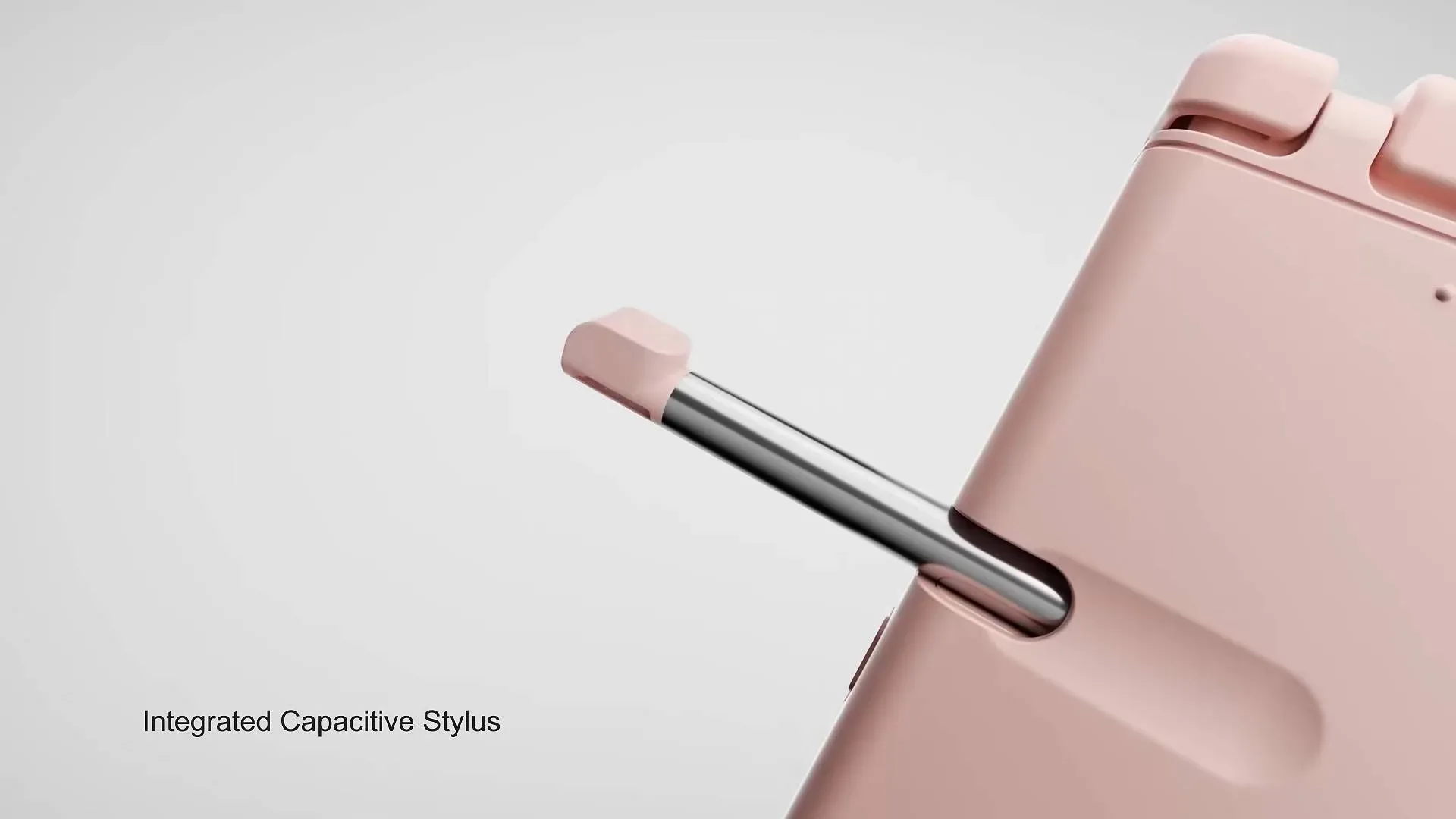
Among the most charming parts of the design is its side-mounted stylus. It is a capacitive stylus with a rubberized tip, not an exact reproduction of Nintendo’s original hardware. Still, its presence is more than decorative. The DS catalog includes games whose controls are merely improved by touch input, as well as games that make it central to the experience. A stylus that has a designated storage spot is less likely to wander off than a separate accessory, and it reinforces the clamshell’s platform-first design.
That does not make every DS game automatically ideal on a modern emulation handheld. Touchscreen behavior, display layout options and emulator compatibility all affect the final result, and those details have not been fully demonstrated. But the decision to include and house the stylus is a meaningful signal. Anbernic is at least trying to solve a real part of the DS equation instead of treating touch controls as an afterthought.
The RG DS Plus also appears to have one thumbstick. That immediately separates it from a device intended to closely mirror the Nintendo 3DS control arrangement. A single stick may be perfectly adequate for a large portion of DS software, but it is not the layout someone would expect from a handheld built to prioritize 3DS games and their additional controls.
Linux, 1GB of RAM, and a practical price target
The revised model reportedly changes direction on software and memory. Where the earlier RG DS used Android and 3GB of RAM, the RG DS Plus is expected to run Linux with 1GB of RAM. It is also said to omit built-in eMMC storage, relying instead on microSD storage for the operating system and library.
On a spec sheet, less memory and no internal eMMC can look like an obvious retreat. In context, it is a trade-off. Linux-based retro handhelds can have lighter overhead than Android-based designs, and a device aimed at DS-class emulation does not necessarily need the same RAM allowance as a more ambitious Android unit. MicroSD-based operation is also common in this part of the handheld market, though it does make card selection, setup and backups more important for owners.
The compromise is probably best understood as an attempt to put the money where this particular machine needs it most: the display and the DS-specific experience. At a planned price below $100, there is not much room to include a more powerful processor, generous memory, built-in storage and a high-resolution dual-screen presentation without pushing the device into a different bracket. Component pricing pressures make that balancing act tougher, not easier.
The RG DS Plus currently looks less like a bargain-bin all-rounder and more like a device trying to spend its limited budget on the parts that define DS play: two screens, clear scaling, touch support and a clamshell form factor.
Why it is not the affordable 3DS-style handheld some players want
The resemblance to a 3DS XL-style shape will naturally raise expectations, especially among players hoping for an inexpensive clamshell that can comfortably handle Nintendo 3DS libraries. But the available information does not support reading the RG DS Plus that way. Its single-stick layout is one clue. The retained Rockchip RK3568 chipset is another. A substantially more capable processor, along with a more robust overall configuration, would be expected from a device seriously positioned around 3DS emulation.
This is not necessarily a failure of ambition. Trying to serve DS and 3DS equally well can create a machine that costs more, consumes more power, needs a more complex control layout and still leaves buyers sorting through platform-specific compromises. The RG DS Plus instead appears to be choosing a lane: original DS games first, with software and physical features arranged around that single goal.
That focus could make the comparison with the earlier RG DS unusually important. The prior version remains an option for buyers who put a premium on its 3GB of RAM and internal storage. The Plus model, meanwhile, shifts the proposition toward the 1024 x 768 display, Linux environment and purpose-built interface. Neither set of choices automatically wins for every buyer. The decision comes down to whether a sharper DS presentation matters more than the older hardware’s memory and storage advantages.
What to check before treating it as a must-buy
Until a full official spec sheet arrives, several questions remain open. Battery capacity and real-world endurance have not been established. Neither have the exact screen arrangement, touchscreen performance, microSD compatibility, build quality or emulator behavior across the wider DS catalog. Those are not trivial footnotes on a handheld whose entire identity depends on its screens and touch controls working together cleanly.
Potential buyers should also separate the appeal of the hardware format from the practical realities of their own libraries. A familiar clamshell, built-in stylus and denser display are enticing, but they do not replace careful file management or legal considerations surrounding game access. The machine’s dedicated DS character will be most appealing to those who specifically want to revisit a library designed around dual screens, rather than shoppers looking for a universal replacement for every Nintendo portable.
For households planning to pass a handheld around, the DS angle may have another benefit: its catalog contains many games suited to shared, informal play even when the action stays on one device at a time. For a refresher on preserving domestic peace when controllers or turns are involved, see the unwritten rules of couch multiplayer.
At this stage, the sensible read on the Anbernic RG DS Plus is straightforward. It is a revised dual-screen retro handheld with a promised sub-$100 price, a higher-resolution 1024 x 768 display, Linux-based software, 1GB of RAM, microSD-based storage, NNDDSS integration, one thumbstick and a stored capacitive stylus. It looks ready to make a persuasive case for DS devotees who value a focused machine. It does not, based on what has been revealed, resolve the ongoing search for a reasonably priced clamshell made to tackle the 3DS generation properly.