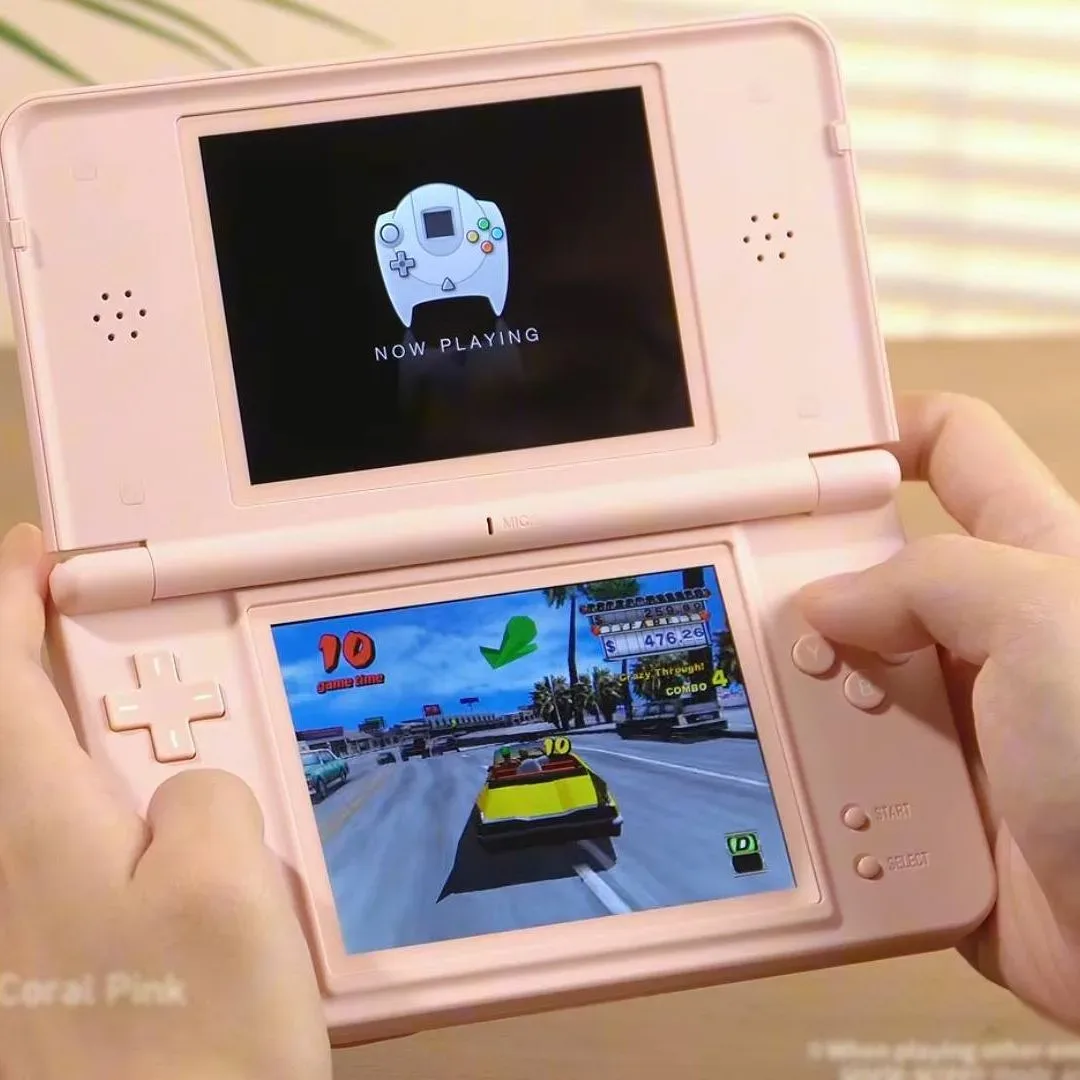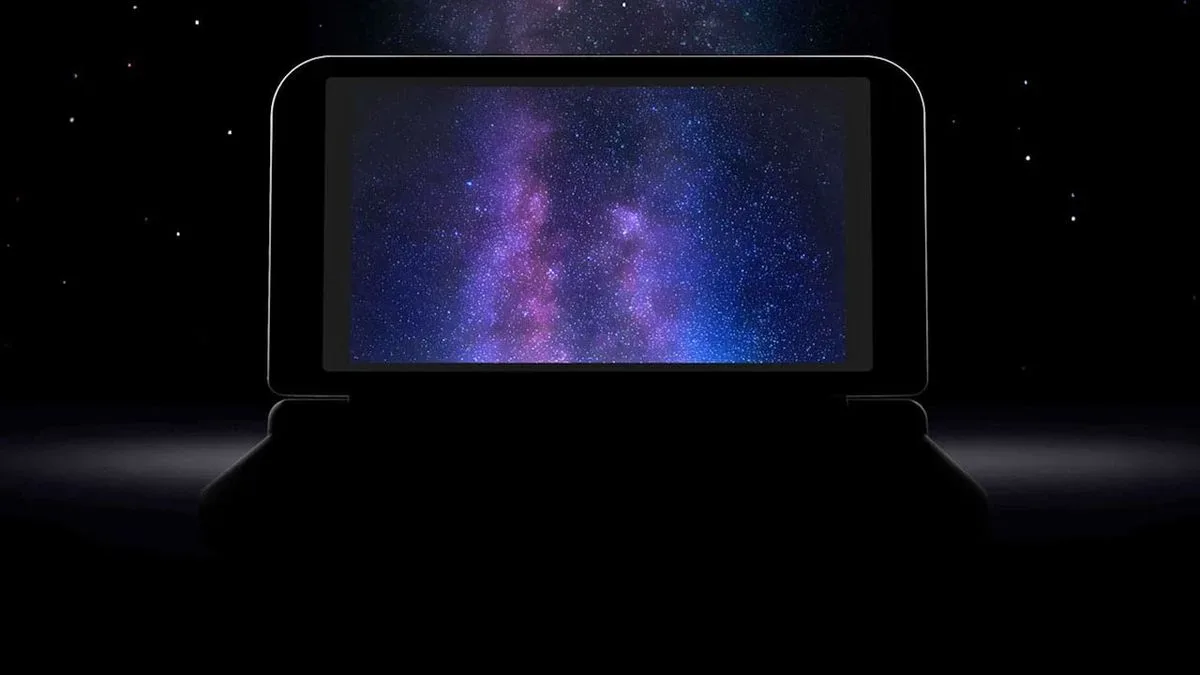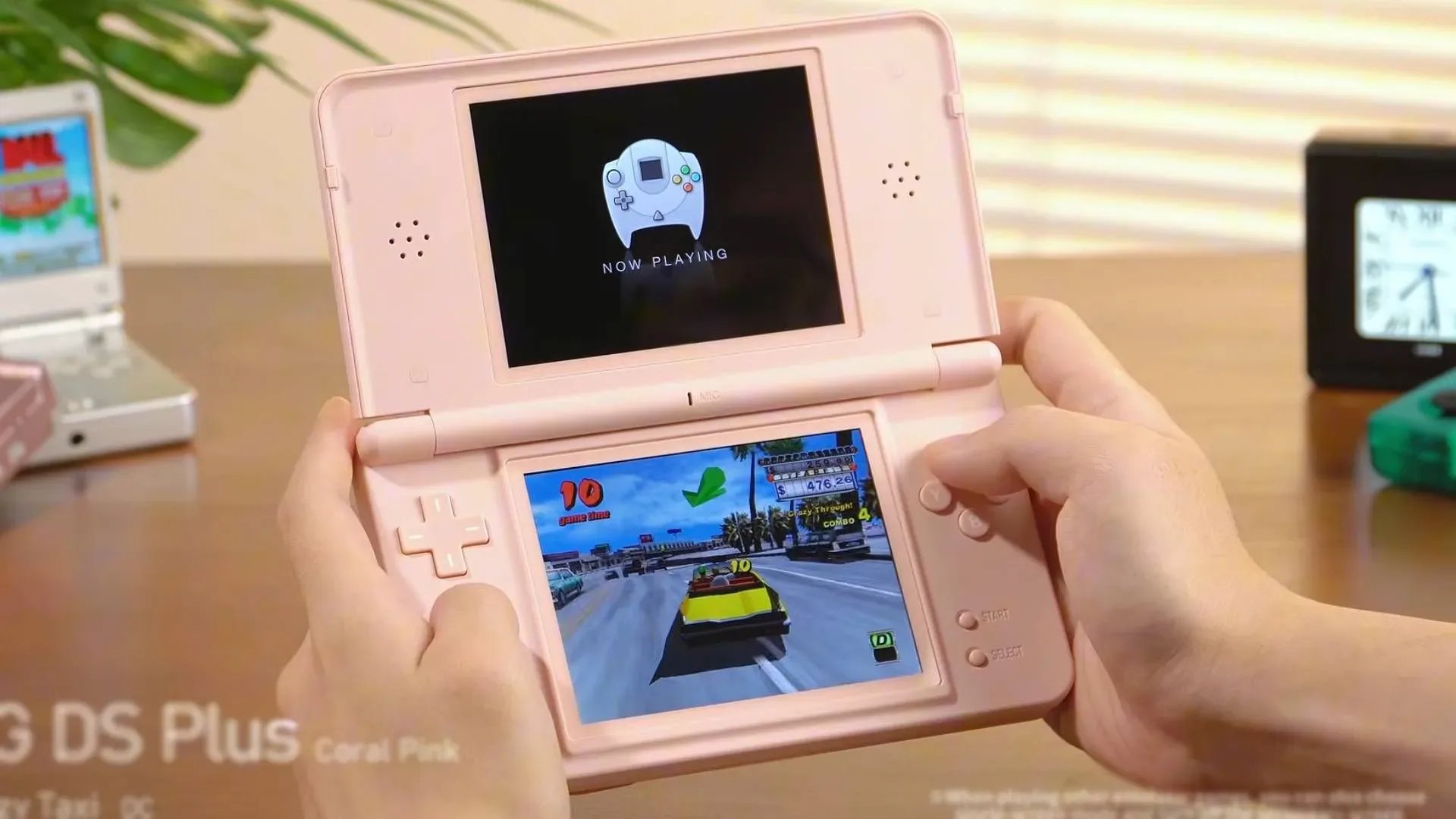
Anbernic’s RG DS Plus is presenting itself as a Nintendo DS-style handheld first and a broader retro-emulation machine second—but a newly shown demo suggests that “second” could be doing a fair amount of work. The roughly six-and-a-half-minute video naturally spends most of its time on Nintendo DS software, the platform the clamshell’s two-screen layout, stylus, and overall silhouette are plainly designed to evoke. Then it starts taking a tour through several more demanding systems: PSP, Nintendo 64, Dreamcast, Sega Saturn, and the original PlayStation.
That does not transform the RG DS Plus into a guaranteed all-platform champion. A curated demonstration can show what a device can do under favorable circumstances, not establish that every game on every supported emulator will run perfectly. Still, the selection matters. Seeing titles from those systems on a compact dual-screen portable is a useful reminder that the machine’s purpose is not limited to DS libraries and the occasional touchscreen puzzle that requires poking a tiny chef in the forehead.
A DS-shaped handheld that is not only for DS games
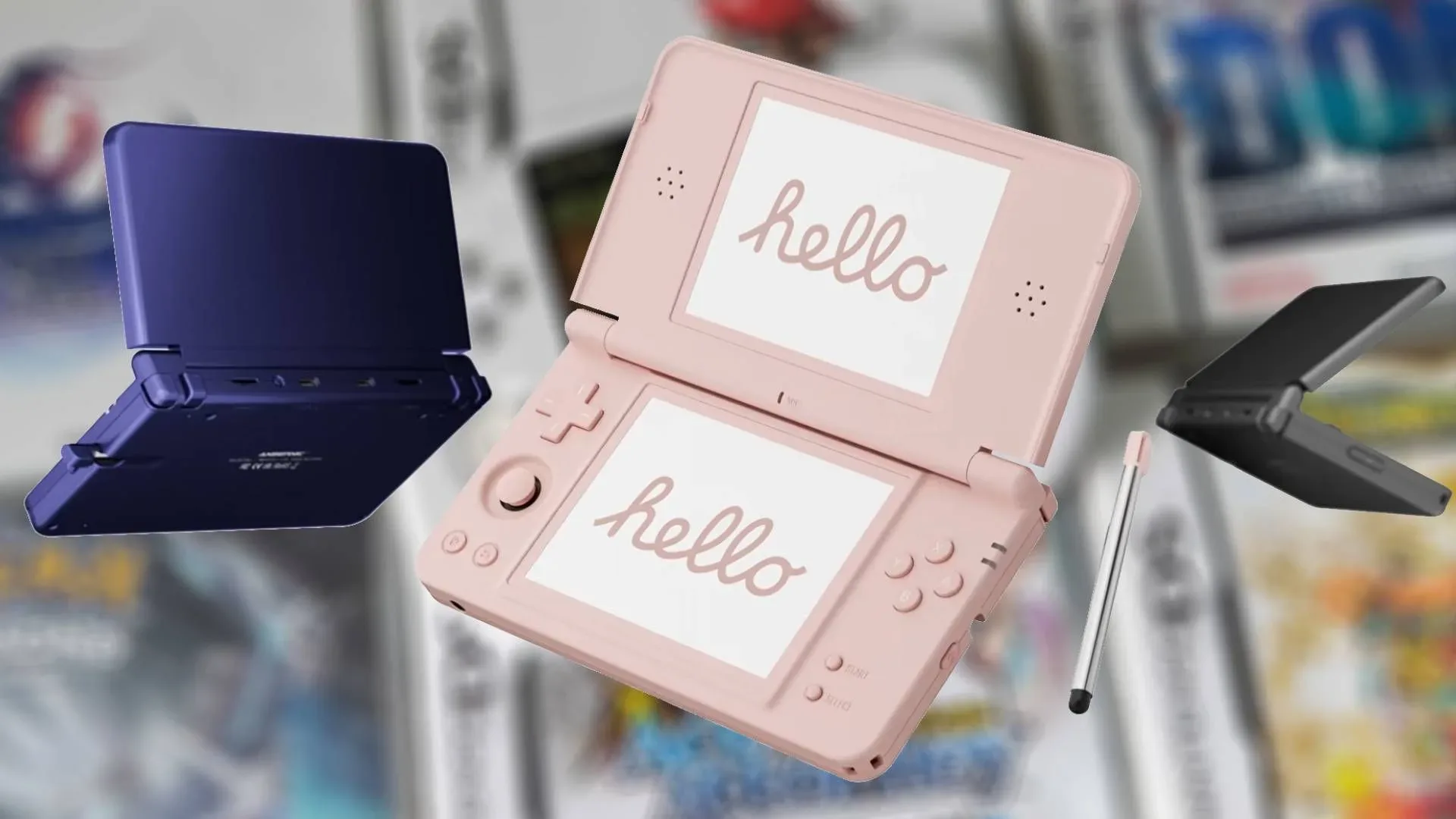
The RG DS Plus follows Anbernic’s existing RG DS, with the newer model positioned as a refreshed version of the budget clamshell concept. Its main appeal is straightforward: modern hardware arranged in a format suited to Nintendo DS emulation, rather than an ordinary single-screen horizontal handheld awkwardly simulating a second display in a corner.
For people who want to revisit DS software, that physical approach is more than cosmetic. The original system’s identity was built around having two displays available at once, and many games expect players to glance between them continuously. Menus, maps, inventory, battle information, minigames, and stylus controls can all be split across both panels. A conventional retro handheld can run some DS titles, but it frequently asks users to compromise with screen swapping, miniature secondary displays, or layouts that make one of the screens feel like an afterthought.
Anbernic’s integrated stylus is consequently one of the more meaningful details on the RG DS Plus. It is a practical feature for the environment the device is trying to recreate, rather than a decorative plastic wand that exists solely to make the handheld look busy in product photos. The display is listed at 4.3 inches with a 1024 x 768 resolution, another specification that could make the portable more appealing for its intended dual-screen role.
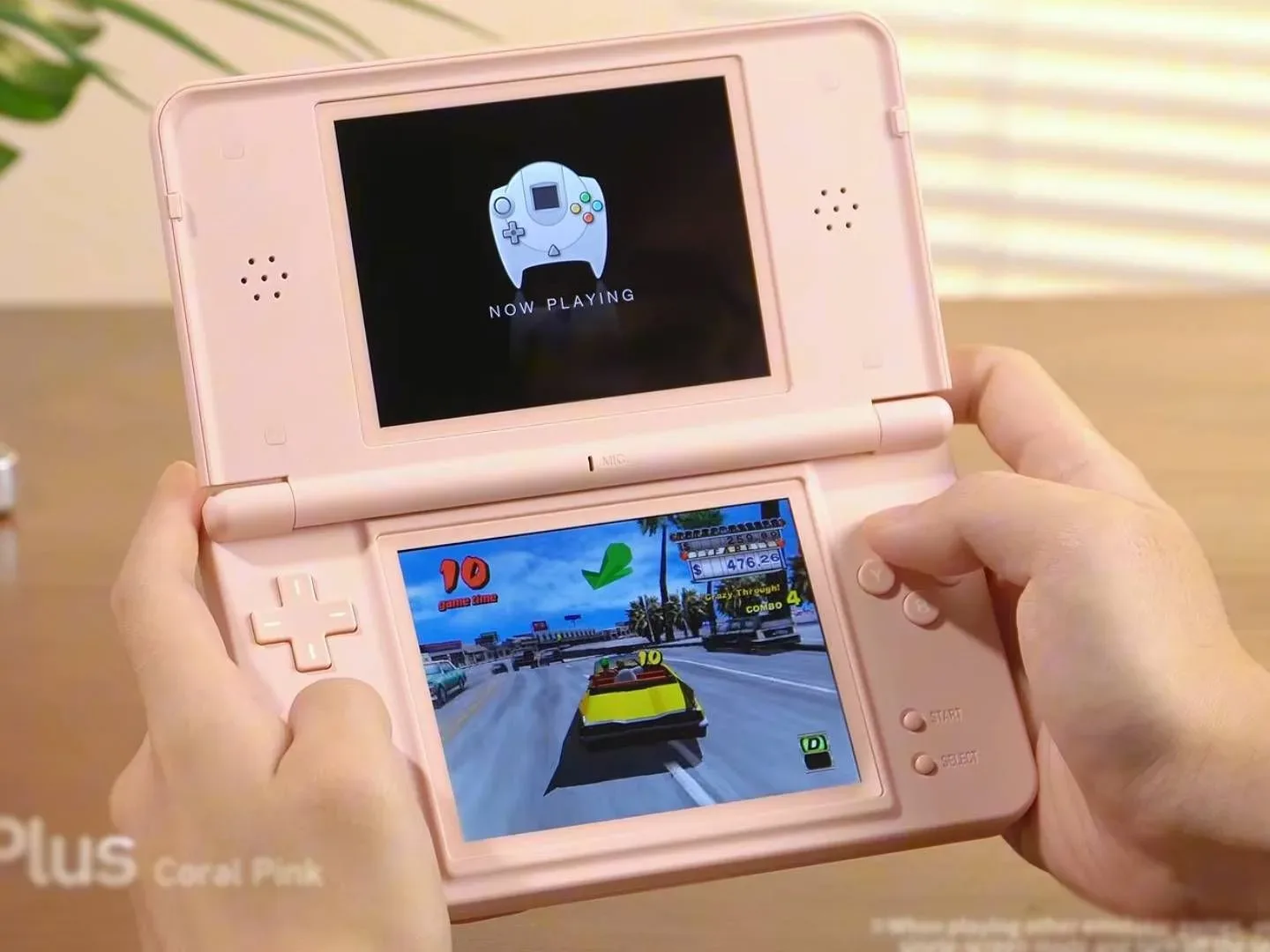
But the recent footage expands the conversation beyond that central use case. In its latter half, the video runs Grand Theft Auto: Vice City Stories for PSP, Super Mario 64 for Nintendo 64, Crazy Taxi on Dreamcast, Shining Force III from the Sega Saturn, and PlayStation classic Castlevania: Symphony of the Night. That is a deliberately eclectic pile of machines and genres: open-world PSP action, 3D platforming, arcade driving, tactical role-playing, and lavish 2D exploration.
What the demo does—and does not—establish
The presence of these games provides a promising indication that the RG DS Plus has some flexibility. It also needs the usual responsible asterisk, preferably one large enough to be read without a magnifying glass. No short showcase can settle questions about compatibility across full libraries, sustained performance, frame pacing, emulator configuration, thermal behavior, or whether particular games require compromises to remain playable.
Different systems pose different challenges, and games within the same system can be wildly uneven in their demands. A device that handles one Dreamcast title acceptably may not deliver the same result in another. PSP performance can likewise vary by game and settings. Sega Saturn is especially not a platform where a single successful showing should be treated as a blanket promise. The demo is evidence of capability in the featured titles, not a universal scorecard.
Related coverage includes Anbernic RG DS Plus Demo Shows Off PSP, N64, Dreamcast and More Retro Performance.
That distinction is familiar to anyone who follows retro handhelds. Emulation is rarely a tidy ladder where one chipset passes a system-wide exam and receives a little gold star. Software maturity, resolution choices, graphical enhancements, individual games, and user settings can all change the result. For a broader look at why platform-to-platform comparisons get complicated, see our explanation of why GameCube and PS2 emulation can have very different demands.
None of that diminishes the RG DS Plus’s likely value proposition. In fact, it clarifies it. This seems to be a budget-oriented machine whose best argument is that it has native-looking dual-screen ergonomics for DS software while retaining enough headroom to explore a range of earlier and adjacent platforms. The PSP, N64, Dreamcast, Saturn, and PS1 appearances make it seem less like a one-trick DS replica and more like a DS replica that brought an unexpectedly stuffed backpack.
3DS is the conspicuous absentee
The demo notably does not show Nintendo 3DS emulation. That omission makes sense. The RG DS Plus uses a Rockchip RK3568 chipset, and nothing in this presentation suggests buyers should expect the consistent, broadly capable 3DS performance associated with more powerful dual-screen-focused handhelds.
It would be premature to state that no 3DS title can run on the device. Some lighter games could potentially fare better than demanding releases, particularly since the handheld is shown tackling software from PSP and Dreamcast. Yet those platforms are not a direct substitute for a 3DS test, and prospective buyers should be cautious about converting that potential into a promise. A game booting is not the same as it maintaining a comfortable speed, and a brief clip is not the same as a full-library compatibility report.
For shoppers whose main priority is dependable 3DS emulation rather than DS games, a more powerful option such as the Ayn Thor remains the more appropriate comparison. The base Ayn Thor Lite model is listed at $259, substantially above the RG DS Plus’s apparent sub-$100 target. That gap is not a minor rounding error; it is the difference between shopping for an affordable specialist and paying for a higher tier of performance expectations.
In other words, the RG DS Plus should not be judged as though it costs the same as a premium device. If it arrives below $100 as indicated, it occupies a far different lane. An affordable clamshell that delivers an enjoyable DS experience and reaches into selected PSP, N64, Dreamcast, Saturn, and PS1 games can make plenty of sense even if it does not conquer every 3DS game thrown at it. No one should be asking a budget pocket device to carry every console generation uphill both ways in the snow.
The budget DS handheld landscape
There are already options for DS-focused buyers who want to remain below $100. The original Anbernic RG DS is still available for around $88 and has clear family resemblance to the upcoming Plus model. The MagicX Zero 40 is another alternative, priced at $75.99, with an unconventional vertical design and vertical display. Its form factor is notably different from Anbernic’s clamshell approach, which makes the decision less about a simple specifications contest and more about how a player wants the hardware to sit in their hands.
The RG DS Plus’s appeal rests on a familiar combination of factors: a handheld shape built around two screens, an integrated stylus, a 4.3-inch 1024 x 768 display, and showcased reach beyond DS software. Its reportedly reduced specifications relative to some alternatives may sound counterintuitive beside the Plus name, but price and intended role matter more than branding arithmetic. This is not necessarily a handheld trying to win a raw-performance cage match. It is trying to give DS fans a polished, low-cost clamshell that can also visit several retro neighborhoods without immediately getting lost.
Reasonable expectations for the RG DS Plus
Until more extensive testing is available, the most useful way to view the RG DS Plus is as an encouraging but not fully answered proposition. The video demonstrates DS play and shows recognizable examples from several classic systems. It does not provide definitive evidence of flawless emulation throughout the PSP, Nintendo 64, Dreamcast, Sega Saturn, PlayStation, or 3DS catalogs.
- Its clearest mission: Nintendo DS emulation with a dual-screen clamshell layout and built-in stylus.
- Systems visibly represented in the demo: PSP, Nintendo 64, Dreamcast, Sega Saturn, and PlayStation, alongside DS software.
- Important nonappearance: Nintendo 3DS emulation was not shown.
- Core hardware detail: Rockchip RK3568 chipset and a 4.3-inch, 1024 x 768 display.
- Expected price position: under $100, versus $259 for the base Ayn Thor Lite model.
For a player chiefly interested in DS games, those visible extras are a welcome bonus rather than the sole reason to buy. For someone hunting a portable that confidently covers demanding 3DS software, they are a reason to wait for deeper evidence and compare stronger hardware. The RG DS Plus’s demo has made its case for attention; the remaining question is how much of that retro roster it can keep running once the camera stops rolling.