The Nintendo 64 is often remembered for platformers, racers and four-player party games, but its fighting library has more variety than its reputation suggests. Traditional one-on-one combat appears alongside weapon fighters, polygonal experiments and the platform-fighting design of Super Smash Bros. The system also hosted several games that tried to solve familiar fighting-game problems in unusual ways, whether through scoring rules, character creation, multiple combat styles or interactive arenas.
This ranking weighs combat identity first: how clearly each game distinguishes itself through movement, attacks, scoring, weapons or stage design. Roster variety, mode selection, replay value, console-specific ideas and historical interest also matter. The order is an editorial selection rather than a review-score average. Regional availability is noted where it affects access, and Super Smash Bros. is treated as a platform fighter rather than being presented as identical to a traditional health-bar fighter.
10. War Gods
War Gods is an interesting but limited example of Midway’s transition from arcade fighting into polygonal 3D combat. Its cast draws on mythological imagery, and the Nintendo 64 version offers one-on-one battles built around arena movement, combos and finishing moves. That gives it a recognizable tone even when the surrounding structure feels less generous than the best games here.
The game’s strongest appeal is historical. War Gods shows developers testing what a three-dimensional fighter should look like before the genre’s design language had settled. Its gods, supernatural powers and violent finishers create a clear identity, even if the combat does not have the same refinement or mode variety as the games ranked above it.
That makes War Gods more useful as a time capsule than as a first recommendation. Players curious about Midway’s late-1990s arcade experiments will find a distinct visual identity and a direct connection to the period’s fascination with 3D combat. Those seeking deep training tools, broad multiplayer formats or a more generous home-console structure should start higher on this list.
- Best suited to: players interested in Midway’s arcade-to-console transition.
- Main tradeoff: memorable mythological presentation, but a comparatively sparse overall package.
- Edition note: the Nintendo 64 release should be discussed as a home conversion rather than assumed to duplicate every arcade detail.
9. Deadly Arts
Released in Japan as G.A.S.P!! Fighters’ NEXTream, Deadly Arts represents Konami’s attempt to build a customizable, training-oriented 3D fighter for the Nintendo 64. Its structure includes training, one-on-one and tournament modes, with support for one or two players. The game also lets players create a fighter and develop that character through training, giving it a more personal progression loop than a straightforward arcade ladder.
That structure is the game’s most important contribution. Rather than treating the roster as a fixed set of finished characters, Deadly Arts asks the player to engage with how a fighter is built and improved. The idea is especially notable on a console where many contemporary fighters were still focused on adapting arcade formats.
Its appeal lies less in universal polish than in experimentation. Players who enjoy obscure 3D fighters, character-building systems and practice modes may find more to investigate here than its reputation suggests. Remembering the alternate Japanese title is essential when researching the game, because Deadly Arts and G.A.S.P!! Fighters’ NEXTream are regional names for the same Nintendo 64 release, not separate entries.
- Best suited to: curious players exploring lesser-known 3D fighters and character-creation systems.
- Main tradeoff: unusual structure and training focus, but less immediate than the library’s headline games.
- Naming note: Deadly Arts and G.A.S.P!! Fighters’ NEXTream are the same game.
8. Dark Rift
Dark Rift was built around Nintendo 64-era 3D combat rather than simply reproducing a famous arcade formula. Its roster combines science-fiction and fantasy concepts, while weapons and arena presentation give its matches a stronger personality than a generic punch-and-kick fighter. The game also received a Windows version, but the Nintendo 64 edition remains the central reference point for its place in the system’s library.
The appeal is its console-focused ambition. Dark Rift tries to make its characters, weapons and arenas part of the same futuristic-fantasy package. That combination separates it from licensed fighters built around an established film or arcade brand. The roster is not as immediately recognizable as Mortal Kombat’s, but its concepts are easy to distinguish from one another.
Dark Rift does not have the broadest replay structure in the category, and its presentation is firmly tied to the limitations and habits of early 3D fighting games. It still earns a place because it represents a clear attempt to give the Nintendo 64 a fighter designed around its own hardware identity. It is a worthwhile pick for players who prefer unusual settings over familiar licensed rosters.
- Best suited to: fans of science-fiction, fantasy and weapon-based combat.
- Main tradeoff: distinctive presentation, but less broadly replayable than the top entries.
- Platform note: the Nintendo 64 edition is the focus here, despite the Windows release.
7. Mortal Kombat 4
Mortal Kombat 4 occupies an important position in the series because it moved the characters into 3D models for the first time. The Nintendo 64 edition preserves the recognizable one-on-one structure while experimenting with three-dimensional arenas, weapons and movement around the fighting space. That change makes it a transitional game: it still feels like Mortal Kombat, but it is clearly testing a new visual and mechanical direction.
The home versions also included playable characters such as Noob Saibot, Meat and Goro as version-specific additions. Those additions give the Nintendo 64 release more than a simple arcade-conversion role, although regional and platform differences mean the home versions should not be treated as interchangeable with the arcade game.
Mortal Kombat 4’s historical importance is stronger than its ranking suggests. It captures a major fighting series adapting to changing hardware expectations at a moment when polygonal combat was becoming the industry’s preferred direction. The presentation can feel less confident than the digitized look of earlier entries, but the game remains valuable for players who want to see the series at a turning point rather than only at its most refined.
- Best suited to: Mortal Kombat fans interested in the series’ first 3D character-model experiment.
- Main tradeoff: important transition and extra home-version characters, but an uneven shift in presentation and movement.
- Edition note: do not assume every arcade feature appears identically in the Nintendo 64 version.
6. Rakugakids
Rakugakids is one of the Nintendo 64’s most visually distinctive fighters. Konami Computer Entertainment Kobe built it around hand-drawn cartoon characters, giving every match the feel of a sketchbook brought to life. Its crayon meter fills during combat and enables a powerful special attack when charged, tying the visual theme directly to the fighting system rather than using the art style as decoration alone.
The game’s characters and stages have a playful, deliberately homemade quality that separates Rakugakids from the darker weapon fighters and grim polygonal conversions surrounding it. Its compact roster is less important than the way the whole presentation reinforces the idea of drawn figures fighting inside a living cartoon.
Regional availability is part of the game’s story. Rakugakids was released in Japan, Australia and selected European markets, including the United Kingdom and several Nordic countries, but it was not a standard North American Nintendo 64 release. That limitation affects how easily players can encounter it, not whether it belongs in this ranking.
Its unusual art direction and meter system make Rakugakids a particularly strong choice for anyone who values character concepts and presentation as much as conventional competitive depth. The regional limitation is a practical drawback, but also part of what makes the game historically interesting.
- Best suited to: players who want a colorful, hand-drawn alternative to darker fighters.
- Main tradeoff: highly original presentation, but regional access is more limited.
- Availability note: do not describe it as a normal North American retail release.
5. Flying Dragon
Flying Dragon is unusually ambitious because it contains two different approaches to fighting. Its Super Deformed mode uses stylized character designs and includes treasure, character development and item-related progression. Virtual mode presents a more serious martial-arts direction and is modeled around both 2D-style and 3D-style rules. The result feels less like one narrowly defined fighter and more like a cartridge built around several interpretations of martial-arts combat.
That split is the reason Flying Dragon ranks above more conventional entries. It gives players a choice of tone and structure rather than treating the fighter as a single fixed experience. The contrast between the stylized mode and the more serious Virtual presentation also makes the game a useful snapshot of how developers were negotiating the difference between traditional sprite-based fighters and the new 3D standard.
The separate modes can feel less unified than a single focused combat system, but they create genuine variety rather than superficial menu options. Players who enjoy experimenting with different rulesets have more reason to return than they would in a standard one-mode conversion.
Regional dates should not be blurred together. The Nintendo 64 game arrived in Japan on December 18, 1997, followed by the United States release on July 31, 1998. European releases followed later. Its layered design rewards players willing to explore beyond the most obvious mode.
- Best suited to: players who want multiple fighting styles and presentation modes in one cartridge.
- Main tradeoff: impressive variety, but the separate modes can feel less unified than a single focused system.
- Regional note: the Japanese, North American and European releases arrived at different times.
4. Mace: The Dark Age
Mace: The Dark Age gives the Nintendo 64 a strong weapon-fighter identity. Its 18 selectable characters use distinct weapons, including swords, daggers, maces and katanas. Battles take place across multi-level arenas, and environmental hazards such as acid pools and swinging axes can damage fighters. Interactive objects can also become part of the action, supporting the game’s dark-fantasy setting.
Character-specific executions add a brutal finishing layer, but stage design is the key reason Mace ranks highly. The game is not only about choosing a fighter and learning attacks; its arenas create a sense of danger and movement that supports the weapon-based concept. A match can feel shaped by the space as much as by the selected character.
That gives Mace more personality than a conventional roster comparison. Its medieval fantasy tone, weapon variety and hazardous stages form a coherent identity, even if the game is less welcoming than Super Smash Bros. or less mechanically focused than Fighters Destiny.
Players who enjoy dramatic environments and dark fantasy will find more personality here than in a generic fighter. The tradeoff is that its appeal depends heavily on enjoying this specific tone and style of combat. It is also important to distinguish the Nintendo 64 version from the arcade original when discussing available modes and presentation.
- Best suited to: fans of dark fantasy, weapons and hazardous arenas.
- Main tradeoff: strong atmosphere and stage identity, but a narrower audience than a crossover fighter.
- Edition note: the Nintendo 64 version should be discussed separately from the arcade original.
3. Fighters Destiny
Fighters Destiny changes the central question of a match. Instead of relying only on depleting a health bar, it uses a point-based victory system in which actions such as ring-outs, special moves and counters can carry different values. A ring-out can award one point, while other actions are worth more, so positioning and risk become part of a larger tactical calculation.
Throws, counters and special moves are therefore not isolated techniques. They are possible routes toward the score needed to win. A player can chase a ring-out, seek a higher-value special move or use counters to turn an opponent’s attack into an advantage. The result is a fighter in which the rules of victory are as important as the move list.
Its additional modes reinforce that identity. The game includes standard versus play, a mode in which defeated opponents can contribute moves, and a Master Challenge structure that changes the opponent and potential reward. These features give the cartridge a more substantial single-player framework than its generic character designs might suggest.
Fighters Destiny may not offer the instantly recognizable cast of Super Smash Bros. or Mortal Kombat, but its rules give every encounter a different strategic texture. It is the best choice here for players who want the scoring system itself to change how they think about fighting games.
- Best suited to: players who enjoy tactical matches and unusual win conditions.
- Main tradeoff: inventive scoring and modes, but less familiar character appeal than licensed fighters.
- Key distinction: the point system is the game’s defining feature, not a minor side mode.
2. Killer Instinct Gold
Killer Instinct Gold is the Nintendo 64’s strongest conventional arcade-style fighter in this ranking. Developed by Rare and published by Nintendo, it adapts the combo-heavy identity of Killer Instinct 2 while adding home-console features. The Nintendo 64 version includes team play, team elimination, five speed levels and a complete training mode covering moves, combos and special attacks.
Its depth comes from the interaction between character knowledge, combo timing and selectable match formats. Training tools make it easier to study the system, while team modes give the cartridge more life beyond standard duels. Variable speed settings also let players change the feel of the action, although they do not remove the commitment required to learn the game’s combo structure.
Killer Instinct Gold is especially strong at preserving the spectacle of an arcade fighter while giving a home audience more ways to practice and compete. Its roster and moves come from Killer Instinct 2, but the added modes make the Nintendo 64 release more than a basic port.
That combination makes Killer Instinct Gold a particularly complete choice for players who want a traditional fighter with substantial practice and multiplayer options. It ranks just below Super Smash Bros. because its appeal is more specialized, not because its combat identity is weak. Players who want combo-heavy one-on-one action may reasonably prefer it over the number-one selection.
- Best suited to: players who want combo-heavy one-on-one combat.
- Main tradeoff: deeper traditional fighter structure, but less accessible for casual four-player sessions.
- Historical note: it is an updated version of Killer Instinct 2 rather than an unrelated sequel.
1. Super Smash Bros.
Super Smash Bros. is not a traditional health-bar fighter, and that difference is exactly why it leads this ranking. Its tournament-fighter design uses percentage-based knockback, ring-outs, interactive arenas and items instead of asking players to win only by emptying an opponent’s life gauge. The goal is to launch opponents from the playing field, making recovery, stage position and movement options central to every match.
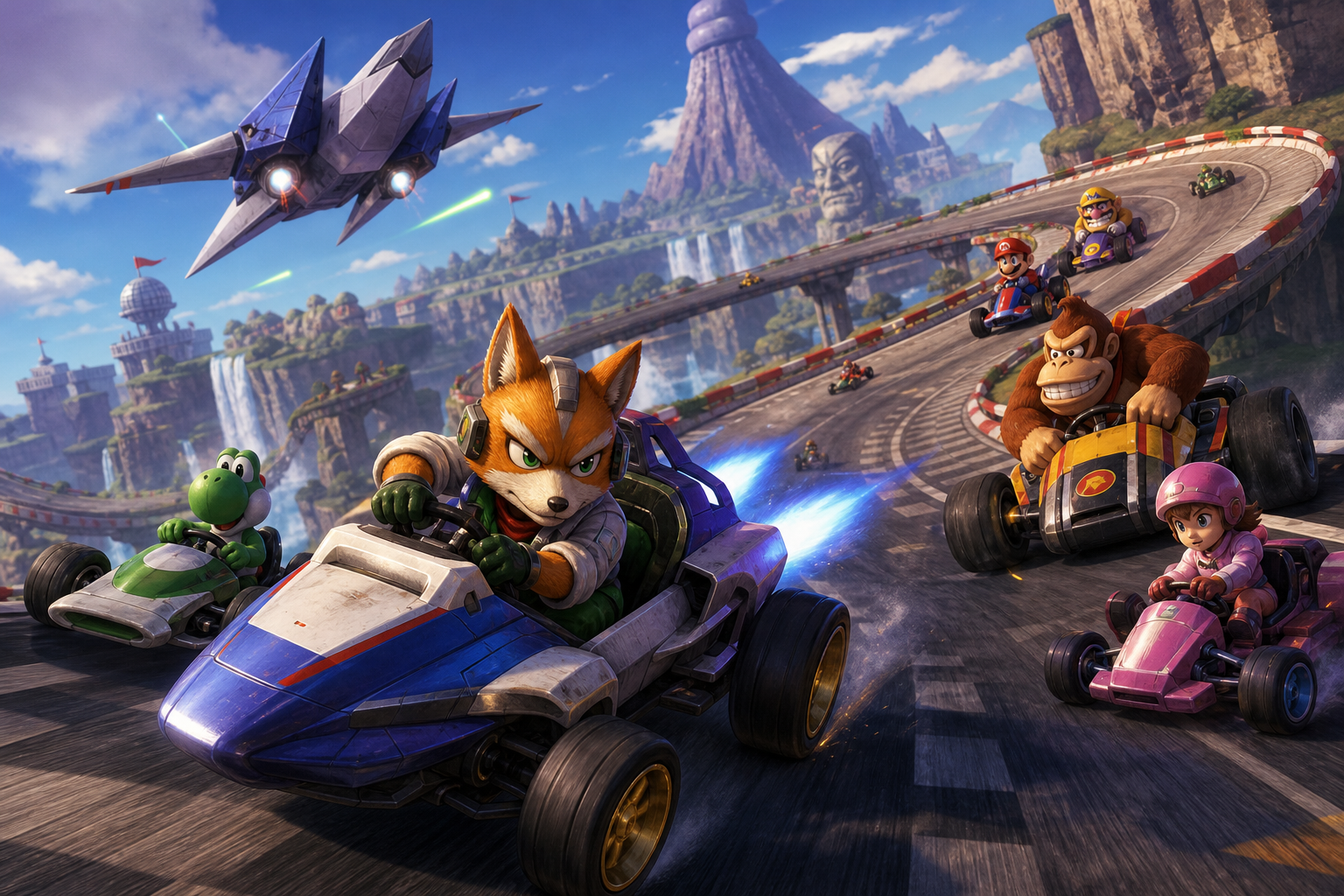
Recognizable Nintendo characters turn the roster into a clash of movement styles, attack ranges and recovery options. Mario, Link, Samus, Kirby, Fox, Pikachu and the rest of the cast do not simply provide different costumes for the same fighting style. Their jumps, recoveries, attacks and stage interactions create different ways to approach space.
The Nintendo 64 game supports two to four simultaneous players, making it unusually strong as both a competitive fighter and a shared living-room game. Its stages change how characters approach space, while items create temporary opportunities that reward adaptation. Interactive arenas and hazards also give the game a much wider range of match situations than a fixed tournament stage.
Compared with Killer Instinct Gold or Fighters Destiny, Super Smash Bros. has a different learning curve and a more chaotic surface. That is not a weakness. Its platform-fighting identity, crossover roster and multiplayer focus give it the widest range of reasons to return. It works for groups, Nintendo fans, competitive players and newcomers who may not be ready for a traditional combo-heavy fighter.
Super Smash Bros. therefore earns the top position not because it replaces every other form of fighting game, but because it offers the most complete combination of accessibility, character variety, stage identity and multiplayer replay value on the Nintendo 64.
- Best suited to: groups, Nintendo fans and players who prefer ring-outs to health-bar depletion.
- Main tradeoff: broad accessibility and replay value, but less traditional combo structure than arcade-style fighters.
- Key distinction: it is a platform fighter with its own movement, recovery and stage priorities.
The Nintendo 64’s fighting library is best understood as a set of competing design philosophies. Killer Instinct Gold emphasizes combo execution, Fighters Destiny turns matches into scoring puzzles, Mace builds combat around weapons and hazards, Rakugakids makes presentation part of the mechanic, and Super Smash Bros. reshapes the genre around platforms, percentages and ring-outs.
The lower-ranked games are not interchangeable filler. War Gods preserves a snapshot of Midway’s polygonal arcade experiments, Deadly Arts tests character creation and training, Dark Rift pursues a console-focused science-fiction identity, Mortal Kombat 4 documents a major series in transition, and Flying Dragon combines multiple fighting traditions in one cartridge.
For a first stop, choose Super Smash Bros. if multiplayer variety matters most, Killer Instinct Gold if you want a conventional combo fighter, or Fighters Destiny if unusual rules are the priority. Choose Mace or Dark Rift for weapon-based 3D combat, Rakugakids for visual eccentricity, and Flying Dragon for mode variety. Taken together, these games show that the Nintendo 64’s fighting scene was broader than its most famous crossover suggested.