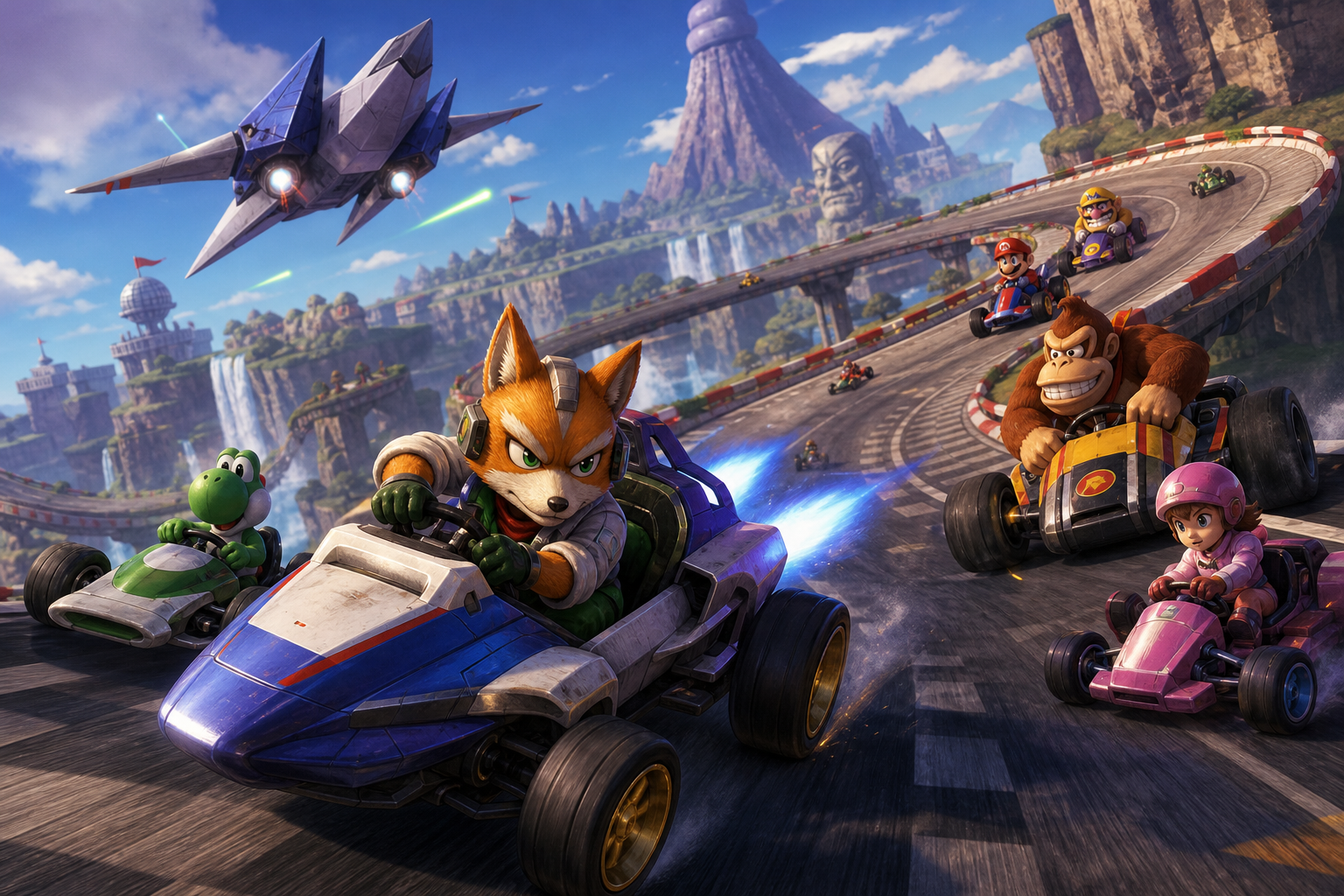
Nintendo 64 racing is often reduced to Mario Kart 64, but the system’s library has a much wider mechanical range. Its racers ask players to read waves, hold impossible speeds, land motocross jumps, discover shortcuts, drift through corners and survive courses designed as much for spectacle as competition.
This ranking considers games released for Nintendo 64 whose central activity is racing. Handling identity comes first, followed by course or track design, meaningful mode variety, replay value and technical ambition. Popularity matters, but it cannot rescue a racer whose ideas overlap too heavily with a stronger choice. The list also favors games that give players a clear reason to choose them instead of another entry. That is why Mario Kart 64 is discussed as an important comparison rather than automatically receiving a place.
Regional names and release dates can differ, so the focus stays on the Nintendo 64 editions. Beetle Adventure Racing, for example, was known as HSV Adventure Racing in Australia, but that regional title does not represent a separate game. Later ports, arcade versions and digital reissues are similarly treated as related releases rather than additional entries.
10. World Driver Championship
World Driver Championship is the quiet outlier in this group. While other Nintendo 64 racers chase mascot chaos, futuristic velocity or spectacular environmental hazards, this game concentrates on circuit racing with conventional cars. It gives players a career structure built around competing for teams, multiple events and a substantial selection of automobiles, making it a useful alternative to the system’s more exaggerated racers.
That focus gives the game a practical identity. It is a choice for players who want the rhythm of braking, corner entry and clean laps without item attacks, transforming vehicles or extreme environmental gimmicks. The emphasis on car handling and track racing also makes it a better fit for this list than vehicle-heavy action games whose racing is only a small part of the experience.
Its position reflects both its strengths and its limits. The more restrained format makes the game valuable, but it does not offer the same immediately distinctive handling language as Wave Race 64 or F-Zero X. Nor does it have the broad adventure structure of Diddy Kong Racing. It earns a place because sustained circuit racing is central rather than incidental, and because a Nintendo 64 top ten would be incomplete without acknowledging the system’s more conventional road-racing side.
Choose it when you want a focused car racer with career progression and less theatrical interference. Choose something higher on the list if your priority is unusual vehicle behavior, multiplayer spectacle or memorable course gimmicks.
- Best fit: players who prefer conventional circuit racing and career events.
- Main tradeoff: a narrower identity than the more inventive racers above it.
9. Hydro Thunder
Hydro Thunder brings arcade boat racing to Nintendo 64 with a very different personality from Wave Race 64. Where Wave Race asks the player to work with water movement and maintain a controlled line, Hydro Thunder aims for acceleration, aggressive hazards and oversized spectacle. The attraction is not simply that the vehicles are boats; it is that the courses turn water racing into a loud, obstacle-filled sprint.
That distinction makes it an important inclusion even though it is less simulation-minded. Its courses are built to create visual drama and sudden danger, giving races a strong arcade pulse. The result is accessible in concept but demanding when speed and hazards combine. Shortcuts, jumps and route hazards make the player react to the course as a sequence of set pieces rather than as a natural water surface.
The Nintendo 64 version should be discussed as its own platform edition rather than being treated as interchangeable with the arcade release or later versions. It ranks below the more complete racers because its appeal is concentrated around high-energy events. It is an excellent change of pace for players who want boats without studying wave behavior, but Wave Race 64 offers the deeper handling conversation.
Hydro Thunder is the right pick when spectacle matters more than realism. It is not the better choice for someone searching for the most nuanced watercraft control on the system.
- Best fit: arcade-racing fans who want boats, speed and hazards.
- Main tradeoff: less emphasis on natural water handling than Wave Race 64.
8. Extreme-G
Extreme-G gives Nintendo 64 a futuristic motorcycle racer built around velocity and weapon pressure. Its machines sit closer to high-speed combat vehicles than ordinary bikes, and that changes how players read a course. The goal is not only to choose a clean cornering line; it is also to maintain momentum while responding to attacks and the visual rush of enclosed, twisting tracks.
Its identity is strongest when compared with F-Zero X. Both games emphasize futuristic speed, but they do not produce the same sensation. F-Zero X is about preserving control through a large field of hover vehicles and severe track geometry. Extreme-G feels more like motorcycle racing with combat layered into its high-speed framework. Weapons such as missiles, lasers, mines and other attacks make positioning part of the competition.
The ranking keeps Extreme-G below the top tier because presentation and weapon-focused pressure can divide players. Those seeking a pure speed contest may prefer F-Zero X, while players who want racing to include tactical aggression have a clear reason to choose Extreme-G. Its four-player support also gives it value in a group, although its mechanical identity is more specialized than Mario Kart 64’s.
Extreme-G is the Nintendo 64 choice for players who want racing to feel dangerous and confrontational. It is less suitable for anyone who wants the cleanest possible contest of cornering and acceleration.
- Best fit: players who want futuristic motorcycles and combat pressure.
- Main tradeoff: weapon action can distract from the purity of the racing line.
7. Ridge Racer 64
Ridge Racer 64 offers a more traditional arcade-car alternative to Nintendo’s mascot racers. Its central appeal is drift-oriented cornering: the player is encouraged to understand how a car carries speed through bends rather than relying on items, character abilities or terrain-specific vehicle switching. That gives the game a clean mechanical identity within a crowded Nintendo 64 racing library.
The course experience is less about exploring huge environments and more about learning a road’s rhythm. Corners become the main vocabulary, and success comes from managing approach speed, slide and exit position. This is a useful contrast with World Driver Championship, whose circuit focus is more restrained, and with Beetle Adventure Racing, which makes shortcuts and discovery central to its appeal.
Ridge Racer 64 does not rank higher because its specialized handling may not satisfy players looking for many vehicle types or elaborate solo progression. Its appeal depends on enjoying repeated refinement: a familiar corner becomes satisfying because the player gradually improves the entry, drift and exit. That narrow focus is a strength for the right audience rather than a missing feature.
It is the Nintendo 64 selection for someone who wants arcade drifting to remain the star of the show. Players searching for broad modes or a large solo adventure should look elsewhere.
- Best fit: arcade racers who enjoy learning drift-heavy corners.
- Main tradeoff: less variety in structure than the adventure-oriented entries.
6. Star Wars: Episode I Racer
Star Wars: Episode I Racer turns podracing into a dedicated high-speed format rather than using the license as a decorative layer. The machines are visually unusual, the courses are hazardous and the sense of speed is central to the game’s identity. Those features make it unlike the conventional car racers and unlike the controlled water movement of Wave Race 64.
Its strongest contribution is specialization. Podracers do not handle like ordinary vehicles, and the tracks are designed around the idea that extreme velocity creates its own form of danger. Players are pushed to react to obstacles and preserve momentum through environments that feel more hostile than a normal circuit. The license gives the game a clear atmosphere, but the ranking rests on the racing design rather than recognition alone.
The game’s appeal is built around speed management and survival. A conventional car racer teaches the player to read corners and braking zones; Episode I Racer asks for a broader awareness of track hazards, vehicle damage and the strange proportions of a machine pulled by two engines. That gives it a strong track identity even when the control model feels less familiar.
The Nintendo 64 version should not be silently merged with other platform editions when discussing presentation or controls. It earns sixth place because its format is memorable and coherent, though its appeal is more focused than the broader racers above it. Choose it when unusual machines and hazardous science-fiction courses matter more than balanced all-purpose handling.
- Best fit: Star Wars fans and players seeking an extreme science-fiction racer.
- Main tradeoff: its specialized speed model is less broadly comfortable than a kart or road racer.
5. Beetle Adventure Racing
Beetle Adventure Racing uses Volkswagen Beetles as the foundation for a road racer that rewards route knowledge as much as raw speed. Its courses are not merely clean loops with scenery placed around them. They encourage players to notice alternate paths, shortcuts and environmental details, making familiarity with the route a competitive advantage.
That emphasis gives the game a different form of replay value from Ridge Racer 64. Ridge Racer asks players to refine cornering technique, while Beetle Adventure Racing asks them to understand a course as a space with choices. The Beetles give the game a friendly personality without reducing the racing to item-based chaos. Its regional naming differences, including HSV Adventure Racing in Australia, should not be mistaken for separate games.
The course design is the real reason to keep returning. A player who only follows the obvious road may finish a race, but a player who studies the landscape can discover faster lines, hidden routes and better ways to carry momentum. That makes the game exploratory without leaving the racing category behind.
The game ranks fifth because it combines accessible road racing with meaningful discovery. It does not deliver F-Zero X’s speed or Diddy Kong Racing’s vehicle variety, but it offers one of the clearest reasons to replay a course: there may be a faster or more interesting way through it.
- Best fit: players who enjoy shortcuts, route learning and personality-filled roads.
- Main tradeoff: less dramatic vehicle variety than Diddy Kong Racing.
4. Excitebike 64
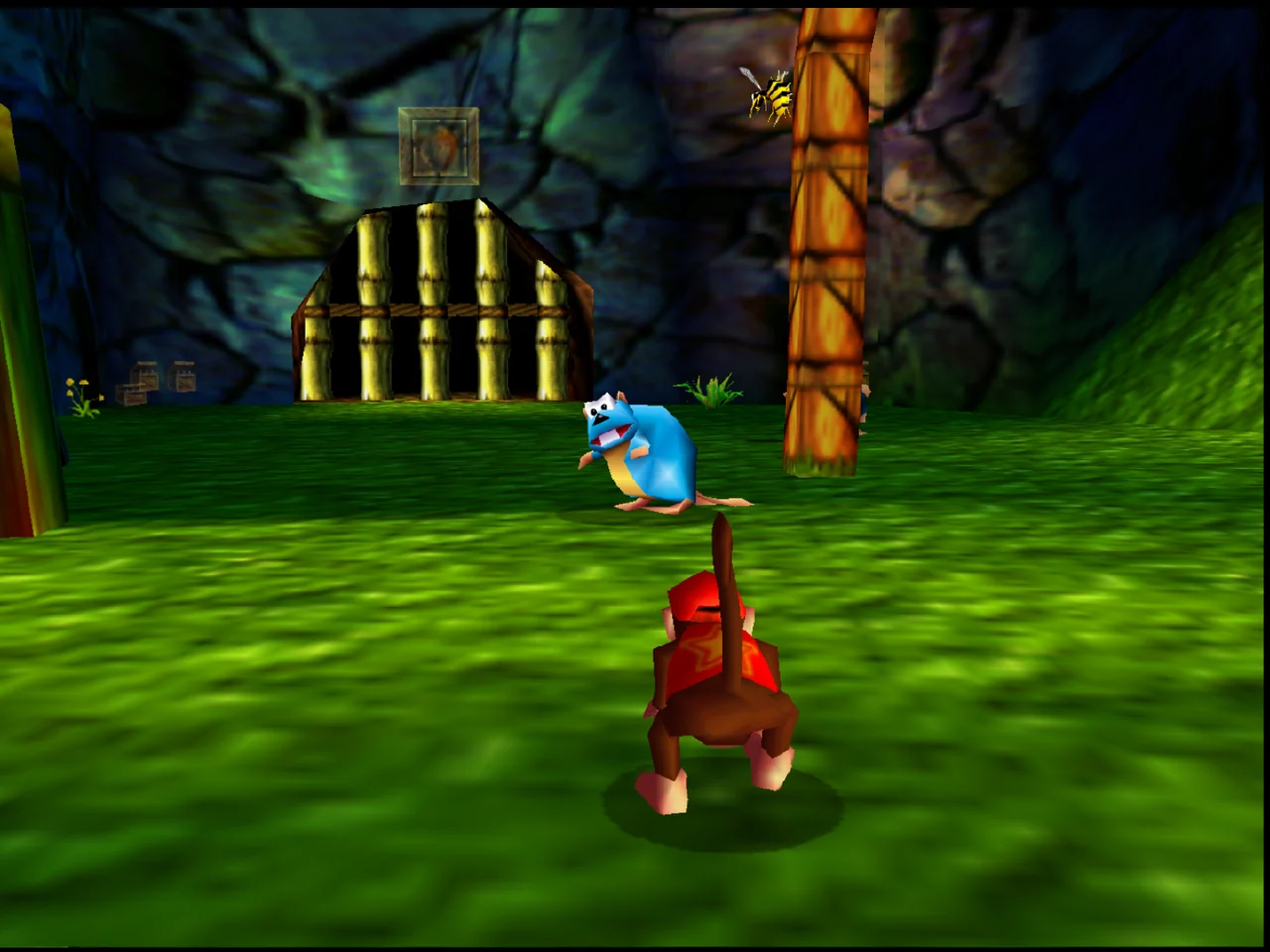
Excitebike 64 expands Nintendo’s motocross series into a 3D racer built around jumps, landings and rider control. The motorcycle is not simply a car with two wheels. Track elevation, takeoff timing and trick opportunities create a different relationship with speed, because a fast lap can be ruined by a poor landing or an overambitious jump.
Its breadth also matters. Nintendo’s game material identifies six riders, 20 stadium and outdoor courses, trick systems, course creation and multiplayer for up to four players. Those modes give it more ways to remain interesting than a straightforward race ladder. Custom tracks especially reinforce the idea that the player is meant to think about course shape, not merely memorize official circuits.
Excitebike 64 also understands that motocross has a different rhythm from road racing. The player must manage the bike in the air, control the landing angle and decide when a trick is worth the risk. A jump is not just a visual flourish; it is part of the line through the course. That gives the game a strong handling identity even when the surrounding modes vary.
Excitebike 64 places fourth because it makes motocross feel like its own discipline on Nintendo 64. It falls short of the top three mainly because its handling can demand more patience than a casual kart racer, and its appeal depends heavily on whether the player enjoys managing airborne movement. For players who do, it is one of the system’s most mechanically distinctive racers.
- Best fit: players who enjoy jumps, tricks and landing technique.
- Main tradeoff: airborne control creates a steeper learning curve than conventional racing.
3. Wave Race 64
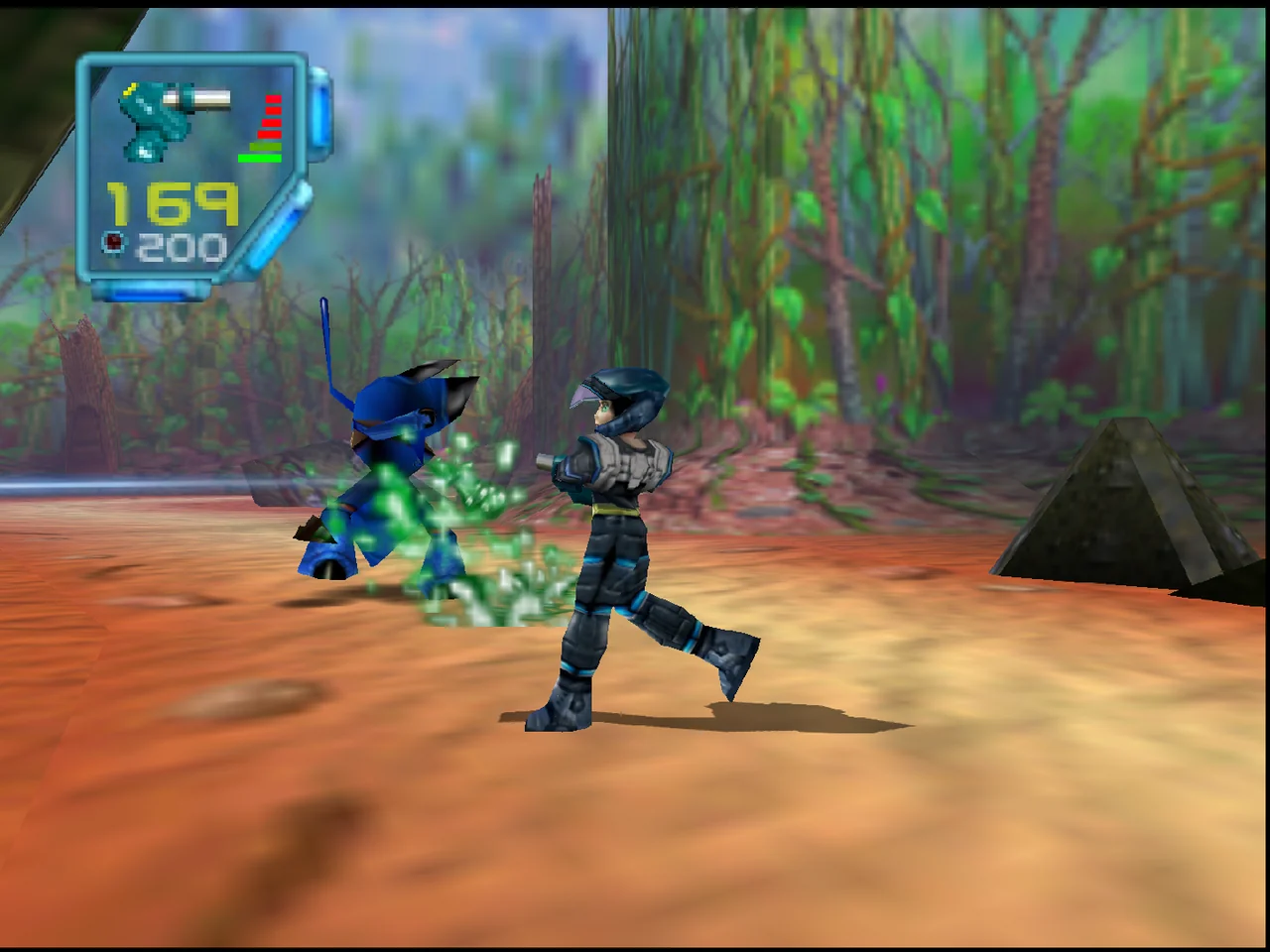
Wave Race 64 is one of the clearest examples of Nintendo 64 racing built around a vehicle’s environment. Its jet skis respond to changing water conditions, and the waves are not background decoration. Course lines, balance and timing all depend on reading the surface. Weather changes further alter the challenge, giving familiar spaces a shifting character.
The game includes Championship, Time Trials, Stunt Mode and two-player versus racing, while four selectable watercraft provide different performance characteristics. That combination gives Wave Race 64 both a focused handling model and several ways to engage with it. Championship rewards consistency, Time Trials expose route efficiency, Stunt Mode changes the objective and versus racing adds direct competition.
The important distinction is that water is part of the control problem rather than merely the setting. A corner on land is mostly about steering and speed, but a wave can change the craft’s balance, launch it upward or disrupt the intended line. The player therefore reads the course and the surface together. That is a much more specific design idea than simply placing boats on ordinary tracks.
Wave Race 64 ranks third because it does something few racers attempt: it makes water itself the main handling system. Hydro Thunder offers more explosive arcade spectacle, but Wave Race offers more to study. It is the strongest recommendation here for players who want vehicle control, weather and course reading to remain connected rather than functioning as separate features.
- Best fit: players who want technical water handling and course reading.
- Main tradeoff: its deliberate control feels less immediately carefree than kart racing.
2. Diddy Kong Racing
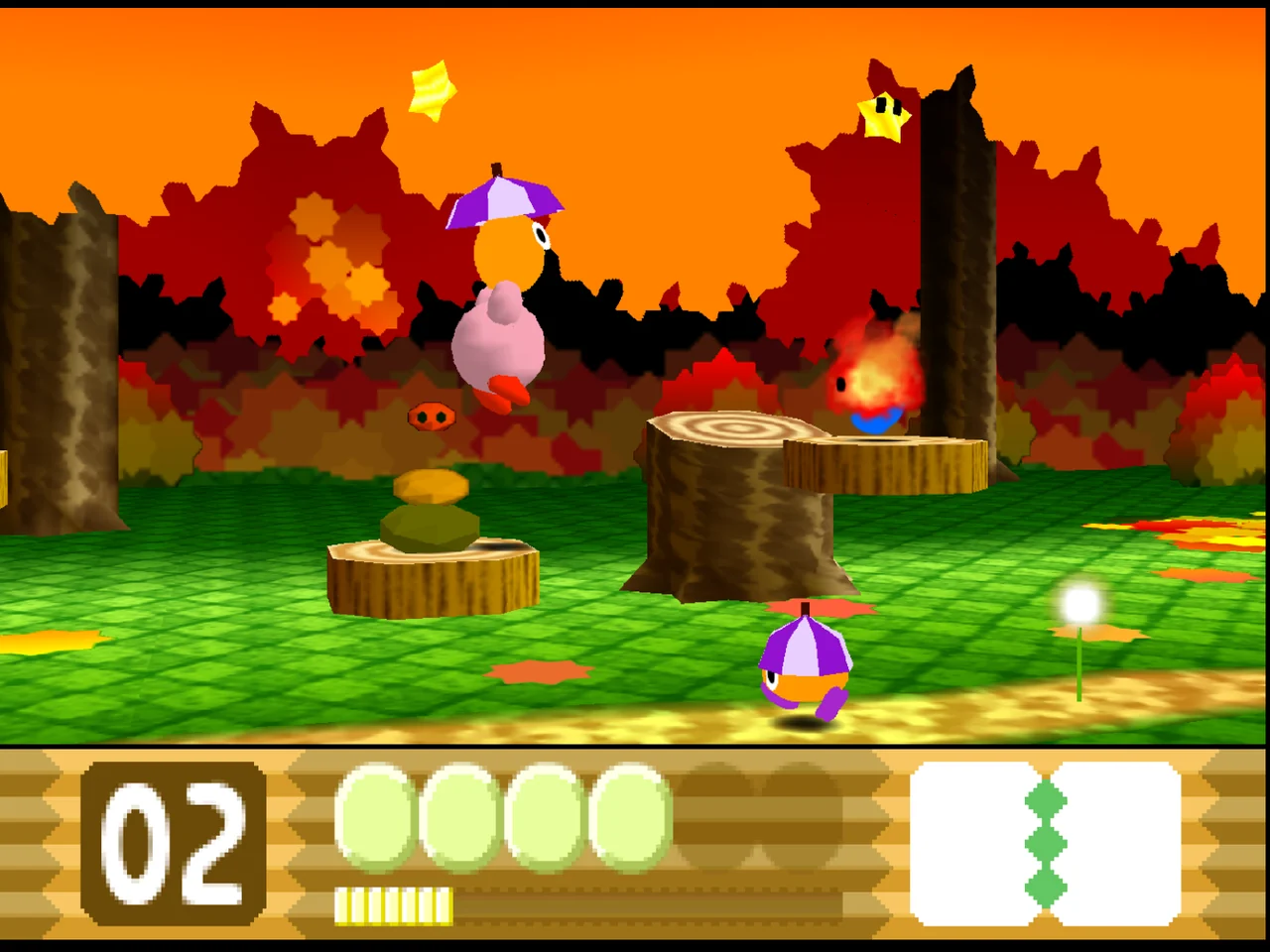
Diddy Kong Racing is broader than a standard kart racer because it supports three vehicle types: karts, hovercraft and planes. That changes more than the appearance of a race. Each vehicle asks the player to understand a different relationship with the course, and the mixture allows land, water and air routes to coexist within one racing adventure.
Nintendo’s official material identifies 20 three-dimensional courses and an eight-racer structure. Its adventure-oriented organization gives solo play more shape than a simple collection of cups. Players explore an island hub, unlock courses and take on challenges that make the racing feel connected to a larger journey. The vehicle switching also separates it from Mario Kart 64.
Mario’s racer is built around item-driven competition and immediately readable party play. Diddy Kong Racing offers a wider handling palette and a stronger sense of progression through its world. The distinction matters because both games are often placed in the same broad kart-racing conversation, even though one is designed around vehicle variety and adventure progression.
Diddy Kong Racing takes second place because it combines accessibility with genuine variety. The reason it does not claim the top spot is that its breadth can sometimes make the individual vehicle systems feel less pure than the dedicated handling of Wave Race 64 or F-Zero X. Still, for a solo player who wants a substantial racing adventure, it is one of the safest Nintendo 64 recommendations.
- Best fit: solo players and groups who want karts, hovercraft and planes.
- Main tradeoff: broader variety can feel less mechanically focused than a specialist racer.
1. F-Zero X
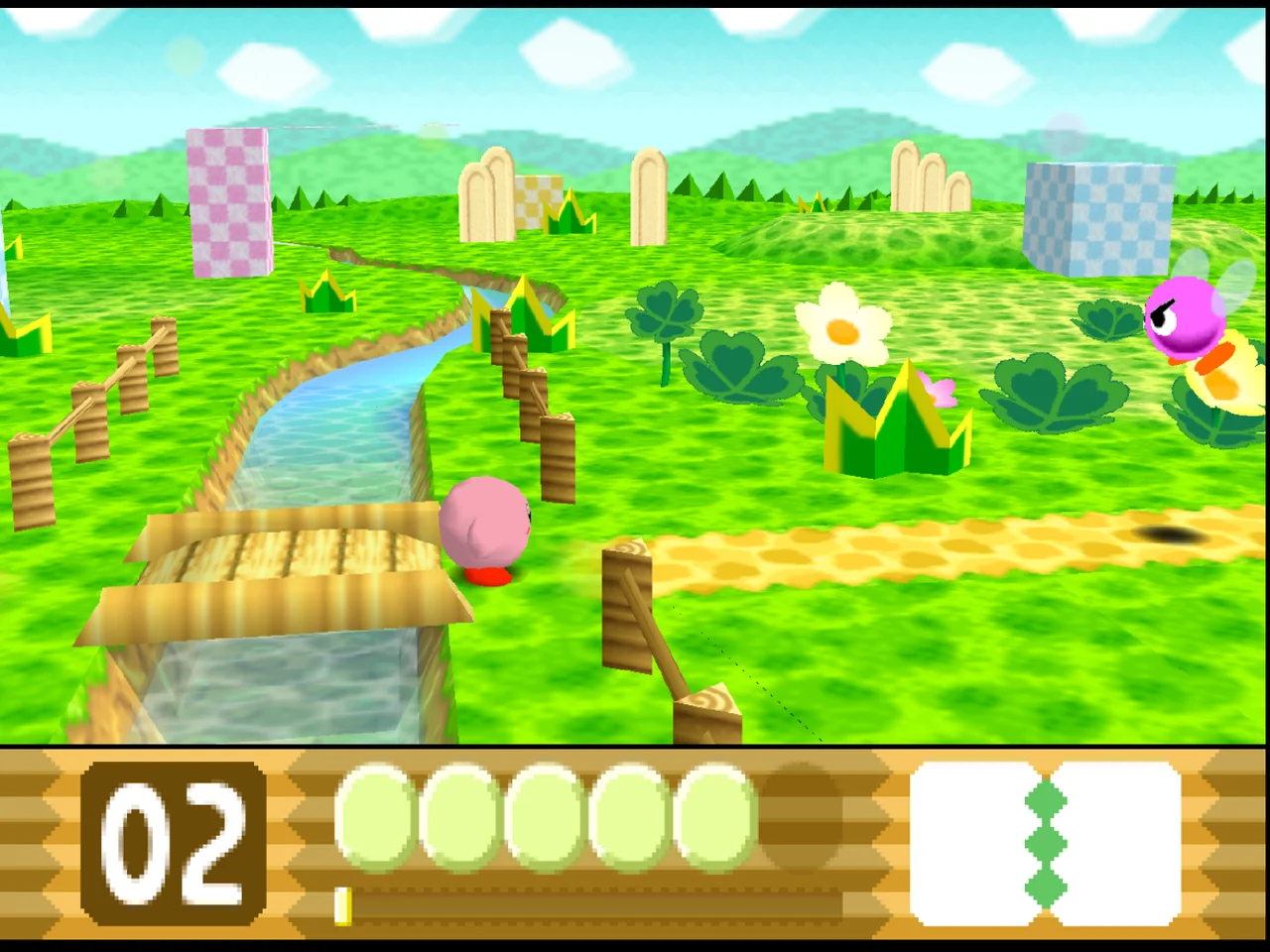
F-Zero X earns the top position by making speed, field size and track structure work together. Released for Nintendo 64 in 1998, it offers 30 selectable hover vehicles and four-player split-screen competition. Those details are not merely technical trivia: they define the game’s identity as a contest where maintaining control in a crowded, high-speed environment is the central skill.
Its futuristic machines produce a sharper contrast with the rest of the list than ordinary cars or karts can. The tracks ask players to commit to lines at speeds that leave little room for hesitation, while the large field creates constant pressure. Vehicle differences also matter, since machines vary in handling, speed and durability. The player is therefore choosing both a racing style and a machine suited to that style.
Compared with Extreme-G, F-Zero X is less dependent on weapon-focused aggression. Compared with Mario Kart 64, it removes the item-driven swing and places more weight on vehicle control, route reading and consistency. The game’s famous speed is not valuable by itself; it matters because the course design and vehicle behavior make preserving that speed a constant challenge.
Mario Kart 64 remains the better choice for easy local party play, and Diddy Kong Racing offers a richer adventure structure. F-Zero X wins this editorial ranking because it delivers the clearest high-speed racing thesis and sustains it across its roster, tracks and multiplayer design. It is the game to choose when speed itself is the feature rather than just one ingredient.
- Best fit: speed-focused players and competitive four-player groups.
- Main tradeoff: its velocity and unforgiving track design can be demanding for newcomers.
The best Nintendo 64 racer depends on the kind of pressure you want. Choose Mario Kart 64 if accessible four-player item battles are the priority, Diddy Kong Racing if you want a solo adventure with multiple vehicle types, Wave Race 64 if water handling sounds more interesting than asphalt, and Excitebike 64 if jumps and landings are your ideal form of racing.
F-Zero X stands at the top because it offers the most concentrated answer to the question of what Nintendo 64 racing can be: fast, crowded, technically demanding and immediately distinct. The rest of the list matters because it proves that the system’s racing library was never one-style entertainment. It could be playful, technical, hazardous, exploratory, conventional or wildly futuristic without leaving the racing category behind.
This is also why Mario Kart 64 does not automatically take the first position. Its four-player design, item battles and memorable track selection make it essential Nintendo 64 racing, but the ranking rewards the game with the strongest combination of handling identity, course design and distinct purpose. On those terms, F-Zero X offers the clearest specialist experience, while Diddy Kong Racing remains the broader adventure recommendation and Mario Kart 64 remains the easiest party recommendation.