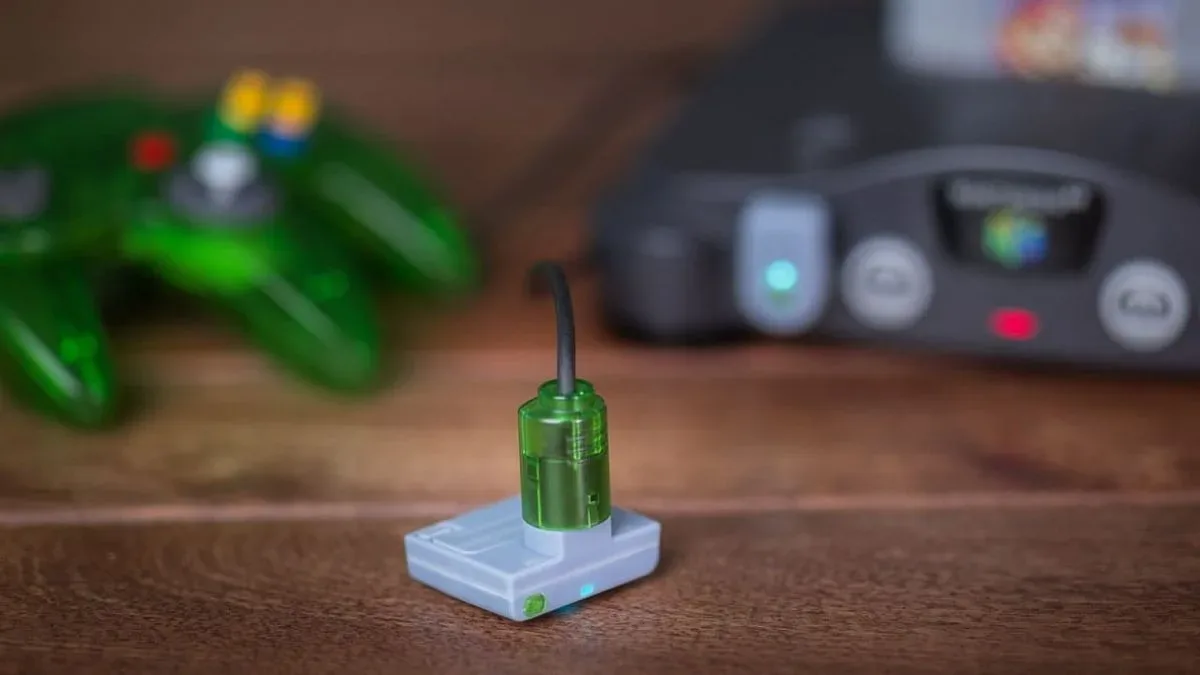
The Nintendo 64 controller has a shape that encourages strong opinions, but its cable is much less controversial: it can be a real limitation when a console is positioned far from the sofa. Bridge is a planned peripheral intended to solve that particular problem without asking owners to open, alter or permanently rewire an original pad.
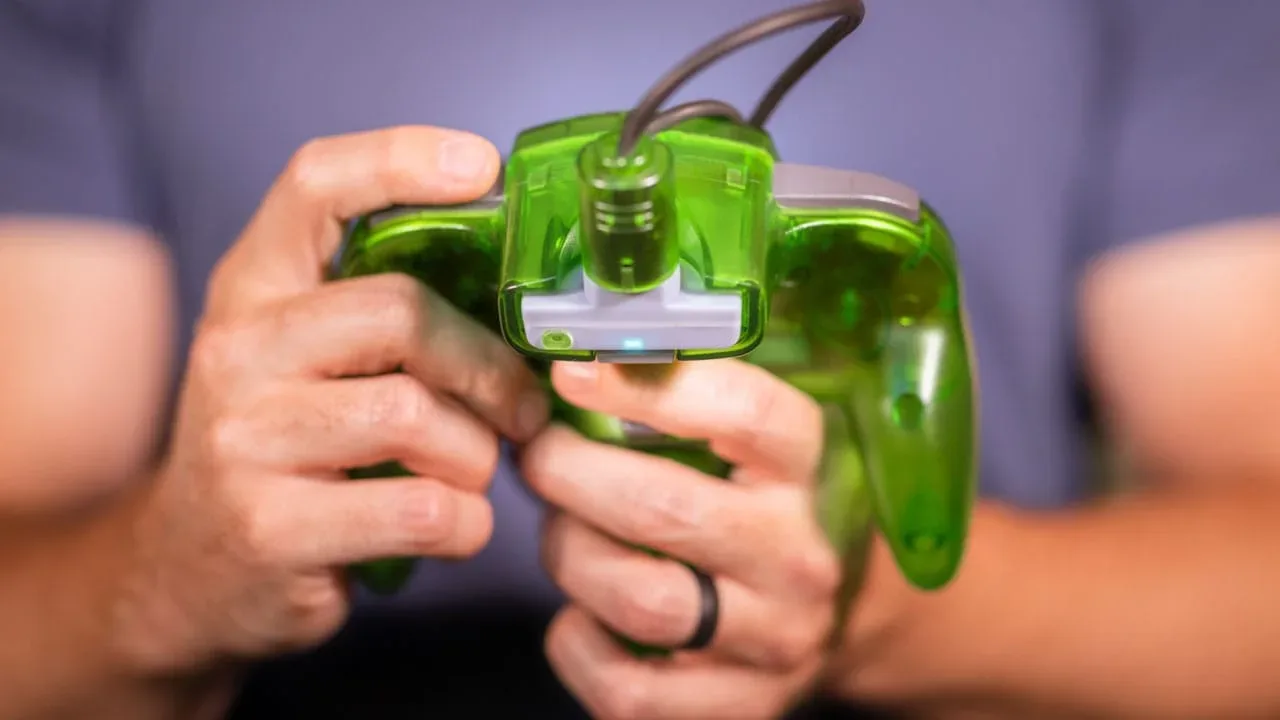
The device’s central idea is refreshingly direct. An N64 controller plugs into a small Bridge unit, which sends its inputs wirelessly to a dongle connected to the console. The original controller cable remains intact. That matters for players who want the convenience of a wireless setup while retaining the option to disconnect the adapter and use the same controller normally later.
Bridge is being developed by Alex, a solo developer in Michigan. A limited first run of 200 units is planned for December, initially for the United States, at a stated price of $39. International shipping may follow if demand supports it. With a small launch allocation, interested N64 owners should treat availability and broader distribution as prospective rather than guaranteed.
What Bridge is designed to do
Bridge is not a replacement N64 controller. It is an adapter system built around the controller many players already own. One end accepts the wired connection from an N64 pad; the other end of the system is a receiver dongle for the console. Instead of modifying a controller’s internals or replacing its cable, the setup is designed to place the wireless step between controller and console.
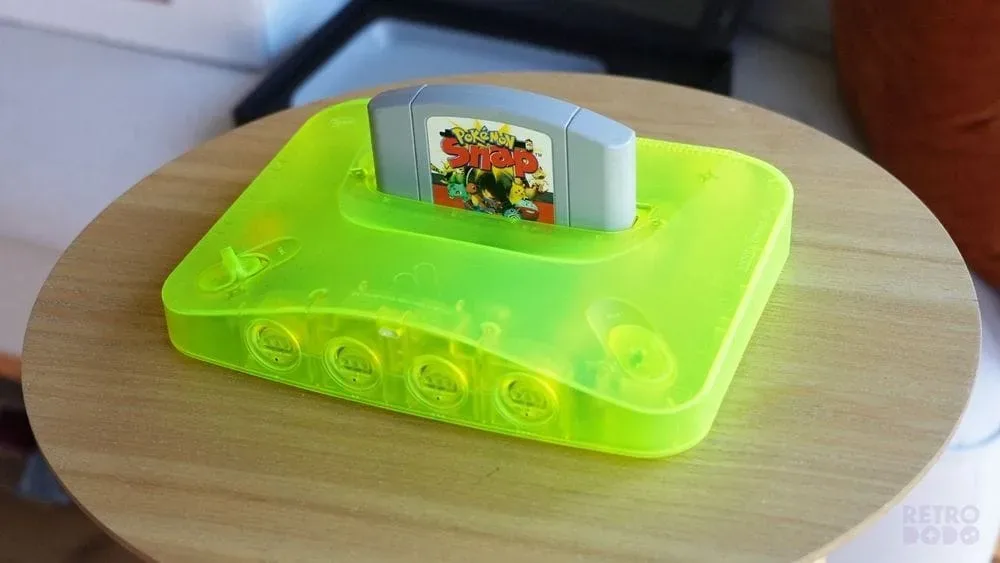
The adapter is said to work with original N64 hardware as well as third-party consoles. That is an important compatibility claim, though it is still a claim from the project rather than a broad independent compatibility matrix. Anyone considering it for a specific clone console or a particularly unusual third-party controller should look for confirmed support details before treating a purchase as certain.
Physical flexibility is also part of the pitch. Bridge can tuck into the controller’s accessory port area when that is practical. Alternatively, it can sit on a nearby table or the floor, which is useful when a player wants to use an accessory in the controller. The distinction is worth making because the N64 controller’s accessory port is normally where devices such as a Rumble Pak or Memory Pak are fitted; an adapter that monopolized that space would make its wireless convenience a much tougher trade-off.
Rumble and Memory Pak support are central claims
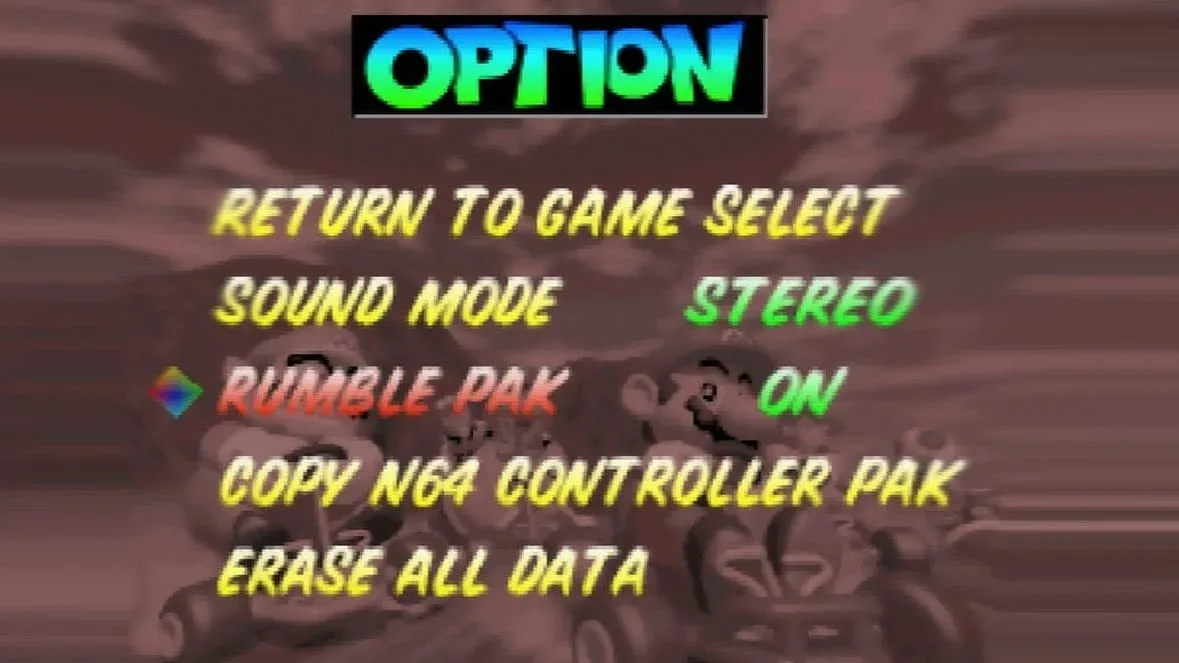
Bridge is designed to preserve use of both Rumble Paks and Memory Paks. A Rumble Pak is the accessory that provides vibration feedback, while a Memory Pak is used by compatible games for save data. For an adapter built specifically around existing controllers, retaining those functions is arguably more meaningful than simply removing a cable.
The project’s placement options reflect that priority. If an accessory needs the port, Bridge can be positioned away from it rather than forcing owners to decide between wireless play and the accessory they want to use. That approach is especially attractive to people who value the original controller setup as an object and as a functional part of their N64 library—not just as an input device to be replaced.
For retro buyers who are also evaluating game cartridges, it is worth separating accessory condition from cartridge condition. Photos can help spot obvious issues, but they do not establish everything about a game’s state or authenticity. Our guide to what Nintendo cartridge pin photos can and cannot prove explains the limits of assessing hardware from listing images alone.
A dedicated 2.4 GHz connection, not Bluetooth
Bridge uses a dedicated low-latency 2.4 GHz wireless link and is N64-only; it is not described as a Bluetooth product. 2.4 GHz refers to the radio-frequency band used for the connection. The key point for this product is not the frequency label by itself, but that the sender and receiver are intended to communicate directly as a dedicated pair rather than relying on Bluetooth pairing.
The developer states that Bridge adds less than 3 milliseconds of latency compared with a wired controller. Latency is the delay between an input and the point at which that input reaches the game. In a controller adapter, low latency is a major design goal because added delay can affect how immediate movement, menu selections and timing-sensitive actions feel.
That sub-3 ms figure should be understood accurately: it describes the claimed extra delay over a wired connection, not an assurance that every part of a player’s display and console setup has no delay. It nevertheless identifies the target Bridge is pursuing—wireless use that remains close to the wired experience—without changing the controller itself.
The wireless hardware is also intended for one job: N64 controller connectivity. Players should not assume it doubles as a general Bluetooth adapter or as a wireless solution for another platform. Its narrow focus is part of the appeal for someone seeking a purpose-built adapter, but it also defines its limits.
Power expectations and practical setup questions
Bridge is powered by a single AAA battery. The stated estimate is roughly 10 hours of active play per battery. Actual time may vary with use, accessories and other conditions, but the provided estimate gives prospective owners a straightforward baseline for planning: this is not a cable-free controller that can be forgotten indefinitely, and spare AAA batteries will be part of the routine.
There are several sensible details to check before committing to an early-run accessory:
- Console setup: Confirm the intended console connection and whether the particular original or third-party hardware in use is covered by the stated compatibility.
- Controller needs: Decide whether the controller will typically be used with a Memory Pak or Rumble Pak, since that affects where the Bridge unit is best placed.
- Battery habits: A single AAA is simple to replace, but players who use the N64 often may want spares available.
- Launch limits: The initial release is limited to 200 units and is planned for the US, so availability outside that group has not been established.
- Expectations: The low-latency figure and accessory support are stated design claims. They should not be mistaken for a promise of identical results across every console, controller and home setup.
Built for preserving the controller people already have
There are already modern ways to use an N64 without its original controller cable, including dedicated replacement controllers and other controller options. Bridge takes a different route. Its appeal rests on preserving an existing pad, cable and connector while moving the player farther from the console.
That is more than a cosmetic distinction. Owners of original controllers may prefer their familiar stick, button layout and feel, while those with working accessories may not want a wireless solution that breaks the established controller ecosystem. By putting the wireless functionality into an external device, Bridge aims to leave the pad itself as it was.
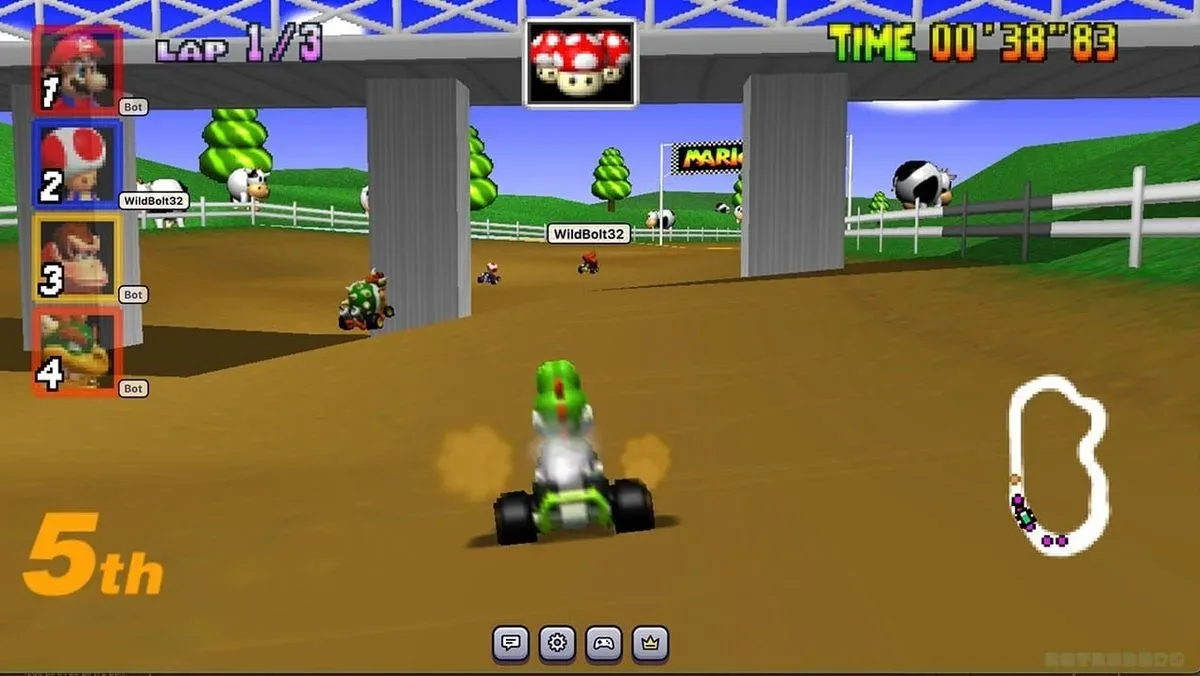
The project has been in development for around a decade, with work paused as its creator focused on family life. Games named as having been used with it include The Legend of Zelda: Ocarina of Time, Super Mario 64, Pokémon Snap and Super Smash Bros., with the original Super Smash Bros. described as the most-used test game. Those titles show the range of games the developer has personally used with the device, but they are not a complete game-by-game compatibility list.
Why the modest adapter approach could matter
For N64 players, the best hardware improvements are often the ones that remove a nuisance without demanding the removal of something cherished. Bridge’s premise is precisely that: retain the original controller and its accessories, avoid cable cutting and soldering, then add a wireless link with a stated under-3 ms latency increase.
The result will depend on whether the final retail units meet those stated goals, and the small initial run means many interested buyers may have to wait for a later opportunity. Still, the concept addresses a specific gap. It is for people who do not want a new controller so much as they want their old controller to reach the couch without dragging a long wire across the room.