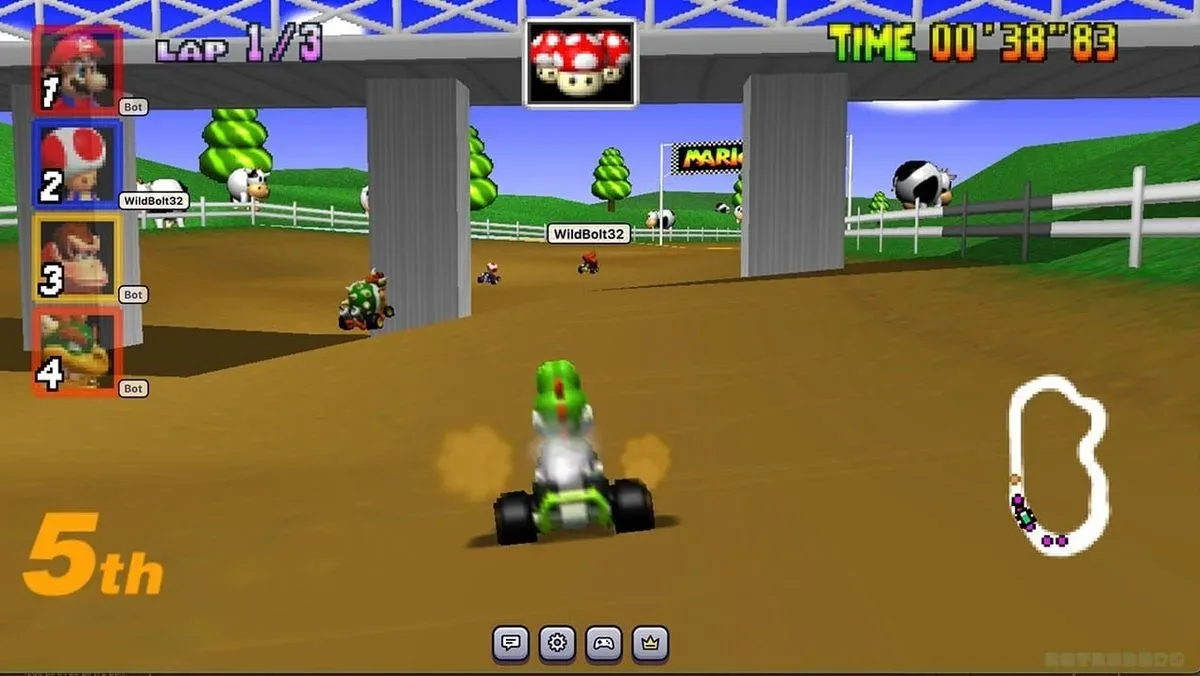
Mario Kart 64 has received a long-delayed-feeling feature through a new ROM hack: Rumble Pak support. Mario Kart 64: Shindou Edition Restored adds native vibration feedback to the Nintendo 64 racer, giving a tactile kick to starts, item boosts, collisions and lightning strikes—sensations players might reasonably have expected from the game decades ago.
The patch is especially notable because rumble is now a near-standard part of controller feedback, yet the original Mario Kart 64 did not include it. The new edition aims to fill that gap without changing the basic point of the game: race hard, defend first place, and try not to let one shell turn a comfortable lead into a deeply personal grievance.
What Shindou Edition Restored adds
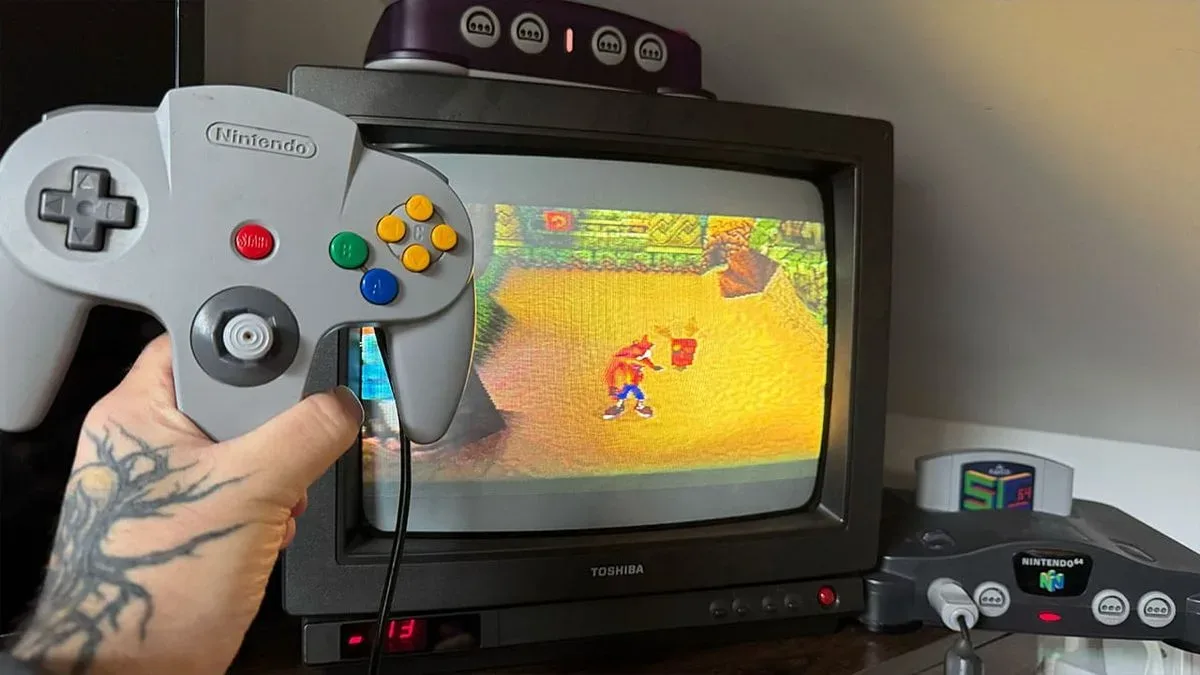
The patch adds native Rumble Pak functionality and uses what its description calls official low-level Ultra64 motor commands. In practical terms, that means the game sends instructions to the controller accessory’s motor so particular on-screen events can be felt in the player’s hands.
Its rumble events include:
- the initial speed boost at the start of a race;
- boosts gained from items such as mushrooms;
- a strong jolt when a shell connects;
- feedback when lightning hits; and
- surface-based vibration in one version of the patch, including sand on Koopa Troopa Beach.
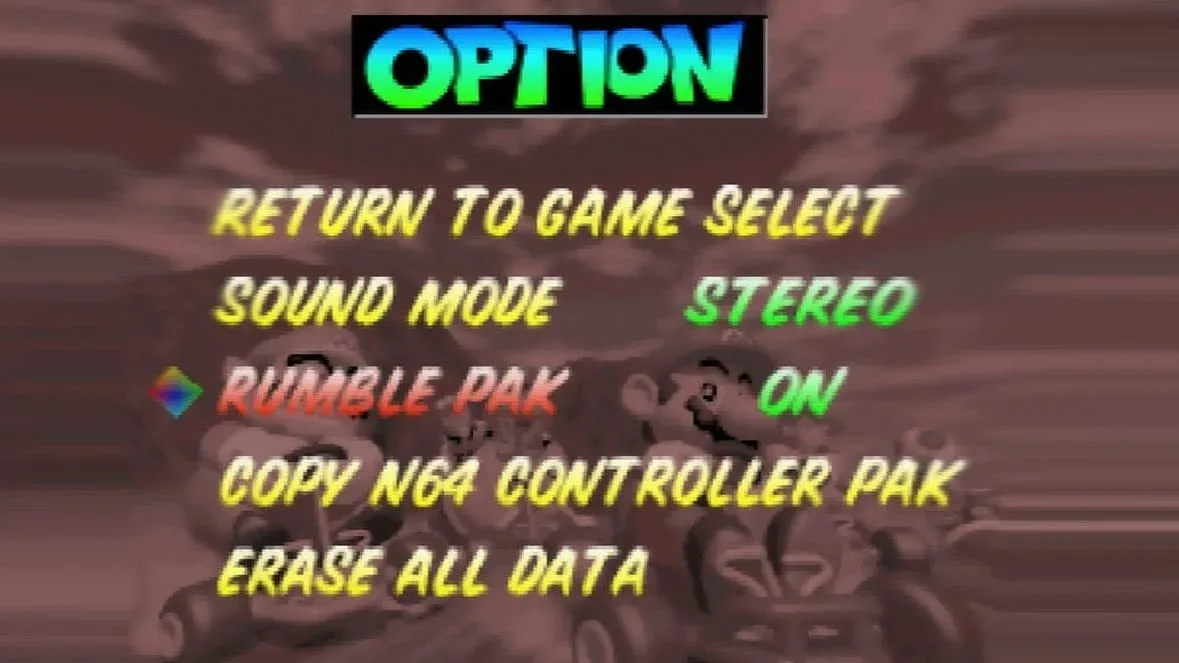
There is an in-game option to turn the feature on or off. That is a meaningful inclusion rather than a minor checkbox. Rumble is most useful when it supports the action without becoming another source of distraction, and players who simply prefer the unmodified feel of the game can disable it.
The patch also supports all four participants in multiplayer races and battles. That matters because local multiplayer is central to the identity of Mario Kart 64; limiting feedback to a single controller would have made the enhancement feel oddly incomplete. Instead, each player can receive the same category of tactile signals while the race becomes progressively less friendly.
Two approaches to sand rumble
Shindou Edition Restored is available in two variants. One uses extensive rumble feedback over surfaces such as the sand on Koopa Troopa Beach. The other offers a smoother sand experience for players who want the new feature without continuous vibration while driving over that terrain.
That choice is a smart acknowledgment that haptic feedback is subjective. In this context, haptics means physical sensation delivered through a controller—in this case, vibration from the Nintendo 64 Rumble Pak. A sharp, short pulse for a shell strike communicates a discrete event. Ongoing vibration over a surface is different: it conveys texture or movement, but can be more intense over an extended stretch of play.
Related coverage includes Mario Kart 64 Gets Rumble Pak Support Through New Shindou Edition Restored Patch.
Neither variant is inherently the “correct” one. The surface-heavy option leans into the novelty of making the course feel more physical. The smoother version should better suit players who want feedback reserved for major moments such as boosts and attacks. The important part is that the patch does not treat all rumble preferences as identical.
Why the name matters
“Shindou” is an alternate rendering of “Shindō.” The term is associated with Japanese releases identified as Rumble Pak compatible, described as Shindō Pak Taiō. Native rumble support was added to Japanese versions of some Nintendo 64 games, including Super Mario 64 and Wave Race 64, but Mario Kart 64 did not receive the same treatment.
That is why “Restored” is an apt part of this patch’s title. It does not suggest that vibration feedback was part of every version of the original racer and somehow disappeared. Rather, it frames the hack as bringing Mario Kart 64 closer to the Rumble Pak-compatible experience that the hardware and several contemporaneous Nintendo 64 releases demonstrated.
The distinction is worthwhile for preservation-minded players. A ROM hack is a modification applied to game data; it is not a newly issued official release of the original cartridge. In this case, the appeal lies in a focused enhancement: adding one familiar modern-feeling layer of feedback while retaining the game people know.
Why rumble changes the feel of a race
Rumble cannot alter the position of a kart, rebalance an item, or make a player take a corner more cleanly. It can, however, make certain moments more immediate. A mushroom boost is already visible and audible; a brief vibration gives it another cue. Shell hits and lightning are similarly clear in visual terms, but a strong controller jolt can make the interruption feel more abrupt and consequential.
That extra signal is particularly suitable for Mario Kart 64, where the action can switch quickly between controlled driving and item-fuelled disorder. The game’s multiplayer races and battles can be noisy, competitive affairs. Tactile feedback gives each player a direct indication of select events, even while attention is split between the track, rivals, items and the ongoing struggle not to drive directly into disaster.
There is also a less technical appeal: the patch turns a conspicuous omission into an optional feature. Players accustomed to vibration in later games may find its absence striking when revisiting the Nintendo 64 original. Shindou Edition Restored offers a way to revisit the racer with feedback patterns that now feel instinctive—boosts feel energetic, impacts feel forceful, and rough terrain can have its own physical character.
What players should know before seeking it out
The modification requires a legally acquired Mario Kart 64 ROM. The patch itself is intended to be applied to that copy; it is not presented as a substitute for owning the game. Prospective users should also pay attention to which of the two rumble versions they select, since the difference is designed around the intensity of vibration over surfaces such as sand.
The in-game toggle means experimentation need not be permanent. Players can begin with the smoother option or disable rumble altogether if they decide the original feedback-free presentation is their preference. Those looking for a more assertive novelty may prefer the version with more frequent surface vibration.
There is a broader reason projects like this draw attention in retro gaming: they show how targeted modifications can revisit a specific design limitation without requiring a wholesale remake. The same wider conversation around patches and games is visible in discussion of how patches can affect physical games reaching store shelves, though Shindou Edition Restored is concerned with a very different goal—adding a missing sensory layer to a classic Nintendo 64 race.
For Mario Kart 64 players, the headline is refreshingly simple. A mushroom boost can now buzz. A shell strike can now kick back. Lightning can announce itself with an extra dose of controller-level indignity. After all this time, the Rumble Pak finally has something to say about being blue-shelled.