A fan-made Banjo-Tooie recompilation has become the latest flashpoint in the argument over generative AI in retro-game preservation work. The project’s creator says AI tools produced substantial portions of its code and helped with engineering and review. That disclosure has prompted a forceful response from developers associated with the N64: Recompiled ecosystem, including teams behind Zelda and Banjo-Kazooie projects that explicitly reject AI use.
The disagreement is not simply about whether a PC version of Rare’s Nintendo 64 platforming sequel should exist. It is about authorship, maintenance, quality standards and what a community owes the people whose tooling and research make these projects possible. The N64: Recompiled developers say they had already expressed interest in tackling Banjo-Tooie themselves, and that the game deserves a patient, human-led port rather than an AI-assisted race to publish first.
What the dispute is actually about
“Recompilation” can sound intimidatingly technical, but the practical aim is straightforward: take a game’s original program logic and translate or rebuild it so that it can run natively on modern PC hardware. That differs from emulation, where software imitates the behavior of the original console while running the original game program within that imitation.
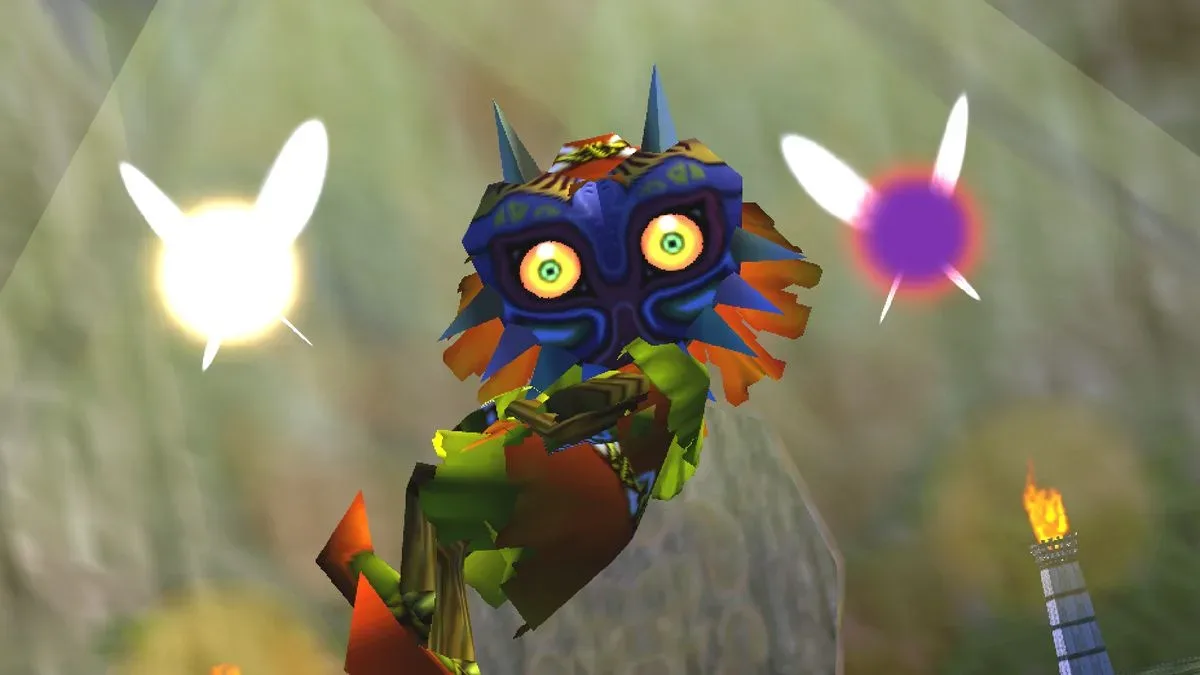
In this case, N64: Recompiled is a framework intended to make PC ports of Nintendo 64 games more achievable. It debuted two years ago alongside a 60fps PC port of The Legend of Zelda: Majora’s Mask. A comparable Banjo-Kazooie release arrived earlier this year and was notably praised by the series’ original creator.
Those examples establish why the prospect of Banjo-Tooie on PC attracted attention. The sequel is a major Nintendo 64 release with a larger scope than its predecessor, and it is precisely the sort of game for which players may want native-PC conveniences and performance improvements. But interest in the result does not settle the question of how the work should be produced.
The creator of the newer Banjo-Tooie effort has stated that AI generated substantial code and assisted with both engineering and review. Dario, a developer connected with Zelda and Banjo recompilation work, responded that the project is not associated with their team, describing it as entirely AI-generated and emphasizing that the Zelda and Banjo projects maintain a clear no-AI policy. Those are competing characterizations of the project’s AI involvement, but there is no ambiguity about the broader divide: the newer project acknowledges major AI use, while the established recompilation developers say they do not use it.
Why the existing team sees more than a technical disagreement
Dario’s objection is rooted partly in timing and provenance. The N64: Recompiled developers had already made public their interest in bringing Banjo-Tooie to PC. Their position is that a proper version requires considerable care, including research into the framework, renderer and games themselves.
A renderer is the portion of a game’s technology that turns scene data into the images displayed on screen. In a classic console game, that process is deeply shaped by the original machine’s hardware and constraints. Reworking it for a modern PC can require painstaking investigation, especially if the aim is faithful behavior alongside improvements such as higher frame rates. “Human research” therefore is not a ceremonial label; it points to the difficult, less visible work of understanding why an old game does what it does before attempting to alter how and where it runs.
Related coverage includes Banjo-Tooie Recompilation Sparks AI Coding Dispute Among Fan Port Developers.
“The game requires a lot of love and care to do a proper port,” Dario said, adding that the team would take the time needed for a polished version rather than join a “race to the bottom.”
Another developer, Reonu_, was more blunt in a Reddit comment. They criticized an AI-assisted alpha release that arrived around a game their team had previously said it planned to handle using the tooling, runtime and decompilation work developed by the group.
An alpha is an early development build, not a finished product. Calling a release an alpha can accurately communicate that it is incomplete, but it does not eliminate the risks of putting unfinished code in front of an audience. Early builds can shape public expectations, create support questions, spread quickly through mirrors or social posts, and become the version that casual players associate with a project. That is one practical reason an unfinished port can be frustrating to a team pursuing a slower, more polished alternative.
Vibe coding versus assisted coding
The phrase “vibe coding” is central to this argument, though it is often used loosely. Here, it refers to using generative AI to produce code through prompts, with the operator directing the desired outcome without necessarily understanding every implementation detail. Its advocates frame that as a way for less experienced people to create software. Its detractors worry that it substitutes generated output for comprehension, debugging skill and long-term stewardship.
That distinction matters because not all AI involvement in programming is identical. A programmer may use a tool to suggest a small fragment, explain an error or speed up routine work, then inspect, test and take responsibility for every line. At the other end, someone may accept large volumes of generated code without being able to explain how it works or repair it when it fails. The source material does not establish exactly where the new Banjo-Tooie project falls on that spectrum beyond its creator’s statement that AI generated substantial portions and helped with review. It does, however, show why the N64 recompilation developers view extensive AI use as incompatible with their own process.
For a community project, “can it launch?” is only one measure of success. A more durable checklist includes whether contributors can trace a bug, determine whether a change introduced it, understand the relevant system, and safely improve the work later. Code that appears functional in a narrow test may still be difficult to maintain if nobody involved can confidently explain its behavior.
That is especially significant for preservation-oriented work. Recompilations are built around old software whose behavior may need careful interpretation. Bugs, graphical oddities and edge cases can be hard to separate from intended game behavior. A port may need repeated investigation rather than a quick patch. In that context, a team’s understanding of the code is part of the project’s value, not just a behind-the-scenes nicety.
A wider fault line in fan-port communities
The Banjo-Tooie clash follows similar criticism from developers behind Donkey Kong 64: Recompiled, who rejected “AI vibe coding” in July while promising a higher-quality port than a competitor. The concern voiced by critics is therefore broader than a dislike of a particular tool. They argue that AI-driven releases can divert attention from slower projects built through extensive research and manual engineering.
Attention is a real resource in volunteer development. A project that reaches players first may collect downloads, discussion, bug reports and public recognition, even if another group later releases a more complete or more maintainable alternative. For teams working without the certainty of a commercial launch cycle, that can make a rush to release feel less like healthy experimentation and more like a shortcut built on a shared foundation.
At the same time, the supplied information does not support the idea that every programmer or every technical project has reached an anti-AI consensus. Some programmers endorse AI as a coding aid; Valve’s Gabe Newell is cited among the prominent supporters of that broader stance. The sharper question is accountability. Does the contributor understand and validate the submitted work, or are they passing along opaque output that other volunteers must diagnose?
That concern has also surfaced at RPCS3, the PlayStation 3 emulator project. Its developers accept AI-assisted contributions but require submitters to understand the code they provide. Earlier this year, the project publicly urged contributors to stop sending what it called AI “slop” and instead learn to debug and create useful work. That policy offers a useful middle position: AI assistance may be allowed, but responsibility cannot be automated away.
What players should take from this
For players watching a promising retro port appear online, the most sensible response is patience and clear-eyed expectations. “PC recompilation” does not automatically mean an official product, a finished product or a project endorsed by the people who created its underlying tooling. Likewise, an alpha label signals that a build remains in progress; it should not be treated as the final statement on how well a game can run on PC.
It is also worth separating enthusiasm for a game from certainty about a project. Wanting Banjo-Tooie to receive a modern-PC treatment is compatible with recognizing that rival fan teams may disagree sharply over methods. The developers behind the human-led N64 recompilation efforts are making a specific claim: their preferred result depends on research, technical understanding and time. The new project makes a different practical choice by openly relying on substantial AI-generated code.
That tension will likely continue wherever fan developers revive classic games. Retro platforms thrive because people study obscure hardware behavior, share tools and spend long periods solving problems that commercial development has long since left behind. A growing interest in the craft is visible across older systems, including projects such as a new Amiga 500 game targeting 50fps. The tools may change, but the underlying question remains the same: whether the fastest way to create something is also the best way to preserve, maintain and understand it.
For now, the most concrete takeaway is limited but meaningful. There is an AI-assisted Banjo-Tooie recompilation effort, and the developers behind the N64: Recompiled projects say it is unaffiliated with them and inconsistent with their no-AI principles. Their own interest in a future Banjo-Tooie port remains public, but no release timing is established here. Players should treat each project on its own terms—and avoid mistaking a shared game, toolset or ambition for shared authorship.