The NES RPG library rewards a broad definition, but not an unlimited one. This list includes traditional turn-based games, Western computer-RPG adaptations, strategy RPGs and action RPG hybrids when role-playing systems are central rather than decorative. Experience or rank growth, equipment, magic, party management, recruitment, classes or meaningful character development must shape the game. The Legend of Zelda, StarTropics and similar action-adventures are left out because exploration and puzzle-solving are their primary structures.
The ranking weighs mechanical depth, party-building choices, exploration, tactical variety, historical importance, replay value and how clearly each game communicates its progression today. A game can rank highly without being the most accessible choice, but its strengths must offer something distinctive. Regional availability also matters. Some entries began on the Japanese Famicom, while others reached North American NES owners later or in altered form. Later remakes are not being used as substitutes for the original NES versions.
10. Dragon Warrior
Dragon Warrior is the cleanest starting point for the classic console RPG. Its structure is deliberately compact: one hero, a sequence of towns and landmarks, equipment upgrades, learned spells and turn-based battles. Every new sword, shield or piece of armor produces a visible improvement, while the world gradually teaches the relationship between preparation and danger. The solo format makes the game unusually readable. There is no party roster to compare and no class system to explain; the central question is simply whether the hero is ready for the next region.
That clarity is also the game’s main limitation. Combat is often repetitive, exploration can require patient searching and the lack of party members leaves little room for tactical recovery after a poor decision. Players seeking an approachable historical foundation should begin here. Players who want varied roles, multi-character combinations or elaborate battle planning will find the later Dragon Warrior games more rewarding. Its importance is less about breadth than about how effectively it established a durable console RPG template for the NES.
- Best for: newcomers who want a focused solo adventure.
- Tradeoff: excellent clarity, limited party and combat variety.
9. Swords and Serpents
Swords and Serpents brings a Wizardry-style dungeon crawl to the NES with first-person exploration, party construction, three character classes, equipment, spells and a 16-level dungeon. Its appeal comes from management rather than spectacle. Building a four-person group, deciding who can absorb damage and keeping spell resources available for the next expedition create a steady chain of small strategic choices. The first-person viewpoint also gives the dungeon a stronger sense of place than many overhead NES RPGs.
This is a demanding recommendation. Mapping, retreating and managing resources are not occasional chores; they are the rhythm of the game. The cartridge supports one to four players through shared control of the party, but it is not a conventional simultaneous multiplayer adventure. Swords and Serpents suits systems-focused players who enjoy planning more than story. It ranks below the broader adventures because its world and character development are narrower, but it remains one of the system’s clearest party-management experiments.
- Best for: dungeon-crawl fans who enjoy mapping and resource decisions.
- Tradeoff: strong party systems, austere presentation and demanding pacing.
8. Faxanadu
Faxanadu is a distinctive side-scrolling action RPG built around ranked character growth, weapons, armor, magic, shops and towns. Its ruined-world atmosphere gives the adventure an identity beyond a chain of disconnected battles. Progression is tangible: new equipment changes survivability, experience ranks improve the hero and magical abilities expand the ways difficult encounters can be approached. The side-scrolling format also makes movement and positioning part of combat, separating it from the menu-driven games higher on this list.
The game’s friction is substantial. Combat can feel awkward, passwords make progress less convenient than a battery save and navigation is not always as transparent as its town-and-dungeon structure suggests. The North American version also differs from the Japanese release in presentation, including the removal of the Japanese character-naming option. Faxanadu is best for players who want an atmospheric hybrid and can accept rough edges. It should not be judged as a failed traditional RPG; its value lies in combining platform-style movement with familiar role-playing progression.
- Best for: players who want action combat and a gloomy fantasy setting.
- Tradeoff: memorable progression, but awkward combat and password-based continuation.
7. The Magic of Scheherazade
The Magic of Scheherazade is one of the NES’s most inventive genre mixtures. It combines real-time action encounters with turn-based party battles, allowing the game to shift between direct movement and command-based planning. The hero can develop through three character classes—Fighter, Saint and Magician—and the adventure uses time-period travel as part of its world structure. That gives exploration a different texture from the standard town, cave and castle progression and makes the game feel more experimental than its fantasy surface suggests.
Its unusual design is both its strength and its barrier. Players must learn when each combat style applies, how class identity affects progression and how the world’s time-period structure fits together. The game appeared in Japan in 1987 and reached North America in 1989, so regional versions should not be treated as identical. It is a good choice for players who have already sampled straightforward turn-based RPGs and want something less predictable. It ranks below the more cohesive adventures because its systems can feel uneven, but its ambition is difficult to ignore.
- Best for: curious players who enjoy unusual RPG hybrids.
- Tradeoff: creative structure, but less consistency between its combat modes.
6. Destiny of an Emperor
Destiny of an Emperor shifts the RPG conversation from fantasy equipment to officer recruitment and military organization. Set during the Three Kingdoms period of Chinese history, it is a strategy RPG in which recruiting officers and managing their forces are central decisions. Players can form a party from a large pool of officers, many of whom must be defeated or persuaded before joining. Each officer commands a soldier count that functions as a major combat resource, so a battle is not simply about selecting attacks or spells. Attrition, personnel and the composition of the force all influence whether a promising encounter becomes a crisis.
That emphasis gives the NES a different kind of party-building game. The roster is not merely a collection of interchangeable heroes; officers matter because their military strength and role affect the campaign. The historical setting also supplies a strong identity, although players unfamiliar with the period may need patience with names and context. Destiny of an Emperor is less immediately approachable than Dragon Warrior or Final Fantasy, and its campaign is more linear than the open-ended appearance of its map suggests. For players who value recruitment and strategic resource management over fantasy exploration, however, it is one of the system’s most distinctive choices.
- Best for: strategy-RPG fans who want recruitment and troop management.
- Tradeoff: unusually deep party decisions, but a specialized historical setting and relatively linear campaign.
5. Pool of Radiance
Pool of Radiance is the NES’s most substantial Western-style RPG adaptation. It brings a party-based Advanced Dungeons & Dragons structure to Nintendo’s hardware through first-person exploration, quest-driven progression and turn-based tactical battles. The adventure feels less like a single corridor toward a final boss and more like a campaign assembled from missions, locations and party development. Character creation and party composition reward players who enjoy considering roles before entering a dangerous area.
The NES version is not a replacement for the computer editions. It has its own interface, presentation and practical limitations. The Japanese release arrived in June 1991, followed by the North American release in April 1992, and the conversion changed the presentation, reduced battle scale and removed or simplified some computer-version features. Its pace can be demanding for anyone expecting the immediacy of a console-native RPG. That is precisely why it remains valuable: it offers a systems-heavy alternative to the cleaner Japanese-style adventures on the cartridge. Choose it for tactical depth and world-building, not for quick sessions or effortless momentum.
- Best for: players who prefer party creation, quests and tactical combat.
- Tradeoff: ambitious systems and setting, but a slow, interface-heavy NES adaptation.
4. Dragon Warrior II
Dragon Warrior II expands the original formula in nearly every direction that matters. The solitary hero becomes a three-person party, the world grows substantially and battles can involve groups of enemies rather than the first game’s one-on-one encounters. Those changes make preparation more interesting: equipment decisions affect several characters, spells have more varied uses and the party’s developing roles create a stronger sense of an expedition. The wider map also makes travel feel like part of the adventure rather than a short link between isolated locations.
The expansion is not perfectly balanced. Difficulty spikes and dated navigation can make the journey feel harsher than its straightforward opening suggests, and the party’s options are not as flexible as those in Dragon Warrior III. The magic-using princess and wizard-warrior prince give the party clearer role differences, but the player does not freely redesign every character. Still, Dragon Warrior II marks an important transition from a focused solo template to a recognizable party RPG. It is a strong choice for players who want traditional exploration and a larger sense of scale, provided they are willing to accept more friction than modern role-playing games usually demand.
- Best for: players who want the first Dragon Warrior’s structure with a real party.
- Tradeoff: broader adventure, but sharper difficulty and less flexible character roles.
3. Crystalis
Crystalis is arguably the NES’s strongest action RPG because its real-time swordplay is supported by substantial role-playing systems rather than merely decorated with experience points. The hero gains levels, buys equipment, learns magic and acquires four elemental swords. Those swords function as combat upgrades and progression tools, opening new routes while also changing how attacks interact with enemies. Charged attacks add range and timing considerations, giving the combat more texture than simple contact damage.
The game’s world is structured around discovery, equipment and ability gates, making exploration feel connected to character growth. Its limitations are familiar to NES players: caves can become repetitive, some encounters are awkward and the original presentation is less forgiving than later remakes. The four swords can each be charged for stronger ranged attacks, and special items add further charge levels, so the combat system has more range than its basic top-down appearance suggests. Crystalis is an excellent recommendation for anyone who wants a role-playing adventure without waiting for menus between every attack. It ranks just below the top two because its party-building is minimal, but its combination of action, magic and progression remains remarkably coherent.
- Best for: players who want swordplay with meaningful levels, magic and equipment.
- Tradeoff: lively combat and progression, but no conventional party management.
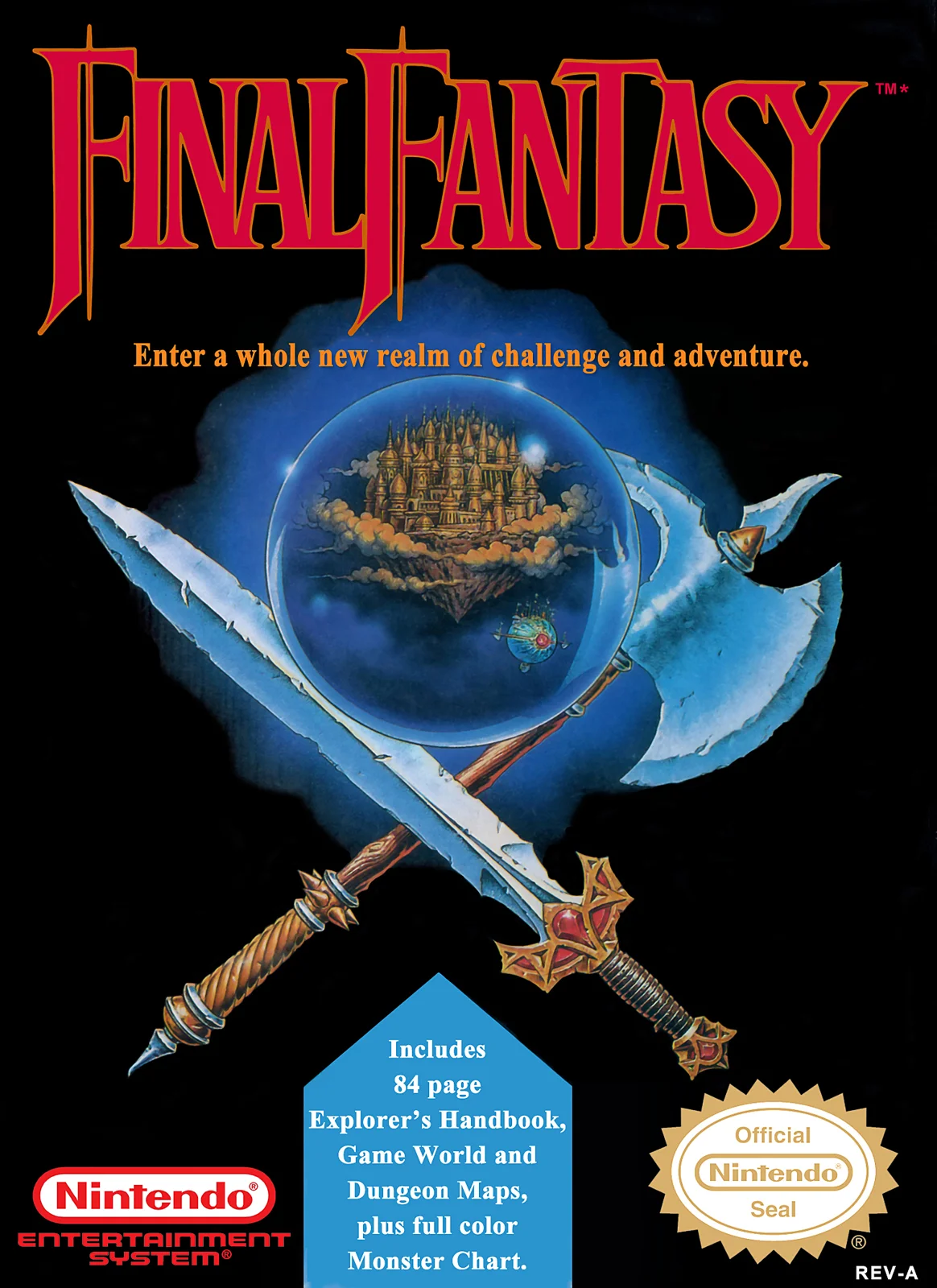
2. Final Fantasy
Final Fantasy makes party composition its defining decision. At the beginning, the player assembles a four-character party from six selectable classes: Fighter, Thief, Black Belt, White Mage, Black Mage and Red Mage. That choice establishes the party’s strengths and limitations for the entire adventure. Weapons, armor, magic charges and expanded transportation give the journey a satisfying sense of growth, while towns, caves, castles and a broad overworld provide a stronger feeling of travel than many earlier console RPGs.
The original NES game has important quirks. Balance can be uneven, some systems do not behave as intuitively as later entries and the game expects patience with random encounters, shopping and exploration. Spells use limited charges rather than a modern shared mana pool, and class identity affects both equipment and battle options. Those limitations are part of the reason later remakes feel different, not evidence that they can be used interchangeably. Final Fantasy remains an excellent recommendation for players who want party identity and world exploration, and Nintendo’s official catalog and NES Classic Edition support its place in the system’s RPG history. It falls just short of first place because its starting party choice is memorable but less flexible over the full campaign than Dragon Warrior III’s class system.
- Best for: players who want a class-defined four-person party and a wide fantasy journey.
- Tradeoff: memorable party planning, but original NES balance and system quirks require patience.
1. Dragon Warrior III
Dragon Warrior III is the most complete traditional RPG package on the NES. Its party system offers more than fixed companions: characters can change classes, retain abilities while taking on new roles and develop into different kinds of teams. That makes party construction an ongoing process rather than a decision made only at the beginning. Players can recruit characters from several starting classes, and later class changes create room for unusual combinations, including characters who combine abilities from roles that are normally separate.
The broad world, equipment progression, day-and-night cycle and varied encounters give those choices room to matter, while the familiar Dragon Warrior foundation keeps the adventure understandable. Its regional history needs careful labeling. The game debuted on the Japanese Famicom on February 10, 1988, and later received a North American NES release in March 1992 under the Dragon Warrior III name. Players comparing it with later Dragon Quest III remakes should remember that interfaces, balance and presentation are not the same. The original can still be demanding, and class experimentation does not eliminate the need for grinding or careful preparation. Nevertheless, it combines exploration, party identity, replayable character planning and a strong sense of adventure more successfully than any other NES RPG in this ranking.
- Best for: players who want the NES’s deepest traditional party and class system.
- Tradeoff: exceptional flexibility, but an old-fashioned pace and a later North American release.
The NES’s best RPGs do not all pursue the same idea of role-playing. Dragon Warrior and its sequels refine party-based adventure, Final Fantasy emphasizes class identity, Crystalis and Faxanadu make action central, while Pool of Radiance, Swords and Serpents and Destiny of an Emperor favor planning and resource control. That variety is why a useful ranking needs clear boundaries rather than treating every game with an experience bar as interchangeable.
For the broadest first choice, Dragon Warrior III offers the strongest mix of customization, exploration and replay value. Final Fantasy is the better pick when fixed class identities and a landmark party adventure are the priority. Crystalis is the natural alternative for action-oriented players, while the more specialized games reward anyone willing to meet the NES halfway on menus, mapping, regional differences and deliberate pacing.