A platformer belongs here when jumping, climbing, swinging, falling, enemy avoidance and level traversal form the central play loop. Combat can be important, but it cannot overwhelm the movement and stage-design challenge. That keeps Final Fantasy, Metroid, Zelda II, Contra and traditional beat ’em ups outside the list, even though some contain platforming elements. Bionic Commando receives an inclusive action-platformer designation because its grappling arm, rather than a conventional jump, is the defining way the player crosses stages.
The ranking considers control clarity, quality of level design, mechanical variety, fairness, replay value, originality and lasting identity. It covers North American NES cartridges rather than treating every Famicom or Famicom Disk System release as interchangeable. The Western Super Mario Bros. 2 is therefore the version ranked here, not the Japanese game later released internationally as The Lost Levels. Castlevania III is likewise discussed as the North American NES release, while its Japanese counterpart and regional differences remain separate historical versions.
Fame alone does not determine the order. The list favors games that teach their movement clearly, make hazards feel connected to their mechanics and give players a reason to return after learning more about the system. That is why a compact game such as DuckTales can compete with a much larger adventure, and why unusual late-library releases such as Little Samson and Little Nemo deserve space beside Nintendo’s most famous platformers.
10. Little Nemo: The Dream Master
Little Nemo: The Dream Master turns platforming into a process of borrowing abilities. Nemo collects candy to befriend certain creatures, then uses their powers to cross dream-world stages. A frog can leap, a mole can burrow and other companions alter how hazards and routes are approached. The player is not simply moving from left to right; each screen asks which creature can make the next section manageable.
That structure gives the game a distinctive identity among NES platformers. Its environments feel like connected dream puzzles, and the need to manage creature access creates satisfying moments when a previously blocked route becomes possible. The limitation is that the rules are not always communicated with Mario-like clarity. Some solutions require experimentation, and difficulty can rise sharply when a player has not yet understood which creature matters. Nemo suits players who enjoy unusual abilities and exploratory stage layouts more than those seeking the cleanest possible first attempt.
The game’s creature system also changes the meaning of failure. Losing the right companion can make a route feel dramatically more difficult, while finding the correct form can turn a dangerous stretch into a controlled sequence. That makes Nemo more thoughtful than its bright presentation initially suggests, although players who prefer instantly readable movement may find the experimentation frustrating.
- Best for: players who like ability-based puzzles inside a traditional platformer.
- Tradeoff: imaginative mechanics and settings come with less immediate readability.
9. Bionic Commando
Bionic Commando earns its place through a movement system that refuses to give the hero a conventional jump. The bionic arm attaches to overhead surfaces, allowing the player to swing, pull across gaps and build momentum through carefully timed releases. Traversal is therefore the main event, not a secondary trick added to ordinary running and jumping.
The system is inventive, but it demands patience. A player accustomed to pressing a jump button must learn to think about height, anchor points and release timing instead. Combat and vertical positioning often overlap, so an awkward swing can create danger before an enemy is even considered. Once the arm’s rhythm becomes familiar, the game offers a kind of spatial problem solving few NES platformers match. It ranks below the more immediately readable entries because its learning curve can obscure its best ideas early in the experience.
The design also creates an unusual relationship between movement and risk. The arm can be used to climb, swing and reposition, but a missed anchor point may leave the player exposed or force a recovery attempt. That makes Bionic Commando a strong recommendation for players who want movement to feel like a specialized skill. It is a weaker first choice for anyone looking for a conventional run-and-jump introduction.
- Best for: players who want movement to feel like a skill rather than a background function.
- Tradeoff: the missing jump makes early progress unusually demanding.
8. Little Samson
Little Samson is one of the NES library’s most interesting late platformers because it gives the player four characters with genuinely different talents. Samson can cling to walls and ceilings, Kikira can fly briefly and breathe fire, Gamm uses his strength and weight to handle obstacles, and K.O. attacks with bombs while bringing a smaller, more specialized movement profile. Switching among them makes stage navigation a matter of matching the right character to the problem.
The compact stages benefit from that variety. A section that feels dangerous for one hero may become manageable with another, and the game encourages players to understand movement properties rather than rely on one all-purpose attack. Its main weakness is that the campaign can feel less generous than Nintendo’s most polished platformers. Precision matters, and unfamiliar characters may take time to read. Still, Little Samson is a valuable choice for anyone who wants a focused adventure built around contrasting movement styles instead of a single hero’s increasingly large power-up set.
The four-character design is more than a menu of alternate attacks. Samson’s wall and ceiling movement changes how the player reads geometry, Kikira’s flight opens different routes, Gamm’s strength helps with heavy obstacles and K.O.’s bombs offer a distinct way to handle enemies. The game does not always explain those strengths as smoothly as later character-switching platformers, but learning them is central to its appeal.
- Best for: players who enjoy switching characters to solve traversal problems.
- Tradeoff: demanding encounters leave less room for careless experimentation.
7. Super Mario Bros. 2
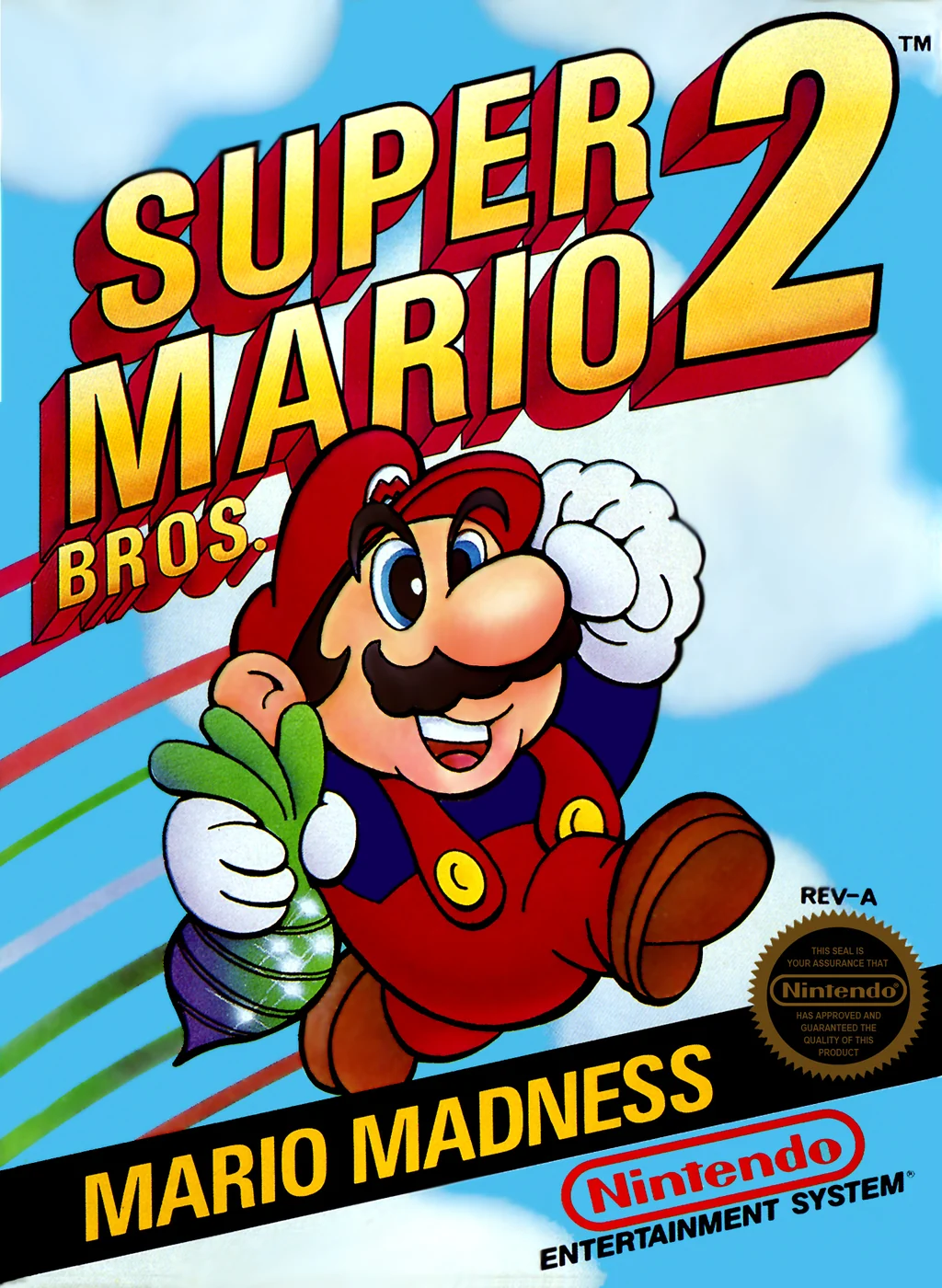
The North American Super Mario Bros. 2 is mechanically distinct from the first game and from its Japanese namesake. Its selectable cast changes the feel of every stage: Princess Peach can float, Luigi jumps differently, Toad handles objects efficiently and Mario provides the middle ground. Players pull vegetables and other objects from the ground, throw them at enemies and use them to shape routes through vertically layered spaces.
That emphasis makes the game slower and more deliberate than Super Mario Bros. The best stages reward choosing the right character, understanding when to carry an object and searching for entrances hidden above or below the obvious path. It is also more forgiving in some situations because enemies can become ammunition. The unevenness comes from its unusual foundation: not every stage tests movement in the same elegant way, and character differences can make a route feel dramatically easier or harder. It remains an excellent pick for players who want exploration and object play rather than pure momentum.
The regional distinction is essential. The North American cartridge uses the game later known in Japan as Yume Kōjō: Doki Doki Panic as its foundation, while the Japanese Famicom sequel was released internationally as Super Mario Bros.: The Lost Levels. They share a name in some historical discussions but not the same stage design or playable structure. This ranking concerns the North American NES release alone.
- Best for: players who like character traits, digging and vertical exploration.
- Tradeoff: its deliberate rhythm may disappoint fans seeking the speed and simplicity of the original.
6. Castlevania III: Dracula’s Curse
Castlevania III returns to the series’ platform-game foundations while expanding the route through branching paths. Trevor Belmont’s whip, stair movement and deliberate jumps still define the core, but recruited companions add alternate ways to handle particular rooms and enemies. Grant’s agility, Sypha’s magic and Alucard’s transformation each change the practical shape of an adventure.
The branching structure gives the game more replay value than a single fixed march through stages. Different routes expose different challenges, and the choice of companion can change how a player thinks about an obstacle. Enemy patterns and platform placement demand attention, especially because Belmont’s movement is committed and recovery options are limited. That severity is also the game’s chief barrier. Castlevania III is not a relaxed introduction to the genre.
Regional labeling matters here. The North American NES release was published as Castlevania III: Dracula’s Curse, while the Japanese Famicom version was released as Akumajō Densetsu. The games belong to the same major design lineage, but their release histories, presentation and technical details should not be flattened into one universal version. The ranking is for the North American cartridge.
- Best for: players who want route choices and classic, pattern-focused action.
- Tradeoff: stiff movement and high difficulty can punish experimentation.
5. DuckTales
DuckTales builds its platforming around Scrooge McDuck’s pogo stick. Holding the pogo stance lets Scrooge bounce across hazards, strike enemies from above and reach elevated routes. The diagonal pogo angle also gives movement a distinct rhythm: the player is constantly judging whether to bounce straight down, cross a gap or approach an enemy from the side.
Its five selectable treasure areas are compact but meaningfully different. Ropes, chains, vines, water, ice and other environmental features give the cane more uses than simple enemy damage. The game is particularly welcoming to players who want responsive movement without a huge campaign. The limitation is scope. Its short structure and repeated reliance on the pogo tool provide less mechanical breadth than the highest-ranked games. Even so, the focused design is a strength when the goal is a concentrated platforming session with exploration, treasure hunting and recognizable stage objectives.
DuckTales also benefits from letting players choose their initial destination areas rather than forcing a single uninterrupted route. That freedom makes the game feel more like a small adventure than a straight sequence of levels, while the underlying controls remain simple enough to understand quickly. Players who want extensive character growth or a long progression system should look elsewhere, but those seeking a concise, movement-led game will find a well-focused package.
- Best for: players who want a distinctive movement gimmick in a compact adventure.
- Tradeoff: the campaign has less variety and longevity than the larger Nintendo platformers.
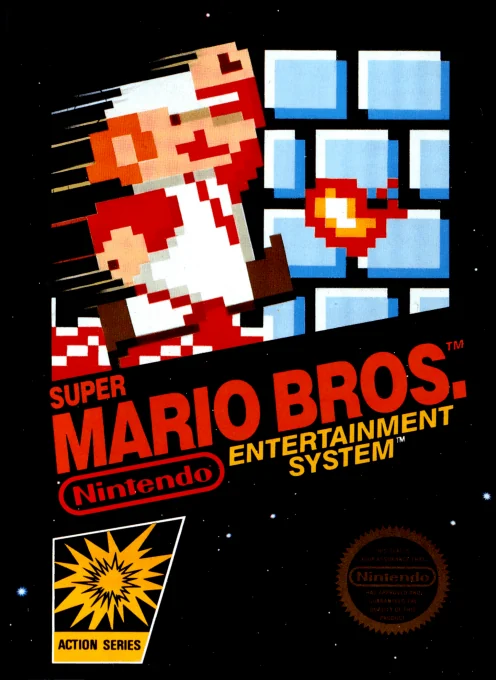
4. Super Mario Bros.
Super Mario Bros. is remarkably economical. Its running speed, jump arc, enemy placement, pits and blocks teach a vocabulary of movement without requiring a tutorial screen. Early stages establish safe jumps and basic hazards, then recombine them into situations that demand momentum, restraint or a decision about whether to investigate a suspicious wall or pipe.
The game’s power-ups are few, but each has a clear purpose. A mushroom changes how much risk Mario can absorb, fire allows a new way to handle enemies and star power briefly reverses the usual danger relationship. Hidden rooms and alternate routes reward curiosity without making the main path incomprehensible. Compared with later entries, the adventure has fewer characters, transformations and map-level choices. Its ranking reflects that narrower range, not a lack of quality. For players studying how readable level design works, this remains the NES platformer’s cleanest lesson.
Its simplicity is also what makes the game unusually replayable. A first-time player can focus on survival, while a more experienced player can chase coins, hidden areas, speed and increasingly controlled jumps. The fixed structure leaves less room for route planning than Super Mario Bros. 3, but nearly every stage teaches something about spacing, timing or risk.
- Best for: beginners, precision players and anyone interested in fundamental level design.
- Tradeoff: limited power-up and character variety makes it less expansive than its sequels.
3. Kirby’s Adventure
Kirby’s Adventure brings the character’s defining copy ability to the NES, letting Kirby absorb certain enemies and borrow their powers. That single idea gives the platformer a broad toolkit without requiring a permanent character-selection screen. Sword, fire, ice and other abilities change how enemies are approached and how certain rooms feel, while Kirby’s floating movement gives players a forgiving way to recover from mistakes.
The game also benefits from its late-generation ambition. Stages use varied themes, hidden switches and optional challenges to make the adventure feel larger than a simple sequence of obstacle courses. Kirby’s generous movement makes it a strong recommendation for younger or less experienced players, though the reduced pressure can disappoint players who want every jump to carry serious risk. It also asks the NES to display a busy, colorful world, so the presentation can feel more crowded than the spare clarity of Super Mario Bros. The combination of accessibility and mechanical variety earns its high position.
Copy abilities also give the player reasons to experiment rather than simply preserve one favorite power. Different abilities are useful in different rooms, and Kirby’s ability to inhale, float and recover from mistakes makes the game unusually approachable without removing all decision-making. The result is a platformer that favors discovery and playfulness over strict punishment.
- Best for: players who want experimentation, forgiving movement and many temporary abilities.
- Tradeoff: the relaxed difficulty reduces the tension that precision-focused players may prefer.
2. Mega Man 2
Mega Man 2 makes stage selection part of its platforming strategy. Players choose among Robot Master stages, learn their hazards and earn weapons that can alter later encounters. The result is not simply a set of levels in any order; it is a route-planning game in which knowledge of enemy weaknesses and environmental demands gradually produces a preferred sequence.
Its platforming is supported by strong boss identity and memorable stage themes. Moving, shooting and managing weapon energy are tightly connected, but the game remains platform-focused because crossing hazards and reading enemy placement are constant demands. The main friction comes from knockback, limited recovery and password-based continuation rather than modern conveniences. Some rooms can feel harsher than their surrounding stages, and the game’s famous weapon interactions are not always obvious without experimentation. For players who like combat to expand movement decisions, Mega Man 2 offers one of the NES’s most complete structures.
The selectable-stage format also improves replay value. Players can revisit the game with a different preferred order, test alternative weapons and discover how a boss reward changes the feel of a later stage. Its weakness is that some of the challenge comes from old-school punishment rather than elegant escalation, but the relationship between movement, combat and route planning remains unusually cohesive.
- Best for: players who enjoy selectable stages, boss rewards and route planning.
- Tradeoff: knockback and uneven difficulty can turn small errors into repeated setbacks.

1. Super Mario Bros. 3
Super Mario Bros. 3 is the strongest overall NES platformer because it expands almost every part of the formula without losing control clarity. Mario and Luigi gain suits and power-ups that meaningfully change movement, while the world map adds decisions about routes, optional stages and limited-use items. The map is not decoration: it lets players shape their progress and creates reasons to replay a world differently.
Stage design supplies the lasting strength. Athletic courses, water stages, fortress rooms, scrolling challenges and secret areas each ask for a different balance of speed, caution and exploration. Enemy variety supports those ideas instead of merely filling empty space, and the game repeatedly introduces a mechanic before asking the player to combine it with something else. Its difficulty can still spike, especially in later worlds, and some power-ups are more situational than others. Nevertheless, it offers the best balance of precision, discovery, spectacle, replay value and mechanical breadth on the NES.
The game’s eight-world structure gives it a stronger sense of journey than the more compact entries, but it never loses the clarity that makes the first Super Mario Bros. so effective. The map, inventory and optional routes broaden the experience without turning movement into a secondary feature. For players who want one NES platformer that demonstrates nearly every major strength of the system’s era, this remains the most complete choice.
- Best for: players who want the fullest traditional NES platformer experience.
- Tradeoff: its larger structure and late-game challenges can feel overwhelming to newcomers.
The best starting point depends on the kind of platforming you want. Super Mario Bros. offers the clearest fundamentals, Kirby’s Adventure softens failure with forgiving movement and Super Mario Bros. 3 gives experienced players the richest combination of stages, routes and power-ups. Mega Man 2 is the choice for players who want platforming tied closely to boss progression and weapon planning.
The less obvious entries explain why the NES library remains so rewarding. DuckTales and Bionic Commando build entire adventures around one movement idea, Little Samson makes character switching central and Little Nemo treats abilities as puzzle pieces. Together, these games show that NES platforming was not one formula, but a family of approaches united by the challenge of turning movement into play.
Players seeking a traditional starting path should begin with Super Mario Bros. or Kirby’s Adventure. Players who want a larger, more layered campaign should choose Super Mario Bros. 3. Those who prefer demanding movement systems can move toward Bionic Commando or Castlevania III, while DuckTales, Little Nemo and Little Samson offer more specialized alternatives. Final Fantasy may be an important NES role-playing game, but leaving it off this list is part of keeping the platformer category meaningful.