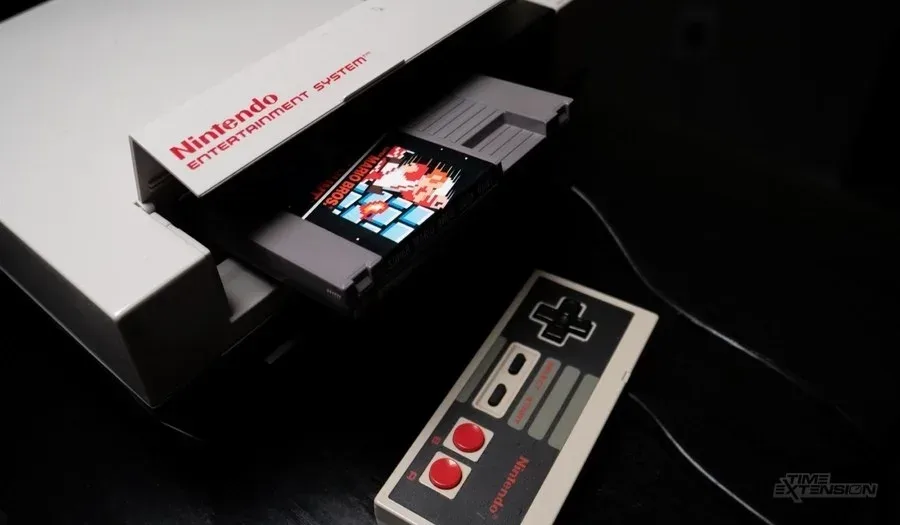
Action is a broad label on the Nintendo Entertainment System, so this list focuses on games where direct movement, combat and moment-to-moment physical decisions are central. Platformers, run-and-gun games, beat-'em-ups and action-exploration hybrids qualify. Role-playing games such as Final Fantasy do not, even when they contain battles, and The Legend of Zelda is left out to keep the comparison centered on immediate action rather than broader adventure design.
The ranking uses North American NES releases unless noted otherwise. It weighs control quality, level and encounter design, mechanical variety, replay value, historical significance and the way each game communicates its rules. The order is an editorial selection rather than an objective consensus, and regional versions can differ substantially. The Japanese Famicom release commonly known as Super Mario Bros. 2 is not being treated as the same game as the North American Super Mario Bros. 2, which is a localized version of a different title.
10. Shatterhand
Shatterhand earns its place by making close-range combat the center of its platforming rather than treating punching as a backup option. The hero advances through industrial stages by striking enemies, blocking or destroying threats with timing, and choosing between available stage routes. Robot partners add another layer: collectible support units can alter how attacks behave and give players a reason to think about more than simple forward progress.
The result is a deliberate action game with a distinctly late-generation feel. Enemies demand spacing, hazards are arranged around commitment, and the route choices give repeat runs more purpose than a strictly linear campaign. It is a good fit for players who enjoy learning attack distance and enemy timing instead of relying on constant shooting. Its limitation is readability: the combat takes longer to understand than Mario's jumping or Mega Man's shooting, and mistakes during crowded encounters can feel harsher before the player has learned the patterns. Shatterhand was released for the North American NES in 1991, while its Japanese counterpart was released under a different title and with regional differences.
- Best for: players who want punching, route selection and companion mechanics.
- Tradeoff: combat is less immediately readable than the more famous platformers above it.
9. River City Ransom
River City Ransom turns the beat-'em-up into a small adventure. Alex and Ryan move through connected streets, fight gangs, pick up weapons and spend money on food and books that improve their abilities. That structure makes every encounter part of a larger decision: buy a useful stat upgrade, try a new technique, or push farther while carrying whatever resources remain.
Its cooperative two-player mode is a major strength, because the streets become a shared space for improvisation rather than a sequence of isolated fights. The game is also unusually welcoming to experimentation for an NES brawler. However, the loose combat does not have the clean precision of a dedicated action-platformer. Hit reactions, crowds and weapon use can become messy, while the upgrade system may distract players who only want compact arcade rounds. Choose it for personality, exploration and co-op variety rather than perfect fighting-game timing.
- Best for: cooperative players who want brawling with light progression.
- Tradeoff: loose combat and uneven pacing can frustrate players seeking arcade precision.
8. Blaster Master
Blaster Master is one of the NES library's most ambitious action hybrids. Much of the game is played in a powerful vehicle that can jump, fire and explore side-scrolling environments, but entering certain areas shifts the action to overhead character-controlled rooms. The vehicle, weapons and ability upgrades gradually open paths through an interconnected world, giving the campaign more shape than a simple line of stages.
That variety makes it valuable for players who want action with discovery attached. The vehicle feels different from the character, and the overhead sections provide a change of pace rather than another variation on jumping. The cost is consistency. Difficulty spikes, backtracking and the contrast between viewpoints can make progress less intuitive than in a focused platformer. Blaster Master is strongest when its unusual structure is the attraction; players who prefer a perfectly even rhythm from start to finish may find its transitions distracting.
- Best for: players who want vehicle action, exploration and contrasting viewpoints.
- Tradeoff: backtracking and uneven difficulty make it less approachable than a linear platformer.
7. Kirby's Adventure
Kirby's Adventure gives the NES a generous, colorful form of action-platforming without making its central ability shallow. Kirby can inhale enemies and copy their powers, so hazards become potential tools. A sword, beam, fire attack or other ability can change how a room is approached, and the game encourages experimentation through varied stages and enemy placement. Its world map also lets the campaign present a clear sequence of action stages without making every level feel identical.
Its forgiving design makes it a strong introduction to NES action. Players can enjoy the visual variety and discover abilities without immediately being punished for every error, while experienced players still have reasons to revisit stages and use powers creatively. The limitation is tension. Kirby's health and flexible abilities reduce the severity that defines Ninja Gaiden or Contra, and players searching for relentless precision may find the campaign too comfortable. That is not a flaw for its intended audience; it is the reason Kirby works so well as an accessible action game.
- Best for: newcomers, younger players and anyone who enjoys ability experimentation.
- Tradeoff: forgiving design offers less pressure than the harder games on this list.
6. Ninja Gaiden
Ninja Gaiden combines fast movement with a distinctive combat rhythm. The ninja can cling to walls, use projectile weapons and move through stages built around enemy placement as much as platform geometry. Cinematic interludes give the campaign a stronger dramatic identity than many NES action games, but the real appeal remains the speed of movement and the need to keep advancing without losing control of the situation.
The game rewards players who learn where enemies appear and how to preserve useful weapons. Its best sections make movement, attack range and momentum feel like parts of one system. The downside is severe retry friction. Knockback can send the character into hazards, enemies may return when the screen scrolls, and later stages expect considerable pattern knowledge. The official manual also makes clear that the game uses a limited-life structure and a timer, reinforcing the pressure built into each stage. Ninja Gaiden is an excellent choice for players who want demanding precision and a fast tempo, but a poor first recommendation for anyone who dislikes repeating difficult sections.
- Best for: players who enjoy speed, wall movement and pattern learning.
- Tradeoff: knockback, enemy placement and late-stage difficulty make failure expensive.
5. Metroid
Metroid expands NES action by making the world itself part of the challenge. Samus explores interconnected areas, finds abilities that unlock new routes and searches for hidden passages while fighting enemies. Progress is less about clearing a neat chain of stages and more about recognizing how a newly acquired power changes the meaning of earlier rooms. That structure gives the game an atmosphere and sense of discovery few contemporaries match.
It is the right choice for players who enjoy mapping spaces mentally and finding their own route through uncertainty. The tradeoff is substantial friction. Password continuation, repeated room patterns, cryptic progression and sparse guidance can make the game difficult to read without outside help. Metroid therefore ranks below the more immediately communicative action games, despite its historical importance. Its strongest quality is not speed but the feeling that every upgrade changes the geography of the adventure. Players who want a directed platforming campaign should start elsewhere; players who enjoy piecing together a world from partial information may find its structure uniquely rewarding.
- Best for: explorers who enjoy secrets, ability-gated routes and self-directed progress.
- Tradeoff: navigation and continuation systems can be cryptic for new players.
4. Castlevania III: Dracula's Curse
Castlevania III builds on the series' whip-based platform combat with branching routes and multiple playable characters. Trevor Belmont can recruit different allies, and the chosen companion changes the rhythm and capabilities of a run. Route choices give the campaign more replay value than a single fixed sequence. Stages have strong identities, from dangerous vertical spaces to encounters that test careful positioning, and the gothic presentation supports the mechanical mood without replacing it.
The game's variety makes it one of the NES's clearest examples of action design with meaningful campaign structure. Players can return to try a different route or character and discover that familiar obstacles demand different solutions. Its major limitation is difficulty, especially when route and character differences create uneven experiences. Some options feel more useful than others, and the commitment required by the classic Castlevania movement can be unforgiving. It suits players who want old-school platform combat with choices, not players seeking a smooth introductory campaign.
- Best for: fans of branching routes, gothic stages and character variation.
- Tradeoff: difficulty and character balance vary sharply across the campaign.
3. Contra
Contra distills run-and-gun action into movement, firing, weapon selection and survival. Enemies arrive in formations, hazards demand constant repositioning, and weapon pickups can dramatically change the player's options. Its simultaneous two-player mode is especially important: cooperation is not an ornamental extra, because both players must manage threats and screen space together while trying not to create new problems for one another.
The game remains compelling because its speed is easy to understand even when mastery is difficult. A new player can immediately run and shoot, while repeated attempts reveal enemy timing, safe positions and more efficient routes. The limitation is its harsh structure. Limited lives, rigid patterns and quick deaths make progress depend on practice and memory rather than casual exploration. Contra is the strongest pick here for immediate cooperative intensity, but it is less welcoming than Mega Man 2 or Super Mario Bros. 3 for players who want room to experiment. Players seeking a similar style with a different stage lineup may also encounter the related Super C, but Contra remains the more influential choice for this ranking.
- Best for: two players seeking fast, direct run-and-gun action.
- Tradeoff: limited lives and memorization-heavy patterns punish unprepared runs.
2. Mega Man 2
Mega Man 2 gives players meaningful control over the order of the adventure. Eight Robot Master stages can be selected from the start, and defeating a boss grants a weapon that may change how another stage or boss is handled. That structure turns experimentation into the central pleasure: players test a route, discover useful tools and gradually understand how the stages relate to one another.
The platforming and shooting are responsive, while each stage has a strong visual and mechanical identity. The official manual presents the Robot Masters and their stage context as part of the game's core structure, supporting the idea that stage selection and weapon acquisition are not decorative features. The fortress sequence then asks the player to apply what has been learned under greater pressure.
Mega Man 2 is not completely even. Some weapons are far more useful than others, and the final stretch rises sharply in difficulty. The game also has fewer exploratory detours than Metroid or Blaster Master, so its replay value comes mainly from route experimentation, weapon choice and improving execution. Still, its combination of choice, readable stage concepts and reward-driven experimentation makes it one of the NES's best action packages. Start here if you want an action game that lets you solve its campaign in your own order.
- Best for: players who enjoy selectable stages, boss weapons and experimentation.
- Tradeoff: weapon usefulness is uneven and the endgame is considerably tougher.
1. Super Mario Bros. 3
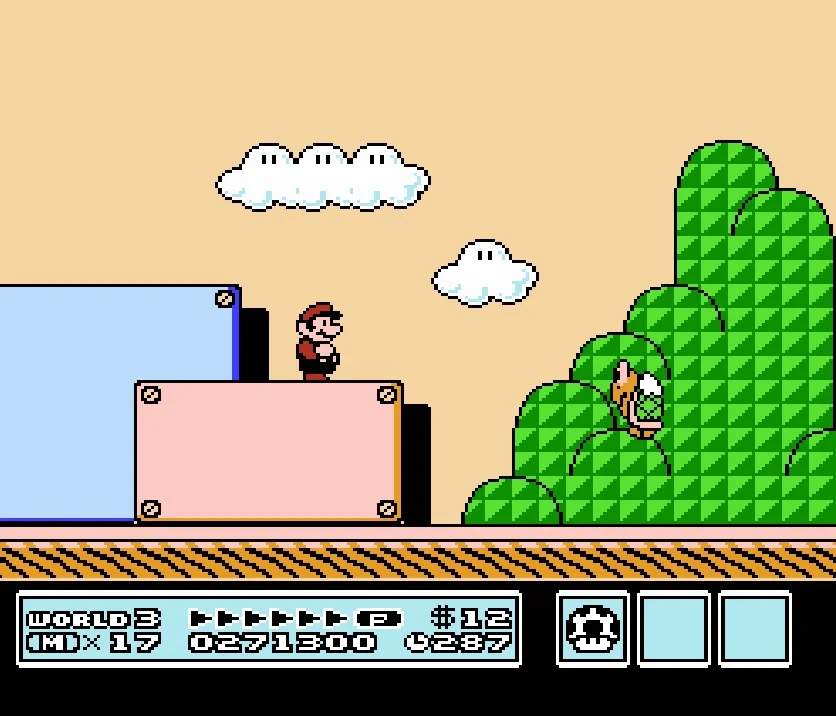
Super Mario Bros. 3 is the strongest all-purpose NES action game because it makes an exceptional number of ideas work together without losing clarity. Movement is immediately understandable, yet running, jumping, flying and swimming create room for mastery. Power-ups change the available approach, stages introduce new hazards at a steady pace, and world maps provide optional routes and a sense of campaign scale without turning the game into a menu-driven adventure.
The North American release supports both one-player and alternating two-player play, but its greatest achievement is how much variety it gives a single player without making the controls feel overloaded. World maps let players choose routes, while the stage themes, fortresses, hidden items and specialized power-ups steadily expand the game's vocabulary. The manual's description of eight kingdoms and map-based progression reflects that broader structure.
Its replay value comes from the balance between accessibility and discovery. Secret exits, hidden items, varied stage themes and alternate tools reward curiosity, while the basic controls remain dependable enough for a first-time player to understand what went wrong. The later fortresses and specialized stages can be much less forgiving than the opening worlds, so the game is not effortless. That contrast is part of its strength: Super Mario Bros. 3 teaches its language clearly, then gives skilled players plenty of ways to speak it better.
- Best for: almost anyone wanting a broad, readable and replayable NES action game.
- Tradeoff: late worlds and fortress stages are substantially more demanding than the opening.
The ranking favors games that remain distinct after the familiar nostalgia fades. Super Mario Bros. 3 offers the broadest package, Mega Man 2 rewards stage-order experimentation, Contra delivers concentrated cooperative shooting, Metroid makes exploration the main challenge, and River City Ransom gives brawling an unusually flexible structure.
There is no single correct starting point for every player. Choose Kirby's Adventure for a gentler introduction, Ninja Gaiden or Castlevania III for demanding precision, Blaster Master for hybrid exploration, or Shatterhand for a less frequently discussed example of late NES combat design. The North American versions are the basis here, so regional releases and later compilations should not be assumed to play identically.