The NES did not have the processing power or storage of later racing consoles, but its racing library repeatedly found ways around those limits. Some games concentrated on clean lines and checkpoint pressure. Others made upgrades, combat, stunts, vehicle switching or environmental hazards just as important as crossing the finish line.
This ranking considers ten games released for the Nintendo Entertainment System and cataloged within racing or driving. The main criteria are course variety, clarity and personality of the handling model, meaningful vehicle or competitive systems, and replay value beyond simply reaching the final event. Racing-action hybrids qualify when driving remains central rather than incidental. The order is an editorial selection, not an objective scorecard.
The list also treats the NES versions as their own releases. A game may have a different number of rivals, modes, vehicles or technical features on another console, so the comparisons below focus on what the Nintendo version actually offers. That distinction matters for games such as R.C. Pro-Am, Rad Racer, Rad Racer II and Super Off Road, whose versions are not interchangeable.
10. RoadBlasters
RoadBlasters is the most openly aggressive game on this list. Rather than asking the player to preserve a clean racing line around conventional circuits, it turns a futuristic highway into a long survival test. The NES release carries the game’s 50-level structure, with the vehicle moving continuously toward the finish while the player manages road hazards, enemy vehicles and fuel. That gives the game a strong sense of forward momentum, even when its priorities differ from those of a traditional lap racer.
Its appeal comes from the way driving and combat overlap. Positioning is not only about taking the fastest route; it also determines how safely the vehicle can approach hazards and enemies. The machine gun and additional weapons provide answers to problems that a pure racer would solve through braking or steering. Fuel adds another layer of pressure because reaching the end of a stage is not guaranteed simply because the player avoids collisions.
The long sequence of levels also gives RoadBlasters a different kind of replay value from a championship racer. The challenge is to survive a chain of increasingly dangerous roads while learning which threats can be destroyed, avoided or bypassed. The tradeoff is that players seeking detailed cornering or a broad garage will find a direct racing-action game. RoadBlasters earns its place because it makes endurance, resource awareness and road combat into one coherent vehicle concept.
- Best suited to players who want racing with weapons and constant forward pressure.
- Its strongest variety comes from hazards, enemies, fuel and endurance rather than a large selection of conventional circuits.
9. Eliminator Boat Duel
Eliminator Boat Duel is one of the NES library’s strangest vehicle games because it refuses to settle on one viewpoint or event format. Its races move through side-scrolling starts, top-down water sections and behind-the-boat segments. The shifting presentation is not merely decorative: each view changes how the player reads obstacles, turns and open water. The result feels closer to a collection of aquatic challenges than a standard championship built from repeated laps.
Water hazards supply much of the game’s personality. Whirlpools can turn a boat in the wrong direction, while sharks, alligators, ramps and people needing rescue make navigation a problem of anticipation as well as speed. The behind-the-boat sections emphasize rapid movement and staying within the marked route, while the top-down sections offer more room for route reading and hazard avoidance.
The game also supports one- and two-player competition, with prize money feeding into boat repairs and upgrades such as engines, hulls and steering. That progression gives the races consequences beyond a single result. The inconsistency is also the limitation. The viewpoints and event types do not always produce one smoothly unified handling experience. Still, Eliminator Boat Duel deserves recognition for making watercraft racing feel different from car racing instead of simply replacing a car sprite with a boat.
- Choose it for unusual event structure, boat upgrades and environmental hazards.
- Do not expect a conventional circuit racer with one consistent camera and handling model.
- The NES version supports one or two players, unlike some racing games on this list that are strictly solo.
8. Formula One: Built to Win
Formula One: Built to Win gives the NES racing field a useful sense of progression. The player begins with a Mini Cooper and advances through races and upgrades, turning the campaign into more than a sequence of disconnected events. Improvement is therefore expressed through both driving and development. A difficult race can matter because it opens the next step in the career, not only because it awards a place on a results screen.
The game’s progression moves through a series of increasingly capable cars, including the Mini Cooper, Vector W2, Ferrari F40 and Formula One machine. Winning races allows the player to improve the current car and work toward access to faster machinery. That structure makes the game unusually interested in the relationship between vehicle performance and career advancement for an NES racer.
It also includes a Free Mode, which lets players choose from the available cars and race selected courses without the normal career obstruction. That separates its progression system from its moment-to-moment racing and gives the cartridge a more flexible replay structure. Players who want direct access to events can approach it differently from those who enjoy building toward a stronger machine.
Its main compromise is that the career ladder can matter as much as the handling. Players looking for the sharpest arcade response may prefer a more immediate racer, while those who enjoy gradual improvement will find more purpose here. It is an important NES example of racing as a progression system rather than a collection of isolated time trials.
- Best for players who want upgrades and a career arc alongside racing.
- Its appeal depends on enjoying progression; it is less immediate than an arcade-focused title.
- The North American NES title should not be confused with the game’s alternate listing, Formula One: Born to Win.
7. Al Unser Jr. Turbo Racing
Al Unser Jr. Turbo Racing reaches toward simulation without abandoning the accessibility expected from an NES cartridge. Manual gear switching gives acceleration and corner approach more texture than a simple gas-and-brake model, while pit stops add another layer of race management. Limited turbo boosts create a strategic question: spend extra power to recover ground now, or preserve it for a decisive section later?
The game’s championship structure includes practice, qualifying and races across a sixteen-race season. Qualifying affects the starting position, while results influence the setup points available for improving the car. That gives the game a more formal competition framework than its title might suggest. It also includes a time-trial mode, allowing players to approach the driving without committing to the entire championship.
Those systems give the game a stronger mechanical identity than its licensed presentation alone would suggest. A player must think about pace, gearing and race resources rather than treating every event as a test of steering alone. The behind-the-car view keeps the action readable, but the added controls mean that speed is not simply something the game grants automatically.
The design is not a full simulation, and that is part of its usefulness. It presents racing ideas in compact form without requiring a large roster of cars or a complex season structure. Some players may find manual shifting and pit strategy more demanding than they want from a short NES session. For others, those details are exactly what make it a rewarding middle ground between arcade racing and technical competition.
- Choose it for manual shifting, qualifying, pit decisions and limited turbo management.
- Alternate names include Turbo Racing and World Grand-Prix - Pole To Finish, so use the North American title when identifying this NES release.
- Its Formula One presentation should not be mistaken for a fully realistic simulation.
6. Michael Andretti’s World GP
Michael Andretti’s World GP broadens the NES Formula One-style format through its selection of 16 courses, four cars, manual shifting and split-screen two-player racing. The courses represent a wide collection of international locations, including Brazil, Monaco, Canada, the United States, Japan and Australia. That combination gives the game a more structured competitive feel than many console racers of the period.
Manual transmission is particularly important to the game’s identity. It turns speed management into an active decision, while the two-player split-screen mode makes the game useful for direct competition rather than only solo progression. That multiplayer structure also changes the value of a course: a track can be interesting because it creates opportunities for pressure, recovery or mistakes between two players.
The larger course selection gives the game a longer competitive arc, even though it does not use the same upgrade-focused career model as Formula One: Built to Win. Vehicle choice and shifting matter within races, while the split-screen mode gives the cartridge a clear social use that many NES racers lack.
The game has an important regional naming distinction. Its Japanese release appeared under the title Nakajima Satoru F-1 Hero, while the North American NES version used Michael Andretti’s World GP. Those releases should not be treated as unrelated games, but their regional identities should be kept clear. This is a strong choice for players who want a more formal racing framework without giving up the immediacy of an 8-bit console racer.
- Best for course quantity, manual transmission and split-screen competition.
- Keep the North American and Japanese titles distinct when discussing regional releases.
- The NES version supports one or two players; the split-screen mode is a central part of its identity.
5. Rad Racer II
Rad Racer II keeps the behind-the-car perspective that made its predecessor notable, but it presents a more focused package. The game adds eight new tracks, a turbo boost and new obstacles while maintaining the basic appeal of pseudo-3D road racing. Traffic and changing road situations remain central, so the challenge is built around reading the road quickly and maintaining momentum.
The turbo system helps distinguish Rad Racer II from a straightforward sequel that merely supplies new scenery. Boost timing becomes part of the race rhythm, especially when an obstacle or traffic pattern threatens to break a good run. The eight-track structure is compact enough to learn, but the emphasis on speed and reaction can make repeated attempts feel different as the player improves their line.
Rad Racer II is less distinctive as a presentation showcase than the first game because it does not support that title’s red-and-blue 3D glasses. It also offers one car rather than a broader vehicle selection. Those are meaningful edition differences, not minor footnotes. Players seeking a concentrated road-racing experience may prefer its directness, while those drawn to novelty and presentation will find the original more memorable.
Its rank reflects that tradeoff. Rad Racer II improves the basic road-racing formula with turbo and fresh obstacles, but it does not expand the concept as boldly as the games above it expand their vehicle systems or event structures.
- Choose it for a concentrated pseudo-3D racer with turbo and obstacle pressure.
- Its eight new tracks and focused single-car structure make it less expansive than some competitors.
- The NES sequel does not support the red-and-blue 3D glasses associated with the original Rad Racer.
4. Rad Racer
Rad Racer is one of the NES’s clearest attempts to make a road feel three-dimensional. The behind-the-car viewpoint, road scaling, traffic, checkpoints and changing scenery combine to create a strong impression of speed within a limited hardware budget. Its optional red-and-blue 3D glasses add another layer to that presentation ambition, although the underlying game remains playable as a conventional screen-based racer.
The course design is built around maintaining momentum while interpreting the road ahead. Traffic changes the safest line, checkpoints make time management essential, and different environments alter the visual character of the route. These details do not create a full simulation, but they give each stage more identity than a simple sequence of identical straightaways and turns.
The game’s directness is both its strength and its limitation. It offers less vehicle variety and less progression than Formula One: Built to Win or Al Unser Jr. Turbo Racing, and the player is primarily trying to reach the end of each stage before time expires. That gives the game a clear arcade purpose, but not the same long-term systems depth as the top entries.
Rad Racer ranks highly because its central idea is so clearly executed. The game understands that a racing experience is partly about the sensation of reading a road at speed, and it uses perspective, obstacles, checkpoints and presentation to make that sensation the main event.
- Best for classic pseudo-3D road presentation, traffic and checkpoint pressure.
- The North American and European Rad Racer releases used red-and-cyan glasses, while the Japanese Highway Star version supported the Famicom 3D System.
- The 3D feature is an optional presentation mode, not the foundation of the game’s entire appeal.

3. Excitebike
Excitebike proves that a racing game does not need a behind-the-vehicle camera to create speed. Its side-on view makes every jump, landing and throttle adjustment visible, turning the motorcycle and the terrain into one readable system. The player manages normal and turbo acceleration while trying to launch cleanly, land safely and avoid overheating. Cooling sections and careful throttle use become as important as outright speed.
The track editor significantly strengthens the replay value. A fixed set of events can teach the game’s vocabulary, but player-created layouts allow those same mechanics to be recombined into new timing problems. That makes Excitebike feel less dependent on a long campaign or a large vehicle roster. Its variety comes from the relationship between speed, ramps, landing angles, lane changes and track construction.
The game’s control model is unusually transparent. Raising or lowering the motorcycle’s front wheel changes jump behavior, and a poor landing can cost more time than a modestly slower approach. Because the consequences are visible on screen, the game teaches its central ideas through motion rather than through a large ruleset.
The tradeoff is that its format may not satisfy players searching for traditional lap racing or deep vehicle customization. Excitebike is closer to stunt-oriented motocross than a circuit simulator. It ranks third because its handling model is unusually legible and because the editor gives the game a form of replay that many NES racers never attempt.
- Best for jump timing, throttle control, stunt-minded racing and user-created courses.
- Its side-view format is a deliberate design choice, not a lesser version of behind-the-car racing.
- The NES version includes a design mode, although it should not be confused with later releases that offered different track-saving features.
2. Cobra Triangle
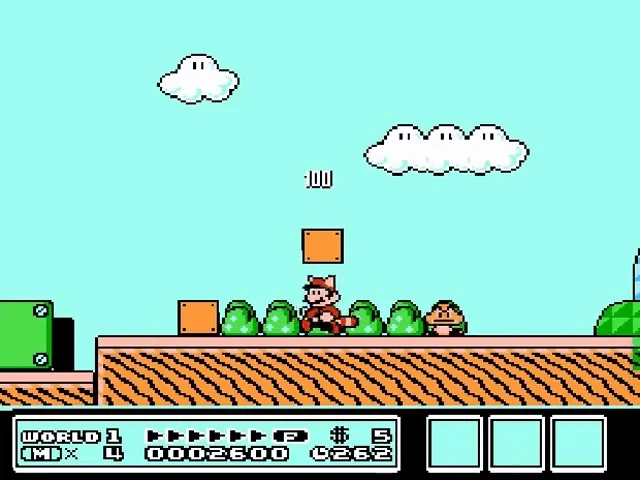
Cobra Triangle turns boat racing into a mission-based action system. Speed matters, but so do combat, hazards, power-ups and changing objectives. The player is not simply trying to circulate around a course faster than rivals; the boat must also survive situations that demand attacking, avoiding danger, collecting objects or choosing a safer route through the water. That broader objective design gives the game a remarkable amount of variety for an NES release.
The game uses several recurring stage types, including races to the finish, pod collection, mine disposal, creature battles, target shooting, rescues and waterfall jumps. That structure means the word racing describes the way the player moves through the game, but not every stage is a conventional contest against rival boats. The vehicle remains central because speed, steering and positioning determine whether each objective can be completed before time runs out.
Power-ups affect acceleration, speed, firepower, missiles and temporary invulnerability, so improvement is not limited to learning a single ideal line. A section that is difficult at normal speed may become manageable with the right temporary advantage, while combat can create openings or distractions during a race. The boat therefore feels like both a vehicle and a tool for solving scenarios.
Cobra Triangle’s hybrid identity is its only real qualification issue. It is not a pure circuit racer, and players seeking traditional lap structure may prefer Rad Racer or Michael Andretti’s World GP. Yet racing remains central to its movement, objectives and risk management. It earns second place by showing how a vehicle game can expand the meaning of competition without losing the thrill of moving quickly through dangerous spaces.
- Best for racing-action variety, power-ups, combat and changing objectives.
- Choose another game if you specifically want conventional laps and clean racing lines.
- The NES release is a one-player game, so its appeal comes from scenario variety and repeated improvement rather than head-to-head competition.
1. R.C. Pro-Am
R.C. Pro-Am is the strongest overall synthesis of NES racing ideas. Its isometric viewpoint gives the track a clear sense of shape while preserving the compact readability needed for quick decisions. Three rival cars share the course, and the player must handle corners, hazards and positional pressure while also looking for weapon pickups. That combination makes every race more than a test of raw acceleration.
The track conditions and obstacles give the courses more personality than their compact screen layouts might suggest. Water and oil can punish a careless line, while walls, arrows and other hazards change how the player approaches a turn. Weapons allow the player to disrupt rivals, but using them is not a substitute for driving: a badly timed attack can still leave the car in a poor position or exposed to the next obstacle.
The upgrade system gives the long run of 32 tracks a strong sense of development. Better engines, tires and acceleration change what the vehicle can do, while the game’s progression rule makes consistency matter. Finishing last is dangerous because the player can lose a life when the race ends at the back of the field. That creates tension between attacking rivals and protecting a run. A risky shortcut or weapon use may gain a place, but a mistake can have consequences beyond one corner.
R.C. Pro-Am ranks first because its systems reinforce one another. The perspective supports readable driving, the weapons create tactical disruption, the hazards give tracks character, and the upgrades make later races feel connected to earlier decisions. It is not the purest racer on the NES, but it is the most complete expression of racing as speed, competition, route management and progression working together.
- Best overall choice for isometric racing, weapons, upgrades and long-form replay.
- Its NES version uses three computer opponents; other versions should not be used when describing the Nintendo release.
- Its progression rewards consistent finishes, so avoiding last place matters more than chasing spectacular wins every time.
The best NES racer depends on which part of racing you want emphasized. Rad Racer is the clearest pick for pseudo-3D road presentation, Excitebike offers the most distinctive stunt-and-editor format, and Michael Andretti’s World GP provides a stronger multiplayer and course-selection framework. Formula One: Built to Win and Al Unser Jr. Turbo Racing are better choices when progression, shifting or pit decisions matter more than instant arcade action.
For the broadest mixture of driving and action, Cobra Triangle and R.C. Pro-Am stand apart. Cobra Triangle offers more varied objectives and environments, while R.C. Pro-Am builds the most cohesive long-term competition from tracks, weapons, upgrades and rival pressure. Eliminator Boat Duel is the unusual specialist choice for players who want water hazards, multiple viewpoints and boat development.
Together, these games show why the NES racing library is worth judging by design ideas rather than graphical scale alone. The system offered everything from side-view motocross and pseudo-3D highways to career racing, combat vehicles and multi-stage watercraft competition. Its limitations encouraged developers to make the vehicle, course structure or progression system do something distinctive.