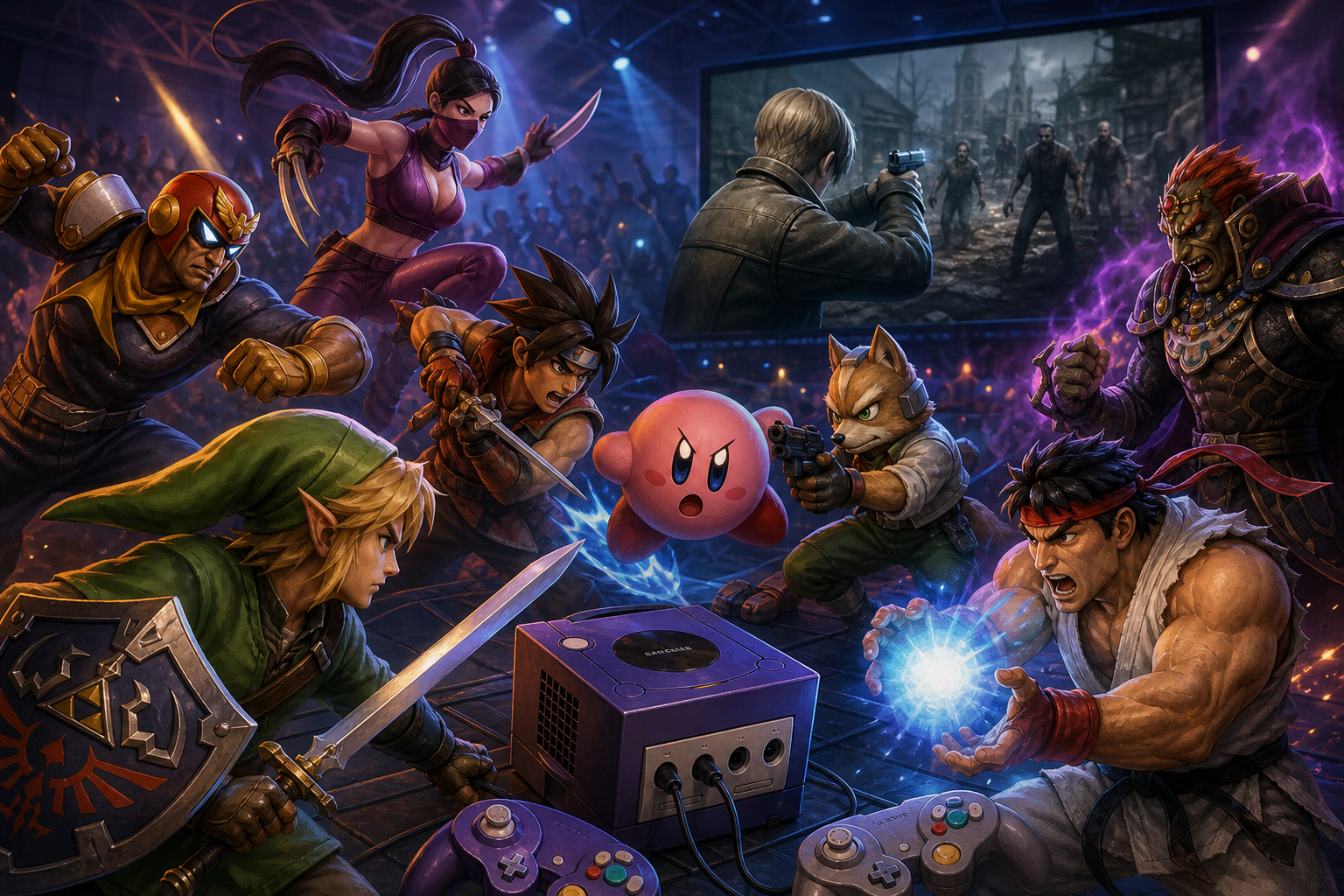
Nintendo’s purple console is often remembered for platformers, party games and fast multiplayer, but its adventure library has a surprisingly broad personality. Some games build enormous worlds around exploration, while others turn a mansion, a haunted island or a tiny suburban home into a tightly designed playground.
This list ranks ten games released for Nintendo GameCube by the quality of their exploration, puzzle design, world-building, mechanical variety and sense of discovery. The ranking favors games in which curiosity is an important part of progress, whether that means finding a route through a dungeon, photographing evidence, studying an alien ecosystem or uncovering a secret in a haunted room.
The list is not limited to one narrow definition of adventure. Action-adventure hybrids, role-playing adventures and horror adventures are eligible when exploration and discovery remain central. Ports are included when the GameCube edition is a meaningful way to play, and each entry identifies its particular strengths and limitations. The order is an editorial selection rather than an objective scorecard.
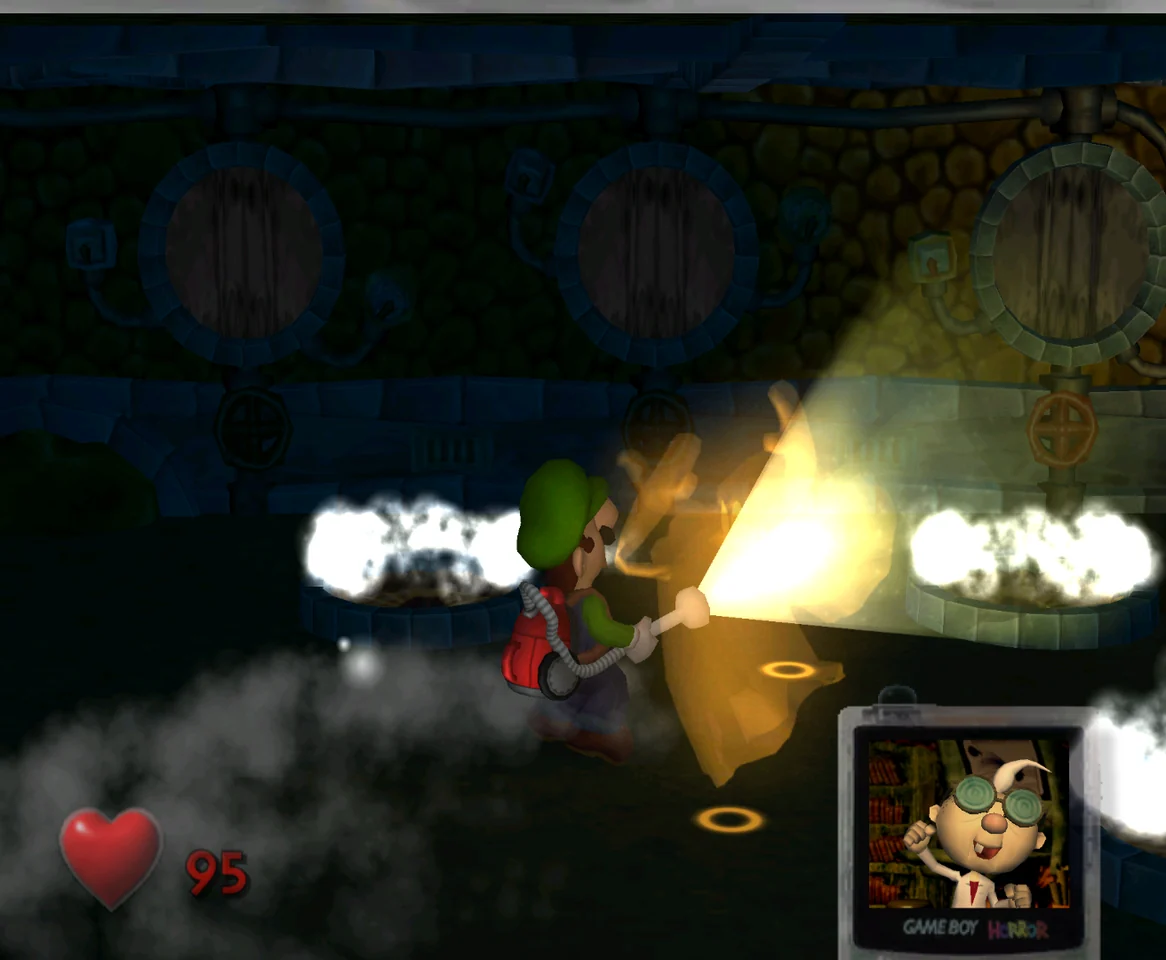
10. Luigi’s Mansion
Luigi’s Mansion is a compact adventure built around one excellent idea: every room is a small mystery waiting to be disturbed. Luigi explores a haunted house with the Poltergust 3000, revealing hidden objects, uncovering secrets and confronting ghosts whose behavior gives each encounter a different rhythm. The mansion is not a huge open world, but its interconnected rooms create a clear sense of progress as new tools and discoveries change familiar spaces.
The house gradually becomes more legible as Luigi learns how its rooms connect and how different ghosts behave. Searching furniture, checking suspicious corners and returning to earlier areas gives the adventure a satisfying investigative rhythm. The Game Boy Horror also turns navigation and item tracking into part of the fiction rather than leaving those functions entirely outside the world.
The game ranks tenth because its adventure structure is narrower than the sprawling journeys above it. Its treasure hunting can sometimes pull attention away from the central ghost-catching loop, and the mansion’s compact scale limits environmental variety. Still, it is an excellent choice for players who prefer a short, approachable adventure with strong atmosphere and a playful supernatural identity rather than a punishing horror game.
- Best for: Players who want a short, accessible haunted-house adventure.
- Key strength: Room-by-room discovery supported by a distinctive ghost-catching tool.
- Tradeoff: Less geographical variety and less long-term exploration than the higher-ranked games.
9. Star Fox Adventures
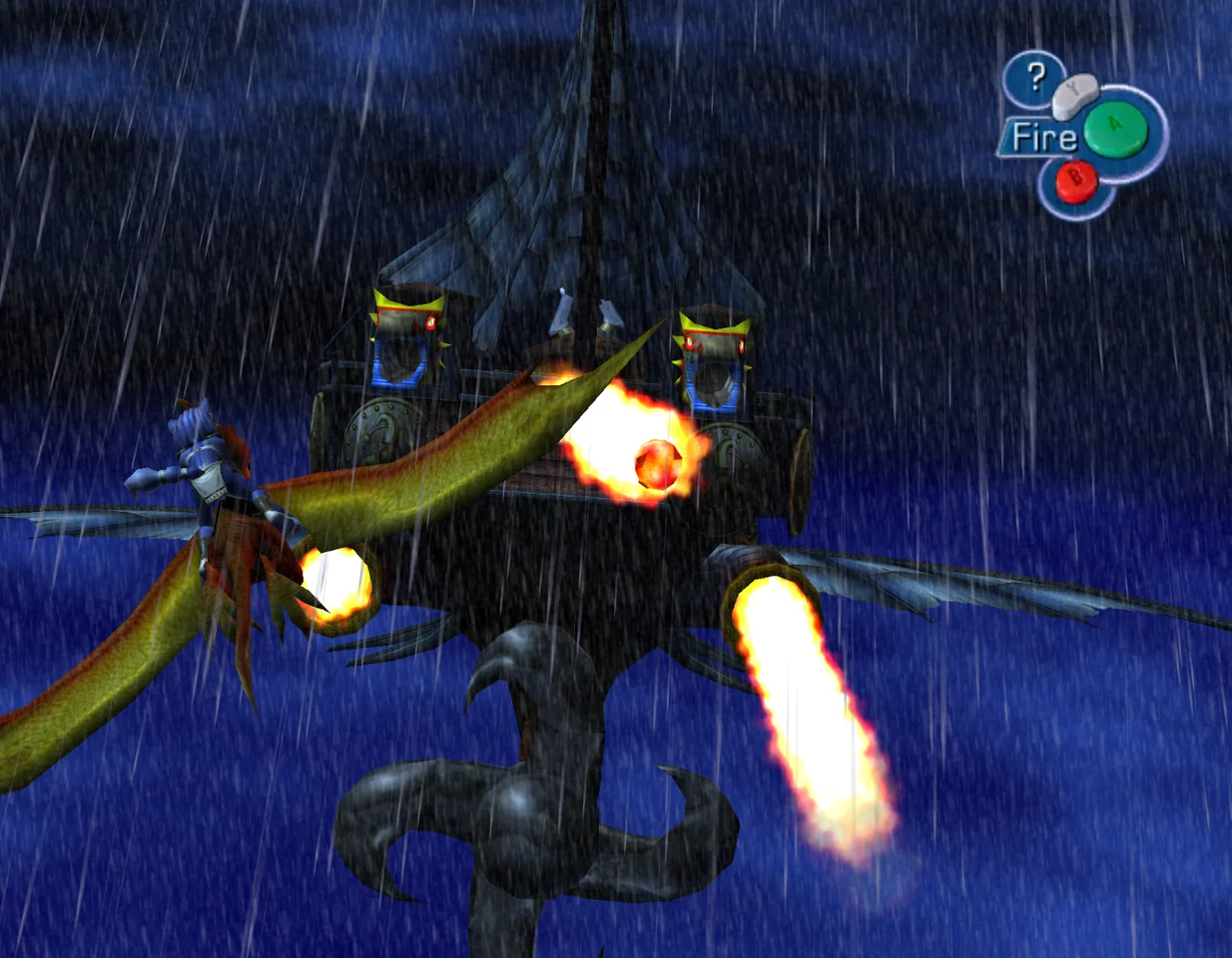
Star Fox Adventures is an unusual fit for its series, but a convincing GameCube adventure when judged on its own structure. Dinosaur Planet gives Fox a colorful world filled with villages, temples, environmental puzzles and characters who need help. The game’s central loop alternates between traveling, solving dungeon problems, collecting upgrades and returning to earlier areas with new capabilities.
The staff is more than a combat weapon. Its powers provide access to new routes, solve environmental problems and create a steady sense of progression. The game also moves between on-foot exploration and occasional Arwing sequences, giving the journey more variety than a straightforward fantasy action-adventure.
Its weakness is that the adventure design does not always feel fully integrated with the Star Fox identity. The melee combat is functional rather than deep, and some progression tasks can feel more routine than revelatory. Even so, the game offers a distinct blend of science-fiction framing, fantasy landscapes and traditional action-adventure design. It belongs on this list because its world, puzzles and light exploration make it more than a simple genre detour.
- Best for: Players who enjoy colorful worlds and conventional dungeon progression.
- Key strength: A generous setting with villages, temples and backtracking opportunities.
- Tradeoff: Combat and series identity are less consistent than the exploration design.
8. The Legend of Zelda: Four Swords Adventures
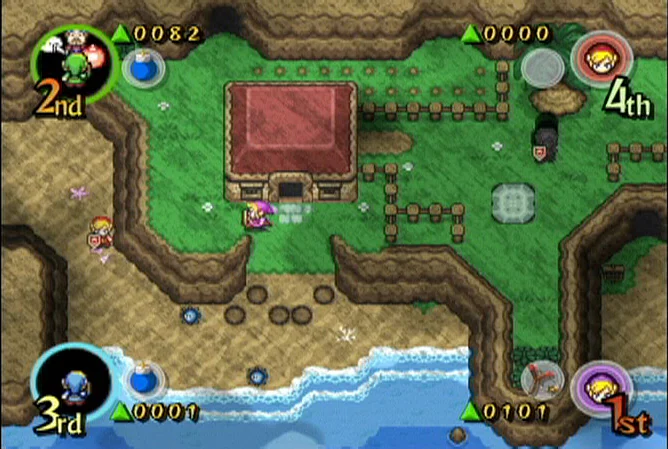
Four Swords Adventures turns Zelda’s usual solo puzzle-solving into a coordinated group exercise, even when played alone. The four Links can spread out, form lines, surround enemies or combine their movements to solve environmental challenges. Levels are arranged as self-contained stages, giving the game a more deliberate, arcade-like pace than The Wind Waker or Twilight Princess.
The formation system creates puzzles that would not exist in a conventional one-character Zelda game. Players must decide whether the Links should move as a group, divide across multiple paths or arrange themselves to activate switches and defeat enemies. This makes positioning as important as item selection.
That structure makes it a particularly good adventure for players who enjoy readable objectives and constant interaction with the environment. It is less satisfying for anyone seeking one continuous world, and its fullest multiplayer concept depends on additional Game Boy Advance systems and link cables. Solo play remains available, but the social design is central to the game’s identity.
Four Swords Adventures ranks eighth because its mechanical originality is stronger than its sense of geographic scale. It is a focused action-adventure built around formations, stages and cooperation rather than a single uninterrupted expedition.
- Best for: Groups or solo players who enjoy puzzle rooms and coordinated movement.
- Key strength: Four-character formations turn familiar Zelda actions into spatial puzzles.
- Tradeoff: Stage-based progression feels less like a single uninterrupted journey, and multiplayer requires additional hardware.
7. Final Fantasy: Crystal Chronicles
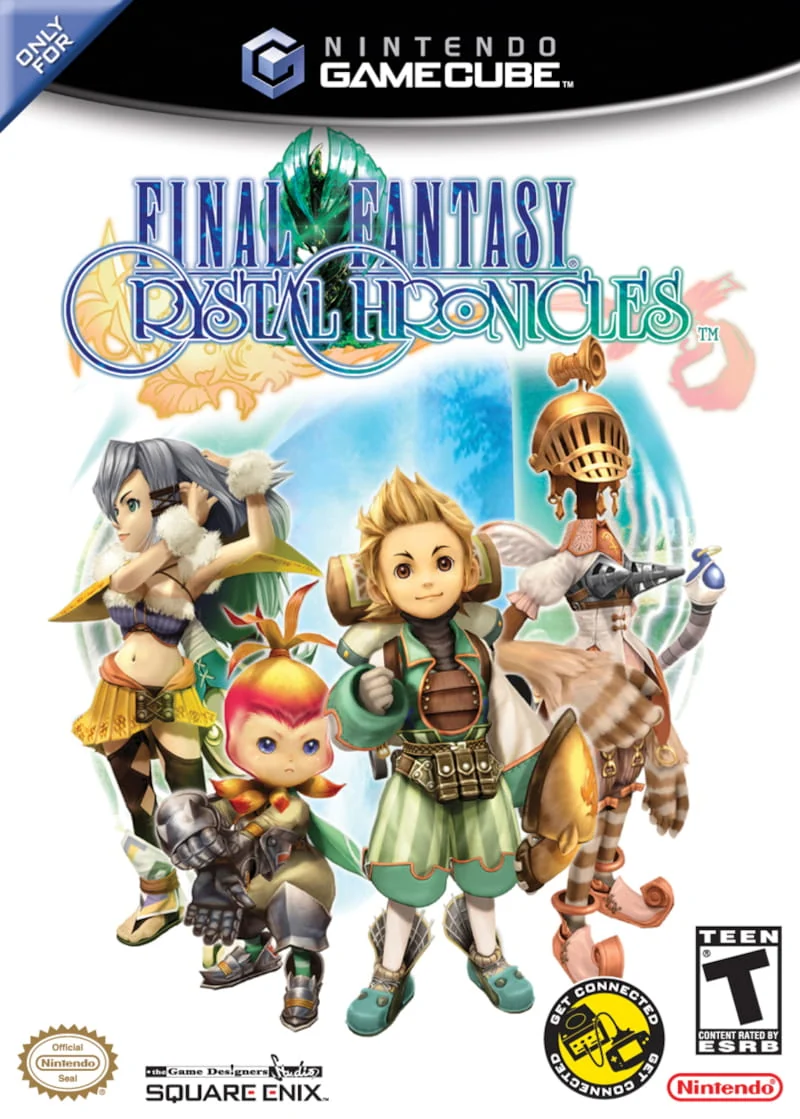
Final Fantasy: Crystal Chronicles presents its adventure through travel, village visits, dungeon expeditions and a world shaped by the danger of miasma. The chalice mechanic gives every journey a practical boundary: the party must carry protection while exploring, and the group’s position matters as the adventure unfolds. Combat is real-time rather than menu-driven, giving the game a more immediate feel than many Final Fantasy spin-offs.
The game’s caravan structure gives travel a stronger identity than a simple sequence of disconnected dungeons. Players return to settlements, meet recurring characters and learn more about a world whose survival depends on the protection provided by myrrh. Even routine expeditions contribute to the broader sense of a community trying to endure.
The GameCube version is especially distinctive because multiplayer uses Game Boy Advance systems as controllers. That requirement makes the game harder to approach as a casual group adventure, but it also gives cooperation a physical and informational dimension. Solo play remains possible, though the experience changes without several players sharing responsibility.
Crystal Chronicles ranks seventh for its atmosphere, travel structure and unusual cooperative design. It is not the deepest role-playing game on the system, but it is one of the GameCube’s most recognizable attempts to make a fantasy adventure feel like a shared expedition.
- Best for: Players who want a cooperative fantasy journey with real-time combat.
- Key strength: The miasma and chalice systems give travel a clear strategic identity.
- Tradeoff: The original multiplayer setup requires compatible Game Boy Advance hardware and link cables.
6. Eternal Darkness: Sanity’s Requiem
Eternal Darkness is an adventure about investigation, history and the unstable boundary between what the character experiences and what the player believes. Its story moves across different historical periods and protagonists, allowing the game to change its atmosphere without abandoning its central mystery. Exploration, item use and combat support the larger horror framework, but the most memorable discoveries often come from the way the game encourages suspicion.
The historical structure gives the world unusual depth. Instead of treating its supernatural conflict as a problem belonging to one contemporary hero, the game presents a chain of events that stretches across centuries. Each protagonist contributes another piece of the mystery, so learning about the past is part of understanding the present.
The sanity system is not merely a health variation. It makes perception part of the adventure, using audiovisual disturbances and apparent disruptions to challenge confidence in the game itself. That design remains its greatest strength and also its most divisive feature: players who want transparent rules may find the tricks distracting.
Eternal Darkness earns sixth place because its world-building and psychological design remain unusually inseparable. It is less mechanically smooth than the best traditional action-adventures, but few GameCube games make the player’s assumptions such an important part of exploration.
- Best for: Players who like historical mysteries, psychological horror and unreliable presentation.
- Key strength: Sanity mechanics make the player’s expectations part of the design.
- Tradeoff: Combat and traditional exploration are less refined than the game’s atmosphere.
5. Beyond Good & Evil
Beyond Good & Evil gives its adventure a strong investigative center. Jade explores Hillys, photographs wildlife, uncovers conspiracies and moves between story areas using a mixture of stealth, vehicle travel, environmental interaction and light combat. The camera is not just a collectible tool: photographing creatures and gathering evidence helps establish the world and gives exploration a purpose beyond finding the next objective.
The game’s setting feels lived in because Jade’s work connects its systems to the story. Photographing animals reveals the variety of Hillys, while investigation turns ordinary-looking spaces into potential sources of evidence. Vehicle travel broadens the sense of place without making the world so large that every destination feels remote.
The GameCube version is a 2003 release of an adventure that also appeared on other platforms, so it should not be presented as a Nintendo-exclusive production. Its action systems are useful but not especially deep, and some stealth and combat sections feel more like connective tissue than fully developed mechanics.
What elevates the game is the consistency of its tone and the way its photography, journalism and rebellion themes reinforce the act of looking closely. It is an excellent recommendation for players who want an adventure driven by curiosity and investigation rather than treasure alone.
- Best for: Players who prefer investigation, photography and story-led exploration.
- Key strength: Evidence gathering gives the camera a meaningful role in world-building.
- Tradeoff: Combat and stealth are competent but are not the main attraction.
4. The Legend of Zelda: Twilight Princess
Twilight Princess is the GameCube’s broadest traditional Zelda adventure, combining a large overworld with dungeons, villages, equipment upgrades and environmental puzzles. Its transformation mechanic changes how Link interacts with spaces, while dungeons usually introduce a tool and then build challenges around it. The result is a steady rhythm of discovery: enter a new region, learn its rules, gain an ability and revisit the world with a changed perspective.
The GameCube edition is important to identify clearly because Twilight Princess also launched on Wii with a different control scheme and presentation. The GameCube release retains the series’ conventional control approach and presents the world in the original GameCube format, making it a distinct edition rather than merely a duplicate package.
Its darker visual tone gives the adventure a different mood from The Wind Waker, but the game’s scale is not always matched by equally memorable interaction in every overworld stretch. Some travel sections can feel more functional than exploratory. The transformation sections also divide the adventure into noticeably different rhythms, with some players preferring Link’s conventional form.
Even with those limitations, Twilight Princess offers a substantial quest with strong dungeons and a satisfying sense of geographical progress. It ranks fourth because it delivers the most expansive traditional adventure structure in this selection.
- Best for: Players who want a large, traditional Zelda journey with darker fantasy.
- Key strength: Strong dungeon structure and meaningful tool-based progression.
- Tradeoff: The expansive overworld is not consistently as interactive as its best regions, and the GameCube and Wii editions differ in controls and presentation.
3. Paper Mario: The Thousand-Year Door
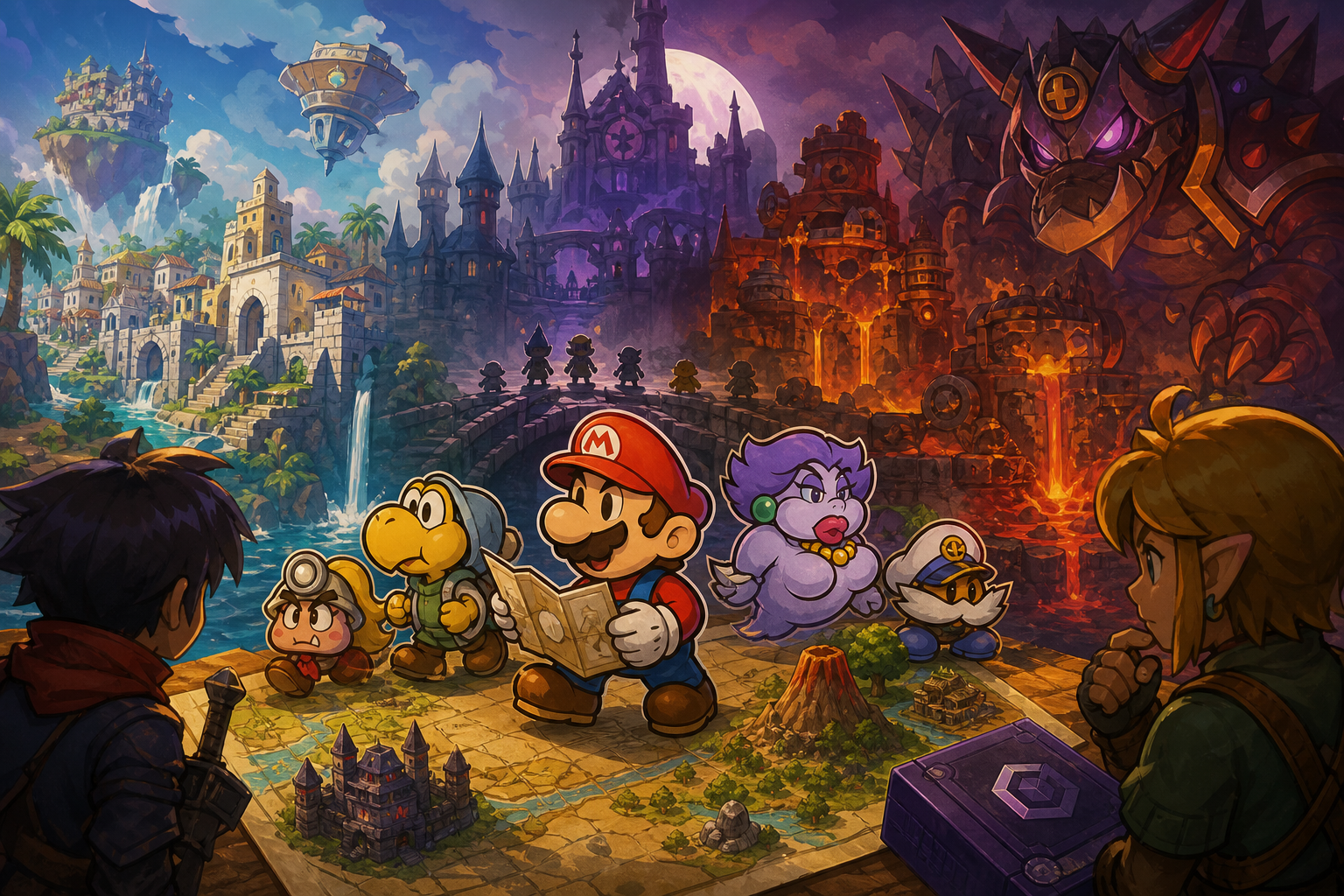
Paper Mario: The Thousand-Year Door is primarily a role-playing game, but its adventure design is too strong to ignore. Rogueport and the surrounding regions are built around investigation, character-driven detours, hidden routes and playful environmental logic. Mario’s paper abilities turn the world itself into a puzzle surface: flattening, rolling and transforming can reveal shortcuts or solve problems that conventional attacks cannot.
The turn-based battle system gives each discovery a useful context because partners, badges and action commands affect how players approach obstacles and enemies. Partner abilities also make party selection relevant outside combat. Swapping companions to solve environmental problems gives the journey a stronger adventure identity than a role-playing game built only around combat progression.
Its episodic structure means the individual chapters have distinct themes and rhythms, though the return trips to Rogueport can become repetitive. Some objectives also rely on backtracking through familiar spaces rather than introducing a new mechanical challenge.
It ranks third because its humor, world-building and constant environmental experimentation create one of the GameCube’s most rewarding adventure journeys. The RPG structure is not a reason to exclude it; it is the framework that lets the exploration, characters and puzzle systems reinforce each other.
- Best for: Players who want story, exploration and puzzle-solving alongside turn-based combat.
- Key strength: Paper abilities and partner skills make the environment mechanically expressive.
- Tradeoff: Repeated travel through familiar locations can slow the otherwise excellent pacing.
2. The Legend of Zelda: The Wind Waker
The Wind Waker turns exploration into its central fantasy. The Great Sea is not merely a map between islands: it creates anticipation about what might appear beyond the horizon. Sailing, charting locations, visiting islands and uncovering optional discoveries give the adventure a sense of movement that differs from land-based Zelda games. The expressive art style also makes characters, enemies and environments immediately readable, allowing the world to feel inviting even when its story becomes more serious.
The sea changes the player’s understanding of distance. A small island on the horizon can represent a dungeon, a side story, a character encounter or a treasure hunt, and the act of reaching it becomes part of the discovery. Wind control adds a light navigational layer, while the baton’s role in changing the environment supports the game’s broader theme of movement and direction.
Its sailing can feel slow when the player is crossing familiar water, and some late-game objectives interrupt the strongest momentum. Those limitations explain why it does not take first place here. The game’s open-water structure also means that some optional discoveries are more rewarding than others.
Nevertheless, The Wind Waker’s combination of navigation, dungeon puzzles, expressive characters and visual world-building makes it one of the clearest examples of a console adventure designed around curiosity. It is the best choice here for players who want the journey between destinations to matter as much as the destinations themselves.
- Best for: Players who enjoy navigation, island-hopping and a bright visual style.
- Key strength: Sailing makes distance, direction and discovery part of the adventure.
- Tradeoff: Open-water travel and late-game collection can test patience.
1. Metroid Prime
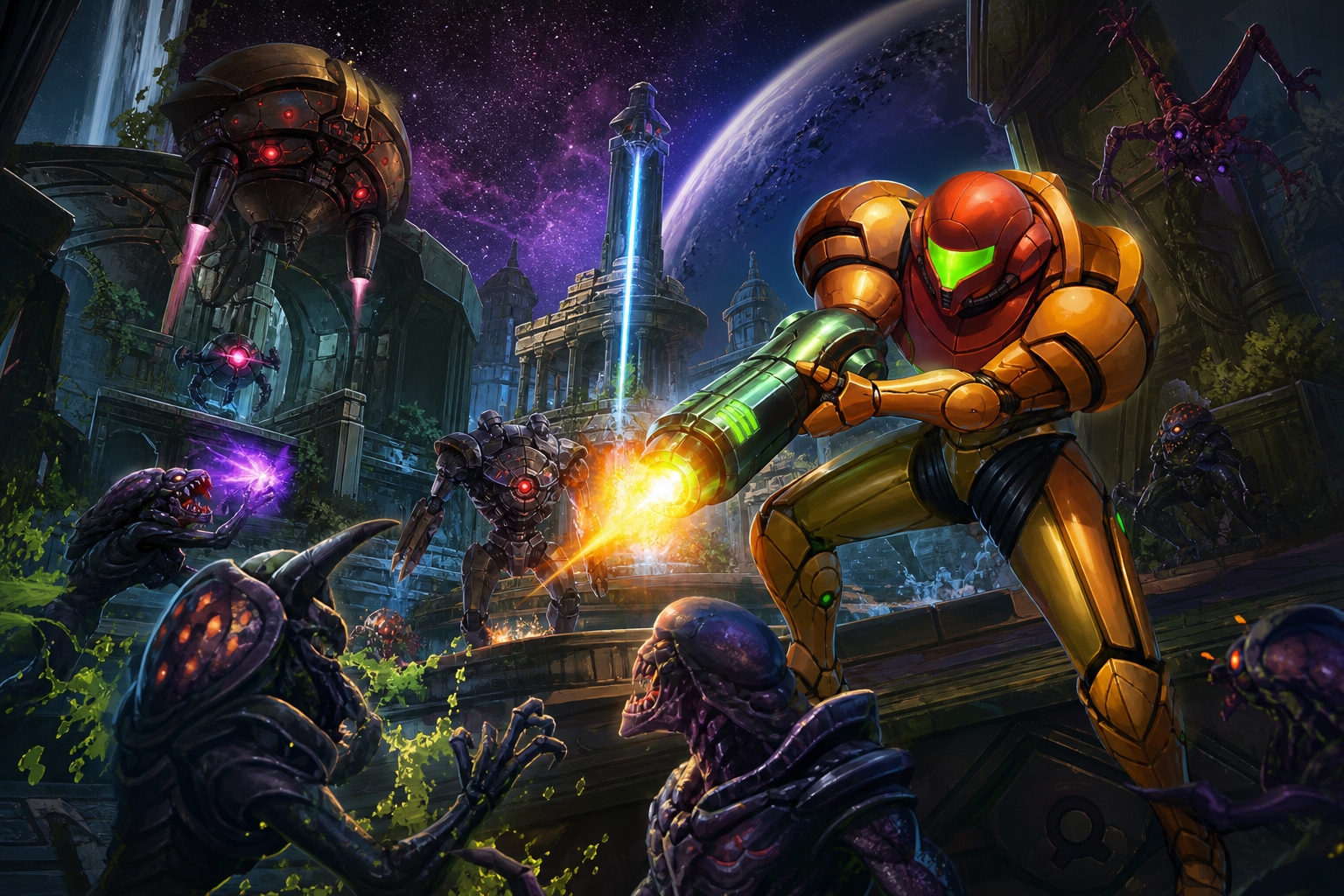
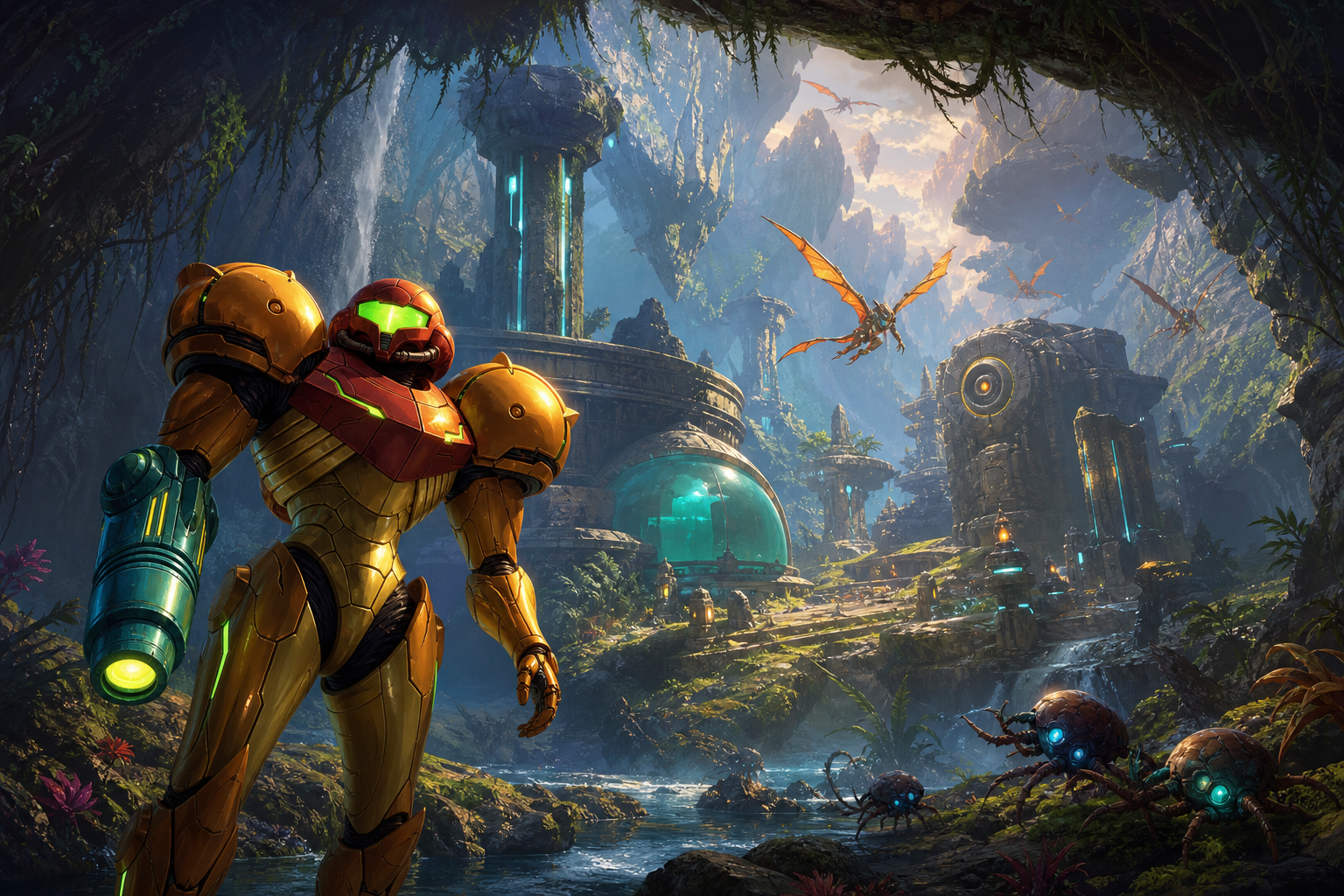
Metroid Prime is the GameCube’s most complete adventure because exploration, combat, scanning and progression all reinforce one another. Tallon IV is divided into distinct regions, but the world feels connected through locked paths, environmental clues and upgrades that change what Samus can reach. The scan visor adds a second layer of discovery, turning story fragments, creature behavior and ancient technology into information that rewards players who investigate rather than rush forward.
The first-person viewpoint supports atmosphere without sacrificing the careful spatial design associated with Metroid. Combat is more demanding than in a purely puzzle-focused adventure, yet weapons and visors also function as exploration tools. Learning how an enemy behaves can reveal a weakness, while studying a machine or ruin can explain why a route is blocked or what happened to the planet’s earlier inhabitants.
The game’s environmental storytelling is especially effective because it does not separate discovery from movement. A room can be a combat arena, a navigation problem, a source of historical information and a clue about a future upgrade. This gives the planet a coherent identity rather than making its regions feel like unrelated levels.
Backtracking can become demanding, particularly when the game asks players to revisit older spaces, but returning with new abilities usually feels purposeful. Metroid Prime takes the top spot because it makes every major system serve the same goal: understanding and penetrating an alien world.
- Best for: Players who want exploration, environmental storytelling and satisfying ability-based progression.
- Key strength: Scanning, combat and navigation all deepen the same world rather than competing for attention.
- Tradeoff: Backtracking and late-game collection can make the final stretch feel more deliberate.
The GameCube’s best adventures are not defined by one template. The Wind Waker and Twilight Princess deliver large fantasy journeys, Metroid Prime builds exploration around scientific observation, and Paper Mario turns comedy and paper transformations into environmental design. Other games make the category smaller and stranger: Luigi’s Mansion focuses on one haunted building, Four Swords Adventures makes cooperation a puzzle, and Eternal Darkness makes perception itself unreliable.
For a first choice, Metroid Prime is the strongest all-round recommendation because its exploration, atmosphere and mechanics remain tightly connected. Choose The Wind Waker for sailing and discovery, The Thousand-Year Door for character-rich role-playing adventure, Twilight Princess for a darker traditional quest, or Luigi’s Mansion for a shorter supernatural outing.
The GameCube’s adventure identity also comes from its willingness to let different genres share the same basic promise: there is always another room, island, ruin, clue or character worth investigating. That variety is why the system’s adventure library remains more substantial than its family-friendly reputation initially suggests.