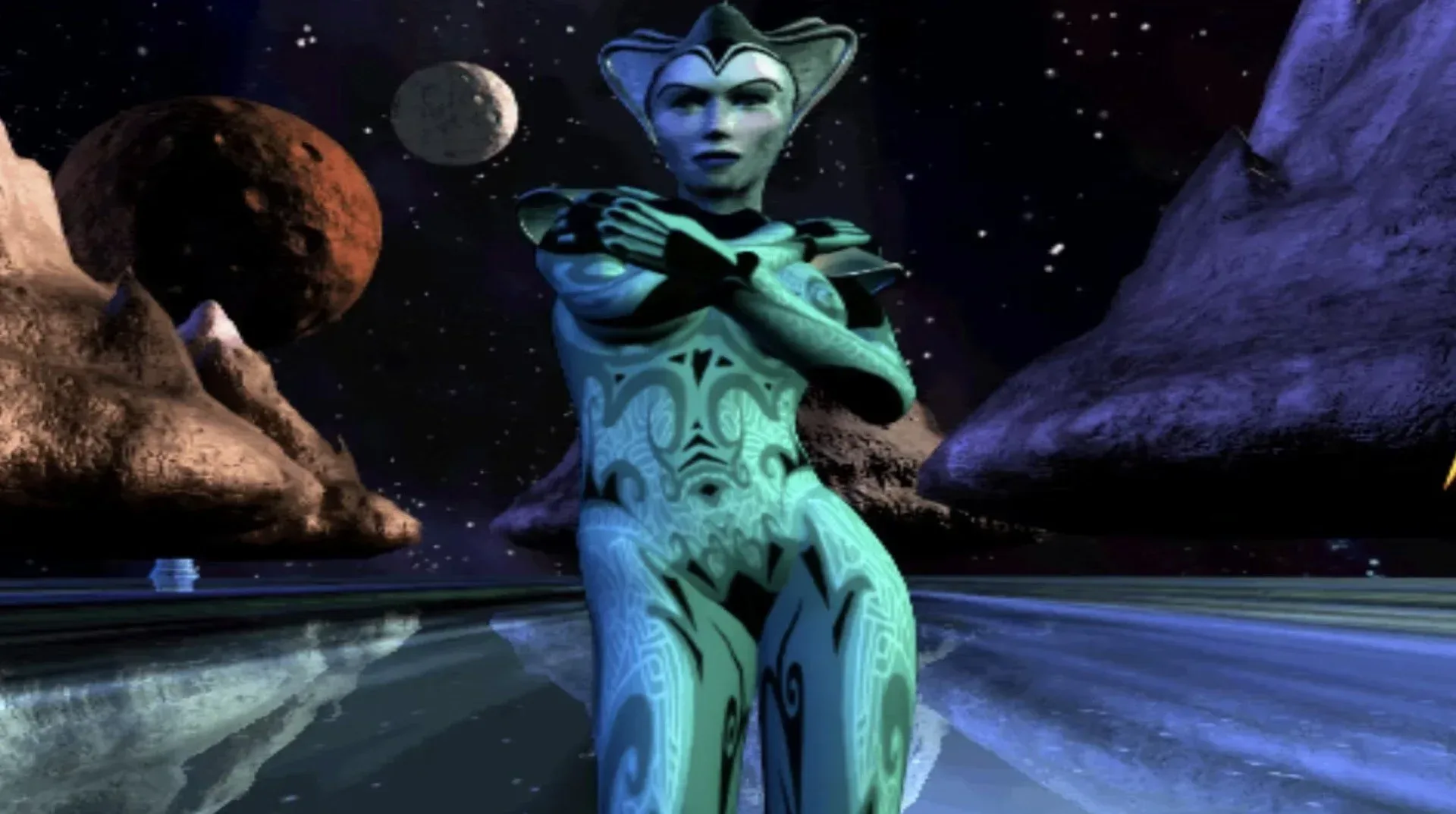
Some lost games vanish with the elegance of a stage magician. Others remain just visible enough to become legends: a screenshot here, a release-window mention there, perhaps an old retail listing that promises a version nobody can actually play. Ring: The Legend of the Nibelungen belongs squarely in the latter camp. The point-and-click adventure reached PC in 1998, was once intended for Sega’s Dreamcast, and then quietly missed its date with the console.
Now, a playable prototype of that abandoned Dreamcast edition has been preserved. It is a significant find for the console’s archive not because the game is an unheralded masterpiece waiting to overturn history, but because it makes an unfinished branch of that history accessible. The build is a three-disc release, it can be troublesome to run correctly, and it appears to provide a genuine opportunity to explore a port that was expected for 2000 but never officially arrived.
That distinction matters. Preservation is not only about rescuing famous games, immaculate games, or games that collectors wish had become expensive. It is also about preserving the strange, ambitious, commercially real projects that fell between platforms, schedules, and business decisions. And Ring, with its Wagner-inspired title, elaborate fantasy setting, and baffling early-game logic, is very much one of the strange ones.
A PC adventure that found buyers, not applause
Developed by Arxel Tribe, Ring: The Legend of the Nibelungen arrived on PC in 1998. It reportedly sold more than 600,000 copies, a figure that makes its critical story especially interesting. Commercial reach and critical affection do not always travel together, and Ring is an unusually loud example of that divide.
Reviews from the period were broadly harsh. One prominent assessment scored it 2.7 out of 10 and described the experience in deeply unflattering terms. That reception did not stop the game from reaching a substantial audience, but it did help establish the title’s long-running reputation as an oddity: a lavish-looking adventure that many critics felt was far less compelling to play than its mythology-heavy premise suggested.
None of this turns the newly accessible Dreamcast version into a retroactive critical triumph. Nor should it. A prototype is not a time machine designed to make every cancelled port secretly brilliant. What it does offer is a chance to inspect how a late-1990s PC adventure was being reshaped for Sega hardware, and to see a piece of software that had previously existed more as a promise than as a playable artifact.
The Dreamcast version that never reached shelves
The Dreamcast was a natural destination for projects like this on paper. Sega’s final console had room for adventures, cinematic presentation, unusual controls, and games that did not need to fit a conventional action template. In practice, however, a planned port could be far along and still never become a retail disc. The reasons might be technical, financial, logistical, or simply tied to a changing market. A cancelled conversion is rarely accompanied by a tidy public explanation.
The available prototype indicates that developer Success handled the Dreamcast port. Success is also associated with the Cotton series, which makes its apparent involvement a notable detail for Sega historians. The proposed release was expected in 2000, a moment when the Dreamcast library still had its own distinctive identity but the broader commercial future of the platform was becoming increasingly difficult.
There is an important limit to what a preserved prototype can tell us. Playable does not automatically mean final. The three-disc build may contain incomplete elements, quirks, rough edges, or behavior that differs from what a finished commercial edition would have shipped with. It is best treated as a surviving work-in-progress rather than a recovered retail release. Still, being able to boot and examine such a build moves the discussion from speculation into documentation.
Alberich, a magic frog, and a train-track motorcycle
If the name The Legend of the Nibelungen suggests grave mythological drama, the opening adventure apparently has other plans. Players take control of Alberich, a figure who learns that he was once king of the surrounding land and has awakened from a long sleep. So far, that is fairly standard fantasy business: slumber, former royalty, an inherited world in need of sorting out.
Then the adventure’s puzzle logic starts refusing to wear sensible shoes.
Early on, Alberich encounters a dwarf who can provide a magic frog and another peculiar creature. Striking the dwarf also produces a glass plate needed for a later puzzle. From there, the player climbs onto a motorcycle that runs on train tracks, places the creature in its engine compartment, and feeds it minerals so it can power the vehicle toward the next area.
That sequence is not a parody of old adventure-game moon logic. It is the actual route described for the beginning of the game. The effect is less “grand opera made interactive” and more “someone spilled a box of fantasy nouns into a mechanical workshop and called the result a quest.” For players who enjoy the medium’s most aggressively unconventional corners, that may be a more persuasive invitation than any vintage review score.
It also underscores why preserving unsuccessful or divisive games is useful. A game can be poorly received and still be culturally revealing. Ring represents a particular era of PC adventure design: large ambitions, pre-rendered atmosphere, mythology used as a launchpad for surreal interaction, and puzzles that expect players to accept a world’s private internal rules. Its Dreamcast incarnation adds another layer, showing the same sensibility being adapted for a console that itself became synonymous with fascinating detours and unrealized possibilities.
Why prototypes deserve careful attention
Lost builds can invite a rush of understandable excitement, but they also need patient handling. A prototype may not behave reliably across every setup, and this particular three-disc version is reported to require some effort before it runs properly. Anyone exploring older console software should also remember that practical display and connection details can matter as much as the disc itself; our guide to mapping a retro console HDMI adapter connection covers the kind of hardware questions worth checking before a vintage system meets a modern screen.
More broadly, preservation should not be confused with endorsement. Archiving a game does not require declaring it great, and acknowledging an infamous reputation does not make a project unworthy of care. The historical record is fuller when it includes the near-misses, the ports that were nearly sold, and the games whose strangest decisions make them more memorable than their reviews ever intended.
For Dreamcast enthusiasts, the prototype is a fresh chance to study an obscure cancellation with unusually substantial material behind it. For adventure-game fans, it is an invitation to confront a title whose reputation for eccentricity is supported by a motorcycle apparently fueled by a mineral-eating creature. And for preservation-minded players, it is another reminder that a game’s journey does not necessarily end when its original release plan does.
A valuable oddity, even with its baggage
Ring: The Legend of the Nibelungen arrives in this new context carrying all of its old baggage: the poor critical notices, the awkward puzzle reputation, and the fact that the recovered Dreamcast build is not a polished final product. Those caveats should remain attached. Yet its preservation is still a win.
There is no need to pretend every rediscovered prototype is a lost classic. Sometimes the reward is a more honest one: seeing an abandoned game exactly as it is, with its ambition, its confusion, its technical compromises, and its wonderfully questionable idea that a magical creature belongs under the hood of a rail-bound bike. The Dreamcast has gained another playable ghost, and this one appears determined to make the afterlife weird.