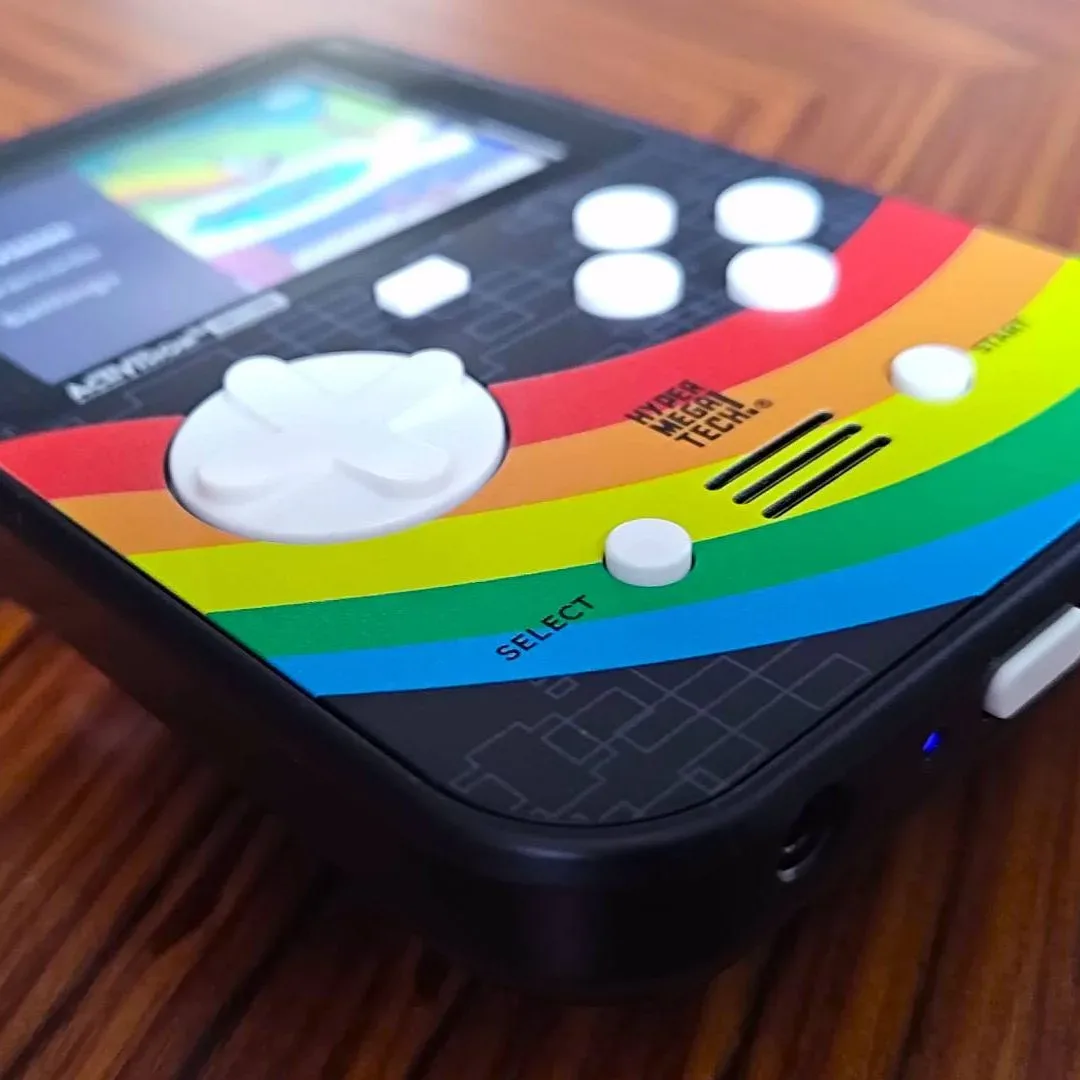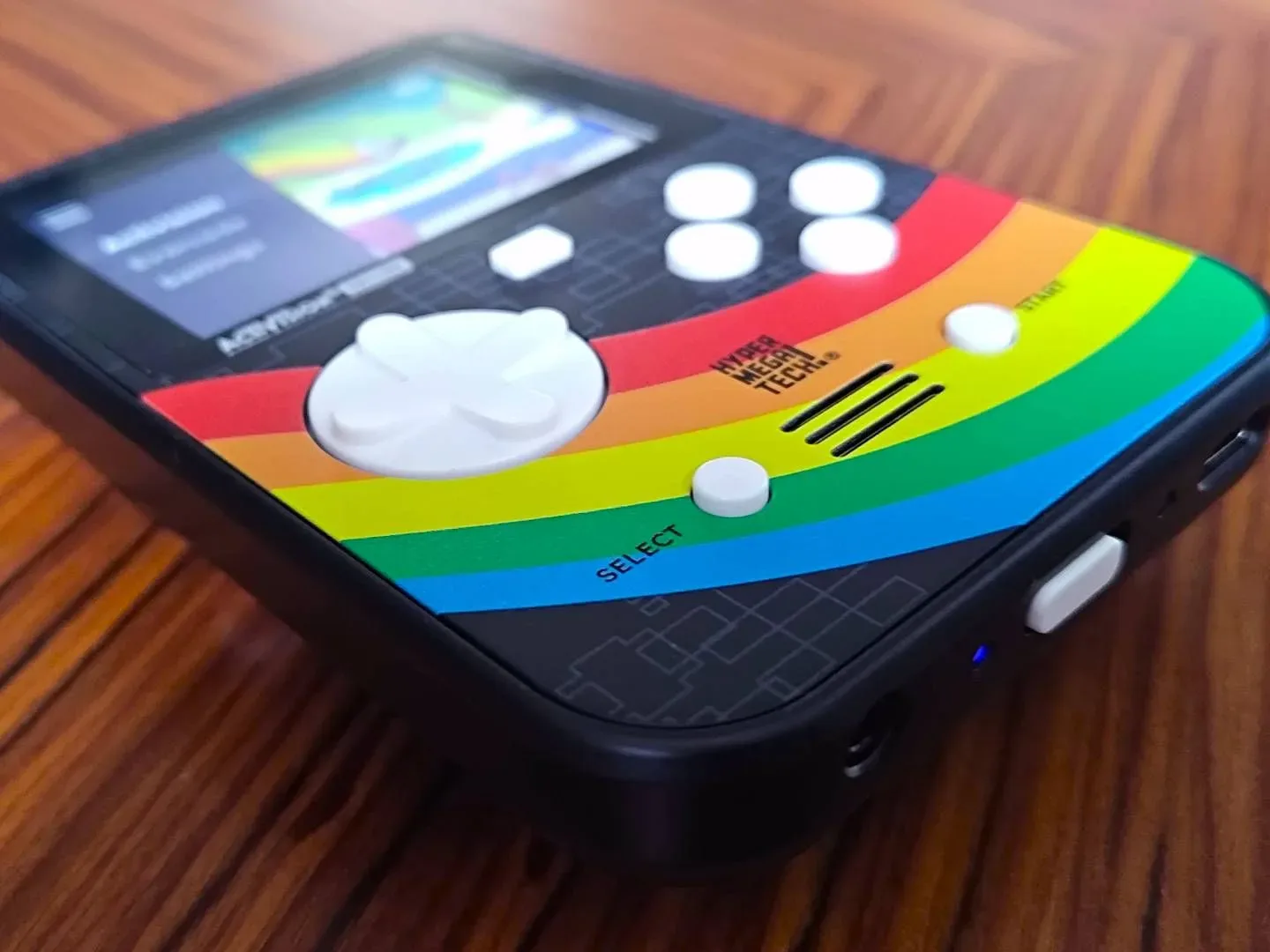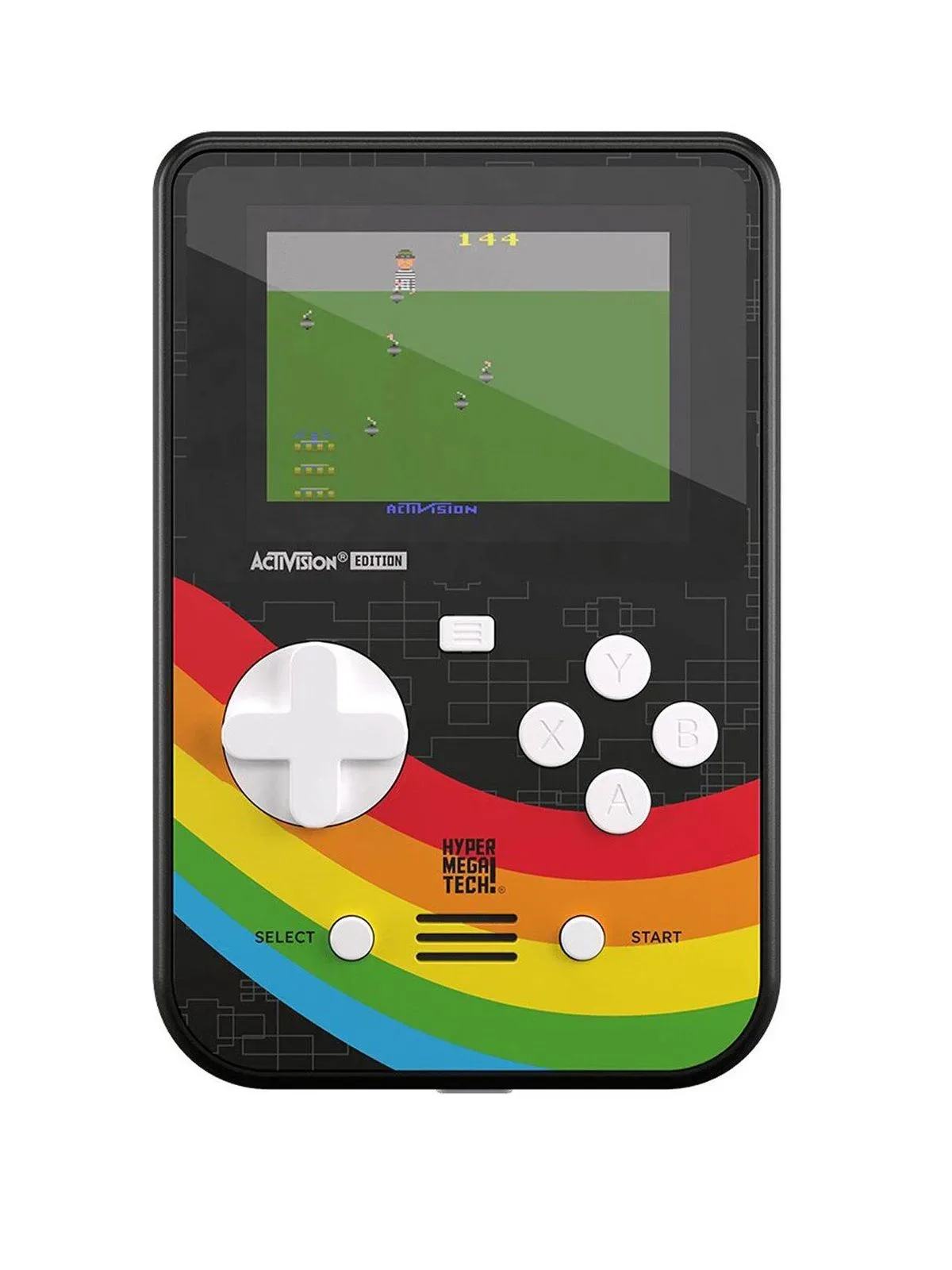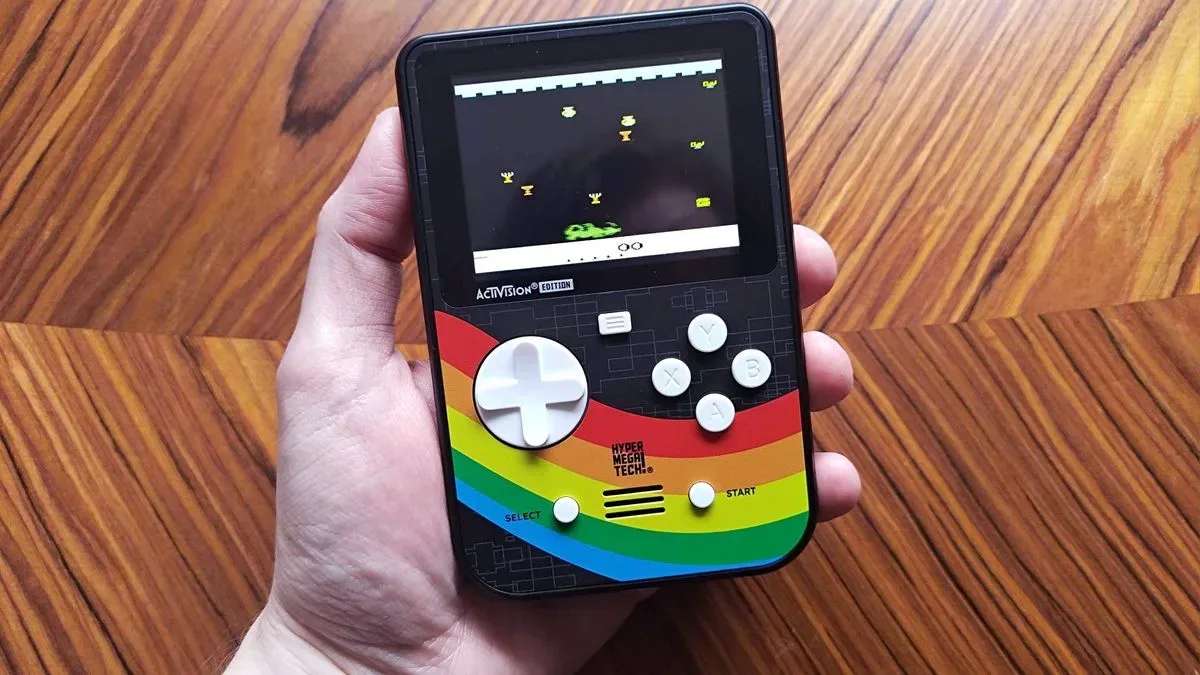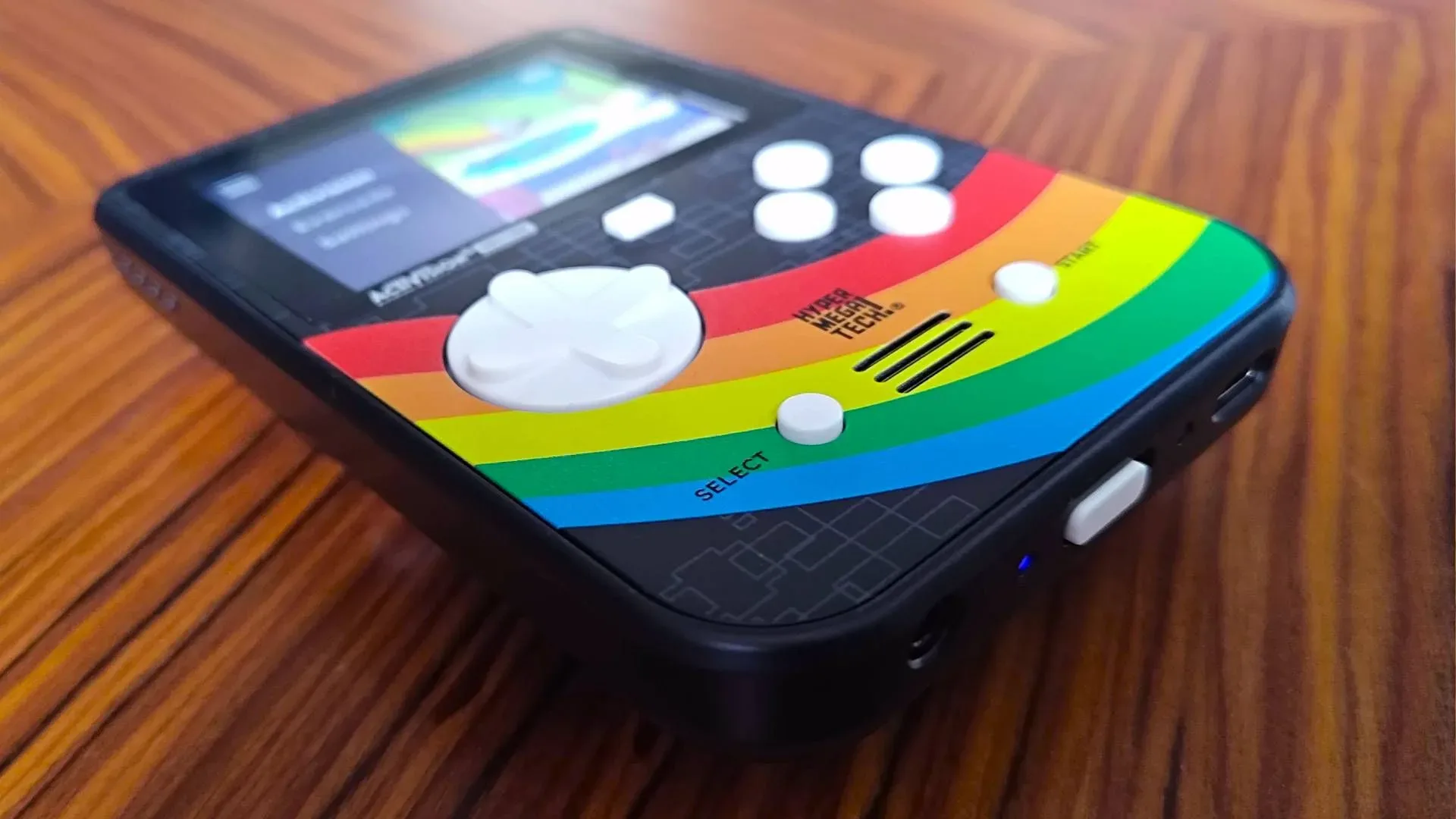
Evercade’s Super Pocket family has become a compact lesson in how much a handheld’s identity can change with its built-in library. The Activision Edition arrives with 34 games associated with the publisher’s formative Atari-era catalogue, but its most immediate calling card is visual: a black shell interrupted by a bold rainbow-wave treatment drawn from Activision’s vintage branding.
That design gives the Activision Super Pocket a distinct place among the various models. It is a deliberately nostalgic object, but not in the beige-console sense. The color treatment is energetic, loud and unusually attractive for a small retro handheld. For collectors who display their hardware as much as they use it, the casing may be the decisive feature. It is also the version that most clearly turns the Super Pocket itself into a celebration of a specific publisher’s early history.
The question for buyers is not simply whether 34 games is a substantial number. It is whether these are the particular 34 games they want close at hand. The built-in selection is focused on older arcade-style design: quick starts, repeatable challenges and the kind of rules that can be understood in moments but mastered over many attempts. That makes the Activision Edition a very different proposition from a handheld built around a famous later-era console game such as Banjo-Kazooie.
A catalogue rooted in short, sharp Atari-era play
Pitfall! and Pitfall II: Lost Caverns are the natural names to lead with. The first remains one of the defining adventures of the Atari 2600 generation, using jungle hazards, timing and exploration to make a relatively simple control scheme feel surprisingly expansive. Its sequel carries that exploratory impulse further. Neither needs elaborate modern systems to communicate its premise; a player can understand the danger of a scorpion, log or open pit immediately.
That directness is central to the Activision Super Pocket’s appeal. These games were made for an era in which replayability often came from an increasingly clean execution of a narrow idea. A run might be brief, but the desire to improve it can endure. The library includes titles that represent several variations on that approach, rather than attempting to imitate the modern expectation that every game must provide dozens of hours and a dense progression track.
Beamrider, H.E.R.O., Keystone Kapers and Moonsweeper help illustrate the breadth within those constraints. There are shooters, rescue-focused action games, chase games and score-driven challenges. The common thread is readability and momentum. These are games designed to get a player back into the action, whether the goal is a higher score, a better route or simply surviving a little longer.
That focus will not suit everyone. The 34-game roster also contains Boxing, Skiing and Checkers, games that may be less compelling for players who are choosing a Super Pocket chiefly for headline classics. Their inclusion nevertheless reflects the wide range of software once marketed under the Activision banner. In a historical collection, not every title is expected to have equal pull decades later.
Imagic games add an interesting wrinkle
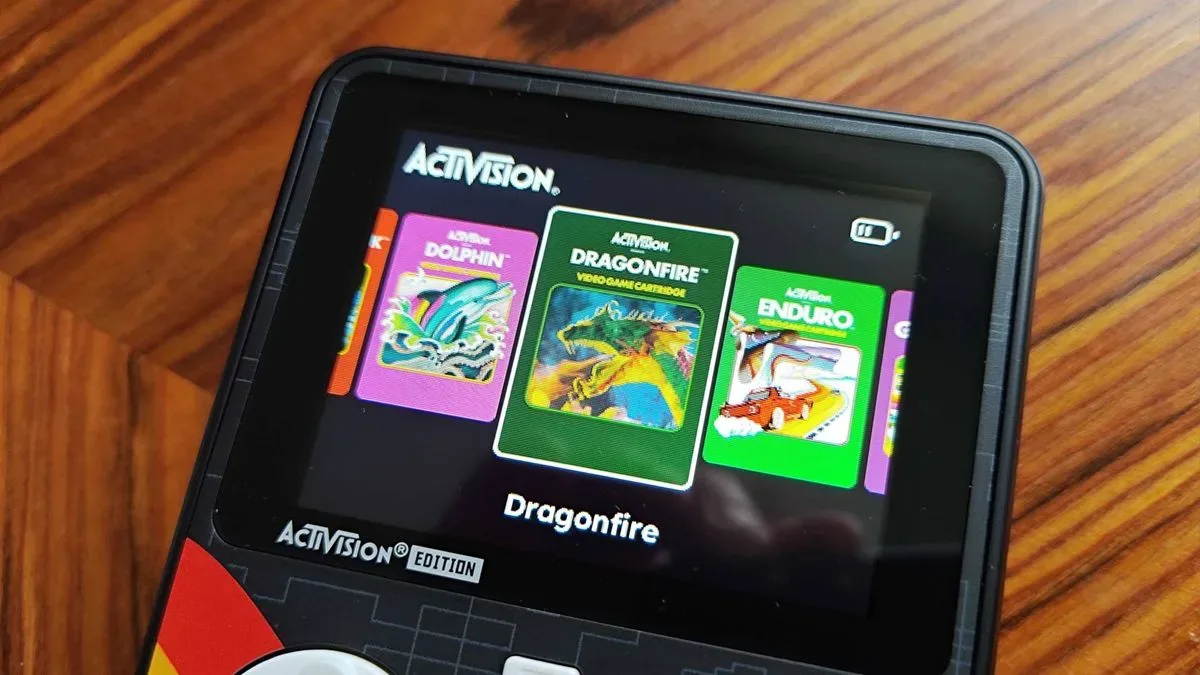
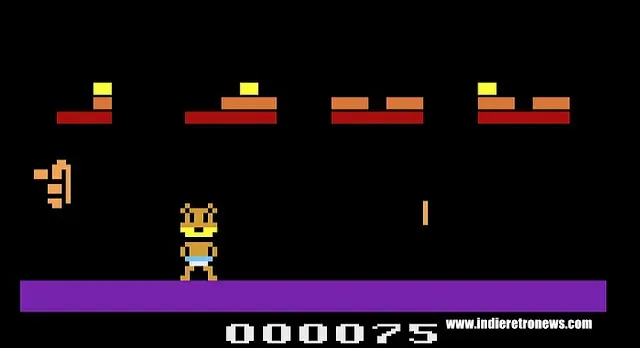
Two particularly notable inclusions are Dragonfire and Demon Attack, games originally associated with Imagic. They bring a small but meaningful layer of third-party history to the package. Dragonfire is remembered for its rapid, obstacle-dodging action, while Demon Attack is a fixed shooter built around intense waves of enemies.
Related coverage includes Activision Super Pocket Brings 34 Retro Games to Evercade's Most Stylish Handheld Yet.
The presentation of those games is not fully archival, however. Their displayed cover treatments use an Activision-style look rather than preserving the original Imagic silver-and-red box artwork. That may be a minor packaging matter for someone interested only in loading a game and playing it, but it is more consequential for enthusiasts who value retro releases as historical artefacts. Original box art is part of how players remember a game: it records the era’s illustration, branding and the independent identity of publishers that competed on the Atari 2600.
The situation is especially curious because Imagic’s identity has not vanished entirely from Demon Attack; its original logo remains visible on the game’s start screen. The revised artwork therefore does not erase the game’s past, but it does create a split between the on-device software and the exterior presentation. Collectors with a strong interest in original packaging may see that as an unfortunate compromise, even if the games themselves remain the main event.
Everycade compatibility is the bigger long-term feature
Like the other Super Pocket models, the Activision Edition is an Evercade device and can play compatible cartridges. This is what prevents the built-in list from being the entire buying decision. A player whose preferred classics live elsewhere in the Evercade ecosystem can treat the Activision unit as a cartridge-friendly portable that happens to include a publisher-specific starter library.
That changes the recommendation substantially. Someone buying one Super Pocket solely for preloaded games should compare every edition carefully. The Neo Geo model makes more sense for a player drawn to fighting games, while the Rare Edition has a major advantage for anyone whose priority is having Banjo-Kazooie built into a compact system. A 3D collectathon from the Nintendo 64 era delivers a different kind of nostalgia from an Atari 2600 score chase, and it will understandably carry more weight for some players.
The Activision edition is instead strongest for people who want its particular strain of early-1980s action, or who intend to build an Evercade cartridge collection anyway. In the latter case, its library becomes a bonus and the unusually handsome shell becomes a persuasive reason to pick this hardware variant. The upcoming Banjo-Kazooie double pack is also relevant to that calculation: cartridge support means choosing the Activision design does not necessarily mean forgoing that series entirely.
Retro handheld interest is not limited to one technology or one idea of authenticity. Some players want emulation-focused portable devices; others prefer FPGA recreations; still others want officially curated libraries on dedicated hardware. The Activision Super Pocket sits squarely in the last category. For a look at another approach to portable retro hardware, see our coverage of the Retroid Pocket Duo and its native dual-screen ambitions.
Choose the edition around the games, then let the design break the tie
The most sensible way to approach the Activision Super Pocket is to separate two questions. First: are Pitfall!, H.E.R.O., Beamrider, Keystone Kapers, Dragonfire and Demon Attack the sort of games likely to receive repeat play? Second: if Evercade cartridge support means the built-in list is only part of the picture, which Super Pocket do you most want to own and look at?
On the first question, this is a focused and credible snapshot of Activision’s early legacy, with a few less essential sports and board-game selections alongside its better-remembered action titles. On the second, the answer is straightforward: the Activision Edition’s retro rainbow graphics make it one of the most distinctive Super Pockets yet. It is not automatically the best choice for every player, particularly those whose priority is Banjo-Kazooie or Neo Geo fighting games. But as a cartridge-capable Evercade handheld with a strong Atari-era identity and perhaps the series’ most memorable exterior, it knows exactly what it is trying to be.
Shop the products
Check current price, model and availability at the retailer.