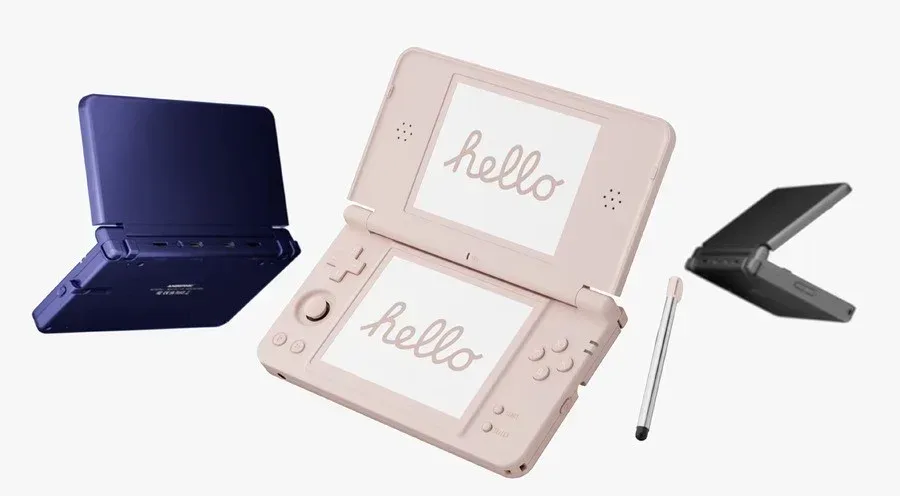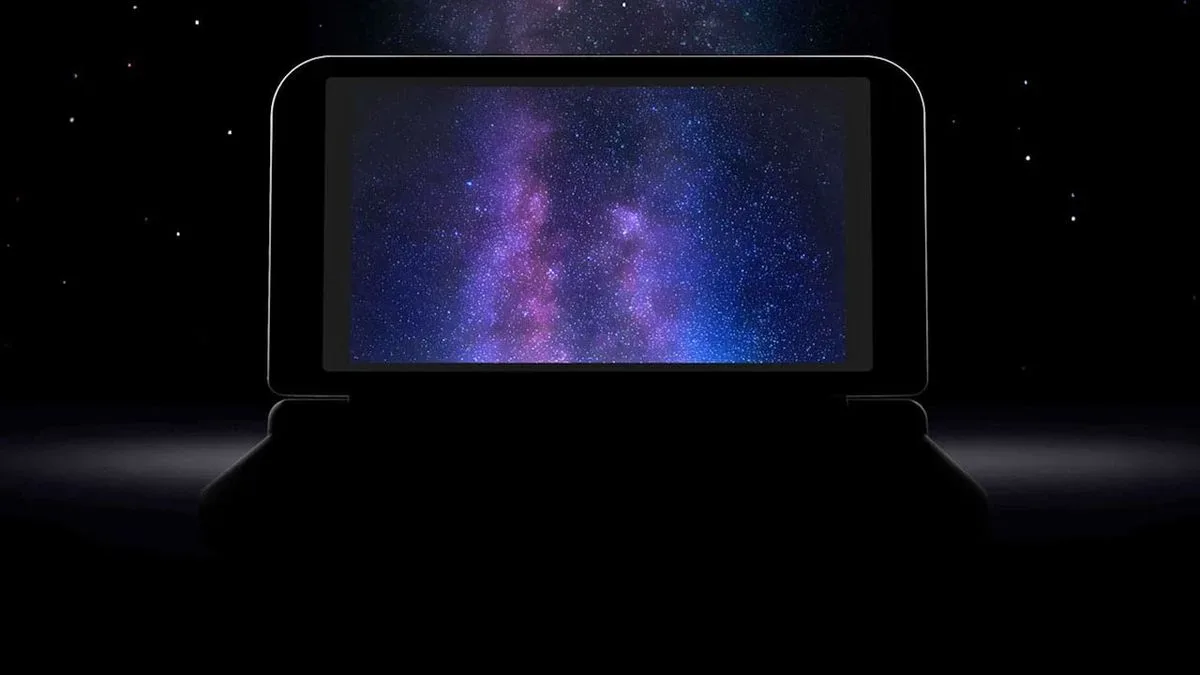
Retroid has offered a first glimpse of the Retroid Pocket Duo, a forthcoming handheld built around two screens. The company’s teaser appeared on social platforms on September 7, 2026, with the product name itself representing the clearest confirmed detail so far: this is Retroid’s first native dual-screen handheld rather than a standard Retroid Pocket fitted with an external display accessory.
The brief promotional material uses the line “no clips, two screens, one pocket”. That wording matters because Retroid has already explored a two-screen setup through an add-on for its existing handhelds. The new device appears intended to put both displays into one integrated piece of hardware, removing the clips, cable routing, and separate components that came with the earlier approach.
At this early stage, Retroid has not publicly detailed the Pocket Duo’s processor, display technology, memory, storage, battery, controls, operating system, price, or release date. That leaves a lot of the most important buying questions unanswered. The teaser establishes the concept, but it does not yet establish where the Duo will sit in the company’s lineup or how it will compare with rival dual-screen devices.
A shift away from the external-screen compromise
Retroid’s prior dual-screen effort used an attachment for a Retroid Pocket. It was an understandable route for a company with established single-screen hardware: provide a second display without waiting for an all-new clamshell or dual-panel system. But an add-on is not the same thing as a purpose-built handheld. It introduces extra physical connections, asks the player to assemble the system before use, and can affect portability.
Reported cable problems with that accessory were especially significant. A dual-screen handheld only works elegantly when both screens feel like permanent, dependable parts of the machine. If the second display needs a cable and an attachment mechanism, the convenience of having two panels can quickly be offset by setup friction or connection concerns.
The Pocket Duo’s slogan reads as a direct attempt to solve that problem. An integrated design could make opening a game, navigating menus, and moving between screens feel more natural than attaching a display to the top of a conventional handheld. It could also offer a tidier option for people who want a portable system that reflects the layout of Nintendo DS and Nintendo 3DS software without turning their device into a stack of accessories.
That does not automatically answer the practical questions, however. Retroid has not shown enough to confirm the Duo’s hinge design, screen orientation, dimensions, control layout, or whether it folds shut. The name and teaser point to a native two-screen product; the exact form factor remains to be revealed.
Why dual screens still matter for retro handheld fans
Two displays are more than a cosmetic throwback. For games designed around the Nintendo DS family, the second screen can handle maps, inventories, touch prompts, status data, puzzles, and game-specific interfaces. Those games can be played on a single screen through screen swapping, picture-in-picture arrangements, or other workarounds, but those methods are inherently less direct than seeing both panels at once.
Related coverage includes Retroid Pocket Duo Teased as a Native Dual-Screen Handheld.
For that reason, an integrated dual-screen handheld could be useful for enthusiasts who value the original presentation of DS and 3DS-era software. The appeal is not limited to raw emulation speed. Screen placement, aspect ratios, touch implementation, ergonomic comfort, and the ability to read both displays without squinting all affect whether a device feels practical for long sessions.
It also makes careful guidance more valuable. Different original releases, remasters, and remakes can have very different interfaces and structures, which is one reason it helps to verify that a guide matches the version being played. Joking Joystick’s guide to matching walkthroughs with original, remastered, and remade games explains why that distinction can matter before players begin a retro project.
For Retroid, the core opportunity is straightforward: offer the convenience of a modern Android-style handheld while respecting the software conventions that made dual-screen consoles distinctive. Making that happen well is much harder. A second panel must be useful, not merely present, and the system needs enough performance and polished software to justify choosing it over a single-screen portable.
Performance predictions are still only predictions
It is tempting to project the capabilities of Retroid’s current hardware onto the Pocket Duo. Retroid Pocket 5 and Retroid Pocket 6 models have been associated with strong PlayStation 2 emulation performance, leading to understandable speculation that the new device could also target demanding DS and 3DS libraries.
Still, that is not a specification sheet. A device’s processor, graphics hardware, cooling, power profile, screen resolution, software configuration, and emulator support all influence what it can do. Even if the Pocket Duo proves to be a powerful handheld, performance can vary dramatically between individual games and emulators. No specific platform compatibility should be treated as confirmed until Retroid provides official details and the hardware is independently assessed.
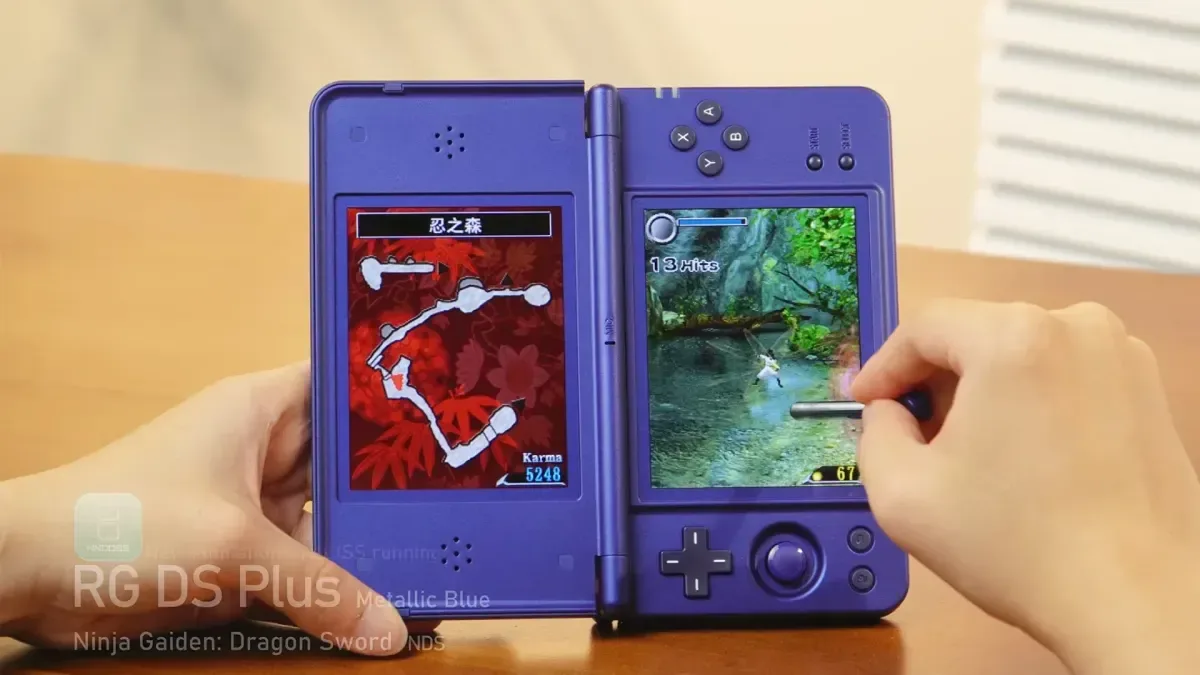
There is also speculation that the Duo could be positioned above ANBERNIC’s RG DS Plus, which was announced shortly before Retroid’s teaser. That possibility is based on the timing of the two products and the increasingly competitive market for dual-screen retro devices, not on a confirmed Retroid comparison. Likewise, suggestions that the Pocket Duo may use a Snapdragon 8 Gen 2 chip or AMOLED displays, potentially placing it alongside AYN Thor in headline specifications, remain unverified.
For prospective buyers, that distinction is worth keeping firmly in view. A teaser tells us that Retroid is working on a native dual-screen portable. It does not tell us which chip is inside, whether the displays are OLED or LCD, whether touch works on one or both panels, or what performance tier Retroid is targeting.
The details that will define the Pocket Duo
When Retroid expands on the teaser, several specifications will carry more weight than simple marketing comparisons. The company will need to show whether the screens are large enough for comfortable simultaneous use, how bright and responsive they are, and how their resolutions fit the older systems the device is likely to attract.
- Screen layout: Whether the panels are stacked, their size, and their aspect ratios will shape the DS and 3DS experience.
- Touch functionality: A touchscreen is a major consideration for software designed around stylus input, menus, and touch-driven puzzles.
- Hinge and chassis: If the Duo uses a foldable design, its durability, viewing angles, and closed size will be central to its appeal.
- Controls and comfort: Dual screens should not come at the cost of cramped sticks, awkward shoulder buttons, or an uncomfortable grip.
- Processor and thermal design: These will determine the realistic ceiling for more demanding emulation workloads.
- Software experience: Easy screen configuration, sensible menus, controller mapping, and sleep behavior can matter as much as benchmark figures.
- Price and availability: Retroid has not yet announced either, but both will decide how the handheld stacks up against competing options.
The earlier accessory also sets a clear expectation: the integrated device must deliver a cleaner experience than the workaround it replaces. Fewer separate pieces is an appealing start, but reliability and day-to-day usability will determine whether the Pocket Duo feels like a meaningful step forward.
What is confirmed, and what is not
For now, the confirmed list is short. Retroid has teased a device named the Retroid Pocket Duo. It is presented as a two-screen handheld, and the company’s messaging emphasizes an arrangement without clips. The teaser follows the recent unveiling of ANBERNIC’s RG DS Plus, placing Retroid in an emerging contest to make modern dual-screen portables more compelling.
Everything beyond that needs an asterisk. There is no confirmed launch window, no price, no full design breakdown, and no official performance claim. There is no basis yet to declare the Pocket Duo stronger than the RG DS Plus or comparable with AYN Thor. There is not even enough information to say precisely how Retroid will implement its second screen.
That uncertainty does not make the reveal uninteresting. On the contrary, Retroid’s move from a cable-dependent attachment toward a dedicated dual-screen system is a notable change in direction. If the eventual hardware combines a dependable integrated design with comfortable controls and a suitably capable chip, it could appeal to players who want their dual-screen classics to feel less like a workaround and more like they belong on the hardware in their hands.
Until Retroid publishes full specifications, though, the Pocket Duo is best viewed as a promising outline rather than a finished answer. The two screens are real; the rest of the story is still waiting for the company to fill in the blanks.