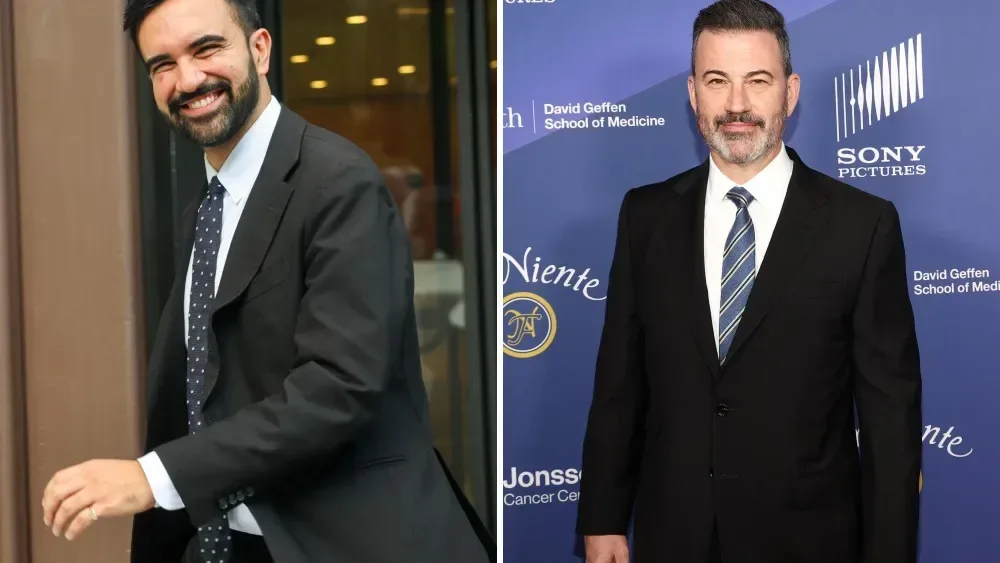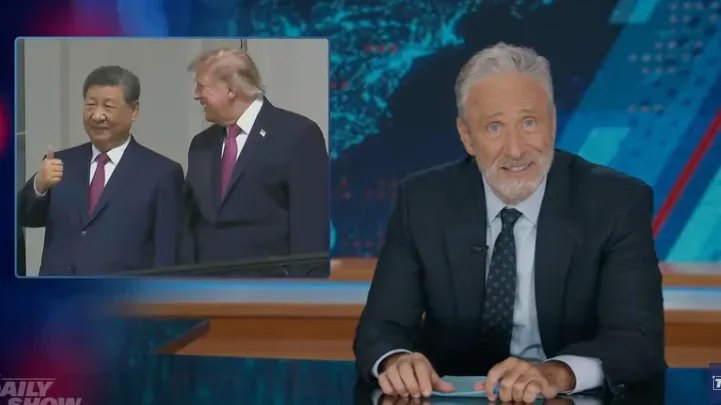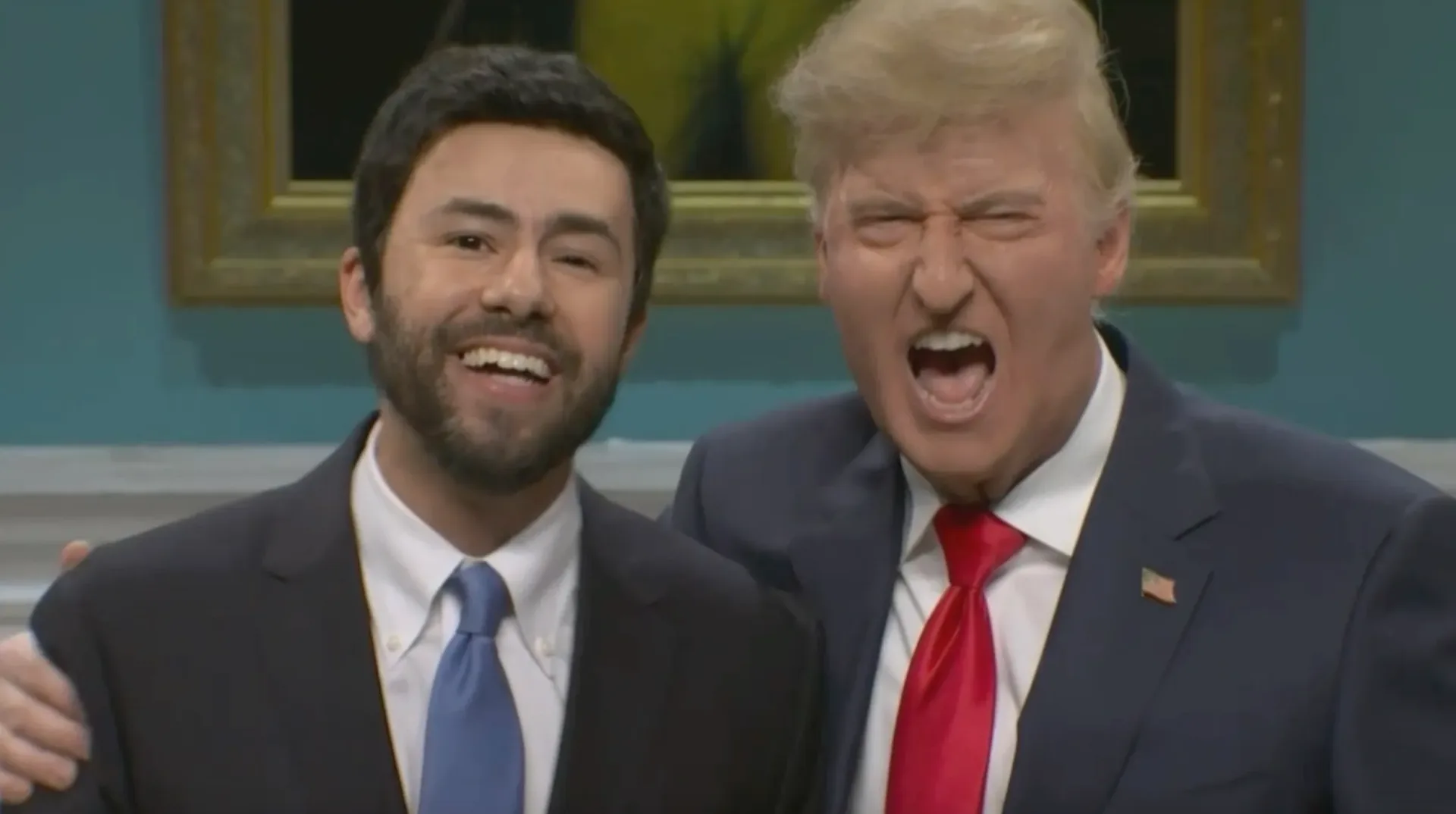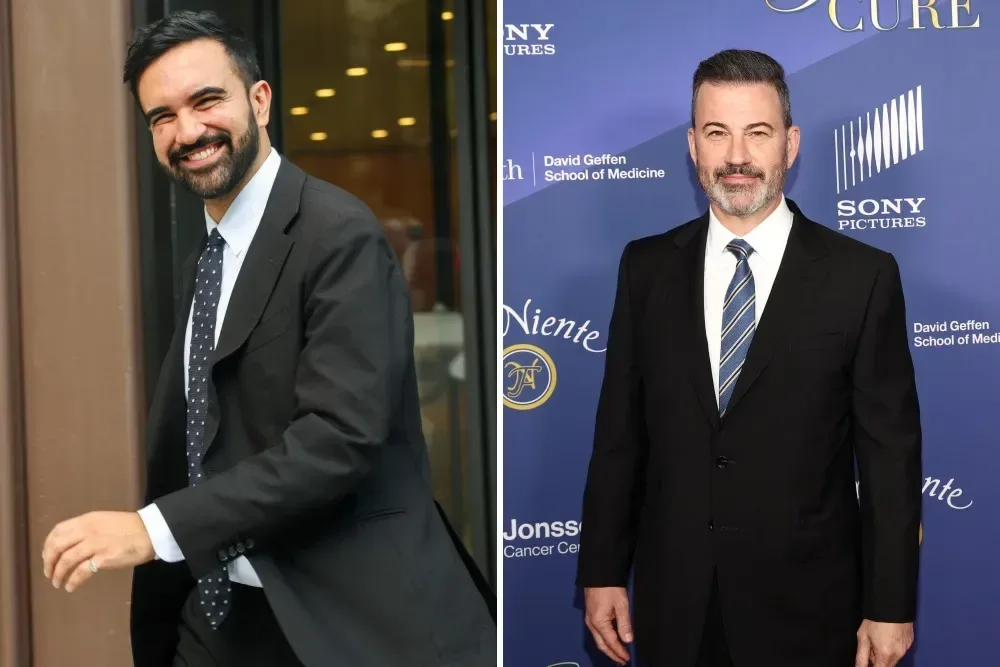
Jimmy Kimmel’s return to Brooklyn came with the usual late-night ingredients: celebrity guests, a deliberately unruly comedy bit, hometown sentiment and a question that was never likely to produce a normal answer. But Mayor Zohran Mamdani’s appearance gave the show a notably more policy-minded punchline when Kimmel asked him to text President Donald Trump a selfie of the two of them.
Mamdani declined. His response was concise and pointed: “Jimmy, I love you, but I love housing more.”
The exchange followed a discussion of Mamdani’s communications with Trump and the unexpectedly cordial public perception of their relationship. Mamdani did not portray their contact as personal friendship. Instead, he characterized it as work centered on New York City priorities, particularly federal approval for the proposed Sunnyside Yard development in Queens.
In a setting built to turn public figures into entertaining guests, the mayor’s answer did something different. It took a bit designed around the absurdity of a Trump-Kimmel selfie and redirected attention to a large, consequential development proposal. That is not inherently less political than sending the text; it is political in a more literal, municipal sense.
A Brooklyn week with a civic detour
The episode launched a week of Jimmy Kimmel Live! tapings at the Brooklyn Academy of Music. It marked Kimmel’s eighth time bringing the program to Brooklyn, where he was born and spent part of his early life. Kimmel said the run drew more than 150,000 ticket requests.
The opening lineup mixed comedy, music and government. Pete Davidson appeared to promote his Netflix video podcast The Pete Davidson Show and the forthcoming film How to Rob a Bank. TV on the Radio performed during a celebration of the 20th anniversary of Return to Cookie Mountain. The show also staged a comic interruption involving Matt Damon, Kimmel’s mother and sister, and Jon Hamm in the guise of an irate New York construction worker.
Against that backdrop, Mamdani was not introduced as a standard celebrity guest. Kimmel prefaced the interview with clips of television commentators predicting a grim outcome for New York under the mayor. The program contrasted those predictions with the assertion that murders and shootings reached record lows during Mamdani’s first seven months in office.
That framing set up the core interview question: why did Mamdani appear to have a workable relationship with a president with whom he has major disagreements?
Related coverage includes Zohran Mamdani Turns Down Jimmy Kimmel’s Trump Selfie Text Request.
Friendly optics versus functional communication
Kimmel described the relationship as seemingly friendly and asked whether Mamdani had deliberately tried to charm Trump. Mamdani’s answer drew a line between interpersonal tone and political alignment. He said the two disagree on many issues, but share a love of New York City.
He also described his approach from their first meeting in November of the prior year: keep the meeting focused on New Yorkers rather than on the two politicians. In practical terms, that means discussing steps that could make city life easier instead of treating a presidential meeting as a symbolic contest or a personal photo opportunity.
That distinction matters. Political relationships are often interpreted through images: a handshake, a smile, a private message, a guest appearance, or a viral photograph. Those images can suggest affinity even when the participants are negotiating out of necessity. Mamdani’s account presents his communication with Trump as transactional in the public-interest sense: use access to pursue specific outcomes for the city.
There is no claim here that disagreement has vanished or that cooperation is guaranteed. Mamdani explicitly said there are many disagreements. The significant detail is narrower: he says they have communicated at times about city business, and he regards federal engagement as important to the agenda he is trying to advance.
Sunnyside Yard is the policy behind the punchline
The mayor repeatedly returned to Sunnyside Yard when Kimmel pressed him about Trump. The proposal concerns a development over the rail yard in Queens and is estimated to include 12,000 homes and roughly 30,000 jobs. Mamdani said that, when Trump is speaking, his own focus is on securing federal approval for the project.
Federal approval refers, in this context, to an authorization or participation from the federal government that Mamdani sees as necessary to move the proposal ahead. The interview does not establish what exact approvals are required, what stage the proposal has reached, what its timetable would be, or whether the administration will grant what the city seeks. It does establish why the mayor views a channel to the president as valuable: the project’s ambition extends beyond a local talking point.
The estimated numbers explain why Sunnyside Yard became the interview’s recurring subject. Twelve thousand homes is the housing argument. Approximately 30,000 jobs is the employment argument. Together, they frame the project as an attempt to make a sizable intervention in two areas that dominate city politics: where people can live and how economic activity is supported.
Those figures are estimates, not completed results. That distinction is important in any discussion of development. A proposed home is not an occupied home; an anticipated job is not yet a job created. Still, a plan with those projected totals is substantial enough that its federal pathway becomes a legitimate subject for a mayor’s conversations with a president, even when the two figures disagree sharply elsewhere.
Kimmel’s observation about Mamdani’s stony expression during a Gracie Mansion appearance with Trump made the scene sound almost like a poker table. Mamdani’s own explanation was considerably less theatrical: he was concentrating on the project. Whether viewers read the expression as restraint, calculation or discomfort, the stated objective remained housing.
Why Mamdani would not send the selfie
The selfie request was a classic late-night escalation. If Mamdani texts with Trump, why not use that access for a joke in real time? Kimmel’s proposal would have created an easy segment-ending spectacle, perhaps even an unpredictable presidential reply.
Mamdani’s refusal kept the exchange from becoming a casual test of access. His answer was playful enough to fit the format, but it also implied a boundary: communication with the president was not there to be converted into a televised novelty. If the conversations are about obtaining support for a development plan and advocating for New Yorkers, sending an unsolicited celebrity selfie would be beside the point.
This is also why the line worked as television. It gave Kimmel a clean punchline without conceding the premise of the joke. Mamdani acknowledged the host warmly, then reasserted what he said the relationship is for. The moment is memorable because it compressed a broader governing argument into a sentence that audiences could immediately understand.
Haitian New Yorkers were part of the discussion too
Housing was not Mamdani’s only stated priority. He said he and Trump had discussed Haitian New Yorkers, and he voiced concern that their Protected Status had ended. Mamdani argued for doing what is possible to provide stability, describing Haitian New Yorkers as part of the city’s fabric.
The interview did not outline a specific policy response, legal process or proposed timeline. It did, however, make clear that the mayor sees the subject as part of the same broader case for maintaining contact with the federal government. A mayor cannot resolve every federal immigration question alone, but can advocate for residents whose stability may be affected by federal action.
That is another reason the “friendly relationship” framing can be misleading if taken too literally. Mamdani’s description was not of a broad political alliance. It was of selective communication aimed at issues where federal decisions carry direct consequences for New Yorkers. Sunnyside Yard and Haitian residents are different subjects, but both illustrate the same practical calculation: access can matter even amid deep disagreement.
A late-night moment that stayed on message
Celebrity political interviews frequently flatten public office into personality. The format rewards the quick anecdote, the surprising friendship and the shareable visual. Kimmel’s question naturally leaned toward that terrain, especially given the idea that Mamdani could text Trump directly.
Mamdani’s answers resisted a simple story of rivals turned pals. He did not deny communication. He did not claim ideological peace. He said the relationship has a narrow purpose: advance city priorities where possible. The selfie refusal completed that message in miniature.
For viewers, the practical takeaway is not that a text message itself is meaningful policy. It is that the person sending or receiving it may be trying to keep a federal conversation open around concrete matters. The meaningful questions remain whether Sunnyside Yard receives the necessary federal support, whether the promised scale of housing and jobs can be realized, and what support can be delivered for Haitian New Yorkers seeking stability.
Those are larger questions than a late-night gag can answer. But Kimmel’s request and Mamdani’s refusal made the tension visible: television wanted a selfie; the mayor wanted to talk about homes.
Brooklyn’s week of shows will also feature figures including Howard Stern, Billy Crystal, Paul McCartney and Sen. Bernie Sanders. For more culture coverage from the borough’s stages, see our look at School Girls; or, the African Mean Girls Play on Broadway.