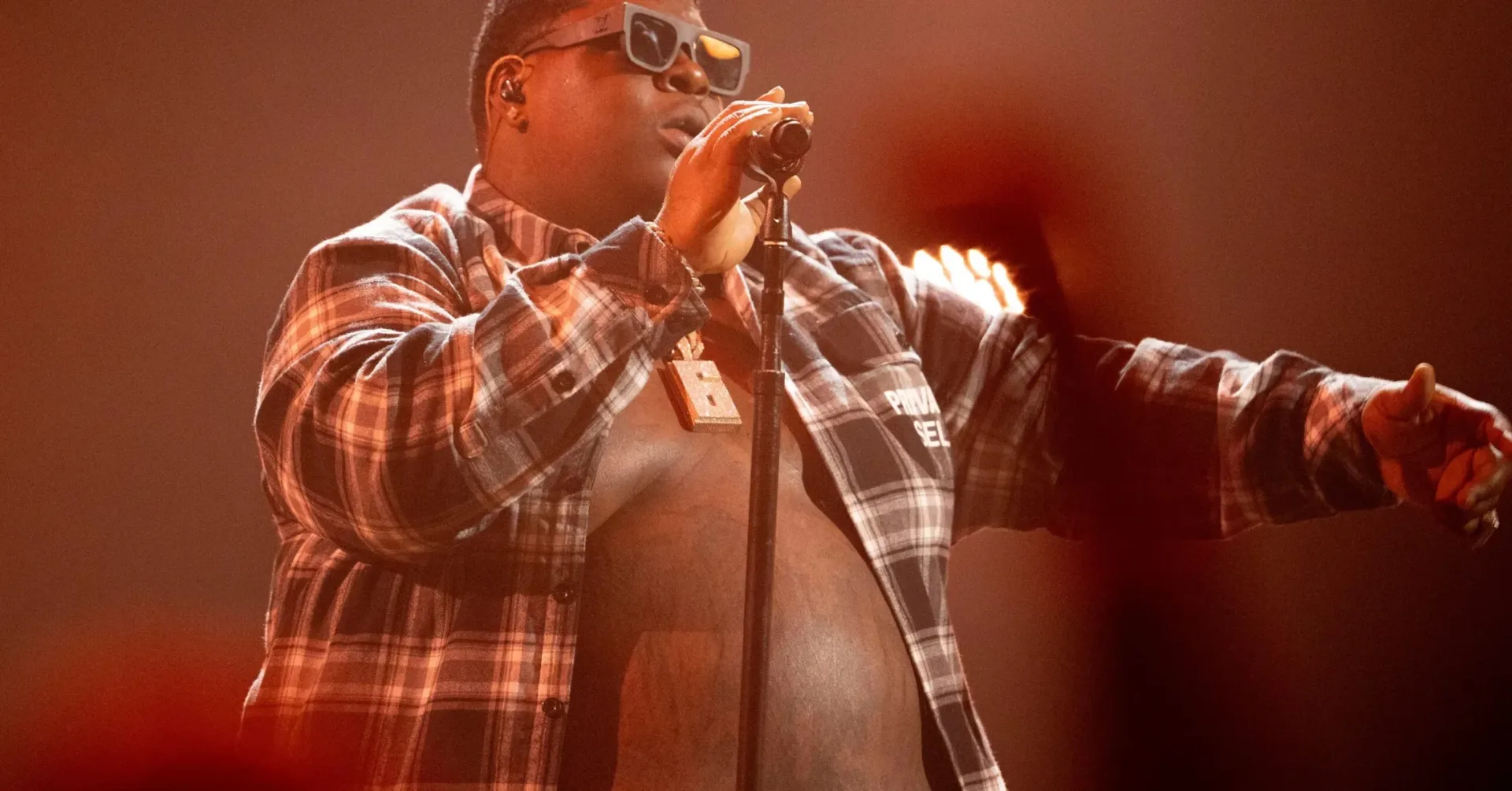
Yella Beezy’s defense has turned airline-booking patterns into a central point of dispute in his capital-murder trial over the November 2020 killing of Dallas rapper MO3.
The defense presented roughly 17 other flight reservations from 2020 that were booked close to departure. The objective was not simply to challenge the details of one Los Angeles trip, but to give jurors a larger baseline for judging it. If booking flights a day before departure was a recurring part of Yella Beezy’s travel routine, the defense argues, then a late reservation around the time of the killing may be less suggestive of a deliberate attempt to conceal or coordinate anything.
That distinction matters because the state has accused Yella Beezy of hiring Kewon White to carry out the shooting. Yella Beezy has pleaded not guilty to capital murder and has denied hiring White. A conviction could result in a life-prison sentence.
Why the airline records matter
Travel evidence often carries persuasive weight in criminal cases because it can offer dates, times, passenger names, booking details and a potential timeline. But an airline record does not automatically explain why someone traveled, why a ticket was purchased when it was, or who made arrangements. Those unanswered questions are at the center of the defense’s approach.
Diala Alrihani, an American Airlines investigator who testified on November 2, described Yella Beezy as a frequent traveler. Her testimony also addressed a practical feature of travel in entertainment work: reservations may be handled by other people. Managers, assistants, business associates or other representatives can potentially make bookings rather than the traveler personally completing every reservation.
For the jury, that provides important context. A booking timestamp may show when a reservation entered the airline’s system. It does not, on its own, establish who made the decision, who entered the booking, what the traveler knew at that moment, or the purpose of the trip. The prosecution and defense can therefore look at the same records and draw sharply different inferences.
The Los Angeles travel timeline presented in court
Airline records placed Yella Beezy and Theodore Thomas on a November 10, 2020 flight from Dallas-Fort Worth to Los Angeles. MO3 was killed in Dallas on November 11, 2020.
The records further showed that the return trip for Yella Beezy and Thomas was booked on November 19, with travel back to Dallas occurring the following day. Some separate reservations used matching booking addresses, another data point that can be offered as a possible connection between travel arrangements but still requires interpretation alongside the broader evidence.
Related coverage includes Yella Beezy Defense Cites 17 Last-Minute Flight Bookings in MO3 Murder Trial.
Separate records involved Devarius Moore, described as an associate. Moore booked a Dallas-Fort Worth-to-Los Angeles flight only hours before departing on November 13, 2020, and records showed a return to Dallas on November 21.
The chronology is plainly important: it places the cited Los Angeles flight for Yella Beezy and Thomas one day before MO3 was killed, while Moore’s departure came two days after the killing. But chronology is not a complete narrative. The legal contest is over what jurors should infer from it, especially when the defense says late booking was common rather than exceptional.
What the defense’s 17-booking argument is designed to show
The roughly 17 additional reservations were reportedly made around a day before departure. In effect, the defense is arguing from pattern rather than treating the travel surrounding the killing as an isolated event.
This is a familiar logic question for jurors: is a piece of behavior unusual enough to support a suspicious inference, or is it part of an established habit? In this instance, the behavior is last-minute booking. A person whose travel is routinely scheduled near departure may appear differently from a person who almost always plans far ahead but made one abrupt trip at a consequential moment.
The defense’s point does not require the jury to regard every booking as identical. Instead, it asks them to avoid treating short-notice travel as inherently incriminating without considering how Yella Beezy traveled throughout the year. Alrihani’s characterization of him as a frequent traveler supports the relevance of that wider comparison, while her testimony about entertainment-industry reservations gives jurors another reason to be cautious about treating booking administration as a direct window into intent.
What “circumstantial evidence” means here
Travel records are generally a form of circumstantial evidence: information from which a fact-finder may draw an inference, rather than direct proof of a disputed act. A booking may directly document that a reservation existed; its significance in a murder-for-hire allegation depends on surrounding facts and the argument made about them.
That does not mean circumstantial evidence lacks force. Timelines can be powerful when multiple records reinforce one another. However, the same evidence can become less definitive if an ordinary explanation fits the documented behavior. The defense is attempting to establish precisely that kind of ordinary explanation for short-notice reservations.
The prosecution’s theory, meanwhile, places the travel in the context of an allegation that Yella Beezy hired White. Those are allegations, not established facts about Yella Beezy’s conduct, and his not-guilty plea means the state bears the burden of proving its case to the jury.
White’s separate conviction and Yella Beezy’s own jury
White was convicted on September 4 and sentenced to life in prison. That outcome does not decide Yella Beezy’s case. Yella Beezy is being tried before a separate jury, which must assess the evidence introduced against him and determine whether the state has met its burden on the capital-murder charge.
The distinction is essential in any multi-defendant matter. A conviction of one person can be part of the wider case history, but it is not itself a substitute for a finding that another person committed, directed or arranged the crime alleged by prosecutors. The trial concerning Yella Beezy remains focused on the evidence and arguments specifically tied to him.
Why booking habits can become a high-stakes trial issue
Modern travel creates extensive records: passenger names, departure and return dates, booking windows, contact information and, in some cases, overlapping details across reservations. These records can seem objective because they are generated through airline systems. Yet their meaning is frequently disputed.
A matching booking address, for example, may be offered as a link between reservations. A short booking window may be portrayed as either suspicious timing or normal working practice. Evidence that entertainers often rely on others to arrange flights may weaken an assumption that every transaction was personally created by the passenger. None of those facts necessarily resolves the central question alone.
That is why the defense’s broader sample of reservations could matter beyond the narrow issue of flights. It is an effort to define the context in which all of the airline evidence is read. Rather than allowing jurors to evaluate one late booking in a vacuum, attorneys are asking them to compare it with other instances from 2020.
The case also arrives amid ongoing attention to rap and the narratives built around artists’ careers and public images. Debates over rap’s changing career pressures and public perception are separate from this criminal proceeding, but they underline why courtroom claims involving musicians demand particular care: fame, associations and industry logistics should not be confused with proof.
For now, the key question raised by the testimony is narrow but consequential. Were the flight reservations around MO3’s killing evidence of suspicious conduct, as prosecutors contend, or were they consistent with a frequent traveler’s established, often last-minute booking patterns? The answer will depend on how the jury weighs the full record, including the timing of the flights, the booking details and the competing explanations offered in court.