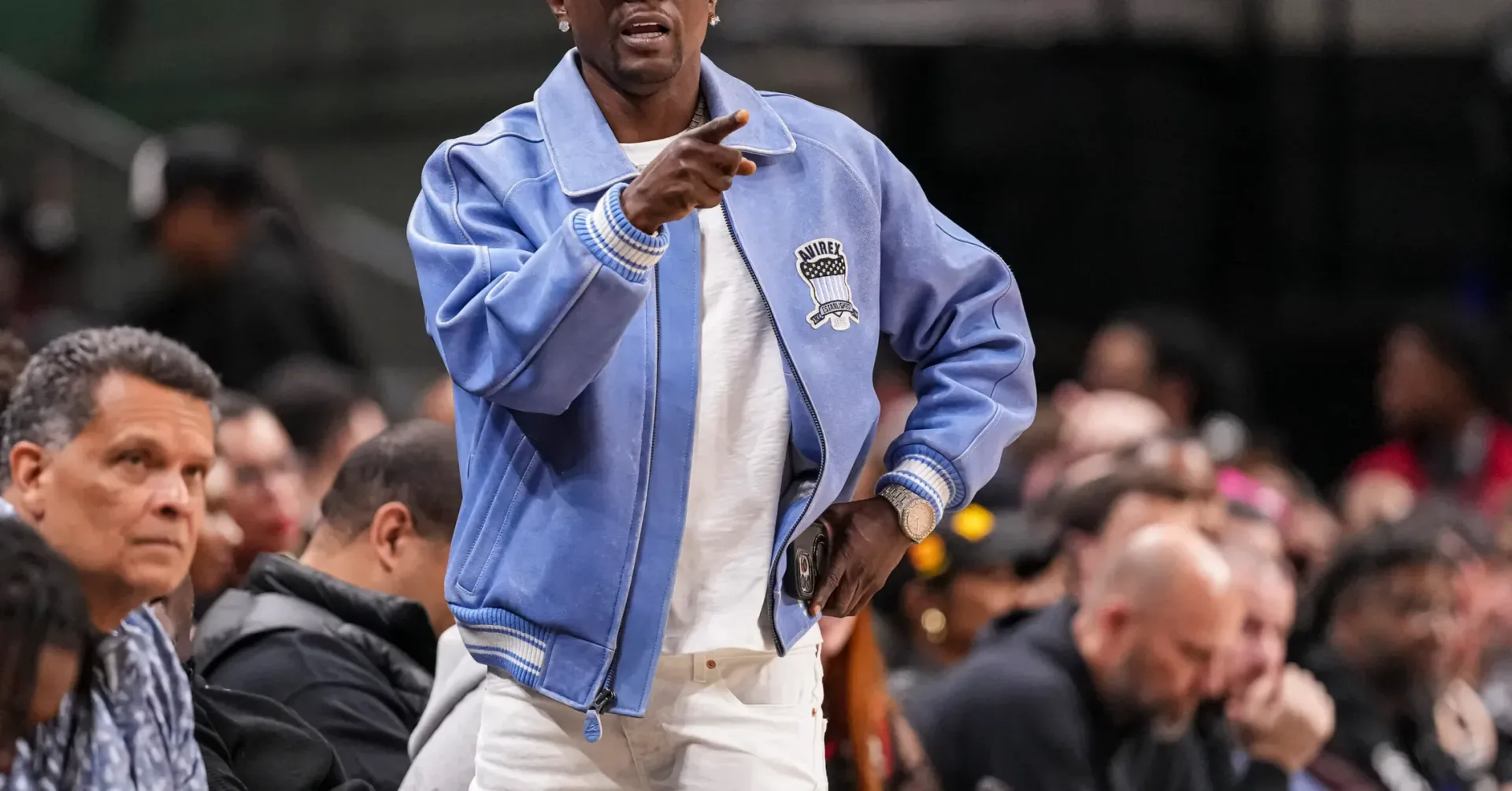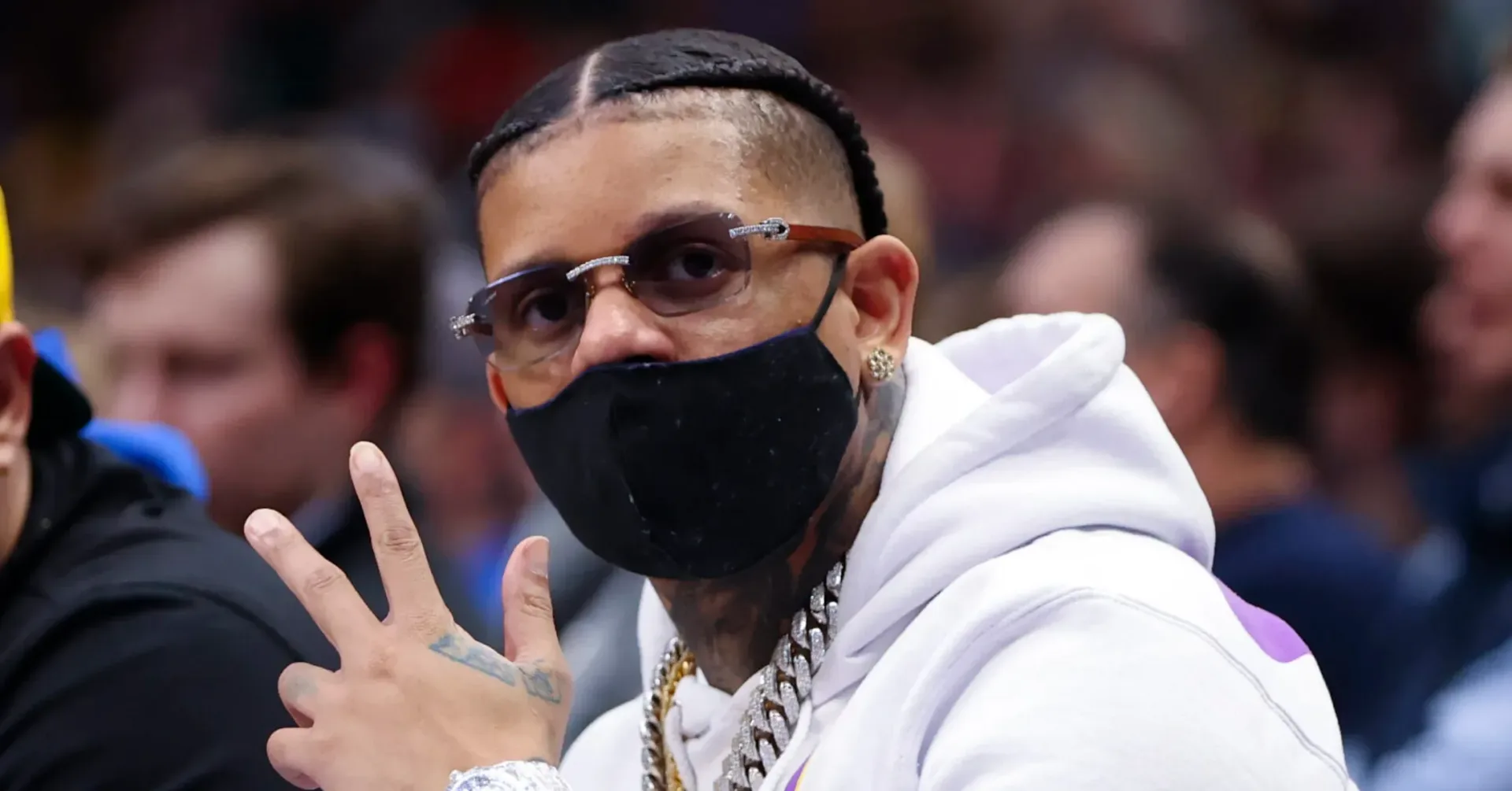
A Dallas County jury has found Kewon White guilty of capital murder in the November 2020 shooting death of Dallas rapper MO3. The killing took place on Interstate 35, and the verdict represents the first time a defendant in the case has faced a jury.
Jurors deliberated for roughly three hours before returning the guilty verdict. Under the reported terms of the capital-murder conviction, White receives an automatic sentence of life in prison without parole.
The decision resolves the jury’s assessment of the case against White, but it does not close the broader legal proceedings tied to MO3’s death. Fellow Dallas rapper Yella Beezy is scheduled to go to trial on September 11. He has pleaded not guilty, and the charge against him remains an allegation that must be proved in court.
A verdict after a brief jury deliberation
The prosecution’s position was that White was the person who fired the fatal shots. Prosecutors characterized the killing as part of an alleged murder-for-hire plot and alleged that Yella Beezy was involved in arranging it. In closing arguments, the state focused on the evidence it believed connected White to the shooting and argued that it met the demanding criminal standard of proof beyond a reasonable doubt.
For a jury, a capital-murder case is not a matter of deciding which story is more interesting, dramatic, or culturally familiar. The question is whether the evidence presented during trial establishes guilt beyond a reasonable doubt. After approximately three hours of deliberation, the Dallas County panel concluded that it did in White’s case.
That timeframe should not be treated as a measure of the human importance of the case or of every discussion that occurred in the jury room. Deliberation length alone cannot reveal how jurors weighed individual exhibits, testimony, arguments, or instructions. It does establish that the panel reached the legally required unanimous verdict relatively quickly after receiving the case.
MO3’s killing has remained a consequential case for Dallas music culture, where the artist’s work and public profile had built a substantial audience. The legal process now moves into a distinct phase: White’s conviction has brought a mandatory life-without-parole outcome, while the allegations involving another defendant remain headed toward their own trial.
The defense challenge centered on proof and artistic expression
White’s legal team argued that prosecutors had not cleared the beyond-a-reasonable-doubt threshold. Defense attorney Bree West challenged the certainty of the state’s narrative and argued that the evidence did not conclusively establish White’s guilt.
A prominent part of the defense approach concerned the use and interpretation of music lyrics. West invoked Johnny Cash’s “I Shot a Man in Reno,” a song long associated with the provocative line about killing a man simply to watch him die. The comparison was designed to make a basic point: violent language in a song can be performance, storytelling, image-making, or fiction rather than an admission of a real criminal act.
The argument matters far beyond any one genre. Rap is frequently discussed through the language of persona, competition, autobiography, exaggeration, character work, and commercial spectacle. Country, rock, folk, film, television, comics, and games have all used violence and criminality as narrative material too. An artist’s output may feel personal, and sometimes it may draw from lived experience, but that does not automatically convert a lyric into a literal statement of fact.
West’s argument was that jurors should not merge artistic expression with criminal intent or criminal proof. The defense warned that treating lyrics as direct evidence of conduct could create a dangerous path toward wrongful convictions, particularly where the rest of the evidentiary record is disputed.
That principle does not mean courts can never consider creative material in a case. Rather, it underscores why context and the totality of evidence matter. A courtroom has to distinguish between art that might be inflammatory, art that might be expressive, and evidence that can be tied reliably to the particular legal questions before a jury. In White’s trial, the jury ultimately accepted the prosecution’s case despite the defense’s objections.
Video evidence and the alleged connection to Yella Beezy
During the trial, prosecutors presented video showing White and Yella Beezy appearing together on stage. The state used the footage in an effort to demonstrate a connection between the two men. On its own, an appearance together is not the same thing as proof of a criminal agreement; the prosecution’s responsibility was to place that material within its larger theory of the case.
That distinction is especially important as attention shifts to Yella Beezy’s upcoming proceeding. White’s verdict is a result in White’s case. Yella Beezy has entered a not-guilty plea, and his trial will have its own evidence, arguments, legal rulings, and jury evaluation. The presumption of innocence continues to apply unless and until a conviction is secured through the judicial process.
It is tempting in high-profile cases to frame every new development as a sequel with a predetermined ending. Real criminal proceedings do not work that way. Separate defendants can face different charges, evidence, defenses, and legal issues. A guilty verdict against one person does not eliminate the government’s burden to prove allegations against someone else beyond a reasonable doubt.
The September 11 trial date therefore stands as the next major milestone, not as an answer already supplied. Public interest will understandably be intense because of the artists involved and the gravity of MO3’s death. Still, the essential facts are straightforward: prosecutors have alleged a murder-for-hire arrangement, Yella Beezy denies the accusation through his not-guilty plea, and a court process is set to test those competing positions.
White’s separate federal sentence
White was already serving a nine-year federal prison sentence following a 2022 conviction for possession of a firearm by a convicted felon. That federal matter was unrelated to the MO3 murder case.
The separation between those cases is more than a technicality. A prior conviction or an unrelated sentence should not be confused with evidence establishing responsibility for a different offense. The Dallas County jury’s capital-murder decision rests on the evidence and arguments in the MO3 case, while the prior federal conviction concerned a separate firearm-possession charge.
Now, the life-without-parole sentence attached to the capital-murder verdict is the controlling outcome reported from the Dallas County proceeding. It is a stark legal consequence, one that reflects the severity of a capital-murder conviction under the applicable law.
A music-world story with legal stakes, not spectator drama
Coverage of criminal cases involving musicians can easily slide into the language of rivalries, lyrics, viral clips, and celebrity intrigue. Those subjects may explain why a case draws notice, but they should not obscure the stakes. A person was killed, a defendant has now been convicted and sentenced to spend the rest of his life in prison without parole, and another defendant awaits trial after pleading not guilty.
The artistic-expression dispute raised by the defense also has significance outside this case. Entertainment routinely uses characters who commit crimes, narratives built around threats or revenge, and exaggerated accounts of danger. That is as true for a grim rap record as it is for an action movie, a crime novel, or a game built around an outlaw protagonist. The legal question is never whether art can be dark; it is whether the prosecution has presented admissible, reliable evidence that proves a specific alleged crime.
For readers following music news alongside other pop-culture developments, Joking Joystick has also covered how artists navigate release models and fan response, including David Banner’s consideration of a free release for The God Box 2. The MO3 case is a far more serious subject, but it similarly illustrates how music-world stories can extend well beyond the work itself and into issues carrying real personal and legal consequences.
For now, the verified procedural picture is clear. Kewon White has been found guilty of capital murder for the 2020 death of MO3 and faces life in prison without parole. Prosecutors alleged he was the shooter in a murder-for-hire plan. His defense disputed that the evidence proved the allegation and cautioned against reading artistic material as a confession. Yella Beezy, accused by prosecutors of orchestrating the plot, has pleaded not guilty and is scheduled for trial beginning September 11.